PERFORMANCE EVALUATION AND ANALYSIS OF FREQUENCY RECONFIGURABLE DIELECTRIC RESONATOR ANTENNA: A REVIEW
1M.Tech, Electronic and Communication Engineering, GITM, Lucknow, India

2Assistant Professor Electronic and Communication Engineering, GITM, Lucknow, India
Abstract - Frequency reconfigurable dielectric resonator antennas (DRAs) are a type of antenna that can adjust their operating frequency without physically changing their shape or size. DRAs are made of a high-permittivity dielectric material that resonates at a specific frequency, and by adjusting the dielectric constant of the material or its dimensions, the resonant frequency of the antenna can be tuned. One way to achieve frequency reconfigurabilityinDRAs is by using a varactor diode, which is a type of electronic component that can change its capacitance when a voltage is applied. By placing a varactor diode inserieswiththeDRA,the effective permittivity of thedielectricmaterialcanbechanged, and the resonant frequency of the antenna can be shifted.
Another approach to achieving frequency reconfigurabilityin DRAs is by using a switchable feed network, which can change the coupling between the DRA and the feedline. By switching between different feed configurations, the resonant frequency of the antenna can be changed.
Frequency reconfigurable DRAs have several advantages, including their small size, low profile, and wide bandwidth. They can also be easily integrated into wireless communication systems and have applications in mobile and satellite communication systems, radar systems, and wireless sensor networks.
Key Words: Frequency reconfigurable, resonator, antennas,wireless,communication.
1. INTRODUCTION
Wirelesscommunicationisincrediblyimportantintoday's world,anditsimportanceisonlyincreasingastechnology advances. Wireless communication allows people to stay connectedwhileonthemove,whetherit'sthroughmobile phonesorotherwirelessdevices.Thishasrevolutionizedthe waypeoplecommunicateanddobusiness,asitenablesthem toworkfromanywhereandstayconnectedtotheinternetat all times. With wireless communication, people no longer havetobetetheredtoaspecificlocationtocommunicateor accessinformation.Thisconveniencehasmadeitpossible forpeopletoworkremotely,accessinformationonthego, andstayconnectedwithfriendsandfamilyevenwhenthey arenotphysicallyclose.Wirelesscommunicationhasmade it possible to transmit information over long distances withouttheneedforexpensiveinfrastructure,suchascables
orwires.Thishasloweredthecostofcommunicationand madeitmoreaccessibletopeopleinremoteareaswhomay nothavehadaccesstotraditionalcommunicationmethods. Wirelesscommunicationhasalsoimprovedsafetyinmany industries,suchastransportationandemergencyservices. For example, wireless communication allows emergency responders to quickly communicate with each other and coordinate their response to a crisis. Wireless communication has enabled the development of new technologies, such as smart homes, wearables, and the Internet of Things (IoT). These technologies are transformingthewaypeopleliveandwork,andareopening up new possibilities for businesses and consumers alike. Overall,theimportanceofwirelesscommunicationcannot be overstated. It has revolutionized the way people communicateanddoesbusiness,madecommunicationmore accessibleandcost-effective,improvedsafety,andenabled thedevelopmentofnewtechnologies.
1.1. RECONFIGURABLE DIELECTRIC RESONATOR ANTENNA
Reconfigurabledielectricresonatorantennas(RDRA)area typeofantennathatusesadielectricresonatortoresonate ataspecificfrequency.Thedielectricresonatorismadeofa high-permittivitymaterial andistypicallyintheformofa cylindricalorrectangularblock.
RDRA is designed to allow its resonant frequency to be changed dynamically by using some form of tuning mechanism.Thistuningmechanismcanbeeitherelectrical or mechanical. The use of such a mechanism allows the RDRAtobereconfiguredtooperateatdifferentfrequencies, which makes it highly versatile and useful in a variety of applications.
OneofthemainadvantagesofRDRAisthatitcanprovide highlevelsofperformance,includinghighgain,lowloss,and high directivity. In addition, its compact size and reconfigurability make it an attractive option for use in a variety of applications, including wireless communication systems, satellite communication systems, radar systems, andmicrowaveimagingsystems.
RDRAtechnologyisstillinitsearlystagesofdevelopment, butithasalreadyshownsignificantpotentialinarangeof applications. As the technology continues to mature, it is
expectedthatRDRAwillbecomeevenmorewidelyusedand will play an increasingly important role in modern communicationandimagingsystems.
2.1. RECONFIGURABLE ANTENNAS FOR COGNITIVE RADIO APPLICATIONS
Reconfigurable antennas are a type of antenna that can dynamicallychangetheiroperatingfrequency,polarization, radiation pattern, or other parameters based on the surrounding electromagnetic environment or user requirements. These antennas have gained significant interestincognitiveradioapplicationsduetotheirabilityto adapttochangingradiofrequency(RF)environmentsand providespectrumagility.
Cognitiveradio(CR)isawirelesscommunicationtechnology thatenablesefficientanddynamicspectrumsharingamong differentwirelesssystemsbyutilizingtheunderutilizedor unused spectrum. CR systems require reconfigurable antennas that can operate over multiple frequency bands, supportmultiplewirelessstandards,andprovidedirectional coveragebasedonthespecificcommunicationscenario.
2. RECONFIGURABILITY IN PATCH ANTENNA
Reconfigurabilityinpatchantennasreferstotheabilityto changetheelectricalpropertiesoftheantennabyadjusting its physical configuration or adding external components. Thisallowstheantennatooperateatdifferentfrequencies or in different modes, making it more versatile and adaptabletochangingrequirements.
Onewaytoachievereconfigurabilityinpatchantennasisby using tunable materials, such as varactors or ferroelectric materials, that can change their electrical properties in responsetoanexternalstimulus,suchasanappliedvoltage or magnetic field. By integrating these materials into the antennadesign,theresonantfrequencyoftheantennacan betunedoverawiderange.
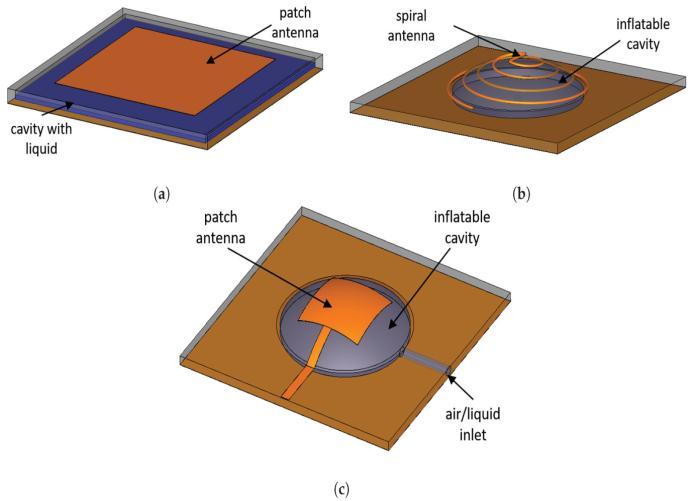
Anotherapproachistouseswitchablecomponents,suchas PIN diodes or MEMS switches, that can change the configuration of the antenna, such as switching between different feed points or changing the size or shape of the patch. This can also be used to create multiple resonant modes in the antenna, allowing it to operate at different frequencies.
Reconfigurable patch antennas have many potential applications in wireless communications, including frequencyhoppingsystems,cognitiveradios,andadaptive beamforming.Theycanalsobeusedinotherareassuchas radarsystemsandsensingapplicationswheretheabilityto changetheantenna'spropertiescanenhanceperformance orenablenewcapabilities.
Thereareseveraltypesofreconfigurableantennasusedin cognitive radio applications, including frequency reconfigurable antennas, polarization reconfigurable antennas,beam-steeringantennas,andswitchableantennas. Frequencyreconfigurableantennascandynamicallychange their resonance frequency to cover multiple frequency bands, while polarization reconfigurable antennas can change the orientation of the electric field to support differentpolarizationschemes.Beam-steeringantennascan changethedirectionoftheradiationbeamelectronicallyby varyingthephaseandamplitudeoftheantenna elements. Switchableantennascanswitchbetweenmultiplemodesof operation,suchasomnidirectionalanddirectionalmodes,by selectively activating or deactivating certain antenna elements.
Reconfigurable antennas have several advantages in cognitive radio applications, such as improved spectrum efficiency, increased capacity, and reduced interference. These antennas can also adapt to different wireless standardsandcommunicationscenarios,whichmakesthem suitableforfuturewirelesscommunicationsystems.
In summary, reconfigurable antennas have significant potentialincognitiveradioapplicationsduetotheirability toadapttochangingRFenvironmentsandsupportdynamic spectrum sharing. As wireless communication systems continue to evolve, reconfigurable antennas will play an increasinglyimportantroleinenablingefficientandflexible spectrumusage.
3. RECONFIGURABLE MONOPOLE ANTENNA
Areconfigurablemonopoleantennaisatypeofantennathat can be adjusted or reconfigured to operate at different frequencies or with different polarization. The monopole antennaisasimpleantennathatconsistsofasinglevertical conductor mounted over a ground plane. The
reconfigurabilityoftheantennaallowsittobeusedinawide range of applications, including wireless communication systems,radarsystems,andsatellitecommunications.
The reconfiguration of the monopole antenna can be achievedbychangingthelengthorshapeoftheantenna,by addingorremovingparasiticelements,orbychangingthe properties of the materials used in the antenna. These changes can be controlled by electronic switches or other devices,whichcanbeprogrammedtoadjusttheantennato thedesiredfrequencyorpolarization.
The advantages of a reconfigurable monopole antenna includeitsversatility,compactsize,andeaseofintegration withotherelectroniccomponents.Itcanalsobedesignedto operate in a variety of environments and conditions, includingharshweatherandhightemperatures.
Overall,reconfigurablemonopoleantennasareapromising technologyforwirelesscommunicationsystemsandother applications that require flexible and adaptable antenna designs.
4. LITERATURE SURVEY
Inthesectionoftheliteraturereview,wehavestudiedpast research papers re; are to Reconfigurable dielectric resonatorantennas,andsummaryofallpastresearchpapers isgivenbelow:
Haider et al: Communication and surveillance use reconfigurableantennas.Theycanreal-timeadjustcircuital and radiation properties. To accomplish radiation pattern and frequency agility, antennas must be topologically reconfigurable. To meet functionality requirements, array form,size,andgridspacingshouldbeadjusted.Digitalbeam shapingintransmitandreceiveallows theflexiblefieldof view and coverage specification. This entails choosing the best beam-forming algorithm and calibration technique. Reconfiguring the antenna element allows frequency, polarisation,andradiationpatternagility.Frequencyagility mightmeanswitchingbetweenoperatingfrequencybands (connected to the sensor application) in a multifunctional systemortuningthecenterfrequencyoftheinstantaneous bandwidthwithintheentireoperatingbandwidthofagiven communication or sensing feature. The first instance involvesreconfigurabilityattheantennaelementlevel,using switching components to provide optimal antenna functioningwithintheintendedfrequencyranges,andarray topologylevel,tomodifyarrayspacing.Tunablecomponents or substrates adjust narrowband elements' center frequenciesinthesecondscenario.
Joseph, Silvio: This study summarises reconfigurable antenna design, optimization, and utilization methods. Reconfigurableantennasdominatemoderncommunication systems. They provide the foundation for many future cognition-based and adaptive applications. Today's
communication technology doesn't require a static communication system with one or more permanent antennas. Various antenna reconfiguration methods are suggested. These methods are electrical, optical, or mechanical. No matter the method, the antenna radiating apertureisrearranged.Graphmodelsandneuralnetworks can automate, control, and optimize reconfigurable antennas.TheseapproachesonFPGAs,microcontrollersor anyprogrammableCPUenablereconfigurableantennasto meetdesigngoals.Eventually,reconfigurableantennaswill self-adapt,learn,respond,overcomefailures,andprovidean efficient, dynamic, and ever-changing communication connection.
Weng, Zahriladha: This study reviews reconfigurable integrated filters and antennas and discusses current improvements and their applications. Most researchers choose microstrip structures. This construction is light, cheap, simple to make, and compatible with any planar structure. Recent research demonstrates that microstrip constructionmayreduceantennasize,however,creatinga largertuningrangewithlowpowerandlossisachallenge. This review explains microwave filter development. It intendstoprovideareferenceforreconfigurableintegrated filterandantennadesignresearchtoimproveperformance andsizeformultifunctionoperatingapplications.
Shraddha, Pankaj: Subjective radio, space, satellite communication, and portable radio use distinct reconfigurableantennas.Reconfigurableantennasarebetter thanotherantenna methodsbecausetheymaybeused in several modes. Single antenna multiuse applications or customers are suitable. It offers cheaper, better communication.Thisarticleshowsreconfigurableantenna characteristics.Reconfigurableantennashaveconsiderable potential. CST Microwave Studio (CST MWS)-2018 can structureandreproducereconfigurableantennas.
Manjula: This article compares their performance improvement strategies and reviews 5G antennas. 5G connection requirements are detailed. Centered on input ports, SISO, and MIMO are the two main 5G antenna architecture classifications. Wideband and multiband are basedonfrequencyresponse.SISOantennasmaybedivided intosingleandmulti-unitelementantennas.SISOantennas fit5GIoTdevices.WidebandandmultibandMIMOantennas maybemulti-elementormetal-rimmed.MIMOantennasare optimalforsmartphones,althoughbasestationsmayemploy huge ones. Carrier aggregation boosts MIMO metal rim antenna transmission rates. Orthogonal polarisation increases separation and performance. Antennas are also classifiedbyshape.
Elizaveta, Huang: Thisstudydetailedstate-of-the-artliquid dielectricreconfigurableantennadesign,optimization,and application approaches. Modern communication technology's shrinking hardware makes permanent
antennas unsuitable for communication networks. Liquid dielectric materials provide a new radiation control and reconfigurability mechanism that complements previous approaches. Liquid-based and liquid-assistive antenna reconfigurationmethodsusedliquiddielectrics.Theliquidbased approach uses a liquid dielectric substance as the radiating structure. In the liquid-assisted method,a liquid dielectricsubstancemodifiesthelocalcurrentsofametalbasedantennatochangeitsradiationcharacteristics.This study covered reconfigurable antenna design principles, benefits, and drawbacks. Liquid dielectric reconfigurable antennas provide greater efficiency and operating bandwidth than electrical switch-based reconfiguration techniques, despite certain technical and practical limitations.
Marie et.al: This study reviewed all CR reconfiguration methods.CRcommunicationusesfrequency-reconfigurable antennas.Somehavesensingandcommunicationportions on the same substrate but different antennas. Single-port antennas perform sensing and communication in the 3rd category. Every antenna must be changeable electrically, optically, and physically, using smart materials, and most recently,excitationswitching.MEMS,PINdiodes,Varactors, FET switches, and photoconductive switches may reconfigureelectricallyandoptically.Structurevariationand smartmaterialsenablephysicalreconfiguration.Thelatest method, excitation switching reconfiguration, switches excitationtodeterminewhichantennacanconnectwiththe sensor antenna. Size, UWB and NB coverage, complexity, losses,switchingspeed,isolation, powerneeds, efficiency, etc.arestudiedformanyantennas.Thisstudyanalysesthe benefitsanddownsidesofeachapproachtohelpresearchers work within application limits. Reconfigurable antennas shouldadapttotheirenvironmentandprovideanenergyefficient communication connection between devices. Software-defined control and machine learning of the antenna system will advance reconfiguration. Multi-band wearableantennasmaybenefitfromreconfiguration.
Anjana: Thisworkclassifiesandreviewsreconfigurations. The antenna's structural design and reconfigurability methods electrical,optical,andmechanical aredetailed. Reconfigurableantennasadapttosystemneeds.Compound reconfigurableantennaschangetheirdualpropertiesinside thesameantennasystem.Reconfigurableantennaresearch has mostly concentrated on antenna shapes and feeding methods,althoughgainincrease,widebandoperation,and high-power handling techniques are also important. Understanding reconfiguration methodologies and commercial applications of reconfigurable antennas is importantasthechangingenvironmentincreasesdemand formultifunctionalantennasystems.
Rohini, Sonal: AsshowninFig.4,asurface-mountassembly instrumentationtransmitssignalsfromthefeed-otherline's end.Tocreateauniquemultibandantenna,two-foldedarms with a microstrip stub between them are used as the
diverging stub. Misusing this structure causes additional surface current techniques and variable resonance frequencies[4,5].Theinitiallengthoftherolled-uparmsis chosen to match the WLAN band frequency (lg/4 at the centerwavebandof2.4GHz)andthelengthofthemicrostrip stubbetweenthetwo-foldedarmsmatchestheWiMAXband frequency(lg/4at3.5GHz),wherelgistheradio-controlled wavelength[8].Aconstantstudyhasbeenconductedtofind anappropriatecompromisebetweentheantennafrequency responsesatbothbands.ZeelandIE3Dsimulatesproposed reconfigurableantennas.
Karthika, Kavitha: Reconfigurableantennasarethemost modern antenna design to meet wireless communication systemneeds.Thisreportexaminesreconfigurableantenna design for wireless applications. This study examined reconfigurable antenna designs, switching processes, and antenna performance enhancement methods. Thus, the reconfigurationkind,size,andformofradiatingstructures mustbechosenforthefinaluse.Inreconfigurableantenna designs,effective methodsshouldreduce mutual coupling and improve gain, bandwidth, and isolation. Combining reconfigurationormulti-functionalcapabilitiesonasingle substratetoprovideacceptableradiationcharacteristicsin allstateswouldenableenhancedwirelesscommunication. So,thiseffortwillallowantennaresearcherstodevelopnew concepts to surpass benchmark results in future antenna research.
Navneet et.al: A reconfigurable frequency metasurfacebased microstrip patch antenna is rotatable. A microstrip patchantennahasacirculargroundplaneandametasurface on a first and second substrate, respectively. Rotating the metasurfacestructureachievesfrequencyreconfiguration, accordingtoresearch.Fractionaltuningandbandwidthof 20.2% and 1.12 GHz, respectively, allow frequency reconfigurationinthe4.97to6.09GHzrange.
5. CONCLUSION
Reconfigurabledielectricresonatorantennas(RDRA)havea promisingfutureastheyofferthepotentialtoenhancethe functionality of conventional antennas by changing their physical properties. RDRA technology has been gaining increasingattentionfromresearchersandindustryexperts duetoitsabilitytooperateoverawiderangeoffrequencies and its adaptability to different wireless communication systems.RDRAtechnologyhasthepotentialtoimprovethe performance of 5G wireless communication systems by providinghigherdataratesandincreasedbandwidth.RDRA technologycanbeusedinsatellitecommunicationsystems to provide better signal quality, higher data rates, and reducedpowerconsumption.RDRAtechnologycanbeused inIoTdevicesto enablewirelesscommunication between devicesandimprovetheoverallperformanceofthesystem. RDRAtechnologycanbeusedinradarsystemstoimprove theresolutionandaccuracyofthesystem.RDRAtechnology canbeusedinmedicalapplications,suchaswirelessmedical
devices and implantable antennas, to enable wireless communication between devices and improve the overall performanceofthesystem.
REFERENCE
[1]Nadeem,Q.-U.-A.;Kammoun,A.;Debbah,M.;Alouini,M.-S. Design of 5G full dimension massive MIMO systems. IEEE Trans.Commun.2018,66,726–740.
[2]Bhartia,P.;Bahl,I.J.Frequencyagilemicrostripantennas. Microw.J.1982,25,67–70.
[3] Bernhard, J.T. Reconfigurable Antennas; Morgan & ClaypoolPublishers:SanRafael,CA,USA,2007.
[4] Peroulis, D.; Sarabandi, K.; Kateh, L.P.B. Design of reconfigurableslotantennas.IEEETrans.AntennasPropag. 2005,53,645–654.
[5] Christodoulou, C.G.; Tawk, Y.; Lane, S.A.; Erwin, S.R. Reconfigurableantennasforwirelessandspaceapplications. Proc.IEEE.2012,100,2250–2261.
[6] Balanis, C.A. Antenna Theory Analysis and Design, 4th ed.;JohnWiley&Sons:NewYork,NY,USA,1998.
[7]Bernhard,J.T.ReconfigurableAntennas;Wiley:NewYork, NY,USA,2005.
[8] Grau, J.R.; Lee, M.J. A dual-linearly-polarized MEMSreconfigurable antenna for NB MIMO communication systems.IEEETrans.AntennasPropag.2010,58,4–17.
[9] Tawk, Y.; Costantine, J.; Christodoulou, C.G. A varactor basedreconfigurablefiltenna.IEEEAntennasWirel.Propag. Lett.2012,11,716
719.
[10] Nikolaou, S.; Bairavasubramanian, R.; Lugo, C.; Carrasquillo, I.; Thompson, D.C. Pattern and frequency reconfigurableannularslotantennausingPINdiodes.IEEE Trans.AntennasPropag.2006,54,439–448.
[11]Parchin,N.O.;Al-Yasir,Y.;Abdulkhaleq,A.M.;Elfergani, I.; Rayit, A.; Noras, J.M.; Rodriguez, J.; Abd-Alhameed, R.A. Frequencyreconfigurableantenna arrayformm-Wave5G mobile handsets. In Proceedings of the 9th International ConferenceonBroadbandCommunications,Networks,and Systems,Faro,Portugal,19–20September2018.
[12] Ojaroudi, N.; Parchin, N.O.; Ojaroudi, Y.; Ojaroudi, S. Frequencyreconfigurablemonopoleantennaformultimode wirelesscommunications.Appl.Comput.Electromagn.Soc.J. 2014,8,655–660.
[13] Ojaroudi, N.; Ghadimi, N.; Ojaroudi, Y.; Ojaroudi, S. A noveldesignofmicrostripantennawithreconfigurableband rejection for cognitive radio applications. Microw. Opt. Technol.Lett.2014,56,2998–3003.
[14] Hussain, R.; Sharawi, M.S.; Shamim, A. An integrated four-elementslot-basedMIMOandaUWBsensingantenna systemforCRplatforms.IEEETrans.AntennasPropag.2018, 66,978–983.
[15]Hussain,R.;Khan,M.U.;Sharawi,M.S.Anintegrateddual MIMO antenna system with dual-function GND-plane frequency-agileantenna.IEEEAntennasWirel.Propag.Lett. 2018.
[16] Hinsz, L.; Braaten, B.D. A frequency reconfigurable transmitterantennawithautonomousswitchingcapabilities. IEEETrans.AntennasPropag.2014,62,3809–3813.
[17] Hannula, J.-M.; Saarinen, T.; Holopainen, J.; Viikari, V. Frequencyreconfigurablemultibandhandsetantennabased onamultichanneltransceiver.IEEETrans.AntennasPropag. 2017.
[18] Nguyen-Trong, N.; Piotrowski, A.; Fumeaux, C. A frequencyreconfigurabledual-bandlow-profilemonopolar antenna. IEEE Trans. Antennas Propag. 2017, 65, 3336–3343.
[19]Boukarkar,A.;Lin,X.Q.;Jiang,Y.;Chen,Y.J.;Nie,L.Y.;Mei, P. Compact mechanically frequency and pattern reconfigurablepatchantenna.IETMicrow.AntennasPropag. 2018,12,1864–1869.
[20]Sam,S.;Kang,H.;Lim,S.Frequencyreconfigurableand miniaturized substrate integrated waveguide interdigital capacitor(SIW-IDC)antenna.IEEETrans.AntennasPropag. 2014,62,1039–1045.
[21]Anand,S.;Raj,R.K.;Sinha,S.;Upadhyay,D.;Mishra,G.K. Bandwidthreconfigurablepatchantennafornextgeneration wirelesscommunicationsystemapplications.InProceedings of the International Conference on Emerging Trends in CommunicationTechnologies(ETCT),Dehradun,India,18–19November2016.
[22] Anagnostou, E.; Torres, D.; Sepulveda, N. Vanadiomdioxde switch for a reconfigurable bandwdith antenna.In Proceedings of theLoughboroughAntennas & Propagation Conference (LAPC 2017), Loughborough, UK, 13–14November2017.
[23] Meng, L.; Wang, W.; Gao, J.; Liu, Y. Bandwidth reconfigurable antenna with three stepshaped slots. In ProceedingsoftheSixthAsia-PacificConferenceonAntennas andPropagation(APCAP),Xi’an,China,16–19October2017.
[24] Chen, S.-Y.; Chu, Q.-X.; Shinohara, N. A bandwidth reconfigurable planar antenna for WLAN/WiMAX applications.InProceedingsoftheAsia-PacificMicrowave Conference(APMC),NewDelhi,India,5–9December2016.