Inelastic seismic response of single-story structure in hilly areas owing to ground excitation: Mitigating by vibration control device TLD
Krishnendu Chowdhury1 , Utsha Chowdhury2 , Goutam Bairagi31,2Assistant Professor, Civil Engineering Department, K K College of Engineering & Management, Jharkhand, India

3Professor & Head, Civil Engineering Department, Jalpaiguri Govt. Engineering College, West Bengal, India ***
Abstract – This study examines the inelastic seismic response of an idealized single-story RC structural system in hilly region under sloppy ground subjected to bi-directional ground motion excitation. In this exertion, models have various degree of inelasticity, are subjected to a set of near-fault ground motion with different characteristics for both symmetric and asymmetric structural systems. The columns are varying height owing to sloping ground conducted different angle of slopes like 15°, 25°, 35° and 45° on symmetric and asymmetric system for evaluating the overall response of load resisting elements and their mitigation techniques due to uncontrolled vibration and heavy weight land slide using beam-column joint and also modern technique of tuned liquid damper (TLD) The broad conclusions present in this study helps the fine tune of the provisions in the seismic code
Key Words: Inelastic response, Seismic response, Sloppy ground, Bi-directional, Angle of slopes, Beam-column joint, TLD.
1. INTRODUCTION
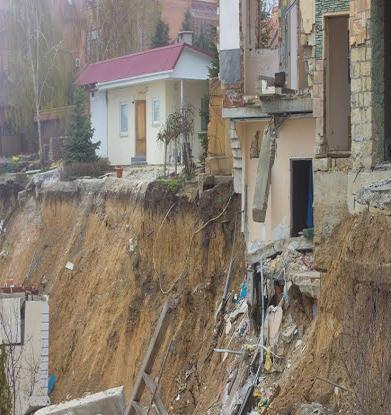
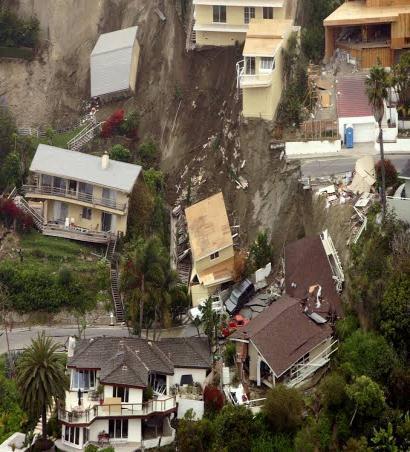
ThedeficiencyofRCbuildinginhillyareascanbeobserveda majorseriouschallengingissuethroughouttheglobe.The seismicperformanceofbuildingsdependsonshapesandplanofstructuralelements.Inthatcase,athillyareastructuresare constructedbasedongroundorientationmakethestructuresirregularwithverticalandhorizontalsetback.Generally,ground motionbehaveslikeavectorformationthatisN-SandE-Wdirection.Thisbi-directionalexcitationcreatedthevulnerabilityof structuresforbothconfigurationsmajorlythattheeye-witnessNepal2015,Sikkim2011,Kashmir2005etc.werealready recorded.Thepositionofcolumnsonsloppygroundterrainsfabricatesanirregularweaksupportingframeworkthatinducea torsionaleffectinaninelasticregionofloadresistingstructuralelementsowingtogroundmotion.Also,soilofthehillsand mountainsarethosetobefoundinareaswithaltitudeminimumabove300msealevelandslope15%andabove.Thisserious conditionmakesuneasefordevelopingthefoundationstrongforages.Needsomenewobservationswillbemadeonkeepingin mindthatoverallparticularmattersotheseismicsafetymitigationtechniquessolvetheproblemsandalsofavorthecode provisionmoreupdated.Asymmetricstructuresaremorevulnerablethanthesymmetriccounterpartsduetolateraland torsionalcouplingatdifferentstiffnessandmasseccentricconditions.Severalearthquakephenomenaindicatetheelemental deformationcausesduetolowqualitymaterialsusedandtheproperdesigningprogramofstructuralconstructionwithrespect totheplanorientationinhillyregion.SomeexemplarshowsinFig.1-3thatmakesaseriousmatterinhumanlife.Thelimited workdonehasbeenconductedonthisparticularaspectforsingle-storymodelstructure.Researchershavebeenproposedthat theeffectduetobi-directionalexcitationinhillyregionbuildings,clearlyconcludethattheprimaryfailuremodeiscreatedby shearfailureofshortcolumnsasa resultlower seismiccapacityofstructural systemin sloppy ground [1]. Furthermore, anotherseriousobservationonRCframebuildingsinhillyslopesclearlyshowsthattheslopeangleincreasing,building is becomingstifferforshortcolumnswhereshearforceisincreasing[2].Recently,researchershavebeenassessedtheseismic responsefordifferentstoriesonslopinggroundclearlyconcludethattheoverallresponseofflatgroundstructuresaremuch moresuitablethanslopinggroundinhillyareas[3].Generally,inhillyareas,columnandslabthicknessarevariedin0.127mto 0.178mand0.038mto0.0762mrespectivelyforonlycausesduetolightweightconstruction.Thatspecificissuescreatethe majoraspectforvulnerabilityofelementaldeformationshowinFig.3.Ontheotherhand,brickmasonrywallsarecommonly damageduetogroundmotionshowinFig.2andsometimesbyheavylandslideshowinFig.4.forlowflexiblepropertiesof brickmaterialalsoachallengingaspectforcontrollingthedamagefrompre-andpost-earthquakesituationmaybuiltajustified guideline.Thesignificantlessamountofworkhasbeendoneinthiscase,buttheapertureindicatesthejudgmentalresponseof sloppygroundstructuresduetoseismicsyntheticbi-directionalgroundmotionsforsymmetricandasymmetricsystemsina criticalseismiczoneIVinIndia.Moreover,differentparametersareconsideredandliesinafeasible

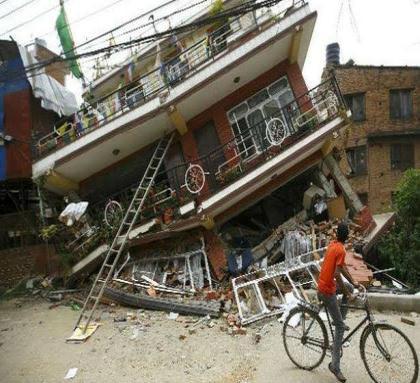
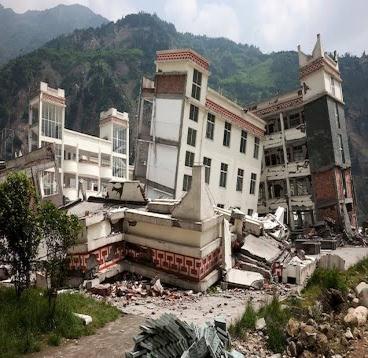
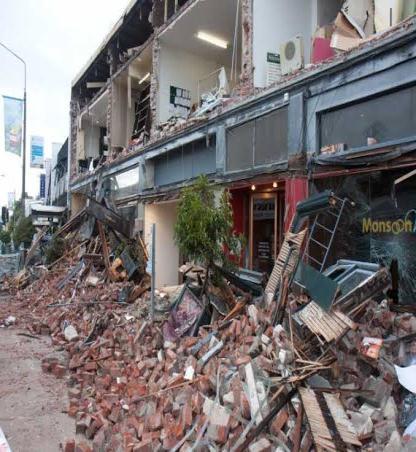
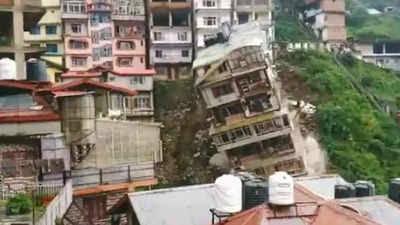
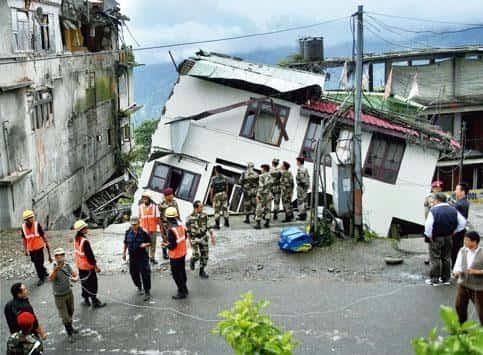
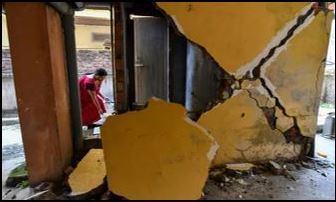
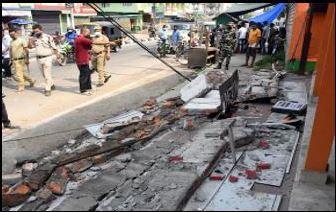
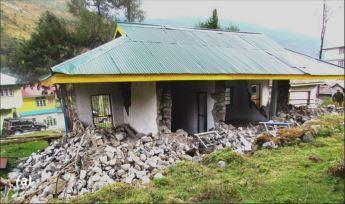
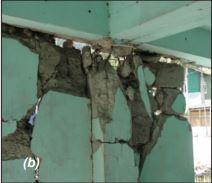
rangeforthissystemundertheinelasticrange.Itisalsointendedtoinvestigatetheeffectofincorporationofbi-directional interaction for both systems in terms of displacement of edge lateral load resisting elements for the satisfactory of this effectivenessincriticalphasethatshouldbeusefulforpracticalanddesignpurposesalsobelievedtobenewapproach.Besides ofelementaldeformation,theexteriorsectionofbuildinglikemasonrybrickwall,balconyandchajjaaremorevulnerablefor highstiffnessandlessstrengthshowinFig.4.Commonlybrickinfillwallbeacommonpartofabuildingwhereas,balconyand chajjaarenotsuitableelementforconstructinginhillyareasbuildingsclearlyshowinFig.4.Insteadoftemporarychajjacanbe usedcausesduetogroundexcitationthatactingontheexteriorsectionofstructureshighlyasperpreviousincidence The dimensionforchajjais0.6×0.6mand0.4×0.4mforbalconymaybeconsideredbyfieldsurvey Keepinmindthevulnerabilityof the structure, the mitigation technique being shown in this study, beam-column joint can be considered as a significant techniquebyobservefieldsurveywhichisshowninFig.1.Thetunedliquiddamper(TLD)canbeusedalongwithbeamcolumnjointforsafetyandresistthemaximumdeformationofloadresistingelementsofsloppygroundinhillyareas.For manyyears,researchershavebeenworkedwithTLD[12]thatobservedtocontrolthedynamicloads.So,ourobservationis notconsideredtobebeam-columnjointonly,parallellytheuseofTLDandbothcasesaccompanyingwithmasonrybrickinfill wall In that case, observation not only consider the interior section of structural elemental deformation but also the serviceabilityofexteriorsectionofstructuresthatdealaseriouschallengingissuealloverIndia
2. STRUCTURAL IDEALIZATION

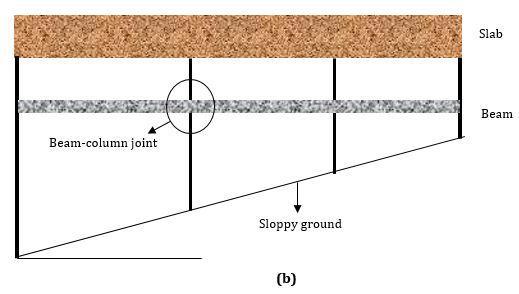
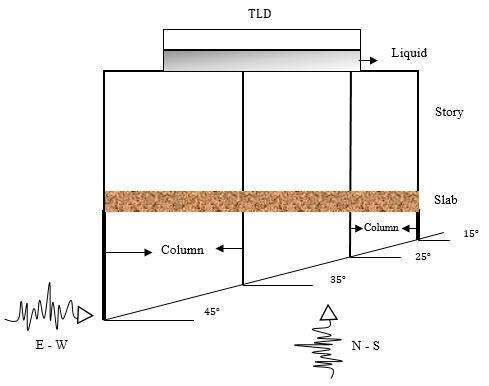
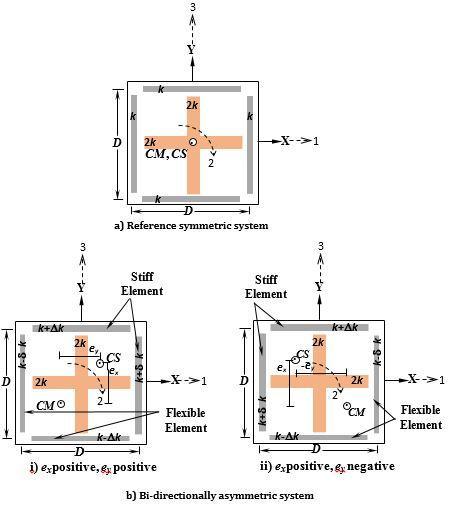
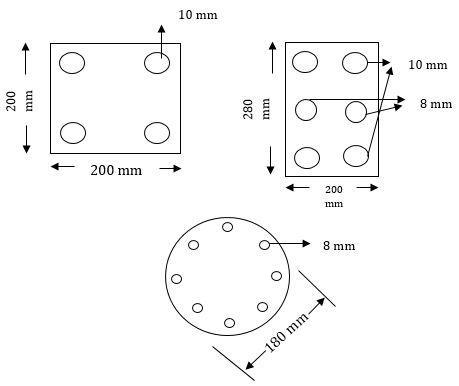
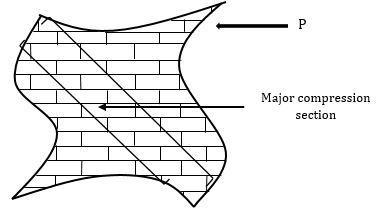
Inthisstudy,threetypicalidealizedsingle-storystructuresaredevelopedundertheslopinggroundterrainindifferentslope angleshowinFig.5,wherethecolumnsarefreefromeachothersituatedbelowthebasementslabshowinFig.5(a).Onthe otherhand,anothersystemisdevelopedwithbeam-columnjointshowinFig.5(b)withsameidealizationforassessingthe overallresponseforbothcasesandtheirserviceabilityduetogroundexcitation.Fig.5-(i)showsthepassivevibrationcontrol deviceconsistarigidsquareliquid(water)containerwhichisconnectedtothetop-midofthestructurethatreducestructural vibrationbysloshingofliquidinsidethetankconstructbybrickmasonry Allparametersareconsideredfrompastissue[12]. Theliquidsloshingcanmoveinacoupledhorizontalandrotationaldirection.Thelengthandwidthofsystemareconsidered 3m × 3m,alsothedepthofliquid0.5mandsloshingliquiddepth1matasectioninTLD.Therotationalmotionofliquidis specifiedbyθb.Therefore,thegoverningequationsareadoptedbypreviouscasestudy[12]toassessthereducingpercentage ofvibration.Ontheotherhand,themasonrywallcanwithstandconsiderablecompressivestressbutnotnearlytensilestress whensubjectedtoseismicloads.Inthatcase,masonrybrickinfillprovidesadditionalstiffnessappearingfromcompressive struteffect,asmentionedinFig.20(a) Causedbythelateraldeformationofthesimplerectangularpanelbyseismicload,the panelassumestheshapeofparallelogram,causingonediagonaltoexpandandtheothertoshorten.Theshortdiagonalswill carryacompressiveloadandbehavelikeacompressivestrutinthesamesense.Fig.20(b)representthedifferentshapeof columnssectionwithspecificdimensions.Thesimplifiedmodelevencanusedtoatleasttogrosslyunderstandtheseismic performanceininelasticregion.Inthisstudy,twodifferenttypeofidealizedstructuralsystemarerepresentednamely,(a) completelysymmetricsystem,(b)bi-directionallyasymmetricsystemwheretheeccentricityiscausedbythestiffnessand masseccentricityshowinFig.6.Thesamesix-elementsystemwasalsodevelopedbysomeresearchersinearlierstudies[4]. Generally,buildingstructureshaveloadresistingelementsscatteredovertheplanofbuilding.Acceptingthesameforthe purposeofanalysisanidealizedsystemofsixloadresistingelementshavebeenconsideredwithdetailsvariationofstiffness andmassdistribution,whereasmidtwoelementsareconsideredinonespecificelement Thesystemhasthreedegreesof freedomandcontemplate of a rigiddeck supported by threelateral load-resistingstructural elements in eachof the two translationsintwoorthogonaldirectionsandonerotational.
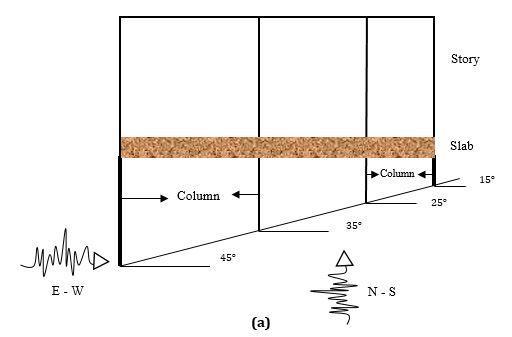
Theframesorwallshavingstrengthandstiffnessarerepresentedbythelateralload-resistingstructuralelementsintheir planesonly.Thedistributionofboththeorthogonaldirectionalisperfectlyaccountedforthereferencesymmetricsystemas showninFig.6(a),byassigningstiffnessis2ktothemiddleelementthatis50%ofthetotalstiffness4k,representthrough Element5.Theremaining50%isequallydistributedbetweentwoedgeelementsthuseachofthemhasstiffnessk,represent throughElement1(Flexible,Flexible),Element2(Flexible,Stiff),Element3(Stiff,Stiff)andElement4(Stiff,Flexible) Forthe referencesymmetricsystem,thelocationofthecenterofmass(CM)andthecenterofstiffness(CS)areinitiallythesame Contrastingly,forthereferenceasymmetricsystemasshowninFig 6(b),thelocationofthecenterofmass(CM)andcenterof stiffness(CS)reclineatthedifferenteccentriclocationtowardstheprincipalaxisofsystem.Thelateralload-resistingedge elementswithlessstiffnesswereconsideredlikeflexibleelementsandtheoppositeedgeelementshavinggreaterstiffness wererepresentedtoasstiffelements ThedistanceDissamebetweentwoextremelateralloadresistingelementsintwo orthogonaldirection.Thespecificbi-directionallyasymmetricsystemeccentricityisinitiatedbyincreasingthestiffnessofone edgeelementanddecreasingthatoftheelementattheoppositeedge.Insuchbi-directionallyasymmetricsystemsthestiffness eccentricitiesaresymbolizedbyexandeythatliesbetweenthedistanceofcenterofmass(CM)andcenterofstiffness(CS)with respecttoprincipalaxisofsystem.Distributionofstiffnessandmasseccentricconditionisbalancedforbotheccentricities’ex andeywiththepositivesensewhereCSliesinthefirstquadrantandCMliesinthirdquadrantasshowninFig.6(b-i).Another systemshowsthatthenegativeeccentricsensethatisexand-eywhereCSliesinthesecondquadrantoftheprincipalaxisofthe systemandCMliesinforthquadrantasshowninFig.6(b-ii) Thetwopossiblecasesforbi-directionallyeccentricsystemis taken depending on as also found in the previous literature that the combination of eccentricity ex and eccentricity ey in differentquadrantmayaltertheresultconsiderably[4].Thestiffnesseccentricsystemischosenasfewliteraturesinthis particularfieldhasonlyconsideredasymmetricsystemformasseccentricity[6].Suchthisstudygivesanideaaboutthenature ofeccentricitymakesanydifferenceornotinthebehavior.
3. METHODOLOGY
Thenon-linearequationofmotionshowineq.1.isnumericallysolvedintimedomainusingNewmark’sβ-γmethodandbythe bymodifiedNewton-Raphsontechniqueisusedforiteration.TheNewmark’sparametersarechosenasγ=0.5andβ=0.25[4, 5,6].TheresultsarecomputedwithvarioussizesoftimestepgivenbyTx/N,whereTxistheuncoupledlateralperiodandNis anintegernumberwhichisgraduallyincreasedbydoublingittoobtaintheresultswithbetteraccuracy.Forthispurpose,we consideredtimestepofTx/400forappropriatedeterminationofvalues[4,5,6].SeismosignalV.5.1.0–Acomputerprogram thatconstitutesaneasyandefficientwayforsignalprocessingofstrong-motiondata[online];2018,ed:availablefromURL: (http://www.seismosoft.com)andbythebyaddedtheessentialparametersthatismomentmagnitude,closestsite-to-faultrapture distance, shear wave velocity, mean time period [4] Using this essential software investigating the ultimate characteristicofgroundaccelerationmotioncapacitythathasbeenactedonthestructuralmembers.Where,ristheradiusof gyrationofmassofrigiddeck;cisthedampingmatrix;ux,uy,θarethetranslationsofCMalongthexandyaxisandrotationof CM is horizontal plane respectively and ügx and ügy are ground accelerations along two perpendicular principal axes respectively Forsymmetricsystemtheuncoupledtorsionaleffectisnegligible.
4. GROUND MOTION
Forthesingle-storystructuralmodelanenhancednonlineardynamicanalysishasbeenusedwhichiscapabletocapture progressiveseismicdamageofstructuresunderinelasticrange.Asscalednear-fault(NF)groundmotionsareconsideredfrom PacificEarthquakeEngineeringResearch(http://peer.berkeley.edu)Centerfortheperformanceanalysis.Thegroundmotionis generatedonastructuralsystemlikeavectorformation,oftenorientedinnorth-south(N-S)andeast-west(E-W)directions whereas the strong motion database for horizontal components of motions are generally available along orientations of recordingwhichareoftenarbitrary.Thisrecordedcomponentisappliedalongtwoprincipalaxesofthestructure.Thus,itis oftendeducedthatthearbitrarilyplacedrecordingsensorsarealignedwiththeprincipalaxesofstructure.Inthisway,overall structuralresponseoftheSDOFsystemisestimatedsubjectedtobi-directionalNFsyntheticgroundmotionhistoryunderhilly areasinIndia Thecasestudiesinthispaperareinvestigatedforasetoffifteenbi-directionalsyntheticgroundmotionsto resistanyvariabilityarisingsubjectedtotheparticularcharacteristicofanyspecificgroundmotion[4,6,8] Detailsofthe groundmotionsareshowninTable1.Selectedgroundmotionsintermsofgeophysicalparameters,viz.,magnitude-distancesoilconditionstriads.Motionsarescaledappropriatelytointroduceauniformlevelofinelasticaction.Foreachcomponentofa motion,thisscalefactorisdecidedobservingthespectralaccelerationofeachoriginalrecordcomponentatthefundamental periodofvibrationofelementinrelationtotheelementcapacity.Scalefactorsoftwocomponentsofarecordsocomputedare comparedandtheaveragefactorisappliedtothecomponents.Thepeakgroundacceleration(PGA)valuesaredependson aboutthemomentmagnitude(Mw),closestsite-to-fault-rupturedistance(r),shearwavevelocity(Vs30)andmeantime(Tm)[46] Allrecodedparametersareconsideredinajustifiedrange.
5. SYSTEM PARAMETERS
The variation of maximum displacement response may be influenced by several system parameters as well as loading considerationsforvaluableconclusions.Theseprimarilyconsiderabletwodynamiccontrolparametersnamelythelateral naturalperiod(Tx)andtheuncoupledtorsional-to-lateralperiodratio(τ).Thislateralperiods(Tx)consideredforsymmetric
systemis0.25sec,0.5sec,1.0secand2.0secinshort,mediumandlongperiodrangesandforasymmetry0.25secand0.5sec areconsideredinshorttolongperiodrangesrespectively.Ontheotherhand,formostrealbuildings,thevaluesofuncoupled torsional-to-lateralperiodratio(τ)arevariedwithintherangeof0.25-2.0withanintervalof0.05with5%dampingalsoused inpreviousresearch[4,6,8].Influencethetorsionaleffectforasymmetricsystemeccentricityisimportantcriteriatoobserve thecriticalresponseofstructuralelementswithrespectonτ.Further,thepresentstudyattemptstoincorporatetheanalysisof
thebi-directionalasymmetricsystemintoafeasiblerangeofeccentricvariation.Inthiscasestudy,thethreetypicaleccentric parametersofthissystemareclassifiedintermsofsmall,intermediateandlargeeccentricsystemsasrepresentedase/D= 0.05,0.1and0.2usedinpreviousliterature[4-7].Hence,sixcombinationsofeccentricityareconsideredalongtwoprincipal directionsinthispaper,aslistedinTable2. Asymmetricsystemswithstiffnessandmasseccentricitiesareconsideredinthis presentstudy AllparametersrelatedtoTLDareconsideredfrompreviousliterature[12]andothersinpracticalobservation
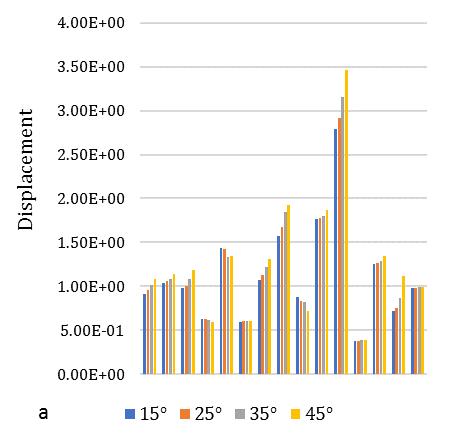
Table 2: Combinationsofeccentricityconsideredalongtwoprincipaldirections(Note: ex andey areeccentricityinxand y-axisrespectively)
6. RESULTS AND DISCUSSION
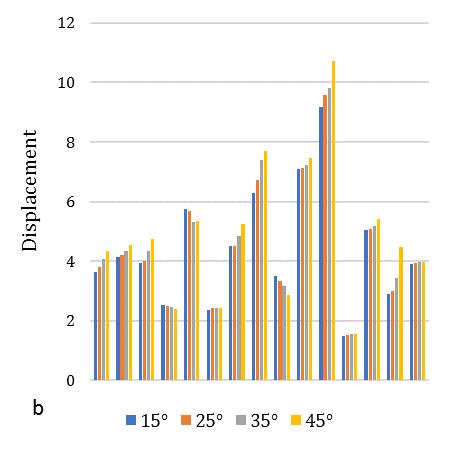
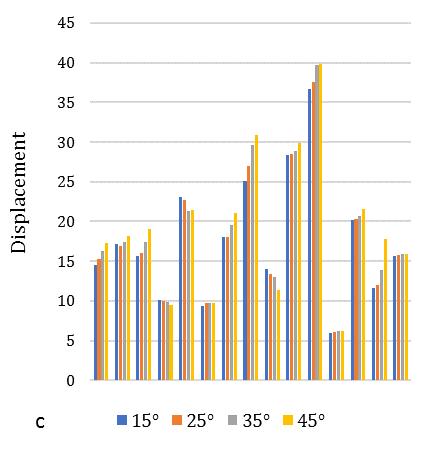
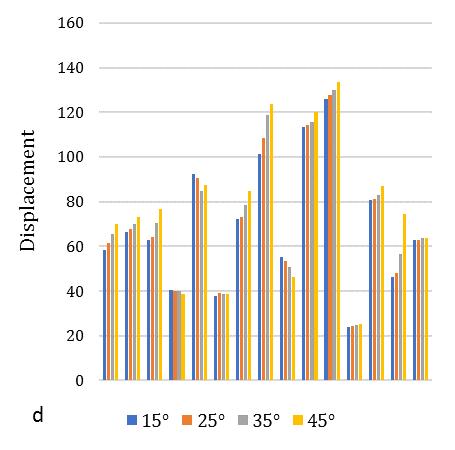
Thenonlineardynamicanalysisofsingle-storystructuralsystemthroughmeanelementdisplacementundercriticalinelastic senseforvariousangleofslopes(15°,25°,35°and45°)arepresentedwithplottingasrepresentativeofthetrendwiththetime variationliesbetweensmalltolargelateralperiods(T)thatis0.25secto2.0secforsymmetricsystem.Fig.7showsthemean displacementresponseforsymmetricsystembynonlineardynamicanalysis.Fig.7(a)indicatestheamplificationinmean responseforsymmetricconfigurationmaybe113,1.16,1.20and1.27timesforsloppygroundterrain15°,25°,35°and45°at lateraltime0.25sec.Fig.7(b)indicatestheamplificationinmeanresponseforsymmetricsystemmaybe4.4,4.5,4.6and4.9 timesforsloppygroundterrain15°,25°,35°and45°atlateralperiod0.5sec.Fig.7(c)indicatestheamplificationinmean responseforsymmetricsystemmaybe17.7,18,19and19.4timesforsloppygroundterrain15°,25°,35°and45°atlateral period1.0sec.Finally,Fig.7(d)indicatestheamplificationinmeanresponseforsymmetricsystemmaybe69,70,73and76 timesforsloppygroundterrain15°,25°,35°and45°atlateralperiod2.0sec. Fig.7(a-d)clearlyshowsthatastheinclination angleofthesloppy ground increases,the elemental deformationofthesymmetric system with respect to lateral periods increasesdueto15NFgroundexcitation,considering5%dampingandductilityreductionfactor(Rμ)=1

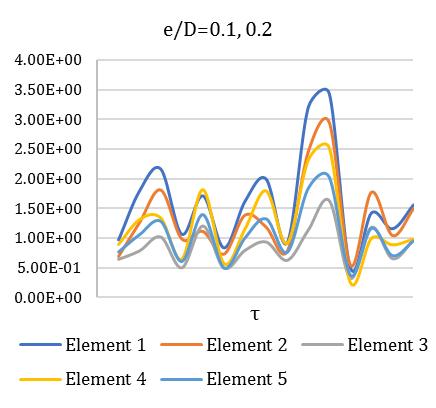
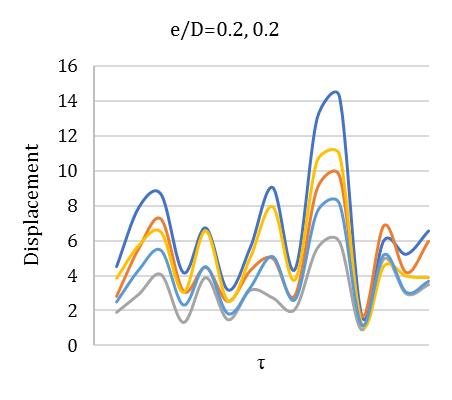
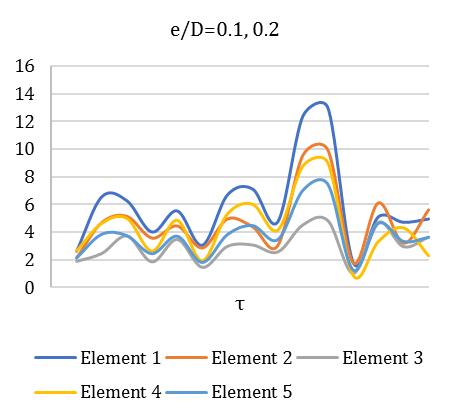
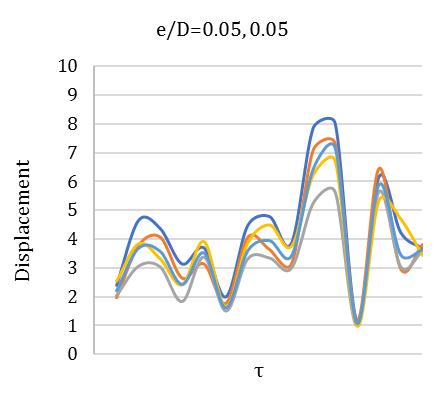
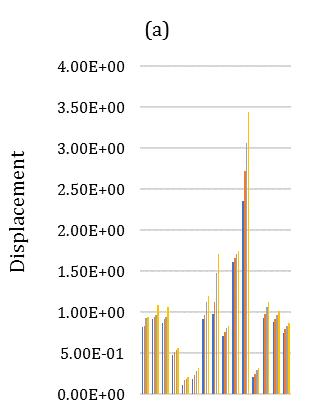
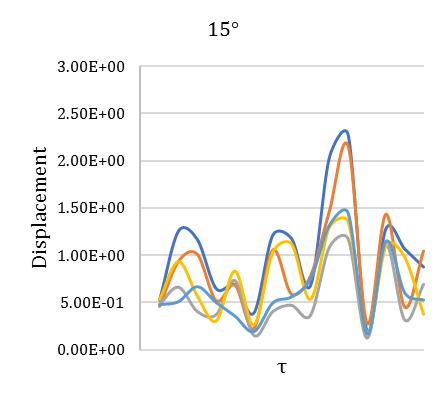
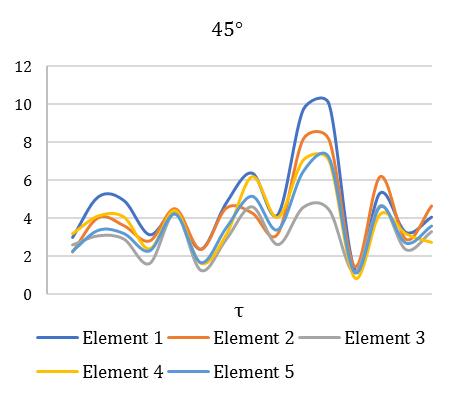
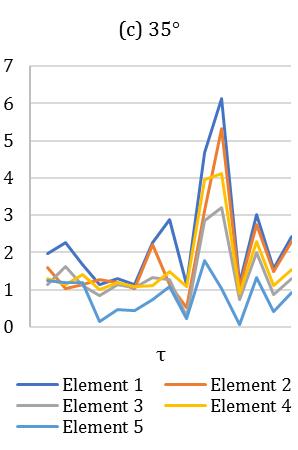
Influenceofgroundmotioncharacteristicsonthenonlineardynamicanalysis,theresponseofsymmetricstructuralsystemis systematicallyexaminedtoachieveafairinsightintothebehaviorofsuchsystems.Ontheotherscenario,asymmetricstructure isalsoaseriousissuefornonlineardynamicbehaviourowingtogroundmotion.Inthiscase,Fig.8-15indicatestheoverall seismicresponsewithsmall,intermediateandlargeeccentricconditionfordifferentangleofslopeslike15°,25°,35°and 45°duetolateraltotorsionaltimeratio(τ)andalsoconsiderthelateralperiods0.25secand0.5sec.Inthiscase,midtwo elementsofstructureareconsideredasone(Element5)and5%dampingischosenwithRμ=1. The mean ofnormalized responsearecomputedandpresentedforcornerelementsaremorevulnerableduetolateralandtorsionalcouplingeffectin asymmetricstructure.ThesecornerfourelementsElement1isflexiblealongbothprincipaldirectionsanddesignatedas “flexible,flexible”.Element2andElement4arecombinedasflexibleandstifffordifferentprincipalaxis,designatedas“flexible, stiff”and“stiff,flexible”respectively.Element3isstiffalongbothprincipaldirectionandfinallydesignatedas“stiff,stiff”.The responseofallcornerelementsaredevelopedforphysicalunderstandingduetobi-directionalsystemofasymmetry.Fig.8-15 has six sets of graphs shows the mean of response for a different combination of bi-directional eccentric system. The amplificationinresponseforasymmetricconfigarationconsideringlateralperiod0.25secat15°sloppygroundshowinFig.8, the1stElementmeanmaximumdeformationlies1.7timesandminimum0.8timesfor3rdElement.Inthatcase,Element2and Element4carriesthealmostsameresponsethatliesbetween1.27to1.34timesduetotorsionaleffect.
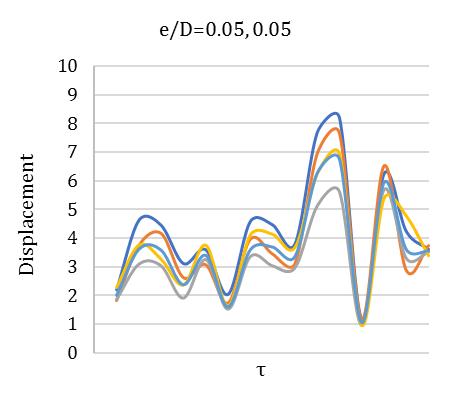
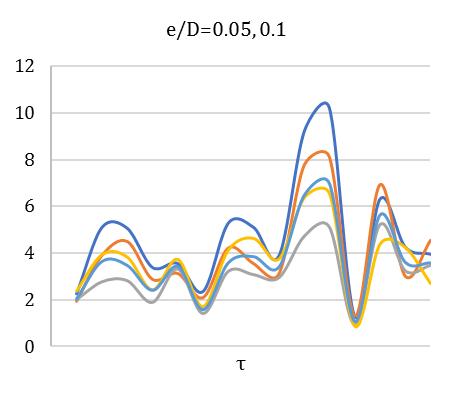
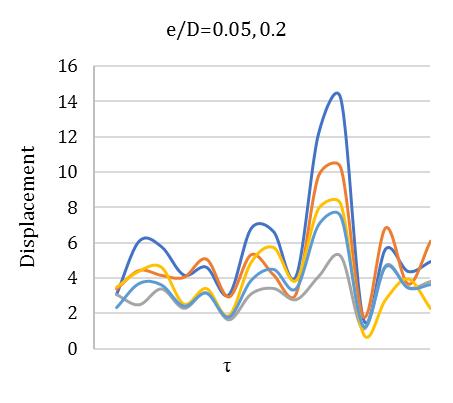
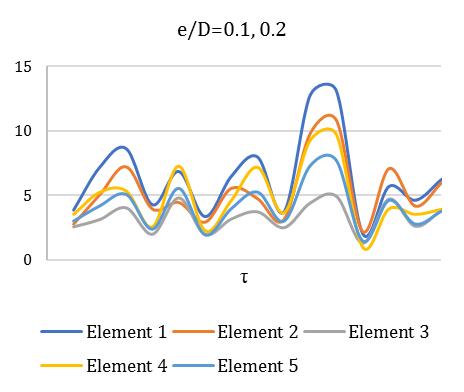
Consideringlateralperiod0.25secat25°sloppygroundshowinFig.9,the1stElementmeanmaximumdeformationlies1.72 timesandminimum0.86timesfor3rd Element.Inthatcase,Element2andElement4carriesthealmostsameresponsethat liesbetween1.29to1.38timesduetotorsionaleffect.Also,forlateralperiod0.25secat35°sloppygroundshowinFig.10,the 1st Elementmeanmaximumdeformationlies1.8timesandminimum0.85timesfor3rd Element.Inthatcase,Element2and Element4carriesnearaboutsameinelasticresponsethatliesbetween1.31to1.43timesduetobi-directionalasymmetry.
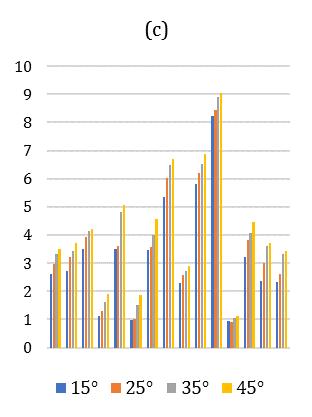
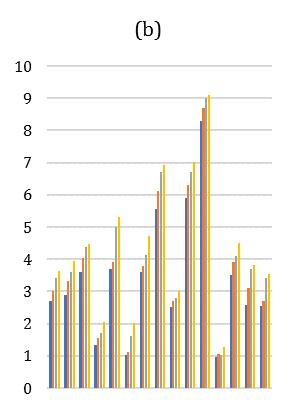
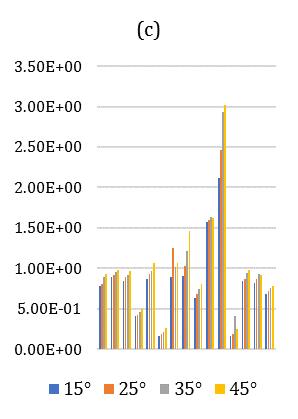
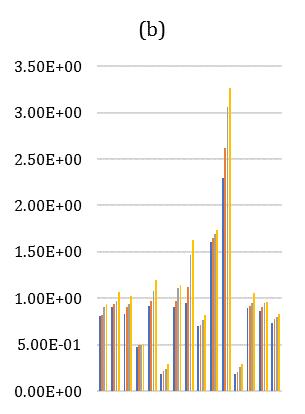
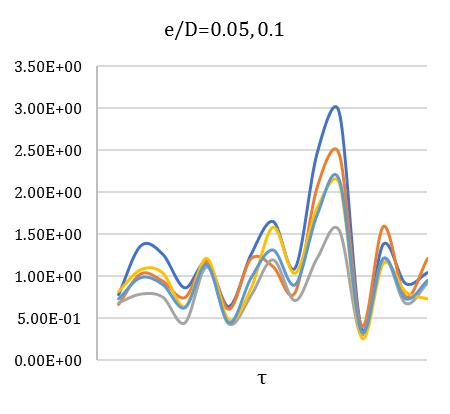
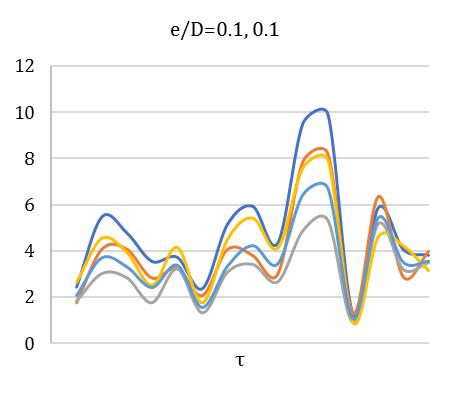
Consideringlateralperiod0.25secat45°sloppygroundshowinFig.11,the1stElementmeanmaximumdeformationlies1.82 timesandminimum0.9timesfor3rdElement.Inthatcase,Element2andElement4carriesthesameaverageinelasticdemand that lies between 1.35 to 1.5 times due to torsional effect. Furthermore, the amplification in response for asymmetric configarationconsideringlateralperiod0.5secat15°sloppygroundclearlyshowinFig.12,the1st Elementmeanmaximum deformationlies6.7timesandminimum3.0timesfor3rd Element.Inthatcase,Element2andElement4carriesthealmost
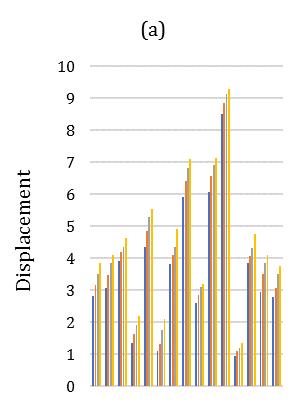
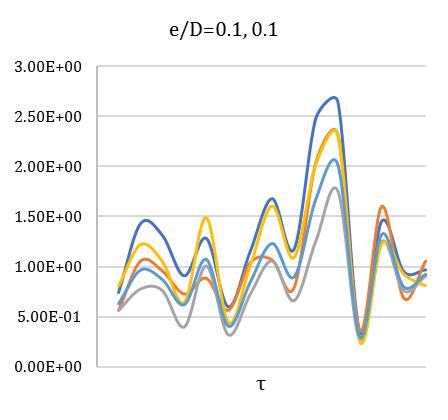
sameresponsethatliesbetween5.0to5.3timesduetotorsionaleffect.Consideringlateralperiod0.5secat25°sloppyground showinFig.13,the1st Elementmeanmaximumdeformationlies6.81timesandminimum3.0timesfor3rd Element.
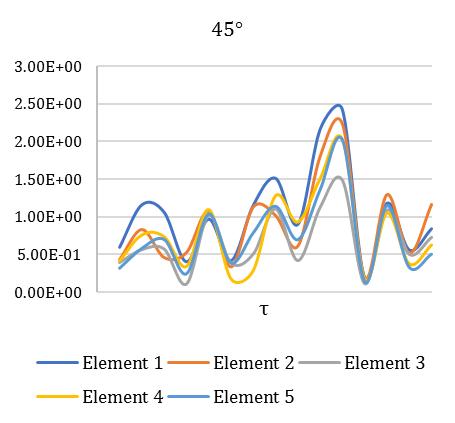
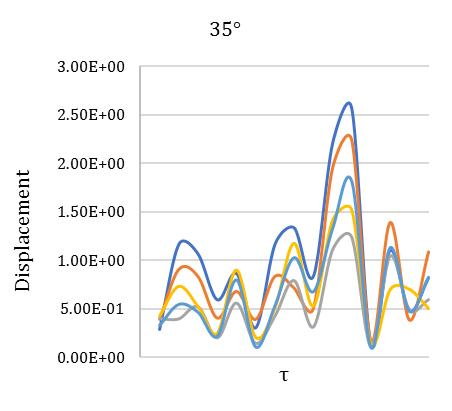
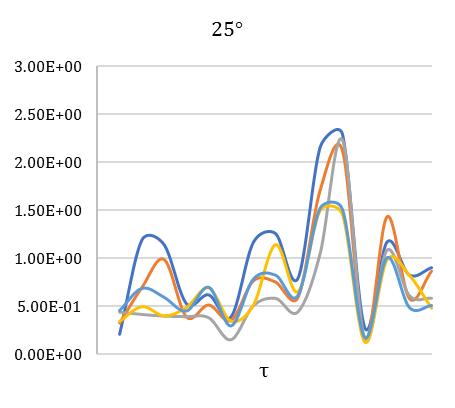
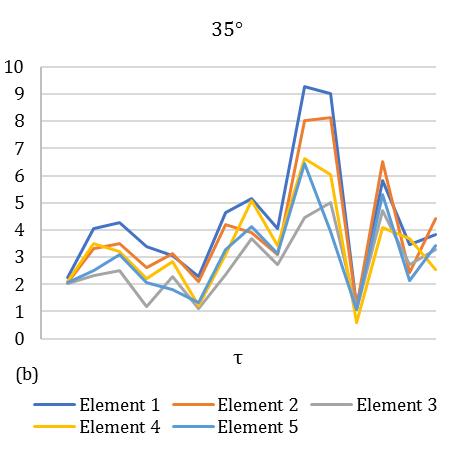
Inthatcase,Element2andElement4carriesthealmostsameinelasticresponsethatliesbetween5.14to5.5timesdueto torsionaleffect.Takingintoconsideration,lateralperiod0.5secat35°sloppygroundshowinFig.14,the1st Elementmean maximumdeformationlies7.0timesandminimum3.14timesfor3rdElement.Inthatcase,Element2andElement4carriesthe averageinelasticdemandthatliesbetween5.2to5.7times.Consideringlateralperiod0.5secat45°sloppygroundshowinFig. 15,the1stElementmeanmaximumdeformationlies7.2timesandminimum3.5timesfor3rdElement.Inthatcase,Element2 andElement4carriesthenearaboutsameinelasticdemandthatliesbetween5.3to5.9times.Inthiscase,withincreasingthe angleofslopes,theresponseofElement2andElement4arequicklydeferred Inthiscontext,itisneededtoobservefrom15 earthquakedatathatisplottedfortwodifferentextremecombinationsofeccentricitiesalongXandYdirections.However,in thispoint,theobservationforinelasticseismicdemandofRCasymmetricsysteminsmalltolargecombinationofdifferent eccentricconditionsthatassembleaneffectivescenarioinhillyareasforsuitability.Furthermore,itisalsoimportantcriteria thattoobservetheserviceabilityofsuchsystemsduetocriticalorientationofearthsurfacebesidesofseismicresponse.Inthis content, the column section of structures for both cases are joined using simple beam concept to reduce the elemental
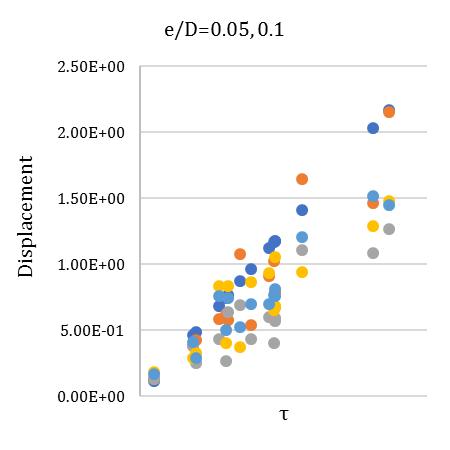
deformationwithstandarddepth.Fig.16representthemeandisplacementdemandofsymmetricsystemfordifferentcolumn layout within beam-column joint. In this case, it is clearly showing that the mean displacement response for rectangular column-beamjointlies0.85timesfor15°,0.92timesfor25°,1.1timesfor35°and1.24timesfor45°atT=0.25secFig.16(a). Also,forsquarecolumn-beamjointlies0.81timesfor15°,0.9timesfor25°,1.0timesfor35°and1.1timesfor45°atT=0.25sec Fig.16(b).Finally,forcircularcolumn-beamjointlies0.8timesfor15°,0.89timesfor25°,0.9timesfor35°and1.0timesfor 45°atT=0.25secFig.16(c).Ontheotherhand,Fig.20(b)representthedifferentshapeofcolumnswithstandarddimensions thatmightbeusedinhillyareasforSDOFsystem.ConsideringT=0.5sec,meandisplacementresponseforrectangularcolumnbeamjointlies3.6timesfor15°,3.9timesfor25°,4.2timesfor35°and4.5timesfor45°showinFig.17(a).Also,forsquare column-beamjointlies3.4timesfor15°,3.7timesfor25°,4.1timesfor35°and4.4timesfor45°atT=0.5secFig.17(b).Finally, forcircularcolumn-beamjointlies3.2timesfor15°,3.5timesfor25°,3.9timesfor35°and4.2timesfor45°showinFig.17(c) rivaltoFig.16.Consideringcircularcolumntocircularcolumnjointinlateralperiod0.25secforasymmetricsystemwhere,e/D =0.05,0.1,themeandisplacementresponseofsuchsystemclearlyshowsinFig.18.InFig.18atangleofslope15°,the1st Elementmeanmaximumdeformationlies1.0timesandminimum0.57timesfor3rd Element.Inthatcase, Element2and Element4carriesthesameaverageinelasticdemandthatliesbetween0.88to0.8timesduetotorsionaleffect.InFig.18at angleofslope25°,the1st Elementmeanmaximumdeformationlies1.0timesandminimum0.63timesfor3rd Element.
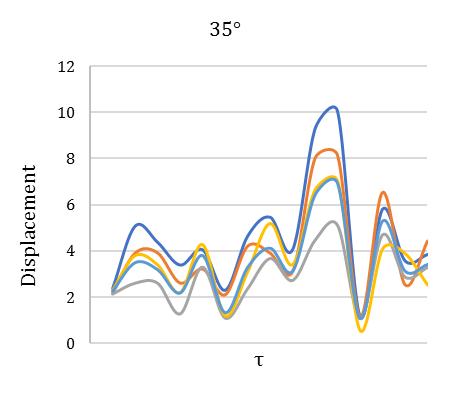
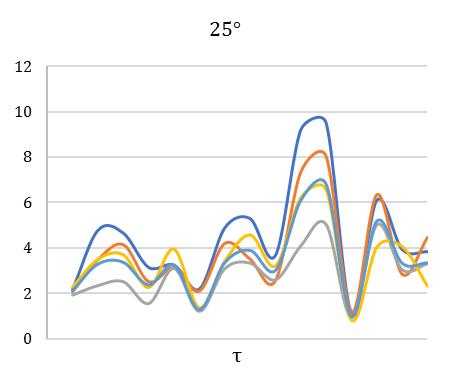
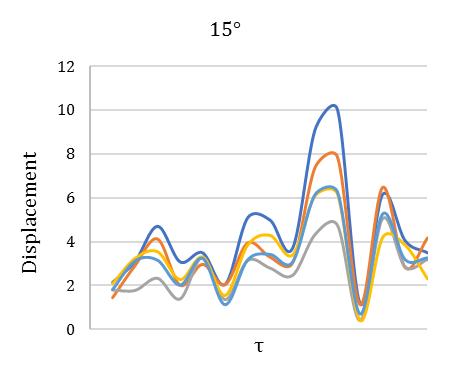
Inthatcase,Element2andElement4carriesnearaboutthesameaverageinelasticdemandthatliesbetween0.8to0.7times duetotorsionaleffect.InFig.18atangleofslope35°,the1stElementmeanmaximumdeformationlies1.0timesandminimum 0.6timesfor3rdElement.Inthatcase,Element2andElement4carriesthesameaverageinelasticdemandthatliesbetween0.9 to0.7timesduetotorsionaleffect.InFig.18atangleofslope45°,the1stElementmeanmaximumdeformationlies1.1times andminimum0.7 times for 3rd Element.In thatcase,Element 2and Element 4carriesalmost the sameaverage inelastic demandthatliesbetween0.9to0.8times.InFig.19atangleofslope15°forlateraltime0.5sec,the1stElementmeanmaximum deformationlies4.4timesandminimum2.7timesfor3rd Element.Inthatcase,Element2andElement4carriesthesame averageinelasticdemandthatliesbetween3.7to3.4timesduetotorsionaleffectfore/D=0.05,0.1.InFig.19atangleofslope 25°,the1stElementmeanmaximumdeformationlies4.5timesandminimum2.9timesfor3rdElement.Inthatcase,Element2 andElement4carriesnearaboutthesameaverageinelasticdemandthatliesbetween3.9to3.5timesduetotorsionaleffect. InFig.19atangleofslope35°,the1st Elementmeanmaximumdeformationlies 4.6timesandminimum2.9timesfor3rd Element.Element2andElement4carriesthesameaverageinelasticdemandthatliesbetween4.0to3.6times.Finally,inFig.
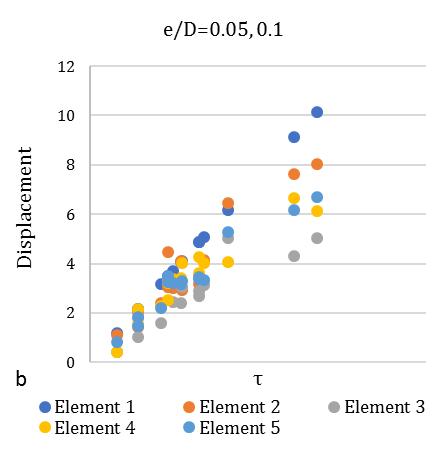
19atangleofslope45°,the1stElementmeanmaximumdeformationlies4.8timesandminimum3.1timesfor3rdElement.In thatcase,Element2andElement4carriesalmostthesameaverageinelasticdemandthatliesbetween4.2to3.9timesdueto torsional effect that rival to Fig. 18. Effect of masonry infill is another important issue throughout the globe. Reinforced concreteframeswithmasonrybrickinfillwallsareoneofthemostcommontypesofconstructioninrecentpast.
Abrickwallcancounteractconsiderablecompressivestressbutverylessamountoftensilestress.Thewallprovidesadditional stiffness rising from compressive strut effect show in Fig. 20(a) due to bi-directional excitation. Owing to the lateral deformationofacriticalrectangularpanelcausedbyseismicexcitation,thepaneltendstoachievetheshapeofaparallelogram causingelongationofonedirectionandshorteningofother.Theshorteneddiagonalwillconveyacompressiveloadandbehave likea compressivestrutintheidentical perception.Several researchershaveproposeddifferentmodellingtechniquesto estimatetheresponseofthemasonrybrickinfillpanelsofRCframesontheirseriousobservation[9-11].However,inthe
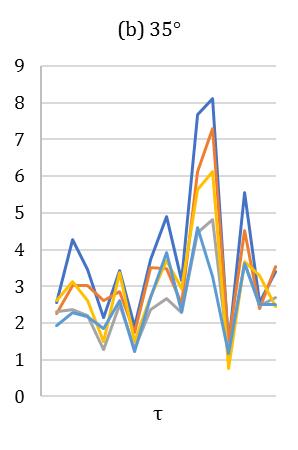
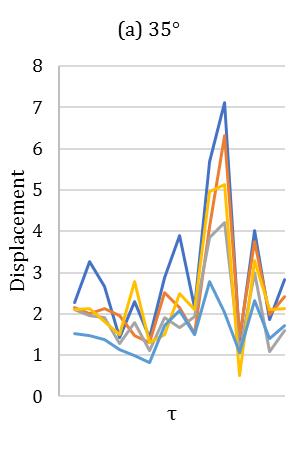
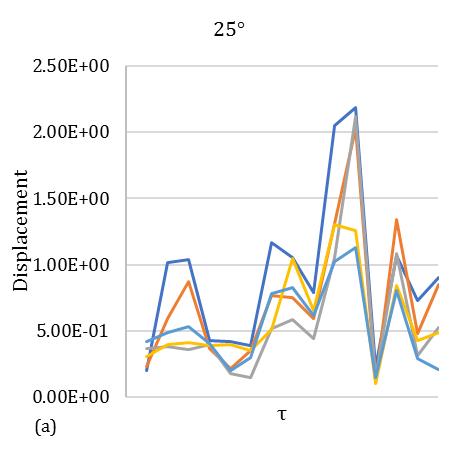
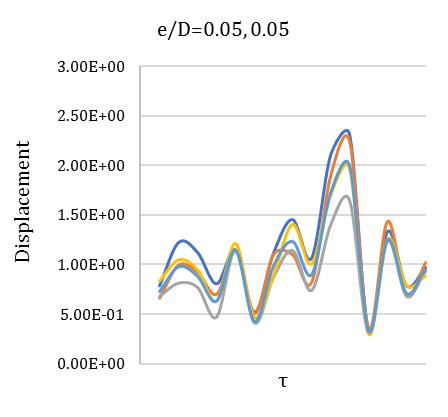
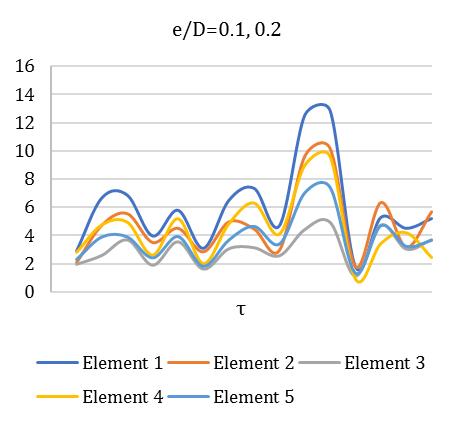
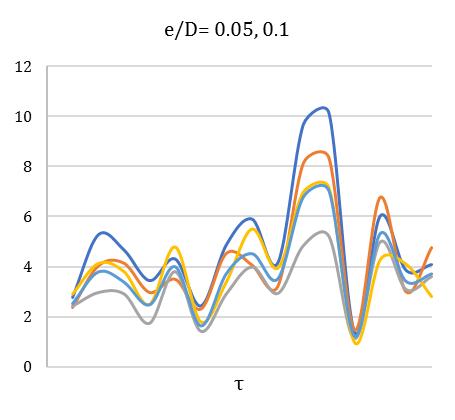
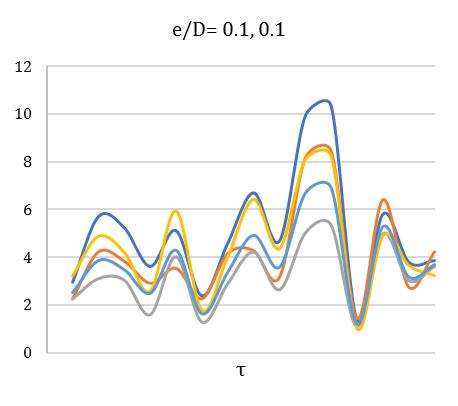
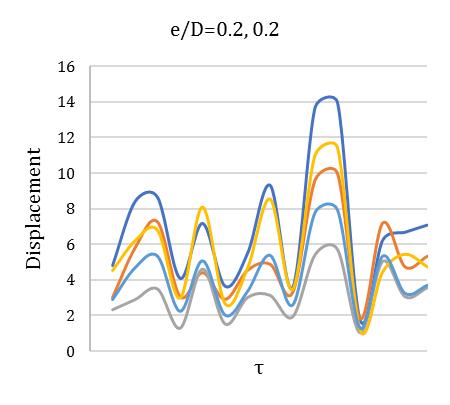
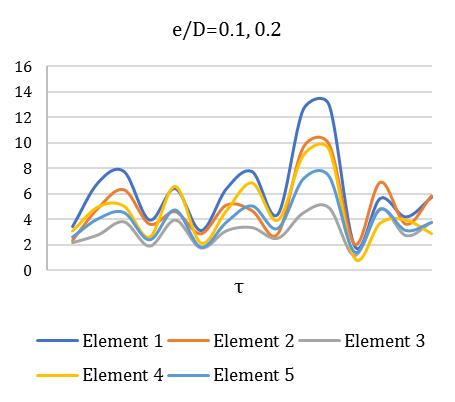
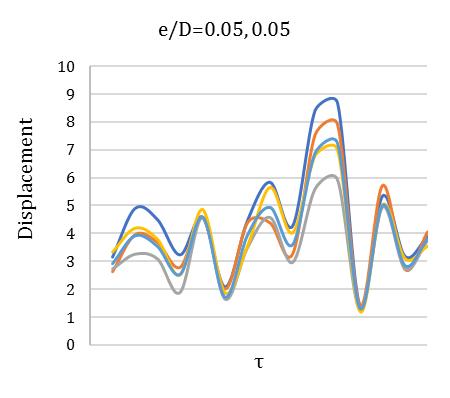
presentresearchisadoptedanequivalentcompressiondiagonalstrutmodelshowinFig.20forvariousangleofslopeinhilly areasthatincorporatetheeffectofmasonrybrickinfillintheirfundamentalperiodduetogroundmotion.Fig.8representthe responseofloadresistingelementswithsinglepanelbrickmasonrywall.Keepinginmindthedamageofthestructure,the brick wall is adopted in double layer panel in 254mm for serviceability from ground motion. Fig. 21 represent the mean displacementresponseofasymmetricstructuralsystemfordoublelayerbrickinfillwallpanelatlateralperiod0.25secFig. 21(a)andlateralperiod0.5secFig.21(b)fore/D=0.05,0.1andinitially15°sloppygroundrespectively.Fig.21(a)showsthe 1stElementmeanmaximumdeformationlies1.0timesand0.6timesfor3rdElement.Element2andElement4carriesalmost same response that lies between 0.9 to 0.7 times that also a rival to Fig. 8. Also, Element 1 show the mean maximum deformationthatlies4.5timesand2.8timesfor3rd Element.Element2andElement4carriesnearaboutthesameresponse thatliesbetween3.8to3.4timesduetotorsionaleffectshowinFig.21(b),rivaltoFig.21(a)andFig.12respectively.Fig.22 representthemeandisplacementresponseofSDOFsystemonlyusingthevibrationcontroltunedliquiddamper(TLD)for T=0.25secat25°angleofslopeandT=0.5secat35°wheree/D=0.05,0.1forbothcases.
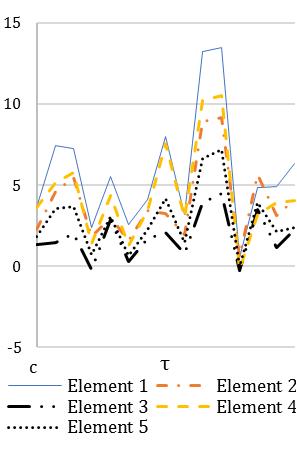
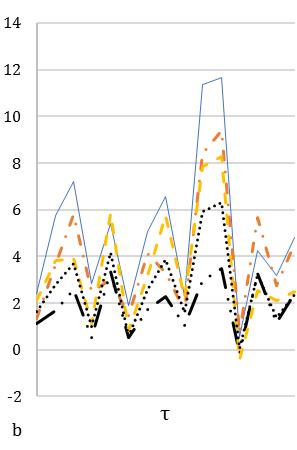

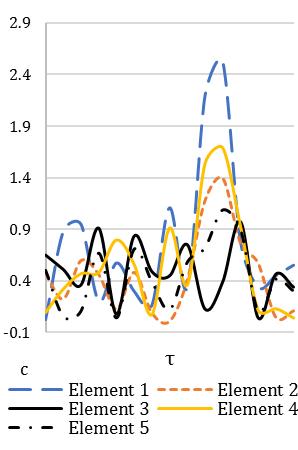
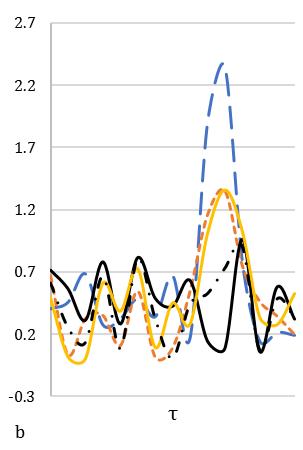
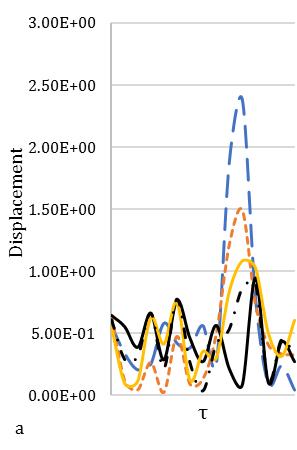
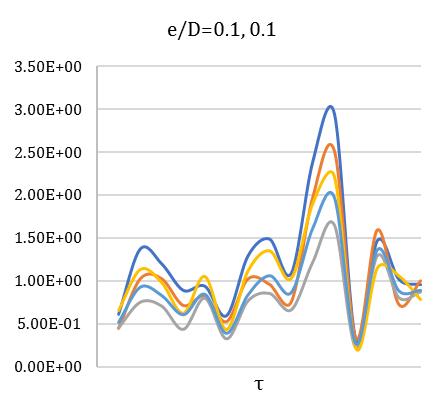
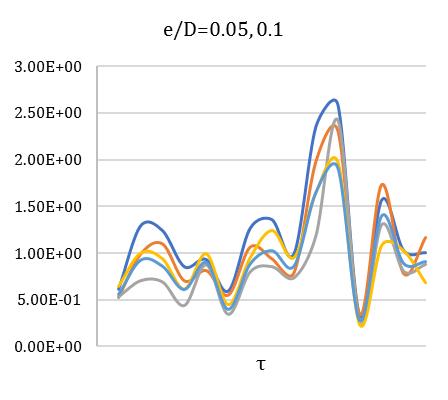
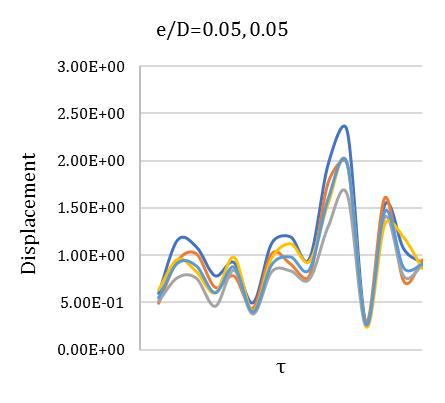
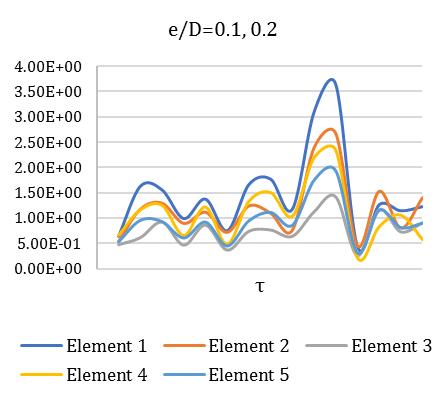
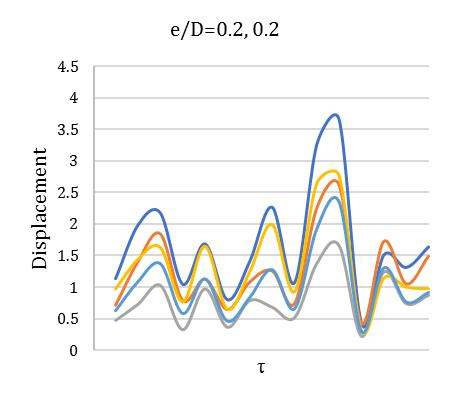
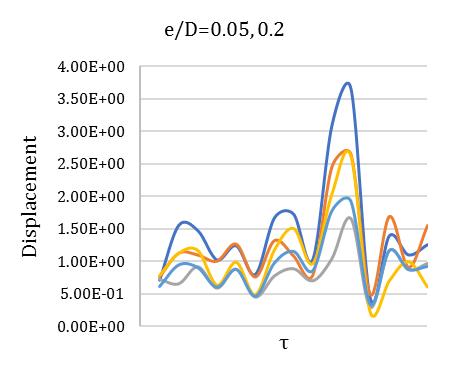
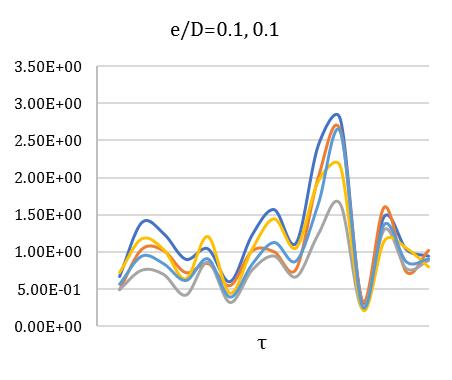
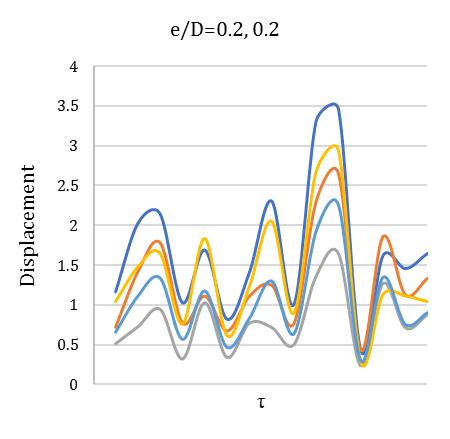
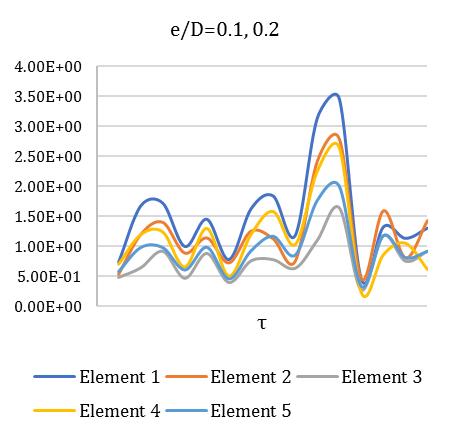
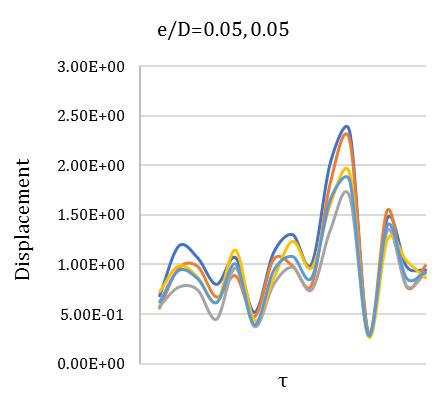
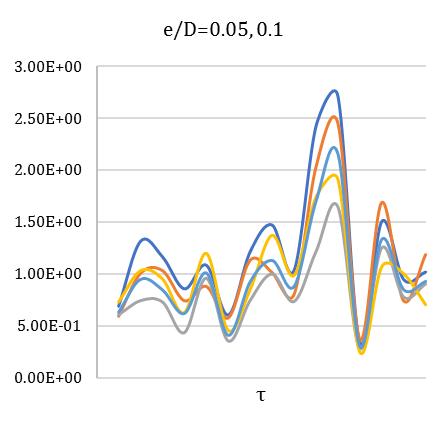
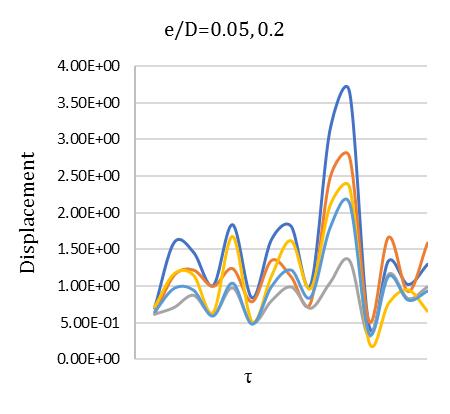
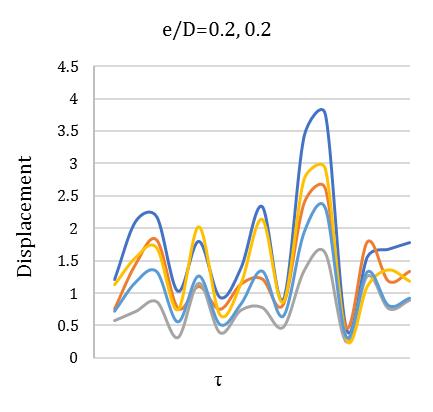
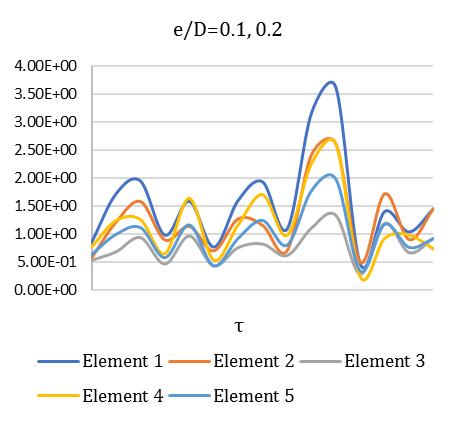
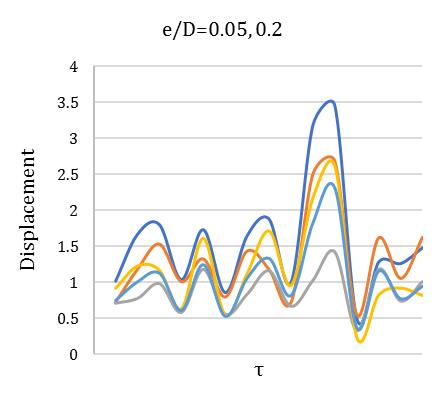
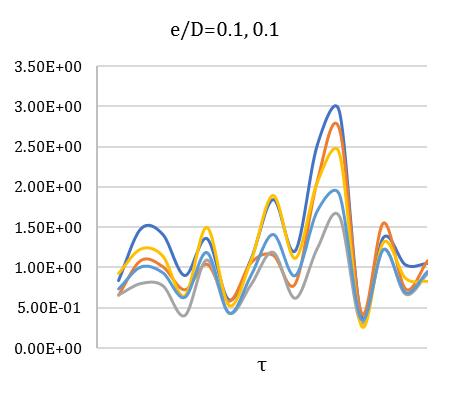
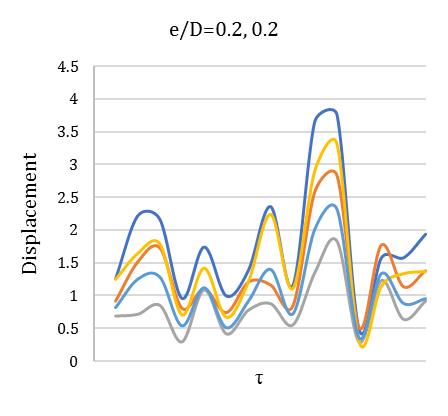
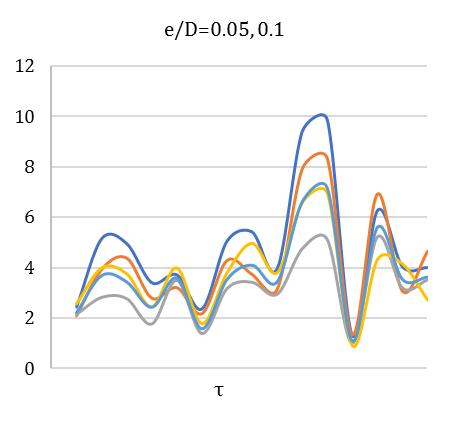
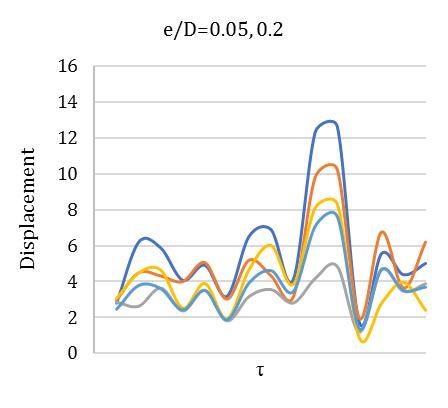
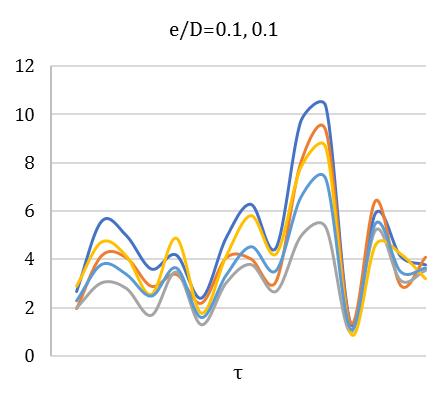
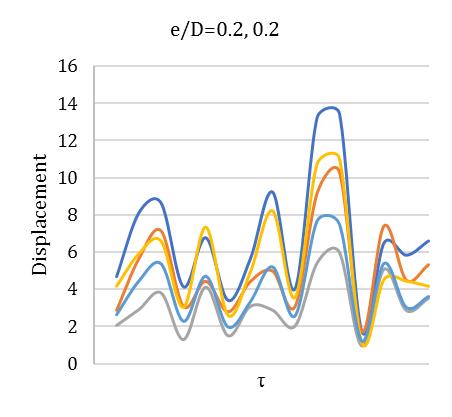
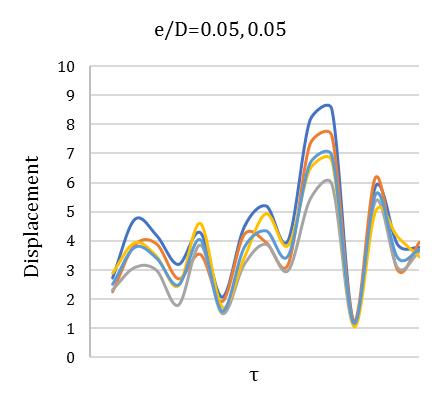
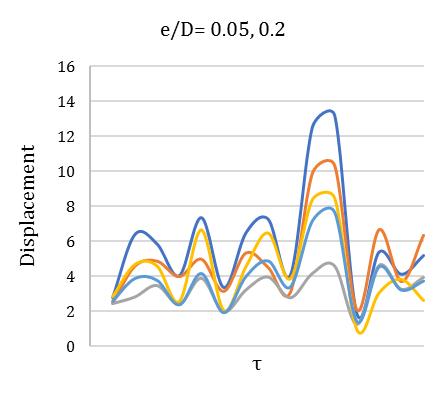
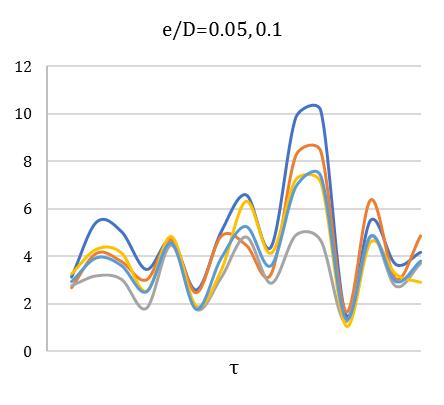
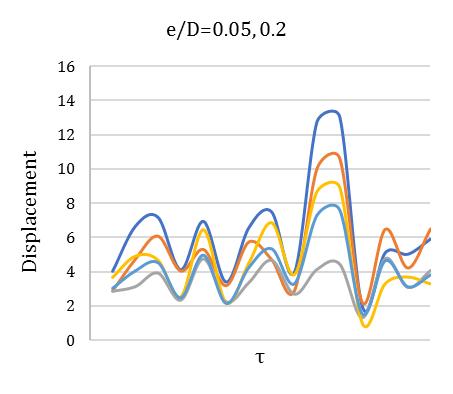
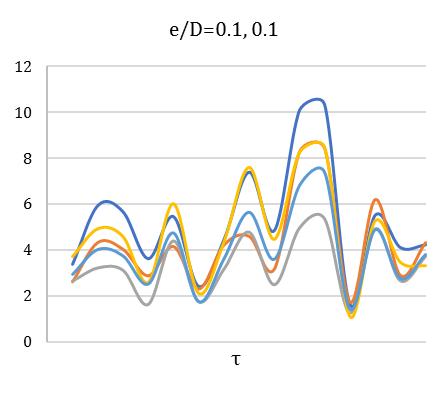
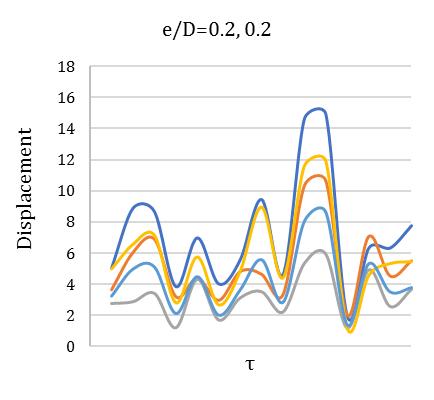
Fig.22showstheminimumdeformationresponseofloadresistingelementsthanFig.9andFig.14thatdealsaverageinelastic demandwith2.3timesand9.2timesforflexibleelementmajorlyowingtotorsionaleffectrespectively.Fig.23representsthe meandisplacementresponseofSDOFsystemforbothconditionusingbeam-columnjointandTLDatlateralperiod0.5sec, wheretheeccentricconditionconsiderede/D=0.05,0.1.Inthisplotting,differentcolumnlikesquare,rectangularandcircular arechosenwith TLDat35°sloppyangle.Itisclearlyshownthatthe elemental deformationcontrolledbyusing theboth conditionthatliesforsquarecolumn7.1times,rectangularcolumn8.2timesandforcircularcolumn6.1timesrespectively subjectedtobi-directionalgroundmotionexcitation.Fig.24representsthemeandisplacementresponseofasymmetricsystem usingbothbeam-columnjointandTLDat35°forT=0.25sec,wheree/D=0.05,0.2,e/D=0.1,0.2ande/D=0.2,0.2;clearlyshown thattheelementaldeformationcontrolledbyusingbothbeam-columnjointandTLDthatdecreasebetween1.2-1.35timesthan actualcondition.Fig.25representsthemeandisplacementresponseofasymmetricsystemusingbothbeam-columnjointand TLD at 45° for T=0.5sec, where e/D=0.1, 0.1, e/D=0.1, 0.2, e/D=0.2, 0.2; clearly shown that the elemental deformation controlledbyusingbothbeam-columnjointandTLDthatdecreasebetween1.4-1.5timesthanactualcondition.Allplottingis clearlyshownwithrespectthesystemparametersbasedonindividualconditions.
7. CONCLUSIONS
Theemphasisinthispaperistostudytheinelasticseismicperformanceofasingle-storyRCsymmetricandasymmetricmodel planstructureswithvariousangleofslopesinhillyareasinIndiaowingtobi-directionalgroundexcitationandalsomajorland slide.Theresultsarealsoindicatedtheperformanceevaluationwithdifferentcolumnsectionsandthebrickinfillcapacityof asymmetricsystemforbetterunderstandingtheserviceabilityofloadresistingelementsandbythebymoderntechniqueTLD forcontrollingthemajorvibration.Thefollowingbroadconclusionsemerge.
1. Considerationofsymmetricconfigurationeffectisowingtosimultaneousbi-directionalshakingmayproducethe inelasticdemand.Theresultanalysisimpliesforbothcasesamplifiestheresponseconsiderably.Forseismicsafety measurement, the vulnerability resistance of symmetric structure in the inelastic range of sloppy ground lies between10°to25°,whereasabove25°tocreateelementaldeformation.Butinhillyareassloppygrounddoesn’t dependinanycircumference,sosafetymeasurementcanbeconsideredcolumntocolumnjointwithbeamwherethe depth of beam shall be minimum 0.152×0.305m. It is possible to protect the vulnerability of the structure lies percentageof90%evenifitdoesn’tdependonsloppyground.Besidesthat,thecolumnswillbekeptinbothsquare 0.152mto0.203mandcircular0.127mto0.152mmanner.
2. Considerationunderinelasticity,thebird’seyeobservationrepresentstheperformanceofasymmetricsystemdueto groundexcitation.Inthecaseofasymmetricstructure,atorsionaleffecthasbeencreatedinaninelasticrange,where themaximumdeformationofsixelementswithrespecttodifferenteccentricconditionshavebeenclearlyobserved andappropriatelyapplicableforelementaldeformationofastructureforincreasingdifferentlateralperiods.The stabilitybyusingcolumn-beamjointinsymmetricstructureisalsosuitablyapplicableforasymmetricstructurebut theshapeofthecolumnshallbesquareandcircularandforrectangularcolumnitshallbeliebetweenthedimension of0.152mto0.254mthatomittedthemajortorsionaleffectabout85%.Thecriticalobservationsthathavebeen obtainedwithincreasingthedifferenteccentricconditionwithangleofslopesonasymmetricstructureswhichare dependentnotonlythelandslidemovementbutalsothelessmagnitudegroundmotionsthatinfluencetheelemental deformationinlesstimeintervalbeforereachingtheultimateinelasticphase.
3. In hilly areas, light weight structures are acceptable for abnormal ground orientation [6]. Land slide is a sudden disasterphenomenonthatsatisfiesthedepthoffoundationhigher.Ontheotherhand,itmaybeprotectedbyusing column-beam joint. In spite of this guideline, major risk factor is remained due to uncontrolled land slide. The exteriorsectionofthestructuremaybedamagediftheeffectofthelandslideisaboveorbelowthepositionofthe structure and also in foundation. Therefore, by omitting the land slide for safety measurement, to prevent the collapseofthestructureattheinitialposition,itispossibletoprotectthetorsionaleffectofanasymmetricstructure byprovidingacircularcolumntocolumnjointonthesloppygroundwherebeamandcolumnliesinonedirectional onlynotunderinclinationangle.
4. Considerationofbi-directionalinteractionforsymmetricandasymmetricstructuralsystem,thecompressiveload induces in the mid-section of brick masonry walls also produce the stiffness degradation on the load resisting elements.Asaresult,brickmasonryinfillwallsareeasilycollapseforsingle-storystructurehighly.Therefore,the thicknessofthemasonryinfillbrickwallscanbeincreasedtoaminimumof254mm,responseforcollapsingismuch less and will prevent major damage subject to bi-directional ground motion. Also, material quality shall be maintainedand1st classbrickshallbeconsideredwhichhasmoreflexibility.
5. ItcanbesaidforsurethattheresponsereceivedbyTLDisbetterthanthatofapproachingbeam-columnjoint,highly dissipates the energy almost 87% against major vibration also resists the stiffness degradation about 75-80% through sloshing and wave breaking in the TLD for future uncertain ground motions. In this regard, only the individualapproachisnotenoughtocontrolalargeamplitudeharmonicexcitationforthistypeofSDOFasymmetric systemincriticalseismichillystation,butitcanbecontrolledcooperativelythatsignifiesmoreeffectiveness,reduces theelementaldeformationcanbeachievedalmost90-95%withhighlysuitableangleofslope35°-45°forgeneral eccentricconditionsunderdifferentlateraltimes
Thus,thepresentscenariomaybehelpfulintheprocessofresponseanalysisofthebuiltorto-be-builtstructuresintheevent ofanyanticipatedearthquake.Safetylevelofthestructuresundergoingseismicexcitationwithoutcollapsemaybeassessedto planforthepost-earthquakestrategy.Suchasymmetricandasymmetricstructuresinhillyareasservevariousfunctionaland architecturalrequirementscausesduetoplanandinterconnectionactivitiesleadtotheadditionalvulnerabilityofsystem. Furthermore,thesensitivityofthebi-directionallyattackingforcesexecutetheseismicdeteriorationofsuchsystems.This presentpapermayproveandmoreoverlyusefultodispensebroadguidelinestoaddressallessentialissuesandtohighlight theneedsforinvestigatingthesameinfurtherdetails.Theseresultscan,therefore,helptoevaluatetheretrofittingassessment duetoadditionalstrengthdemand.Thesefindingspointoutthelimitationofcurrentcodesdevelopedprimarilyonresearchin thisparticularaspectthatemployedamulti-storyasymmetricstructuralmodel.Hence,thisinterestingstudymaybeextended toassessthesoil-structureinteractioneffectobtainingfurtherinsight
REFERENCES
[1] SinghY.,YeluguriV.R.,LangD.H.,“Seismicresponseofhillybuildingssubjectedtobi-directionalexcitation”,10th US NationalConferenceonEarthquakeEngineering,2014.
[2] SreeramaA.K.,RamancharlaP.K.,“Earthquakebehaviorofreinforcedconcreteframedbuildingsonhillyslopes”,USMCA, 2013.
[3] GaikwadA.A.,PujariA.B.,“Seismicanalysisoflowrise,midriseandhighriseRCCstructureonslopingground”,IRJET, Vol.6(7),pp.1357-1365,2019.
[4] ChowdhuryK.,ChowdhuryU.,HazraA.,“Influenceofangleofincidenceininelasticresponseofanidealizedsingle-story R/Cstructuralsystemduetobi-directionalgroundmotion”,IRJET,Vol.8(9),pp.915-937,2021.
[5] RoyS.,ChowdhuryK.,HazraA.,“StudyonthebehaviorofsinglestoriedR/Cframedstructureunderblastloadingand seismicexcitation”,IRJET,Vol.7(9),pp.522-534,2020.
[6] ChowdhuryU.,Chowdhury K.,“Inelasticseismicresponseofdiagridstructureundercriticalseismiczone duetobidirectionalgroundmotion”,IRJET,Vol 9(11),pp.423-438,2022
[7] ChowdhuryK.,RoyU.S.,BairagiG.,“Assessingtheseismicresponseofmulti-storyasymmetricstructuralsysteminzone IVusingextendedN2method”,IRJET,Vol.7(6),pp.4700-4706,2020.
[8] ChowdhuryU.,ChowdhuryK.,BairagiG.,“Assessmenttheaccurateresponseofembeddedpileinlayeredearthwith differentmethodofanalysis,”IRJET,Vol.7(7),pp.20-25,2020
[9] El-DakhakhniW.W.,ElgaalyM.,HamidA.A.,“Three-strutmodelforconcretemasonry-infilledsteelframe”,Journalof StructuralEngineering,Vol.129(2),pp.177-185,2003.
[10] CrisafulliF.J.,CarrA.J.,“Proposedmacro-modelfortheanalysisofinfilledframestructures”,EarthquakeEngineering, Vol.40(2),pp.69-77,2007.
[11] RodriguesH.,HumbertoV.,CostaA.B.,“Simplifiedmacro-modelforinfillmasonrypanels”,JournalofEarthquake Engineering,Vol.14(3),pp.390-416,2010.
[12] BanerjiP.,SamantaA.,“Earthquakevibrationcontrolofstructuresusinghybridmassliquiddamper”,Engineering Structures,Vol.33,pp.1291-1301,2011