Integrated Water Resources Development And Management Of Suvarnamukhi Watershed In Tumkur District, Karnataka Using GIS And Remote Sensing
1 Student Shri Tuljabhavani Engineering College, Tuljapur Tuljapur,Osmanabad, Mahrashtra, India
2,3,4 Professor Shri Tuljabhavani Engineering College, Tuljapur,Osmanabad, Mahrashtra, India
Abstract - Water is a crucial natural resource and its availability is being threatened due to factors such as population growth, urbanization, industrialization, and deforestation. To develop and implement water resource projects effectively, it is important to have an accurate assessment of the quantity and quality of water resources at a watershed level. This can be achieved through the use of advanced technologies like Geographic Information System (GIS) and Remote Sensing (RS).
In this context, a detailed study has been undertaken to assess thewaterresourcesoftheSuvarnamukhiwatershedinTumkur district, Karnataka state. The area falls under a semi-arid climate zone and has no perennial streams. The region primarily relies on groundwater for drinking and irrigation purposes, and the failure or delay of monsoons has led to a significant depletion of dug wells and bore wells in many villages. Additionally, there is a lack ofdata onthe availability of natural resources, demography, and infrastructure, which has hindered developmental activities in the region.
Toaddressthesechallenges,anintegratedhydrologicalstudyis necessaryatthewatershedlevel,usingadvancedscientifictools like GIS and RS.
Key Words: Geographic Information System (GIS) and Remote Sensing (RS), Water Resources Development, watershed level etc.
1.INTRODUCTION
Water is a crucial renewable natural resource, but its availability with good quality and quantity in the right locationandtimeiscrucial.Despitebeingwidelyavailable, only a small amount of water is useful for human needs, whichhighlightstheimportanceofanaccurateassessmentof waterresourcesatawatershedlevel.Thisrequiresstudying andanalyzinghydrologicalprocessesinthewatershedovera longperiod,usingadvancedscientifictechnologiestodevelop accuratemodels.GeographicInformationSystem(GIS)and RemoteSensing(RS)arepowerfultoolsthatcanplayavital roleininventoryingandanalyzingvariousnaturalresources for decision-making on water resources development and management.
RS is particularly useful for deriving information about objectsontheearth'ssurfacewithoutphysicalcontact,andits highresolutionandtemporaldatamakeitanessentialtool forsustainabledevelopmentofnaturalresources,including water resources. The Soil and Water Assessment Tool (SWAT) is a model used to predict the impact of land managementpracticesonwater,sediment,andagricultural chemical yields in large, complex watersheds. The SWAT model uses hydrological parameters such as daily rainfall, temperature,solarradiation,windspeed,humidity,landuse, soil characteristics, drainage network, and topography to simulate evapotranspiration, runoff, stream flow, sedimentation,andmoreatawatershedscale.

Therefore, a detailed study using advanced scientific tools like GIS, RS, and the SWAT model has been conducted to assess the status of water resources in the Suvarnamukhi watershed in Tumkur district, Karnataka state. The study provides an effective use of GIS and RS for analyzing the quantityandqualityofbothsurfaceandgroundwateratthe watershed level, which can help optimize water resources developmentandmanagement.
1.2 DEFINITION AND TERMINOLOGY
Geographic Information System (GIS) is a tool for capturing,storing,manipulating,querying,analyzingand displaying data, which are spatially referenced to the earth87.GIScanplayanimportantroleininventoryand data base handling of various natural resources to carryout spatial analysis and overlay analysis of wide rangeofapplications.GIShasthecapabilitytointegrate, superimpose, spatial query and analyse the various themes of the watershed for decision making on water resourcesdevelopmentandmanagement.
Remote Sensing (RS) is the technology of deriving information about objects on the surface of the earth without physically coming in contact with them62. RS withitshighplatformsensing,synopticviewandspatial multi spectral characteristics has wide ranges of applications.IthasbecomeanintegralpartofInformation Technologyandprovidessolutiontofacilitatesustainable development of the natural resources in general and
water resources in particular at varying scales by providinghighresolutiontemporaldata.
Soil and Water Assessment Tool (SWAT) isariverbasin or watershed scale model developed by the USDA Agricultural Research Service. SWAT was developed to predict the impact of land management practices on water,sedimentandagriculturalchemicalyieldsinlarge complex watersheds with varying soils, land use and management conditions over long periods of time. The SWAT model is being used to assess and simulate the Evapo-transpiration, PET, Run-off, Stream flow, Sedimentationetc,byusinghydrologicalparameterssuch asdailyrainfall,temperature,solarradiation,windspeed, humidity,landuse,soilcharacteristics,drainagenetwork, topographyetc,atwatershedscale88.
Suvarnamukhi Watershed is spread across partly 7 taluks covering733revenuevillagesinTumkurdistrict.Outoftotal geographical area, 65% comes under Chikkanayakanahalli andSiraandremaining35%ofareacomesunderfivetaluks namely Tumkur, Tiptur, Gubbi, Madhugiri and Koratagere taluks.
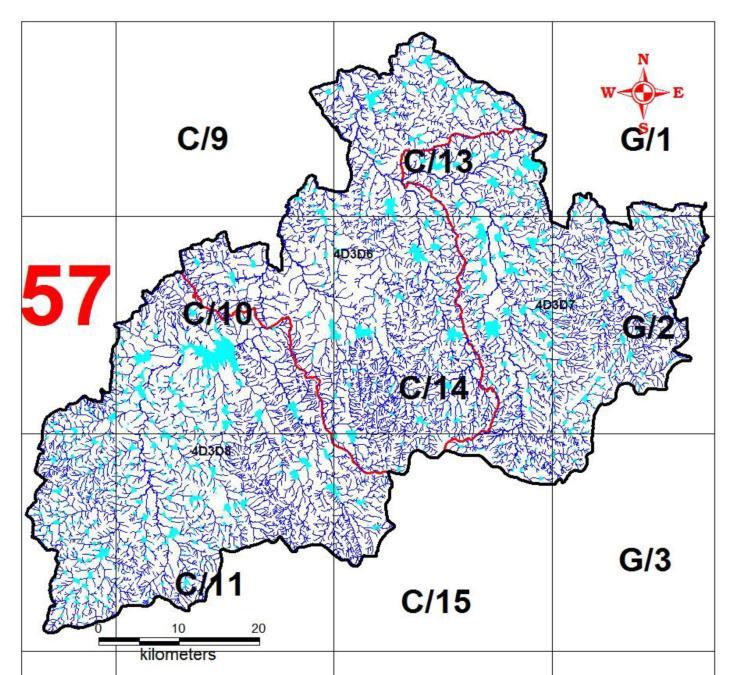
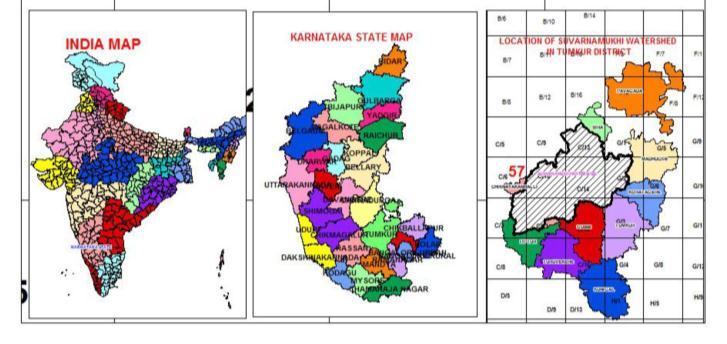
The villages of the Watershed comes under 102 Grampanchayaths and 4 Town Panchayaths for administrative purpose as shown in figure 3.2. Out of 733 villages, C.N.Halli taluk has213 villages, Sira taluk has210 villages,Madhugiritalukhas97villages,Gubbitalukhas91 villages,Tipturhas68villages,Tumkurtalukhas35villages andKoratagerehas22villages.TheWatershedhas22hoblies whicharehavingNadaKacheriesforrevenueadministration purposes.Thewatershedcomesundertwopartiallycovered Parliamentary Constituencies such as Tumkur PC and Chitrdurga PC and has 7 partially covered Legislative AssemblyConstituencies.
3. LITERATURE REVIEW
Ageneraloverviewofpreviousresearchworkon IntegratedWaterResourcesDevelopmentAndManagement
1. Zhou et al (2008), undertookastudyonsurfacewater resourcesinChaobaihebasinofBeijingusingthemicro satellite data to collect on surface water distributions bothintherainyandnon-rainyseasons.Itwasobserved that, the annual change of surface water area of the basinshowsadecreasingtrendfrom1997to2007.The study concluded that satellite imageries can be successfullyusedintheassessmentofsurfacewaterat microlevel.
2. Gauhar Mahmood and Shasikanth Chaudary (2004), madeanattempttoelaboratewatercrisisondomestic aswellascommercialwaterdemandsofLakeWoodcity, Haryana. It includes the importance of water balance method to obtain water development and water management which will augment the groundwater by artificialrechargethroughrainwater.
3. Jala Samavardhana Yojana Sangha (2004), conducted rainfall-runoffsimulationstudiesforthevarioustanks some districts of Karnataka usingSCSCN method. The studyconcludedthat,GISandRStechniqueshaveplayed important roleinassessing thestatus of waterbodies forimprovingtheconditionsofvarioustanks.
4. Srishail Dolli (2006), carried out a study on sustainability of natural resource management in watershed development in two taluks of Chitradurga district.Theinvestigationwasbasedontheinformation collectedfromsixvillagesand240farmers.Hence,the generalizationoffindingshasbeenmadebasedonthe samplestudycarriedoutduringstudy.
5. Keshab Das(2005) , carried out the study on Harvestingfordomesticuse;PotentialandRelevanceof villagetanksatdesertregion.Thefindingssuggestthat village ponds remain important sources of domestic water and these can be substantive use, especially during summer and suggests that community management is a useful strategy to protect and improvisethesystemsbycommunityparticipation.
6. Madhavi Ganesan(2007), studied the status of Madrass,India;RehabitationofAncientTechniquefor multipurposewaterstudyanattempthasbeenmadeto evaluate appropriate strategies to conserve the rainwaterintheexistingurbantempletanks.Thestudy foundthereasonforthedrynessofurbantanks.Italso revealedthemethodstorehabilitateandre-establishthe hydrologicalroleofthetanks.
7. GOI(1994), developed a manual of national use/land covermappingusingsatelliteimageries.Theobjectof this manual is to familiarize the users with the classification, definition, methodology and interpretation techniques, steps involved for identification and mapping land use/ land cover categories.Thesetechniqueshavebeenincorporatedin thepresentresearchwork.
8. Minor et al (1994), attempted to present a unique methodologyforgroundwaterexplorationusingRSand GIS,particularlyindevelopingcountrieslikeGhana.The study concludes that, interpretation strategies that integratevariousdatatypesareusefultocharacterize groundwaterresourcesforlocatingawellpoint.
9. Asadi et al (2007), evaluated the quality of groundwaterinMunicipalcorporationofHyderabad,by conducting physico-chemical analysis for twenty five groundwatersamples.WaterqualityIndex(WQI)was calculated.
10. Shankar (2007), evaluatedthewaterqualityindicesfor groundwaterofWhitefieldindustrialareainBangalore whichwasdeterminedbycollecting35samplesinand around the industrial area. Water quality index was calculated based on 10 parameters. The WQI ranged from 11.58 to 495.07 with an average of 69.95. The analysis revealed that the groundwater samples in
general can be considered to be fit for human consumption.
3.2 Objectives of the study:-
Keepingdetailedquantitativeandqualitativestudyofthe waterresourcesatwatershedlevelinview,thestudyhasbeen takenwiththefollowingobjectives.
Assessment of the detailed hydrological status of selectedSurfaceWaterBodiesandTraditionalWater Harvestingsystemsalongwithwaterquality.
Assessment of Ground Water Recharge, Discharge, Storage,Waterbalance,WaterdemandandMapping thedepthtogroundwaterlevelandseasonalground watertablefluctuation
Ground water quality analysis for drinking and irrigationpurposes
Tosuggestthevariousmeasuresforconservationof water and soil for sustainable development and managementofwaterresources.
Scanning
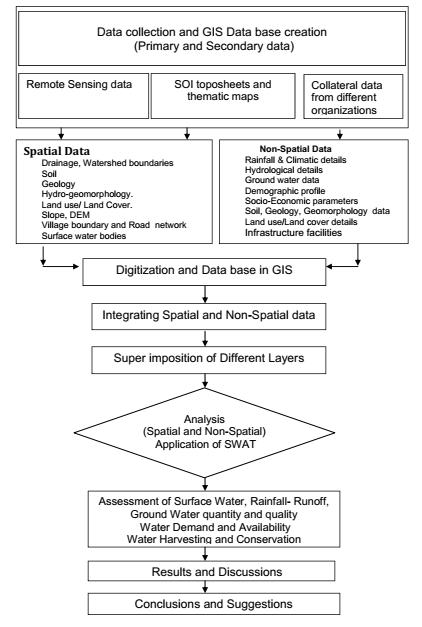
A scanner is a hardware used for converting an analogue source document into digital raster format. Scanning is a methodofautomaticdigitizing.Scanninghasbeencarriedout inthestudytoconvertsomeanaloguemapsintodigitalmode andusedforfurtheranalysisinGISenvironment.
Digitization
Digitizationistheprocessofconvertingfeaturesonapaper mapintothedigitalformat.Whendigitizationisstarted,theX andYcoordinatesofthefeatureareautomaticallyrecorded andstoredinaspatialdata.Thefeaturesofinterestonageoreferenced toposheets and other maps are digitized as differentlayersinthestudy.
Geo-registration
ItisimportantthatallspatialdatainGISanalysisshouldbe locatedwithrespecttoacommonframeofreferencewhichis known as geo-referencing or geo-registration. As the toposheetisbeingusedasthebasemap,itneedstobegeoregistered before carrying out any further analysis. Georegistrationhasbeencarriedoutforallthefeaturesextracted fromtoposheetsinGISenvironmentusingMapinfoandArc GIS software in the study. This georegistered image of the toposheetisfurtherusedasthebasemapfordigitizationand geo-registrationofsatelliteimageries.
Topology Building
In GIS, topology is the term used to describe the geometric characteristicsofobjects.Thetopologicalcharacteristicsofan object are also independent of scale of measurement. Topology, as it relates to spatial data, consists of three elements:adjacency,containmentandconnectivity.Topology has been built to all various thematic layers created in the studyunderGISenvironment.
4.1 Experimental set-up
5. Expected Outcome:-
Suvarnamukhi watershed is elongated in the east-west direction.ThemaximumlengthofSuvarnamukhiwatershedis 72.5kmalongNorth-Southandthemaximumwidthis77.5 kmalongE-W.Thelinearaspectshavebeenevaluatedusing GISasdescribedbelow.
(a) Stream Order(U)
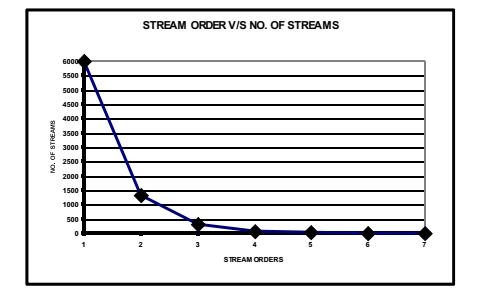
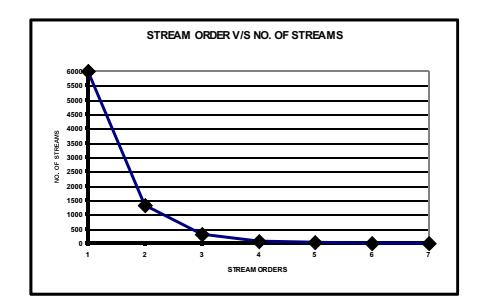
Designationofthestreamorderisimportanttoindexthe sizeandscaleofthebasinanditformsanapproximateindex oftheamountofstreamflow.ThemainstreamSuvarnamukhi is found to be at 7th order stream as per Strahler's (1957) methodofstreamorderingasshowninfigure6.3.
(b) Stream Length(Lu)
Afterclassifyingthestreamsofthedrainagenetworkinto orders,eachsegmentsorderUarecomputed(Strahler,1957) asshownintable6.1.streamsofeachofthedifferentorders tends closely to approximate a direct geometric pattern. Hence,aplotofstreamlengthonordinate&thefunctionof orderonabscissashouldyieldasetofpointslyingessentially alongastraightlineasshowninfigure6.1.
From the table 6.1, it is clear that the length of streams variedwithreferencetothestreamordersassuggestedby Horton(1945).
RLisdefinedastheratioofmeanlengthofanordertothat of the lower order(Horton,1945) which is calculated and shownintable6.3.
Stream numbers and lengths supports the theory i.e., geometricalsimilarityispreservedinthebasinofincreasing orderasdepictedinfigure6.2.
CONCLUSION
Finally it may be concluded that, this study would be a gatewayforfurtherexplorationofSurfaceandGroundwater in the watershed t meet the requirements of the area. The overallhydrologicalstudiescarriedoutinthepresentstudyis not only hoped to serve as a first hand information on Suvarnamukhi watershed using GIS and Remote sensing techniques,butalsoforfurtherdetailedresearchandplanning for effective management and development of water resources.
REFERENCES
1. Abhijit M.Zende et al (2012): Prioritization of subwatershedsinsemiaridregion,WesterMaharashtra, India using GIS, American Journal of Engineering Research(AJER),Volume-02,Issue-10,pp-128-135.
2. All India Soil and Land Use Survey (AISLUS)(1984): MinistryofAgriculture,Govt.ofIndia,WatershedAtlas ofIndia.
3. Allison Marie Valerio(2008): The study on Modelling Ground water and Surface water interactions in an operational setting by linking River ware with Modflow, a thesis submitted to the University of Colorado.
4. Amaranarayana,K.(2008): Ancient water harvesting system and its relevance today increasing Ground water A success story of Chitradurga city a paper presented during Rainwater harvesting workshop at NIAS,Bangalore.
5.AmereshKrisinghandRaviprakash(2006):Thestudy on suitable location for Groundwater exploration in hard rock areas, an integrated approach of Remote sensingandGIS,IJCE,Vol-84.
6.AmarinderSingh(2009):ApplicationofSWATModelto assesstherunoffandsedimentyieldinawatershedof Himalayan region, a thesis submitted to Manipur University.
7. Anand Vadivelu.G.(2007): The impact of watershed development in rainfed areas using GIS and Remote sensing in Karnataka and Andhra Pradesh, a thesis submittedtoAndhraUniversity.
8. Anderson(1977): Investigation on the use of sat SAR imageryformappinglanduseinaridenvironmentof Denver,Colorado,USA,athesissubmittedtoUniversity ofColorado.
9. Anji Reddy (2001): Evaluation of impacts of NeeruMeeru (Water and You) development programme, a report submitted to the Government of Andhra Pradesh.
10.AnuraghMohanandKirtiPandey(2005):Thestudyon GroundwaterqualityintheindustrialareaofBareillyin UttarPradeshathesisisubmittedtoIIT,Khanpur.
11.Asadi et al (2007): Evaluation of the quality of GroundwaterinMunicipalcorporationofHyderabada thesissubmittedtoUniversityofHyderabad.
12.Ashish Pandey (2003): Estimation of runoff for agricultural watershed using SCS curve number and GIS,MapIndia2003
13.Basavaraddi.S.B. et al(2012): The study on Seasonal VariationofGround WaterQualityandits Suitability for Drinking in and around Tiptur Town, Tumkur District,Karnataka,IndiaathesissubmittedtoTumkur University.
14.Baweja.B.K and Karanth.K.R(1980): Ground water recharge estimates in India, a Report by CGWB, MinistryofWaterresources,GOI.
15.Bhuddhietal(2004):Thegroundwaterqualityofthe Pithampur area, International Journal on water resources.
16.BrownandHolf(1976):TheuseofThermal infrared imagerytodemonstratetheusefulnessofthedatafor mapping different Land use/Land cover in an area coveringareservoiringreatLakeTexas,International JournalonEarthsciences.
17.Carlston et.al(1967): Drainage characteristics of watersheds in hardrock area, American soc of hydrology,vol-24
19.Central Ground Water Board(1997): Ground Water Information Booklet, Tumkur District, a Report by CGWB,MinistryofWaterresources,GOI
20.Central Ground Water Board(2008): Ground Water Information Booklet, Tumkur District, a Report by CGWB,MinistryofWaterresources,GOI
21.Central Ground Water Board(2012): Karnataka, a ReportbyCGWB,MinistryofWaterresources,GOI
22.Chandrasekhar.K.N(1988):Hydro-geologicalappraisal ofSuvarnamukhi riverbasin.
23.Chandrmohan.T.andDurbude.D.G.(2001):Estimationof runoff using small watershed models, Hydrology Journal.24(2):45-53.
24.CollinsandEi-beik(1971):Utilityofaerialphotographs for Land use/Land cover categories on Commercial, Industrial or Residential for the city of Leeds, U.K., InternationalJournalonEarthscience.