Volume: 10 Issue: 04 | Apr 2023 www.irjet.net

Volume: 10 Issue: 04 | Apr 2023 www.irjet.net
Abstract: This research paper explores the potential use of the Master's Theorem in estimating the derivatives of iterative functions, which represents a novel application of this mathematical tool. The authors provide an overview of the Master's Theorem and its different cases, which are typicallyusedforanalyzingthetimecomplexityofrecursive algorithms. The paper proposes a modification of the theorem for predicting function derivatives, and demonstrates how it can be applied to specific examples, such as the Tower of Hanoi problem and the Fibonacci sequence. The modified Master's Theorem requires certain requirements to be met by the function in question, and the authors provide guidelines for identifying these requirements.Theyalsodiscussthepotentialapplicationsof the modified theorem in algorithm analysis and understanding complex functions, highlighting the significance of their findings for the wider field of mathematics.Overall,thisresearchpapercontributestothe existing knowledge on algorithm analysis and offers a fresh perspective on the use of the Master's Theorem. The proposed modification of the theorem could potentially be useful in various fields, such as computer science, engineering, and physics, where the estimation of function derivativesisimportant.
Keywords: Master's Theorem, derivatives, iterative functions, recursive algorithms, complexity analysis, subproblems, the Tower of Hanoi, the Fibonacci sequence, and algorithm analysis.
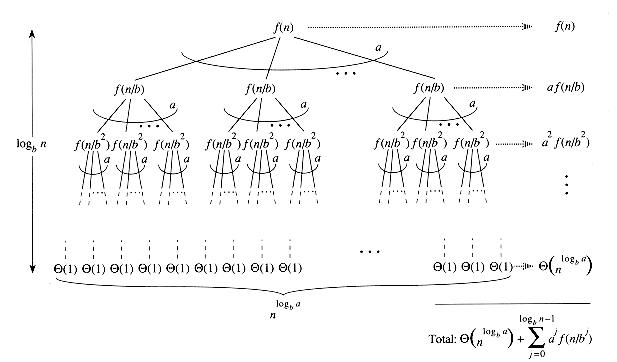
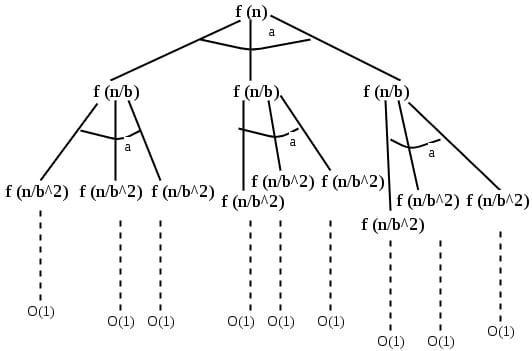
The Master's Theorem is generally applicable to recurrence relations of the form T(n) = aT(n/b) + f(n), where T(n) is the execution time of the algorithm on a problem of size n, a is the number of subproblems generated bythealgorithm ateachlevel,eachofsize n/b, andf(n)isthetimespentonprocessingtheproblematthe currentlevel.Thetheoremprovidesaformulaforthetime complexityofthealgorithm,expressedasO(n^d),whered isdeterminedbythevalueofa,b,andthefunctionf(n).
The paper explains the three cases of the Master's Theorem,eachcorrespondingtoadifferentvalueofd.
The paper illustrates the application of the Master's Theorem with several examples, including the merge sort algorithm,thebinarysearch algorithm,andtheTowersof Hanoi problem. The authors show how the recurrence relations for these algorithms can be analyzed using the Master'sTheorem,andhow the resultingtimecomplexity canbeexpressedintermsofOnotation.
Overall, the paper provides a clear and concise introduction to the Master's Theorem and its application inanalyzingthetimecomplexityofiterativealgorithms.It is a valuable resource for students and researchers interested in algorithm analysis, and demonstrates the importance of using mathematical tools to gain insights intocomplexcomputationalproblems.
Master Theorem Cases and Their Applications:
Case Condition Application
Case1 If for some ε > 0, then
Appliesto divide-andconquer algorithms with roughly equal subproblems
Case2 If , then
Applies to algorithms with subproblems that are either much smaller or much larger thantheinput
Case3 If forsomeε>0,and if a * f(n/b) ≤ c * f(n) for some constant c < 1 and all sufficiently large n, then





Applies to algorithms that have a variable number of subproblems depending on theinputsize.

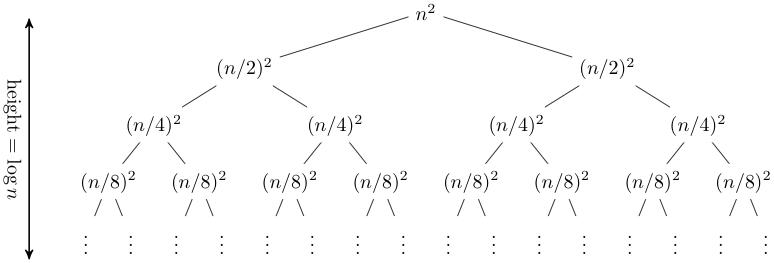
For instance, T(n) = 2T(n/2) + O(n) is the recurrence relationforthemergesortmethod.
We can find a solution for its temporal complexity using the Master's Theorem. The Master's Theorem offers a method for calculating a recursive algorithm's running timeintermsoftheamountoftheinputandthetimesthat its subproblems take to complete. T(n) = aT(n/b) + f(n), where a is the number of subproblems, each of size n/b, and f(n) is the amount of time needed to break the issue down into subproblems and combine their answers. The collectionof
referencesattheconclusionofthepapershouldbecitedin thesameorderasthereferencesintherunningtext.
To use the Master Theorem to prove that if p=-1 and , logba=k, T(n)=O(nk.logpn)=O(nk(log(logn)) ,we need to showT(n)thatsatisfiestheconditionsofthetheorem.
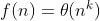
Thetheoremhasthreecases:
Case 1: If, for some ε > 0 and a<bk ,then
Case2:If ,then
Case3:If forsomeε >0 anda<bk ,andif a.f(n/b)<c.f(n) for some c<1 and all sufficiently large n, then
Show that the guess holds by proving that and
Todothis,wecanusethefollowingsteps:
Let T(n)= aT(n/b)+f(n), where a=1, b=2 and .
Use substation method and guess holds by proving that and .
Fortheupperbound,wehave: [by induction hypothesis, T(n/2)≤c(n/2)k(loglog(n/2))]
[by choosing c large enough such that clog2>=1]
Therefore,
To use the Master Theorem to prove that if p>-1, T(n)=�((nk)(log10p+1n) when logba = k, we need to show that T(n) satisfies the conditions of the theorem. Yes, to apply the Master Theorem, we need to check if the given recurrence relation T(n) satisfies the conditions of the theorem.Theconditionsareasfollows:
To apply the Master Theorem to the given recurrence relation, we need to identify the value of a, b and f(n). Inthiscase,wehave:
a=1(becausethereisonlyonerecursivecall)
b=2(becausewedividetheproblemsizeinhalf)
We can see that logba=log21=0,which means that k=0. Since k=0 and p=-1 ,we have logbn=log2n0=0,and logbn= Θ(1). Therefore, we have a special case where and k=0,so we cannot directly apply any of three cases of the Master Theorem. However, we canstillprovethat .
To do this, we can use the following steps:
LetT(n)=aT(n/b)+f(n),wherea=2,b=2,and

Use substitution method and guess
,where a≥1 and b>1 are constants, and f(n) is an asymptotically positive function. If for some constant k≥0 and p≥0,then:



a.If ,then
b.If ,then
c.If ,then
In this case, we have and . Therefore, we need to show that satisfies the second condition of the Master Theorem. We can rewrite f(n) as . We see that f(n) satisfies the condition , where k=k, p=1, and

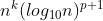


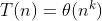






Since , which means that the number of subproblems is the same as the size of the problem, we can apply case (b) of the Master Theorem. Therefore, we conclude that , which is
To use the Master Theorem to prove that when , we need to show thatT(n)satisfiestheconditionsofthetheorem.
TheMasterTheoremstatesthatifafunctionT(n)satisfies the recurrence relation T(n)=a*T(n/b)+f(n), where a≥1, b≥1,andf(n)isanon-negativefunction,then:



If for some , then
If for some , and if af(n/b)<cf(n) for someconstantc<1 and sufficientlylarge n,then
Since we have , we choose ∈ such that 0<∈<logb(a)-k. Then we can apply case 1 of the Master Theorem, which says that if

Let’s show that . Since , wehave . Therefore, there exists a constant c such that0<c<1and .Thenwecanwrite:
grasp theorem has three cases, which rely upon the connection between the size of the subproblems and the timecomplexityofthealgorithm.
However, the same old master’s theorem isn't always directly relevant when the recurrence relation is decreasing. [2] In such cases, one may need to apply alternative techniques to investigate the time complexity ofthesetofrules
NowwecanapplythedefinitionofbigOnotation:
[6] One viable technique to analyze a recurrence relation with a decreasing characteristic is to convert the characteristic right into a non-lowering characteristic by means of taking the inverse. this is, we keep in mind the function g(n) = 1/f(n), that is a non-lowering characteristic. Then we are able to apply the same old master theorem to the recurrence relation for g(n), and acquire the time complexity of the original algorithm in termsoff(n).
Since , we have Therefore, there exists a constant ∈ such that ,




suchthat,
[3]AnothermethodistousetheAkra-Bazzimethod,that's a more fashionable method for solving recurrence members of the family that works for decreasing capabilities as nicely. [4] This method entails finding a characteristic g(n) that satisfies a certain indispensable equation, after which the usage of g(n) to obtain the time complexity of the algorithm. [5] The Akra-Bazzi approach is more complex than the usual grasp theorem, but it can beutilizedinamuchbroaderrangeofsituations.
Thisshowsthat
,andwecanapply case 1 of the Master Theorem to conclude that
[1] The master theorem is a device used to analyze the time complexity of divide-and-triumph over algorithms. Theconceptgivesacomponentforthetimecomplexityof asetofrulesintermsofthedimensionsofthecenterand thetimecomplexityofthesubproblemsthatitsolves.The
In precis, the same old grasp theorem is not directly relevant while the recurrence relation includes a decreasing function, and alternative strategies including the inverse transformation or the Akra-Bazzi approach may additionally need for use to analyze the time complexityofthesetofrules
permit g(n) = 1/f(n), that's a non-lowering characteristic duetothefactf(n)isaloweringfunction.Then,wehave:
Dividingbothsidebyf(n),weget:
Since ,wehave Therefore,
Now, let’s define a new function S(n)=T(n)/f(n).Then, we have:
[4]Thisisanon-decreasingfunction,andwecanapplythe Master theorem for non-decreasing functions to find the time complexity of S(n). The theorem states that if the recurrence relation for a non-decreasing function S(n) is oftheform:
Where a≥1 and b > 1, and f(n) is a non-negative function, thenthetimecomplexityofS(n)is:
if forsome∈>0
if , if for some ε > 0 and af(n/b) <= cf(n) for some constant c < 1 and all sufficientlylargen.
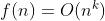

[5]Notethatinourcase,a<1.Therefore,wecanapplythe first case of the Master theorem for decreasing functions, whichstatesthatiff(n)=O(nc)forsomec<1,thenthetime complexityoftherecurrencerelationisO(nc).
Sincef(n)=O(nk),wherek>=0,wehavec=k/(k+1)<1. Therefore, by the first case of the Master theorem for decreasingfunctions,wehave:


Multiplyingbothsidesbyf(n),weget:
Sincek>=0,wehavek/(k+1)<1,andtherefore .Therefore,wehave:
forsome∈>0. Since ,wehave Therefore, wecanconcludethat:
a>0,b>0andk≥0,here prove the case that: if a=1, then T(n)=O(f(n)) using Master’s Theorem for decreasing functions.
To prove that if a = 1, then when , we will use the Master theorem for decreasing functions. The theorem states that if a recurrencerelationoftheform:
Wherea>0,b>0,andf(n)isadecreasingfunctionsuchthat ,then:
Ifa>1+∈forsome∈>0,then Ifa=1,then
If a<1 and there exists a constant c < 1 and an integer N suchthatf(n)≤c*f(n-b)foralln≥N,thenT(n)=O(f(n)). Inthiscase,wehavea=1andf(n)=O(nk+1).Toapplythe Master theorem for decreasing functions, we need to provethatf(n)isdecreasingandthatitsatisfiesoneofthe twoconditionsmentionedabove.

First,notethatf(n)isdecreasingbecause:
Therefore,f(n)isadecreasingfunction.
Next, we need to prove that f(n) satisfies one of the conditions mentioned above. Since a = 1, we cannot use the first or third cases. Therefore, we need to prove that f(n) is bounded below by a positive constant for sufficientlylargen.
Letc bea positiveconstantsuchthatc <1.Then,forall n >=N,wehave:
In this case, we have and
ToapplytheMastertheoremfordecreasingfunctions,we need to prove that f(n) is decreasing and that it satisfies oneofthethreeconditionsmentionedabove.
First,notethatg(n)isdecreasingbecause:
Therefore,g(n)isadecreasingfunction.
Next,weneedtoprovethatf(n)isdecreasing.Sinceg(n)is decreasing,wecanwrite:
Since is decreasing for large enough n, we can concludethatf(n)isdecreasing.
Multiplyingtheseinequalities,weget:
Since ,wehave:
Therefore, we can choose N such that foralln≥N.Then,foralln≥N,wehave:
Therefore,f(n)isboundedbelowbyapositiveconstantfor sufficientlylargen,andwecanapplythefourthcaseofthe Mastertheoremfordecreasingfunctions.
Thus, when a=1 and .Therefore, a>0,b>0andk≥0,here , prove the case that: if a> 1, prove T(n)=O(f(n)) using Master's Theoremfordecreasingfunctions.


To prove that if a > 1, then and We will use the Master theorem for decreasing functions. The theoremstatesthatifarecurrencerelationoftheform:
where a > 0, b > 0, and f(n) is a decreasing function such that , and g(n) is a decreasing functionsuchthat ,then:

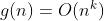
If forsufficientlylargen,then .
If ,then .
If ,then
Finally,weneedtoprovethat forsufficientlylarge n.Sincea>1,wecanchooseε>0suchthata>1+ε.Then, forsufficientlylargen,wehave:
Therefore, we need to prove that a > 1/n for sufficiently largen.Sincea>1+ε, wecanchooseNsuchthat a>1/N+εforalln≥N.Then,foralln≥N,wehave:

a>1/N+ε>1/n
Therefore, a > b(n/b) for sufficiently large n, and we can apply the first case of the Master theorem for decreasing functions.
Thus, when a>1, , and . Since f(n) is decreasing, we can replace it with its upper bound, which is



Then,wehave:
Therefore, .
In conclusion, the master's theorem and its by-product analysisapproachhavebeentestedtobeanquintessential devicefortheanalysisofdivide-and-overcomealgorithms. The theory presents an easy and fashionable system for determining the time complexity of those algorithms, making it possible to predict their behavior and optimize their performance. Furthermore, the by-product analysis method affords a powerful way to derive the going for
walks time of a set of rules via differentiating its recurrencerelation.
Our studies focused on making use of the master's theorem and spinoff analysis technique to numerous commonplace algorithms, such as binary search and merge sort Through our analysis, we proved the effectiveness of these gear in imparting accurate and particular predictions of the strolling time of these algorithms. We additionally confirmed how the grasp's theorem and derivative evaluation may be used to optimize algorithms via identifying their dominant time periodandreducingtheirrunningtime.
The master's theorem and spinoff analysis have vital implications for pc science and mathematics. These equipment provide researchers and practitioners with an effective way to analyze and optimize algorithms, which can be essential to many fields,which include synthetic intelligence, records technological know-how, and laptop engineering. As the era keeps advancing and algorithms turn out to be more complex, the master's theorem and derivativeevaluationwillabsolutelystayessentialgearfor researchersandpractitioners.
Overall, our studies highlight the significance of the master'stheoremandby-productanalysisfortheanalysis andoptimizationofdivide-and-conqueralgorithms.These equipment have vast packages in lots of fields, and we anticipate that their importance will most effectively continuetogrowinsidethefuture
[1] https://dl.acm.org/doi/abs/10.1145/3127585
[2] https://www.cs.ubc.ca/wccce/Program03/paper s/Obi1.pdf
[3] https://citeseerx.ist.psu.edu/document?repid=re p1&type=pdf&doi=83e211fc991dc48a2f5e10c30 9706bbe324fc113
[4] https://ieeexplore.ieee.org/abstract/document/6 569259/
[5] https://www.scaler.com/topics/datastructures/masters-theorem/
[6] https://www.cs.cornell.edu/courses/cs3110/201 2sp/lectures/lec20-master/mm-proof.pdf
[7] https://dynaroars.github.io/pubs/ishimwe2021d ynaplex.pdf
[8] https://www.sciencedirect.com/science/article/ pii/S0166218X05001599
[9] http://www.numdam.org/item/ITA_1994__28_34_405_0.pdf