Design and analysis of Air purifier
Abhishek Mishra1, Ayush Kakani2 , Ayush Shah3 , Lester Dsouza4 , Prof. Dhaval Birajdar1Abstract - Air purifiers are increasingly used to improve indoor air quality and promote healthy living and working environments. In this study, we designed and analyzed an air purifier for a standard office space using a combination of literature survey, market research, software tools, and simulation techniques. We conducted a comprehensive search and screening of research papers related to various aspects of air purification, ventilation, design of air filter and narrowed down our focus to the specific domain of air purifier design and analysis. We used Solidworks software to design the air purifier and conducted CFD analysis using ANSYS Fluent to gain a better understanding of the airflow, removal, and capture of dust, pollen, and other airborne contaminants. Our results showed that the designed air purifier based on best possible filter selection was effective in removing pollutants from indoor air, with a suggested standard air purifier capacity for a standard office space and residential bedrooms. The simulation results were validated by comparison with analytical solutions. Our study highlights the importance of air purifiers in maintaining healthy indoor air and provides insights into their design and analysis along with the filter design.
Key Words: Air purifier, Indoor air quality, Design, analysis, Solidworks, CFD, ANSYS Fluent, Simulation, pollutants,Officespace,cleanairdeliveryrate
1.INTRODUCTION
Air purifiers are devices designed to improve the qualityofindoorair byremovingpollutants,suchasdust, smoke, allergens, and other harmful particles. The air quality in indoor spaces, such as homes, offices, schools, and hospitals, can have a significant impact on the health and well-being of the occupants. Poor indoor air quality canleadtoarangeofhealthproblems,includingallergies, asthma,respiratoryillnesses,andevencancer.
Air purifiers have become increasingly popular in recent years,aspeoplebecomemoreawareoftheimportanceof maintaining healthy indoor air. With the rise of air pollution levels, natural disasters, and pandemics, air purifiers have become an essential tool in ensuring that indoorairissafeandhealthy.
The significance of air purifiers is particularly evident in areas with high levels of outdoor pollution, such as cities
andindustrialareas.Intheseareas,theuseofairpurifiers can help to reduce the harmful effects of pollution on human health, particularly among vulnerable populations such as children, the elderly, and those with pre-existing healthconditions.

Inaddition,airpurifiersarealsoimportantinworkplaces, where the quality of indoor air can have a significant impactonproductivity,absenteeism,andemployeehealth. For example, in office spaces, air purifiers can help to reduce the spread of germs and viruses, particularly duringfluseason.
2.PROPOSED METHODOLOGY:
1) Theprojectwasinitiatedwiththeselectionofairpurifiersasthetopicofresearch.
2) A comprehensive search and screening of research papers related to various aspects of airpurification were conducted, including performance evaluation, ventilation, applications, andemergingtechnologies.
3) The analyzed research papers were discussed in theresearchwork.
4) The team narrowed down their focus to the specificdomainofairpurifierdesignandanalysis to check effectiveness and suggest a standard air purifiercapacitywithbestpossiblefilterselection along with ventilation and heat treatment study forastandardofficespace.
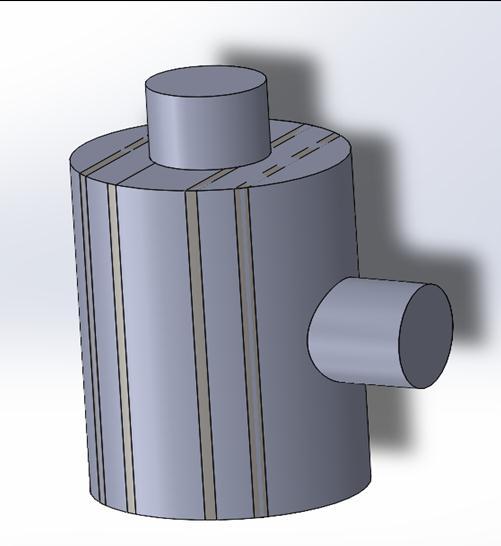
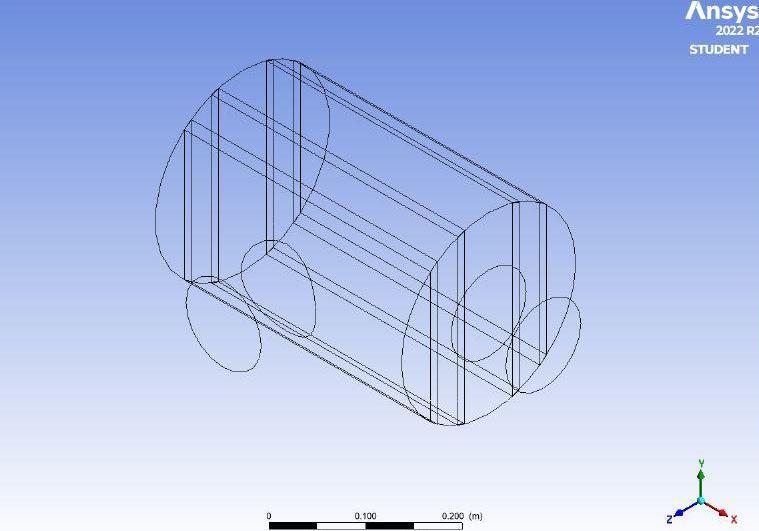
5) Solidworkssoftwarewasutilizedtodesigntheair purifier, taking into account market research and availableairpurifiermodels.
6) CFD analysis was conducted using ANSYS Fluent to gain a better understanding of the airflow, removal, and capture of dust, pollen, and other airbornecontaminants.
7) The results obtained from the CFD simulations were validated by comparison with analytical solutions.
3.CONSTRUCTION AND PERFORMANCE OF AIR PURIFIER
chargedormaintainedtoimprovefunctionality. However, this process generate smell with ozone generation that processmayhamperIAQ.
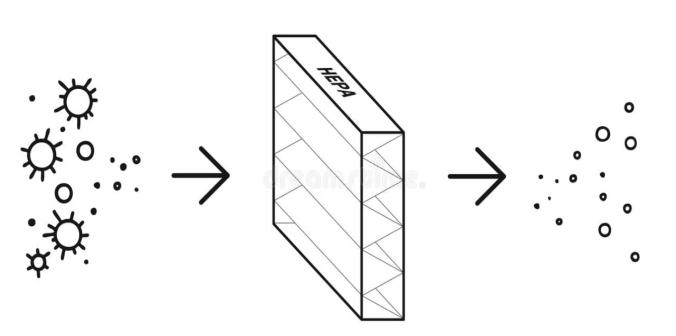
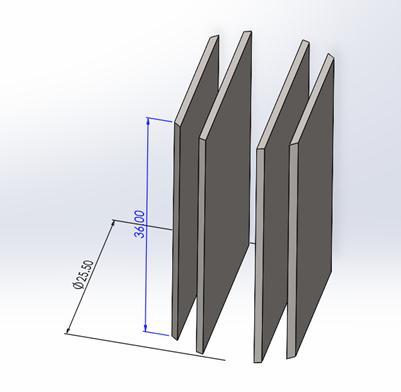
Hybrid AP combines static electricity with filtration. In which, ESP removes gases contaminants and Mechanical filter removes other contaminants. HEPA filter, a fibrous material with ionizer has been taken in the purification system that we have taken for analysis. The efficiency for goodHEPAisabout99.97%.Alongwiththese2filters,two Pre-filters are placed at front & back as they remove Contaminants > PM 2.5 easily and can be replaced at low costorcanbemaintainedorcleanedveryeasily.
4.DESIGN AND CAD:
Air Purifier's function is to reduce, remove or prevent theContaminantspresentinair.Hence,allthesefunctions areperformed byfilter. Hence,Filteristhemostessential component of AP. There has been evolution in the filters and hence the classification of filter is discussed. To improve the performance of Air purifier we need to be keen on the selection of the filter and filtration process, i.e.,airpurificationtechnique.
3.1.Types Of Inside Air Filtration Technique-
Capture type isbasedonseparation,prevention,removal ofcontaminantspresentinairand Reactive type includes reaction which involves some kind of transformation to the contaminants of air, i.e., ionization, catalysis ,oxidationetc.
Normally, reactive types of Air Purifiers can cause some problem of smell, odor due to chemical reaction & hence causes unnecessary pollution. Therefore, Capture type of AirPurifiersarepreferredoverreactivetypeAirPurifiers.
3.2.Types Of Capture Filters-
1. Mechanical filter (HEPA - high efficiency particulateair)
2. ElectrostaticPrecipitator(ESPionizer)
3. Hybrid
Mechanical filter consists of prefilter, fan & casing and the purification process is diffusion. Its efficiency is affected by fan speed, filter material characteristic and structure of Air purifier i.e., coverage area etc. Mainly porousfibrousmaterialispreferredasfilter.
ESP useshighvoltageelectrode&Collectingelectrodeand electricity is generated, by creating electrostatic field. In the presence of electrostatic fields contaminants are ionized and with collision, they continue the chain of ionization.Duetoinfluenceofelectricfieldforces,charged particles flow in direction of electric field & are collected on collecting electrode. Hence electrodes need to be
4.1.Objective
Of Design :
ThemainobjectiveofusingdesignorCADsoftwareinthe research paper on air purifiers is to create a prototype that meets the desired specifications and is capable of efficientlyremovingairbornecontaminants.CADsoftware is used to design the air purifier, considering market researchandavailableairpurifiermodels.
4.2.Selection
Of Software:
In this project, Solidworks software was chosen for designing the air purifier due to its versatility and userfriendliness.Solidworksoffersawiderangeofdesigntools that allow for efficient creation and modification of 3D models.Italsooffersadvancedsimulationcapabilitiesthat enable the researchers to evaluate the design and make informed decisions. The availability of a vast library of pre-built parts and models in Solidworks reduces design time and increases productivity. Additionally, Solidworks is widely used in various industries, making it an ideal choice for designing an air purifier that can be manufacturedatscale.
4.3.Components Of Air Purifier:
Thefollowingarethecomponentsofairpurifier.
1)Casing
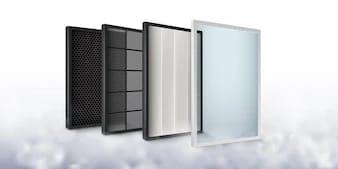
2)Setof4Filter
(i)pre–AirFilter (ii)2xHEPAFilter (iii)ActivatedCarbonAirFilter
5.SIMULATION:
5.1.Objective Of The Simulation
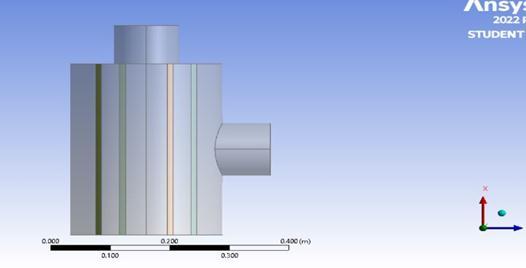
The design of the air purifier is done using American Micronic air purifier , the required dimensions for the
purpose of design are obtained based on referring to it . Also, parameters of the air flow are determined using the analytical method. To compare the results, we require a software CAD model which will imitate the process of air flowandthecaptureofdustparticlesbythefilter.
5.2.Selection
:-
There are a number of software available in the market which allow the simulation of the airflow . Namely , Autodesk CFD , Simscale , Ansys Fluent , Open FOAM , Simcenter , Paraview etc. Among all these software we usedAnsysfluent.ThemainreasonforselectionofAnsys Fluent was the amount of community help and tutorials availableinthemarketaboutthesame.
5.3.Process
:-
Thesimulationoftheairpurifierhastobedoneinnumber ofstages:-
a. Importing the geometry:
The geometry which is created using the Solidworks software is imported in order to conduct further analysis onit.
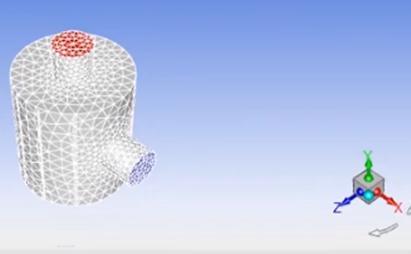
b. Meshing of the Air
Inthisstepthegeometryis dividedintofinitenumbers of elementsinordertoobtainanapproximatesolution.
c. Setting up of the boundary conditions:
The following assumptions of boundary conditions are made–
Laminarviscousflow
Suitable values of viscous resistance for the porousfiltermaterial
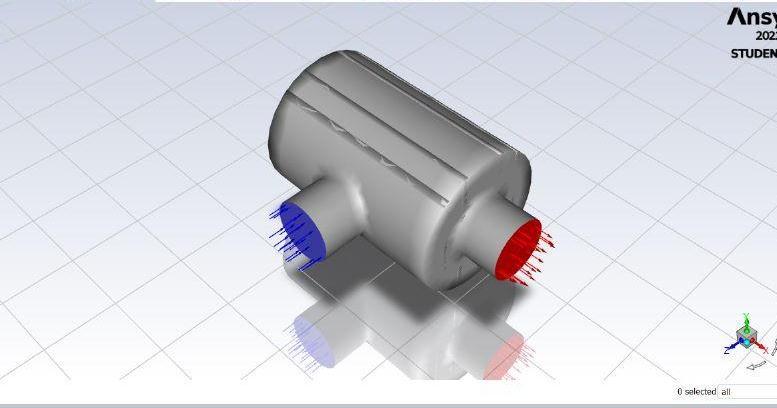
inletvelocitymagnitude
outletintensityandhydraulicdiameter
d. Solution:
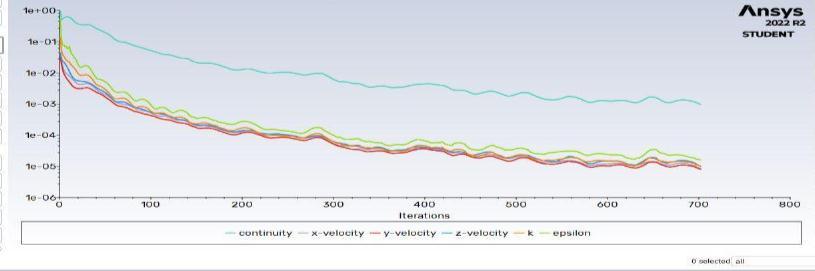
For the above boundary conditions the solution is obtainedfor1000iterations.
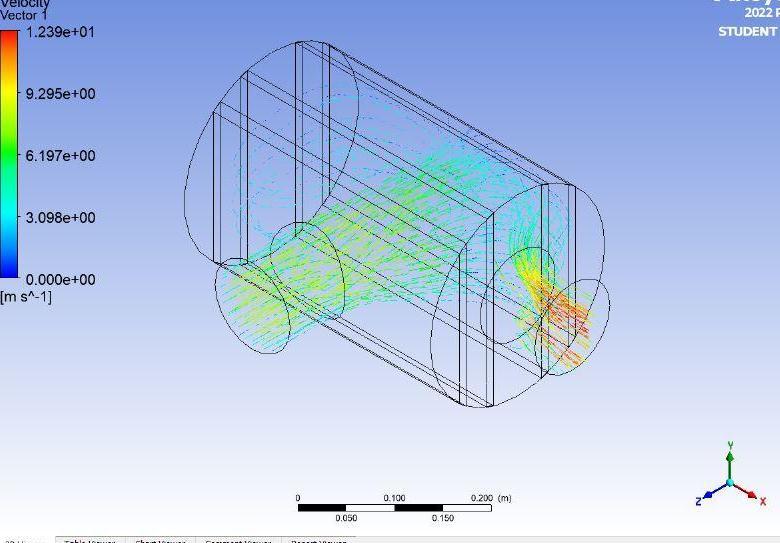
e. Obtaining the results :- The results in the form of a graphobtainedare–
● Continuity
● Outletairflowrate
● OutletMassflowrate
● OutletVolumeflowrate
● Permeability
6.ANALYTICAL CALCULATION:
6.1.Specifications:
1. Coveragearea(CA):300sq.ft
2. Ceilingheight(h):10ft
Normally, residential buildings have ceiling height of 9 to 11ftinMumbai.
3. Airchangesperhour(ACH):3.5 ASHRAE recommends selecting ACH of 3 to 4, hence selectingtheaveragevalue.
4. ThisAPefficiencyis99.97%asitfilters99.97%of dust,bacteria,odor&contaminants.
5. Multistage filtration is installed in the system consisting of Pre-filter, HEPA, ionizer and activatedcharcoalfilter.
6. Power:30W
7. Weight:2.9kg
8. Cleanairdeliveryrate(CADR):275m^3/h
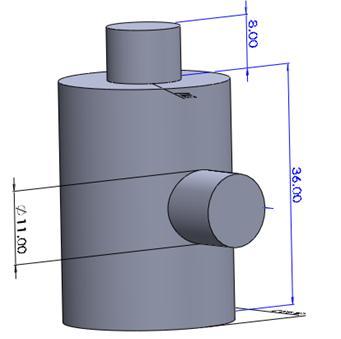
9. Dimensions: D25.5 x W25.5 x H36 cubic centimeters
Material:ABS
10. Efficiency:99.97%
11. Color:Ivory&Grey
12. Controlmethod:Touch
13. Model:AMI-AP2-30Dx
6.2.Calculations:
Dimensionofbedroom:20x15x10cubicft. CADRiscleanairdeliveryratei.e.,sincethepurifierfilters the contaminants and impurities present in air and air at outlet or discharge is pure and clean. Hence the term CADR is used as a parameter to measure performance of thepurificationsystem.
CADR=(ACHxCAxH)/60 =(3.5x300x10)/60 =175cubicft/min (1ftisequivalentto0.305m ) =175x(0.305^3)x60 =274.3466cubicm/h
CADR = Area at outlet x Velocity at outlet ( diameter at outlet is 0.11m, outlet is circular in shape, V is velocity at outlet)
CADR=(3.142xdxd)/4xV
274.3466 = (3.142x0.11x0.11)/4xV
V=8.019m/s
The value of V is in range with the simulation results. Hence results are verified. Since the results are verified, wealsoneedtodefinetheaccuracyofthesolutionandfor thatpurpose weneedtocalculatethe percentage error. If the percentage error is less than 5% i.e., 5% deflection fromtheactualvaluesthentheresultswillbeaccurate.
%error=(Actual-Calculated)/Actualx100
Here, calculated value of CADR IS 274.3466 m^3/h and actualvalueis275m^3/h(specifications)
%error=(275-274.3466)/275x100 =0.237596%
The percentage error is under control i.e., <5%. Hence resultsaresatisfactory.
7.VENTILATION AND HEAT TREATMENT
7.1.External Factors Affecting Air Purifier
Performance :
Since the purpose of installation of Air Purifier is to free theairfromcontaminantsortokeepthesystemfreefrom contaminatedair.Ventilationistheprocessofexchangeof air in which fresh air is brought inside the system and expelling the contaminated air outside. Doing ventilation at regular intervals ensures the proper working and efficiencyoftheAir Purifier. This alsoleadstoincrease of intervals of maintenance and removal of filters and thus reducing the overall cost. Improving ventilation efficiency and performance further improves the performance and efficiency of Air Purifier. Hence, natural ventilation and PAC (Portable air conditioners) combined yields better resultsthantheindividualAirPurifierinstallation.
Another thing which came to our notice with regards to AirPurificationisthepresenceofharmfulcontaminantsin air. It's very similar to polluted or contaminated water problem which is solved by boiling the water as the contaminants lose their functionality at the high temperature. The thing which brought this to our attention was that air as well as water both are very essential for human life to sustain. Hence, we studied and analyzed the feasibility and process of heat treatment of airanditslimitations.
7.2.Proposed Solution-
Presence of contaminants like dust, pollen, and bacteria aretheprimereasonsforpoorairquality.Asweallknow, these contaminants cannot survive when temperature is higher than 100°C as in the case of boiling water. Hence, air heat treatment is also an air disinfection approach. As mentioned in the calculations below, the same heat required for air and water to 100°C makes this method considerable. Sometimes, heating may require too much energy which results in an increase in expenditure. Continuous heat recovery from air already heated during thedisinfectionprocesshenceenergy&cost efficient.The process involves inactivation i.e., losing functionality of contaminants.Henceusingkineticsequationofhalf-life
The
Experimentallyat20°Cand50%RH,half-lifeis274forthe virus and Relative Humidity (RH) depends on the virus. The proposed solution is to heat above 50°C, where viruseslosetheirfunctionality.
Differentmethodsofairpurification/disinfestationare:
o UVradiation
o filtration
o ventilation
o photocatalysis
7.3.What Makes The Heating Feasible?
Humanconsumptionofair(dailybasis)=14kg
Humanconsumptionofwater(dailybasis)=3kg
Energyrequiredtoheatto100°C
Forwater,
Q=Cwater Mwater∆T =4.20×3×(100-20)=1008KJ
Forair,
Q=Cair Mair∆T =1×14×(100-20)=1120KJ
Where,
C-Specificheat(KJ/KgK)
M-mass(kg)
T–tempdifference(k)
Q - required for air and water is almost equal hence it is feasibletoheat
7.4.How To Make Heat Treatment More
Economic:-
Itisrequiredtosetupa continuous heatrecoverysystem dueto:
o Reducethecostofenergyinput
o Outletairtemperaturereductionfromsystem
Costofthermaldisinfectionofair:-
Cost = R×0.31110.9
Where R–costofelectricenergyperKWh
0.9-efficiencyofconversionelectricaltothermalenergy
0.311-equivalentof1120KJ
Out considering cost & efficiency of conversion, cost can be reduced by cheaper heat source (heat recovery used) i.e., heat exchanger(HE). Efficiency(h) of HE depends on:-
MaximumheatingtemperatureandtheExposuretime.
However,heattreatmentofairdisinfestationcannotsolve theproblemofsmellandodorinairandalsoitmakesthe airpurificationsystembulkyduetouseofheatexchanger. Hencebeforeadoptionofthismethodweneedtodomore research and improve this method. However, this is an
excellent area to be focused in future for the purpose of innovatingtheairpurificationprocess.
8. RESULTS AND DISCUSSIONS:
Table -1: Comparisonofresults
Thepresentstudywasconductedtodesignandanalysean airpurifierforastandardofficespaceusingacombination of literature survey, market research, software tools, and simulationtechniques.Theairpurifierwasdesignedusing Solidworks software, taking into account market research andavailableairpurifiermodels.Capturefilterswereused forfiltration,andthevelocityoftheairpurifierwasfound tobeintherangeof8-9m/s.
Tovalidatethesimulationresults,wecomparedthemwith analytical solutions. The results of the simulation and analytical solutions matched well, indicating the accuracy of the simulation technique. The clean air delivery rate (CADR) of the air purifier was found to be in the range of 250-300m³/h,whichiswithintheacceptablerangeforan airpurifiertobeeffective.
Our study also highlighted the importance of natural ventilation and portable air conditioners (PAC) for maintaininghealthyindoor airquality.Therecommended ventilationshouldallowforthenaturalflowofairintothe space and should be combined with PAC to provide optimalfiltration.Additionally,ourstudyshowedthatheat treatment above 50°C is necessary to remove all airborne contaminantseffectively.
In conclusion, our designed air purifier based on the best possible filter selection was effective in removing pollutants from indoor air, with a suggested standard air purifiercapacityforastandardofficespaceandresidential bedrooms.Ourstudyprovidesinsightsintothedesignand analysis of air purifiers, including filter design and recommendations for natural ventilation and heat treatment,tomaintainhealthyindoorair.
9. CONCLUSIONS:
This study highlights the importance of air purifiers in maintaining healthy indoor air quality. The designed air purifierisbasedonthebestpossiblefilterselectionwhich
was effective in removing pollutants from indoor air, capacity selection , ventilation and heat treatment suggestions . The insights gained from this study can be useful for designing and implementing effective air purifiersinindoorenvironmentstopromotehealthyliving andworkingenvironments.
REFERENCES
[1] G.S.N.V.K.S.N. Swamy (2021) , Development of an indoor air purification system to improve ventilation and air quality , https://doi.org/10.1016/j.heliyon.2021.e08153
[2] Haiguo Yina, Zhuohang Li , Xinping Zhai , Yuxuan Ninga, Le Gaoa, Haihang Cui ,Zhenjun Mae, Angui Li ,(2022) , Field measurement of the impact of natural ventilation and portable air cleanersonindoorairqualityinthreeoccupantstates ,https://doi.org/10.1016/j.enbenv.2022.05.004
[3] Stuti Dubey , Himanshi Rohra , Ajay Taneja (2021). Assessing effectiveness of air purifiers (HEPA) for controlling indoor particulate pollution , https://doi.org/10.1016/j.heliyon.2021.e07976.
[4] Aditya Roy,ChetanMishra, Naveen Solanki(2018).A review of general and modern methods of air purification,DOI:10.18186/thermal.529054
[5] Deng,Zhihui,Zhang,Xiliang(2018). PerformanceTest and Structural Analysis of Indoor Air Purifier , https://doi.org/10.3303/CET1871137