
Abstract - The purpose of this project is to develop a digital storage space for documents such as notes, student ID cards, library cards, and certifications. The papers in the app are considered to be equivalent to the original physical documents. This will be accomplished by developing an app in which a user may establish his or her own account after completing a thorough verification procedure. In order to log in to the account, biometric authentication measures are applied, which can protect the security of documents. These documents can be stored in SQL databases. It minimizes administrative costs by reducing the usage of paper and shortening the verification process. Serves as a safe environment for document sharing. We may use this app to access essential papers at any time and from any location.
Key Words: digital storage, documents, notes, certifications, app development, user account, twofactor authentication, security, SQL databases, documentsharing,safeenvironment.
1. INTRODUCTION
The transition to digitisation has been swift in recent years, affecting a wide range of industries, including document storage. Many papers issued by government or non-government organizations are still in physical form, resulting in substantial overhead in terms of human verification, paper storage, manual audits,and so on. This makes it difficult for multiple organizations to check the validity of these papers, opening the door to the use of fraudulentdocuments/certificates.
To address this problem, there is a need to provide individuals with a choice of digital storage and minimize the use of physical documents. The benefits of digital storage are numerous, including the capacity to check the validity of e-documents, which eliminates the use of counterfeit papers. Individuals would also have anytime, anywhere access to their documents, which can be very convenient. Furthermore, digital storage would allow for open and interoperable architecture, creating a multiprovider ecosystem that provides choice to issuers, requesters, and individuals. This also allows rapid digitalisationacrossvarioussystems.
Animportantaspectofthedigitalstorageofdocumentsis the architecture that supports a well-structured standard document format to support easy sharing of documents across departments and agencies. This would allow for
easy integration of various systems and ensure that the documents are easily accessible and shareable across differentagencies.
Another critical feature of digital document storage is ensuring privacy and security through user identification and consented access to documents. This would involve the development of robust security measures to protect the documents from unauthorized access, tampering, or theft. The user authentication process would involve biometric authentication measures to protect the security ofdocuments.
The objective of developing an application where important documentscan bestoreddigitallyisto prevent theloss ordamageofvital documents.Thedigital storage of documents would ensure that documents are secure, easily accessible, and shareable. The main aspect of this appistomaintaintheprivacyandsafetyofthedocuments storedinit.Thedigitaldocumentsstoredintheappwould betreatedasvalidandseenasoriginaldocumentsinplace ofthephysicalones.
The app would have options for uploading documents, accessing already stored documents, and sharing documents.Uploadingdocumentswouldinvolvescanning or uploading digital copies of the documents. The app would have features that allow users to search and retrievedocumentsquicklyandeasily.Sharingdocuments would involve granting access to other individuals or agencies to view or access the documents. This would require the user to provide consent for the sharing of the documents.
The development of an application for the digital storage ofdocumentswouldprovidenumerousbenefits,including minimizing the use of physical documents, ensuring authenticity, improving accessibility, and enhancing security. The app would also support the interoperability of various systems, ensuring that documents are easily accessible and shareable across different agencies. To ensure the project's success, the creation of such an application will need the involvement of different parties, including government agencies, non-governmental organizations,andindividuals.
2. RELATED WORK
"Digital Document Management in the Cloud" by S. S. Y. Lim,S.R.H.Lee,andJ.Y.Kim[1]:Thispaperexploresthe benefits and challenges of using cloud-based solutions for digitaldocumentmanagement.Theauthorsdiscussissues suchasdataprivacy,security,andscalability,andprovide recommendations for implementing a successful cloudbaseddocumentmanagementsystem.
"A Comparative Study of Digital Document Management Systems" by C. R. Mohan, M. N. Giriprasad, and M. V. Ramesh [2]: This paper compares different digital document management systems and highlights their strengths and weaknesses. The authors evaluate systems based on criteria such as usability, performance, and security, and provide recommendations for selecting the mostappropriatesystem.
"SecureDocumentManagementSystemforHealthcare"by P. R. Sastry, S. K. Sahoo, and S. K. Patel [3]: This paper describes the development of a secure digital document management system specifically for healthcare applications.Thesystemincludesfeaturessuchaspatient recordmanagement,accesscontrol,andencryption,andis designed to comply with industry regulations and standards.
"Blockchain-Based Digital Document Management System"byS.N.Sharma,V.K.Tyagi,andN.K.Sharma[4]: This paper proposes the use of blockchain technology for secure and tamper-proof digital document management. The authors discuss the benefits of using blockchain for document management, such as decentralization, transparency,andimmutability.
"Digital Document Management in Education" by M. N. R. Narayanan and S. Prakash [5]: This paper discusses the benefitsofusingdigitaldocumentmanagementsystemsin educational institutions. The authors describe how digital document management can improve administrative processes,enhancestudentengagement,andreducecosts.
"DigitalDocumentManagementforGovernmentAgencies" by T. K. Das and R. K. Singh [6]: This paper describes the development of a digital document management system for government agencies, with a focus on security and privacy. The system includes features such as document version control, audit trails, and access control, and is designed to comply with government regulations and policies.
"MobileDigital DocumentManagement System"byS.S.Y. Lim and S. R. H. Lee [7]: This paper describes the development of a mobile app for digital document management, with features such as biometric authentication and cloud storage. The authors discuss the
benefits of mobile document management, such as increasedflexibilityandaccessibility.
"Digital Document Management for Small and Medium Enterprises"byA.K.RamanathanandP.M.Kamalakannan [8]: This paper discusses the benefits of using digital document management systems for small and medium enterprises, including improved efficiency and cost savings. The authors provide recommendations for selecting and implementing a document management systemthatmeetstheneedsofSMEs.
"Digital Document Management and Archiving" by M. A. Mohtashami and A. M. Rostami [9]: This paper explores the challenges and opportunities of digital document management and archiving, with a focus on preserving digital documents for long-term use. The authors discuss issues such as data integrity, authenticity, and preservation, and provide recommendations for developingeffectivedocumentarchivingstrategies.
"Digital Document Management and Workflow Automation" by M . H. Chakraborty and S. K. Bose [10]: This paper discusses the benefits of combining digital documentmanagement withworkflowautomation, which canstreamlinebusinessprocessesandimproveefficiency. The authors describe how workflow automation can be used to automate tasks such as document review and approval, and provide recommendations for selecting a document management system that supports workflow automation.
"Digital Document Management for Legal Professionals" byR.V.K.Prasad[11]:Thispaperexploresthebenefitsof using digital document management systems in the legal profession. The author discusses how document managementcanimprovecasemanagement,reducecosts, andincreasecollaborationamonglegalprofessionals.
"Digital Document Management and Knowledge Management" by J. J. Xu and X. H. Hu [12]: This paper describes the relationship between digital document managementandknowledgemanagement,whichcanhelp organizations leverage their intellectual capital. The authors discuss how document management can support knowledge creation, sharing, and reuse, and provide recommendations for integrating document management withknowledgemanagement.
"Digital Document Management and Electronic Signatures" by M. Z. Hussain and R. A. Rahman [13]: This paperdiscussesthebenefitsofusingelectronicsignatures in digital document management systems, which can improvesecurityandreduceprocessingtime.Theauthors describe how electronic signatures work, and provide recommendations for selecting a document management systemthatsupportselectronicsignatures.
"Digital Document Management for Remote Work" by M. A. Rahman and A. K. M. Kamruzzaman [14]: This paper explores the benefits of using digital document managementsystemsforremotework,whichhasbecome increasingly important in the wake of the COVID-19 pandemic. The authors discuss how digital document management can support remote collaboration, reduce costs,andimproveefficiency.
"Digital Document Management for Environmental Sustainability"byJ.W.ChungandS.Y.Lee[15]:Thispaper discusses the role of digital document management in promoting environmental sustainability, by reducing paper usage and minimizing waste. The authors describe howdocumentmanagementcansupportgreeninitiatives, and provide recommendations for developing sustainable documentmanagementpractices.
3. PROPOSED METHODOLOGY
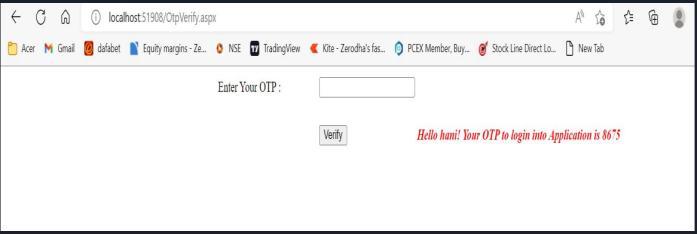
The primary objective of this project is to design and develop a digital document wallet that allows users to accessandstoreall theirimportantdocumentsina single securelocation.Thesecurityandprivacyofthedocuments are ensured by implementing proper registration and verification processes. Users can register for the service using their email or phone number and will be provided with a unique one-time password for verification purposes. Additionally, biometric authentication can be usedasanextralayerofsecurity.
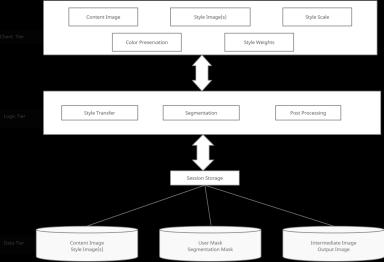
The programme was built with asp.net for the front end andmysql for the back end. Itis made up offour primary modules:
UserInput,SignUpandLogin,andDashboard.
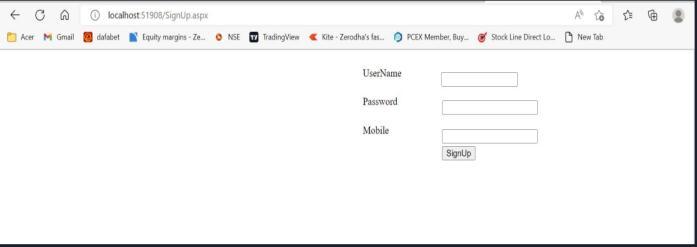
The User Input module enables new users to register by entering their desired username, password, and phone number.
The Sign Up module enables users to sign up for the service and verifies their details, providing a secure and seamlessregistrationexperience.
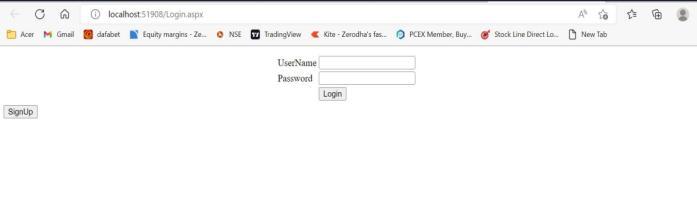
TheLoginmoduleenablesregistereduserstologintothe application securely by entering their username and password. This module ensures the confidentiality and privacyoftheuser'spersonalinformationanddocuments.
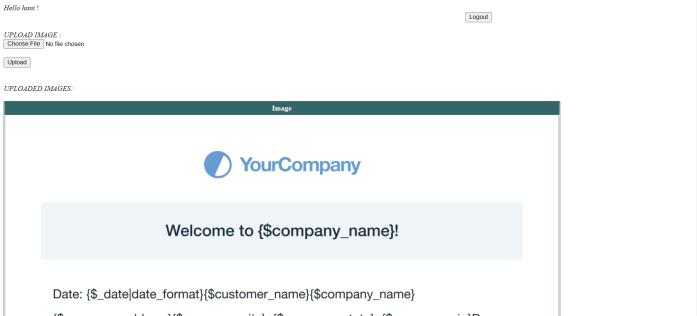
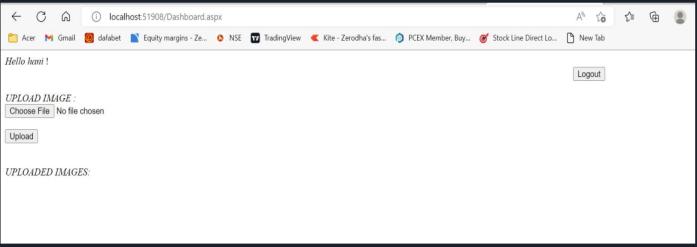
The Dashboard module is the main interface of the application, which is displayed once the user has successfullyloggedin.Theusercanaccessandmanageall of their stored documents from the dashboard. Overall, this project aims to provide a secure and convenient solution for users to store and manage their important documents.
4. IMPLEMENTATION
Theimplementationofthisprojectinvolvesseveralstages:
1. Requirement gathering: The requirements of the project were gathered byconductingsurveys and interviews with potential users to identify their needs and preferences. The features required for theappwereidentifiedanddocumented.
2. Design and development: The app was designed and developed using ASP.NET for the frontend and MySQL for the backend. The three modules, UserInput,SignUp,andDashboardwerecreated.
3. Testing:Theappwasthoroughlytestedtoensure that all features were working properly and all possiblesecurityloopholeswereaddressed.
4. Deployment: The app was deployed to a server andmadeavailablefordownloadonappstores.
5. Maintenance: Regular maintenance and updates are provided to ensure that the app remains secure and functional, and new features can be addedbasedonuserfeedback.
Someoftheimplementationdetailsareasfollows:
1. To maintain the security of the documents, the app requires two-factor authentication (2FA) while login in. A time-based algorithm generates the 2FA code, which is then transmitted to the user'sregisteredphonenumberoremailaddress.
2. The app uses SQL databases to store the documents, and the databases are encrypted to ensuretheprivacyandsecurityofthedocuments.
3. The app provides an option for users to upload their documents and categorize them for easy access.
4. The app provides a dashboard for users to view andmanagetheirdocuments.Userscanalsoshare theirdocumentswithothersthroughasecurelink orQRcode.
5. The app provides an option for biometric authenticationforadditionalsecurity.Thiscanbe enabledintheappsettings.
6. Theapphasasearchfunctionthatallowsusersto easilylocatespecificdocuments.
7. Theappallowsuserstodownloadandprinttheir documentsforofficialuse.
Finally, the creation of a digital document storage space allowsuserstoaccessalloftheirimportantpapersinone location while also protecting the privacy and security of those documents. With the rising use of technology and the desire to reduce the usage of physical documents, the creation of such an application has the potential to have enormous advantages for people, organizations, and society as a whole. The implementation of biometric authentication measures and the use of SQL databases provideanadditionallayerofsecuritytosafeguardagainst unauthorizedaccess.Theuseofanopenandinteroperable architecture can also facilitate the rapid digitalisation of various systems, leading to increased efficiency and reducedadministrativeoverhead.
Inthefuture,theintegrationofadditionalfeaturessuchas watermarks on document photos and integration with messaging applications can further enhance the functionality of the application. Overall, the development ofadigitaldocumentstoragespacehasimmensepotential to improve the way we store and access our essential documents,makingourliveseasier,andmoresecure.
REFERENCES
[1] Reddy, B. R., & Babu, D. V. (2015). Secure Document Storage System Using QR Code. International Journal of Advanced Research in Computer and CommunicationEngineering,4(5),407-410.
[2] Ramachandran,M.,&Senthilnathan,K.(2017).Secure Document Management System Using Cloud Computing. International Journal of Advanced
Research in Computer Science and Software Engineering,7(7),1032-1037.
[3] Sun, Y., Xie, W., Zhang, X., & Yang, Y.(2021).Research on the Application of Blockchain Technology in Electronic Document Management. IEEE Access, 9, 24421-24431.
[4] Prasad, K. S., Choudhary, S., & Mishra, A. (2019). An Approach to Secure Document Storage and Retrieval. In Proceedings of 3rd International Conference on Advances in Computing, Communication, & Automation(pp.655-660).Springer,Singapore.
[5] Sen, P., & Das, A. K. (2018). A Secure Document Storage System using Hash-based Encryption Technique.InternationalJournalofComputerSciences andEngineering,6(10),82-87.
[6] Duraipandian, S., & Shyamala, S. (2015). A Secure Document Management System Using AES Algorithm. Journal of Information Engineering and Applications, 5(4),10-14.
[7] Ponnambalam,S.G.,Jayaraj,V.,&Kumar,V.A.(2018). Secure Document Management System using Public Key Infrastructure. In Proceedings of 2018 International Conference on Signal Processing, Communication, Power and Embedded System (SCOPES)(pp.849-853).IEEE.
[8] Gupta, M., & Malhotra, S. (2017). Secure Document Management System using Encryption Algorithm. In Proceedings of 2017 International Conference on Computing, Communication and Automation (ICCCA) (pp.904-907).IEEE.
[9] Hasan,M.M.,Islam,M.M.,&Rahman,M.M.(2019).A Secure Document Storage System using Elliptic Curve Cryptography. In Proceedings of 2019 International Conference on Electrical, Computer and CommunicationEngineering(ECCE)(pp.1-5).IEEE.
[10] Anand, S., & Srinivasan, S. (2016). A Secure Document Management System Using Elliptic Curve Cryptography. International Journal of Applied EngineeringResearch,11(4),2594-2597.
[11] Acharya,B.,&Nayak,P.(2017).SecureDocument Management System using RSA Algorithm. International Journal of Engineering Research and Applications,7(4),45-48.
[12] Yadav, N. K., Singh, S., & Singh, S. (2017). A Novel Approach for a Secure Document Management System. In Proceedings of 2017 International Conference on Innovations in Information, Embedded andCommunicationSystems(ICIIECS)(pp.1-5).IEEE.
[13] Shah,S.R.,&Shah,N.B.(2019).SecureDocument Management System using Hybrid Cryptography. International Journal of ComputerScienceandMobile Computing,8(4),134-138.