
SMART STREET LIGHTING AND MONITORING SYSTEM BASED ON SUNLIGHT INTENSITY DETECTION USING IOT AND CLOUD
Kavitha G L1 , Mohammed Akber Khan2 , Sai Charan S3 , Satish K41Assistant Professor, Dept. of Information Science and Engineering, Bangalore 234Student, Dept. of Information Science and Engineering, Bangalore, Karnataka, India

Abstract - The aim of the smart street lighting system using IOT is the preservation of energy by dropping electricity consumption as well as to diminish the work force. Streetlights are the rudimentary part of any city since it eases better night visions, protected roads, and experience to community areas nonetheless it devours a impartially huge amount of electricity. In the labor-intensive streetlight system lights are power-driven from dusk to dawn with thoroughgoing intensity even when there is adequate light available. This energy wastage can be dodged by switching off lights automatically. This can be accomplished using an IOT enabled streetlight managing system The main purpose of this project is to design an automated street lighting system which senses the sunlight intensity in its surrounds and automatically switches on and off depending on the sunlight intensity. The IOT based smart street lighting system also directs the data from the sensors to an open cloud server for monitoring and visualization. The working principle of the smart street lighting system is wholly controlled by microcontroller. It controls workingof all the components. We can program the microcontroller and control the working of all the components to detect the light intensity, switch the lights on and off accordingly and send the data to the cloud server. We also focus on using LED lights instead of the HID lamps to improve the lifespan and reduce energy consumption.
Key Words: Microcontroller, Cloud Server, IOT, Sunlight intensity detection,LED.
1. INTRODUCTION
The chief reflection in present field technologies are Automation, Power usage and cost efficiency Automation is envisioned to lessen man power with the assistanceofintelligentsystems.Powersavingisthemain attention forever as the source of the power are getting weakened due to several reasons. This project aims to define a way for adjusting and automating street light illuminationbyusingsensorsatminutestelectricalenergy consumption.Whenincidenceofsunlightisnotsensed,all surrounding street lights glow at their brightest mode, and when the presence of sunlight is detected the bulbs willautomaticallyturnoff.
The use of LED lights is required because they outperform traditional incandescent lamps in every way.
As a result, there will be a decrease in carbon dioxide emissions, power usage, maintenance and replacement expenses, and heat emissions. This project has the potential to save a lot of energy. The Internet of Things (IoT) will be used to create the implementation process, which will display the street light system's real-time updatesandalertuserstoanymodificationsthataremade.
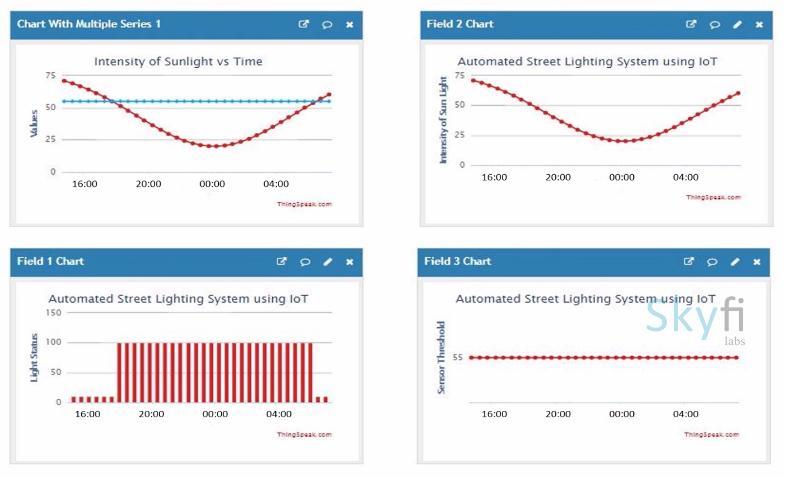
To gather data from the sensors and provide visualizations based on the incoming light intensity, the thresholdthathasbeenset,andthestartinglightintensity withregardtotime, wewill beusinganopencloudserver called Thing Speak API in this project. We can more effectively monitor and maintain the street lights with the helpofthisdataandvisualizations
2. LITERATURE REVIEW
Fathima Dheena, Greema S Raj,Gopika Dutt, Vinila Jinny[1]presented a review of researches done on the subject of Street Light automation. It included LED lights, LDR sensors, Arduino Nano and DHT11 TemperatureHumidity sensor. This delivers the precise temperature and humidity of a particular region. The street lights are turnedoffautomaticallybasedonthereadingsfromthese sensors. The projected work has attained an improved performancecomparedtothepresentsystem.
SkMahammadSorif,DipanjanSaha,DipanjanSaha[2]In this paper, a streetlight control system built on the Bolt IoT platform is presented. This project's goal is to conserveenergybycuttingdownonwastedelectricityand labour. The plan makes use of Light Emitting Diodes (LED). After detecting the density and movement of vehicles,IR sensorsplaced alongtheroadsidegivesignals to the LEDs to begin shining for the next particular segment of the road. When compared to the current systems,theproposedworkhasproducedbetterresults.
Seher Kadirova, Teodor Nenov, Daniel Kajtsanov [3] By only switching on the lights through the darkest hours of the day, the goal is to maximize energy efficiency. The time for switching on and off the lights varies depending onthedayoftheyearusingGPScoordinatesandthesun's trajectory.
The core tenet of the operation is based on the transmission and reception of information via the GPRS, GPS,andGSMnetworkstoabuilt-inphysicalserverthatis connected in some way to the Internet network and receives position data and precise time from the GPS navigationsystem.
3. THE OBJECTIVE OF PROJECT
Thespecificobjectiveofthisprojectwas

1. The major goal of this project is to create an IoT-based Automatic Street Lighting System, in which the street lights automatically turn onatnightfallandturnoutatmorning.
2. Traditional HID lights are replaced in the street lighting system by Light Emitting Diodes (LED). The high intensity discharge (HID)lamp,whichisfrequentlyusedininnercity street lights, is unlikely to be able to managetheintensity.
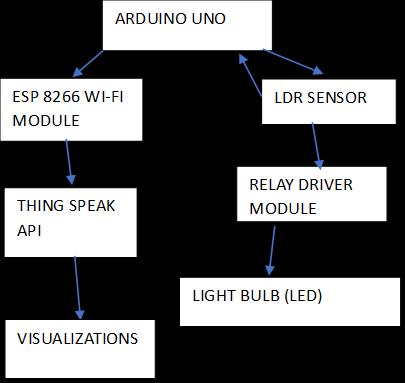
3. This proposed system uses an Arduino UNO board as the microcontroller which is programmedtocontroltheentiresystem.
4. LDR sensors are used to detect the light intensity in the surroundings and a relay driver module is used to switch the LED on/offdependingonthelightintensity.
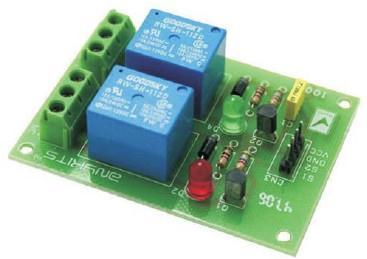
5. Data from the sensors is transmitted via an ESP8266Wi-Fimoduletothecloudserver,or ThingSpeak API, where it is monitored and displayed.
4.
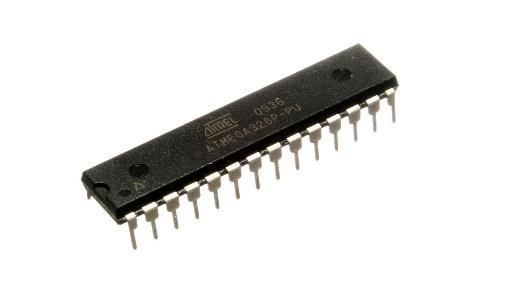
The ATmega328P, is a single-chip microcontroller based on an 8-bit RISC CPU core. This little microcontroller is a great option for many applications becauseitslowpoweredandreasonablypriced.Formany embedded control applications, it’s a sensible solution in termsofcost
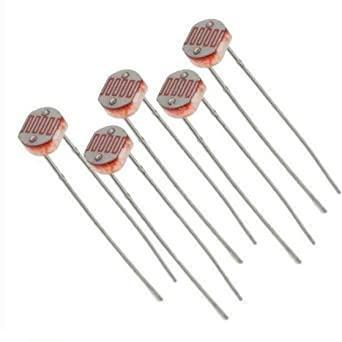
A light-controlled variable resistor is referred to as a photoresistor,light-dependentresistor(LDR),orphotocell. A photoresistor's resistance diminishes as the concentrationoftheincidentlightincreases.It determines photoconductivity,inotherwords.
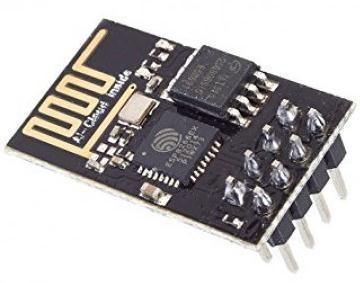
The low pass Wi-Fi module ESP8266 allows the microcontrollertoestablishaconnectionoverWi-Fi.
ESP8266moduleisusedto deliverdata toandreceive data from websites. We are able to connect wirelessly betweenmicrocontrollersusingtheESP8266module.
Sensors need to drive biggerpieces of equipment that use large currents. Sensors generally produce small currentsandrelayshelptomakesmallcurrentsintoactive largecurrentsfortheusage bytheload. Inourproject we use an electromechanical relay. The relay driver also acts as a switch which turns the light on/off based on the commanditreceivesfromArduinoUNOafterdetectingthe lightintensity.
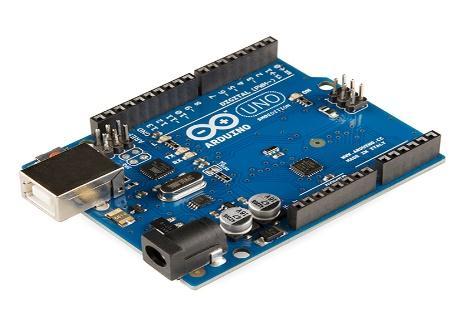
Anopen-sourcemicrocontrollerboardcalledArduinoUNO isbuiltaroundtheATmega328Pmicroprocessor.Itisoneof themostwidelyuseddevelopmentboardsforDIYprojects andprototyping.Theboardcontainsa16MHzquartz crystal,sixanalogueinputs,14digitalinput/outputpins,a USBport,apowerjack,andaresetbutton.TheArduino IntegratedDevelopmentEnvironment(IDE),whichemploys acondensedformofC++,toprogramtheboard
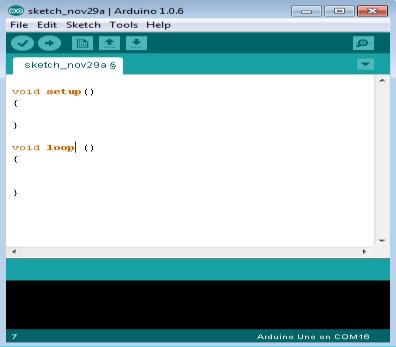
The code written in C++ to program the Arduino uno and control all components is written in the Arduino IDE. ThecodethatyouwriteforyourArduinoarecalledsketches. Each sketch requires two functions SETUP and LOOP, which donotreturnanything.The commandsunderneath thesetup function are implemented foremost by the Arduino. The commands underneaththeloopfunctionrun repeatedlyuntil theArduinoisbeingdriven
Forourproject,wewillusetheThingSpeakAPIto visually present past data collected by the sensors. With the assistance of the IoT analytics platform service ThingSpeak, we can collect, visualize, and examine realtime data streams online. Our devices allow us to direct data to ThingSpeak, see live data immediately, and give alarms.alerts.

6. FLOWCHART
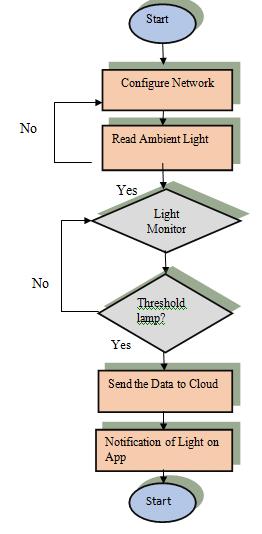
Figure-Flowchart
7. WORKING
The Smart Street Lighting System uses Arduino UNOthatcanbepowerbya9voltbatteryorbyaUSB to UART cable as its microcontroller to control the working of all the components of the system. We program the Arduino UNO using C++ and through the Arduino IDE. The LDR sensors are continuously detecting the intensity of the incoming sunlight. We setaspecificthresholdvalueandprogramtheArduino to detect whether the incoming light intensity on the LDRsensorsislessthanorgreaterthanthisthreshold value.
If The street light is automatically switched on during the day if the incoming light intensity exceeds the threshold value, and automatically turned off during the night if the incoming light intensity is less thanthethresholdvalue.Aknownvoltageisdelivered acrossthecircuit,andanLDRisconnectedtoaknown resistance. The microcontroller records the voltage dividercircuit'soutputvoltageandusesittocalculate thechangeinresistance.
Since the incoming and outgoing current to and from the sensors is very small and cannot be used to drive thelargerload(LEDBulb),weusea relaydriver module to control the current voltage from the sensors. Also, the relay driver is used as a switch to turntheLEDlightbulbON/OFFdependingonthedata fromtheLDRsensors.
TheuseofIOTtechnologyalsosignificanthere.We use an ESP8266 WI-FI module to send the data from the sensors to an open cloud server(ThingSpeak API) for analysisandvisualization.TheESP8266canonlyfunction between 3-3.6 volts any current above this voltage will permanently damage the ESP8266 WI-FI module. We use AT commands to test and configure the ESP8266. AT commandscanbeusedforfunctionslikeconnectingtothe available WI-FI network, Connect a microcontroller to the ESP module and begin sending data to the internet. Open TCP connections without needing your own microcontroller'sTCP/IPstacktobeoperating.
WewillbeusingtheThingSpeakAPIforourprojectto display historical data measured by the sensors, in a visual format. We maygather,visualize,andanalyzerealtime data streams online with theaid oftheIoT analytics platformserver ThingSpeak.ThingSpeak canreceive data from your devices, instantaneously visualize real-time data,anddirectnotifications.
8. RESULT
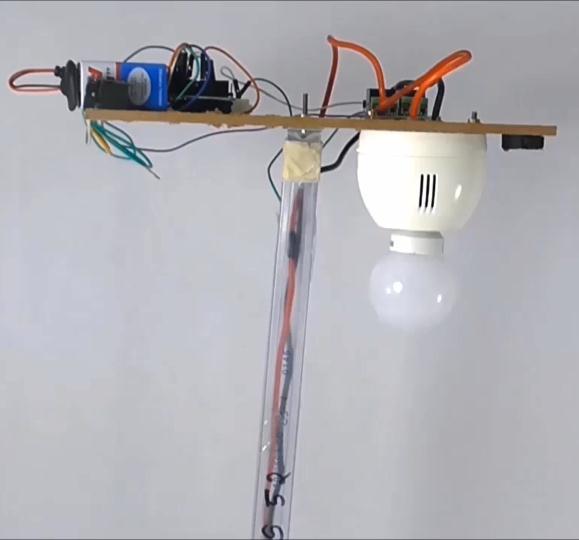
Figure-HardwareofProject
By using this system it is possible to switch the lights ON/OFFautomaticallybydetectingthesunlightintensityin the surroundings, hence we will be saving a large amount of energy when we use this system on a large scale across the world. The involvement of human interaction is also minimizedduetotheusageofIOTandcloud.Ifthereisany breakdown in our systemor failure in any components we canidentifyitremotely.
9. ADVANTAGES
• Huge reduction of energy and maintenance cost.
• Increased public safety from improved lighting.
• Quantifiable ecological effect due to abridged energyconsumption.
• There are lower chances of the automatic street light systemoverheating& risk ofaccidentisalsominimized.
• Priceof functioning automatic street light is far less as and when compared to the orthodoxstreetlightingsystem
• The automatic street light system isecofriendly& hence assists in reducing the carbonfootprint.
• Reduced requirement of manpower which caused reduction in probability of errors to occur.
• Highercommunitysatisfaction.
• Fast Payback and easier maintenance as all the information about the LED lights and the intensity is constantly sent to the server for monitoring.
• PromoteusageofLEDlightbulbstoemitlight in specific direction thereby optimizing the efficiencyofthestreetlights.
• LEDlightsmightlastupto45,000hourswhile HIDshavealifespanofaround15,000hours.
10. CONCLUSION
Inconclusion, asmartstreetlightingsystemusingIOT and cloud based on sunlight intensity detection has several benefits including energy savings, improved safety and reduced maintenance costs. By using sensors to detect the levelofsunlightandadjustthe brightnessaccordingly,this system can optimize energy consumption while still providing adequate lighting for pedestrians, cyclists, and motorists.
There are also several potential future enhancements that could be made to the system, such as integrating with weather data, adding motion detection, using adaptive learning algorithms, incorporating wireless connectivity, and utilizing renewable energy sources. These enhancements could further improve the efficiency and effectivenessofthestreetlightautomationsystem,making itanevenmorevaluableinvestmentformunicipalitiesand communitiesaroundtheworld.
11. REFERENCES
[1] S. Kadirova, T. Nenov and D. Kajtsanov, "IoT Based AutomaticElectronicSystemforMonitoringandControlof Street Lighting," 2020 IEEE 26th International Symposium for Design and Technology in Electronic Packaging (SIITME),2020,pp.122-126,doi: 10.1109/SIITME50350.2020.9292246
[2]. P. P. F. Dheena, G. S. Raj, G. Dutt and S. V. Jinny, "IOT basedsmartstreetlightmanagementsystem," 2017 IEEE International Conference on Circuits and Systems (ICCS), 2017,pp.368-371,doi:10.1109/ICCS1.2017.8326023
[3] S. M. Sorif, D. Saha and P. Dutta, "Smart Street Light Management System with Automatic Brightness Adjustment Using Bolt IoT Platform," 2021 IEEE International IOT, Electronics and Mechatronics Conference (IEMTRONICS), 2021, pp1-6,doi: 10.1109/IEMTRONICS52119.2021.9422668
[4] M. C. V. S. Mary, G. P. Devaraj, T. A. Theepak, D. J. Pushparaj and J. M. Esther, "Intelligent Energy Efficient Street Light Controlling System based on IoT for Smart City," 2018 IEEE International Conference on Smart SystemsandInventiveTechnology(ICSSIT),2018,pp.551554,doi:10.1109/ICSSIT.2018.8748324.
[5] N. Gopinath, D. Ezhilarasi, S. Kiruthika and S. Hemavathi,"Self-ActivatingStreetLightsUsingSensorsand Arduino," 2021 IEEE 4th International Conference on Computing and Communications Technologies (ICCCT), 2021, pp. 469-472,doi: 10.1109/ICCCT53315.2021.9711871.