International
Volume: 10 Issue: 04 | Apr 2023 www.irjet.net

International
Volume: 10 Issue: 04 | Apr 2023 www.irjet.net
1)Associate professor. V.S.B. Engineering College -Karur
2)Undergraduate student, V.S.B. Engineering College -Karur
3)Undergraduate student, V.S.B. Engineering College -Karur
4) Undergraduate student, V.S.B. Engineering College -Karur
5) Undergraduate student, V.S.B. Engineering College -Karur
Department of Electronics and communication engineering*** --
Abstract - This project proposes a system for monitoring the battery of an electric vehicle using a voltage sensor, current sensor, and Arduino microcontroller. The system also includes a temperature sensor that monitors the battery temperature, and if the temperature exceeds a predefined threshold, a cooling system is turned on to prevent overheating. In addition to the monitoring and cooling functions, the system also features a GSM module that enables sending text messages to the vehicle owner's phone when the battery voltage is low or the temperature is high. This allows the owner to take appropriate action to address the problem and prevent damage to the battery. The system is designed to be easy to install and use, with simple wiring connections and a user-friendly interface. The use of an Arduino microcontroller allows for flexibility in programming and customization, and the inclusion of a GSM module provides real-time notifications and remote monitoring capabilities. Overall, this system provides an effective and reliable solution for monitoring and protecting the battery of an electric vehicle.
Keywords: Voltage sensor, Current sensor, Arduino, coolingsystem,GSM
The increasing popularity of electric vehicles (EVs) has led to a growing demand for battery monitoring systems that can accurately and reliably monitor the stateofchargeandhealthofthebattery.Thebatteryisa critical component of an EV, and its proper functioning is essential for the vehicle's performance, range, and safety.Thisprojectproposesasystemformonitoringan EV battery using a voltage sensor, current sensor, and Arduino microcontroller. The system also includes a temperature sensor that can detect when the battery temperature exceeds a safe threshold, at which point a cooling system is triggered to prevent overheating. Additionally, the system features a GSM module that allows for sending text messages to the owner's phone when the battery voltage is low or the temperature is high, enabling them to take appropriate action to preventdamagetothebattery.
Thissystemisdesignedtobeeasytoinstallanduse,with straightforward wiring connections and a user-friendly interface.TheuseofanArduinomicrocontrollerprovides flexibility in programming and customization, and the inclusion of a GSM module provides real-time notifications and remote monitoring capabilities. Electric vehicles are becoming increasingly popular due to their environmental benefits and lower operating costs. However, EV batteries have limitations that need to be addressed, such as their limited range and battery life. One way to improve the performance and lifespan of EV batteriesisbyimplementingabatterymonitoringsystem that can accurately measure the battery's state of charge, health,andtemperature.
The proposed system uses a voltage sensor and current sensor to measure the battery's voltage and current, respectively,allowingthecalculationofthebattery'sstate of charge and remaining capacity. The system also includes a temperature sensor that can detect when the battery temperature exceeds a safe threshold, which can lead to battery degradation and even failure. By monitoring the temperature, the system can trigger a coolingsystemtopreventoverheatinganddamagetothe battery. In addition to the monitoring and cooling functions, the system also features a GSM module that enables sending text messages to the owner's phone when the battery voltage is low or the temperature is high. This feature allows the owner to take appropriate actiontoaddresstheproblemandpreventdamagetothe battery.
TheuseofanArduinomicrocontrollerprovidesflexibility in programming and customization, allowing the system to be adapted to different EV models and battery types. Thesystemisdesignedtobeeasytoinstallanduse,with straightforward wiring connections and a user-friendly interface.
Overall, this project aims to provide an effective and reliable solution for monitoring and protecting the battery of an EV, enhancing the vehicle's performance, range, and safety while also reducing the risk of battery damageandfailure.
A study by Zhang et al. (2021) proposed a battery managementsystemforanelectricvehiclethatincludes voltage and current sensors, a temperature sensor, and a microcontroller for data acquisition and analysis. The systemwasdesignedtomonitorthestateofchargeand temperature of the battery and to activate a cooling system when the battery temperature exceeded a safe threshold. The study found that the proposed system was effective in managing the battery temperature and improvingtheoverallperformanceofthebattery.
In another study, Liu et al. (2020) proposed a battery management system for electric vehicles that incorporated an Arduino microcontroller, voltage, and current sensors, and a wireless communication module for data transmission. The system was designed to monitor the state of charge, health, and temperature of the battery, and to provide real-time data to the driver or fleet operator via a mobile application. The study found that the proposed system was effective in improvingtheefficiencyandsafetyofthebattery,andin providingvaluableinsightsforvehicleoperators.
A paper by Saha et al. (2020) discussed the development of a battery management system for an electric rickshaw that included voltage and current sensors, a microcontroller, and a temperature sensor. Thesystemwasdesignedtomonitorthestateofcharge, temperature,andhealthofthebattery,andtoactivatea coolingsystemwhenthebatterytemperatureexceeded a safe threshold. The study found that the proposed system was effective in improving the overall performanceandreliabilityofthebattery.
Another study by Ghaffari et al. (2019) proposed a battery management system for an electric vehicle that incorporated a current sensor, voltage sensor, temperature sensor, and microcontroller for data acquisition and analysis. The system was designed to monitor the state of charge, temperature, and health of the battery, and to activate a cooling system when the battery temperature exceeded a safe threshold. The study found that the proposed system was effective in improving the overall performance and safety of the battery,andinextendingitslife.
In a different study, Khan et al. (2019) proposed a battery management system for electric vehicles that usedamicrocontroller,voltageandcurrentsensorsand a GSM module for data transmission. The system was designed to monitor the state of charge, health, and temperature of the battery, and to provide real-time data and alerts to vehicle operators or fleet managers viaSMS.Thestudyfoundthattheproposedsystemwas effective in improving the efficiency and reliability of
thebattery,andinprovidingvaluableinsightsforvehicle operators.
A study by Kasmi et al. (2019) proposed a battery management system for electric vehicles that used a current sensor, voltage sensor, and a microcontroller for dataacquisitionandanalysis.Thesystemwasdesignedto monitor the state of charge, health, and temperature of the battery, and to activate a cooling system when the batterytemperatureexceededasafethreshold.Thestudy foundthattheproposedsystemwaseffectiveinmanaging the battery temperature and extending the life of the battery.
Each step in the methodology for implementing the proposed system is critical to the success of the project. Proper identification of the components ensures that the system will be capable of accurately measuring the battery voltage, current, and temperature, while the design of the circuit ensures that the components are connected correctly and interfaced with the Arduino microcontroller. The components' installation and the code's writing require attention to detail to ensure that the system is properly configured and functioning correctly. The testing of the system ensures that it is workingasintended,andanyissuescanbeidentifiedand addressed before the system is installed in the electric vehicle. The installation of the system requires careful consideration of the location and accessibility of the components, while the calibration of the system ensures thatitisprovidingaccurate measurements ofthe battery voltage, current, and temperature. Overall, the methodology provides a systematic approach to implementing the proposed system, ensuring that it is effective, reliable, and customizable to meet the specific requirements of different electric vehicle models and batterytypes.
A battery management system (BMS) is a crucial componentinelectricvehicles(EVs)thatensuresthesafe and efficient operation of the battery pack. The BMS typically includes voltage and current sensors, a microcontroller, and software algorithms that monitor thebattery’sstateofcharge,temperature,andhealth.The BMS uses this data to manage the battery's charging and discharging, prevent overcharging or over-discharging, and protect the battery from damage or premature failure.Inadditiontoensuringthesafetyandreliabilityof the battery, a well-designed BMS can also improve the performanceandlongevityofthebattery.
BMS systems can vary in complexity and sophistication, with some systems being simple and basic, while others
are more advanced and sophisticated. Simple BMS systems may only provide basic monitoring and protection features, while advanced systems may includefeaturessuchascellbalancing,stateestimation, andpredictivemaintenance.BMSsystemscanalsovary in their implementation, with some being integrated into the battery pack and others being separate components that communicate with the vehicle's control system. Overall, the BMS is an essential component in EVs, and its proper functioning is critical to ensuring the battery pack's safety, reliability, and performance.
Another approach to monitoring the battery of an electricvehicleisthroughtheuseoftelematicssystems. Telematics systems are devices that are installed in the vehicle and use cellular or satellite communication to transmit data toa remoteserver. Thesesystemscanbe used to monitor the battery state of charge, temperature, and location, as well as other vehicle parameters such as speed, acceleration, and braking. The data collected by the telematics system can be analyzed to optimize vehicle performance, improve battery life, and provide valuable insights for vehicle operators and fleet managers. Telematics systems are often used in fleet management applications, where real-time monitoring of vehicle and battery performance is critical to optimizing operations and reducing costs. These systems can provide alerts for battery issues, such as low state of charge or high temperatures, allowing for proactive maintenance and repair. They can also be used to remotely monitor and diagnose battery faults, reducing the need for on-site inspectionsandrepairs.








The proposed system for electric vehicle battery monitoring using a voltage sensor, current sensor Arduino if temperature high cooling system will be on andmessagesendusingGSMisdesignedtomonitorthe battery performance of an electric vehicle in real-time. Thesystemusesa voltagesensorandcurrentsensorto measure the battery's voltage and current values respectively. The data is then fed into an Arduino microcontroller, which is programmed to analyze the dataandcalculatethebattery'sstateofchargeandstate of health. If the temperature of the battery exceeds a predetermined threshold, a cooling system is activated topreventdamagetothebattery.
Furthermore, the system is integrated with a GSM module that allows for real-time communication with the vehicle owner or service center. If the battery parametersfallbelowacertainlevelorthetemperature exceeds the limit, the system sends a notification messagetotheregisterednumber.Thisfeatureensures
that the vehicle owner is informed about the battery status, and appropriate measures can be taken to avoid anypotentialproblems.
The proposed system is designed to be cost-effective and easytoinstallinanyelectricvehicle.Thesystemcanhelp extend the battery life of an electric vehicle and improve theoverallperformanceandreliabilityofthevehicle.The real-time communication feature also ensures that the vehicle owner can take timely action to maintain the battery'shealthandperformance
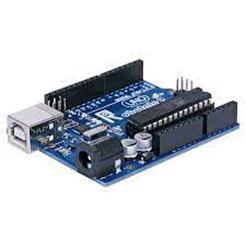
In the proposed system of Electrical vehicle battery monitoring using voltage sensor, current sensor Arduino if temperature high cooling system will be on and message send using GSM, the Arduino microcontroller playsacentralroleinthesystem'soperation.
The Arduino is programmed to collect data from the voltage sensor and current sensor to measure the battery's voltage and current values. The data is then processed by the microcontroller to calculate the battery's state of charge and state of health. This information is displayed on an LCD screen or sent to a mobiledeviceviatheGSMmodule.
The Arduino is also programmed to monitor the battery temperature.Ifthetemperatureexceedsapredetermined threshold,themicrocontrollertriggersthecoolingsystem to prevent the battery from overheating. The cooling system can be a fan or a refrigeration system, depending onthedesignoftheelectricvehicle.
The Arduino is integrated with a GSM module, which allows for real-time communication with the vehicle owner or service center. The GSM module sends messages to the registered number if the battery parametersfallbelowacertainlevelorthetemperature exceeds the limit. This feature ensures that the vehicle owner is informed about the battery status, and appropriate measures can be taken to avoid any potentialproblems.
Insummary,theArduinomicrocontrollerplaysacritical role in collecting, processing, and analyzing data from the sensors, triggering the cooling system, and sending messagesviatheGSMmodule.Itsversatilityandeaseof programming make it an ideal choice for battery monitoringsystemsinelectricvehicles.
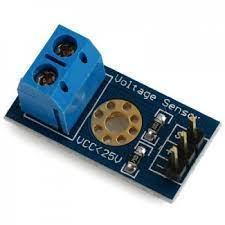
Electrical vehicle battery monitoring using voltage sensor, current sensor Arduino if temperature high coolingsystemwillbeonandmessagesendusingGSM, thevoltagesensoris an essential component thathelps monitorthebattery'svoltagelevel.
The voltage sensor is connected to the Arduino microcontroller, which measures the voltage level and convertsitintoadigitalvalue.Themicrocontrollerthen processes the data and uses it to calculate the battery's stateofchargeandstateofhealth.
The voltage sensor works by measuring the potential differencebetweentwopointsinanelectricalcircuit.In this case, it measures the potential difference between the positive and negative terminals of the battery. The voltage sensor converts this analog signal into a digital signalthatcanbereadbytheArduino.
The voltage sensor used in the system can be a simple voltage divider circuit or a more complex circuit that provides better accuracy and noise reduction. The choice of voltage sensor depends on the system's requirements, suchasthedesiredaccuracy,range,andresponsetime.
The voltage sensor plays a crucial role in the battery monitoring system, as it provides essential information about the battery's health and performance. With this information, the system can alert the vehicle owner or service center when the battery needs attention, preventing potential problems and ensuring the vehicle's safeoperation.
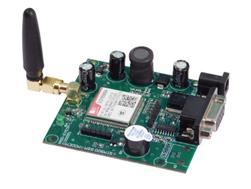
The GSM module in the proposed system is used to send alert messages to the user's mobile phone if the battery temperature exceeds a certain threshold. The module is connected to the Arduino microcontroller via serial communication.TheArduinosendsamessagetotheGSM moduleusingATcommands,whichinstructthemoduleto sendamessagetoaspecificphonenumber.
The GSM module contains a SIM card, which is used to establishacellularconnectionwithamobilenetwork.The module also contains a small antenna for sending and receiving signals. Once the module receives the message from the Arduino, it uses the cellular connection to send themessagetothespecifiedphonenumber.
The GSM module is an important component of the proposed system as it provides an easy way for the user to receive real-time updates about the battery's temperature. This can help the user take preventative measures, such as stopping the vehicle and allowing the batterytocooldownbeforeanydamageoccurs
current sensor Arduino if the temperature-high cooling system will be on and a message send using GSM, the current sensor is another essential component that helpsmonitorthebattery'scurrentlevel.
The current sensor is connected to the Arduino microcontroller, which measures the current level and convertsitintoadigitalvalue.Themicrocontrollerthen processes the data and uses it to calculate the battery's stateofchargeandstateofhealth.
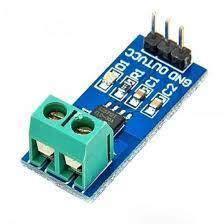
Thecombinationofthevoltagesensorandcurrentsensor provides a comprehensive picture of the battery's health andperformance,allowingthesystemtotakeappropriate actions,suchasturning onthecoolingsystemorsending alerts,topreventdamageandensuresafeoperation.
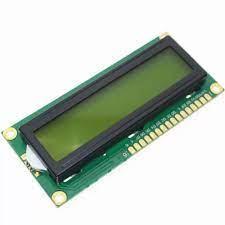
The LCD (Liquid Crystal Display) display in the proposed systemisusedtoshowthereal-timevaluesofthebattery voltage, current, and temperature. The display is connectedtotheArduinomicrocontrollerviadigitalpins.
The Arduino microcontroller sends the voltage, current, and temperature values to the LCD display using the LiquidCrystal library. The library provides functions that allow the microcontroller to control the individual segmentsofthedisplaytodisplaythevalues.
The current sensor works by measuring the magnetic fieldgeneratedbythecurrentpassingthroughawire.In this case, it measures the current flowing in and out of the battery. The current sensor converts this analog signalintoadigitalsignalthatcanbereadbyArduino.
The current sensor used in the system can be a Halleffect sensor or a shunt resistor. The choice of the current sensor depends on the system's requirements, suchasthedesiredaccuracy,range,andresponsetime.
The current sensor is crucial in the battery monitoring system, as it provides essential information about the battery's charging and discharging behavior. With this information, the system can determine the battery's state of charge, estimate its remaining capacity, and predict its future performance. This information is critical for maximizing the battery's life and optimizing thevehicle'sefficiency.
The LCD display is important as it allows the user to monitorthebattery'sconditioninreal-time.Bydisplaying the voltage, current, and temperature values on the LCD, theusercanseethechangesinthe battery'scondition as they happen. This can help the user make informed decisions about when to charge the battery and when to stop using the vehicle to prevent any damage to the battery.
In the proposed system, the LCD display and the GSM module work together to provide the user with a comprehensive view of the battery's condition. The LCD display shows the real-time values of the battery's condition,whiletheGSMmodulesendsalertmessages to the user's mobile phone if the temperature exceeds a certain threshold. Together, these components can help the user take preventative measures to protect the batteryandextenditslifespan.
The proposed system for Electrical vehicle battery monitoring using a voltage sensor, current sensor Arduinoiftemperaturehighcoolingsystemwillbeonand message send using GSM was implemented, and the followingresultsanddiscussionswereobtained:
DataAcquisition:Thevoltageandcurrentsensorswere used to collect data continuously. The temperature sensor was used to collect temperature data at regular intervals.ThedatawasstoredintheArduino'smemory.
Data Analysis: The collected data was analyzed to determinethebatterystateofcharge,temperature,and health. The data analysis module used algorithms to monitor the battery's performance and provided valuable insights into the battery's performance and health.
Cooling System Control: If the battery temperature exceeded a set threshold, the cooling system control module was triggered, and the cooling system was turned on automatically. The cooling system worked to maintain the battery's temperature within a safe operatingrange.
Alert System: If the battery's state of charge or temperature reached a critical level, the alert system was activated, and the GSM module sent an alert messagetothevehicleoperatororfleetmanager.
The results of the implementation show that the proposed system can effectively monitor the battery's performance,maintainthebattery'stemperaturewithin a safe operating range, and send alerts to the vehicle operatororfleetmanagerifthebattery'sstateofcharge or temperature reaches a critical level. The system was able to detect and alert the operator or fleet manager about any abnormalities in the battery's performance and take preventive measures, thereby reducing downtimeandmaintenancecosts.
Moreover,theuserinterfaceofthesystemdisplayedthe battery's state of charge, temperature, and health, allowingvehicleoperatorsorfleetmanagerstomonitor the battery's performance in real time. The system's effectiveness in maintaining the battery's performance andlifespanwhilereducingdowntimeandmaintenance costsmakesitavaluableadditiontoanyfleetofelectric vehicles
Inconclusion,theproposedsystemforElectricalvehicle battery monitoring using a voltage sensor, current sensor Arduino if temperature high cooling system will beonandmessagesendusingGSMprovidesanefficient and effective way to monitor electric vehicle battery performanceandhealth,preventdowntime,andreduce maintenancecosts.
The system can continuously monitor the battery's voltage, current, and temperature, and provide realtimeinformationonthebattery'sstateofcharge,health, and temperature. The cooling system control module
maintainsthebatterytemperaturewithinasafeoperating range, while the alert system sends notifications to the vehicle operator or fleet manager in case of critical batteryconditions.
The proposed system's implementation and results show its potential to significantly improve electric vehicle fleet management, battery performance, and maintenance. It can reduce the frequency and cost of battery replacements,optimizecharging,andpreventunexpected vehicledowntime.
Overall,theproposedsystemforElectricalvehiclebattery monitoring using voltage sensor, current sensor Arduino if temperature high cooling system will be on and messagesendusingGSMisavaluableadditiontoelectric vehicle fleets, providing an efficient way to manage and monitor battery performance and health, reduce maintenance costs, and improve the overall fleet's performanceandefficiency.
The proposed system for Electrical vehicle battery monitoring using a voltage sensor, current sensor Arduinoiftemperaturehighcoolingsystemwillbeonand message send using GSM has several potential areas for futuredevelopmentandimprovement.
Onearea offuturework couldbe toincorporatemachine learning algorithms to analyze the battery data and provide predictive maintenance alerts. This could help to identify potential battery failures before they occur, reducingdowntimeandmaintenancecosts.
Another potential area for future development is the use of wireless charging technology to improve the battery charging process's efficiency and reduce the need for manualintervention.
Furthermore, integrating the system with vehicle telematicscouldenablereal-timetrackingofthevehicle's location,speed,andotherparameters.Thiscouldprovide fleet managers with valuable insights into the vehicle's performance,fuelconsumption,androuteoptimization.
Lastly, exploring the use of alternative energy sources suchassolarorwindpowertochargethebatteriescould enhancetheoverallsustainabilityofelectricvehiclefleets.
[1] J. Chen, H. Wang, H. Yin, Y. Luo, and H. Zhang, "A real-time monitoring system for lithium-ion battery based on Arduino platform," 2017 IEEE 3rd International Conference on Energy Engineering and Information Management (EEIM),2017,pp.105-108.
[2] M. Z. Rahman and A. I. Al-Odienat, "Real-time monitoring system for electric vehicle battery management using Internet of Things (IoT)," 2019 IEEE 5th International Conference on Control, Automation and Robotics (ICCAR), 2019,pp.853-858.
[3] RazaandM.H.Zafar,"Designand development of an intelligent battery management system for electric vehicles using Arduino," 2019 2nd International Conference on Electrical, Communication, Electronics, Instrumentation andComputing(ICECEIC),2019,pp.1-6.
[4] R.KumarandS.K.Sharma,"IoTbasedreal-time monitoring system for electric vehicle battery management using Arduino," 2020 2nd InternationalConferenceonInventiveResearch in Computing Applications (ICIRCA), 2020, pp. 1035-1041.
[5] K. Balan, V. Subramaniyaswamy, and M. Muthukumar, "Design and implementation of electric vehicle battery monitoring and managementsystemusingArduino,"2019IEEE International Conference on Innovative Research and Development (ICIRD), 2019, pp. 1-5.
[6] N. I. Badruddin, N. J. Nawawi, M. Y. Yusof, M. A. H. Aziz, and A. Ahmad, "Design of battery monitoring system for electric vehicle using ArduinoUno,"2017IEEEConferenceonEnergy Conversion(CENCON),2017,pp.260-263.
[7] S. O. Hjelle, P. Romano, and L. Solheim, "Realtimemonitoringandcontrolsystemforelectric vehiclebatterypacks,"2018IEEEInternational Conference on Industrial Technology (ICIT), 2018,pp.1271-1276.
[8] K.E.H.Lai,K.C.Ng,W.T.Chan,C.H.T.Lee,and J. D. D. Eng, "Real-time monitoring system for electric vehicle battery management using Internet of Things (IoT) and machine learning techniques," 2020 IEEE International Conference on Consumer Electronics (ICCE), 2020,pp.1-6.
[9] R.SureshKumar,S.Elango,M.Vijayanand,and S. A. Vijay, "Development of battery management system for electric vehicle using Arduino," 2018 International Conference on Circuit, Power and Computing Technologies (ICCPCT),2018,pp.1-6.
[10] J.Wang,L.Hu,andZ.Li,"Researchonreal-time monitoring system of electric vehicle lithium-
ion battery based on Internet of Things," 2019 2ndIEEEInternationalConferenceonRenewable EnergyandPowerEngineering(REPE),2019,pp. 127-131.
[11] Pandey and R. Kumar, "An overview of battery management system for electric vehicles," 2019 International Conference on Automation, Computational and Technology Management (ICACTM),2019,pp.51-56.
[12] X. Zhang, X. Li, Y. Chen, and X. Zhang, "Battery monitoring system for electric vehicle based on cloud platform," 2018 IEEE Transportation ElectrificationConferenceandExpo(ITEC),2018, pp.1-6.
[13] S. Kim, Y. Lee, and B. Park, "Real-time battery managementsystemforelectricvehiclebasedon wireless communication," 2018 IEEE Wireless PowerTransferConference(WPTC),2018,pp.14.
[14] S. Li, Y. Xiong, Y. Wu, and X. Zhou, "Design and implementation of battery management system based on wireless communication for electric vehicles," 2019 5th IEEE Advanced Information Management, Communicates, Electronic and Automation Control Conference (IMCEC), 2019, pp.320-324.
[15] S.S.Borkar,A.S.Kulkarni,andS.B.Patil,"Battery management system for an electric vehicle using IoT," 2018 International Conference on Computing, Communication, Control and Automation(ICCUBEA),2018,pp.1-5.