EXPERIMENTAL STUDY OF SCC BY ADDING POLYPROPYLENE FIBER WITH CASHEW NUT SHELL ASH AS PARTIAL REPLACEMENT OF CEMENT
Swetha Chandran1 , Er. Rajeev V. S.21PG Student, Dept. of Civil Engineering, Universal Engineering College, Vallivattom, Kerala, India
2Assistant Professor, Dept. of Civil Engineering, Universal Engineering College, Vallivattom, Kerala, India ***

Abstract - In the present day, for the purpose of replacing the cement there is much research is being globally to identify a suitable cementitous material to take the role of cement. In this paper, the main aim of the project is to study the mechanical properties of the self-compacting concrete (SCC) by adding polypropylene fiber with cashew nut shell ash (CNSA) as partial replacement of cement with different proportions. The fresh and hardened properties of the SCC with this materials with different proportions and control one were investigated. The cashew nut shell ash is an excellent cementitious material used as partial replacement of cement and which have similar properties compared to cement. Polypropylene fiber (PPF) was added to concrete at 1% and replacement of cement with CNSA at 5%, 10%, 15% and 20%. The mould used for casting SCC are cube (150mmx150mmx150mm), cylinder (150mmx300mm). The compressive strength and split tensile strength of casted SCC are noted along with the curing period of 7 and 28 days. The results showed that 10% mix have the optimum value more than control mix.
Key Words: Cashew nut shell ash, Polypropylene fiber, Compressive strength, Split tensile strength, Selfcompacting concrete
1. INTRODUCTION
Self-compacting concrete is cutting edge method that does not require vibration for placing and compaction. The serious durabilityissuesarisesin placelikethe marine environment, underground etc.dueto sulphateattack chlorideattack and carbonation can be eliminated by using SCC. Which make quick concrete placement compared to normal concrete, homogeneity, which does not use vibrating equipment for placing, which have higher productivity, which need fewer air spaces,whichreducethenoise,andalsoenhancethestrengthanddurability.
The industrial by-products like fly ash, silica fume, metakaolin etc., provide excellent binding properties to concrete and which used as a replacing material of cement. These substances are generally termed as supplementary cementitious materials.Self-compactingconcreteisamixofcementasbindingmaterial,water,sandandcoarseaggregate.Theexpanding need for the use of cement could be increased day by day. There for the need of substitutive binder or replacement materials to cement is increased and which make to find the possibilities of utilizing industrial waste products as cementitiousmaterial.
Some of the reports shows that the construction industry is responsible for 23% of the total CO2 released in global economicactivitiesbecausethedemandforconcreteintheconstructionsectorisever-growingtoday,thatalsoincreases the production of cement, which causes the emission of CO2. The substitution of supplementary cementitious material (SCM)reducestheclinkerproduction,whichinhelptoreducetheenergydemand.Consideringthechemicalandphysical properties of the agro-waste ashes (AWAs) which can be used as the replacing material. In this way, we can reduce the environmentalimpactbyreducingtheclinkerproduction,andtheopenfieldburningofagro-basedwastes.Inhisproject wecanusedastheSCMascashewnutshellash.Which reducestheamountofcementandattainthestrengthmorethan controlmix.
ThePolypropyleneFiberisa kindoflinearpolymersyntheticfiberhavinglightweight,highstrength,hightoughnessand corrosion resistance. The main role of polypropylene fiber is to overcome shrinkage and limit the formation of cracks in theconcrete.Whichisusedinself-compactingconcretetoreduceshrinkageandformationofcracks.
2. MATERIALS USED
2.1 Cement
PortlandPozzolonaCement,(Ultratech)isusedforthisstudy.TestswereconductedasperIS:4031-1988andtheresults were as per IS Standards. Unlike Ordinary Portland Cement, Portland Pozzolana cement (PPC) is manufactured by combination of pozzolanic materials. Pozzolana is an artificial or natural available material. Silica in the cement is in a reactive form. The pozzolanic materials in specific proportions, the PPC also contains OPC clinker and gypsum. These pozzolanicmaterialsincludevolcanicash,calcinatedclayorsilicafumesand flyashwhichmakearound15percentto35 percentofcementweight.
2.2 Fine Aggregate
M – Sand was used as fine aggregate. Availability of river sand is less there for artificial sand has been employed as an alternative for construction. Which is made by crushing hard granite stone. It is commonly used because of readily availableandcostlesstotransport.Laboratorytestwereconductedonfineaggregatetodeterminethedifferentphysical propertiesasperIS2386(PartIandIII)andIS:383-1970
2.3 Coarse Aggregate
Crushedrockof12.5mmsizeisusedascoarseaggregates.Concretebenefitsfromcoarseaggregate’sstrength,hardened qualityandtoughnessvarioustestsoncoarseaggregatewereconductedbasedonIS:2386(PartIandPartIII)–1963and IS:383–1970
Waterisrequiredtowetthesurfaceofaggregatetodevelopadhesivequalityasthecementpastewhereitbindsquickly andsatisfytothewetsurfaceoftheaggregatesthandrysurface.Itiscommonlyacceptedviewthatanyportablewateris suitable to be used in concrete making. It should have inorganic solid less than 1000 ppm and should be free from injurious quantitiesofalkalies,acids,oils,salts,sugars,organicmaterials,vegetable growthorothersubstancethatmay bedamagetobricks,stones,concreteorsteel.
2.5 Admixture
In ACI 116R the admixtures are defined as “a material other than water, aggregates, hydraulic cement, and fiber reinforcement, used as an ingredient of concrete or mortar, and added to the batch immediately before or during its mixing”. The chemical admixtures are used in concrete to enhance the quality of concrete especially SCC during mixing, transporting,placementandcuring.Theyfallintothefollowingcategories.
1. Airentrainers
2. Waterreducers
3. Setretarders
4. Setaccelerators
5. Superplasticizers
6. Specialadmixtures(corrosioninhibitors,shrinkagecontrol,alkali-silicareactivityinhibitors,andcoloring)
A new generation of admixture called MASTER RHEOBUILD 1126ND is based on modified poly-carboxylic ether. The product has been developed primarily for high performance concrete applications where the maximum durability and performancearerequired.Lowalkalicontentandchloride-freeMASTERRHEOBUILD1126ND.Allkindofcementscanbe usedwithit.
Table4ItemsDetails[13]
Incomparisontotheconventionalsuperplasticizers,MASTERRHEOBUILD1126NDhasadifferentchemicalstructure.It is made up of a polymer carboxylic ether with lengthy side chains. The side chains connected to the polymer backbone create a steric barrier that significantly stabilizes the cement particles' capacity to split and disperse. It starts the same electrostaticdispersionmechanismastheconventionalsuperplasticizersatthebeginningofthemixingphase.Alongwith the electrostatic barrier, steric hindrance creates a physical barrier between the cement grains. This method yields flowableconcretewithasignificantlylowerwatercontent.
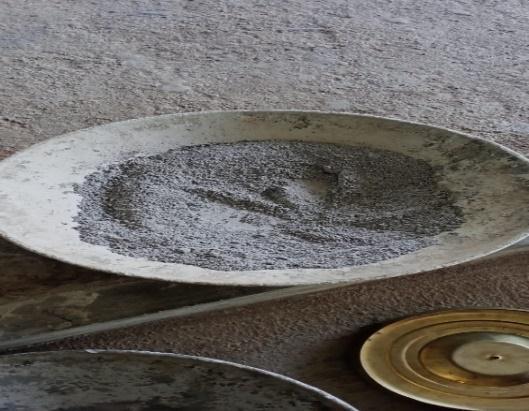
2.6 Cashew Nut Shell Ash
Thecashewtree,whichbelongstotheAnacardiaceaefamily,genusAnacardiumL.,andspecies AnacardiumoccidentaleL. The cashew tree have an important position among the tropical fructiferous trees on account of the growing commercializationofitsmainproductslikethecashewnutshell.
Mostoftheproductionofthecashewnutisdestinedforexportation.TheCNSAisthewastecollectedfromby-productof combustedcashewnutshell.
2.7 Polypropylene Fiber
Polypropylene fiber have been applied for concrete for many years. Main role is to overcome shrinkage and limit the formation of cracks in the concrete. The use of this fiber increase the durability and which also prolong the life of the element.Polypropylenefiberisakindofpolymermaterialwithlightweight,highstrength,andcorrosionresistance.
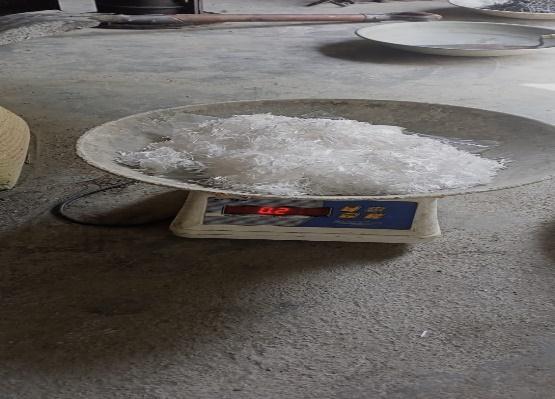
Propertiesofpolypropylenefiberare;
1. Length(L)=12mm
2. Diameter(D)=20micron
3. AspectRatio(L/D)=600
4. Density=1000kg/m3
3. MIX DESIGN
Inthepresentstudy M30 gradeconcrete mix design asper IS: 10262 -2019wascarriedout. Theconcrete mix proportion was 1:2.21:3.4. Water cement ratio was 0.45. For 1m3 concrete, 358.00 kg of cement, 794.00 kg of fine aggregate and 1231.00kgofcoarseaggregatewereused.Toimprovetheworkability,superplasticizerwereusedandwatercontentwas reducedto143.00l/m3.TheproportionedmixforM30 gradeofconcreteisshowninTable6
CNSAandPPFwasaddedasapartialreplacementofcement.CNSAwasreplacedby5%,10%,15%,and20%[1]andPPF was1%.
4. SPECIMEN DETAILS
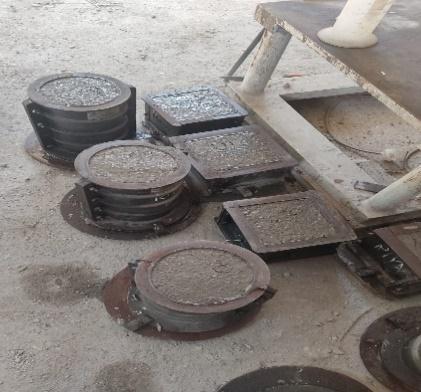
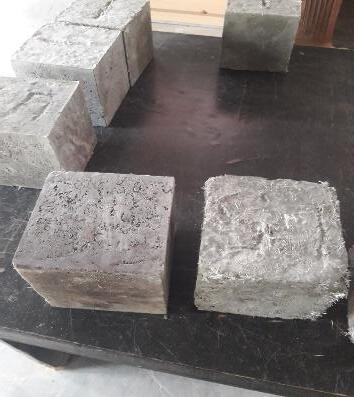
The mould used for casting SCC are cube of size 150mmx150mmx150mm, and cylinder of size 150mmx300mm. 6 numbersofcubeofeachmixand2numbersofcylinderofeachmixcasted.Aftertestingtheoptimumvalueisobtainedat 10%cashewnutshellashand1%polypropylenefiber.
5. PREPARATION OF SPECIMENS
For casting the specimens, required quantities of the cement, fine aggregate, coarse aggregate, super plasticizer, cashew nutshellashandpolypropylenefiberwereweighedandkeptreadyformixing.Foreasyremovalofthespecimens,theoil wasappliedtotheinnersurfacesofthemoulds.Themixingmachinewasusedtomixingmaterials.Theamountofsuper plasticizertobeusedtotheSCCmixwasmeasuredandisalsokeptreadyformixing.Beforemixingthesuperplasticizer wasmixedwiththequantityofwater.Atfirst,alltheingredientsaremixedwellindryconditionandafterthatcalculated amountof waterwithsuper plasticizerwereaddedtothedrymix.All therewere mixedthoroughly.Aftermixing,slump testwasconducted.Finally,concretewasplacedintothemouldsandfilled.
6. TESTS ON HARDENED SCC
Thehardenedconcreteaftercuringmustbestrongenoughtowithstandthestructuralandserviceloadsappliedonitand must be durable enough to withstand the environmental exposure for which it has been designed. If the concrete is properlyproportioned,mixed,handled,placedandfinishedwithhigh-qualitymaterials,itwillbethestrongestandoneof themostdurablebuildingmaterials.
Thepropertiesofhardenedconcrete,suchascompressivestrength,splittensilestrengthandflexuralstrengthofconcrete mixesweredeterminedbycastingcubespecimensofsize150mmx150mmx150mm,cylinderspecimensof150mmx 300mmasperISspecifications.TheresultsaretabulatedinTable6.
From the above test result, the mix with 1 % PPF shows maximum strength. So this proportion is used to make the mix withdifferentproportionofCNSA
SplitTensileStrength
CompressiveStrength
CompressiveStrength
SplitTensileStrength
Fromtheabovegraphstheoptimumvalueisobtainedat10%CNSA+1%PPFmix
7. CONCLUSIONS
Themainfindingsofthisinvestigationaredescribedbelow;
1. SCCwith1%PPFshowsthemaximumcompressivestrengthandsplittensilestrengthmorethanthecontrolmix.
2. Morethan1%PPFusedinmixwhichincreasesthevolumeofvoidsandwhichmakesthereductionstrength.
3. Theoptimumvalueisobtainedatthemixmadewith10%CNSAand1%PPF
ACKNOWLEDGEMENT
I wish to thank the Management, Principal and Head of Civil Engineering Department of Universal Engineering College, Thrissur, affiliated by All India Council for Technical Education New Delhi and the APJ Abdul Kalam Technological Universityfortheirsupport.Thispaperisbasedonthewokcarriedoutbyme(SwethaChandran),aspartofmyPGcourse, undertheguidanceofRajeevV.S.(Assistantprofessor,CivilDepartment,UniversalEngineeringCollege,Thrissur,Kerala). Iexpressmygratitudetowardshimforvaluableguidance
REFERENCES
[1] Adithya Tantriet.al.(2 22).“Implementationassessmentofcalcinedanduncalcinedcashewnut-shell ashwithtotal recycled concrete aggregate in self-compacting concrete employing Bailey grading technique.” Springer, doi.org/10.1007/s41062-022-00907-8M.
[2] ArunKumaretal.(2 22)“Laboratorystudyonmechanicalpropertiesofselfcompactingconcreteusingmarblewaste andpolypropylenefiber” Science direct, doi.org/10.1016/j.clema.2022.100156.
[3] PeihuanYetal.(2 22)“Mechanicalpropertiesoffullyrecycledcoarseaggregateconcretewithpolypropylenefiber” Science direct,doi.org/10.1016/j.cscm.2022.e01352.
[4] JugalKishoreMenduandRamaMohanRaoPannem(2 21).“Assessmentofmechanicalpropertiesofcashewnutshell ashblendedconcrete.” Springer,doi.org/10.1007/s41062-021-00586-x.
[5] JuliaBlazyandRafalBlazy(2 21)“PolypropylenefiberRCanditsapplicationincreatingarchitecturalformsofpublic spaces” Science direct doi.org/10.1016/j.cscm.2021.e00549.
[6] C. Pavithra et al. (2 2 ) “Behaviour of concrete adding chicken feather as fiber with partial replacement of cement withCashewnutshellpowder” Science direct,doi.org/10.1016/j.matpr.2020.08.731.
[7] SolomonOyebisietal.(2 19)“Performanceevaluationofcashewnutshellasabinderinconcreteproduction” Science direct,doi.org/10.1016/j.cscm.2019.e00293.
[8] IndianStandardCodeofPracticeforPPC-Specifications(FirstRevision),IS:12269-2013,BureauofIndianStandards, NewDelhi.
[9] Indian StandardCodeof Specification for CoarseandFineAggregate, IS:383-1970, BureauofIndianStandards, New Delhi.
[10] Indian Standard Code of Methods of Test for Aggregate for Concrete Particle Size and Shape, IS: 2386 (Part 1)-1963, BureauofIndianStandards,NewDelhi.
[11] IndianStandardCodeofMethodsofTestforAggregateforSpecificGravity,Density,Voids,AbsorptionandBulking,IS: 2386(Part3)-1963,BureauofIndianStandards,NewDelhi.
[12] Indian Standard Code of Recommended Guide Lines for Concrete Mix Design, IS:10262-2019, Bureau of Indian Standards,NewDelhi.
[13] MasterRheo-build1126NDcatalogue.