
Design Modification of a Copper Water Heater for Rapid Heating
1234Student, Dept of Mechanical Engineering, Bharat College of Engineering, Badlapur, Maharashtra, India

5Professor, Dept of Mechanical Engineering, Bharat College of Engineering, Badlapur, Maharashtra, India
Abstract - Consumption of purified water is the major issue in rural areas as we are heading towards development. Industrialization and technologicaladvancementhavecaused water supplies, which are a primary sourcefornativeareas, to become contaminated. Therefore, the only method of eliminating pollutants from water is through heating. People from remote regions are still not adapting the improvements in the energy industry, for reasons being various. The traditional copper bumba, which burns firewood, is a form of water heating that's commonly used in rural areas. In this essay, we tried to change the design of thesamecopperbumba so that it would eventually run on an LPG gas stove and use less energy while saving time.
Key Words: Water heater, copper bumba, water purification, firewood burning, remote regions, water contamination.
1.INTRODUCTION
Themostessentialelementforlifeiswater,andanyhuman being musthaveaccessto clean,purified waterona daily basis.Areliablesourceofpurewaterisessentialforsociety's healthandwell-being.Althoughtechnologicalprogresshas beenmadetosupplysafewater,awiderangepeopleliving inruralareasareunabletoaffordtheseadvancements.Asa result,onlythetraditionalapproachofpurificationisleftto makethewatersuitableforconsumption.
Boilingistheprocessthatismostfrequentlyusedtotreat water.Allthedisease-causingmicroorganismsinthewater aredestroyedbyboiling,makingitsafetoconsumeanduse forotherpurposes.Itisthewatertreatmentapproachthat worksbest.Usually,acontainercalleda"Waterheater" is used for this. The output from the heater can be used for numerous reasons, including drinking, cooking, and other domestic chores, but it needs a sufficient amount of heat sourcetoheat.
Themajorityofhomesinremoteregionsarefamiliarwith oldcoppervesselusedonlyforwaterheating.Thiscopper vessel uses firewood to heat itself and operates on the conductive and radiative heat transfer theory. It usually takes a long time to heat, which also produces CO2. Therefore, we attempted to alter the design of the same vesselsothatthetimeforheatingdwindles.Inaddition,we havemadeanefforttomovefromfirewoodtoLPGgasfor heating,whichwouldultimatelycutCO2emissions.
***
2. LITERATURE REVIEW
Withregardtothenation'sgrossdomesticproduct,forestry contributes 1.7%; undocumented withdrawals are not included. (NTFPs, fuelwood, fodder, etc.). A greater percentage of individuals utilize fuelwood in rural areas (67.3% of the population), compared to urban and semiurbanareas(14%),whichaccountsforover93%ofIndia's forestrysector'sGHGemissions.Fordomesticcookingand otherpurposes,itisestimatedthat80%ofruralfamiliesin Indiauseunprocessedorganicmatter,suchaswood,dung, andcropresidue.Around274hoursperyearareputinby women harvesting fuelwood. India's 854 million people consumes216.4milliontonsoffuelwoodannually.According toWorldBankresearch,18.5%ofthe1.3billionpeoplewho live in "environmentally fragile lands," which include arid regions, slopes, and forest ecosystems, are believed to be living in extreme poverty. These people typically reside in remote,oftenhilly,andrelativelyinaccessibleareas,where access to new technology and market advancement is hinderedorslowed.
2.1 Solar Energy (Solar Water Heater) Current Scenario
India'sadvantageouslocationclosetotheequatormakesit an ideal contender for the development of solar energy. Acrossthenation,itreceivessolarradiationrangingfrom4 to7kWh/m2/day,withstrongersolarincidenceinthewest and south. Utilizing these natural assets contributes to a reduction in global warming and emission of greenhouse gases.Additionally,thegovernmentofIndiahasintroduceda numberofinitiativestoimplementandfullyharnessthese non-renewable resources. In three phases, India had previouslyenvisionedtoincreasetheinstalledsolarpower capacity. The installation of 1100 MW of capacity was the goalforthefirstphase(2010–2013).10,000MWand20,000 MW were anticipated to be reached in the second phase (2013–2017) and the subsequent phase of the process, respectively (2017–2022). However, the current circumstanceshaven'tworkedoutasexpected.
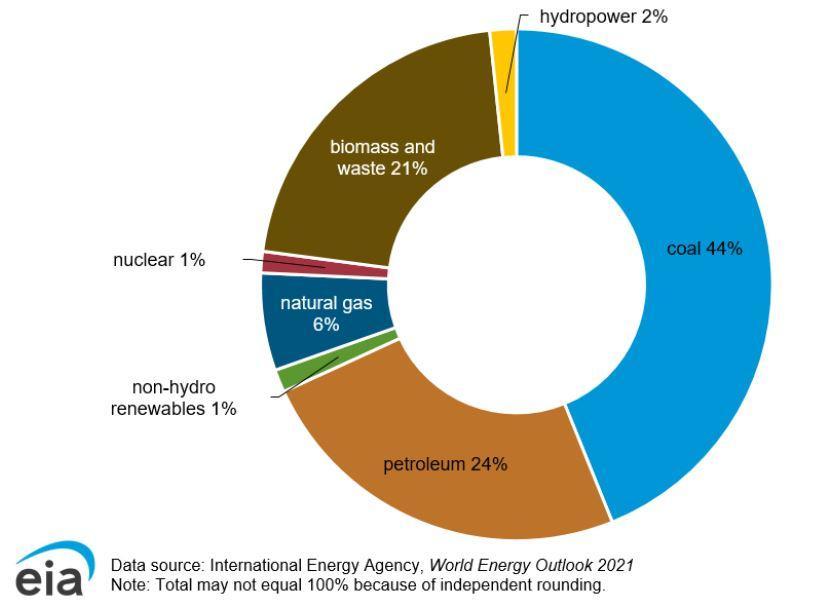
The energy utilization in India by various fuels in 2021 is shownbelow.
The following is a list of the government of India's solar projectinitiatives:
TheGovernmentofIndiaprovidesmonetarysupportfor a variety of solar systems, including solar air heating/dryingandsolarconcentratingsystems.
By2050,theGovernmentofIndiahopestoproduce500 GW of clean energy using nuclear energy based on thorium and reduce the intensity of harmful gas emissionsby20–25%.
Different Indian states are active in the generation of solarenergy,withGujaratleadingthewaywith600MW andRajasthanfollowinginsecondwitharound500MW. With their huge solar power plants, Madhya Pradesh andAndhraPradesharerapidlycatchingupwitheach other.
The global renewable energy investor's meet was supportedby293companies,includingNTPC(National ThermalPowerGeneration),SuzlonPower,andReliance Power, among others. These companies made commitmentstobuildplantsthatwillproduce26,600 MWofrenewableenergyintheyearstocome.
SBI (State Bank of India), the largest lender in India, pledgedtomakeinvestmentsofRs750,000millionin the next five years in order to produce 15,000 MW of sustainableenergy
Indiahasmadesignificantadvancementstowardstheuseof solarenergy,establishinggovernmentorganizationslikethe MinistryofNewandRenewableEnergy(MNRE),theIndia Renewable Energy Development Agency (IREDA), and the SolarEnergyCentre(SEC),andlaunchingsubstantialsolar projects.Thesesolarprojectsnonethelessconfrontavariety of obstacles that eventually prevent their development in rural areas, forcing people to use fossil fuels and natural resources. Based on multiple literature reviews, multiple barrierstotheuseofsolarenergyhavebeenpointedout.
1) Institutionallimitations.
Agencies'lackofcollaboration.
InadequateR&Dculture.
Localinfrastructuredeficiency.
Ambiguousgovernmentpolicies.
2) Technicalchallenges.
Inadequatestandards.
Lackofcommunityinvolvement.
Lackofcompetentworkersandtrainingfacilities.
Technologyriskandperformancelimitations.
Storagechallenges.
Designandflexibilityofuse.
3) RegulatoryandPoliticalroadblocks.
Lackingpoliticalwill.
Politicalupheaval.
Localgovernmentagenciesfailingtooperate.
4) Marketconstraints.
Inadequatecompetition.
Arelativelysmallmarket.
Issueswithpartnerships.
5) BarriersthatareSocial,Cultural,andBehavioral.
Lackofunderstanding.
Hostilitytoemergingtechnologies.
Lowaffordabilityforsociety'spoorestpopulations.
6) Financialobstacles.
Inabilitytoobtaincreditorcapital.
Insufficientfinancialinstitutions.
Limitstothebudget.
InadequateFinancialliteracy.
7) Substantialcapitalcosts.
Longpaybacktime.
Difficultieswithsolarmanufacturing.
Costofoperationandupkeep
Due to the aforementioned hurdles, people from remote regions switch to conventional forms of energy use. So by studyingthemanyscenarioofenergyconsumptionoffuels andalsotoreducegreenhousegasemissions,wedesigneda vessellayoutthatdoesn'trequirespecialskillstooperateor maintainandisalsoaffordableforlower-classresidentsof rurallocations.
3. DESIGN OF WATER HEATER
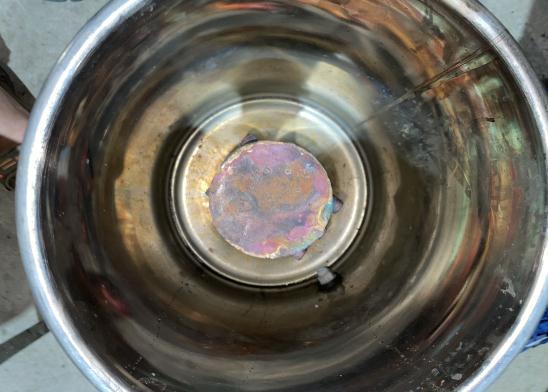
As it is well-known, the cylindrical structure of the traditionalcopperwaterheater(bumba)hasahollowtube initscenter.Thefilledwaterbecomesenclosedbetweenthe cylinder'swallandthehollowtubeinitscenter.Onaplate known as the ash plate, the fuel, such as firewood and coconut husk, is delivered from the very bottom of the vessel. Radiative and conductive heat transfer, which transpires while the fuel burns, occurs as the heat flows throughthehollowtube,heatingthewaterasanoutcome. Theprocessappearstotakealongtime,andprolongedfuel burningstimulatesthereleaseofhazardousgases.
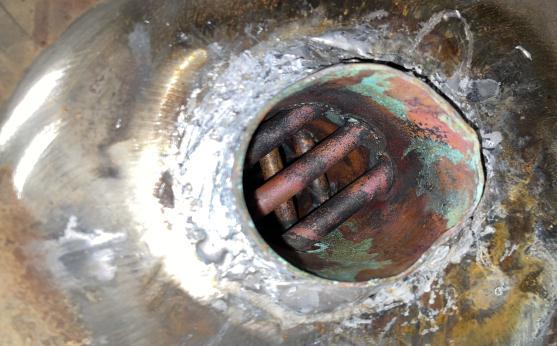
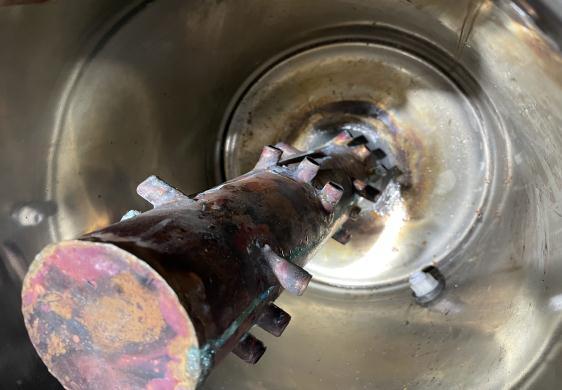
The vessel's comparable structure has been updated to provide efficient heating in less time. We must raise the water's temperature to the boiling point while we are heatingit.Whentheliquid'svaporpressureequalstheair pressureactingontheliquid,achangefromaliquidphaseto a gaseous phase occurs. Boiling happens when atoms or molecules in a liquid are able to sufficiently disperse to transitionfromaliquidtoagaseousstate.
The water at the bottom of the vessel heats up at a faster pace during the boiling process than the water at the top, resulting in a differential in temperature and density. In boiling water, these differences produce convection currents.Now,inthepriordesignofthevessel,thehollow section in the center of the vessel makes it difficult for convectioncurrentstoform duringheating. The design of thathollowparthasbeenalteredinthispaperasaresult. Theredesignedstructurestillcontainsahollowcoppertube inthecore,butthistime,tinycoppertubeshavealsobeen introduced in a crossing pattern. As a result, the crossing designallowsforeffectiveheattransfer,providingquickand continuouswaterheating.
3.1 Process of Heating with Altered Design
In the center portion of the vessel, which is also made of copper,thereare10mmhollowcoppertubesinsertedaspart ofthemodifieddesign.Theentiregeometryisthenplacedin thecenterofthestainless-steelvesselincrisscrosspattern,as shown. Furthermore, heat transmission is accelerated by copper'ssuperiorthermalconductivity,whichis385W/mK. Whenthevesselisfilledwithwater,thehollowtubesinthe middle also gets filled, leaving no air gap in tubes. Heat is transferred through conduction as well as radiationas the flame from the fuel source in this instance, LPG flame begins to warm the center of the vessel from its base. The
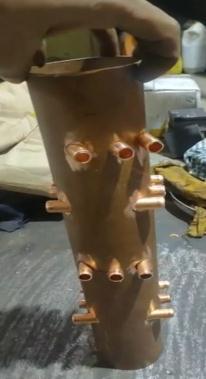
primaryhollowportionofthevesselisheatedbyconduction. (Made of copper). Along with raising the water's temperature, it additionally elevates the vessel's bottom surface temperature. In light of this, radiation heat transmission also causes the small hollow copper tubes, whichareacomponentofthemainverticalhollowsection,to becomeheated.Furthermore,radiationfromtheblazeraises the temperature of tiny hollow tubes filled with water, heatingthewaterthroughradiationandconduction.
Thus,properconvectioncurrentsareproducedinwaterasa result of effective heat transfer through conduction and radiationwhichultimatelyshortensthetimeittakestoheat thewaterandreducestheamountoffuelused.
Timetakenforheatingistabulatedbelow:Sr.
4. OBSERVATIONS AND RESULT
Thereadingsobtainedbyalteringboththefuelsupplyand thewatercontentinbothvesselsareoutlinedbelow:-
Observation No. 1: -
Vessel:-CopperBumba–38L
FuelSource:-Firewood
Timetakenforheatingistabulatedbelow:-
Observation No. 3: -
Vessel:-ModifiedWaterHeater–20L
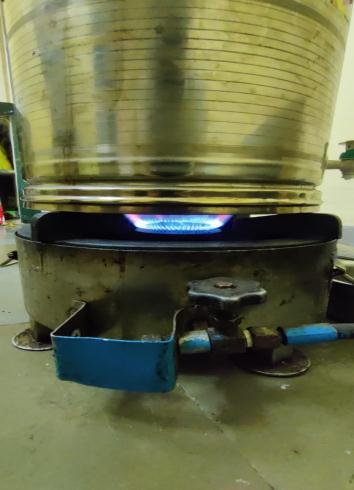
FuelSource:-LPG(5LTank)
Timetakenforheatingistabulatedbelow:-
Inordertocompare,let'sstartwithObservationNo.1,which depictstheheatingofwaterusinganaturalsource,suchas firewoodandotherorganicmaterials.It isclearthatmore time was required for the water to attain its highest temperatureof 62°C.Burning natural fuel foran extended periodoftimeresultsinthereleaseofharmfulgasesandtime loss.
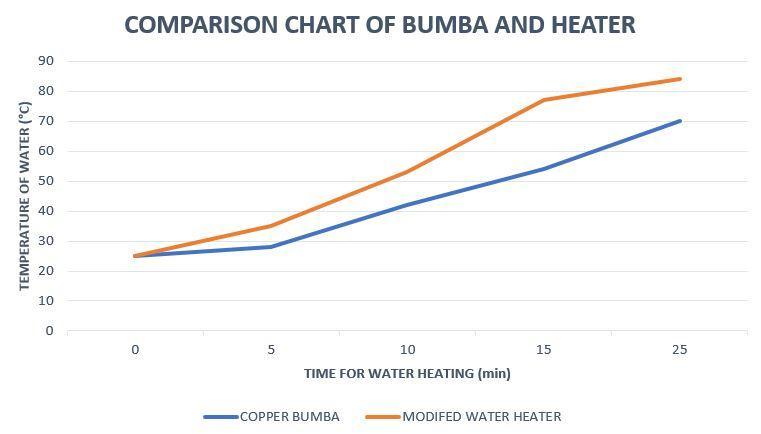
Then,inthefollowingstage,weattemptedtocomparethe heating of the water with our modified vessel design. The water content and fuel source for both vessels, however, weremaintainedthesamethistime.Andwediscoverthatthe modifiedvesseldesignproducessignificantlysuperiorresults thantheconventionaloneduetoanincreaseintheheating surfacearea.Belowisachartthatcomparestheoutcomes.
Observation
Vessel:-CopperBumba–20L
FuelSource:-LPG(5LTank)
5. CONCLUSION
WaterheatingisanecessityforthepeopleinIndia,aswas also addressed in the paper's introduction. Water heating becomesacrucialaspectofliving,especiallyforthosewho liveinremoteareaswhereitischallengingtoaccessclean water.However,theheatingshouldnotbecarriedoutatthe expense of fuel waste or environmental deterioration. Varioustypesofsolarwaterheatingdeviceshavealsobeen introduced,buttheyarealsoexpensiveandunaffordablefor thevariousreasonsstatedabove.Oneofthealternativesin suchascenarioistheadaptedcoppervesseldesign.When compared to the conventional design, the modified design consumeslessfuelandtakeslesstimeforheatingup.
Theincreasedsurfaceareainthemodifiedconstructionis what causes the water to heat up quickly. Because of the entire hollow section in the center of the vessel in the traditional design, heat transfer is slow. The modified version,ontheotherhand,useshollowcoppertubesfilled with water to speed up the heating process through conduction and radiation. Compared to the conventional design, which eventually pollutes the environment by burning firewood, the modified design runs on LPG and consumeslessfuel.
REFERENCES
[1] "A review on traditional water purification methods used in Rural Area", January 2016 Indian Journal of EnvironmentalProtection,SadhanaChaurasia&Ashok Tiwari.M.Young,TheTechnicalWriter’sHandbook.Mill Valley,CA:UniversityScience,1989.
[2] "Efficientfuelwoodconsumptionwithinnovativesolar water-heating system for forest conservation and mitigation of household carbon emission", CURRENT SCIENCE,VOL.120,NO.5,10MARCH2021,LalSingh*, Maninder Jeet Kaur and D. K. Thakur Himalayan ResearchGroupCoreGroup,DepartmentofScienceand Technology(GovernmentofIndia).
[3] "ADescriptiveComprehensionStudyonSolarEnergy, SolarProducts,andSolarProductsMarketinginIndian Context", InternationalSeriesinOperationsResearch& Management Science book series (ISOR,volume 333), AnsariSarwarAlam&ArshiyaFathimaM.S,17January 2023.
[4] "Why Have Improved Cook-Stove Initiatives in India Failed?", World Development Volume 92, April 2017, Pages13-27.
[5] "Analysis of barriers to implement solar power installations in India using interpretive structural modeling technique", Renewable and Sustainable
EnergyReviewsVolume27,November2013,Pages163174.
[6] "Recognitionandprioritizationofchallengesingrowth of solar energy using analytical hierarchy process: Indianoutlook",EnergyVolume100,1April2016,Pages 332-348.
[7] http://www.indiaenvironmentportal.org.in/
[8] https://en.wikipedia.org/wiki/Water_heating
[9] https://byjus.com/chemistry/thermal-conductivity-ofcopper/
[10] https://www.eia.gov/international/analysis/country/I ND
[11] https://chem.libretexts.org/Bookshelves/Physical_and_ Theoretical_Chemistry_Textbook_Maps/Supplemental_ Modules_(Physical_and_Theoretical_Chemistry)/Physica l_Properties_of_Matter/States_of_Matter/Phase_Transiti ons/Boiling