Electricity Generation Using Biogas
Abstract - Rising global challenges of Energy generation, sustainability, cost, environmental enterprises among

others have touched off immense exploration on indispensable energy sources and technologies in the recent once times. Similar former workshop includes exploration into use of biogas as cover Energy in petrol machines. This Paper focusses on how biogas is generated from bacteria and cow soil and other uses, is used for electrical energy is generated from biogas and petrol, using binary Energy (DF) Creator. DF operations are considered to lower cost of operating machine machines and power creators.
This paper focuses on reviewing indispensable energies and ways fastening on bio-gas parcels and original eventuality, also on how to run internal combustion machines on biogas energy, former operations, their vacuity and cost.
The paper also illustrates styles for revision of ordinary machine to run on binary energy, considering their operations, performance and cost recrimination. The findings of this work are of great significance in developing an original medium that uses petrol as an airman energy and biogas as substitute energy. The findings also will help in identification of an applicable energy regulation tool and conforming the generation factory for a salutary use. This is to give affordable indispensable source of electrical power to institutions, cosmopolises or in remote pastoral points.
Key Words: Animal waste, biogas, diesel machine, electricity generation, non-conventional energy sources, petrol machines, clean energy.
1.INTRODUCTION
Now current energy situation throughout the world and the fact that main resources of energy, such as crude oil, natural gas, coal and nuclear fuel are not renewable give importance to other sources of energy, like hydro energy, solar energy, wind energy and biogas energy. Mentioned sources of energy are all renewable, but biogas is particularly significant because of possibility of use in internalcombustionengines(petrolengine),whicharethe main power source for transport vehicles and also commonly used for powering of generators of electrical energy.
Indiaislargestcattlebreedingcountry;thereisabundance of raw material for producing biogas. Also municipal sewage&kitchenwastescanbeusedforthispurpose.The use of methane separated from biogas as a fuel will substantially reduce harmful engine emission and will help to keep the environment net and clean. Biogas consists of approximately 50-70 % methane. It is economical and slurry can be used as organic manure Biogas is a intermixture of gases, primarily conforming of methane, carbon dioxide and hydrogen sulphide, produced from raw stuff similar as farming waste, dung, external waste, mill material, sewage, green waste, wastewater,andfoodwaste.
1.1 Problem Defination
InIndia biogasrequestsizewasvaluedatUSD1.40billion in 2021. But The growth of this sector is directly dependent on population’s mindfulness of environmental protection, and the desire for renewable energy sources grows. Asperthestated data ofICAR (The IndianCouncil ofAgriculturalResearch),everytime,Indiaproducesover 350milliontonsofagrarianwastethatcaninducefurther than,000 mw of power each time and green toxin for agrarian use. MNRE states that India generates around0.1 million tons of external solid waste/ day. But presently Indiabiogasproductislowerthanitseventuality,between 29and48billionm3/time.
Hence, it's demanded to produce a mindfulness and a technology or system from which wecan prize the biogas fromwasteeffectivelyandwithlowcost.
1.2 Objective
Tocreatelowcosthouseholdbiogasdigester.
Finding a way to extract maximum biogas from feedstock.
To find the alternative for traditional biogas extractionmethods.
2. MAIN COMPONENTS
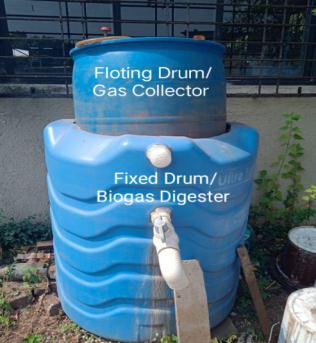
2.1FixedDrum/DigesterTank
2.2FloatingDrum/GasCollector
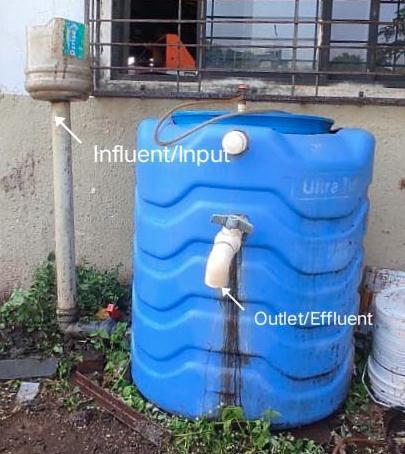
Digestertank isbasicallyacontainerforthemanurefrom livestock, green waste from agriculture, food waste etc. Theoveralldigestionprocessiscarriedoutinthisdigester in the absence of oxygen. Size of these digesters are depending upon application. In above picture it is a simplest design of biogas digester which having single tankwhichisloadedwithbiomass
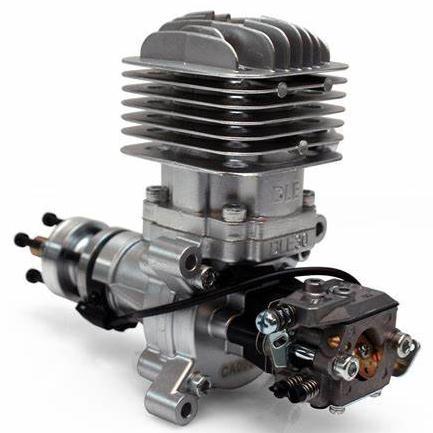
2.4 4 Stroke Petrol Engine/Generator
Floatingdrumorgascollectorconsistacylindricalshaped movingorfloatinggasholderordrum.Thedruminwhich the biogas collects has an internal and/or external guide frame that provides stability and keeps the drum upright. itusedtocollectthegenerated
Switchingtobiogasasvehiclefuel canreducegreenhouse gas emissions. It requires to convert the gas energy into mechanical energy which is require to generate the electricity
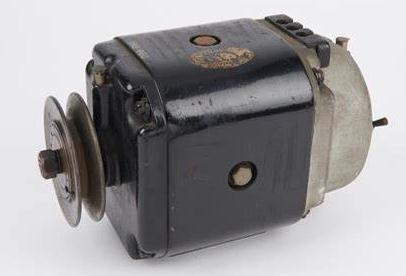
2.5 Dynamo Motor
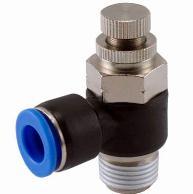
Pneumaticvalvesareusedtocontroltheflowofgenerated biogas. It helps to maintain the air tight seal in floating drum to store the biogas and flow control mechanism allowstocontroltheflowofbiogaswhenitsrequired.
Pneumatic pipe is required to transfer the generated gas totherequiredlocations.

Dynamo is the device which generates the direct current. It basically converts the mechanical rotation into pulsing directcurrent.
3. METHODOLOGY
Biogas is a combustible gas mixture produced during the anaerobic digestion of organic matter in an anaerobic biogas reactor (e.g. small-scale digester, biogas settler, digestionoforganicwasteetc.Duringanaerobicdigestion, wastesaretreatedanddegradedandbiogasisproduced.
Biogasconsists mostly of methane(CH4,around 65-70%) carbon dioxide (CO2, around 25-30%) and varying quantities of water (H2O) and hydrogen sulphide (H2S) and some trace amounts of other compounds, which can be found, especially in waste dump biogas (e.g. ammonia, NH3, hydrogen H2, nitrogen N2, and carbon monoxide, CO).
3.1 Converting Technology
The principle of conversion is, the chemical energy of the combustible gases is converted to mechanical energy in a controlled combustion system by a heat engine. This mechanical energy then activates a generator to produce electrical power. The most common heat engines used in
for biogas energy conversion are gas turbines and combustionengines.
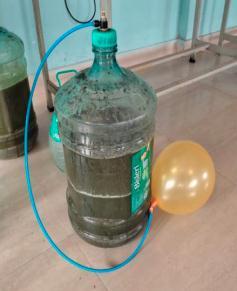
This whole solution is kept in an air tight container and kept for hours so gas is evolved and it is trapped in the container.Thereisaflowvalveconnectionattachedtothe containerwhichcontrolstheflowofthegastrappedinthe container.
4 . Observations
After 24 hours we found that the container is been filled withbiogaswhichisthentrappedintheanothercontainer forfurtherusageorfurthercompressiontostore.
Aspertherecenttestwehavefoundthatthegaswhichhas beencreatedinthecontainerispurebiogaswithMethane contentinitandit’sproperlyflammable.
5. FUTURE SCOPE
The inlet of the biogas digester is start with the mixing tank. In this mixing tank, the waste is mixed with the Bacteriasolutiontoformaslurry.Aslurryisacomposition of the bacteria solution and the cow dung or waste (biomass).Then,thismixedslurryentersintodigester.The microorganisms which are generated in the digester decompose the biomass and breakdown the complex substanceintobasicgaseslikemethane,hydrogen,carbon dioxide, hydrogen sulfide this gas is stored in the floating drumandwecantakenoutaswhenitsrequired.
3.2. Our Methodology
This project is not been made by us for the first time the change that we made is the bacteria solution which requiresforthefermentationofbiomass.
We have made some certain changes in the bacterial solution. we where using a bacterial solution in which we usedtomixjaggeryandwaterandthenthesolutioniskept for some days to get degrade after getting degrade there are micro organisms created in the solution which is the pure bacteria which we are going to need to produce the methane from the biomass. later we had prepared two different samples to testing the different parameters like timerequired,purityofbiogasetc.
3.2.1
Sampleno:-1
Rui leaves (Calotropis gigantea) + bacteria (water + jaggery)aremixed inacontainerIntheratioof3:4where 30percentisgrindedRuileavesinaformofslurryand40 percentisbacteriaaddedtodiluteitproperly.
3.2.2
Bhamburdi leaves (Physalis peruviana L.) + Bacteria (water+jaggery)aremixedincontainerintheratioof3:4 where30percentisgrindedbhamburdileavesinaformof slurry and 40 percent is bacteria added to dilute it properly.
1. Tofindatechnologythatcanbehelptopurifythe methane.
2. Tocreateanawarenessinruralareas.
3. Toproduceabiogasunitinlargescaletominimise theinitialcost.
6. APPLICATIONS
6.1. As a Fuel For Vehicles:werunan4strokeengine on generated biogas on atmospheric pressure, if biogas compresseditcanbeusedeffectivelyasfuelinvehicles.
6.2 As Replacement of Natural Gas :biogashaslarge contain of methen which enables its uses in heating and cookingapplication.
6.3 In Electricity Generation: biogas is the green energy source which can help to create an electricity with the help of generator. It has less emission of greenhouse gases.
6.4 By-Product Utilization: by-productingenerationof biogasistobeusedasfertilizerinfarm.Thisby-productof digestate has large ammout of nitrogen and high carbon contentwhichhelpstoimprovethewaterholdingcapacity ofsoil.
5. CONCLUSIONS
A different methodology and use for extraction of biogas from waste is proposed here. Deeply observing those methods and uses we feel that we need to develop this technologyforcleanandefficientenergysource.
We have successfully run a 4 stroke engine on generated biogasusingabovementionedmethods.Fromourworkwe conclude that electricity generation using biogas has a great scope in future because it’s available in nature itself infreeofcost.
ACKNOWLEDGEMENT
We would like to take this opportunity to express deep regard and profound gratitude to Prof. Anil Rane for this guidance, constant encouragement and valuable feedback throughout the work. The perspective criticism kept us working to accomplish the project in better way. Working under their guidance was an extremely knowledgeable experienceforus.
We would also give our sincere gratitude to IETES
BHARAT COLLEGE OF ENGINEERING for providing us platform where wecanimplement our innovative ideas in rightdirection.
REFERENCES
[1] Updated Guidebook on Biogas Development. United Nations, New York, (1984) Energy Resources DevelopmentSeriesNo.27.P.178,30cm.
[2] Woodhead Publishing Series. (2013). The Biogas Handbook:Science,ProductionandApplications.ISBN 978-0857094988R. Nicole, “Title of paper with only first word capitalized,” J. Name Stand. Abbrev., in press.
[3] https://www.vedantu.com/question-answer/explainthe-principle-and-working-of-a-biogas-class-12physics-cbse-5fa0213401044e34ce0c9e6a
[4] https://www.sciencedirect.com/topics/chemicalengineering/biogas
[5] Abbasi,A.S.andDr.Nipaney,P.C.:(1993)“Modeling andSimulationOfBiogasSystemsEconomics.”Ashish publishing house 8/81 panjabi bagh New Delhi. 110026
[6] Ashok kumar, N. : (1990) “Economics of biogas evalution.”Publishedby–Dr.BS.KS.Chopra.ChiefThe Times Research Foundation 1117/ 5A Ganeshkhind roadOpp.ModiBaugPune411016
[7] TataMacGrawHillpublicingcompanyLtd.NewDelhi. –“BiogasTechnology,APracticalHandbook”.
[8] Moulik T. K. Shrivastava U. K., Shingi P. M. – (1977) “Biogas System in India A Socio – Economic Evaluation.” Indian institute of management Ahmadabad.
[9] Khan, B. H.: (2011) “Non Conventional Energy Resource.” Tata McGraw Hill Education Private LimitedNewDelhi
[10] Kukic, S.,Bracum, B., Karlik, D.,Burns, R. T., Rupcic, S., Jovicic, Daria.(2010): “Comparison between biogas production from manure of laying heners and broilers.”Poljorivedavol.no.1pp.67-72.
[11] Sittiboon Siripornkarachi, and Thawan Sacharitakul. (2007):“Modificationandtuningofdieselbusengine for biogas electricity production.” Published by Maejo International Journal of science and technology pp.194-207.
[12] Tom, Bond., Michael, R. Templeton – (2011) “Energy for Sustainable Development History and future of domestic biogas plants in the developing world.” Energy for sustainable development 15 (2011) 347354.
[13] Sagagi, B. S. B. Garba and N. S. Usman – (2009) “Studies On Biogas Production From Fruits And Vegetable Waste.” Bajopas Volume 2 Number 1 June, 2009 Bayero Journal of Pure and Applied Sciences, 2(1):115-118