
MULTI-FUNCTIONAL BLIND STICK BY USING SOLAR CHARGING SYSTEM
1Associate Professor/ Dept. of EEE, Srinivasa Ramanujan Institute of Technology, Andhra Pradesh

2, 3,4,5,6 UG Student/ Dept. of EEE, Srinivasa Ramanujan Institute of Technology, Andhra Pradesh ***
Abstract - For many visually impaired individuals, navigating through the world can be a difficult and daunting task, as they often encounter obstacles and challenges that sighted individuals may take for granted. The multifunctional blind stick project seeks to provide a solution to these challenges by offering a device that can aid visually impaired individuals in their mobility, navigation, and daily activities. Our proposed system employ several sensors like ultrasonic sensor, infrared sensor, moisture sensor forobstacle detection and various modules like RF module, GPS and GSM modules are used for finding the misplaced stick and tracking the location of the blind person. All these sensors and modules are connected to the Arduino Uno microcontroller. The solar panels in our proposed system are used to charge the blind stick apart from regular power supply. Additionally, the multifunctional blindstickprojecthasthepotentialtoimprove the quality of life for visually impaired individuals by enhancing their independence and reducing their reliance on others for assistance. The device can help users to navigate unfamiliar environments, travel more confidently, and access information about their surroundings, which canhelpthemto feel more empowered and self-reliant
Key Words: Solar Panels, Arduino UNO ATmega 328 microcontroller, Ultrasonic sensor, Moisture sensor, IR sensor, RF module, GPS and GSM modules
1. INTRODUCTION
Visuallyimpairedindividualsfacearangeofdifficultiesin their daily lives, including challenges related to mobility, access to information, and social interaction. These difficulties can impact their quality of life and limit their independence.AccordingtotheWorldHealthOrganization (WHO), there are approximately 285 million visually impaired individuals worldwide, with 39 million of them beingcompletelyblind.Visuallyimpairedindividualsoften face difficulties with mobility, as they may encounter obstaclesorhazardsthatarenoteasilyvisibletothem.This canmaketravelingoutsidethehomechallengingandmay limit their ability to participate in daily activities. Additionally, visually impaired individuals may have difficultyaccessinginformation,particularlyifitispresented in a visual format. This can make it challenging to read books,newspapers,orsigns,andmaylimittheirabilityto engagewiththeworldaroundthem.
Giventhechallengesfacedbyvisuallyimpairedindividuals, thereisa pressingneedforassistivetechnologiesthatcan
help them to navigate the world with greater ease and independence. The multifunctional blind stick is one such technology that has the potential to improve the lives of visually impaired individuals by providing enhanced mobility,navigation,andaccesstoinformation.
1.1 OBJECTIVE
Themainobjectiveofthisprojectistoincreasetheoperating periodofblindstickbychargingwiththehelpofsolarenergy unitinadditiontoregularpowersupplyunitandtohelpthe blindpeopletowalkwithoutthehelpofothers.
2. PROPOSED SYSTEM
Theproposedsystemforthemultifunctionalblindstickisa device that incorporates multiple functions to aid visually impairedindividualsintheirdailyactivities.Thedevice is designed to be compact and portable, making it easy for users to carry with them wherever they go. The device is designedtohavealongbatterylife,allowinguserstouseit forlongertimewiththehelpofsolarchargingunitwithout needing to recharge it frequently. The device is equipped with sensors that can detect obstacles in the user's path, such as stairs, or other hazards. The sensors can provide feedback to the user through vibrations or audible alerts. The device includes GPS and GSM module that allows the usertosendmessagestotheirfamilymembersorfriendsin case of emergency. It also includes RF module to find the misplacedstick.
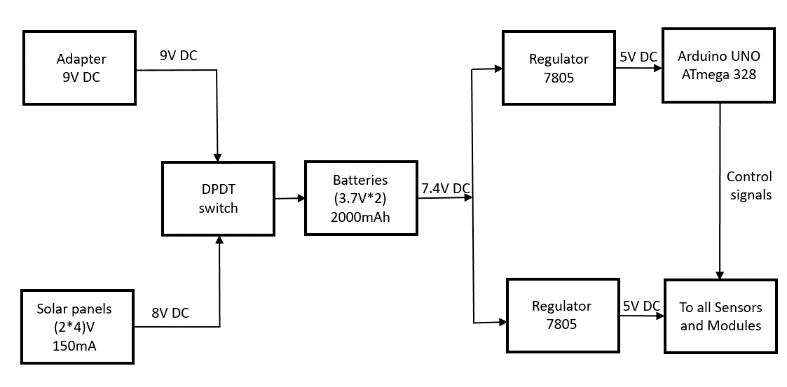
BlockDiagramofControlunitofBlindStick
FromFig-1,wecanunderstandthatallsensorsandmodules will be under the control of the microcontroller. A 9V DC adapter can charge the batteries. Apart from this, the batteriescanevenbechargedbySolarchargingunit.From thebatteries,thesupplywillbegiventoArduinoUno,which, inturnfeedsallthesensorsandmodulesconnectedtoit.The regulatorsareusedtoregulatethevoltageto5V.
2.2 METHODOLOGY
The multi-functional blind stick consists of several componentsincludingsolarpanelsforcharging,ultrasonic andinfraredsensorsforobstacledetection,andamoisture sensorfordetectingwetorslipperysurface,aGPSmodulefor locationinformation,andaGSMmoduleforsendingalertsor notification. The stick also include a vibration feedback system,abuilt-inspeakerforaudioalerts,andacustomizable griptofitindividualneeds.
2.3 COMPONENTS
a)
Arduino Uno
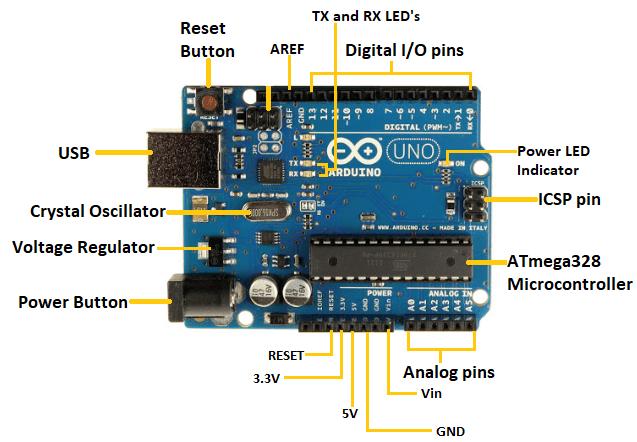
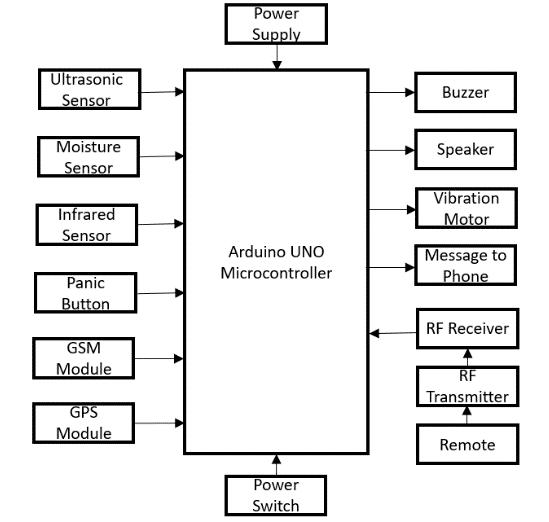
Arduino Uno is a microcontroller board based on the ATmega328. Thecontrolofallsensors,modules,switches willbeunderthismicrocontroller.Ittakestheinputfrom varioussensorsandtriggerstheoutputdevices.Ithas14 digital input/output pins, 6 analog input pins, a 16 MHz quartzcrystal,aUSBconnection,andapowerjack.Itcanbe programmed using the Arduino software and is used to controlvariouscomponentsinthesystem.
b) Solar panels
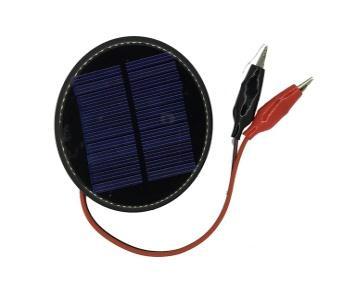
Twosolarpanelsof4Vareusedinthisprojecttocharge the batteries apart from regular power supply. Solar technologiesconvertsunlightintoelectricalenergyeither throughphotovoltaic(PV)panelsorthroughmirrorsthat concentrate solar radiation. This energy can be used to generate electricity or be stored in batteries or thermal storage
c) Ultrasonic sensor
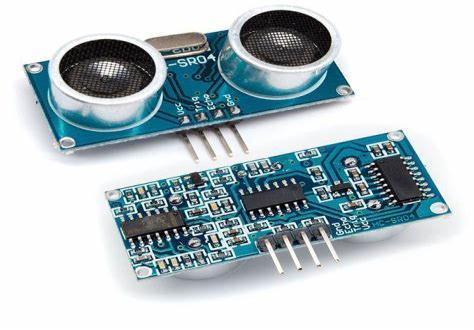
Anultrasonicsensorisusedtodetectobstaclesinthepath of the user. It emits high-frequency sound waves from a transmitter and detects their echoes with the help of a receiver.
d)
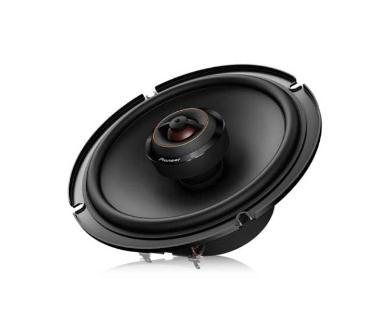
A speaker is used to provide audio alerts to the user. Whenever an IR sensor detects the obstacle the relay, whichisconnectedtoit,istrippedwhichinturnactivates thespeakerandgivesalerts.
e)
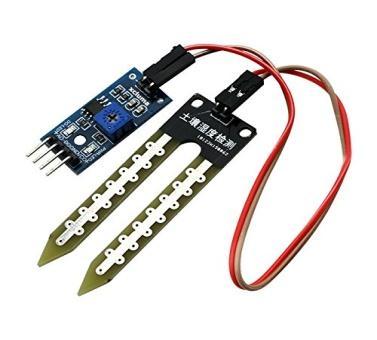
A moisture sensor is used to detect wet or slippery surfaces.Itsensesthemoisturecontentinthesurfaceand sendsasignaltotheArduinoUnotoprovidefeedbackto theuser.
g)
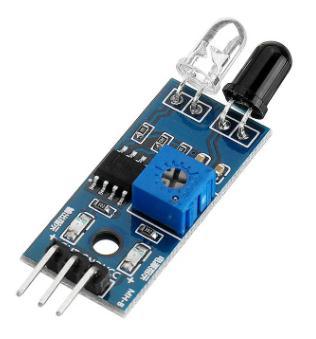
Aninfraredsensorisusedtodetecttheobstaclebelowthe onefeetlikestairs.Itsensestheinfraredradiationemitted bytheheatsourceandsendsasignaltotheArduinoUnoto providefeedbacktotheuser.
f)
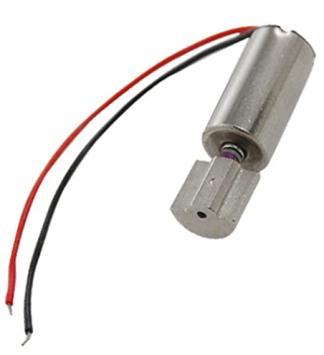
Avibrationmotorisusedtoprovidehapticfeedbacktothe user. When the moisture sensor detects the presence of waterinthepath,ittripstherelayconnectedtoitandas soon as the relay is tripped, the controller makes the vibration motor output high, which in turn makes the motortovibrate.
h)
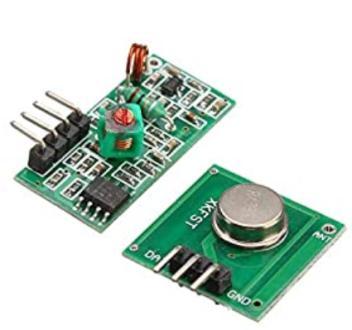
It consist of an RF Transmitter and RF receiver. This module is used to find out the misplaced stick. The RF receiver,whichismountedonthestick,receivesthesignal fromtheRFTransmitterwhenthebuttonispressedand givesabeepsoundwiththehelpofabuzzerattachedtoit.
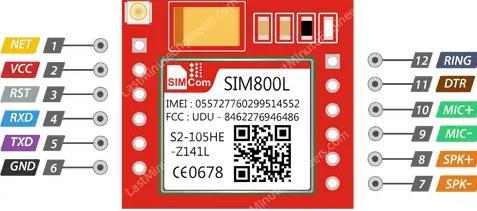
AGSMmoduleisusedtosendSMSalertstothecaretaker orfamilymembersincaseofanemergency.Itrequiresa SIMcardandacellularnetworktofunction.
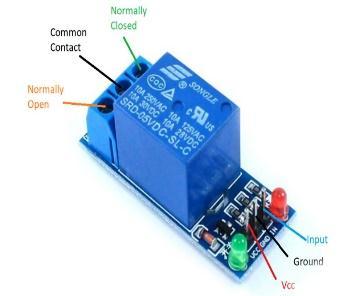
Relayisanelectromechanicaldevicethatusesanelectric current to open or close the contacts of a switch.Two single-channel relay modules are used here one for Vibrationmotorandtheotherforspeaker.
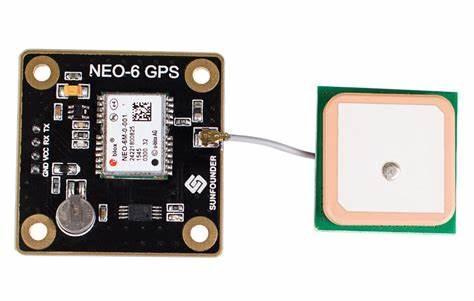
AGPSmoduleisusedtoprovidelocationinformationofthe blindpersontotheconcernedpeopleoftheblindperson.It communicates with the Arduino Uno using serial communication and can provide latitude, longitude, altitude,andtimeinformation.
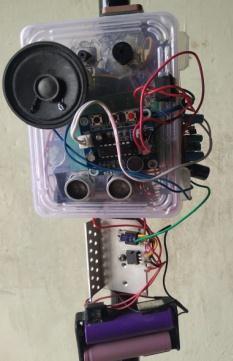
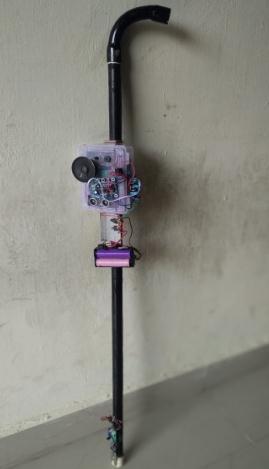
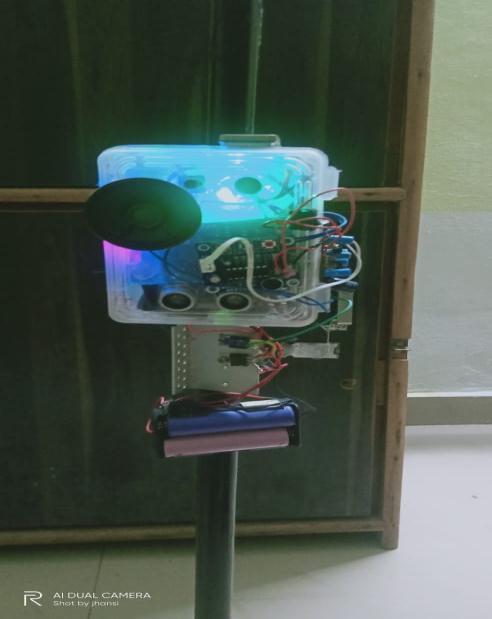
Theexperimentalsetupforthemultifunctionalblindstick isshowninFig-15,16.
Two3.7VrechargeableLi-ionbatteriesareusedtoprovide thepowersupplytotheArduinoUno,whichinturnfeedsall thesensorsandmodulesconnectedtoit.Thesebatteriescan bechargedbyregularpowersupplyusinga9VDCadapter orbyusingsolarpanels.
3.1 RESULTS
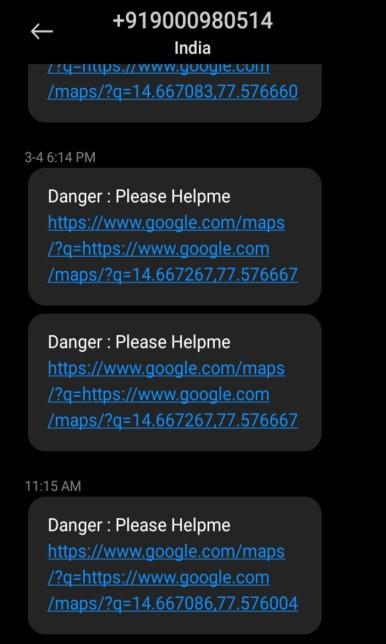
Fig-17,18showstheresultsfortheconductedexperiment. Fig-18showsthemessages senttothecoordinatesofthe blindperson.Itconsistsoflocationoftheblindperson.
4. CONCLUSION
The multifunctional blind stick is a device that has been designedtoassistvisuallyimpairedpeopleintheirmobility and navigation. It combines various technologies such as ultrasonic sensor, Moisture sensor, GPS, voice assistance, andtoprovideenhancedfunctionalityandconvenienceto theuser.Byprovidingreal-timefeedbackabouttheuser's surroundings, obstacles, and destinations, the multifunctional blind stick enables visually impaired individualstonavigatetheirsurroundingswithgreaterease andconfidence.Furthermore,theadditionofsolarpanelsin thedesignprovidesasustainableenergysource,makingit moreeco-friendlyfortheuser.Thisisparticularlyimportant for visually impaired individuals who may not have easy accesstoareliablepowersource.
REFERENCES
[1]Jose,G.George,M.R.Nair,M.J.ShilpaandM.B.Mathai “Voice Enabled Smart Walking Stick for Visually Impaired.”InternationalJournalofAdvancedResearchin Electrical,ElectronicsandInstrumentationEngineering, vol.5,pp.80-85,2016.
[2] B.G. Roopashree, B.S. Patil and B.R. Shruthi “Smart Electronic Stick for Visually Impaired.” International Journal of Innovative Research in Science, Engineering andTechnology,vol.4,number7,pp.6389-6395,2015.
[3]C.S.Kher,Y.A.Dabhade,S.KKadam.,S.D.Dhamdhereand A.V. Deshpande “An Intelligent Walking Stick for the Blind.”InternationalJournalofEngineeringResearchand GeneralScience,vol.3,number1,pp.1057-1062,2015.
[4] E. J. Chukwunazo and G. M. Onengiye “Design and ImplementationofMicrocontrollerBasedMobilityAidfor Visually Impaired People.” International Journal of ScienceandResearch.Vol.5,issue6,pp.680-686,2015.
[5]G.PrasanthiandP.Tejaswitha“SensorAssistedStickfor the Blind People.” Transactions on Engineering and Sciences,vol.3,number1,pp.12-16,2015.
[6]M.H.Mahmud,R.SahaandS.Islam“SmartWalkingStick – An Electronic Approach to Assist Visually Disabled Persons.” International Journal of Scientific and Engineering Research, vol. 4, number 10, pp. 111-114, 2013.
[7] O. O. Olakanmi, “A Multidimensional Walking Aid for VisuallyImpairedUsingUltrasonicSensorsNetworkwith Voice Guidance", International Journal of Intelligent SystemsandApplications(IJISA),vol.6,number8,pp.5359,2014.DOI:10.5815/ijisa.2014.08.06
[8] R. Radhika, P.G. Pai, S. Rakshitha and R. Srinath “Implementation of Smart Stick for Obstacle Detection andNavigation.”InternationalJournalofLatestResearch inEngineeringandTechnology,vol.2,number5,pp.4550,2016.
[9] R. Sheth, S. Rajandekar, S. Laddha and R. Chaudhari “SmartWhiteCane–AnElegantandEconomicWalking Aid.” American Journal of Engineering Research. Vol. 3, number10,pp.84-89,2014.