CONDUCTING STUDIES ON CONCRETE WITH QUARRY DUST AND FLY ASH AS PARTIAL REPLACEMENT OF AGGREGATE
FIRDOUS AHMED KHAN1, ER. SWATI PATHAK2
Abstract - Quarry dust or Common Aqueduct sand is precious due to the low cost of transportation from natural sources. Also large- scale reduction of these sources creates environmental problems. As environmental transportation and other constraints make the vacuity and use of conduit sand less attractive, a cover or relief product for concrete sedulity needs to be set up. River sand is most generally used fine aggregate in the product of concrete acts the problem of acute insufficiency in multitudinous areas. Whose use has started some serious problem environmentally as well as economically Same is the case with Fly ash currently fly ash is substantially used in construction as it gives much further strength and continuity to construction material substantially in concrete In such a situation the Chase dust can be a profitable volition to the conduit sand. Quarry Rock Dust can be outlined as remains, rolling or other nonvoluble waste substance after the birth and processing of rocks to form fine patches lower than4.75 mm. Generally, Quarry Rock Dust is used in large scale in the highways as a face finishing material and also used for manufacturing of concave blocks and feathery concrete prefabricated rudiments. Use of Quarry rock dust as a fine aggregate in concrete draws serious attention of researchers and investigators etc
Key Words: Quarry Dust ,Fly Ash, Aggregate, cement , concrete,Rcc,sandetc

1. INTRODUCTION
Out of colorful cementing accoutrements , fly ash is the most extensively used material worldwide. Fly ash is the derivate of the combustion of pulverized coal in thermal power shops. Fly ash is defined as the fine residue that is acquiredfromcombustionofcoal.thecombustionzoneto the flyspeck junking system. ” Worldwide, the estimated periodicproductofcoalashin1998wasfurtherthan390 milliontons.Themaincontributorsforthisquantumwere China and India. Only about 14 percent of this cover ash wasemployed,whiletherestwasdisposedofintips.
By the time 2010, the quantum of cover ash produced worldwide is estimated to be about 780 million tons annually Fly ash, if not employed, may present environmental enterprises, and its storehouse/ disposal will be precious. The maturity of cover ash produced in India is low calcium cover ash. The use of cover ash as
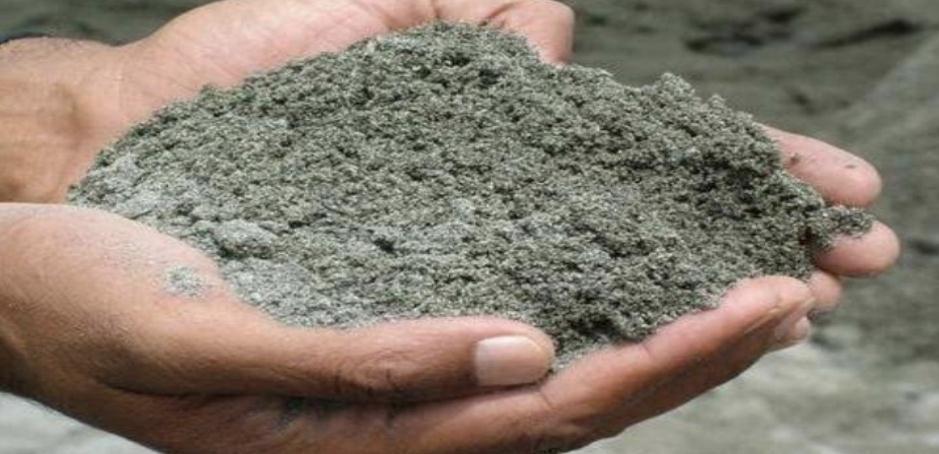
amalgamation in cement mortar/ concrete not only extends specialized advantages to the parcels of cement mortar/ concrete but also contributes to the environmental pollution control. likewise, Hundreds of gravestone crushing shops in our country induce several thousand tons of chase dust every day. This chase dust is considered to be solid wastematerial. However, also it'll breaktheproblemofitsdisposal,Ifit'spossibletousethis inmakingmortar/concretebyreliefofswashbeach.also, the application of chase dust, which can be called as manufacturedbeachafterjunkingofmicrofinesbelow150 micron size by sieving, has been accepted in the industrially advanced countries of the West as the swash beach, which is one of the ingredients used in medication of cement mortar/ concrete, has come largely precious and scarce. operation of chase dust as partial relief to swash beach/ natural beach further modified by partial relief of pozzolanic accoutrements like cover ash is enteringfurtherattentionthesedaysastheirusegenerally improvestheparcelsofcement/concrete.
Compared to numerous other engineering paraphernalia similar as brand, rubber, etc., concrete requires lower energy input for its manufacture. presently, a large number of material combinations, which are desolate products of other assiduity, are being beneficially used in makingqualityconcrete.therefore,fromtheconsideration of energy and resource conservation and sustainability andterrain,concreteisthemostfavouredmaterial
1.1 Literature And Review
Before The well known literature about the use of Quarry dust (Crusher dust) in concrete carried out in any part of the world has been reviewed and presented as under:
● (Dr. P.B.Sakthivel -2013) This paper deals with the replacement of natural sand used in concrete withquarrydust(wasteproducedfromthestone quarry industry). In this study, sand has been partiallyreplacedwithquarrydustforM35grade of concrete. Samples have been casted with 0%,10%,20%,30%,40% quarry dust in replacement with sand. On the basis of experiments,thepaperconcludesthatM35grade concrete shows optimum results on 10% replacement of sand with quarry dust. The authors of this paper had emphasised that this methodwill helptodecreasetheusageofnatural sand in concrete which will decrease the cost of construction as well as trim down the level of prohibited withdrawal of sand from the river beds.Itwilldefinitelyhelptopreservethenatural resourcesandresolvesomesustainabilityissues.
● (G.Balamurugan-2013)Thisinvestigationalstudy presented the deviation in the strength of concrete on use of crusher dust instead of sand from 0% to 100% at intervals of 10%. For this study, M20 and M25 grades of concrete were taken into consideration. Slump was in this study was kept as a 60mm. Concrete cubes were tested after7daysand28daysatroomtemperaturefor compressive strength. Concrete gains utmost raiseincompressivestrengthat50%replacement of sand. The %age increase in strength as compared to control concrete was obtained as 24.04 & 6.10 correspondingly for M20 and M25. The outcome gives an obvious image that quarry dust can be used in concrete mix as a fine option fornaturalriversandwithlargerstrengthat50% replacementwithquarrydust.
● (Lohani T.K-2012)This study deals with the utilisation of crusher dust in concrete as a partial substitute of sand. Utilisation of river sand on a huge scale produces ecological impact on society. Overall availability of river sand is fine, but it is most commonly used; Cost and environmental impact are the main factors to be considered (Ahmed et.al., 1989). To defeat this crisis, small substitution of sand with quarry dust, according to the study, can be an economical option. In this study, M1, M2, M3, M4 and M5 samples had been casted with 0%, 20%, 30%, 40%, 50% replacement of dust for M20 grade concrete design mix for laboratory analysis i.e. the idea is
to test them correspondingly for compaction factor test, compressive strength (cubic, cylindrical sample), split tensile strength, flexural strength, water absorption of hardened concrete. Depending on the investigational results of this study, it has been concluded that on adding crusher dust physical and mechanical properties of concrete will improve. Use of 30% of quarry dust content increases the compressive strength of concrete, compressive strength gradually begins to decrease for more than 30% dust material. According to this study, maximum split tensile strength can be attained at 20% substitutionoffineaggregate.
● (Radhikesh P. Nanda-2010) This investigational study is about preparation of paving blocks with crusher dust. Physical and mechanical properties of paving blocks are investigated with sand substituted by various %ages of quarry dust. The analysis reveals that the substitution of sand by quarry dust up to 50% by weight has a slight effect on the diminution of any physical, mechanical property whereas money can be easily saved till 56%. This also leads to the reduction of discarding crusher dust on earth to reduce the ecological contamination. The study concluded that substitution of sand by quarry dust up to 50% by weight will have a negligible effect on the drop of split tensile strength, compressivestrength,flexuralstrengthetc.Water absorption is lower than the limit according to Indian codes. Also, there is not any sort of variationindurabilitywithuseofcrusherdust.
● (Dr. A.D. Pofale) In this experimental study an attempt has been done to change the usual sand with crusher dust in concrete design mixes that are having grade M25 and having grade M30, for slump value of 100 mm to 120 mm and this is attained by providing alternative of 30%, 40%, 50% and 60% using PPC. There was a reduction in the value of workability from 1 to 6% when quarry dust was used as an alternative. Result shows that strength was increased by 5-22% when the alternative of river sand known as quarry dust was used. In all the mixtures highest compressive strength was obtained for the mixture having replacement of 40% sand by crusherdust.Thisdrawsustotheconclusionthat quarry dust can be successfully used instead of sand in above mentioned mixes at replacement from 30 to 60% cost-effectively leading to advancement
● (Joseph O. Ukpata-2012) This paper is a piece of study investigating the structural features of concrete by means of different proportions of
lateritic sand and rock dust as total substitution for natural sand(fine aggregate). The amount of lateritic sand was changed from 0% to 100% against rock dust at steps of 25%. Prepared samples of concrete were cured and checked for compressive strength. Tests for workability were conducted initially in this study to find out the optimum w/c ratios for diverse mixes, precisely for 1:1:2, 1:1.5:3 & 1:2:4. This paper concluded that at a water/cement ratio of 0.5 gives greater compressivestrengthsforaconcretemixof1:1:2. The author of this paper had attained higher values of compressive strength for an arrangement of 25% lateritic sand with 75% quarry dust when used as fine aggregate in 1:1:2 mix.
● (R. Ilangovana-2008) this paper is all about the possibility of the utilization of rock dust as 100% substitute for natural sand in concrete. Natural sand is pricey because of extreme transportation cost. Also depletion of natural sources on larger scale creates ecological troubles. In such circumstances the rock dust can be a profitable option to the natural sand. For three grades of concrete mix design has been developed. Cubes and beams were casted and tested to learn the strengthofconcretepreparedwithrockdust.The comparisonofresultswasmadewiththeconcrete having natural sand. Durability of the concrete withquarrydustwasalsocomparedwithnatural sand concrete. The paper concludes that the flexural strength, compressive strength and durabilitystudiesforconcretehavingquarrydust
● Danish et al 2022 Strength appraisal of artificial sand as fine aggregate,”In this study partial replacement of sand with quarry dust was found. Thesandwaspartiallyreplacedinstepslike10% ,30% ,60% and 70% till the mixture achevid full strength
● M. Devi et al “Analysis of strength and corrosion resistance behavior of inhibitors in concrete containingquarrydustasfineaggregate
● Felekoglu et al. observed that the incorporation of quarry waste at the same cement content generally reduced the super plasticizer requirement and improved the 28 days’ compressivestrengthofSCC.NormalstrengthSCC mixtures that contain approximately 300–310 Kg of cement per cubic meter can be successfully prepared by employing high amount of quarry waste.
● Sukumar etal.found thattherelations have been established for the increase in compressive
strength at premature ages of curing (12 h to 28days)fordifferentgradesofSCCmixesandare compared
● Muhit et al. determined that passing from 200 mmsieveisusedascementreplacementwhereas retaining from 100 mm sieve is used as sand replacement. Cement was replaced with stone dustinpercentageof3,5,and7percent.Similarly, sand was replaced with stone dust in percentage of 15 to 50 with an increase of 5 percent. Test result gives that compressive strength of mould with 35% of sand and 3% of cement replacing dust increases to 21.33% and 22.76% in that ordercomparedtothenormal mortarmouldat7 and 28 days for tensile strength which increased to13.47%.
● Ukpata and Ephraim identified the flexural and tensile strength properties compared with those for normal concrete. Hence, concrete proportion of lateritic sand and quarry dust can be used for construction provided the mixture of lateritic sandcontentisreservedbelow50%.Bothflexural strength and tensile strength are increased with increaseinlateriticcontent.
● Soutsos et al. the physical characteristics of recycled destruction aggregates may unfavourably affect the properties of the blocks. However, levels of replacement of quarried stone aggregates with destruction recycled aggregates determined that it will not have significant harmfuleffectonthecompressivestrength.
● (SUDHIR S.KAPGATE-2013) Concrete plays an important role in construction and its large quantity is utilised in construction practices. Natural sand, one of the constituents of concrete, is expensive because of the high transportation cost from major sources. Diminution of sources createsenvironmentalproblemsandtoovercome this problem there is a requirement for costeffective and creative solution materials. This paper deals with the use of quarry dust, a waste obtained during the extraction process, as a good filler instead of fine aggregate.M25 concrete mix design with 0%, 20%, 25%, 30% and 35% of quarry dust was used in this paper. In this experimentalstudydifferentcubeswereanalysed for compressive strength, flexural strength and split tensile strength for concrete in hard form using quarry dust. Results from this study concludes that an increase in quantity of dust up to 30% increases compressive strength of concrete, if the %age of quarry dust is more than 30% the compressive strength starts decreasing gradually.
1.2 REVIEW ON COMPRESSIVE STRENGTH
The results of compressive strength of cubes for (7, 28) days curing are shown in table. It should be noted that in mixM1,M2andM3compressivestrengthincreasesasthe daysofcuringareincreasedfrom7daysto28days.Butas the percentage replacement of quarry dust reaches the value30%,compressivestrengthinmixM4,M5,M6starts decreasingwiththeincreaseindaysofcuringfrom7days to28days.
2. DISCUSSION
(a) The compressive strength results of quarry dust concrete (cubes) were obtained in the first series, where M30 grade of concrete with 20, 25, and 30 percent replacement of quarry dust tested for 3 days, 7 days, 28 days,and60daysisstudiedandtheresultsarepresented. The specimens were casted with conventional materials; thatis,fineaggregateisnaturalriversandwithM30grade by using ordinary Portland cement (OPC).With the increase in age of concrete, the compressive strength increasesupto30percentreplacementofquarrydustasa fine aggregate. The partial replacement of quarry dust gave a 60 days’ peak compressive strength at 30% replacementlevel. thecompressivestrengthofM20grade with varying age of concrete by replacement level up to 30%.
(b) The compressive strength results of quarry dust concrete (cubes) were obtained in the second series, where M25grade of concrete with 20,25, and 30percent replacement grade also was observed with varying age of concretebyreplacementlevelupto30%.
(c) The compressive strength results of quarry dust concrete (cubes) were obtained in the third series, where M20,M25,andM30gradesofconcretewith20,25,and30 percent replacement of quarry dust and also workability arestudiedbyvaryingthewater-cementratioof0.45and 0.50andtheresultsarepresented.
● Some of the facts based on the test are given below:
Thecompressivestrengthincreasedby22%forthegrade ofM25concretemixwhentheaidofquarrydustwasused withreplacementof40%withnaturalsand.
There was an increase in the compressive strength after thefairreplacementofnaturalwithquarrydust.
There was an 8.26% increase in compressive strength at replacement of 30%, 22.34% for 40%, 18.53% for 50% and4.9%for60%.
Increase of 16% in the compressive strength of M30 was observed when 40% of quarry dust was used in the place
of river sand. At 30% replacement 5.25% increase in compressivestrengthwasobserved.
At 40% replacement 16% increase, at 50% replacement 12.5% increase and at 60% replacement 8.9% increase wasobservedaccordingly.
3. CONCLUSIONS
All the experimental data shows that the addition of the industrial wastes improves the physical and mechanical properties. These results are of great importance because thiskindofinnovativeconcreterequiresalargeamountof fineparticles.Duetohighfinesofquarrydustitisfoundto be very effective in assuring very good cohesiveness of concrete. From the said observations it is concluded that thequarrydustmaybeusedasareplacementmaterialfor sand. Quarry dust has been used for various activities in theconstructionindustryespecially forroadconstruction
1. Non availability of sand at reasonable cost as fine aggregate in cement concrete for various reasons, search for alternative material stone crusher dust qualifies itself asasuitablesubstituteforsandatverylowcost.
2.Aggregateswithhighersurfaceareaarerequiringmore water in the mixture to wet the particle surfaces adequately and to maintain a specific workability. Obviouslyincreasingthewatercontentinthemixturewill adverselyaffectthequalityofconcrete.
3.Itshouldbenotedthatsplittensilestrengthincreasesas we replace the fine aggregate up to 10% and shows maximum strength in M2 mix. Then split tensile strength decreases as percentage replacements are increased further.Itisalsoobservedthatsplittensilestrengthinmix M1, M2, M3, M4, M5, M6 increases with the increase in daysofcuringfrom7daysto28days.
4. Itshould be notedthat inthemixM1,M2,M3,M4, M5 and M6 compressive strength increases as the days of curing are increased from 7 days to 28 days. But as the percentage replacement of quarry dust reaches the value 20%, compressive strength shows maximum value and thenstartsdecreasingaswemoveaheadinreplacement.
● FutureScopeofstudy
● The main motive is to find the positive variation in the properties. In that regard I tried the extremeconditionsoffailuresothatbestpossible results can come. Value of Compressive strength of concrete is taken as Maximum compressive loadthattheconcretecancarryperunitarca.
● This variation is controlled by formation of different proportions of quarry dust and fine aggregate.Inthecubes,cylindersand beams,fine
aggregate was replaced with a different percentageofquarrydustandthestrengthwillbe checked after 7 days and 28 days. The strength was much more than expected. In future if we replace full 100 % of sand we will desirable strength
● In future river sand will not be available as its extraction is affecting aquatic life, so use of alternativeisinurge
● Asquarrydustandflyashiswastematerial,ifwe dump it this will cause land pollution , so to save pollution and water life, quarry dust will be used as future sand ,as many European countries are usingit.
● The concrete mix prepared will be checked for workabilitywiththeaidofslumptests.Aboveall. cost analysis will be done on cach cube, cylinder and became prepared with different ratios of quarrydustso toensurethatthemixesprepared areeconomicalafterthereplacementofsandwith quarrydustornotwaste
● Itwillgiveusanideathatthereshouldbepartial replacement of quarry dust or full replacement withflyash
REFERENCES
"A Haid Mir "Improved concrete properties using quarry dust as replacement for natural sand,” International JournalofEngineeringResearchandDevelopment,vol.11, no.3,pp.46–52,2015.
SUDHIR S.KAPGATE AND s.R.SATONE "DUST AS PARTIAL REPLACEMENT OF SAND IN CONCRETE" Indian Streams ResearchJournalVolume3,Issue.5,June.2013.
Dr. P.B.Sakthivel, C.Ramya, M.Raja(May 2013) " AN INNOVATIVE METHOD OF REPLACING RIVER SAND BY QUARRY DUST WASTE IN CONCRETE FOR SUSTAINABILITY'' International Journal of Scientific & EngineeringResearchVolume4,Issue5,
Chandana Sukesh,KatakamBala Krishn.P.Sri LakshmiSai Teja, S.Kanakambara "PARTIAL REPLACEMENT OF SAND WITH QUARRY DUST IN CONCRETE International Journal of Innovative Technology and Exploring Engineering (JITEE)ISSN:2278-3075,Volume-2,Issue-6,
G.Balamurugan, Dr.P.Perumal(December 2013)"USE OF QUARRY DUST TO REPLACE SAND IN CONCRETE - AN EXPERIMENTAL STUDY International Journal of Scientific and Research Publications, Volume 3, Issue 12, December 2013,ISSN2250-3153
LohaniT.K.,PadhiM.,DashK.P.,Jena S.(2012)OPTIMUM UTILISATION OF QUARRY DUST AS PARTIAL REPLACEMENT OF SAND IN CONCRETE Int. Journal of Applied Sciences and Engineering Research, Vol. 1, No. 2, 2012
Joseph 0. Ukpata, Maurice E. Ephraim and Godwin A. Akeke (JANUARY 2012 COMPRESSIVE STRENGTH OF CONCRETE USING LATERITIC SAND AND QUARRY DUST AS FINE AGGREGATE" ARPN Journal of Engineering and Applied Sciences, VOL. 7, NO. 1, JANUARY 2012, ISSN 1819-6608
Radhikesh P. Nanda, Amiya K. Das, Moharana.N. C (2010) "STONE CRUSHER DUST AS A FINE AGGREGATE IN CONCRETEFORPAVINGBLOCKS"InternationalJournalOf CivilAndStructuralEngineeringVOL.1,2010,ISSN0976439
A.Sivakumar,M.Prakash.(2011),'Characteristicstudieson the mechanical properties of quarry dust addition in conventional concrete', Journal of Civil Engineering and Construction Technology, Vol. 2(10), pp. 218-235, AcademicJournals.
Elavenil,S.,NagabhushanaRao,Bh.,Radhakrishnan,Rand Hariharan, K (2005) Comparative Study of Steel and Polypropylene Fibre Concrete Plates for Bridges and Roads",JournalofCurrentScience,Vol.7,No.1,pp.19-24
Elavenil.S, Saravanan.S, Akarsh.M.R, (2012)'Studies on Plastic mixed concrete with Conventional concrete',imanagers Journal on Structural Engineering, Vol. 1,NO.2,pp-11-17