
Renewable Energy Technologies for sustainable Development of Energy Effective Building
 Dr. Yogesh Pahariya 1, Vaishali Devidas Nimbalkar 2
Head of Electrical Engineering (Power System) Department, Sandip University, Nashik
Dr. Yogesh Pahariya 1, Vaishali Devidas Nimbalkar 2
Head of Electrical Engineering (Power System) Department, Sandip University, Nashik
***
Abstract - Thepurposeofthisstudyistoidentifythemost relevantrenewableenergytechnologiesforbuildingsandto assesstheeffectivenessoftheirimplementation.Methodsof analogies and comparisons were used to determine the featuresofenergyefficiencybasedonthetechnologiesunder study.Thestudyproposesthemethodologicalapproachto assessingtheeffectivenessoftheintroductionofrenewable energytechnologies.Thispaperpresentsacomprehensive literature review on the reactive power management in renewablerichpowergrids.Reactivepowerrequirements stipulatedindifferentgridcodesforREGsaresummarized toassesstheiradequacyforfuturenetworkrequirements. Reactivepowercoordinationbetweensupportdevicesand their optimal capacity are vital for an efficient and stable management of the power grid. The proposed model for assessingthelevelofenergysavingprovidesanopportunity foreconomicjustificationofintroducingrenewableenergy technologyinbuildings.
Key Words: Renewable Energy, Power grid, Reactive Power, Devices, Buildings, Technology
1. INTRODUCTION
Duetotheglobaldrivetowardsrenewableandsustainable energysystems,powerelectronicconverter(PEC)interfaced renewable energy generators (REGs), such as wind generatorsandsolar-PVsystemshavewidelybeenadopted in power networks around the world. The main goals of sustainable design were to reduce depletion of critical resourcessuchasenergy,water,andrawmaterials;prevent environmental degradation caused by facilities and infrastructure throughout their life cycle; and create built environmentsthataresafe,productiveandeffectiveutilityof the water and solar energy. A large part of these costs is relatedtoprovidingacomfortableenvironmentforaperson to live or stay in a particular building. Maintaining a comfortable environment through improved energy efficiencyinbuildingsisimportantnotonlytokeeppeople safeandproductive,butalsotoreducecarbonemissionsby using renewable energy sources instead of fossil and carbonizedones.Thisstudy’slimitationisthefactthatthe construction of a building using renewable technologies involves a complex integrated solution. Therefore, the technologies under study can be complementary in the context of meeting different energy needs. The study can helpdeveloplong-termstrategiesthattakeintoaccountboth energyandclimateaspectsinKuwaitinthecontextofthe introductionofrenewableenergytechnologiesinbuildings.
The main premise for this is that implementing highperformance construction and renovation activities will require greater access to finance, as well as innovative businessmodelsthatbringtogetherborrowers,lendersand regulator.
1.2 LITERATURE SURVEY
1. Collins C. Ngwakwe “Role of energy efficiency on sustainable development” The main purpose of this currentpaperinvolvesdeterminingtheroleofenergy efficiencyonsustainabledevelopment.Thus,thepaper adopts a conceptual approach by using current literatureonenergyefficiencyinevaluatingitspurpose in sustainable growth. The paper finds that energy efficiency plays multiple roles towards sustainable economic development. The paper also introduces an additional approach that support energy efficiency termed“energyefficientstrategyforurbanresidential setting sustainability” which further enhances sustainablegrowth.
2. BaderAlshuraiaan“RenewableEnergyTechnologiesfor Energy Efficient Buildings: The Case of Kuwait”. The purpose of this study is to identify the most relevant renewable energy technologies for buildings and to assesstheeffectivenessoftheirimplementationinthe long term for Kuwait Methods of analogies and comparisons were used to determine the features of energyefficiencybasedonthetechnologiesunderstudy. The study proposes the methodological approach to assessing the effectiveness of the introduction of renewable energy technologies, determining the directionofincreasingtheenergyefficiencyofbuildings and the investment efficiency of introducing these technologies.
3. MohammadnazmulislamSarkar,lasanthagunaruwan meegahapola, “Reactive Power Management in RenewableRichPowerGrids:AReviewofGrid-Codes, Renewable Generators, Support Devices, Control Strategies and Optimization Algorithms” This paper presents a comprehensive literature review on the reactivepowermanagementinrenewablerichpower grids. Reactive power requirements stipulated in differentgridcodesforREGsaresummarizedtoassess their adequacy for future network requirements. The PEC-interfaced REGs are discussed with a special emphasis on their reactive power compensation
capability and control schemes. Along with REGs, conventional reactive power support devices (e.g., capacitor banks) and PEC-interfaced reactive power supportdevices(e.g.,staticsynchronouscompensators) play an indispensable role in the reactive power management of renewable rich power grids, and thus theirreactivepowercontrolcapabilitiesandlimitations arethoroughlyreviewedinthispaper.
4. Arvind Chel, Geetanjali Kaushik “Renewable energy technologies for sustainable development of energy efficient building” The energy conservation through energy efficiency in the building has acquired prime importanceallovertheworld.Thefourmainaspectsfor energyefficiencyinabuildingincludefirstandforemost the nearly zero energy passive building design before actual construction, secondly the usage of low energy buildingmaterialsduringitsconstruction,thirdlyuseof energyefficientequipment’sforlowoperationalenergy requirementandlastlyintegrationofrenewableenergy technologies for various applications. These aspects have been discussed along with their economics and environmentalimpactsbrieflyinthispaper
1.3 BACKGROUND
This paper presents a critical review of reactive power management in renewable rich power grids, with special emphasisongrid-codes,renewablegeneratorcapabilities, reactive power support devices, control strategies, and coordination&optimizationalgorithms.
The reactive power capability and control schemes for variouswindgeneratortypes,reactivepowercapabilityof solar-PVsystemsandotherREGsarediscussedinSectionV, reactive power support devices. The proposed methodological approach to assessing the effectiveness of the introduction of technologies for the use of renewable energysourcesallowsonetotakeintoaccountthedriversof energysaving,todeterminethedirectionsforimprovingthe energy efficiency of buildings and to promote favorable investmentsupportfortheintroductionofrenewableenergy technologies
At the early stage of renewable energy integration, REGs couldbeeitherconnectedordisconnectedfromthepower gridwithoutsignificantimpactongridstability,duetotheir lowpenetrationlevel.
2.1 PASSIVE BUILDING DESIGN
Themostsustainableenergytechniqueistoconserveenergy as much as possible. Passive solar building design can aid energy conservation efforts because building design is directlyrelatedtoenergyuse.Buildingswithpassivesolar building designs naturally use the sun’s energy for free of chargeheating,coolinganddelighting.Thisreducestheneed to consume energy from other sources and provides a comfortableenvironmentinside.Theprinciplesofpassive
solardesignarecompatiblewithdiversearchitecturalstyles and can be renovated with existing building for net zero energyuse
2.2 PASSIVE SOLAR HEATING

Thegoalofallpassivesolarheatingsystemswastocapture thesun’sheatwithinthebuilding’selementsandreleasethat heatduringperiodswhenthesunisnotshining.Atthesame time that the building’s elements (or materials) are absorbing heat for later use, solar heat is available for keepingthespacecomfortable(notoverheated).
Fig1:thermalmassabsorbsheatindaythroughwindow andradiatesinnight

Inindirectgainsolarpassiveheatingsystem,Trombewall absorbs and stores heat during the day. Excess heat is carriedoutbypassageairbetweenwallandglassthrough thermosyphonprincipleintotheinteriorspace.
An indirect gain solar passive design that provides both heating and cooling is the thermal pond approach, which useswaterencasedinultravioletrayinhibitingplasticbeds underlined with a dark color, that are placed on a roof. Hence, this system is known as roof pond solar passive heating/coolingsystem.
In colder climates, where heating is more desirable, attic ponds under pitched roof glazing are effective. Winter heating occurswhen sunlightheatsthewater,whichthen radiatesenergyintothelivingspaceaswellasabsorbsheat withinthewaterthermalmassfornighttimedistribution
2.3 ADVANTAGES
• Thesupplementarycontrollerreducesvoltage
• The Proposed controller can effectively depend the oscillationsofthewindfarmafteragroundfault
• Thesystemwaseffectiveforreactivepowersupportand theLVRT.
• Voltage variability and shirt term flicker severity has significantlyreduced.
• Improves
gridfrequencydeviation

2.4 METHODOLOGY
ANewonlinesupplementarylearningcontrolisdeveloped basedonthetheoryofapproximatedynamicprogramming. AneuralnetworkbasedcontrollerisdevelopbasedonADP for reactive power support provided by GSC and DFIG Starter.ReactivepowerexchangedbytheDFIGisoptimally shared between the GSC and the RSC to reduce total converterapparentpowerappropriatecontrolmechanismis developedtoimprovethevoltagerisemitigationandvoltage fluctuationreduction.
Vectorcontrolisusedtoinjectreactivepowerintothegrid duringsymmetricalgridfaults.Virtualdampingflux based LVRTcontrolstrategycansupressrotorcurrentoftheDFIG withasmoothelectromagnetictorque


3. CONCLUSIONS
A comprehensive review of recent literature reported on reactive power management in power grids with high penetrationofREGswaspresentedinthispaper.According tothereview,manygridcodesspecifysteady-statereactive powerrequirementsforREGs,howeveronlyfewgrid-codes specify dynamic reactive power requirements. There are variousmethodstoreducetheuseofconventionalenergy from fossil fuels to meet the energy requirement for the building. The combination of various solar passive design aspectscaneasilybeintegratedinnewbuildingsbasedon thesite,orientationofbuildingandlocalclimaticconditions. TheretrofitofTrombewallassolarpassiveheatingdesign concepts in honey storage building had shown promising resultsforwinterheating.Similarly,theuseofproperdesign ofdaylightingcanleadtotremendousreductioninuseof artificial lights during daytime and thereby reduces the energy consumption by building for lighting. Hence, integrationofsolarpassivefeaturesintothebuildingleads to reduction in energy consumption of building which
ultimately reduces the CO2 emissions and helps in sustainabledevelopment
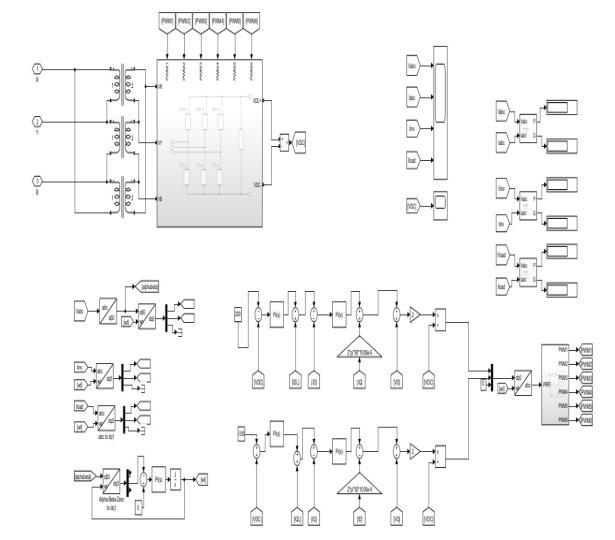
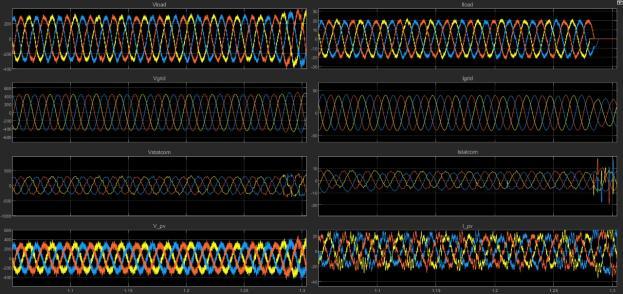
2.5 SIMULATION IMAGES
Itisindeedagreatpleasureandmomentofimmense satisfaction for we to present a project report on “Renewable energy technologies for sustainable development of energy effective building” amongst a wide panorama that provided us inspiring guidance and encouragement,wetaketheopportunitytothankstothanks those who gave us their indebted assistance. We wish to extend our cordial gratitude with profound thanks to our internal guide Dr. Yogesh Pahariya for his everlasting guidance.Itwashisinspirationandencouragementwhich helpedusincompletingourproject.
Our sincere thanks and deep gratitude to Head of Department, Dr. Mangesh Nikose and other faculty members; but also to all those individuals involved both directly and indirectly for their help in all aspect of the project.
Atlastbutnotleastweexpressoursincerethanksto our Institute’s Associate Dean Dr. Prakash Burade, for providingusinfrastructureandtechnicalenvironment.
REFERENCES
1. Collins C. Ngwakwe “Role of energy efficiency on sustainabledevelopment”"EnvironmentalEconomics" (2014).
2. BaderAlshuraiaan“RenewableEnergyTechnologiesfor EnergyEfficientBuildings:TheCaseofKuwaiEnergies 2021.
3. MohammadnazmulislamSarkar,lasanthagunaruwan meegahapola, “Reactive Power Management in RenewableRichPowerGrids:AReviewofGrid-Codes, Renewable Generators, Support Devices, Control StrategiesandOptimizationAlgorithms”2018IEEE.
4. Arvind Chel, Geetanjali Kaushik “Renewable energy technologies for sustainable development of energy efficient building” Alexandria Eng. J. (2017), http://dx.doi.org/10.1016/j.aej.2017.02.027.
5. InternationalEnergyAgency.(Oct.2017).Renewables 2017: Analysis and Forecasts to 2022. [Online]. Available:https://www.iea.org/renewables/
6. EirGridGroup.(Jun.2015).TheGridCodeVersion6.0. [Online].Available: http://www.eirgridgroup.com/customer-andindustry/general customer-information/grid-code/
7. Renewable Energy Information Portal. (2009). Ordinance on System Services by Wind Energy Plants (System Service Ordinance SDLWindV). [Online]. Available: http://www.erneuerbare energien.de/EE/NavigationD E/Home/home.html
