UPSERVE – Restaurant Sales and Analysis System
1-2Students, Army Institute of Technology, Pune, Maharashtra, India
3Assistant Professor, Army Institute of Technology, Pune, Maharashtra, India

4 Students, Army Institute of Technology, Pune, Maharashtra, India ***
Abstract - In the current world of technology, we can improve everything with help of technology same is the case with restaurant systems. In restaurant we need waiter to place order, customers are not sure about what to order, restaurants face difficulties on analyzing their sales, customers many times decides what to order only to know that it is not available etc. all these problems can be solved using technology by providing both customer and restaurant a software solution/platform that will provide customer with dynamic menu, recommendation system and admin with analysis of their sales. Therefore, we propose a web application where we are offering the customer a better management service and admin an easy-to-use environment where he/she can easily operate based on the reports generated by sales analysis. This will also boost the sales of the restaurant and it will be one of the key strategies to grow in the food business.
Key Words: RestaurantManagement;DynamicMenu;Food Recommendation;DataRetrieving;TasksAllocate;Business Intelligence
1. INTRODUCTION
Theprojectrevolvesaroundhowtoimprovetherestaurant systems based on the current scenario. In restaurant we needawaitertoplaceorder,customersarenotsureabout whattoorder,restaurantsfacedifficultiesonanalyzingtheir sales,customersmanytimesdecideswhattoorderonlyto know that it is not available etc. Therefore, the web applicationweareproposingcanbemerestrategytoboost therestaurantbusinesssinceweareprovidingthecustomer a better UI using web development technologies and, recommendation system based on our previous sales and adminagraphicalrepresentationofsalesusingdataanalysis where he can operate on real time menu provided by the technology
WhereasArestaurantsalesandanalysissystemisasoftware tool that helps restaurants manage and analyze various aspects of their business, including sales data, inventory, menu planning, customer information, and staff management.Thistypeofsystemcanprovideinsightsinto restaurantperformanceandhelpownersmakedata-driven decisions to improve operations, increase profits, and provide a better customer experience. Some common features of a restaurant sales and analysis system include sales reporting, inventory management, customer relationshipmanagement,andOnlineorderinganddelivery management,etc.
1.1 Features:
Herearesomeadditionalfeaturesthatarestaurantsales andanalysissystemmayoffer:
1. Sales tracking and reporting: This feature helps restaurantskeeptrackoftheirdaily,weekly,andmonthly sales,includingrevenue,salesbymenuitem,andsalesby paymentmethod.
2. Inventorymanagement:Thisfeatureallowsrestaurants to monitor food and beverage inventory levels, set reorderpoints,andtrackfoodwaste.
3. Customer relationship management (CRM): This feature helps restaurants track customer information, including contact information, purchase history, and preferences,andprovidesinsightsintocustomerbehavior andpurchasingpatterns.
4. Menu planning and optimization: Thisfeatureallows restaurants to optimize their menu offerings based on salesdata,customerfeedback,andtrendsintheindustry.
5. Marketing and promotions: This feature help restaurants create and manage marketing campaigns, includingemail,SMS,andpushnotifications,andtrackthe resultsofthosecampaigns.
6. Online ordering and delivery management: This feature allows restaurants to manage online orders, including food delivery and takeout orders, and track deliverystatus.
Thesearejustafewexamplesofthetypesoffeaturesthat arestaurantsalesandanalysissystemmayoffer.
1.2 Objectives
Ourobjectiveis
1. Toprovideacleanandeasytosearchmenusystemwith accuratedetailsofdishesandwhatitinvolves.
2. RealTimeMenuallowstoshowifthefollowingdishis availableornotbasedonresourcesavailability.
3. Highlightsinagraphicalrepresentationthetimelysales of dishes help in deciding factor of whether to keep sellingoreliminatethedishandmuchmore.
4. Recommendation system highlighting the key options available for the customers according to the previous orders.
5. Thesystemshouldhelptherestauranttotrackcustomer feedback,analyzecustomerbehavior,andtakeactionto improvetheoverallcustomerexperience.
6. By using a sales and analysis system, a restaurant can gainacompetitiveadvantageoverotherrestaurantsthat donothaveaccesstosimilartoolsandinsights.
2. LITERATURE REVIEW
In[1],theyhavefocusedonmakingthecustomerservice better by making the order preparation timeless by considering things like which order dishes should be prepared,takingtheorderthroughthedevicethatusershave broughtwiththemratherthantakingordersbyawaiter,not serving wrong or someone else's dish to the customer as these things creates bad user experience and because of which restaurant suffers loss. They have also used the concept of a 3D menu. the menu which we see in the restaurantsshowsitems'nameandpriceand,insomecases, asmalldescriptionaboutthedishesbuttheproblemofnot knowingtheingredientsofthefoodremainsatmanyplaces soshowingtheingredientsofthedishinsidethemenuwill alsohelptocreatebetteruserexperienceaspeoplecanavoid dishwhichhasanallergiceffectonthemoranyspecificspice oritemthattheydonotlikethiswill,inturn,increasethe sales of the restaurant. They have discussed methods to decide which order to prepare first they have considered orderingtime,preparationtime,andotherfactorslikegiving priority to dining customers. Algorithm considering these factors will decide in which order the dishes should be prepared.Theyhavealsodescribedmakingauniquemenu for recommendation by putting those dishes first on the menuwhicharemorefavorableforcustomersaccordingto their profile on Facebook, but we will make use of their profileonourdatabasetoprovidetherecommendation.
Intoday’sgeneration,everyoneisinaracetobuildthe bestmanagementwebsitepossible.Therefore,itisessential toidentifytheupcomingtrendsinthemarket.Dr.Zainab[2], giveninformationaboutthedataanalysisalgorithms. This paperillustratesthathowtoanalyzethedatabasedonsales. Basedonthealgorithmsmentionedinthepaper,theyhad generatedsalespatterns.Theyhadalsoextractedpatterns from customer data. Now all these patterns are used for optimizingthesales.Classifyingthecustomerdatapatterns areaveryimportantfactorforbusinesssupportanddecision making i.e., modifying the real-time menu by the administrator.Theyhadalsoanalyzedthedatabasesystem whichconsistsofitemreviewsandratingswhichhelpsthem tosegregatetheitemsbasedonthedifferentprofilesandan easyrecommendationprocess.Basedontheseratings,they havecomparedtheitems.Therefore,thehighertheratings themoretheitemgotsoldandviceversa.
Day-by-day on increasing priorities of the population, satisfying every customer is becoming a huge challenge. Therefore,JinatAraandothers[3]illustrateshowtoanalyze thereviewsandratingsprovidedbythecustomer.Butinstar rating review, often there is a mis-leading since every customerisnotsopatientwithreadingeveryquestiongiven by the restaurant and rate accordingly. Therefore, to understand the customer sentiment properly the written reviews are provided those days. To analyze this unstructured material,we'll need to useNatural Language Processing. Sentiment analysis, often known as opinion mining,isamethodfordeterminingthestrengthofareview by automatically calculating the sentiment polarity. Therefore,inthiswaywecancomparetheitemsandfilter thenecessaryrecommendationstoprovidethecustomer.
Lasek,A.,Cercone,N.,Saunders,J[4]presentsabriefreview oftheliteratureandaclassificationofrestaurantsalesand consumer demand techniques. The literature provides a varietyofforecastingmethodologiesandmodels.
AjiAchmadMustofaandIndraBudi[5]focusesonproviding arecommendationsystembyusingthesimilaritiesbetween item and user by using collaborative based filtering and content-based filtering. There are two models that are formed first model will focus on items. It will be used to access the similarities and find the value for similarities betweenitems.Thesecondmodelwillfocusonuser.itwill workonthesimilaritiesbetweentheuserandwillfindvalue for the similarities between users. Algorithm they used is nearest neighbor Algorithm. The method that we will be using for making the recommendation for the user for orderingthedisheswillbebasedonthesalesandpopularity ofthedishintherestaurantandtheprofileoftheuser.The profileoftheuserwillhavedetailslikeage,gender,nameetc andbasedonthesefactors’recommendationwillbedecided bythealgorithm.
R. V. Ravi and coauthors [6] proposes an android-based restaurantautomationsystem.Theproject'smaingoalisto makerestaurantmanagementeasier.Mostrestaurantsnow order and deliver food items manually, which has the disadvantage of taking a long time and, in some cases, not deliveringtherightitemattherighttime,whichcausesmany problems. As a result, we considered automating this procedure with modern electronic technology. They had provided digital touch screen for selecting menus and ordering, touch screen will show the prices and menus accordingwiththiscustomerwillorderstheitems.Theorder fromeachtableiswirelesslytransmittedtothekitchenvia Bluetooth. The electronic menu system assists people in selecting food from the rolling screen of an Android touch screen,aswell asseeingthecostandrecentavailabilityof fooditems,aswellasshowingtablenumber.Usingathermal printer,thehotelstaffcanreadtheitemsfromeachtableand takethebillfromthekitchen.Afterfoodreadyinkitchen,an LEDglowswhichindicatestorespectivetables.Theymade
onlyorderautomationworktheywasnotconcentratingon dataanalysispartofthesystem.
MdShamimHossainandcoauthors[7]describesastudyof predictingcustomerfeedbackforrestaurantsusingmachine learningalgorithms.Thestudyshowshowmachinelearning techniques,suchasdecisiontreesandrandomforests,canbe usedtoanalyzecustomerfeedbackdataandprovidevaluable insightsforrestaurantmanagers.
ParallelsystemsliketheonesinKFCs,BurgerKing,BBQ,etc exists.Theseplacesalsohavethesystemofdigitalmenuand billingandpaymentmethodoptionbuttheproblemofthe usertowaitforthewaiterortobeinqueuestoorderfood still exists moreover we are focusing this on the small businesswhodonotknowthatmuchabouttechnology.The restaurant will havenoneedto buyasmuchhardware as comparedtothesystemintheabove-mentionedrestaurants becausetheuserisorderingthefoodthroughtheirdevice ratherthanorderingitthroughthedeviceofrestaurant.We arealsoprovidingrecommendationswhicharenotprovided intheabove-mentionedrestaurants
3. SOME IMPORTANT FEATURES
Here are some the important features included in this project:
1. Sales tracking and reporting: This feature helps restaurantskeeptrackoftheirdaily,weekly,andmonthly sales,includingrevenue,salesbymenuitem,andsalesby paymentmethod.
2. Inventorymanagement:Thisfeatureallowsrestaurants to monitor food and beverage inventory levels, set reorderpoints,andtrackfoodwaste.
3. Customer relationship management (CRM): This feature helps restaurants track customer information, including contact information, purchase history, and preferences,andprovidesinsightsintocustomerbehavior andpurchasingpatterns.
4. Menu planning and optimization: Thisfeatureallows restaurants to optimize their menu offerings based on salesdata,customerfeedback,andtrendsintheindustry.
5. Online ordering and delivery management: This feature allows restaurants to manage online orders, including food delivery and takeout orders, and track deliverystatus.
4. RESTAURANT DATA ANALYSIS
In this system, data analysis refers to the process of collecting,organizing,andinterpretingdatatogaininsights intovariousaspectsofthebusiness.Theseinsightscanthen be used to make informed decisions that can improve operations, increase revenue, and enhance the customer
experience.Somecommontypesofdataanalysisperformed throughthissysteminclude:
1. Sales analysis: Thistypeofanalysisinvolvesexamining salesdatatoidentifytrends,patterns,andopportunities forgrowth.Forexample,salesanalysismayrevealwhich menuitemsaresellingwellandwhichonesarenot,which daysortimesarebusiest,andwhichpaymentmethods aremostpopular.
2. Inventory analysis: This type of analysis involves examininginventorydatatoidentifytrends,patterns,and opportunities for cost savings. For example, inventory analysismayrevealwhichitemsarefrequentlyrunning outofstock,whichitemsareexpiringquickly,andwhich itemsarecontributingtohighlevelsoffoodwaste.
3. Customer analysis: This type of analysis involves examiningcustomerdatatoidentifytrends,patterns,and opportunitiesforgrowth.Forexample,customeranalysis may reveal which customers are the most loyal, which customersaremostlikelytomakerepeatpurchases,and whichcustomersaremostlikelytorefernewcustomers.
4. ItemRecommendation: Thistypeofanalysiscanbeused to suggest items to customers based on their previous behaviorandpreferences.Inthecontextofrestaurants, itemrecommendationcanbeusedtosuggestmenuitems to customers based on their past orders, or to suggest similaritemstocustomerswhohaveorderedaparticular dish.
5. Customer Feedback analysis: Customer feedback analysiscanbeusedtounderstandcustomersatisfaction, identifyareasforimprovement,andmeasuretheimpact ofchangestotherestaurant'sofferingsorservice.
Thesearejustafewexamplesofthetypesofdataanalysis that can be performed in a restaurant sales and analysis system.Byusingdataanalysis,restaurantscangainabetter understanding of their business, identify areas for improvement, and make informed decisions that drive growthandsuccess.
5. PROPOSED SYSTEM:
Forthissystemtherewillbetwotypeofusersonewillbethe customer and other will be the management side of the restaurant.Thissystemprovidesbothofthemwithdifferent functionalitieswhichsuitstheirrequirements.
5.1
Customer Side
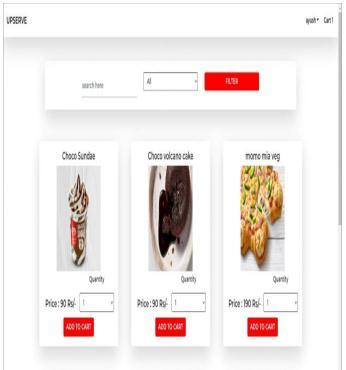
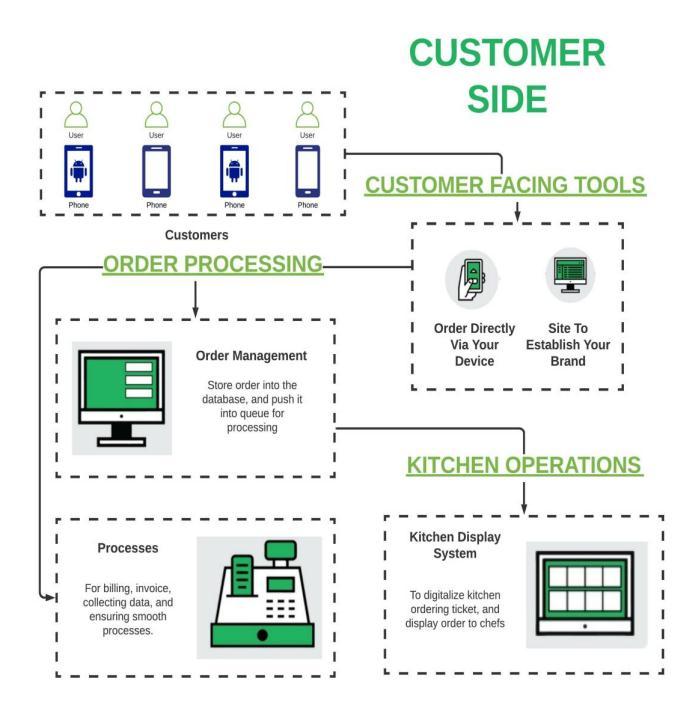
Customerwillbeabletoaccessthesystemthroughtheir device.They will be provided withloginand register page after which they will be able to order food from the restaurantanddopaymentfortheordereditem.Customer willalsobeprovidedwithmenuandsuggestionsaboutthe famous food items of that particular restaurant. After the
orderhasbeencompletedtheorderwillbeshowntothechef inkitchenandheorderwillbepreparedbythem.Figure1 showsabasiclayoutaboutthecustomerside.
6. RESULTS
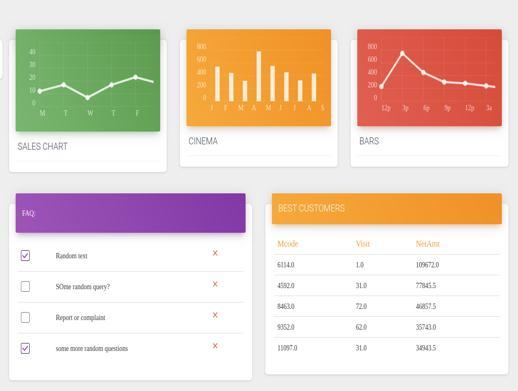
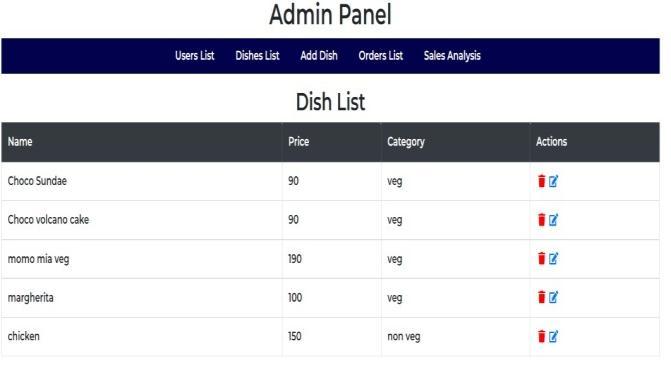
This system provides easy to use user interface for the customers.Theadministrationoftherestaurantisprovided withoptiontoedit,addanddeletedishesformthemenuthey can also see all the orders that have been placed, all the customersthathaveregisteredtothewebsiteandtheoption tounregisterthemandtheyalsohavethedataaboutwhich dishisperforminggoodandwhichdishisperformingbad basedonthequantityoftheproductsthreegroupsaremade least selling, moderately selling, not selling. Also, various kindsofanalysisaredoneatadminside.Followingvarious diagramsshowssomeUserInterfaces.
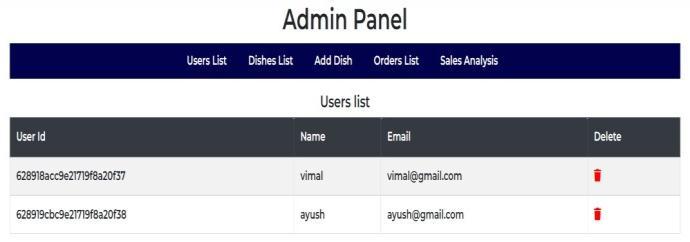
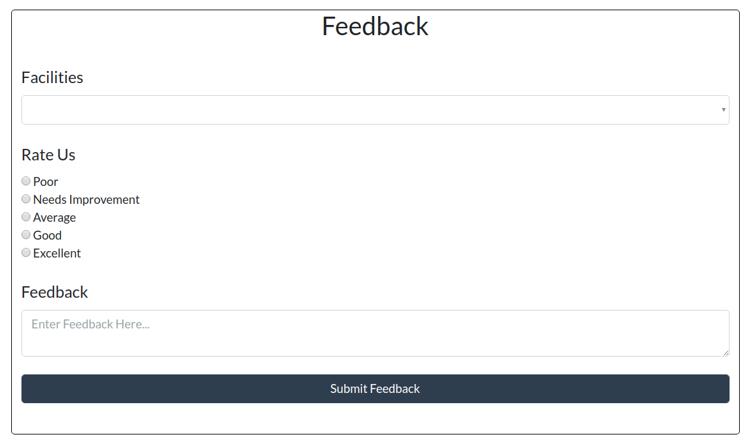
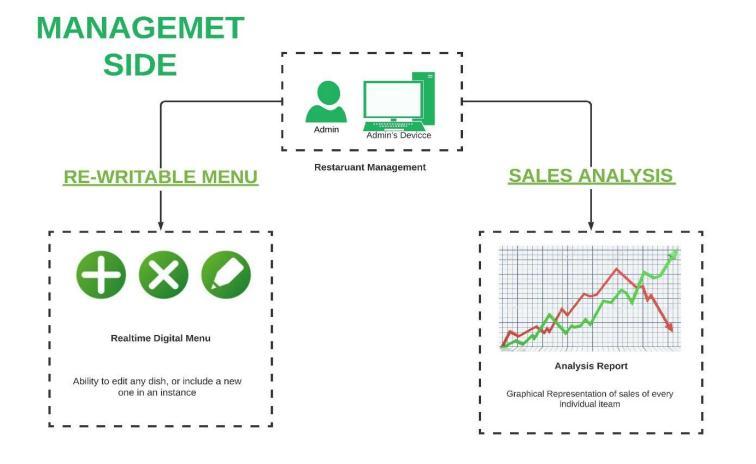
Onmanagementsidetherearetwomajorfocusoneisthe dynamicmenuandotherisanalysisofsalesoftherestaurant. Restaurant will be provided with a feature that will allow themtochangethemenuaccordingtotheavailabilityofthe dishesintherestaurant.Apartfromthisthesystemprovide restaurant with the analysis of the sales of the restaurant which will help them take decisions about changes in particulardisheslikewhatdishtheywanttokeepordiscard fromtheirrestaurantorwhatdishtheyhavetoworkmore onsothatcustomerwill findthose dishesmoreenjoyable. Figure2showsbasiclayoutaboutthemanagementside.
7. CONCLUSIONS AND FUTURE SCOPE
Intheincreasingdemandsofthisnewera,it’sbecomingvery difficult to satisfy the customer same is the case in the businessofrestaurant.But,throughthissoftwareboththe administrationandcustomerwillbesatisfied,astheclient cangethissalesreportswhichincludesthesalesprediction ofeachdishanddishesaredividedintothreegroupsleast selling,moderatelyselling,notsellingandtheycanalsodo thechangesrequiredinthemenuandalsoseealltheorders placed whereas the customer will get easy to use user interface where they will be able to easily order the food fromtherestaurant.Therefore,wecanexpecttheriseinthe sales and the customers of the restaurant. Customers will also have good experience through our easy to use and attractiveuserinterface.
The future of restaurant sales and analysis systems is expectedtobedrivenbytheincreasinguseoftechnology, data-driven decision-making, and the need for more personalized,efficient,andeffectivecustomerexperiences.
REFERENCES
[1] Vindya Liyanage,AchiniEkanayake,Hiranthi Premasiri, Prabhashi Munasinghe, Samantha Thelijjagoda,“Foody–SmartRestaurantManagement andOrderingSystem”,Dec2018
[2] Dr.ZainabPirani, “AnalysisandOptimizationofOnline SalesofProducts”,March2017
[3] JinatAra,Md.ToufiqueHasan,AbdullahAlOmar,Hanif Bhuiyan,“UnderstandingCustomerSentiment:Lexical AnalysisofRestaurantReviews”,June2020

[4] Lasek, A., Cercone, N., Saunders, J. (2016). Restaurant Sales and Customer Demand Forecasting: Literature SurveyandCategorizationofMethods.In:,etal.Smart City 360°. SmartCity 360 SmartCity 360 2016 2015. Lecture Notes of the Institute for Computer Sciences, Social Informatics and Telecommunications Engineering, vol 166. Springer, Cham. https://doi.org/10.1007/978-3-319-33681-7_40
[5] AjiAchmadMustofaandIndraBudi,“Recommendation System Based on Item and User Similarity on RestaurantsDirectoryOnline”,May2018
[6] R.V.Ravi,A.N.R.,A.E.,H.P.andJ.T.,"AnAndroidBased Restaurant Automation System with Touch Screen," 2019 Third International Conference on Inventive SystemsandControl(ICISC),Coimbatore,India,2019, pp.438-442,doi:10.1109/ICISC44355.2019.9036365.
[7] Hossain, M.S., Rahman, M.F., Uddin, M.K. and Hossain, M.K. (2022), "Customer sentiment analysis and predictionofhalalrestaurantsusingmachinelearning approaches",JournalofIslamicMarketing,Vol.ahead-ofprintNo.ahead-of-print https://doi.org/10.1108/JIMA04-2021-0125
BIOGRAPHIES
Mr.ZaidKhan

BEComputerEngineeringStudent ArmyInstituteofTechnology,Pune
Mr VamsiKrishnaShahukaru
BEComputerEngineeringStudent ArmyInstituteofTechnology,Pune