DRISHTI – A PORTABLE PROTOTYPE FOR VISUALLY IMPAIRED
1 Student, ECE Dept, BNMIT, Bangalore

2 Student, ECE Dept, BNMIT, Bangalore
3 Student, ECE Dept, BNMIT, Bangalore
4Sudarshan, Assistant Professor, Dept. of ECE, BNMIT, Banashankari, Bangalore, Karnataka, India ***
Abstract - Drishti is a portable device to help blind people. This prototype helps to navigate the blind people with greater comfort, speed and confidence, whilstmakinguseofultrasonic waves to detect the nearby obstacles and to notify the user through vibrations and includes live location tracking of the blind people to the caretaker. The idea was inspiredfrombats, who also use sound waves of high frequency to move.
According to an estimate, there are 285 million visually impaired people in the world. The loss of one the most important human senses cause them a lot of hardships in daily life. The affected ones have been using the traditional white cane since many years which although being effective, still has a lot of disadvantages. Another way has been a pet animal such as a dog which is not very common for being comparatively expensive. So, the aim of this project is to develop a cheap, yet more efficient way to help the visually impaired navigate with more speed and confidence.
1. INTRODUCTION
Thirdeyeforpeoplewhoareblindisaninnovationwhich helpstheblindpeopletonavigatewithspeedandconfidence bydetectingthenearbyobstaclesusingthehelpofultrasonic wavesandnotifythemwithbuzzersoundorvibration.They onlyneedtowearthisdeviceasabandorcloth.
According to WHO 39 million peoplesare estimatedas blindworldwide.Theyaresufferingalotofhardshipintheir dailylife.Theaffectedoneshavebeenusingthetraditional white cane for manyyearswhich although being effective, stillhasalotofdisadvantages.Anotherwayis,havingapet animalsuchasadog,butitisreallyexpensive.So,theaimof theprojectistodevelopacheapandmoreefficientwayto help visually impaired to navigate with greater comfort, speedandconfidence.
This is the first wearable technology for blind people whichresolvesalltheproblemsofexistingtechnologies.Now adaystherearesomanyinstrumentsandsmartdevicesfor visually impaired peoples for navigation but most of them havecertainproblemsforcarryingandthemajordrawbacks is those need a lot of training to use. The one of the main peculiaritiesofthisinnovationis,itisaffordableforeveryone. Therearenosuchdevicesavailableinthemarketthatcanbe wornlikeaclothandhavingsuchalowcostandsimplicity.
When used on a large scale, with improvements in the prototype,itwilldrasticallybenefitthecommunity.
With addition to the ultrasonic sensors, buzzers and vibrationmotorswehaveincludedGlobalPositioningSystem (GPS)moduleandGlobalsystemformobilecommunication (GSM)modulethatutilizesSMStechnologywhichisapopular, inexpensive,convenientandreliablewayoftransferringand receivingdatathatsendsthemessagetocaretakeraboutthe locationofthevisuallyimpaired.
This design monitors the location continuously of the blindbysendinganalertmessageusingGSMmoduleassoon as the location is requested by the caretaker. The SMS consists of the latitude and longitude coordinates of the visuallyimpairer’slocationtrackedusingGPSmodule.
Thus,withthissystem,thevisuallyimpairedcandetect the object easily and the location of the person can be monitored.
1.1 Objective:
To add a third method to the existing lot of two mostcommonnavigationtechniquesbythevisually impaired (A simple stick- “The white cane” and A petdog).
Touseaccurateultrasonicrangingmethodbythe useofsensorstodetectobstaclesandtonotifythe user about their presence near them in different directionsthroughvibrationsandsoundbeeps.
Tomakeitbatteryoperated,longlasting,portable, open source, easily usable and explicit in calculations.
Tomakethedeviceeasilyaffordablebyeveryone.
1.2 LITERATURE SURVEY
In the past few years, there has been innovations and developmentofvarioustechniquesanddevicesorgadgets guiding visually impaired people, thus towards attaining their independent or free movement around the surroundingswithoutany other individual’ssupport.Few parametersaretherebuttheyarehavingsomelimitations andrestrictions.
D. Dakopoulos, N.G. Bourbakis, “Wearable obstacle Avoidance Electronic Travel Aids for Blind; A Survey” proposed that a relative survey among mobile obstacle detection systems in order to inform the research communityandusersregardingtheabilitiesofthisproject andregardingtheinnovationinadaptivetechnologyforthe sightlesspeople.Thisstudyisbasedondifferentattributes andperformancespecificationofthissystemthatarranges themincategories,offeringquantitative-qualitativeanalysis.
Mr. Ungar S, “Blades comparing methods for Introducing Blind and Visually Impaired People to unfamiliar urban environments”. He proposed methods for the unsighted peopleofurbanareas.Buttheydidn’tconsiderthepeople who cannot afford equipments of high cost. Drishti overcomesthisdrawback.
Ms. Pooja Sharma, “ A Review on Obstacle Detection and Vision”[4]. She analyzed that objects can be detected, but therearedrawbacksintermsofanglesanddistance.Onthe other hand, Drishti for blind has a wide angle for the detectionwhichcanbewidenedwithrespecttotherangeof thesensor.
HugoFernandesc,JoảoBarroso,“BlindGuide:anultrasound sensorbasedbodyareanetworkforguidingblindpeople”. The research introduces supportive formula for sensing obstaclesforthesightlesspersonswhogenerallytakehelpof white-caneorthepetdog,thusforthedetectionofobstacles byusingthisdeviceprovidesapropersolutiontotheblinds. BasedontheBodyAreaNetworkofultrasonicsensorsthat generatesound-basedresponse,thissolutionisgiven.The Body Area Network can be inserted inside cloth fabric, emancipatingsightlesspersonfromutilizingtheseeing-eye dogorthatwhite-cane.
Today’sInnovativeworldisprovidingmanysolutionstothe visuallyimpairedforexample;white-canehavinga tipfor assisting the movement of the blind people. The cane has different types used in today’s technological world in the formofwhitecane,lasercaneandsmartcane.Dogstrained for this purpose are too expensive and unaffordable for certain people. The study discovered that the remote guidancesystembeingveryhardtomovehencethisdevice willactasmostoptimizedversion
2. Methodology
Figure1showstheblockdiagramofthemainmoduleof theprototypewhichconsistsofArduinonanowhichisthe main processor,ultrasonic sensor which is used for object detection,GPSandGSMmoduleusedfortrackingthelocation oftheuserandvibrationmotortonotifytheuseraboutthe objectaheadbyitsvibrations.
Figure2showstheblockdiagramoftheothermoduleof theprototypewhichonlyconsistfArduinonanowhichisthe main processor,ultrasonic sensor which is used for object
detectionandvibration motor to notify the useraboutthe objectaheadbyitsvibrations.
2.1 Vibration motor
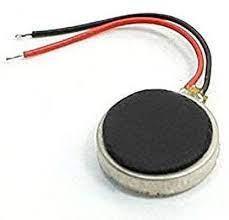
VibrationmotorisacompactsizecorelessDCmotorusedto informs the users of receiving the signal by vibrating, no sound. Vibration motors are widely used in a variety of applicationsincludingcellphones,handsets,pagers,andso on.
The main features of vibration motor are the magnet coreless DC motor are permanent, which means it will always have its magnetic properties (unlike an electromagnet,whichonlybehaveslikeamagnetwhenan electriccurrentrunsthroughit);
Anothermainfeatureisthesizeofthemotoritselfissmall, and thus light weight. Moreover, the noise and the power consumption that the motor produce while using are low. Based on those features, the performance of the motor is highlyreliable.
Fig1 :Vibration Motor
2.2Software Requirements
Here the software used is Arduino IDE. The Arduino IntegratedDevelopmentEnvironmentorArduinoSoftware (IDE) - contains a text editor for writing code, a message area, a text console, a toolbar with buttons for common functionsandaseriesofmenus.ItconnectstotheArduino hardwaretouploadprogramsandcommunicatewiththem.
TheArduinolibrariesusedareasfollows:
i. Software Serial library
TheSoftwareSeriallibraryallowsserialcommunicationon other digital pins of an Arduino board, using software to replicatethefunctionality(hencethename"SoftwareSerial"). It is possible to have multiple software serial ports with speed up to 115200 bps. A parameter enables inverted signalingfordeviceswhichrequirethatprotocol.
ii TinyGPS++
TinyGPS++isanewArduinolibraryforparsingNMEAdata streams provided by GPS modules. It is the immediate inheritorofTinyGPS,apopularcompactparserthatisused inArduinoinstallationsaroundtheworld.TinyGPS++isnot
quite as ‘tiny’as its older sibling, but its powerful and extremely easy-to-use new object model and useful new feature set make it an attractive alternative. Like its predecessor, TinyGPS, this library provides compact and easy-to-use methods for extracting position, date, time, altitude,speed,andcoursefromconsumerGPSdevices.
• Now, microcontroller calculates the distance of object by using this time interval and as speed of soundisconstantinair.Thedistanceiscalculated using:
• Distance=Speed×Time
• Thisisthedistancetravelledbytheultrasonicwave buttheactualdistancebetweensensorandobjectis halfofthisdistanceasthewavealsotravelledallthe waybacktoo.So,
• Distance=Distance/2
• Now this distance is the actual distance between Sensorandtheobject.
• Hence,thedistancecalculationiscalculatedandthe sensor detects and the further procedure of the buzzingsoundtotheuseriscarriedout.
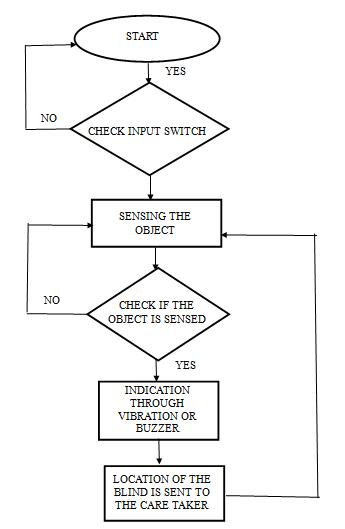
• Thecurrentlocationofthepersonistracked bytheguardianthroughGPSandGSMmodule.
• This design monitors the location continuously of the blind by sending an alert message using GSM moduleassoonasthelocationisrequestedbythe caretaker.
• The SMS consists of the latitude and longitude coordinates of the visually impairer’s location trackedusingGPSmodule.
2.1Working of the project
• The components are connected to the Arduino as showninfigure2.

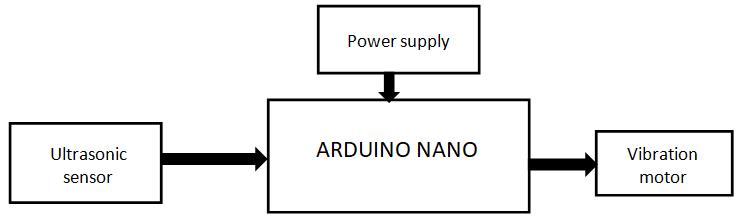
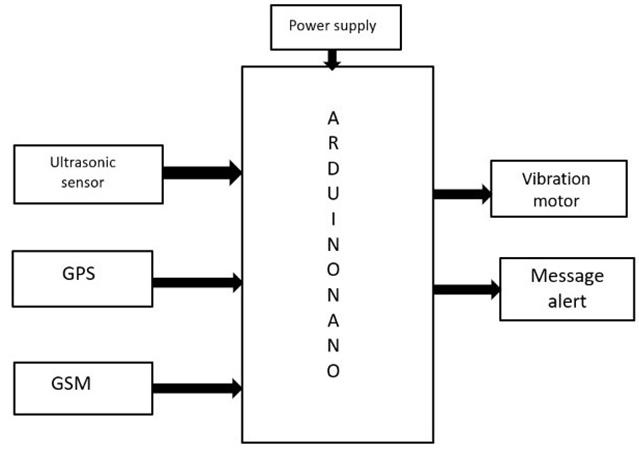
• Attheend,afteralltheconnectionsaredonetothe Arduinoboard,uploadthecodetoArduinoboard andpowerthemoduleusingthepowersupply.
• TheUltrasonicsensorhereusedasatransceiver.
• Anultrasonicsensortransmitstheultrasonicwaves with frequency 40KHz and simultaneously microcontrollerstartstheclock.
• The ultrasonic wave travels to the object, get reflected back by the object and again travels towardsthesensor
• Theclockstopsandmeasuresthetimeintervalat the moment ultrasonic waves is detected back by thereceiverpartofthesensor.
3. RESULT
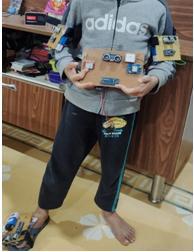
The system is created and designed for visually impaired people. This device helps the visually impaired people to handle several states and responds to the user in every environment. All the conditions can be easily met by the blind individual using ultrasonic sensor and the Arduino board.Aftertheanalysisofthisdeviceindividually,wehave seen the project works perfectly. Therefore, we have effectivelyimplementedtheprototypeoftheentiresystem, whichweplannedinitially.Thewholesystemisdividedinto 4modules,oneforeacharm,oneforthehipandoneforthe footoftheuserasshowninfigure5
3. CONCLUSIONS
Withtheimprovementofthelivingstandardsofthepeople, wehavebecomesomaterialisticthatwehaveforgottenhow thephysicallydisabledpeopleliveatoughlife.Theyundergo rigorous, indifferent behavior towards them for being physicallydisabled.Theybecomedependentonotherpeople inawayfortheirday-to-dayroutinechores.
Thus,theproject,Drishtiismadesightlessindividualstolive independently,soastoperformtheirdailyactivitieseasily andmoreconfidentlywithhighlevelofsafety.
ThisArduinobasedconceptfortheblindpeopleissimple, cheapandcanbeeasilycarriedandmaintained.Thissystem is able to scan and detect the hindrances in all directions irrespective of the height or depth the object lies at and locatetheuser.
Withthisproject,theblindcanenjoythetasteofsightand can move freely from one place to another without assistanceoftheotherindividual.
Future Scope
Infuturewiththeadvancementofquickerresponse ofsensors,liketheusageoftop-notchsensorsitcan bemadehighlyuseful.
Themodulesthatoneneedstowearasabraceletor onanyotherpartofthebodycanbetransformed intoawearableclothinglikeacoat,sothatitcanbe madefitforworking.
Thisdevicewillhelpthevisuallyimpairedpeopletoknow abouttheobstaclesineverydirection.
1. CASE 1: If the obstacle lies on the west/left side of the person,thedevicewillletthepersonknowthatthereisan obstacleonthewest/leftsidewhichisshowninfigure5
2.CASE2:Iftheobstacleliesontheeast/rightsideofthe person,thedevicewillletthepersonknowthattheobstacle liesontheeast/rightsidewhichisshowninfigure5.
3.CASE3:Iftheobstacleliesinfrontoftheuser,itwilltell theuserthatthereisanobstacleinfrontoftheuserwhichis showninfigure5
Thisdesignmonitorsthelocationcontinuouslyoftheblind bysendinganalertmessageusingGSMmoduleassoonas thelocationisrequestedbythecaretaker.TheSMSconsists of the latitude and longitude coordinates of the visually impairer’slocationtrackedusingGPSmodule.
Thus,withthissystem,thevisuallyimpairedcandetectthe objecteasilyandthelocationofthepersoncanbemonitored
Abbreviations in the title or heads unless they are unavoidable.
Camera module and Audio assistance can be embeddedintotheprojectforbetterassistance.
Therecanbemoreadvancementinthisdevicefor instance we can use piezo electric plates in the shoes of the user which can generate sufficient electricitythatthemodulescanrunon.
REFERENCES
[1] S.Shovel,IUlrich,J.Borenstien.NavBeltandtheGuide Cane, IEEE “Transactions on Robotics & Automation”. 2003;10(1):9-20.
[2] JM.Benjamin,NA.Ali,AF.Schepis.“Alasercaneforthe blind”, Proceedings of San Diego Medical Symposium, 1973,443-450.
[3] S. Sabarish. “Navigation Tool for Visually Challenged using Microcontroller”, International Journal of EngineeringandAdvanced Technology(IJEAT),2013; 2(4):139-143
[4] .Pooja Sharma, SL. Shimi, S. Chatterji. “A Review on ObstacleDetectionandVision”,InternationalJournalof ScienceandResearchTechnology.2015;4(1):1-11.
[5] [5].M.Maragatharajan,G.Jegadeeshwaran,R.Aakash,K. Aniruth,A.Sarath. “ObstacleDetectorforBlindPeople”, International Journal of Engineering and Advanced Technology(IJEAT),ISSN:2249–8958,Volume-9Issue1S4,December2019.
[6] V.DianaEarshia,S.M.Kalaivanan,K.BalaSubramanian, “A Wearable Ultrasonic Obstacle Sensor for Aiding VisuallyImpairedandBlindIndividuals”,International Journal of Computer Applications(IJCA) (0975–8887)NationalConferenceonGrowthofTechnologiesin Electronics, Telecom and Computers - India's Perception,GOTETC-IP'13.
[7] M. Maragatharajan,G.Jegadeeshwaran,R. Askash,K. Aniruth,A.Sarath,.“ObstacleDetectorforBlindPeoples”, International Journal of Engineering and Advanced Technology(IJEAT)ISSN:2249–8958,Volume-9Issue1S4,December2019.