Survey on Automatic Kidney Lesion Detection using Deep Learning
Jyothi1Assistant Professor, Department of CSE, ATME College of Engineering Mysore, Karnataka, India

2-5Student, Department of CSE, ATME College of Engineering Mysore, Karnataka, India
***
Abstract - Kidney lesion detection is a crucial step in the diagnosisandmanagementofkidneydisorders.Deeplearning methods have showed potential in enhancing kidney lesion detection'sprecisionandeffectiveness.Usingmedicalimaging modalities such ultrasound, computed tomography (CT), magnetic resonance imaging (MRI), and X-rays, we discuss recentresearchthathaveinvestigatedtheapplicationofdeep learning algorithms for kidney lesion diagnosis. We examine the effectiveness of several deep learning architectures and algorithms as well as the difficulties and restrictions associated with using deep learning to the identification of kidney lesions. Our study demonstrates that kidney lesion diagnosis using a variety of imaging modalities can be done with great accuracy and efficiency using deep learning algorithms. However, there are significant restrictions that must be overcome, including the necessity for sizable labelled datasets and the possibility of bias. We also highlight future objectives for deep learning research in kidney lesion identification, such as the creation of comprehensible deep learning models and the incorporation of deep learning with additional clinical data. Overall, this study emphasizes the potential of deep learning algorithms in enhancing kidney lesion identification and its contribution to improving the diagnosis and treatment of renal illness.
Key Words: Kidney Lesion Detection, Deep Learning, Medical Imaging, Magnetic Resonance Imaging, Computed Tomography,ConvolutionalNeuralNetwork,Segmentation
1. INTRODUCTION
Thekidneysareimportantorgansinthehumanbodythat filter waste and extra fluid from the blood in order to maintain the body's equilibrium. Abnormal growths or lumpsonthekidneysarereferredtoaskidneylesions,also known as renal lesions. Early discovery is essential for successful treatment of these lesions, which can either be benignormalignant.
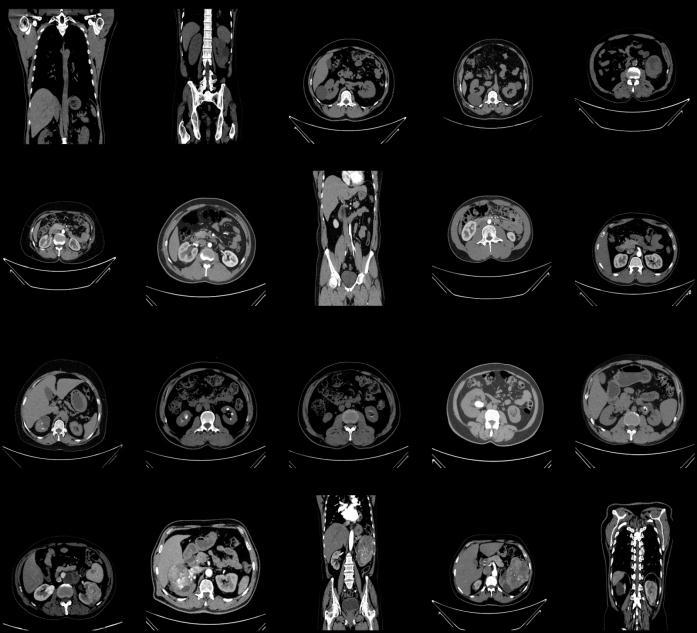
A medical procedure known as renal lesion identification includeslocatingandassessingtheexistenceandseverityof kidneylesions.Thedetectionprocesscommonlymakesuse of medical imaging techniques including ultrasound, computed tomography (CT), magnetic resonance imaging (MRI), and X-rays. With these methods, medical professionalsmayseethekidneysandspotanyanomalies liketumoursorcysts.
To prevent benign kidney lesions from developing into malignant ones, early detection and treatment of kidney lesionsareessential.Also,earlydiscoveryenablesmedical professionals to choose the best course of action, which, depending on the nature and severity of the lesion, may entailsurgery,chemotherapy,orradiationtherapy.
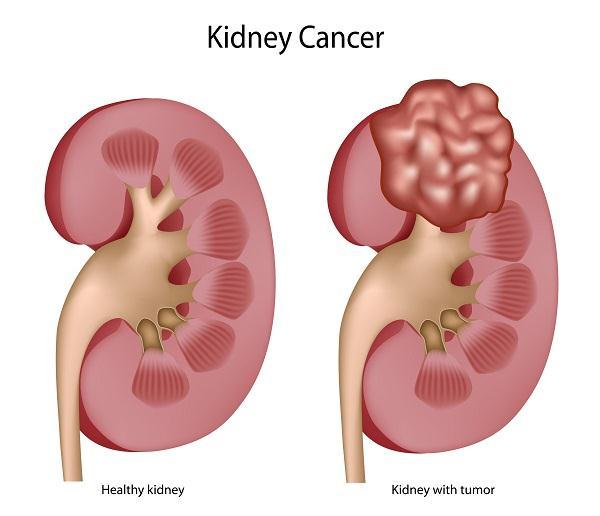
Kidneylesionscantakemanydifferentforms,suchascysts, tumours,andabscesses.Cystsarefluid-filledsacsthatcan formonthekidney'soutsideorinsideofit.Theyareoften benignanddon'tneedtobetreated,butiftheyaretoobigor start to hurt, they could need to be surgically removed or drained.
Theidentificationofkidneylesionsisa critical stepinthe diagnosisandmanagementofrenalillnesses.Usingmedical imaging methods including ultrasound, computed tomography(CT),magneticresonanceimaging(MRI),andXrays,thedetectionphaseentailslocatingandassessingthe existenceandseverityofkidneylesions.Themanualanalysis of medical photographs, however, can be time-consuming andpronetomistake.Inordertoincreasetheprecisionand effectiveness of kidney lesion diagnosis, researchers have investigatedtheuseofdeeplearningalgorithms.
Therearevariousbenefitsofusingdeeplearningalgorithms to find kidney lesions. Secondly, deep learning algorithms canrapidlyandreliablyprocessmassivedatasetsofmedical pictures, which can save time and lower the possibility of humanmistake.Second,deeplearningalgorithmscangain accuracy and generalisation skills by learning from big datasets of medical pictures. Lastly, the sensitivity and
specificityofkidneylesionidentificationmaybeincreased by training deep learning algorithms to recognise subtle signs and patterns that may be challenging for humans to notice.
polycystickidneydiseaseandglomerulonephritisarecauses of chronic kidney disease. Family history of chronic renal diseaseisoneoftheriskfactors.Thenullvalueswerethen filled by running the proposed model a predetermined number of times. The finished product demonstrates how effective the suggested model is. By using random forest imputation,LR,DTmightsurpasstheexistingmodel.
The main manifestations of chronic kidney illness will be examinedinthisarticle[3],aswellashowwekaandmachine learningapproachesmaybeusedtoidentifyit. Theriskof cardiovascular disease and end-stage renal disease is increased by chronic kidney disease. When chronic renal disease reaches an advanced level, the body may begin to accumulateelectrolytesandwaste.Multilayerperceptronisa general word for any feed-forward ANN that is used ambiguouslyandoften.Thenumberofpersonswhosuffer fromchronicrenaldiseaseisenormous.Thenumberofthose whoareafflictedbythesicknessisgrowingdaily.Itwillmake chronic kidney disease more predictable. Machines are capableofbothillnessdetectionanddiseaseprediction.The accuracy, ROC, precision, recall, and f measure have been determinedinthisstudyusingavarietyofmachinelearning classifiers. Nevertheless, random forest has the best ROC valueand99%accuracy.
2. LITERATURE SURVEY
Hadjiyski [1] suggest that the automatic identification of kidneycancerwillbenefitfromthebuildingofaclassifierthat candifferentiatebetweennormalorbenignCTpicturesofthe kidneyandthecancerimages.Investigationwillbedoneon howvariedcroppedpicturescaleaffectsDLNNaccuracy.The goal of this project is to develop a deep learning neural network-basedsystemthatwillaccuratelyestimatethestage ofkidneycancer.TheTensorFlowframeworkwasutilisedin thisresearchtogetherwiththeInceptionV3deeplearning network structure. The DLNN-based artificial intelligence platform successfully distinguished kidney cancer Stage 1 from Stages 2, 3, and 4. 227 individuals from the Cancer Imagingwithvariousstagesofkidneycancerparticipatedin the research. For the training and validation sets, respectively,theattainedaccuracywas92%and86%.The systemhasthepotentialtohelpdoctorsstagekidneycancer moreprecisely.
NSaranya'steam[2]atSriEshwarCollegeofEngineering's Subhanki B Department of Computer Science and Engineeringhasdemonstratedhowcrucialmachinelearning algorithms are in the diagnosis of chronic kidney disease (2021). They postulate that using this approach to the practical diagnosis of CKD would have an alluring effect. Initially, there are frequently no symptoms; subsequently, sideeffectsmightincludeleggrowth,fatigue,regurgitation, lack of appetite, and disarray. Hypertension, Diabetes,
Researchershavepublishedanarticle[4]ontheclassification of chronic kidney disease (CKD) using a number of algorithms.Adangerousconditionthataffectspeopleallover theworld,chronickidneydisease(CKD)isamajorfactorin adversehealthconsequences.Millionsofindividualsdieeach year as a result of poor treatment. The team was able to evaluatehowwelldifferentMLalgorithmsworked.Logistic regression offers the highest accuracy and recall, whereas decisiontreeshavethebestprecision.Ifdetectedearlyand appropriately,CKDcanhelppatientsinavarietyofways.It lengthens the patient's life and raises the likelihood of a successfultherapy.400participantsparticipatedinthestudy. The accuracyof thesuggested approach, whichconsistsof decision trees, random forests, and logistic regression, is 98.48,94.16,and99.24,respectively.Recallof97.61,96.29, and100,and precision of 100,95.12,and98.82.Usingthe advantagesofeachfeatureselectionapproach,twofeature selectionstrategiesaremerged.Inacomparison,theyfound that logistic regression had the best accuracy and recall, whereasdecisiontreeshavethemostprecision.
A group ofresearchers [5] has createda machinelearning techniquetoforetellrenalillnessinpatientsandthosewho careforthem.Alife-threateningconditionknownaschronic kidney disease (CKD) affects around 14% of people worldwide. Even though the whole CKD domain has been sufficiently covered by the data distribution, general traits likehunger,anemia,andpedaloedemaarebiasedinfavorof CKD. A number of incredibly intricate excretion and reabsorption mechanisms result in the production of urine.
Thismechanismisnecessaryforthebody'schemicalmakeup toremainstable.Theproposedtechniqueconsistsofthree key steps: model training, model selection, and data preparation.Thisworkproposesasystemthatincorporates dataprepossessing,amechanismforhandlingmissingvalues, collaborative filtering, and attribute selection in order to predictCKDstatususingclinicaldata.Outofthe11machine learningalgorithmsconsidered,itisshownthattheextratree classifierandrandomforestclassifiergeneratethegreatest accuracyandleastdegreeofbiastotheattributes.Thestudy shows the significance of using domain expertise when utilizingmachinelearningforCKDstatuspredictionaswell asthepracticalelementsofdatacollecting.
Pedro Moreno-Sanchez (2021) [6] remarked on the significanceofcharacteristicsinenhancingthereadabilityof early diagnosis of chronic renal disease. The incidence, prevalence,andhighfinancialburdenonhealthsystemsof chronickidneydisease(CKD)makeitaglobalpublichealth issue. The all-age mortality rate rose to 41.5% in 2017 becausetothe1.2milliondeathscausedbyCKDsince1990. The primary goal of treating CKD is to slow the course of kidneyimpairment,generallybyaddressingtheunderlying causes.Thecreationoftheclassifiermodelhasutilisedthe CRISP-DMtechnique.Thescikit-learnpackageGridSearchCV was used to train and validate the classifier using 5-fold cross-validation. The Apollo Hospitals in Karaikudi, India providedthedatasetusedinthisstudywitha total of400 samplesoverthecourseofabouttwomonthsin2015.Among the 400samples, 250 come from the group withCKD,and 150comefromthenon-CKDgroup.Asstatedintheauthors' conclusions, GridSearchCV "obtained results of 100% accuracy,precision,sensivity,specificity,andf1-score."The research conducted by Van Eyck et al. produced the most accurateresultstodatewhencomparedtothefindingsfrom previous relevant investigations, according to MorenoSanchez.
Agroupofresearchers[7]hasdevisedanintelligentsystem that can predict kidney-related disorders with 98.5% accuracy.Deepbeliefnetworkswereusedbyateamfromthe DepartmentofInformationSystems,ledbyShahindaElkholy (2021),tostudytheearlydetectionofchronickidneydisease. Earlykidneydiseasedetectionprotectsthepatientfromlifethreateningconsequences.400patientswereincludedinthe analysis. The variables that cause renal illnesses must be properly examined in order to forecast them. While Naive Bayes took less time, it produced findings that were more accurate than those of an Artificial Neural Network. The Categorical Cross-entropy loss function and Deep Belief NetworkwithSoftMaxclassifierareusedtobuildthemodel. Toaddressthemissingvalues,theyutilisedadatasetfrom themachinelearningdatabaseatUCI.Theeffectivenessofthe suggestedmodelisassessedandcontrastedwiththemodels already in use. In comparison to the current models, the suggested model performs better and has an accuracy of 98.52%.
This study's [8] goal was to use DLM to quantify the connection between CKD and air pollution. Hence, the datasetsmaybeeasilyseparatedintotwocategories:(1)air pollution statistics, and (2) records of patient health educationorinspections.Thisisanintroductiontothetwo datasetsutilisedinthisstudy.Thisissueissolvedbythedeep learningframeworkcreatedinthisstudy.Weincludedthe timeperiodsofCKDpatientdataandairpollutiondatainto theframeworkandretrievedthetime-seriescharacteristics fromtheairpollutiondata.Inordertoaccuratelycategorise the CKD patient stage, they then extracted the temporal featureinformationofthesecharacteristicsusinganLSTM model.Finally,inourexperiments,theyusedrealCKDdata and air pollution data from Taiwan to evaluate the effectivenessoftherecommendedtechniqueinpredictingthe CKDstageofpatients.
According to this study [9], the application of artificial intelligence to electronic health data can provide doctors with knowledge that will help them make better informed decisions about prognoses or therapies. In this study, machinelearningwasusedtoexaminethemedicaldataof patientswithCKDandCVD.Atthebeginning,wepredicted whetherpatientswoulddevelopsevereCKD,bothwithand withouttakingtheyearitwouldhappenintoaccountorthe dateofthemostrecentvisit.Ourmethodsgeneratedamean Matthewscorrelationcoefficient(MCC)of+0.499inthefirst caseandameanMCCof+0.469inthesecond.Age,eGFR,and creatininearethemostimportantclinicalvariableswhenthe temporalcomponentisabsent;hypertension,smoking,and diabetes are clinical variables when it is present. We then performed a feature ranking analysis to identify the most important clinical characteristics. They compared our findings to those reported in the most recent scientific literature, discussing the variations in results when the temporalcharacteristicisaddedoreliminated.
This research study examines the consequences [10] of utilizing clinical factors and the support vector machines algorithm toclassify individuals withchronic renal illness. The chronic kidney disease dataset is built on the clinical history, physical examinations, and laboratory tests. Using the three performance parameters of accuracy,sensitivity, andspecificity,renalillnesspatientsmaybeclassifiedwitha successrateofover93%,accordingtoexperimentalresults. The tests they utilised in this study were inexpensive, straightforward, and non-invasive since we employed machinelearning approaches. The information is supplied further.Thedatawastakenfromadatasetthatwasobtained fromtheUCImachinelearningrepositoryforCDKpatients. By employing this tactic, scientists seek to "down-stage" (increasethepercentageofCDKdiscoveredatanearlystage) theillnessandgetittoa stagewhencurativetreatmentis morelikelytobeeffective.
Kidney Cancer Staging:
NathanHadjiyski
Year:2020
InceptionV3deeplearning network structure was usedin this project within the TensorFlowplatform.
TheDLNNmodelisn’tperfect thoughandsometimesit can incorrectly classify the kidneycancerstage.
DiagnosingChronicKidney
Saranya N, Sakthi Samyuktha M, Sharon Isaac,SubhankiB
Year:2021
Minhaz Uddin Emon, Al MahmudImran,Rakibul Islam, Maria Sultana Keya, Raihana Zannat, Ohidujjaman
Year:2021
Rahul Gupta, Nidhi Koli, Niharika Mahor, N Tejashri
Year:2021
ImeshUdaraEkanayake, DamayanthiHerath
Year:2020
Pedro A. MorenoSanchez
Year:2020
Shahinda Mohamed
Mostafa Elkholy, Amira
Rezk, Ahmed Abo El FetohSaleh
Year:2021
Sheng-Min Chiu, FengJung Yang, Yi-Chung
Chen,ChiangLee
Year:2020
Weanalyzedandclassified KNN and Logistic Regressionalgorithmswith Chronic Kidney Disease dataset.
Theproposedmodelhas8 ML classifiers are used namely:LR,NB,MLP,SGD, Adaboost, Bagging, DT, RF classifierareused.
The classification techniques, that is, treebased decision tree, randomforest,andlogistic regression have been analyzed.
In this work, 11 classification models were used.
AdaBoostisselectedasthe bestclassifierwitha100% in terms of accuracy, precision, sensitivity, specificity,andf1-score;
Uses modified Deep Belief Network (DBN) as classificationalgorithm.
The DLMs used in this studywerelongandshortterm memory (LSTM) models.
In any case, during the time spent setting up the model, becauseoftherestrictionsof theconditions.
Aforestislessinterpretable than a single decision tree. Single trees may be visualized as a sequence of decisions.
LR assumes linearity between the predicted (dependent)variableandthe predictor (independent) variables.
Doesn’thavealargeamount ofdataset.
Noisydataandoutliershave to be avoided before adopting an Adaboost algorithm.
A lot of training data is needed for the model to be effectiveandthattheyfailto encode the position and orientationofobjects.
DLMs take longer to train and also requires more memory.
A Machine Learning AnalysisofHealthRecords of Patients With Chronic Kidney Disease at Risk of CardiovascularDisease
AnalysisofChronicKidney Disease Dataset by ApplyingMachineLearning Methods
3. CONCLUSIONS
Davide Chicco, Christopher A. Lovejoy, LucaOneto
Year:2021
Yedilkhan Amirgaliyev, Shahriar Shamiluulu, AzamatSerek
Year:2019
In conclusion, using deep learning algorithms to the diagnosis of kidney lesions has demonstrated significant promiseforincreasingtheprecisionandeffectivenessofthe detectionprocedure.Recentstudiesthatwereanalyzedin thisstudylookedattheuseofdeeplearningalgorithmsona variety of imaging modalities, including ultrasound, computed tomography (CT), magnetic resonance imaging (MRI), and X-rays. The findings demonstrated that kidney lesionidentificationusingdeeplearningalgorithmswasvery accurateandeffective,withpromisingresultsfortumorand lesionsegmentation.
Nevertheless,usingdeeplearningmethodshasdrawbacksas well, such as the need for sizable labelled datasets, the possibilityofbias,andthemodels'lackofexplainability.To makesurethatdeeplearningalgorithmsaredependableand efficient in clinical practice, these restrictions must be overcome.
Future research will focus on the creation of explainable deeplearningmodelsthatcanshedlightonthealgorithms' decision-makingprocessaswellastheintegrationofdeep learning with additional clinical data to increase the precision and efficacy of kidney disease diagnosis and treatment.
Overall,thisstudyemphasizesthepotentialofdeeplearning algorithmstoenhancekidneylesionidentificationandtheir contribution to the advancement of the diagnosis and treatment of renal illness. Deep learning is an area that is stillevolving,somorestudyanddevelopmentarerequired before it can completely fulfil its promise for increasing kidneylesionidentificationandoptimizingpatientcare.
REFERENCES
[1] Hadjiyski,Nathan."Kidneycancerstaging:Deeplearning neuralnetworkbasedapproach."In 2020 International Conferenceone-HealthandBioengineering(EHB),pp.1-
In this work, classification models were RF, Gaussian SVM, Neural Network, Linear SVM, Decision Tree andXGBoost.
In this work, the classificationmodelisSVM.
Theyperformedtheanalysis onlyonasingledataset.
Doesn’thavealargeamount ofdatasetandtheaccuracyis low.
4. IEEE, 2020.M. Young, The Technical Writer’s Handbook.MillValley,CA:UniversityScience,1989.
[2] Saranya,N.,M.SakthiSamyuktha,SharonIsaac,andB. Subhanki. "Diagnosing chronic kidney disease using KNNalgorithm."In 20217thInternationalConferenceon Advanced Computing and Communication Systems (ICACCS), vol. 1, pp. 2038-2041. IEEE, 2021.K. Elissa, “Titleofpaperifknown,”unpublished.
[3] Emon,MinhazUddin,RakibulIslam,MariaSultanaKeya, andRaihanaZannat."PerformanceAnalysisofChronic KidneyDiseasethroughMachineLearningApproaches." In 2021 6th International Conference on Inventive Computation Technologies (ICICT), pp. 713-719. IEEE, 2021.
[4] Gupta, Rahul, Nidhi Koli, Niharika Mahor, and N. Tejashri. "Performance analysis of machine learning classifierforpredictingchronickidneydisease."In 2020 International Conference for Emerging Technology (INCET),pp.1-4.IEEE,2020.
[5] Ekanayake, Imesh Udara, and Damayanthi Herath. "Chronic kidney disease prediction using machine learning methods." In 2020 Moratuwa Engineering ResearchConference(MERCon),pp.260-265.IEEE,2020.
[6] Moreno-Sanchez, Pedro A. "Features importance to improveinterpretabilityofchronickidneydiseaseearly diagnosis."In 2020IEEEInternationalConferenceonBig Data (Big Data),pp.3786-3792.IEEE,2020.
[7] Elkholy,ShahindaMohamedMostafa,AmiraRezk,and AhmedAboElFetohSaleh."Earlypredictionofchronic kidneydiseaseusingdeepbeliefnetwork." IEEEAccess 9 (2021):135542-135549.
[8] Chiu, Sheng-Min, Feng-Jung Yang, Yi-Chung Chen, and Chiang Lee. "Deep learning for Etiology of Chronic Kidney Disease in Taiwan." In 2020 IEEE Eurasia
Conference on IOT, Communication and Engineering (ECICE),pp.322-325.IEEE,2020.
[9] Chicco,Davide,ChristopherA.Lovejoy,andLucaOneto. "A machine learning analysis of health records of patients with chronic kidney disease at risk of cardiovasculardisease." IEEEAccess 9(2021):165132165144.
[10] Amirgaliyev, Yedilkhan, Shahriar Shamiluulu, and Azamat Serek. "Analysis of chronic kidney disease datasetbyapplyingmachinelearningmethods."In 2018
IEEE 12th International Conference on Application of InformationandCommunicationTechnologies(AICT),pp. 1-4.IEEE,2018.