WOLBACHIA PIPIENTIS AND VARROA DESTRUCTOR MITE INFESTATION RATES OF NATIVE VENOMOUS POLLINATOR SPECIES IN THE NORTHERN REGION OF THE CHIHUAHUAN DESERT
1Western New Mexico University, Deming, New Mexico
2Early College High School Deming, New Mexico
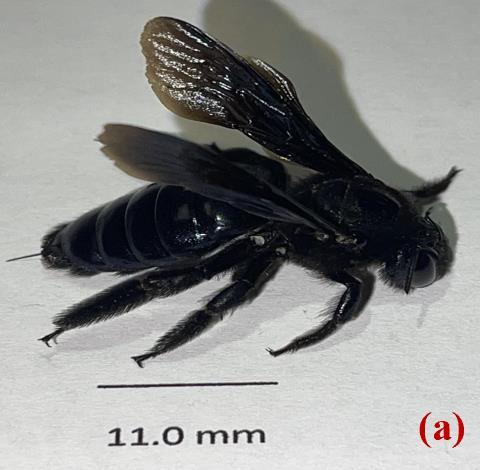
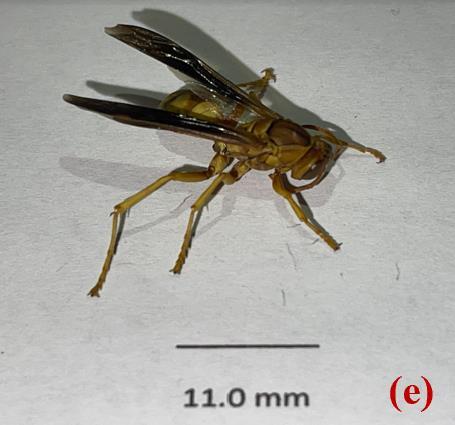
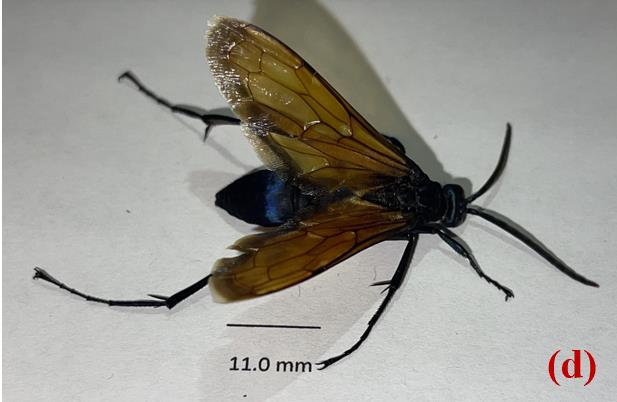
Abstract: AlargepartoftheNorthernportionoftheChihuahuanDesertislocatedinLunaCounty,New Mexico.Eighty-seven Xylocopa mican (Lepeletier,1841)MexicanCarpenterBees,eighteenAfricanized HoneyBees(AHB)andasmallnumberofwasps, Pepsis grossa (Fabricius,1798), Pepsis thisbe (Lucas, 1895),and Trogus species,whichareallparasiticwasps,werecapturedduringJuly,2022atthebaseof theFloridianMountainsintheNorthernChihuahuanDesert.Thesespeciesarenativepollinatorsandtend to be resistant to parasites due to hybrid vigor or heterosis. However, even though large-bodied pollinators have been found to be extremely efficient, they are prone to extinction upon ecological disfunction.Thespecimensweretestedfor Wolbachia pipientisand Varroa destructor mites. Wolbachia pipientis is a Rickettsial endosymbiont bacterium that infects arthropods and nematodes. Wolbachia infestation can manipulate the reproduction of arthropods causing cytoplasmic incompatibility, feminization,parthenogenesis,sterilization,andmalekillingwhichdecreasesthenumberofprogenyand skewsthemale/femaleratiosinarthropodpopulation. Identificationof W. pipientis wasbasedonthe16S geneofrDNA.ThegeneusedforinsectDNAidentificationwasthecytochromeCoxidasegene. Wolbachia is primarily transferred vertically from mother to offspring, but horizontal transfer does happen especiallywithparasiticwasps. Varroa destructor mitesarevectorsforatleasteighteenviruseslinked ColonyCollapseDisorderwhichdecimatesabout40%ofthedomesticatedbeecolonies, Apis mellifera, eachyear. Manybeekeepersdonotrealizethe Apis mellifera areaninvasivespeciesandnotnativeto NorthAmerica.Thisstudyaddressesthatneedfortheagriculturalcommunitytoexpandtheusetonative pollinatorsandreducetheuseofdomesticatedbees.
Keywords: Wolbachia pipientis, Africanized Honey Bees (ABH), Varroa destructor mites, native pollinators,heterosis,hybridvigor, Xylocopa mican, Trogus species, Pepsis thisbe, Pepsis grossa
INTRODUCTION: Thirty-fivepercentoftheworld’scropsdependonanimalpollinators(Klein,etal., 2007).Traditionally,farmersdependondomesticatedhoneybeesforpollination. Nevertheless,about 40%ofdomesticatedhoneybeecoloniesintheUnitedStatesarelosteachyearduetoColonyCollapse Disorder (Evison, et al., 2012). Honeybees, especially Apis mellifera, are the preferred agricultural pollinators. Butthecontinuingdeclineof A. mellifera highlightsthepotentialriskofsolerelianceonone speciesforpollination(Klein,etal.,2007).Besides,diversityofpollinatorshasbeenshowntoincrease crop yield (Hoehn, Tscharntke, Tylianakis, & Steffan-Dewenter, 2008). Parasites and the overuse of pesticides are responsible for the declining populations of pollinators, both domestic and native (Biesmeijer,etal.,2006). Varroa destructor mites,whichareectoparasites,aredirectlyresponsiblefor

reducedhoneyandbroodproductionby A. mellifera colonies(Downey&Winston,2001).Also,theyare thoughttobemajorvectorsforhoneybeeviruses(Moore,Wilson&Skinner,2014).Themite’sinfestation rangesfromallcountrieswiththeexceptionofAustraliaandhavecausedaglobaldeclineindomesticated bee colonies. Presently,it is not possible to eradicate the mites from infected hives exacerbating the situation(Beverley,2008). Thedeclineofdomesticatedpollinatorshasincreasedtherelianceondiverse communities of wild, native pollinators Additionally, native pollinators are an important factor in maintainingplantspecies,butareseldomlyreliedonforpollination(Klein,etal.,2007).Nobaselinedata existsofnative,speciepopulations(Biesmeijeretal.,2006).Anotherissueisthetransferofvirusesfrom domesticatedbeestowildbeesthatcouldpotentiallybeexacerbatingthewildbeedecline.Pollenfrom flowersfrequentedby Apis mellifera havebeenfoundtoharborvirusesfrom A. mellifera,showinghow easilyvirusescan betransferredfrom domesticbee populationstonativepollinators (Dolezal, et al., 2016).
Wolbachia pipientis isawide-spreadendosymbiontthattendstobeparasiticininsectsandmutualisticin filarial nematodes (Slatko, Luck, Dobson, & Foster, 2014). In 2015, it was estimated that 52% of arthropodsand47%ofnematodeswereinfectedwith Wolbachia (Weinert,Araujo-Jnr,Ahmed,&Welch, 2015).OnehundredpercentofdomesticatedhoneybeesinGermanytestedpositivefor Wolbachia,and 75%ofdomesticatedhoneybeesinSouthAfricahavetestedpositiveshowingtheextentoftheinfestation (Pattabhiramaian,Brueckner,Witzel,&Reddy,2011).Nopaperstesting A. mellifera inNorthAmerica were found. Wolbachia is known for manipulating the reproduction of hosts to cause cytoplasmic incompatibility, parthenogenesis, and feminization (Zhou, Rousset, & O’Neill, 1998). It is known specificallytocauseparthenogenesisinparasiticwasps(Werren,1997). However,inthelastseveral years, Wolbachia hasbeenviewedasamutualisticendosymbiontininsects. Wolbachia hasbeenshownto facilitateresistancetoRNAvirusesinitshost(Pimentel,Cesar,Marcos,&Cogni,2021). Insomecases,the bacteriumhasincreasedresistancetoinsecticides. Thisfluctuateswiththeinsectspecies,theinsecticide, thepopulationdensityandthestrainof Wolbachia (Liu&Guo,2018). Wolbachia hasbeenassociatedwith resistancetoorganophophatepesticidein Culex pipiens (Linnaeus)mosquitoes.Buprofezin,commonly used in China on rice paddies, prevents the formation of chitin needed for insect exoskeletons. Leaf hoppers, Laodelphax striatellus (Fallen) infected with high densities of Wolbachia, have developed resistancetothepesticide.Also, L. striatellus,treatedwithanti-bioticsandclearedof Wolbachia, werenot resistance to buprofezin (Li, Liu, & Guo, 2018). The success of Wolbachia infestation is attributed to efficient maternal transmission and manipulations of the host reproductive system to favor females.
Wolbachia isusuallytransmittedverticallyfrommothertooffspringthroughthefemalegermline,butit canalsobetransmittedhorizontallyfrompreytopredator(Werren,1997).
Until2006,MexicanCarpenterBees, Xylocopa mican (Lepeletier,1841)wereonlyfoundyear-roundinthe EasternandSoutheasternsectionsoftheUnitedStatesthanspecimenswerecollectedfromArkansas (Warriner,2010). Xylocopa mican hasalsobeenfoundinthelowerRioGrandeValleysince1981during the warmer months (Porter, 1981). One scenario for the migration was purposed by Tripodi and Szalanski(2011). Beings X. mican buildtheirnestsinwood,theyproposedlumbertransportedacrossthe countryfacilitatedthemigrationinadvertentlyviatheinterstatehighwaysystem. Anexampletosupport thistheory, Xylocopa speciesfromHawaiiarrivedinSanFranciscoviabalsawood(Tripodi&Szalanski, 2011). Xylocopa mican are polylectic and efficient pollinators of several crops including tomatoes, eggplantsandpeppers.Peppersareamajorcrop inLunaCounty,NewMexico(UnitedStatesDepartment ofAgriculture,2021). Thehabitatsof Xylocopa mican maybechangingduetoclimatechangeand/or anthropogenicbehavior(Tripodi&Szalanski,2011).
AfricanizedHoneyBees(AHB)enteredNorthAmericanin1990,andhavesincecolonizedthroughoutthe southernUnitedStates,replacing Apis mellifera.AHBareacrossbetweenanAfricanhoneybeeandtwo subspecies of domesticated Western honeybees (Winston, 1992). They were created in 1956 by two geneticistsinBrazil.Theobjectivewastocreateagentlebeethatproducedmorehoney. However,26 queenbeesthatwereproducedweremoreaggressivethantheAfricanbeeandtheydidnotproducemore honeythantheWesternbees. Theywereaccidentlyreleasedintothewild(Winston,1992). AHBmoved intoLunaCountyin 1992, andsystematically replacedallof theWesternbees. Domesticbeekeeping rapidlydeclinedinLunaCounty(Blandford,2019;Sutherland,2019).AHBareslightlysmaller,produce more offspring, and have a shorter life span than Apis mellifera resulting in rapidpopulation growth (Tribe&Fletcher,1977).TheAfricanbeetraitsaredominantovertheWesternbeetraits. Thesetraits includeswarmingexcessively,abscondingthehivequickly,replacingotherbeecolonies,andexcessively defendingtheirhives(Eimanifar,Brooks,Bustamante,&Ellis,2018).
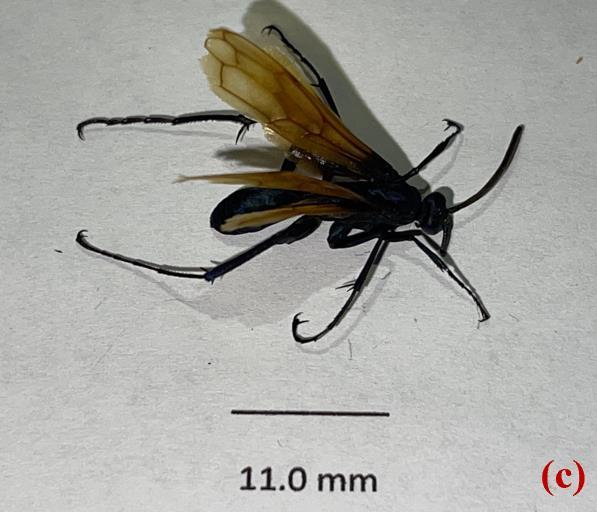
Theparasiticwaspscapturedaredividedintotwogroups:spiderwasps(Pepsis grossa and Pepsis thisbe) and caterpillar wasps (Trogus species). Pepsis grossa and P. thisbe laytheir eggs on tarantulas, while Trogus species lays its eggs on swallowtail butterfly larvae (Sime, 2005). Both behaviors facilitate horizontaltransferof Wolbachia Havinglesssetaethanbees,theyarelessefficientpollinatorsbutstillare pollen vectors and are essential to the native pollinating population (Hooks & Espindola, 2023).
Parasitoidwaspslargelydependonchemicalcuesreleasedfromboththeirherbaceoushostsandthe damagedplants(Tumlinson,Turlings,&Lewis,1992). Parasiticwaspsarealsonativepollinatorsanda commoninhabitantofdesertsinthesouthwesternUnitedStates.
MATERIALS AND METHODS:
Capturingspecimens:Propersafetymeasureswereobservedduringspecimencollection.AHB,especially, areknowntobeveryaggressiveiftheirhivesareapproached.Thespecimenswerecapturedawayfrom hiveslimitingthethreatofswarmattacks.Properattirewasworn.FiftymLcentrifugetubesandinsect netswereusedtocapturethebees.Thespecimenswererefrigeratedbeforehandling.Thecentrifuge tubeswerelabeledwiththelocationanddate.Thespecimenswerefrozenuntilscreeningfor V. destructor mitesand W. pipientis.
Identificationofspecimens:Hurd’srevisionoftheNearcticspeciesofthepompilidgenus Pepsis wasused toidentifythewaspsin the Pepsis genus, Pepsis grossa and Pepsis thisbe (1952) Trogus species was identified using Wahl and Sime revision of the genus Trogus (2006). However, the specimens were damagedduringtissueextraction.Wewereunabletodeterminewhetherthespecieswere T. pennator or T. flavipennis Xylocopa micans wasidentifiedusingtheHurdandMourekeyforlargecarpenterbees (1963).AfricanizedHoneyBeeswereidentifiedbyCarolSutherland,EntomologistsforNewMexicoState UniversityandJackBlandford,DirectorofAgricultureatNewMexicoStateUniversity.
Wolbachia andInsectDNAextractionandPCRprotocols:Twomillimeters(mm)wereremovedfromthe specimen’s posterior abdomen. The abdominal segment was then placed in a 1.5 milliliters (mL) microfugetubewith200microliters(µL)oflysisbuffer.Theabdominalsegmentwasmaceratedfor1 minute.Eight-hundredµLoflysisbufferwasaddedtothemicrofugetubethenvortexed.Thetubewas placedina99°Cwaterbathfor5minutes.Afterheating,thetubewasopenedbrieflytoreleasepressure thencentrifugedfor8minutesat10,000rpm.Anothermicrofugetubewasobtainedand400µLofthe supernatantandputintothenewtube.FortyµLof5.0MNaClwasaddedandplacedonicefor5minutes. Tubeswereplacedinthecentrifugeattherpm’sandtimeaspreviouslystated.Anothercleanmicrofuge tubewasobtainedand300µLofsupernatantwastransferred.Four-hundredmicrolitersofisopropanol wasaddedandthencentrifugedat10,000rpmfor8minutes.Thesupernatantwascarefullypouredout andthemouthoftubewastappedlightlytoremovemostoftheliquid.Thepelletwasairdriedfor10 minutes.Two-hundredµLofTE/RNasewasadded.Thepelletwasdisturbedbypipettingandthentube was centrifuged at 10,000 rpm for 1 minute. The DNA was frozen until PCR amplification. PCR
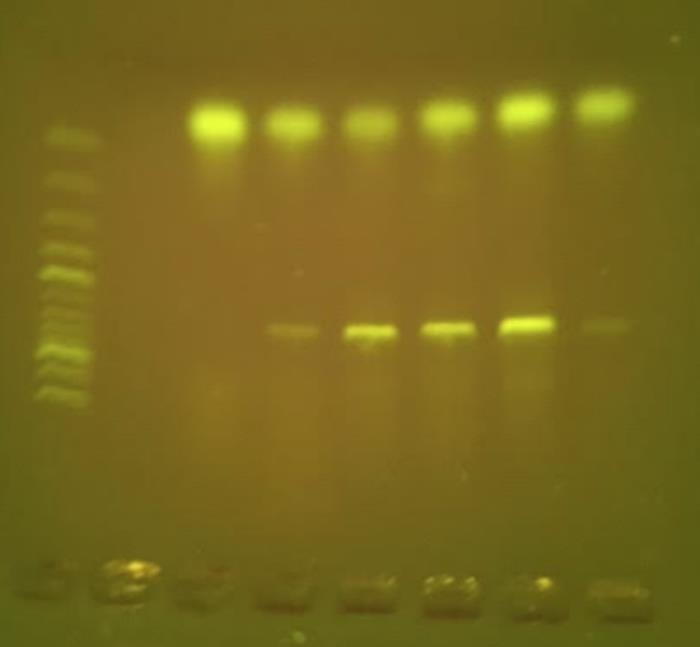
amplificationwasdonewithaBio-Radthermocyclert100;PuReTaq™Ready-To-Go™PCRbeadswere used.TheDNAwasthawed.TwentymicrolitersofprimerwasaddedtothePCRbeadalongwith5µLof extractedDNA.Primerfor16SrDNAwasusedtoidentify W. pipientis,andprimerfortheCytochromeC oxidasegenewasusedtoidentifyinsectDNA.PCRcyclesincluded95degreesfor2minutes,30cyclesof: 94degreesfor30seconds,55degreesfor45seconds,72degreesfor1minute,then72degreesfor10 minutes, and finally left at 4 degrees for the rest of the allotted time. One point two percentagarose electrophoresisgelswererunat150Vfor30minutes.SYBRsafegreenloadingdyewasusedwithlithium bromidebuffer.AnEDVOTEKTruBlu2DNAilluminatorwasusedtoviewtheDNA. Wolbachia pipientis DNAisidentifiedat438kilo-basepairs(kbp)andinsectDNAisidentifiedat708kbp.
Varroa destructor MiteScreening
Varroa destructor screeningwasperformedunderadissectingmicroscopebycarefullyexaminingthe areasbetweenthescleriteswherethemitesnormallyreside.Thespecimenswereexaminedformites beforebeingscreenedfor W. pipientis.
RESULTS
Between2:00pmand3:00pmduringJulyof2022,collectionsweepsweremadeatrandomsitesina5hectareareaoftheNorthernChihuahuaDesert. Venomouspollinatorswerecollectedmostlyfrompurple sage (Salvia carduacea), desert willow trees (Chilopsis linearis), creosote bushes (Larrea tridentata), honeymesquitetrees(Prosopis glandulosa).
The electrophoresis gel to the left shows speciemens 1through6of Xylocopa micans The100basepair(bp)ladder is visible on the left. Specimens 2 through 4 show highdensity infections Wolbachia pipientis. Specimens 2 and 6 showalow-densityinfection.Noneofthespecimensofany specietestedpositivefor V. destructor mites. W. pipientis is identificableat438bpandinsectDNAisidentificableat708 bp. Xylocopa micans wastheonlyspeciethattestedpositive for Wolbachia.
DISCUSSION
Native pollinators are extremely important to the ecological stability of habitats. Relinance of the agriculturalcommunityonasinglespecies, Apis mellifera,mayprovetobeinerrorespeciallyduetothe declineofdomesticatedcoloniesbecauseofCCD.Researchshowsthatdiversityofpollinatorsimproves indiginousplantandcropproduction. ThenorthernportionoftheChihuahuanDesertreliesheavilyon
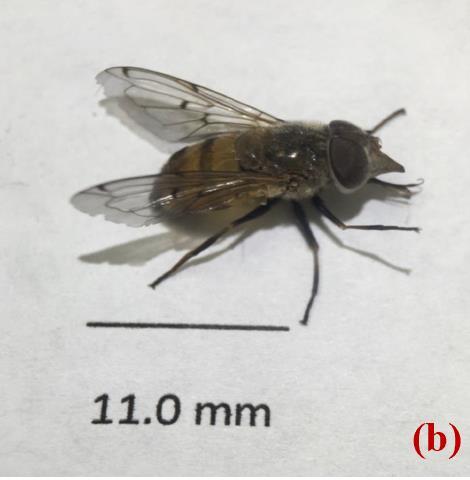
nativepollinatorsforthesuccessfulreplenismentofplantspecies.Thehealthanddensityofthesespecies areessentialtotheenvironmentalsustainabilityofthedesert.Thepurposeofthisstudywastoevaluate the V. destructor miteand W. pipientis infectionratesinthepopulations,however,italsorevealedthe populationdensityofsomespecies.Ofcourseseasonalvariationshappenininsectpopulations,butboth Xylocopa micans andAfricanizedHoneyBees werethemostpopulous venomouspollinating species duringourtimeframe. Xylocopa micans isanefficientpollinatorofpeppers,whichareamajoreconomic cropinthisarea.
Mostofthespecimenswerecaughtonpurplesagebushes(Salvia carduace),desertwillowtrees(Chilopsis linearis),creosotebushes(Larrea tridentata),andhoneymesquitetrees(Prosopis glandulosa). Xylocopa micans madeupseventypercentofthespecimenscaught. Xylocopa micans aresolitarybeesthatboor holesinthestalksofthe Agave parri tomakenests. Agave parri arecommoninthisarea.Theywerenot expectedtoharbor Varroa destructor mitesduetotheirsolitaryexistance. Africanizedhoney,whichare social, made up the second largest percentage, 21%. Even though AHB tend to be more resistant to parasitesthan Apis mellifera,wethoughtthatsomeoftheAHBmightharbor V. destructor mites.Themites tend to locate themselves between the sclerites of the insects. The wasps, a minor percentage of the specimens,werenotexpectedtobehosts. Varroa destructor miteswerenotfoundonanyofthespecies.
Asfor Wolbachia pipientis,wehadprojectedthatapercentageofallofthespecies wouldbeinfected. Globably, Wolbachia isaubiquitousendosymbiont.Thecarpenterbees, X. micans,hada10%infection rate,muchlowerthanotherstudiesresearched.Itwasspeculatedthat Wolbachia infectioninthebees wouldhavebeenbyverticaltransfer.Beingsthewaspslaytheireggsonotherspecies,horizontaltransfer of Wolbachia was conceiable. However, noneof the AHB or wasp specimens were infected. Possible reasonsforthisarethelowspecimensnumbersobtained,ortheresistancetoparasitesduetohybird vigororheterosis. Wolbachia hasbeenknowntoimprovetheimmunesystemsofsomeinsects,andeven make some species resistant to insecticides. But as it decreases the male population in a species, it decreasesthegenepoolandthusdecreasesthevariationinapopulation.Variationinapopulationallows aspeciestoadapttochangingenvironments,asweareexperiencingtoday.
Theidentificationofthe Trogus specieswasproblematic. Verylittleresearchhasbeendoneonthegenus. We did obtain an revision of the taxonomic key for the genus. During the extraction of tissue for Wolbachia testing,thespecimenswereslightlymutalatedandtheexactidentificationwasimpossible. We believethe Trogus specimensareeither T. pennator or T.flavipennis.
Moreresearchisneededbothintheareaofparasiteinfectionratesofnativepollinators,andthedensity ofthepollinatingspeciesintheNorthernChihuahuanDesert.
References
Beismeijer, J., Roberts, S., Reemer, M., Ohlemuller, R., Edwards, M., Peeters, T., Schaffers, A., Potts, S. Kleukers,R.,Thomas,C.,Settele,J.,Kunin,W.(2006).ParalleldeclinesinpollinatorsandinsectpollinatedplantsinBritainandtheNetherlands. Science, 313,351-354.
Beverley,C.(2008). Varroa destructor mites. CABI Compendium,1-33.
Blandford,J.(2019,October11).CountyProgramDirectorofAgricultureNewMexicoStateUniversity.(N. Rech,Interviewer)
Dolezal,A.,Hendrix,A.,Scavo,N.,Tripp,J.,Harris,M.,Wheelock,M.,O'Neal,M.,Toth,A.(2016).Honeybee virusesinwildbees:viralprevalence,loads,andexperimentalinoculation. Plos One, 11(11),1-16.
Downey,D.,&Winston,M.(2001).Honeybeecolonymortalityandproductivitywithsingleanddual infestationsofparasiticmitespecies. Apidologie, 32,567-575.
Eimanifar, A., Brooks, S., Bustamante, T., & Ellis, J. (2018). Population genomics and morphometric assignmentofwesternhoneybees(Apis mellifera L)inSouthAfrica. BMC Genomics,1-26.
Evison,S.,Roberts,K.,Laurenson,L.,Pietravalle,S.,Jui,J.,Biesmeijer,J.,,Smith,J.,Budge,G.,Hughes,W. (2012).Pervasivenessofparasitesinpollinators. PloS One, 7(1),1-7.
Hoehn,H.,Tscharntke,T.,Tylianakis,J.,&Steffan-Dewenter,I.(2008).Functionalgroupdiversityofbee pollinatorsincreasescropyield. Proceeding of the Royal Society Biology, 275,2283-2291.
Hooks, C., & Espindola, A. (n.d.). Maryland Agronomy News. Retrieved from Wasps, Surprisingly Cool Pollinators: https://blog.umd.edu/agronomynews/2020/08/31/wasps-surprisingly-coolpollinators/
Hurd,P.(1952).RevisionoftheNearcticspeciesofthepompilidgenus Pepsis (Hymenoptera:Pompilidae). Bulletin of the American Museum of Natural History, 98,261-334.
Hurd, P., & Moure, J. (1963). A classification of the large carpenter bees (Xylocopini) (Hymenoptera: Apoidea). Journal of the University of Californa Pubications in Entomology, 29,1-365.
Klein, A., Vaissiere, B., Cane, J., Dewenter, I., Cunningham, S., Kremen, C., & Tscharntke, T. (2007). Importanceofpollinatorsinchanginglandscapesforworldcrops. Proceedings of the Royal Society, 274,303-313.
Li,Y.,Liu,X.,&Guo,H.(2018).Variationsinendosymbiontinfectionbetweenbuprofezin-resistantand susceptiblestrainsof Laodelphax striatellus (Fallen). Current Microbiology, 75,709-715.
Liu, Z., & Guo, H. (2018). Importance of endosymbiont Wolbachia and Rickettsia in insect resistance development. Current Opinion in Insect Science, 33,84-90.
Moore,P.,Wilson,M.,&Skinner,J.(2014).Honeybeeviruses,thedeadly Varroa miteassociates. Bee Health,1-19.
Pattabhiramaiah, M., Brueckner, D., Witzel, K., & Reddy, M. (2011). Wolbachia endosymbiont in the workersofEuropeanhonebee, Apis mellifera carnica Electronic Journal of Biology, 7(4),81-85.
Pimentel, A., Cesar, C., Martins, M., & Cogni, R. (2021). The antiviral effects of the symbiont bacteria Wolbachia ininsects. Frontiers in Immunology, 11,1-5.
Porter,C.(1981).EcologicalnotesonlowerRioGrandeValley Xylocopa(Hymenoptera:Anthophoridae). The Florida Entomologist,175-182.
Sime, K. (2005). The natural history of the parasitic wasp Trogus pennator (Hymenoptera: Ichneumonidae):Host-findingbehaviourandapossiblehostcountermeasure. Journal of Natural History, 39(17),1367-1380.
Slatko,B.,Luck,A.,Dobson,S.,&Foster,J.(2014). Wolbachia endosymbiontsandhumandiseasecontol. Molecular & Biochemical Parasitology, 195(2),88-95.
Sutherland,C.(2019,November7).Entomologist,NewMexicoStateUniversity.(N.Rech,Interviewer)
Tribe,G.,&Fletcher,D.(1977).Rateofdevelopmentoftheworkersof Apis mellifera adansonii L..InG. Tribw, & D. Fletcher, African bees: Their taxonomy, Biology and Economic Use (pp. 115-119). Pretoria:Apimondia.
Tripodi,A.,&Szalanski,A.(2011).FurtherRangeExtensionof Xylocopa micans Lepeletier(Hymenoptera: Apidae). Journal of the Kansas Entomological Society, 84(2),163-164.
Tumlinson, J., Turlings, T., & Lewis, W. (1992). The semiochemical complexes that mediate insect parasitoidforaging. Agricultural Zoology Reviews, 5,221-252.
United States Department of Agriculture. (2021, February February 5, 2023). Quick Stats Overview Retrieved from New Mexico Agriculture: https://www.nass.usda.gov/Quick_Stats/Ag_Overview/stateOverview.php?state=NEW%20MEXIC
Wahl, D., & Sime, K. (2006). A revision of the genus Trogus (Hymenoptera: Ichneumonidae, Ichneumoninae). Systematic Entolmology, 31,584-610.
Warriner, M. (2010). A range extension for the large carpenter bee Xylocopa micans (Hymenoptera: Apidae)withnotesonfloralandhabitatassociations. Environmental Science, 83(3),267-269.
Weinert,L.,Araujo-Jnr,E.,Ahmed,M.,&Welch,J.(2015).Theincidenceofbacterialendosymbiontsin terrestrialarthropods. The Royal Society Proceedings: Biological Sciences, 282(1807),1-6.
Werren,J.(1997).Biologyof Wolbachia. Annual Review of Entomology, 42,587-609.
Winston, M. (1992). The biology and management of Africanized honey bees. Annual Review of Entomology, 37,395-406.
Zhou,W.,Rousset,F.,&O'Neill,S.(1998).PhylogenyandPCR-basedclassificationof Wolbachia strains usingwspgenesequences. Proceedings of the Royal Society of London, 265,509-515.