Common Skin Disease Diagnosis and Prediction: A Review
R. Khadke 51Asst. Prof., Department of Information Technology

Vidya Pratishthan’s Kamalnayan Bajaj Institute of Engineering and Technology, Baramati
2,3,4,5UG students, Department of Information Technology
Vidya Pratishthan’s Kamalnayan Bajaj Institute of Engineering and Technology, Baramati ***
Abstract - The integration of computer technology into the healthcare industry has been driven by the proliferation of electronic data. Skin diseases, which can range from common to rare disorders, present a unique challenge for medical professionals in terms of diagnosis. Machine learning anddeep learning algorithms have shown potential for improving the early detection of high-risk skin disorders and displacing traditional diagnostic systems. This paper aims to evaluate the performance of various machine learning and deep learning models in diagnosing skin diseases by analyzing performance indicators. We trained our model using deep learning, a type of machine learning that leverages large data sets, reducing the need for multiple classifiers. This approach enhances dermatology by allowing the machine to continuously learn, categorize input data into appropriate prediction levels, and provide accurate results in a timely manner. Our model utilized Convolutional Neural Network (CNN), a widely used method for image categorization.
Key Words: Skin Disease, Machine Learning, Deep Learning, Neural Network, Convolutional Neural Network (CNN)
1. INTRODUCTION
Dermatologyisacomplexandchallengingfieldduetothe diversity of diseases that affect the hair, skin, and nails. Thesediseasesareinfluencedbyvariousenvironmentaland genetic factors, leading to different symptoms and prognoses. Some diseases, like eczema and psoriasis, are chronic and incurable, while others, like malignant melanoma,canbelife-threateningifnotdetectedearly.
Deeplearningisasubfieldofmachinelearningthatutilizes largedatasetstoreducethenumberofclassifiersneededfor the learning process. Unlike traditional machine learning, deeplearningalgorithmshavetheabilitytoautomatically selectandextractfeatures,makingpredictionseasierforend users with minimal pre-processing. Convolutional Neural Networks (CNNs) are a popular type of artificial neural networkusedinimagerecognitionandclassificationtasks. Theyhavebeenshowntobeeffectiveinrecognizingfaces, objects,andtrafficsigns,andarealsousedinareassuchas roboticsandself-drivingcars.
Skindiseasesarebecomingincreasinglyprevalent,affecting people of all ages. In order to detect these diseases, we utilizedaCNN,atypeofdeepneuralnetworkthathasthe ability to independently learn and categorize data into prediction levels, producing accurate results quickly. The mostcommonlyoccurringdiseasesinthedata setinclude melanocyticnevi,melanoma,benignkeratosis-likelesions, basalcellcarcinoma,actinickeratoses,vascularlesions,and dermatofibromas.Despitetheirprevalence,diagnosingthese diseasesiscomplexduetothevariationsinskintone,color, andhair.
1.1 Skin Diseases:
Malignanciesthataffecttheskinincludeskincancer,whichif untreated,canhavemajornegativeeffectsonone'shealth. Melanoma, squamous cell carcinoma and basal cell carcinoma are the three major types of skin cancer. The mostcommonkind,basalcellcarcinoma,isdistinguishedby tiny, flesh- colored skin growths. On the other hand, squamouscellcarcinomastartsintheskin'ssurfaceflatcells. Skin cancer that is more serious and tends to be dark in color, called melanoma, begins in the cells that produce pigment.Exposuretoultraviolet(UV)radiationfromthesun ortanningbeds,afamilyhistoryofthedisease,havinglight skin, and a history of sunburns are risk factors for developingskincancer.It'salsoimportanttonotethatskin cancercanoccurinareasthatarenotfrequentlyexposedto thesun.
Early skin cancer identification and treatment are crucial. Anymolesthatappearsuddenlyorthatchange should be examinedbyadoctor.Thebestcourseofactionfortreating skincancerwilldependonthekindandstageofthedisease. Treatment options range from surgery to radiation and chemotherapy. Use a sunscreen with a high SPF, wear protectiveclothes,findshadeduringthesun'speakhours, andwearprotectiveeyeweartoprotectyourskinfromUV rays.Regularself-examinationsanddermatologistvisitscan alsoaidintheearlyidentificationofskincancerwhenitis stillthemostcurable.
1.2. Deep Learning:
Artificialneuralnetworksthataremodelledafterthehuman brain are used in deep learning to assess and resolve complicated issues. Without the need for manual feature engineering,itletscomputerstolearnfromdataandmake predictions.Manydifferentactivities,includingpictureand audiorecognition,naturallanguageprocessing,andgaming, maybeperformedusingdeeplearningtechniques.
Deep learning models must be trained using enormous quantities of data and processing power, although technological advances in hardware and cloud computing havemadethislessdifficult.Deeplearninghassignificant promiseforinnovationsandincreasedprecisioninavariety ofapplicationsasitdevelops.
Deeplearningnetworkscanhavecomplexstructureswith several layers and numerous parameters, which makes trainingdifficult.Deeplearningmodelsmay,nevertheless, produce analyses and predictions with extremely high accuracy due to the rise in processing power and data availability.
1.3 Convolutional Neural Network:
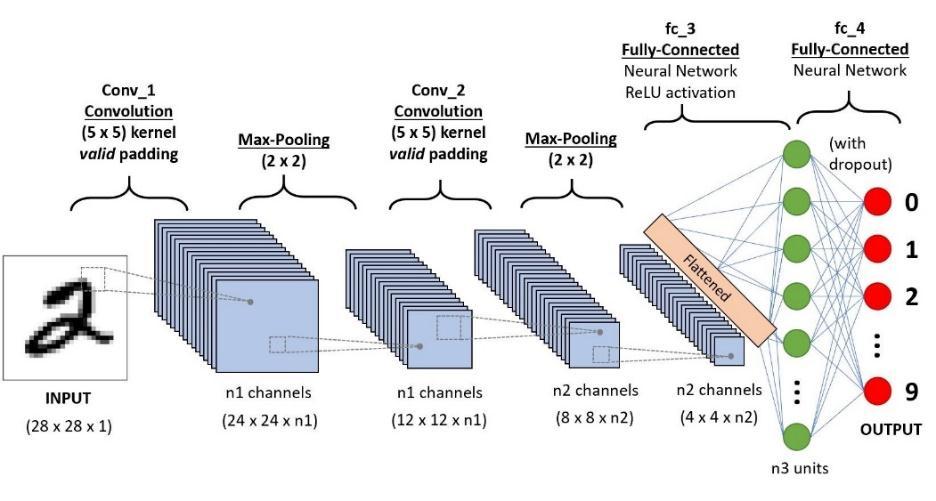
Deep learning algorithms such as convolutional neural networks (CNNs) have completely changed the way computervisionisstudied.Theyareparticularlysuitedfor imageclassificationjobsbecausetheyemployseverallayers tostudyanddiscoverpatternsandcharacteristicsinpictures andvideos.Convolutionallayers,whichapplyfilterstothe input database to detect features, pooling layers, which reduce the spatial dimensions of the data to streamline computation, and fully connected layers, which use the features discovered by the previous layers to make predictions,makeupthearchitectureofaCNN.Thecapacity of CNNs to learn hierarchical representations of the data, startingwithsimplecharacteristicsandprogressingtomore complex ones, is one of its main advantages. This enables themtoforecastimageswithaccuracy.
2. Literature Survey
Skindiseasesoccurinalmostallagegroupsofpeople.There are chronic and incurable diseases such as eczema and psoriasis and malignant diseases such as malignant melanoma.Recentscientists havefoundtheavailabilityof drugs for these diseases if they are detected in the early stages. It has been published for the detection of these diseases using an image processing method. The most dangerousformofskincanceramongothertypesofskinis melanoma. Skin diseasesareoftendifficulttodetectat an earlystageandevenmoredifficulttoclassifyontheirown.
Imageclassificationisoneoftheclassicproblemsinimage processing.Thisarticlegivesusanoverviewoftheexisting machinelearningandimageprocessingalgorithmsforskin diseasedetectionthroughAndroidapplicationdevelopment. One in five people in the US is infected with some kind of skindisease.Therearechronicandincurablediseasessuch as eczema and psoriasis and malignant diseases such as malignant melanoma. To detect these diseases using the imageprocessingmethod.Skindiseasedetectionmethods usingmethodssuchasNaïveBayes,CNN,SVMwereused. The most dangerous form of skin cancer is melanoma becauseitismuchmorelikelytospreadtootherpartsofthe body if not diagnosed and treated early. The literature review shows that CNN and SVM are the most suitable algorithms for the detection of skin diseases. In these articles,wehaveusedOpenCVimageprocessingalongwith machinelearningalgorithmstodetectvariousskindiseases. Theapplicationalsoprovidesthedoctorwithacontrolpanel tomanagehispatientremotelyandcanidentifythepatient's illness at a remote location. There are approximately 2.3 billionAndroiddevicesinuseworldwide,whichis1/3ofthe totalworldpopulation.Inshort,identifyingthediseasecan helpreducetheproblemofthespreadofskindiseases.This will provide aninexpensive methodof medical treatment. Most skin diseases can be easily spread by touch. In our application, weuseda modified pre-trained convolutional neural network model and SVM algorithm. For the classificationofsixclasses,92%accuracyisachieved.
Anewsystemhasbeendevelopedforthediagnosisofthe most common skin lesions. 93% accuracy is achieved in classification using Convolution Neural Networks (CNN) withKerasApplicationAPI.Thewatchwordinthesestepsis "DataPreprocessingandEnhancement:TrashIn-GoodOut". They examined various properties of the data set, their distributions, and actual counts. Data transformation involvesconvertingdatafromoneformattoanother.Model Buildinginvolvesbuildingadeepneuralnetwork(CNNor ConvNet).Backpropagationisastrategyinartificialneural networks(ANN)tofindout theerrorcontributionofeach neuronafterprocessingaburstofdata.Backpropagationis quitesensitivetonoisydata.Datacleaningisperformedto removenullvalues,smoothingnoisydatabyidentifyingor removing outliers, and removing inconsistencies. Skin cancer-MNIST(ModifiedNationalInstituteofStandardsand Technology Database)-HAM 10000.dataset is been used. Artificial Neural Network (ANN) & Back Propagation Network(BPN)areusedinthisresearch.Inconclusion,the workpresentsarobustautomatedmethodforthediagnosis of dermatological diseases in the European Society of MedicalOncology.Skindiseasesarethefourthmostcommon cause of human disease, but many still do not consult a doctor.Weshouldemphasizethatitisintendedtoreplace
doctors,becausenomachinecanyetreplacehumaninput intoanalysisandintuition.
[3]SouravKumarPatnaik,MansherSinghSidhu,Yaagyanika Gehlot, Bhairvi Sharma and P Muthu “Automated Skin Disease Identification using Deep Learning Algorithm”
In order to forecast numerous skin disorders that are prevalentyetchallengingtodetectowingtocomplications suchskintoneandcolour,thisstudyprovidesacomputer vision-based solution employing deep learning. The algorithm predicts skin illnesses based on the highest number of votes using three modified, freely accessible imagerecognitionmodels(InceptionV3,InceptionResnetV2, and Mobile Net). These models undergo a three-stage processoffeatureextraction,training,andtesting/validation before being pre-trained to recognise 1000 classes using skin photos. The technology aims to anticipate skin disorders with the greatest possible precision. Due to the widerangeofillnessesaffectingtheskin,hair,andnailsas well as the difficulties in diagnosing these illnesses, dermatologyisacomplicatedandunreliablebranchofstudy. For the proper diagnosis of skin disorders, a variety of pathological laboratory tests are required. , however, this researchsuggestsatechniquethatenablesuserstoforecast skin problems using computer vision without requiring time-consuming laboratory tests. The study outlines a methodforpredictingskinconditionsusingcomputervision anddeeplearning.Withchangesforskindiseaseprediction, the system leverages three publically accessible image recognitionarchitectures(InceptionV3,InceptionResnetV2, Mobile Net) and predicts the illness based on the combination of votes from the three networks. The technologyaimstoanticipateskinillnessesasaccuratelyas possible. Due to advancements in medical technology and computers'capacitytohandleandanalysemassivevolumes ofdata,theuseofcomputertechnologyinthedetectionof skindisordershasincreased.Thestudyemphasizestheuse ofsupervised,unsupervised,andsemi-supervisedlearning techniques for this purpose, concentrating on machine learninganddeeplearningalgorithms.Threepartsmakeup the proposed computer vision system for predicting skin diseases:featureextraction,training,andtesting/validation. The method employs deep learning technology to extract significant characteristics from photos of skin diseases during the feature extraction phase. These architectures have been pre-trained to identify up to 1000 classes of pictures.Thesystemchecksthealgorithmusingvalidation dataduringthetest/validationphaseinordertodetermine how accurate it is at predicting skin diseases. To forecast skinproblems,thealgorithmtakesthemostvotesfromthe three networks. The major objective of this method is to forecast skin diseases as accurately as possible. In comparisontomanual,time-consumingapproachesthatcall for specialized expertise, the system employs computer vision and deep learning to deliver a more effective and automatedmethodforidentifyingskindiseases.
Swapna,D.A.Vineela, M.Navyasree,N.Sushmtha, P. Bhavana
[4]T.
“Detection and Classification of Skin diseases using Deep Learning”
Thefastest-growingandmostvitaltissueinthehumanbody, accordingtoresearch,isskin.Doctorsandmoderntoolsare necessarytoidentifyvariousskindisordersduetothelow visualresolutionofskindiseasepictures.basisforapicture Dermatologists must be often consulted for manual skin disease diagnosis. Deep learning algorithms have recently been employed in studies on the categorization of skin diseases. The system has an accuracy of 85% on the HAM10000datasetforskindiseases.Asystemthatdivides pictures of skin lesions into benign, malignant melanoma, benignacne,andeczemacategorieswasdesigned,built,and tested using AlexNET, a pretrained CNN model. 750 additionalphotosofburnsandskinlesionshavebeenadded tothecollection,whichhasbeenenlarged.Burnsandskin woundsare nowincluded inthemodern classificationsof skindisorders.Inthisstudy,warts,shellfish,systemicillness, seborrheickeratosis,nevus,bullous,actinickeratosis,acne, and rosacea were all examined. A deep learning-based technique for detecting skin diseases is included in the proposed framework. This method recognises and categorisesskinconditions.UsingCNN,Resnet,Alexnet,and Inceptionv3,researchersproposeddevelopingaworldwide categorizationsystemforskinproblems.Additionally,ithas beendemonstratedthatResnetdetectsskinproblemsmore preciselythanothernetworks.
[5] Pravin R. Kshirsagar, Hariprasath Manoharan, S. Shitharth,AbdulrahmanM.Alshareef,NabeelAlbishryand PraveenKumarBalachandran.” Deep Learning Approaches for Prognosis of Automated Skin Disease.”
One of the most common diseases on the planet is skin problems. Peopleoftenignorethe earlysymptomsofskin conditions. In this study, a classification system for skin disorders was developed using MobileNetV2 and LSTM. Simulated skin injury, chemical exposure, infection of the embryo,immunesystemandgeneticproblemsareallfactors inthedevelopmentofskindiseases.Technologicaladvances havemadeitpossibletoplanandconductskinobservations earlyinthediagnosisofunderlyingskindisorders.Through automatedskindiseasediagnosismethods,skindiseasescan bepredictedquicklyandaccuratelywithhighthroughput. Skinconditionsdetectedearlycanhelppreventmoreserious conditions such as skin cancer. This section describes the components of a combined approach for detecting skin disorders.Inordertodevelopadevicethatcanaccurately detect skin problems, several factors must be observed. Good image separation is needed to predict skin disease. Standardizationisimportantforcomputerizedmethodsfor identifyingskinproblems.
[6] K. A. Muhaba1, K. Dese, T. M. Aga, F. T. Zewdu, G. L. Simegn. “Automatic Skin Disease Diagnosis Using Deep Learning from Clinical Image and Patient Information”
Usingdeeplearningandapre-trainedmobilenet-v2model, anuniquemethodwasdevelopedtoidentifyfiveprevalent skinillnesses.Overall,theinventionofthissystemmarksa hugestepforwardinmedicalscienceandhasthepotentialto significantlyimprovethequalityoflifeofpersonssuffering fromskinillnesses.
A pre-trained mobilenet-v2 model was used to create an automated skin disease diagnostic system. To efficiently classifyskinillnesses,themethodblendsskinphotoswith clinical patient information. This technology has the potential to give more thorough diagnoses, resulting in improved treatment results for patients by merging skin pictures and patient information. The use of pre-trained models also reduces the time and resources required for training and development, making the system more accessibleandconvenienttouseinarangeofscenarios.
Dr. Gerbi's central clinic collected 1137 photographs and patientinformation,whereasourstudycollected239photos anddatafrom286patientsattwomedicalclinicsinEthiopia. The material included skin photos as well as patient information such as age, gender, anatomic areas of skin illness, and symptoms. The study also revealed common symptoms and anatomical areas for five different skin disorders.
To categorise skin conditions, the scientists used transfer learning to a pre-trained MobileNet-v2 model. They discovered that the Adam optimizer, a cross-entropy loss function, and a learning rate of 0.0001 produced the best resultsforbothbinaryandmulticlassclassification.
Thealgorithmwastrainedonhugepicturedatasetsbefore being fine-tuned for skin disease categorization. In conclusion,ourworkeffectivelyutilisedtransferlearningto skindiseasecategorizationusingthepre-trainedMobileNetv2 model and produced good results. In this work, deep learningtechniqueswereusedonclinicalphotosandpatient information to build a smartphone-based skin disease detection system. For the diagnosis of five prevalent skin illnesses,thefindingsdemonstratedgoodperformancewith anaverageaccuracyof97.5%,precisionof97.7%,recallof 97.7%,F1-scoreof97.5%,andkappascoreof0.976.
[7] Parvathaneni Naga Srinivasu, Jalluri Gnana SivaSai, MuhammadFazalIjaz3,AkashKumarBhoi,WonJoonKim, andJamesJinKang. “Classification of Skin Disease Using Deep Learning Neural Networks with Mobile Net V2 and LSTM”
A deep learning strategy for skin disease categorization utilizing Mobile Net V2 and Long Short-Term Memory (LSTM)modelswasdevelopedinthispaper.Withmorethan
85%accuracy,thesuggestedsystembeatexistingcuttingedgemodelssuchasFine-TunedNeuralNetworks(FTNN), ConvolutionalNeuralNetworks(CNN),andVisualGeometry Group (VGG) Very Deep Convolutional Networks. Skin illnesses may be identified using image processing techniquesandAItechnologiessuchasMachineLearning, Deep Learning, Artificial Neural Network (ANN), Convolutional Neural Network (CNN), Support Vector Machines(SVM),BayesianClassifier,GeneticAlgorithm(GA), and morphological operations. SVM is not ideal for processingnoisyimagedata,ANNandCNNrequireahuge quantityoftrainingdata,fine-tunedneuralnetwork-based modelsofferhighaccuracybutrequiresignificanteffortin calibration,andsoon.Back PropagationNeural Networks (BPNN) may forget previously linked weights, Fuzzy Recurrent Neural Networks (FRNN) and Takagi-SurgeonKangFuzzyClassifierareidealforprocessingvariable-size inputs, and GLCM is a statistical technique that is not invariant to rotation and texture changes. The suggested model, which is based on Mobile Net V2 and LSTM, was evaluatedandproducedaccurateresultsforskinillnesses (85.34%)
3. Proposed Work
3.1 System Architecture
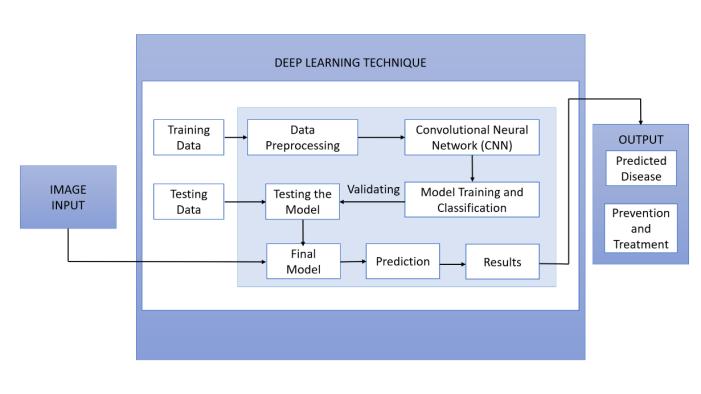
Fig -1:ProposedSystemArchitecture
3.2 System Design
3.2.1 Data Collection -Theskindiseasedetectionsystem wasevaluatedusingimagesfromthepubliclyavailableSkin Cancer-MNIST(ModifiedNationalInstituteofStandardsand TechnologyDatabase)-HAM10000dataset.Tosavetimeand effort,publiclyavailabledatawasutilized.
3.2.2Data Pre-processing -Toensureaccurateresults,the first step in data processing was cleaning the data. This included filling in missing values, smoothing noisy data, identifying and removing outliers, and removing inconsistencies.Duringpre-processing,theimagedatawas transformed into meaningful tensors and fed into the convolutionalneuralnetwork.
3.2.3 Data Transformation -Thisinvolvesconvertingdata from one format to another, such as transforming actual valuesfromonerepresentationtoanother.
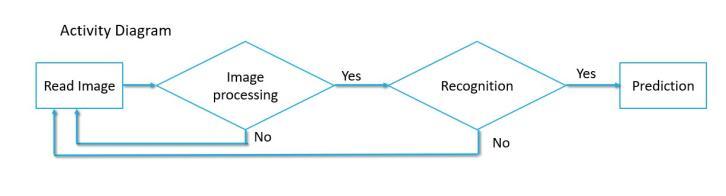
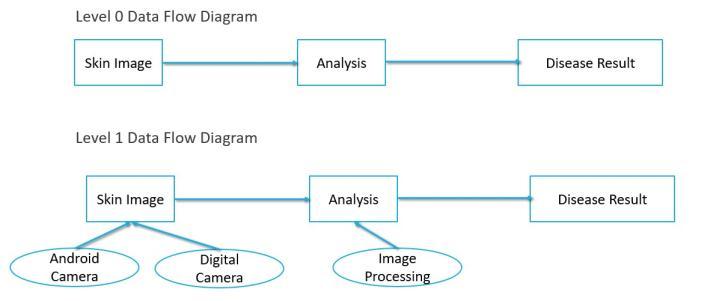
3.2.4 Modelling - A convolutional neural network (CNN) wasused.CNNsareatypeofdeepneuralnetworkwherethe machineitselflearnstodividethedataintopredictionlevels andproduceaccurateresultsinashorttime.Thisnetwork consists of a combination of convolutional layers, pooling layers, and fully connected layers. CNNs are the most effective algorithm for image classification, with features such as sparse connectivity, shared weights, and pooling capabilities playing a critical role in obtaining the best results. Additionally, the use of GPUs has reduced the training time of deep learning methods, and huge data labelled and pre-trained networks are now publicly available.
4. CONCLUSIONS
In this work, a model for the prediction of skin diseases usingdeeplearningalgorithmsiscreated.Ithasbeenfound thatby using featurecompoundingand deeplearning, we can achieve higher accuracy and also predict many more diseases than other previous models. Like the previous models, in this one area of use, we were able to report a maximumofsixskinconditionswithamaximumaccuracyof 75%. According to the implementation of a deep learning algorithm,weareabletopredictupto20diseaseswithan accuracy of 70 percent. This proves that deep learning algorithms have huge potential in real-world skin disease diagnosis. If an even better system with high-end system hardwareandsoftwareisusedwithaverylargedataset,the accuracycanbeincreasedconsiderably,andthemodelcan beusedforclinicalexperimentationasitdoesnothaveany invasive measures. Future work can be extended to make this model a standard procedure for the method of preliminarydiagnosisofskindiseases,asitwillreducethe timeoftreatmentanddiagnosis.
REFERENCES
[1] Kritika Rao, Pooja Yelkar, Omkar Pise and Dr. Swapna Borde,and ,"Skin Disease Detection using Machine Learnings",2021.
[2] Ahmed A. Elngar, Rishabh Kumar, Amber Hayat, Prathamesh Churi, "Intelligent System for Skin Disease PredictionusingMachineLearning”,August2021.
[3]SouravKumarPatnaik,MansherSinghSidhu,Yaagyanika Gehlot, Bhairvi Sharma and P Muthu “Automated Skin Disease Identification using Deep Learning Algorithm”, September2018.
[4]T.Swapna,D.A.Vineela, M.Navyasree,N.Sushmtha, P. Bhavana“DetectionandClassificationofSkindiseasesusing DeepLearning.”
[5] Pravin R. Kshirsagar, Hariprasath Manoharan, S. Shitharth,AbdulrahmanM.Alshareef,NabeelAlbishryand PraveenKumarBalachandran.”DeepLearningApproaches forPrognosisofAutomatedSkinDisease.”
[6] K. A. Muhaba1, K. Dese, T. M. Aga, F. T. Zewdu, G. L. Simegn. “Automatic Skin Disease Diagnosis Using Deep LearningfromClinicalImageandPatientInformation”
[7] Parvathaneni Naga Srinivasu, Jalluri Gnana SivaSai, MuhammadFazalIjaz3,AkashKumarBhoi,WonJoonKim, and James Jin Kang. “Classification of Skin Disease Using Deep Learning Neural Networks with Mobile Net V2 and LSTM.”