User Experience Versus Marketing
Snehashish De Student, Dept. of I.T. Thadomal Shahani Engineering College, Bandra (w), Mumbai 400050 , India
Abstract - User experience research (UX research) is a study of users that offers vital insights into their expectations, needs and behavior’s. UX research as a whole is a huge trend. In the domains of ui design and human-computer interaction, user experience (UX) has grown in prominence during the last ten years (HCI). With the advancement of technology, engaging products become not only more productive and practical but also attractive, fashionable items. Both practitioners and academics appear to support UX as a competitive alternative to traditional HCI, motivated by the belief that a narrow focus on interactive tools fails to capture the diversity and advancingaspects oftechnology use. Further, when you examine a product on social media, it frequently starts to display the same pictures to encourage you to buy it. It has a method of discovering not just what you watched but also how frequently. The future of marketing is digital. There is no need to physically inspect the products to determine the features when it comes to purchasing anything. There has been conflict between these two (UX and Marketing) for a very long time. People have always contrastedthese two, andbased on particular standards, one has always prevailed over the other. However, people have forgotten that these two coexist and have an impact on one another.
Keywords: UX research, UX design, Marketing , Problem
Definition,Ideation,DataVisualization,UserTesting.
1. USER EXPERIENCE
It'scrucialthatyoucomprehendthefundamentaldifferences between UX designand other disciplineslike wireframing, usability, graphic design and a plethora of others. User experiencedesign(abbreviatedUX,UXD)isafieldofstudy concerned with creating the entire user experience for a specificproduct.Theactofplanningandexecutingaspecific course of action that is intended to cause a planned modificationinthebehaviorofatargetpopulationisreferred toasexperiencedesign.AUXdesignershouldalwaysstart with the problems that people have and work toward developingasatisfying,alluring,andmotivatingsolution.The outcomesoftheresearchmustalwaysbequantifiableusing performance indicators that showcase user behavior designersdrawontheoriesandpracticesfromavarietyof disciplines, including cognitive science, computer engineering,graphicdesign,andvisualdesign.Inreality,you areplanningachangeinthetargetgroup'sbehaviorwhen youcreateanexperience.You'veidentifiedtheirissue,and you'reimplementingdesignprinciplestoeliminatethepain points. At the nexus of art and science, user experience
demands both incredibly sharp analytical thinking and creativity.IfweconsiderUXtobetheheartthentheblood thattheheartispumpingistheproblemsfacedbyyourusers .Findit,describeit,experiencetheburdensitcreates,andget ridofit.Theroadtoafantasticuserexperienceisthatone. You'llneedalotofempathyandanalyticalabilitiestokeepon thecorrecttrackbecauseoneofthechallengingthingsabout problemsisthat,eventhoughtheybotherus,wesometimes struggletodefinethem.
1.1 User Experience Design Process
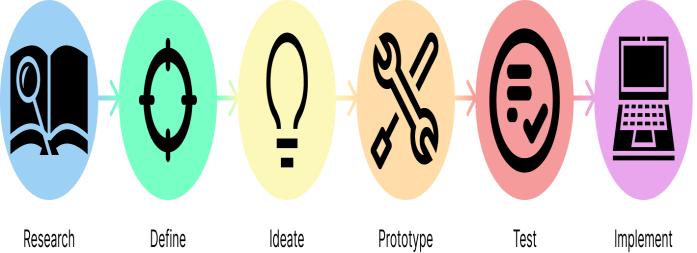
There are various methods to approach the UX design processbutthemainstepsthatarefollowedareasfollows:
I. Research
Userexperience(UX)researchisthesystematicanalysisof targetusers'requirementswiththeaimofsupplyingdesign processeswithusefulcontextsandinsights.Tofindproblems anddesignopportunities,UXresearchersemployarangeof methodologies.
II. Define
Inaresearchproblem,theissuethathastoberesolvedis quickly outlined. It aids the team in concentrating on the specificproblemandultimatelysolvingit.Aissuestatement makesitveryobviouswhatmustbedoneduringdiscovery andwhatisn'twithinscope.
III. Ideate
Althoughtheultimateaimofideationisa high-quality design that addresses a specific issue, the emphasis is on quantityratherthanquality. Followingthedevelopmentof ideas,aseparatestudymustbedonetochoosewhichideas (orpartsofideas)topursue.Thereisagreaterchancethat one of your many concepts may develop into an amazing designsolution.
IV. Prototype
Designprofessionalsoftenevaluatenewideasbymaking material or virtual mockups that can be actually felt. To record design thoughts and carry out usability tests, teamsworkonestablishingprototypeswithvarieddegreesof complexity.Youcanimproveandevaluateyourideasusing thesemodels,allowingyourcompanytooffertheproducts thatadheretothespecifications.
V. Test
In the course of the design process, actual users are surveyedtogetdataonusabilityandoveralluserexperience. Several user testing techniques, such as card sorting, questionnaires, interviews, and observation are used to accomplishthis.
VI. Implement
Technicalpersonnelcanbeginimplementationwhilethe Designphaseisstillinprogressbecausetheyareinvolvedin theearlyphasesoftheprocess.Whenthedevelopmentteam receives the design artefacts, they connect the back-end functionalitywiththeuserinterface.Itispreferablethatthe design team participate in this stage to aid in the developmentphase.Itisfeasibletoidentifythenecessityfor slightdesignadjustmentswhenimplementing.
2. MARKETING
We consume various goods from various businesses, nations,andregionsoftheworldfromdawntill nightasa resultofmeticulousplanningofallmarketingoperationsto sell goods from sources of production (factories) to consumptionpoints.(Consumers).Accordingtothe"Survival of the Fittest" theory put forward by Charles Darwin, the strong will prevail while the weak will perish. This 19thcenturyideaisstillrelevanttoday,asdemonstratedbythe phrase"SurvivaloftheFittestMarketingStrategies,"which assertsthat businesses witheffective marketing plans will thrive while those without them will perish because marketing is crucial for creating, disseminating, and deliveringvaluetoconsumersintheformofmarketofferings.
Therefore, it is possible to define marketing as the exchanges,discussions,andinterventionsmadetoraisethe quality of products and services while also gaining some benefits.As a result, "MARKETING" has evolved into the fundamental requirement of today's business world since, likeoxygen,marketingiseverythingandthebusinessworld cannotexistwithoutit.
2.1 Marketing Process
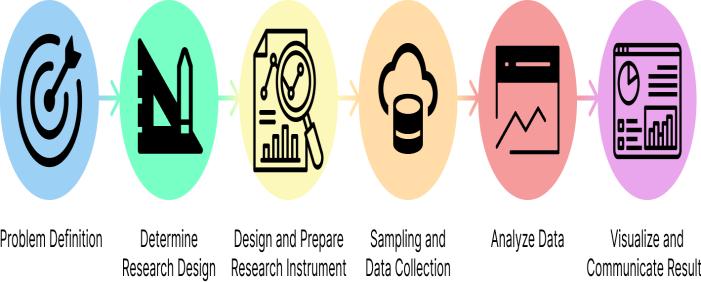
:SixstepMarketingResearchandDesign
I. Problem Definition
Undoubtedly, one of most important step in the market research process is determining your project ’s objectives. Theanswertothisisknowingthecorequestionthatmustbe backed up by market analysis. When a major business challengemustbetackledbutthereisinsufficientknowledge to proceed safely, a market researcher's job is to deliver trustworthydatatobackthatjudgment.
II. Determine Research Design
Nowthatyou'vebecomeacquaintedwithyourtopicof interest,itistimetodeterminethekindofstudythatwould producetheneededdatathemosteffectively.Thinkofthe "researchdesign"asyourdetailedblueprint.Inthisstep,you mustdecideonyourmarketresearchmethod.Willitconsist of a questionnaire, participant observations, etc.? You will alsothinkaboutthedetailsofhowyou'regoingtochooseand characterize your samples Additionally, this is the timeto choose a location for your researchsessions (in-person, telephone,internet,mail,etc.).
III. Design and Prepare Research Instrument
Duringthisphaseofthemarketstudyprocess,itistimeto createyourresearchtool.Ifdoingasurveyistheappropriate courseofaction,thefirststepistoprepareyourquestions and generate your form. If you choose to conduct a focus group,startworkingoncreatingquestionsandresourcesfor themoderator.Inthisstepoftheprocess,youstartputting yourplanintoaction.
IV. Sampling and Data Collection
Duringthistime,themaintasksforyourprojectwillbeto distribute surveys, host focus groups, conduct interviews, implement field testing, and collect data. The responses, choices, and observations are all compiled and recorded; often,thisdocumentationtakestheformofa spreadsheet. Each nugget of information is extremely valuable and will contributetothewisedecisionsyouwillmakeshortly.
V. Analyze Data
You currently have a lot of raw, unprocessed data. If it's currently on scraps of paper, you must now obtain it in spreadsheetordatabasesothatyoucanfurtheranalyseit.If the content is already in a spreadsheet, make sure it is properly set up. Once it is done, the fun can begin. Create graphs and tables, divide your data into groups that make sense (such as age and gender), run summaries using the softwareprogram'sfeatures andsearchforthemajortrends inyourdata.
VI. Visualize and Communicate Results
Finally,youmustarrangethemostcrucialinformation into a report or presentation that is easy to comprehend. When presenting the findings, the business problem and study objectives that were decided upon earlierare a fantastic starting point. Then, depending on the specifications,presentyoursuggestionsforhandlingthese business queries. When presenting your findings, keep in mind to include more than simply charts and tables. Add observations,alternatives,andsuggestionsaswell.Whenever you include a statistic in the report, consider what it representsanditsimplications.Byincludingthisextracritical thinkinginyourfinalreport,youwillmakeyourstudymore valuableandpertinentandyouwillbebetterabletoconvince thestakeholdersofyourpointofview.
3. SIMILARITY BETWEEN UX AND MARKETING
I. Based on research
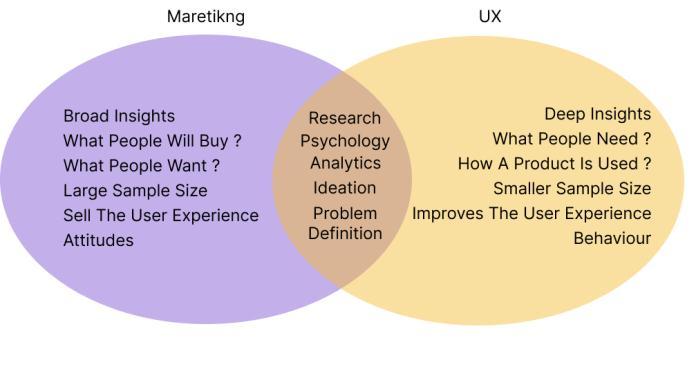
BothmarketersandUXdesignersplayasignificantpart inresearchbecauseitservesasthebasisforthefollowing steps. Both call for a thorough investigation of the preferences of the final customer. Understanding user preferences,behaviours,andcurrenttrendsisthemaingoal ofmarketing.Aftermakingtheseobservations,UXdesigns arecreatedinaccordancewiththem.
II. Based on Psychology
Psychologyisasignificantfactorinbothareas.Thegoal of marketing and user experience is to increase sales by attracting new customers. While marketing focuses on drawing customers to your product or service, user experience(UX)isprimarilyconcerned with engaging the visitors in a way that makes them want to return to your websiterepeatedly.
4. DIFFERENCES BETWEEN UX AND MARKETING I. Focus
Gaining a broad perspective and learning about a particular industry at a high level are the main goals of market research. Market researchers mostly employ
quantitative techniques, or methods that emphasize numbers.Theyconductresearchonsizablerepresentative samples in order to extrapolate findings to the entire population. Survey results,witha tolerable range of error, accuratelyreflectthesituationacrosstheentirepopulation. Wecanbeverycertainabouttheaveragepotentialuser'sage, income level, educational attainment, and other broad attributes thanks to this. Market research frequently gives attitudinaldata whatpeoplesayaboutthemselvesorwhat they would do more weight than specific behaviors in a givensituation.Theytypicallyusethefindingsfrommarket researchtoguidetheirmarketingchoices.
Userresearchusesacompletelydifferentapproach.Thereis nocorrelationbetweenitandmarketsizeandshare,trends, market segments, demographics, or attitudinal responses. Instead, it focuses on how people behave, deal with difficultiesintheirdailylives,useproducts,etc.Itdealswith veryspecialized,in-depthuserinsightsratherthangeneral data. User research gives designers guidance on how to developaproductandhowwellitsatisfiesuserneeds.We don'tneedstatisticalprecisionfortheoutcomes;therefore, wecanutilizemuchsmallersamplesizes.Thegoal ofuser research is to elicit qualitative information about the motivations underlying what individualssay. It focuseson whattheyactuallydowhileutilizingaproduct.
II. Purpose
Thebasicgoalofmarketingistoboostsalesandthereby thecompany'srevenue.Ontheotherside,UXDesigntriesto offeraconnectionandcaptivatingexperiencefortheusers.It doesnotguaranteethatauserwillmakeapurchaseevery timeheaccessesthewebsite,butratherthathewillfindthe interface interesting enough to return and advance in the salesfunnel.Inordertoachievethepurposeofmarketing,UX design forces a user to progress farther in their buyer's journey.Customersaremorelikelytomakeapurchasewhen productsaredevelopedwithexceptionalUXDesigninmind, ashasbeenobservedinnumerousinstances.
III. Problem Solved
User experience research looks into how to make a productorservicemoreappealingtothetargetmarketthat marketresearchidentifies.Marketresearcherscanidentifya marketforaproductbyextensivestudyandsecondarydata analysis, focusing a wide population into a certain demographic(gender,age,economicposition,region)thatis mostlikelytobuyorutilizeit.Abusinesscandetermineifa productshouldbelaunchedbasedonthesizeandpurchasing powerofthissegment.Additionally,theytargetthatgroup withtheuseofthisinformationinavarietyofways,including messaging,advertising,andpackagingdesign
Researchonuserexperiencefocusesontheuserbasealready in use to find ways to make the product appealing to and accommodating to people using it. Because of this, UX
researchanalysesthemorein-depthandfocusedthoughts andbehaviorsofthoseinteractingwithaproduct.
REFERENCES
[1] M.Treder,“UxDesignforStartups,”p.127,2015.
[2] Hidayah,NurAeni&Zulfiandri,Zulfiandri&Rafiiuddin, Ahmad & Durachman, Yusuf & Rustamaji, Eri. (2021). UserExperienceDesignAnalysisUsingLeanUXMethod. 1-6.10.1109/CITSM52892.2021.9588905.
[3] Hassenzahl, Marc & Tractinsky, Noam. (2006). User experience - A research agenda. Behaviour and Information Technology. 25. 91 – 97. 10.1080/01449290500330331.
[4] Karapanos,E.,Zimmerman,J.,Forlizzi,J.,&Martens,J. (2009). User experience over time: an initial framework. Proceedings of the SIGCHI Conference on Human Factors in Computing Systems.
5. CONCLUSIONS
Mostgoodsandserviceshavea lifecyclewithpredictable sales and profitability. Pre-design (Introduction), development (Growth), and post-development (Maturity)are the three stages of product development whenresearchisconducted.
While UX research focuses on the users' observable behavior,marketresearchidentifiescustomersegmentsand customeropinions.
While marketing and UX have fundamentally differentvalues, they can be very effective tools for a businessifusedproperlytogether.Becausetheybothhavea stake in understanding consumer behavior and fostering brandloyalty,theywillinevitablyneedtocollaborate. The responsibility of every business is to give customers a fantasticexperienceandhighlevelsofcustomersatisfaction.
Before creating a product, it is important to consider the preferences of the target market. Users' demands are guaranteed,businessconversionisincreased,andyoustay one step ahead of the competition with a good customercentric UX design. Your customer will be delighted by an exceptional UX design, and they will promote your goods. Many companies place so much emphasis on generating conversionthattheypaynoattentiontotheuserexperience. Your clients would be satisfied and your product would eventuallybemoremarketableifyoutreatedyourwebsite andappasmarketingtoolsandputeffortintocreatingthe UX Design. Marketers should continually put in time and effort to improve the UX design by offering specific and accuraterecommendationsregardingclientneeds.Proper marketing and user experience coordination will undoubtedlyincreasesalesandconversions.
[5] Pachpande, Sandeep & Mathur, Dr & Singh, Prakash. (2016).BasicsofMarketing.
[6] Hyman, Michael & Sierra, Jeremy. (2015). Marketing research process: Six stages. NMSU Business Outlook. 13.
[7] Iwu,Chux.(2009).WhatisMarketing?.CustomerThink [http://customerthink.com/209180/].
[8] https://designial.com/blogs/ux-research-and-marketresearch-know-the-difference
[9] https://ogilvy.medium.com/market-research-or-uxresearch-8b0e992e916d
[10] https://uxplanet.org/ux-marketing-the-need-of-thehour-cf675de2c6ac
[11] https://www.mymarketresearchmethods.com/themarket-research-process-6-steps-to-success/