International Research Journal of Engineering and Technology (IRJET) e-ISSN:2395-0056

Volume: 10 Issue: 01 | Jan 2023 www.irjet.net p-ISSN:2395-0072
International Research Journal of Engineering and Technology (IRJET) e-ISSN:2395-0056
Volume: 10 Issue: 01 | Jan 2023 www.irjet.net p-ISSN:2395-0072
Ekta Dhakar1 , Asst. Prof. Gaurav Shrivastava2
1M.E.Student- Department of Civil Engineering ,VITM College, Gwalior (M.P.),India 2Asst. Professor- Department of Civil Engineering, VITM College, Gwalior(M.P.), India ***
Abstract: When an air entraining agent is added during mixing, it causes little air bubbles to be purposefully produced in a batch of concrete. A type of surfactant that lowers the surface tension between water and particles in this situation, it enables the formation of bubbles of the desired size. These are formed when mixing the concrete, and the majority of them persist to remain in the finished product after it has dried.By including an appropriate air-entraining agent in the concrete mix, air entrained concrete can be created. For the usage of air entraining admixtures in the concrete work, many papers were being considered. The results are being compared, and research is being done to determine the best dosage of each admixture for improving workability and significant compressive strength in the concrete. For the improvement of acid resistance and workability of the concrete, paper suggests the use of various admixtures in the concrete.
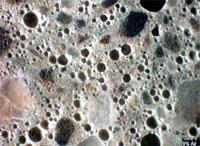
Per cubic foot, air-entrained concrete has billions of tiny air cells. These air pockets create microscopic chambers for frozen water to expand into, relieving internal pressure on the concrete. air entrained Under careful engineering supervision, airentrainedconcreteismadeusingair-entraining Portland cementorbyaddingair-entrainingagentsastheconcreteismixed on the site. Normal entrained air levels range from four to seven percent of the volume of the concrete, but they might vary depending on the circumstances.Millions of non-coalescing air bubbles are incorporated into these air entraining agents, actingasflexibleballbearingsandalteringthequalitiesofplasticconcreteintermsofworkability,segregation,bleeding,and finishingquality.Additionally,itchangesthehardenedconcrete'spermeabilityandresistancetofrostaction.
Followingpropertiesofnormalconcretegetmodifiedduetoairentrainment:
1)Workabilityofconcreteincreases.
2)Useofairentrainingagentreducestheeffectoffreezingandthawing.
3)Bleeding,segregationandlaitanceinconcretereduces.
4)Entrainedairimprovestheacidandalkalineresistingcapacityofconcrete.
International Research Journal of Engineering and Technology (IRJET) e-ISSN:2395-0056
Volume: 10 Issue: 01 | Jan 2023 www.irjet.net p-ISSN:2395-0072
5)Durabilityofhardenedconcreteincreases.Unitweightofconcretedecreasesandpermeabilitydecreases.
6)Thestrengthofconcretedecreased,butnotverysubstantial.
7)Air-entrainmentinconcretemustnotbedoneifthesitecontrolisnotgood.
Entrainedairisintentionallycreatedbyaddingadmixturespecificallydesignedforthispurpose.Thegoalistodevelopa systemofuniformlydispersedairvoidsthroughouttheconcreteandpresentincontrolledamount(voidsizebelow0.3mm)
Entrapped air is created during improper mixing, consolidating and placement of the concrete. Itisnotbeneficialandhavenegativeeffectonconcreteevenvoidsizelargerinthiscase(upto3mm)
It was discovered in the 1930s that some roads in the North-East States of America could withstand the impacts of freezing and thawing temperatures and the presence of salts better than other roads in the region. The less dense roads had more durable roads, according to an experimental inquiry, and the cement came from mills where beef tallow served as an airentraining agent and improved the concrete's durability. This prompted a more cautious examination, and the New York Department of Public Works created an air-entrained concrete roadway in 1939. Since then, the effect has attracted a lot of attention.Herearesomeofthematerials'descriptions:
In order to meet requirements like performance in use and the capacity to generate stable aqueous solutions of sufficient strength,fattyacidsareusedasair-entrainagents.Naturaloilsandfatslikecoconutoil,whichoccurnaturally,areemployed intheformofthismixtureforconcrete.Thesefattyacidsarepresentinadiversityofchainlengths.Fattyacidsaltmakesup around 20% of the weight of conventional formulations. These compounds can be combined in solution with specific lingosulphonic and hydroxyl carboxylic acid salts to create admixtures with air entraining and water lowering properties, unlikeneutralisedwoodresins.
Thealkyl-arylsulphonatestendtofindutilizationintheproductionoflightweightconcrete(LWAC)andnotinenhancingthe freezing-thawing durability of normal concrete. The common raw material is ortho dodecyl benzene sulphone, a basic surfactant used in a variety of industrial and domestic detergents. The hydrocarbon base is petroleum derived. The sulphonation process utilized can vary from direct reaction with sulphuric acid to SO2/SO3 mixtures; result in some excess sulphuric acid. On neutralization a proportion of sodium sulphate is produced which is preferably kept to a minimum for admixtureformulations.
These products are also compatible with a number of water reducing agents to produce air-entraining agents which can be furtherusedintheproductionofairentrainingconcrete.
Sincephenolethoxylatesarenon-ionicmaterials,theyareunique.Althoughtheyarenotfrequentlyemployed,solutionsof2to 4% by weight in water work well at low dosage levels and they are particularly effective at low addition levels.
International Research Journal of Engineering and Technology (IRJET) e-ISSN:2395-0056
Volume: 10 Issue: 01 | Jan 2023 www.irjet.net p-ISSN:2395-0072
Nonylphenolethoxylate is the most widely used substance, and the few research that have been done on it suggest that the highervalueisthemosteffective.
Qi Liu (2020) : It is commonly acknowledged that the air void size distribution plays a crucial role in air-entrained cementitious materials. It is still unclear, nevertheless, how characteristics like the molecular structure of air-entraining agents(AEAs),thekindofsolidparticlesused,orthechemicalenvironmentoftheporesolutioninfreshmortarsaffecttheairentraining behaviour. Additionally, there are few ways to evaluate how AEAs and cement particles interact. Thus, the airentraining behaviours of three different surfactant types (cationic, anionic, and nonionic) were investigated in this study. By using zeta potential and attenuated total reflectance-Fourier transform infrared (ATR-FTIR) spectroscopy, the general functioningmechanismsofthesesurfactantswereinvestigated.Accordingtotheresults,thestrongelectricalcontactbetween the cationic surfactant's air bubbles and negatively charged cement particles causes the cationic surfactant to entrain inappropriatecoarseairgaps.Anionicsurfactantsattractfinerairspacesbyinteractingwiththepositivelychargedportionof cementparticles.Thenonionicsurfactantentrainsthefinestandmostuniformairspacesbecausetheinteractionbetweenthe nonionicsurfactantandcementparticlesissominimal.
Abdulkader EL MIR, Salem G. NEHME (2017) : Due to its special characteristics, self-compacting concrete has obtained a broad variety of uses. With the right choice of raw ingredients, it may provide a high strength and durable type of concrete. Thisstudy'sobjectivewastodemonstratehowusingalargedosageofairentrainingadmixtureaffectedthecharacteristicsof self-compacting concrete. The resistance of conventional and air-entraining self-compacting concrete that contains slagblended cement and additional cementitious elements to frost-salt scaling was experimentally investigated. To obtain an objective comparison between air and non-air entrained self-compacting concrete mixtures, additional fresh and hardened properties tests, such as slump flow, V-funnel, compressive strength, splitting tensile strength, air void characteristics, and waterabsorptiontests,werecarriedout.Tofurtherthisinquiry,theautomatedimageanalysisprocesswasusedtoassessthe airvoidproperties.Theresultsshowthattheairentrainingadmixturesignificantlyreducedthecompressivestrengthbyupto 52% and that metakaolin, as opposed to silica fume, was the dominant additional cementitious material in terms of scaling resistanceandwaterabsorption.
J Holan, J Novák and R Štefan (2019): Onlya small numberofstudieshave examined the mechanical characteristicsofairentrained concrete at high temperatures, despite decades of research into the fire response of concrete. The experimental examinationoftheimpactofairentrainmentonconcrete'scompressivestrengthatvariedhightemperaturesispresentedin this work as early findings. On reference and air-entrained concrete specimens, heat treatments and compression tests have been carried out as part of this investigation. The analysis of the experiment's data reveals that when subjected to high temperaturesforanextendedperiodoftime,airentrainmentappearstohaveanegativeimpactontheconcrete'scompressive strength.
Mohammed Hefni, Ferri Hassani (2021) :The experimental study described in this paper examines the impact of cement andentrainedairdosagesonminebackfillunconfinedcompressivestrength(UCS),freshdensity,anddrydensityaspartofan extensiveresearchprogrammeexploringthepotentialbenefitsofusingair-entrainingadmixturesinminebackfill.Silicasand, regular Portland cement, water, and an entrained air admixture were used to create backfill specimens. To create predictive mathematical models and evaluate the findings, an experimental design using response surface approach was used. The findings showed that a 3.5% entrained air dosage could increase the UCS of the mine backfill due to greater cement particle dispersion.TheUCSaswellasthefreshanddrydensitieswereyetdecreasedbyanadditionaldoseincreaseofabout200and 120 kg/m3, respectively. According to study findings, utilising air-entraining admixtures may improve mine backfill flowability and lower density, leading to safer and more environmentally friendly working conditions in an underground miningsetting.
Hamid Eskandari, Anis Ghanei (2016) : Sulfates, carbonates, and chlorides affected the attack on reinforced concrete buildings. Chloride attack is the primary cause of reinforced concrete structure corrosion, and corrosion of the reinforcing steel is avoided by lowering chlorides in the concrete at the proper thickness, which also regulates the permeability of the concretecoatinglayer.Inorder toinvestigatetheproperties ofcorrosionand water absorption,testsamples wereprepared
International Research Journal of Engineering and Technology (IRJET) e-ISSN:2395-0056
Volume: 10 Issue: 01 | Jan 2023 www.irjet.net p-ISSN:2395-0072
usinga5mixwithvariousairentrainingadmixturesonacylindricalsamplealongwitha15mmreinforcedbar.Resultsreveal thatconcrete'swaterabsorptionandelectricalresistivityaresignificantlyimpactedbyairentraining.
B. Łaźniewska-Piekarczyk (2013) :Intheresearch,itisinvestigatedhowaparticulartypeofviscositymodifyingadmixture (VMA)affectstheair-contentandworkabilityofair-entrainedhighperformanceself-compactingconcrete(HPSCC).Theaimof this study was to investigate the effects of cement ratio, type and volume of aggregate, and volume of cement paste on the porosity and pore size distribution of HPSCC with constant water. Investigations are also conducted into the toughened HPSCC's air gaps and frost resistance properties. The findings in this paper showed that, despite their apparent similarity in chemicalmakeup,admixturesfromdiversesourcescannotbeemployedinterchangeably.
Bo Chen A. Ghani Razaqpur (2022) : There is insufficient knowledge regarding how air entrainment affects chloride diffusivityandbindinginpartiallyfrozenconcrete,despitethefactthatinsomeplacesconcreteispartiallyfrozenforseveral months peryear. To addressthisproblem, total andfreechloride concentrationswere measured in concrete thathadno air entrainedandhadairentrainedundercontinuousexposuretemperaturesof+5,0,5,and15°C.Whentheconcreteevaporable waterwaseitherunfrozenornearlyentirelyfrozen,theentrainedairdecreasedchloridediffusivityby18%,butitonlydidso when the concrete evaporable water was only partially frozen. Under every test temperature, air-entrained concrete demonstrated lower binding capacity than non-air-entrained concrete. The impact of temperature after freezing on the diffusivityofconcrete
Xu-li Lan, Xiao-hui Zeng (2022) :Throughin-situtests,thisworkaimstoexaminethepropertiesoftheporestructureofairentrained concrete at low atmospheric pressure (0.7P0 = 0.7 atm) and standard atmospheric pressure (P0 = 1 atm). The surfacefractal dimensionin variousporesize regionsis estimatedusingtheresultsfromthemercuryintrusion porosimetry (MIP) test and linearly regressed using a thermodynamic model. According to the findings, low atmospheric pressure significantly affects the fractal characteristics of pores and pore volume. Surface fractal dimensions of pores generated at 0.7P0 are 4.5%–27.6% smaller than those prepared at P0 for pores smaller than 10 nm, and 4.5%–13.6% larger than P0 for holeslargerthan1000nm.IncomparisontoP0,thevolumesofporessmallerthan10nmandlargerthan1000nmare9.4%–38.9% and 38.5%–66.7% smaller, respectively, whereas the volumes of pores between 10 and 1000 nm are 19.8%–41.8% larger. Discussion of the mechanisms underlying the anomalous pore structure at 0.7P0 is done from the angles of cement hydrationandairbubblemechanicalequilibrium.
Air-entrainingagents(AEA)stabilisedairbubblesratherthancreatingthem.Thereciprocalattractionbetweentheseparated watermoleculeswaslessenedastheair-entrainingagentmoleculeswereinsertedbetweenneighbouringwatermoleculesat the water's surface. Surface tension was reduced to sustain the bubbles against mechanical deformation and rupture, facilitatingbubbleformation.Thesmallerbubbles,whichhadahigherinternalpressure,mergedtoformlargerbubblesinthe absence of an air-entraining agent, which had a greater propensity to escape to the surface and rupture. At the bubble's surface, absorbed AEA molecules form an end-to-end film with their polar heads in the water phase. If the molecule had a charge,thebubblealsodid(Dodson,1990).TheendsoftheAEAmoleculesthatprotrudedintothewaterwerealsoattractedto cementgrains.
Workabilityofconcreteincreases.
Useofairentrainingagentreducestheeffectoffreezingandthawing.
Bleeding,segregationandlaitanceinconcretereduces.
Entrainedairimprovesthesulphateresistingcapacityofconcrete.
Reducesthepossibilityofshrinkageandcrackformationintheconcretesurface
International Research Journal of Engineering and Technology (IRJET) e-ISSN:2395-0056
Volume: 10 Issue: 01 | Jan 2023 www.irjet.net p-ISSN:2395-0072
Concretethathasbeenpurposelyinfusedwithtinyairbubblesinordertointroduceairincontrolledproportionsisknownas air-entrained concrete. While some of the air entrainment concrete's results are still useful for future applications, others make the use of AEAs problematic. While listing the benefits of the review research, it became clear that there had been a considerable shift in workability, which had reduced the amount of time and vibrations needed for proper consolidation. UtilizingAEAsalsoresultedinareductionintheneedforcementandwater.Thedurabilityofconcrete,theworkabilityofthe mix, the ability to save materials like cement, the reduction of capillary water passage, the reduction of temperature rise in concrete,etc.areallsignificantlyimprovedbyentrainedair.
The main issue with the use of AEAs is the decreased strength of concrete. Therefore, the practical application of AEA utilisationcanbeexplainedbyhowmuchstructuralstrengthcanbesacrificedinordertomaximiseAEAusage. Therefore,itis advised to use AEAs in accordance with the criteria of workability, strength, and durability requirements. The criteria for utilising AEA should be based on the acceptable level of strength loss and the necessary workability improvement. Additionally,furtherresearchshouldbedoneonhowutilisingAEAaffectsdifferentclassesofconcrete,splittensilestrength, andotherconcretedurabilityskinqualitieslikewaterabsorption,sorptivity,etc.
QiLiu(2020) “StudyoftheAir-EntrainingBehaviorBasedontheInteractionsbetweenCementParticlesandSelectedCationic, AnionicandNonionicSurfactantsPMCID:PMC7475877.
Abdulkader EL MIR, Salem G. NEHME (2017) “Effect Of Air Entraining Admixture On The Properties Of Self-Compacting Concrete Incorporating Supplementary Cementitious Materials” International Journal for Engineering and Information SciencesVol.12,No.3,pp.85–98(2017)
J Holan,J NovákandR Štefan (2019) “Air-entrainment as an alternative to polypropylene fibers and its effect on the compressivestrengthofconcreteathightemperatures”IOPScienceseries DOI 10.1088/1757-899X/596/1/012032
Mohammed Hefni, Ferri Hassani (2021) “Effect of Air Entrainment on Cemented Mine Backfill Properties: Analysis Based on ResponseSurfaceMethodology”MDPIPublished15January2021
Hamid Eskandari, Anis Ghanei (2016) “Effect of Air Entraining Admixture on Corrosion of Reinforced Concrete” Elsevier journalVolume150 Page2178-2184.
B.Łaźniewska-Piekarczyk (2013) “The type of air-entraining and viscosity modifying admixtures and porosity and frost durabilityofhighperformanceself-compactingconcrete”ElsevierjournalVolume40March2013Page659-671
Bo Chen A. Ghani Razaqpur (2022) “Effect of air-entrainment and phase transition on chloride diffusion in partially frozen concrete”ElsevierjournalVolume196April2022
Xu-liLan,Xiao-huiZeng(2022)“Experimentalinvestigationonfractalcharacteristicsofporesinair-entrainedconcreteatlow atmosphericpressure”ElsevierjournalVolume130July2022