Real-time and Non-Invasive Detection of Haemoglobin level using CNN
Suresh Mestry1, Kasturi Shinde2 , Dhanita Redij3 , Rajeshwari Tajnekar41 Assistant Professor, Dept. of Computer Engineering, MCT’S Rajiv Gandhi Institute of Technology, Maharashtra, India

2,3,4Student, Dept. of Computer Engineering, MCT’S Rajiv Gandhi Institute of Technology, Maharashtra, India ***
Abstract – The traditional technique of haemoglobin detection involves extraction of blood from the body. Even if these laboratory measurements are reliable, they have their own drawbacks, such as time delays, patient inconvenience, biohazard exposure, and the lack of real-time monitoring in critical situations. Bloodless haemoglobin measurement has gotten a lot of attention from researchers since it can help diagnose polycythemia, anemia, and other cardiovascular disorders earlier. In this study, image analysis using a Convolutional Neural Network is used to detect haemoglobin levels. We used a heterogeneous image dataset with various haemoglobin levels to train the model . We have designed a web application that displays the level of haemoglobin in a real-time scenario during testing.
Keywords: Non-Invasive, Deep Learning, CNN, Haemoglobinleveldetection,realtime
1. INTRODUCTION
Haemoglobin(Hb)isacompositemoleculeofredbloodcells, withinthelungs,withinthelungsofoxygen,andreturnsthe CO2 back to the lungs within the tissue. to make sure appropriatetissueoxygenationonthescreenandtoassess the severity and diagnosis of red blood cells you want to maintain a sufficient level of haemoglobin to assist you diagnose the acceptable conditions for red blood cells. Haemoglobin measurement is one among the foremost frequently performed laboratory tests. This test is performed when health care is usually tested or when an individualhassignsandsymptomsofthecountriesthatfolks affectredbloodcellslikeanemiaorpolynomials.Thistest alsowillbeheldseveraltimesorregularlywhensomeoneis diagnosedwithcurrentbleedingissuesorchronicanemia.
Whenapersoniswillingtodonatebloodthefirstthingthat the doctors check is the haemoglobin level. The classic “fingerstick”testisperformedtoextractthebloodfromthe bodythathelpstodeterminehaemoglobin.Firstly,thefinger iscleanedandthenthehealthprofessionalswillprickthetip with the lancet to collect the blood. Collection of blood samples are often temporarily uncomfortable and faster. Traditionallaboratorymeasurementsareaccurate,buthave limitations like delay, patient discomfort, exposure to biohazards, and lack of real-time monitoring in critical situations
2. Literature Survey
Haemoglobin[HB] is a metalloprotein found in red blood cells that contains iron and carries oxygen[1] There is a growinginterestinassessinganaemiausingocularpallorin NEAinvestigations.Researchingnon-invasiveapproachesto assessanaemiarequiressignificanteffortinordertosupport clinicalinnovationsandproceduresthatdecreasepersonal pain and enable widespread screening. The main goals of thisstudyaretoanalysetheareaofinterestexploredinthe NEAliterature,toevaluatethepeculiaritiesofpapers,witha specialfocusonempiricalones,andtoexaminethemfrom the perspective of daily improvement of doctors' and healthcarepersonnel'sactivities,aswellasthedailylivesof patients; and to identify any significant research gaps in order to encourage further research on new topics.
Methodology:Becauseitspecifiesarigorousmethodology fordataretrievalandinterpretation,thesystematicmapping researchhasbeenchosenasthebestmethodforprobingthe NEAliterature.Findings:Thisfieldofresearchisquitebusy, especially in the world's most populous nations, and it focusesonenhancingexistingtechnologyandofferingnew solutions,particularlyportableanduseablebyeveryone[2].
Theprocedureitshaemoglobinismeasuredatthetipofany finger,usingalightsourceconsistingofaninfraredLEDand a red LED, and a photodiode detecting the absorbed light. The empirical equation for calculating haemoglobin concentration in blood is obtained using a model for light attenuationthroughskin,tissue,andbloodinthatextremity, aswellaswell-knownhaemoglobinextinctionfactors(with andwithoutoxygen).Softwaretechnologiessuchassignal processing and filtering are used to further analyse the received signal. The results of the measurements are provided,alongwithaviableanswer,andtheresearchhasto berefinedfurther[3].
InutilizesspecificaspectsofPPGdataandmultiplemachine literacy ways to develop anon-invasive approach for prognosticatinghaemoglobin.PPGsignalsfrom33persons were included in 10 ages in this study, and 40 distinct characteristics were recaptured. In addition to these characteristics,eachsubject'sgender(manlyorwomanish), height(incm), weight(inkg),andage wereall takeninto account.The"HemocueHb201TM"instrumentwasusedto testthebloodcountandhaemoglobinpositionatthesame time.colorfulmachinelearningretrogressionways(bracket andretrogressiontrees–wain,leastplacesretrogression–
LSR, generalised direct retrogression – GLR, multivariate direct retrogression – MVLR, partial least places retrogression – PLSR, generalised retrogression neural network–GRNN,MLP–multilayerperceptron,andsupport vectorretrogression–SVR)wereused.Thestylishfeatures were chosen using RELIEFF point selection( RFS) and correlation- grounded point selection( CFS). The multiple machinelearningalgorithmswereutilisedto estimatethe haemoglobin position using original data and chosen characteristics utilising RFS( 10 features) and CFS( 11 features)(4).
Anon-invasive device that monitors the volume of GlycosylatedHaemoglobin(HbA1c)utilisingdetectorsand machine literacy algorithms A breath analyzer with detectorsisincludedinsidethecontrivancetomeasurehow importantmoisture,temperature,andacetoneapersonhas gobbled.ThesupervisedmachineliteracysystemArtificial NeuralNetwork(ANN)willbeutilisedtoassayandlinkthe observedacetonepositiontoHbA1cposition.Temperature, moisture, detector voltage, and detector resistance are all mainlyconnectedwithglycosylatedhaemoglobinposition, accordingtotheresultsoftheneuralnetworkretrogression. TheHbA1cpositionanticipatedwillbedividedintothree(5) groups.Hyperparameteroptimizationutilisingthesupport vector machine( SVM) fashion was used to categorise the threegroupsofHbA1cvalues.(6)
The traditional ways of bloodgroupidentification include skinpuncturing,infections,conking,aretime-consuming, andneedtheuseofreagents.Thesuggestedsystemissmall in size, affordable in cost, takes lower time, and produces resultsinstantly.Whencomparedtotraditionalapproaches, thebloodgroupisdetectedinafairlyshortperiod.There's noneedtoperforationtheskin;wecandeterminetheblood typewithoutdoingso.Intheeventofanexigency,hospitals will be suitable to determine the blood group in a short periodoftime.(7)
Before entering the towel model, an original weight is assigned to each photon packet delivered. For a unit path length, the immersion measure a( cm1) and scattering measures(cm1)areassignedtorepresenttheprobabilityof immersionandscattering(8).Theprobabilitydistributionof the scattering angles for first- order approximation is determined bytheanisotropyfactorgwhichisdefined as thestandardcosineofthescatteringangle.likewise,therise of refraction is determined by the change in refractive indicatornbetweenanytwoareasinthetowelmodelorat the air- towel interface. A portion of the photon packet leavesfromthesamesideofthetowelmodelaftertravelling throughaspecificmedium;thisbitisdeterminedasthepart of the incident light that's scored as the entered light intensity(weight).specially,thetransmittance(9)isfulfilled viathenegligiblevolumeofthephotonpacketweightthat goesviathemediumandleavesontheotheraspectofthe model.ThenumberofphotonsthatreachthePDwasstudied
to conclude the association between the entered light intensity and blood- glucose content in this work, which used MC simulations to infer photon transport within the cutlet towel model. Light vehicle in a towel medium has latelybeenusedtoestimatehealth-affiliatedpointersinvivo, similarasbloodpressure,bloodglucoseattention,andblood oxygen achromatism(10). MC simulations are the gold standard for photon migration in the towel model to measurehealthparameters(11)noninvasively.
3. PROBLEM STATEMENT
The classic" fingerstick" test, which involves invasively removing blood from the body, is used to quantify haemoglobin(Hb).Althoughtraditionallaboratorymeasures aredependable,theyhavetheirowndownsides,suchastime holdbacks,patientvexation,biohazardexposure,itwillalso beprovedconvenientforblooddonationcampsandthelack of real- time surveillance in pivotal circumstances. In this design we design and apply system for discovery of haemoglobin position using collaboration of deep literacy ways.
ideal
•Tostudyandanalysisnon-invasivehaemoglobindiscovery inrealtimescript.
• To develop an algorithm for descry the haemoglobin positionofdruggiesgroundedoncutletimage.
•TodevelopanDeepConvolutionalNeuralNetwork(DCNN) fordiscoveryofhaemoglobininrealtimescript.
• To explore and confirmation the delicacy of proposed systemwithcurrentsystems.
4.1 Data preprocessing and normalization
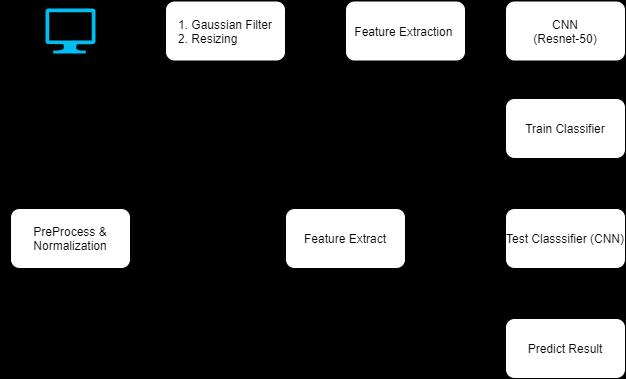
Duringpre-processing,distortioncorrectionimproves photographs, making future processing easier. Preprocessingprocessesincludecolourspaceconversion, cropping,smoothing,andenhancement.Dependingon theimagequality,thismodule'sutilityvaries.According totheliterature,colourspaceconversionisfollowedby filtrationandaugmentation.Croppingisalsorequiredif imagesaretakeninanuncontrolledenvironmentwith intricatebackdrops.Itcanbedoneeithermanuallyor automaticallyusingfunctions.
4.2 Feature extraction and selection
FeatureextractionandselectionTocomprehendvisuals, colour, texture, and shape features are frequently utilised.Colorisoftendeterminedusingmomentsand histograms. Contrast, homogeneity, variance, and entropyareallfeaturesoftexture.Shapeisalsodefined bycharacteristicssuchasroundness,area,eccentricity, and concavity. A range of features are required for heterogeneous datasets, however texture has been identified as the best feature for plant disease identification.Avarietyofstrategiesareusedtoextract features.
4.3 Module Testing and Training
Module training (DCNN) and Module Testing (DCNN)
Classification is an important component of haemoglobin level detecting systems. Because the methodemploysanimagetoassesshaemoglobinlevels, classificationreferstotheprocessofcategorisingfinger image data based on the levels that have been recognised.Theclassifieristrainedusingphotosfroma trainingset,whichthenclassifiesordetectsimagesfrom the test set. To determine haemoglobin levels in a number of ethnicities, researchers used a variety of deep learning algorithms. A low-level haemoglobin image and a high-level haemoglobin image will be distinguishedbytheclassifier.
4.4 Report Generation
Inhaemoglobinlevelreportgenerationwedemonstrate the accuracy of proposed system and evaluate with otherexistingsystem
5. DATASET
Wehavecollectedthedatasetbyconnectingtovariousblood donationcamps,creatinggoogleforms.Wehavetakenthe imagesofthepeoplewhohavedonethehaemoglobintest recently
6. ALGORITHM
In this study we've used the CNN algorithm. It's a special typeofneutralnetwork.TheconvolutionalNeuralNetwork CNN works by getting an image, designating it some weightage prognosticated on the different objects of the image,andalsodistinguishingthemfromeachother.Oneof themaincapabilitiesofCNNisthatitappliesprimitivestyles for training its classifiers, which makes it good enough to learnthecharacteristicsofthetargetobject.
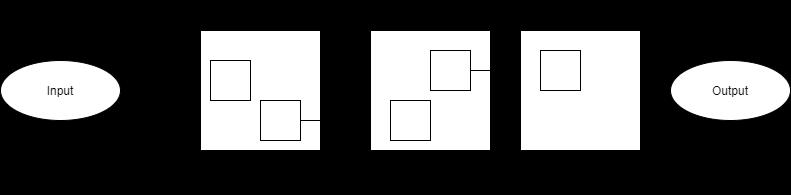
CNNisprognosticatedonanalogousarmature,assetupin the neurons of the mortal brain, specifically the Visual Cortex. Each of the neurons gives a response to a certain stimulantinaspecificregionofthevisualarealinkedasthe open field. These collections stage in order to contain the wholevisualarea.Thisalgorithmcorrespondof3important partandthosearetrainingpartandtestingpart.Trainingis generally done by combining 3 types of layers those are convolution subset, pooling subset and thick subset. Main pointofconvolutionpositionispointbirth.It'sresponsible for extractionofvariousfeatures.Pollingcasteareapplied to down- test the input. The thing is to reduce the computational complexity of the model and to avoid overfitting There are substantially two different types of PoolingwhichareasfollowsMaxPoolingTheMaxPooling principallyprovidesthemaximumvaluewithinthecovered imagebytheKernel.AveragePoolingTheAveragePooling providesandreturnstheaveragevaluewithinthecovered imagebytheKernel.Thickpositionisresponsibletoconnect everyneuronfromtheformersubcastetothecomingbone.
Theidealoftheselayersistoreducethedimensionalityof the image that's set up in the original input image and to increase dimensionality or, in some cases, to leave it unchanged, depending on the required affair. The same padding is applied to convolute the image to different confinesofthematrix,whilevalidpaddingisappliedwhen there'snoneedtochangethedimensionofthematrix.
6.1 CNN Training
Input: Training dataset TrainData [], various activation functions[],ThresholdTh
Output: Extracted Features Feature_ set[] for completed trainedmodule.
Step1:Setinputblockofdatad[],activationfunction,epoch size,
Step2:Features.pklExtractFeatures(d[])
Step3:Feature_set[]optimized(Features.pkl)
Step4:ReturnFeature_set[]
6.2 CNN Testing
Input: Training dataset TestDBLits [], Train dataset TraiDBLits[]andThresholdTh.
Expectedresult:Resultset<class_name,Similarity_Weight> allsetwhichweightismorethanTh.
Step1:Foreachtestingrecordsasgivenbelowequation,it works in convolutional level for both training as well as testing
testFeature(k)=∑(featureSet[A[i]……A[n]TestDBLit m=1
Step 2: produce feature vector from testFeature(m) using belowfunction.
Extracted_FeatureSet_x[t…….n] = n
testFeature(k) ∑(t) x=1
Extracted_FeatureSet_x[t]istheoutgrowthofeachpooling subcastethat'suprootedfromeachconvolutionalsubcaste and forward to net convolutional subcaste. This subcaste holdstheuprootedpointofeachcasefortestingdataset.
Step3: Foreachtraincasesasusingbelowfunction,
trainFeature(l)=∑(featureSet[A[i]….A[n]TrainDBL m=1
Step4: inducenewpointvectorfromtrainFeature(m)using belowfunction
Extracted_FeatureSet_Y[t…….n] = ∑(t) x=1
TrainFeature(l)
Extracted_FeatureSet_Y[t]istheoutgrowthofeachpooling subcastethat'suprootedfromeachconvolutionalsubcaste and forward to net convolutional subcaste. This subcaste holdstheuprootedpointofeachcasefortrainingdataset.
Step5:Nowestimateeachtestrecordswithentiretraining dataset,inthicksubcaste
weight=calcSim(FeatureSetx||∑FeatureSety[y]) i=1
Step6:ReturnWeight
7. RESULTS AND DISCUSSION
The RESTNET has been used for implementation of the proposed system. The major factors considered here are execution time, memory consumption, network overhead andenergyforevaluatingtheefficiencyofproposedsystem. Intel17CPU2.7GHzhasusedwith16GBRandomAccess Memoryforexecution.
Table-1: Accuracy obtained using various deep learning models
The above Table 1 describes an data processing time for deepmodelsusingTensorFlowfordifferentdatasize.
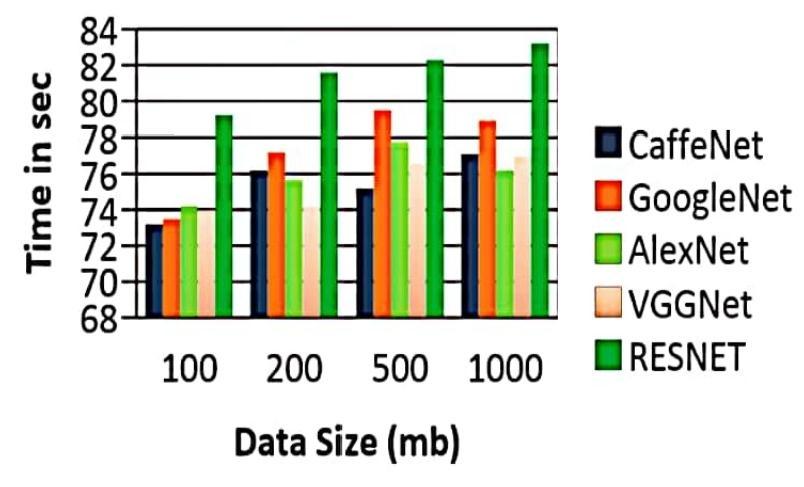
The above Figure is a graphical representation of Table 1 that provides how delicacy will be increased when data cargo has enlarged. It occasionally depends on current trainedmodulesandmiscellaneousdatamodule.
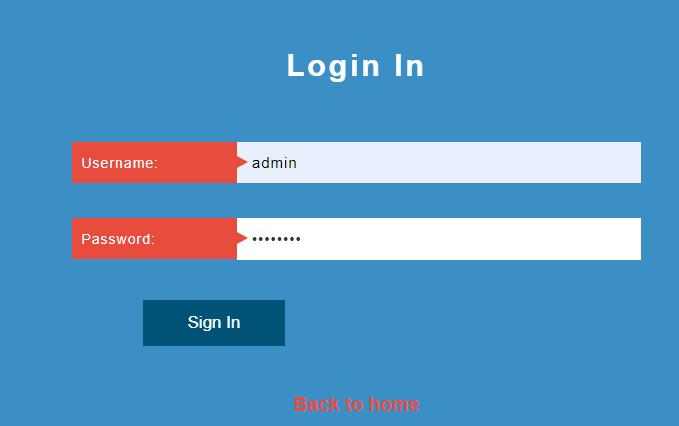
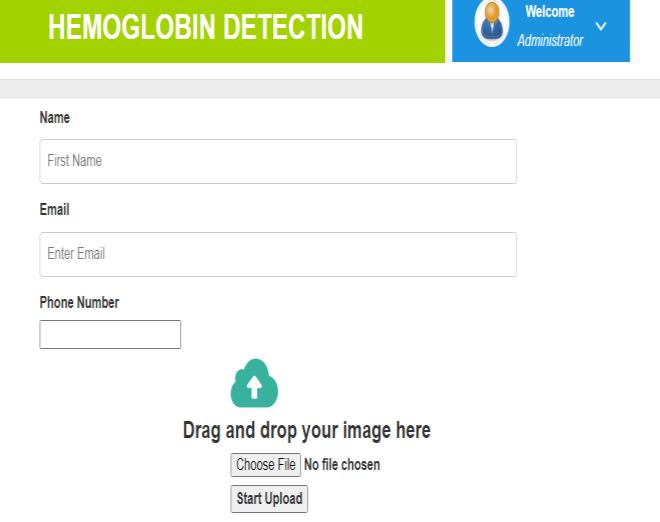
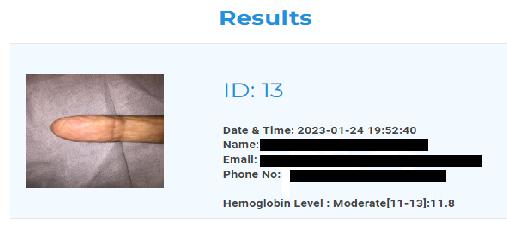
8. SCREENSHOTS OF THE PROJECT
9. CONCLUSION
Ourworkfocusesonhownon-invasivefashiondetectsthe haemoglobin from real- time input images. In medical exploration a problem is set up while trying to break a classifier model due to lack of data for some classes. The imbalance of circumstances may impact the vaticination model. As a result we've cooked an applicable system to breakitusingavarietyofapproach.
10. REFERENCES
[1] 12169. [CrossRef] 11. Monte-Moreno, E Non-Invasive Estimate of Blood Glucose and Blood Pressure from a Photoplethysmograph by Means of Machine Learning Techniques.Artif.Intell.Med.2011,53,127-138.
[2] Jacques, S.L; Wang, L. Monte Carlo Modeling of Light Transport in Tissues In Optical-Thermal Response of Laser-IrradiatedTissue;Lasers,Photonics,andElectroOptics, Welch, AJ, van Gemert, M.J.C., Eds.; Springer: Boston,MA,USA,1995;
[3] Wisotzky,EL:Uecker,FC,Dommerich,S.;Hilsmann,A; Eisert,P.;Arens,P.DeterminationofOpticalProperties ofHumanTissuesObtainedfromParotidectomyinthe SpectralRangeof250to800Nm.J.Biomed.Opt.2019, 24,1-7.
[4] Zhu,C.;Liu,Q.ReviewofMonteCarloModelingofLight TransportinTissues.J.Biomed.Opt.2013,18,050902. [15]NawazJadoon,R.;Shahzad,A.;Shah,S.A.A.:Khan, M.A.;Akram,T.;Zhou,W.VeinsDepthEstimationUsing DiffusedReflectanceParameter.
[5] Lui W; Huang Ai Wang P BpMC: A Novel Algorithm Retrieving Multilayered Tissue Bio-Optical Properties for Non-Invasive Blood. Glucose Measurement. In Proceedingsofthe2017IEEEInternationalConference onBioinformaticsandBiomedicine(BIBM),KansasCity, MO,USA,13-16November2017;pp.451-456
[6] Xiong, B.; Wei, W.; Liu, N.; He, J.-J. Monte Carlo SimulationofNon-InvasiveGlucoseMeasurementBased onFMCWLIDAR.InProceedingsoftheOpticsinHealth Care and Biomedical Optics IV, Beijing. China, 18-20 October 2010; International Society for Optics and Photonics:Bellingham,WA,USA,2010;Volume7845,p. 784518.
[7] Moschou, EA.; Sharma, B.V.; Deo, S.K.; Daunert, S. FluorescenceGlucoseDetection:AdvancesTowardthe IdealInVivoBiosensorJ.Fluoresc.2004,14,535-547.
[8] Maton, Anthea, Jean Hopkins, Charles William, Mclaughlin, Susan Johnson, Maryanna Quon Warner, DavidLaHart,JillD.Wright(1993).HumanBiologyand Health. Englewood Cliffs, New Jersey, USA: Princeton Hall.ISBN0-13-981176-1
[9] A.ResitKavasaoglu,Kemal Polat,M.Hariharan,"NoninvasivepredictionofHblevelusingmachinelearning techniques with PPG signal's characteristics features, Elsevier Science Publishers B. V. Amsterdam, vol. 37, IssueC,pp.983-991,December2015[8]SoumilChugh, Jaskirat Kaur, "Non-Invasive Hb Monitoring Device," 2015 International Conference on Control, Communication & Computing India (ICCC) 19-21 November2015Trivandrum
[10] Sen Gupta, S.; Kwon, T.-H.; Hossain, S.; Kim, K.-D Towards Non-Invasive Blood Glucose Measurement Using Machine Learning An All-Purpose PPG System Design. Biomed. Signal Process. Control 2021, 68, 102706.
[11] Hossain,S;Gupta,S.S.:Kwon,T.-H.;Kim,K-DDerivation and Validation of Gray-Box Models to Estimate Noninvasivein-VivoPercentageGlycatedHaemoglobin UsingDigitalVolumePulseWaveform.Sci.Rep.2021,
[12] NawazJadoon,R.;Shahzad,A;Shah,S.A.A.:Khan,M.A.; Altram, T; Zhou, W. Veins Depth Estimation Using DiffusedReflectanceParameterAppl.Sci.2020,10,8238
[13] Periyasamy,V;Pramanik,M.AdvancesinMonteCarlo Simulation for Light Propagation in Tissue IEEE Rev. Biomed.Eng,2017,10,122-135
[14] Monika Malhotra, "Severe Anemia linked to poor outcomes for pregnant women and their babies", InternationalJournalGynecologyandobstetrics,vol.79 pp93-100,2002
[15] WorldHealthOrganization"NutritionalAnemiasReport ofaWHOscientificgroup,WorldHealOrgan-TechRep Ser,405-5-37,1968
[16] Prevalence of Anemia, "Department of Nutrition for HealthandDevelopment,WorldHealthOrganization," Geneva, Switzerland. WHO Vitamin and Mineral
NutritionInformationSystem,PublicHealthNutr.April 2009WorldHealthOrganizationWorldwideprevalence ofanemiaWHORep.51,
[17] Putut Dewantoro, Clinton Elian Gandana, Resti Oltia Rahman Hashallah Zakaria, Yoke Saadia Irawan "Development of Smartphonebased Non-Invasive Hb Measurement”