A Comprehensive Review of Relevant Techniques used in Course Recommendation System.
Rehan Ahmed Khan, Piyush Kumar GuptaDepartment of Computer Science and Engineering, Jamia Hamdard, New Delhi, India Assistant Professor, Department of Computer Science and Engineering, Jamia Hamdard, New Delhi, India
Abstract - Through a variety of internet venues, there has been a significant increase in online learning tools in recent years, and COVID lockdown was the cherry on top, making us more web friendly for learning things through the web, therefore defining a course recommendationsystemhasnever been more important. Course recommendation systems try to simplify the difficulty of identifying relevant courses based on ranking and set criteria. Despite all of the advantages, we encounter several difficulties and complexities, such as accuracy, time consumption, and insufficient data. This research examines online recommendation systems using a variety of methods, including Content-Based, Collaborative Filtering, Knowledge-Based, and Hybrid Systems. Datasets, methods, evaluation, and outputs were discovered to be necessary components during the research. And the proposed way of recommendation system in this paper will be highly beneficial in recommending courses to students
Keywords: - e-learning, content based, collaborative filtering,machinelearning,onlinecourserecommendation

1. INTRODUCTION
Since evolution, Humans have been building things or machinesthataccomplishvarioustasksinverysimpleways. Thereareconceptsoflearningandmakingotherslearnor traintomakepeopleormachinesuseful.Like,howwetrain anyalgorithmtocarryouttasksthatareperformednaturally and effortlessly by machines as humans do. As, Machine Learning enables computers to think and decide on their ownlikehumansdo.Thisistobeoneofthenoteworthyand most significant developments in the field of computer science.
Aswemovetowardadata-centricsociety,therehasbeena massivedataexplosioninrecentyears.Andalargeamount of data is meaningless unless it is analysed for hidden patterns.Machinelearningapproachesallowustouncover hiddenpatternsandinformationaboutanissuethatmaybe utilised to forecast the future and assist us in different decision-making processes. Learning has undergone a significant transition, moving from the conventional classroomtoanonlinelearningenvironment.Consequently, demonstrating a recommendation system for an online learning environment isa necessity ofthehour. Similarly, high-speed internet encourages us to study over the internet;thereareavarietyofplatformssellingavarietyof
courses, but advising which is most suited to one's personality will make the process go more smoothly. The conceptofarecommendersystemarosefromtheideathat peoplerelyonotherstomakeroutinedecisionsintheirlives. The explosion in the volume and diversity of information available on the internet has aided the development of recommendersystems,whichhasresultedinariseinprofit, userbenefits,andindustryapplications.Inordertolocate relevantcoursesfortheusers,arecommendationtechnique mustestablishthatacourseneedstobesuggested.Themost commonrecommendationalgorithmtechniquesareContent Based,CollaborativeFiltering,andHybridSystems.
ThepopularityofE-learninghasresultedinanabundanceof courses, making it difficult to choose ones that are appropriate. In contrast to typical learning settings, Elearning allows for the personalization of the learning experience. Traditional learning often accommodates just one learning experience, because in a typical classroom setting,ateacherisfrequentlydealingwithseveralpupilsat thesametimeinthesamearea.Asaresult,eachstudentis forced to get the identical course materials, regardless of theirownrequirements,traits,orpreferences.Furthermore, determining the optimum learning technique for each learner and implementing it in a real classroom is exceedingly challenging for a teacher. One approach is to leverage recommender system (RS) approaches to personalisethelearningprocessaccordingtoeachlearner's interestsandgoals
Thispaperpresentsacomprehensiveoverviewof current coursesrecommendationmethodologiesaswellasmachine learning algorithms employed in RS. In order to identify research contributions and limits, the emphasis is on creatingcategorizationsofrecommendationapproaches,ML approaches,aswellasmethodologiesemployed,application domains,datasets,evaluation,andinput/outputdata.
Weusedthequeries"e-learningrecommendationsystem," "course recommender," "online course recommendation system,""recommendationsystem,"and"e-learning"tofind relevant publications. We found 30 publications from journals that were relevant between 2018 and 2020. The availabilityofarecommendationsystemservedasthesole selection criteria at this stage. 'E-learning,' 'course suggestion,'and'aims'thataddressedoneofRS'sremaining issuesweretherequirementsforstagetwo(i.e.,cold-start,
data sparsity etc.). Twenty articles were discarded since noneofthestage-2requirementsweremet.Thefinalstudies indicateanRSfore-learningsystem.
1.1 Inclusion and Exclusion criteria:
Paperswerechosenforevaluationbasedonthe following criteria:
1. Papers presenting algorithms for online platform recommendation.
2. Publications outlining plans to use Machine LearningtodevelopRS.
3. Paperscontainingtheoutcomesofthetechnique's evaluation.
Thefollowingwereusedasexclusioncriteria:
1. Paperstowhichfullaccesswasnotgranted;
2. Papersthatlackeddetaileddiscussionandappraisal oftheissuewerealleliminated;
2. BACKGROUND DETAILS
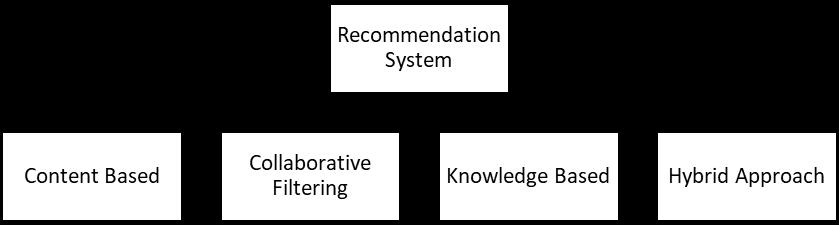
Online learning with virtual assistance is in increasing demand,andtheed-techindustryhastakenfulladvantage. Personalizingquizzes,courses,andassessmentsforstudents makesthewholeprocessmoreconvenient,asitovercomes thedilemmaofpickingcoursesbydefiningourowncriteria. As a response, researchers classified recommendation systemsintofourcategories:CB,CF,knowledge-based,and hybrid.Itisnot,however,highlyoptimized,butthereisstill muchopportunityforimprovement.
attributesthatmaybeusedtocomparethingstooneanother. Through Cosine Similarity, Recommendation would be determined.If‘A’istheuservectorand‘B’isanitemvector thencosinesimilarityisgivenby
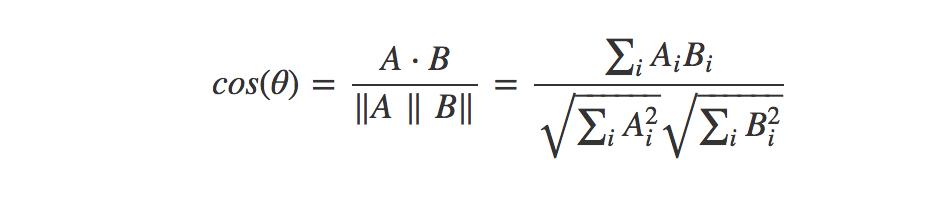
Content Based: Itisbasedonuser’spastactivitiesandlikes inordertorecommendthings.Bycategorizingitemsusing particular keywords, content-based filtering aims to learn whatthestudentlike,searchupthosetermsinthedatabase, andthenofferrelatedcourses.Twodifferentsortsofdataare employedinthisfiltering.First,theuser'spreferences,areas of interest, and personal data like age or, occasionally, history. The user vector is used to represent this data. Second,asubject-relatedpieceofinformationisreferredto as an item vector. The item vector includes all of the
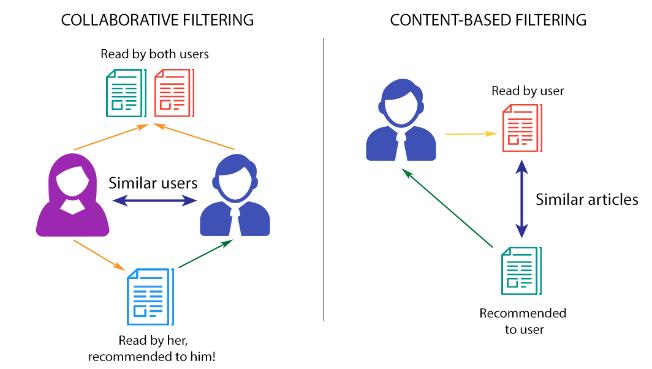
Collaborative Filtering: Recommendations are made in accordancewithuserbehavior.Theuser'spastiscrucial.Itis predicatedontheideathatrelatedusersandprojectsmay beprioritized.[1].TheCFsystemlooksforcoursesthatare comparable based on user feedback. User may provide explicitorimplicitfeedback,suchasanumerical rating to reflecthowmuchusersvaluedacertaincourse,suchas1for dislikeand5forextremelylike,orimplicit,suchasinternet browsing history or reading time for a particular course. Memory-BasedandModelBasedalgorithmsaretwoforms ofcollaborativefilteringalgorithms.Inthefirst,itemsand user data are saved in memory, and then calculations are usedtoprovideestimatesbasedonthedata.TheBayesian network,rule-based,andclusteringapproachesareonlya fewoftheMLalgorithmsthatareusedtobuildthemodel process.
KnowledgeBased: Arecommendersystemisconsideredto be knowledge-based when it delivers recommendations basedonparticularqueriesinsteadofauser'sratinghistory. Context-based and ontology-based are two of the knowledge-basedtechniques.
Hybrid Model: HybridRSincorporatesfeaturesofbothCB andCFbycombiningindividualforecastsintoone,adding relevant data to the CF model, or generating final recommendationsbasedonthecollectiveranks.
Recommender systems (RS) built on one of the aforementioned architectures, are prevalent in all recommenders, and serve as a baseline for addressing
specific recommendation tasks. They should be using ML techniques,anddatasets,besusceptibletomonitoringand feedback, have output, according to us. Each of these components is covered in further detail in the following sections.
2.1 Data Used
Dataisgatheredimplicitlyorexplicitlybyrecommendation systems.Implicitdataisrawdatathatmaybedividedinto two types: those that are purposefully obtained from availabledatastreamsandthosethatareby-productsofuser activityanditmightbeutilizedornot.Throughregistration formsandprofileinformationareusedtoobtainasexplicit datafromusers.Theycanalsobeobtainedthroughinternet userreviews.
3. RELATED WORKS
The major goal of classifying and categorizing previously completed work is to have a thorough knowledge of the recommendersystem'sdeploymentinvariousdomains.The purposeofthispaperistoexplainhowcourserecommender systemshaveimprovedperformanceinthecurrentday.The current research has been divided into four categories: Collaborative,CB,HybridSolutions,andKnowledge-Based.
3.1 Content- Based Research
Content-based recommendations are based on a user's previouschoices,whichareusedtoprovidesuggestionsto otheruserswhohavesimilarlikesanddislikes.Itmadeuse of historical student data to make predictions regarding learningmaterials.Usingfuzzyclusteringanddecisiontrees, learners are categorized as beginner, intermediate, or master depending on their academic history and learning habits. The pattern discovered during categorization also reflectstheamountofinterestintakingspecificcourses.[4] Also,basedonasetofrulesin[5],Learnersarepresented withlearningcomponentsandlearningobjectsviaadaptive userinterfacebasedonrulespresentedbyauthor.TheCB technique has the drawback of relying on previous user experience and being unable to offer fresh content, which maydemotivateusersandleadtoanunwelcomerestricted focus.
3.2. Collaborative Filtering Based Research
Collaborative filtering (CF) is a way of combining crowd consumptionpatternstogenerateamathematicalmodelof allstudentsandcourses.Toputitanotherway,it'samethod ofidentifyingagroupofpeoplewhohavesimilartastesand filtering things based on the opinions of other users. By lookingattheirfavoritethemesandincorporatingtheminto a categorized list of ideas, the approach gets over the limitations of content-based strategies. There are two strategiesfromtheperspectiveofstudentsandcourses.The first,knownasUser-basedCF,analysesallstudentsdatato
identify comparable customers and anticipate their preferencesforvariouscourses,aprocessknownasSocial Recommendation. The second technique, known as Itembased CF, begins with course similarities, then analyses recentbest-sellersandoffersdiscountstotargetcustomers. The Item Recommendation is what it's called. [3] The CF techniqueviewedlackofdataasamajordrawback.Asitcan commonlyresultinthecoldstartproblem,whichexplains the difficulty of offering recommendations when the studentsorcoursesarefresh.
3.3. Knowledge Based Research
Knowledge-based recommendation systems offer recommendationsbasedoninformationaboutstudentsand courses. Knowledge-based suggestions aren't based on a student's rating, and they don't require any information about that user to make recommendations. To produce appropriate learning material from the web based on learners' needs, researchers utilized an Ontology-Based model with dependency ratios and parse trees. [7] It comprises several layers, methodologies, and algorithms that are not ideal for all sizes of e-learning systems, Recommendation System Content Based Collaborative FilteringKnowledgeBasedHybridApproachConsequently, the knowledge-based strategy is both time- and moneyconsuming.
3.4. Hybrid Model Based Research
A hybrid model framework based on three models was presented by the researchers: CF, Content-Based, and CF withaSelf-Organizingmap.Theapproach'smainadvantage wasthatitincludedallofthescoresfromallofthemodels, allowing you to take advantage of all of their advantages. Despitethefactthatthetechniquetakeslongertosuggest than previous models, the accuracy and performance improvements were considerable. [6] The researcher designedalearnerlearningobjectpredicted(LLOP)matrix and used collaborative filtering to choose the most acceptablelearningobjects.TheythenusedtheSPMmethod to identify the most often occurring sequence of learning objectsinthematrix.[2]
ThedrawbacksofCBandCFareeliminatedbythisapproach. Despitebeingmoretimeconsumingandmoreexpensive,the hybridprocedureisnowthebestoptionbecausetoallthe benefitslistedabove.
Categories Techniques
ContentBasedRC Utilizeshistorical studentdataand providepredictions
CollaborativeFiltering Clusteringsimilar usersbasedontheir similarlikesand dislikes
KnowledgeBased
Drawbacks
Benefits
Dependsontheuser'shistory. Recommendationsarevery relevantandtransparent.
Datasparsity, ColdstartProblem
OntologybasedModels TimeConsuming,Expensive
HybridModel CombinationofCBand CF TimeConsuming,Expensive
Table
4. DISCUSSION, CHALLENGES AND ISSUES
Weevaluatedthemethodologiesandbenefitsaddressedby researchers and classified the recommender systems reported in study. The issues of the categorized recommendationsystemswerethenanalyzedandgradedas follows:
i. Cold Start issue: This problem is generally handled by freshmanorcourses.Thisproblemdevelopsduetoamain lackofrating,whichimpliesthatafreshmanmaynothave rated any items, or that any new item may not have been rated by any students. As a result, making the best recommendationsinthiscircumstanceisdifficult.
ii. Data Sparsity: Due to the fact that active users only evaluatedatinynumberofthings,datasparsityreferstothe difficultyinlocatingenoughreliablesimilarusers.It'stough todeliveranappropriatesuggestionlisttothetargetuserif thelearningitemhasalowrating.Thelearnerdoesnotrate existinglearningitems,resultingindatasparsity.
iii.Privacy:Theprivacyhazardsofcollectingandprocessing personal data, on the other hand, are frequently underestimatedorneglected.Manyusersareunawareofif andhowmuchoftheirdataisgathered,whetherornotitis sold to third parties, or how safely and for how long it is held.
4.1 Machine Learning Algorithms
Machine learning and Data Mining employ a variety of statistical approaches and techniques, as well as diverse algorithms such as classification models, clustering, and regressionmodels,toextractinsightsfrommassivesetsof data. It allows us to forecast the result based on previous events. Various fusions of data mining methods, such as classificationandassociationrulealgorithms,clusteringand associationrule algorithms, excreta were compared. were compared.
Studentcangetbroader exposuretothecourses.
Itisnotbasedonuserrating
Overcomethedisadvantagesof CFandCB
Theycomparedtheresultsanddiscoveredthattheoptimal mixtureincludesClustering,Classification,andAssociation RuleAlgorithms.[8]
According to the research paper studied, clustering algorithmswerethemostpopular,alongwithpartitioning approaches such as k-means and k-nearest neighbour. Researchersevaluatedseveralcombinationsofdatamining techniques, including classification and association rule algorithms, clustering and association rule algorithms, integratingclusteringandclassificationalgorithmsintoan association rule algorithm, and solely association rule algorithms.[9]
Researchers discovered that the optimal combination is clustering with classification and an association rule approach.
In[10]researcherproposedaframeworkwhereclustering algorithm were applied to the dataset, and then frequent pattern mining algorithm applied which recommend the coursesbasedonhistoricaldata.
4.2 In-depth analysis of chosen publications
We have provided brief information of the chosen publications in Table 2 below, including recommendation systems,technologyemployed,targetusergroupsforwhom theproposedRSwasproduced,nationofstudy,datausedin the assessment of the RS, and the proposed system's applicationarea.
It also demonstrates the programming language used in developingRS,withinnovation-basedlearningsystems as the primary application. The target demographics were schools, universities and their students. Foreign data was usedbyallsystemstoevaluatetheirsystems.
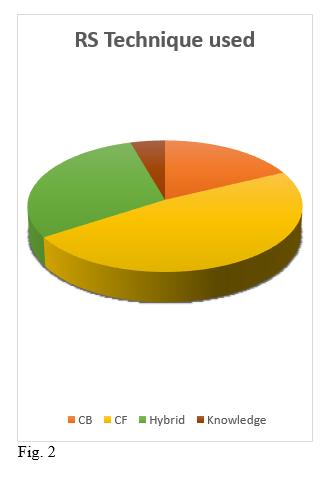
Basedonthesearchqueriesandresearchpapersstudied,fig.
2demonstratesanassessmentofthepopularityofvarious RSapproaches.CFapproachesareutilisedinroughly48%of papers, whereas CB and Knowledge-based are used in around 18% and 14% of papers, respectively, and hybrid modelsareemployedinaround20%ofpapers,despitetheir significantbenefits.
6. CONCLUSIONS AND FUTURE WORKS
The fulfilment of personalised educational resource recommendationshasbecomethekeychallengethathasto besolvedinintelligenteducation.Thisreviewisbasedonelearning publications that deal with Recommendation System. This paper's key contribution is, different ML methods and a taxonomy of RS systems are presented, assessment measures, and insights into obstacles and concerns that need to be considered in future study. This studyfoundthatCFisacommonrecommendationstrategy ine-learning,withthemajorityofstudiesseekingtoincrease suggestionquality.
Hybrid approaches provide a competitive advantage over theotherfourstrategies,buttheirpopularityismodest.
Personalization and adaptive user interface have become importantfeaturesine-learningasitwillbeengagingand interesting to learn through the web, and the research obtainedfromtheexploratorystudyreportedthatlearners in group four benefited the most from the individualized
recommendationlinksprovided by the personalised webbased system. [4] They had much superior learning comprehensionthantheotherthreegroupssincetheyhad moreWebsearchexperiences.
Datasparsityandlatencyaremajorchallengesthatstillneed to be addressed with RS, as well as privacy and shilling threats. The hybrid model has been proved to tackle the majorityofcontemporarysystemissues.Furthermore,much researchisnecessarytoimproveuserconfidenceandfacets ofuserengagement.
REFERENCES
[1]Chen,Zheng,XueyueLiu,andLiShang."Improvedcourse recommendationalgorithmbasedoncollaborativefiltering." 2020 International Conference on Big Data and InformatizationEducation(ICBDIE).IEEE,2020.
[2]Bourkoukou,Outmane,EssaidElBachari,andMohamed El Adnani. "A recommender model in e-learning environment."ArabianJournalforScienceandEngineering 42.2(2017):607-617.
[3]Chen,Yung-Hui,etal."Recommendationsystembasedon rule-spacemodeloftwo-phaseblue-redtreeandoptimized learning path with multimedia learning and cognitive assessmentevaluation."MultimediaToolsandApplications 76.18(2017):18237-18264.
[4] Rahman, Mohammad Mustaneer, and Nor Aniza Abdullah. "A personalized group-based recommendation approach for Web search in E-learning." IEEE Access 6 (2018):34166-34178.
[5]Kolekar,SuchetaV.;Pai,RadhikaM.;M.M.,ManoharaPai (2018). Rule based adaptive user interface for adaptive E learningsystem.EducationandInformationTechnologies,(), – doi:10.1007/s10639-018-9788-1
[6] Afoudi, Yassine, Mohamed Lazaar, and Mohammed Al Achhab. "Hybrid recommendation system combined contentbased filtering and collaborative prediction using artificialneuralnetwork."SimulationModellingPracticeand Theory113(2021):102375.
[7] Aeiad, Eiman, and Farid Meziane. "An adaptable and personalisedE-learningsystemappliedtocomputerscience Programmes design." Education and Information Technologies24.2(2019):1485-1509.
[8]DolAher,Sunita&Lobo,Louis.(2012).BestCombination of Machine Learning Algorithms for Course RecommendationSysteminE-learning.InternationalJournal ofComputerApplications.41.1-10.10.5120/5542-7598.
[9]Ricci,Francesco;Rokach,Lior;Shapira,Bracha;Kantor, Paul B. (2011). Recommender Systems Handbook || Data MiningMethodsforRecommenderSystems.,10.1007/978-
0-387-85820-3(Chapter2),39–71.doi:10.1007/978-0-38785820-3_2
[10] Mondal, Bhaskar, et al. "A course recommendation systembasedongrades."2020internationalconferenceon computer science, engineering and applications (ICCSEA). IEEE,2020.
[11]Lalitha,T.B.,andP.S.Sreeja."Personalisedself-directed learning recommendation system." Procedia Computer Science171(2020):583-592.
[12] George, Gina, and Anisha M. Lal. "Review of ontology based recommender systems in e-learning." Computers & Education142(2019):103642.
[13] Ali, Sadia, et al. "Enabling recommendation system architecture in virtualized environment for e-learning." EgyptianInformaticsJournal23.1(2022):33-45.
[14] Aher, Sunita B., and L. M. R. J. Lobo. "Combination of machinelearningalgorithmsforrecommendationofcourses inE-LearningSystembasedonhistoricaldata."KnowledgeBasedSystems51(2013):1-14.
[15] Aher, Sunita B., and L. M. R. J. Lobo. "Combination of machinelearningalgorithmsforrecommendationofcourses inELearningSystembasedonhistoricaldata."Knowledge BasedSystems51(2013):1-14.
[16] Tan, Huiyi, Junfei Guo, and Yong Li. "E-learning recommendationsystem."2008Internationalconferenceon computer science and software engineering. Vol. 5. IEEE, 2008.
[17]Guruge,DeepaniB.,RajanKadel,andSharlyJ.Halder. "The state of the art in methodologies of course recommendersystems areviewofrecentresearch."Data 6.2(2021):18.
[18] Lee, Youngseok, and Jungwon Cho. "An intelligent course recommendation system." SmartCR 1.1 (2011): 69 84.
[19]Lin,Jinjiao,etal."Intelligentrecommendationsystem forcourseselectioninsmarteducation."ProcediaComputer Science129(2018):449-453.
[20] Hameed, Mohd Abdul, Omar Al Jadaan, and Sirandas Ramachandram. "Collaborative filtering based recommendationsystem:Asurvey."InternationalJournalon ComputerScienceandEngineering4.5(2012):859.
[21]Jin,Chenxia,etal."Hybridrecommendersystemwith coreusersselection."(2022).
[22] Morales Murillo, Victor Giovanni, et al. "A Systematic Literature Review on the Hybrid Approaches for
Recommender Systems." Computación y Sistemas 26.1 (2022).
[23]Bhumichitr,Kiratijuta,etal."RecommenderSystemsfor university elective course recommendation." 2017 14th international joint conference on computer science and softwareengineering(JCSSE).IEEE,2017.
[24] Sánchez-Sánchez, Christian, and Carlos R. Jaimez González. "Course Recommendation System for a Flexible Curriculum Based on Attribute Selection and Regression." ProceedingsofSAIIntelligentSystemsConference.Springer, Cham,2021.
[25] Choi, Sang-Min, and Yo-Sub Han. "A content recommendation system based on category correlations." 2010FifthInternationalMulti-conferenceonComputingin theGlobalInformationTechnology.IEEE,2010.