Simulation study on installation of Solar Photovoltaic panels on roof top of Vagdevi Junior College, Newtown, Mahabubnagar by using Helioscope web-based software
1Correspondent, Vagdevi Junior College and IIT-NEET Academy, Mahabubnagar
2Director, Vagdevi Junior college and IIT-NEET Academy, Mahabubnagar

3Physics Lecturer, Vagdevi Junior college and IIT-NEET Academy, Mahabubnagar ***
Abstract - This paper illustrates about the importance of helioscope software which is basically a web-oriented cloud computing based software application. By usingthis software, one can analyze the pattern of solar irradiation; assessing the number of solar panels that can be installed in series or parallel configuration, how much energy could be generated and more importantly how much quantity of energy is being wasted in the form of losses. There are many options in this software like checking wiring connections, checking panel name plate details and their ratings, analyzing the battery specifications and also one can test the real time shading effects also. A case study has been conducted on installationof solar panels on roof top of vagdevi junior college, Mahabubnagar and presented in this paper.
Key Words: Helioscope,solarpanel,VagdeviJuniorcollege.
1. INTRODUCTION
ThispaperexplainedabouttheinstallationofRooftopbased photovoltaic(PV)systemswhichareverycommodiousfor installationincommercialbuildingsandalsoforinstallations inresidential areassothatonecansave hugegroundarea space.Therearemanytypesofsoftwareavailable[1-10]in ordertoanalyzethesolarPVinstallations,buthelioscopehas some special features like embedding the googlemap locationsdirectlyandanyonecanstudythedimensionsofPV arrayswhicharetobeinstalled.Itisuser-friendlysoftware. Helioscope software shows exactly the location where the panels to be installed. Visualization of installation area of solar PV panels becomes very clear and feasible. This softwareapplicationalsoyieldsusthesimulationreportsof the various parameters like performance ratio, energy renderedandstatisticalbaseddatapertainingtothe solar radiationbothdaywiseormonthlywisedependingonthe userrequirement.
2. HELIOSCOPE SOFTWARE
While using this web-based software application, the followingstepsneedtobeconsidered.
Anaccountshouldbecreatedandloginisrequired. After login, the software asks for creating a new project.
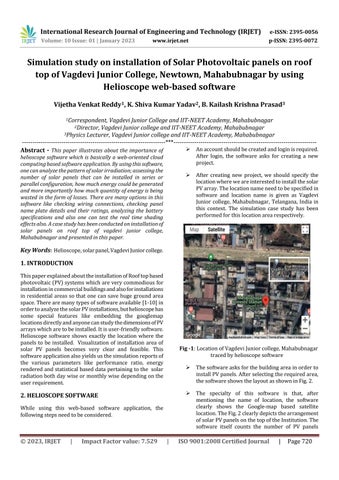
After creating new project, we should specify the locationwhereweareinterestedtoinstallthesolar PVarray.Thelocationnameneedtobespecifiedin software and location name is given as Vagdevi Junior college, Mahabubnagar, Telangana, India in this context. The simulation case study has been performedforthislocationarearespectively
Thesoftwareasksforthebuildingareainorderto installPVpanels.Afterselectingtherequiredarea, thesoftwareshowsthelayoutasshowninFig.2.
The specialty of this software is that, after mentioning the name of location, the software clearly shows the Google-map based satellite location.TheFig.2clearlydepictsthearrangement ofsolarPVpanelsonthetopoftheInstitution.The software itself counts the number of PV panels
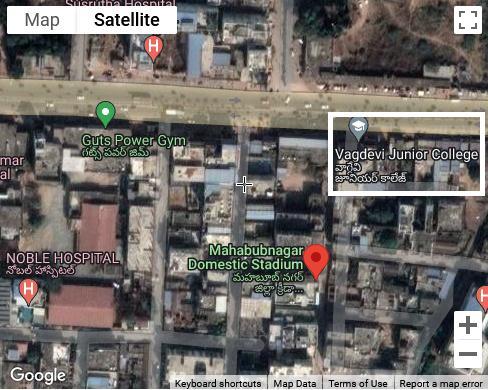
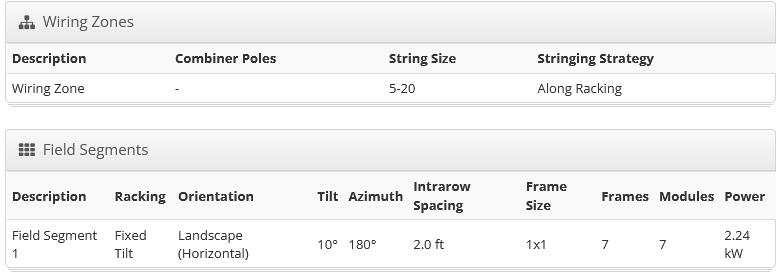
requiredforthegivenspacearea.Inthiscasestudy, itsuggested‘7’panelsforinstallation.
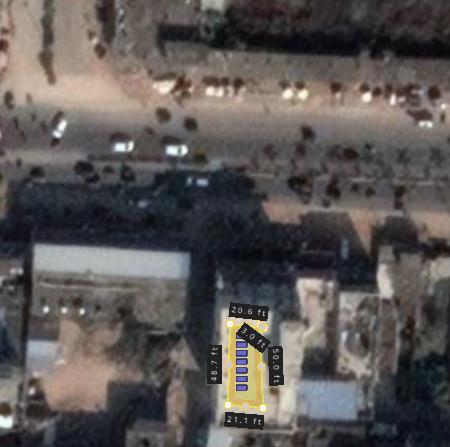
Secondly, electrical based connections to be specifiedbyselectingthetypeofPVpanelneedsto be installed. We need to check the manufacturing companynameofPVpanelandthetypeofinverter usedforDCtoACconversion.
The software has also many options like; we can check the tilting angle of PV panels. It specified tilting angle of panels as ‘10’ in this particular simulationstudy
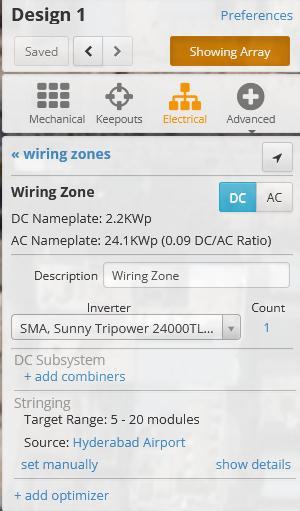
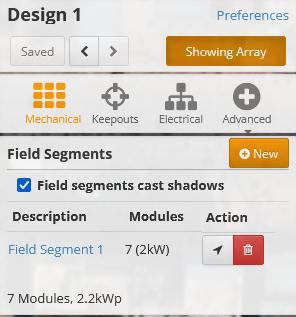
The wiring connections and name plate details of inverteralsobeenrepresentedbysoftwarewhichis shownbelowinFig.4.
There are few steps to be implemented in this softwareforthepurposeofinstallation.Firstly,itis requiredtodesigntheMechanicalfieldsegments.It tellsabouthowmanypanelsarenecessarytoinstall.
3. SIMULATION RESULTS:
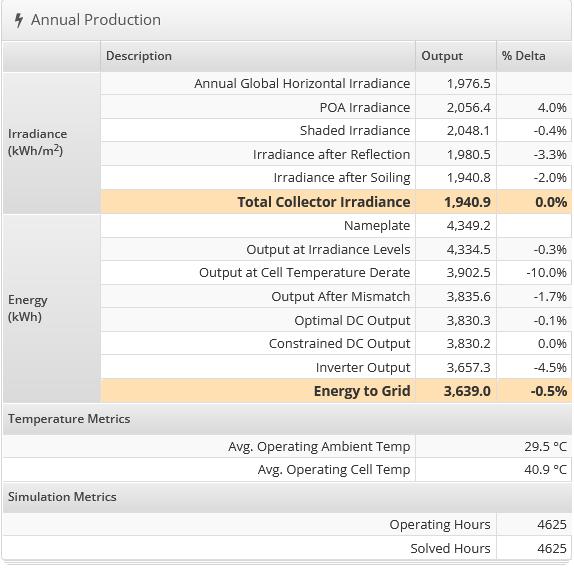
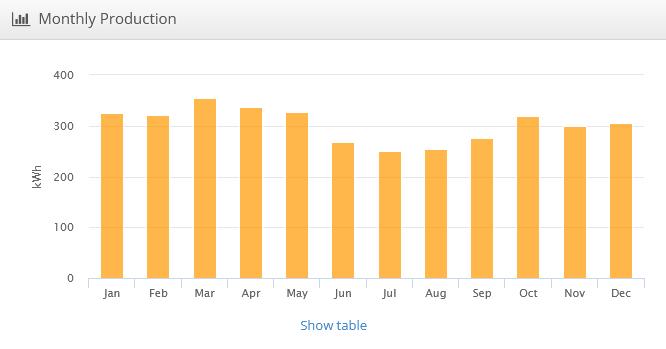
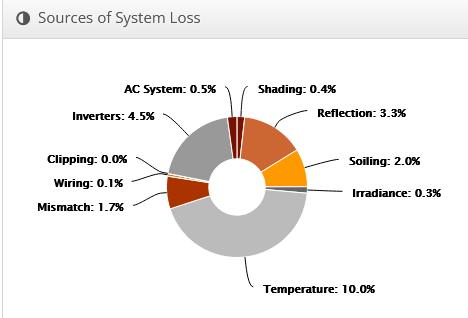
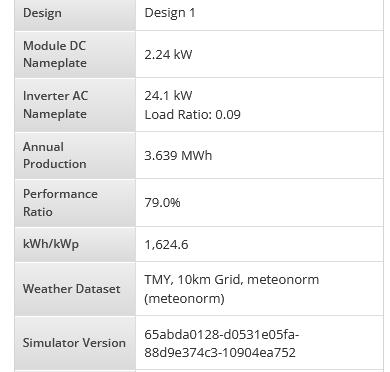
The simulation has been carried out by the software. The varioussimulationoutputreportshavebeenrepresentedin this paper. The results basically illustrates about the performanceratioparameter,theratingofthePVpanelsand inverter,annualproduction(inkWh)energybythepanels, weatherconditionsandmanymore.
Theseresultsareshowninfiguresgivenbelowrespectively:
4. CONCLUSIONS
Thissimulationworkiscarriedoutmainlyinordertocheck the feasibility of installing the solar PV panels on roof top area of vagdevi junior college. The installing of PV array analysishasbeenattainedwiththehelpofhelioscopewhich is web-technology related application and user-friendly software.ThispaperexplainedregardingtheprocessofPV panel configuration design in detailed version. The conclusions pertaining to the kWh energy afforded, performance ratio parametric quantity and the energy actuallybeingestimated
REFERENCES
[1] Anshul Chouhan, Dr. Rajeev Arya and Dr. Nilesh Diwakar, “Performance evaluation of a 21 kW Solar PowerPlantinCentralIndia&AnalysisbyusingBlueSol PV & Helioscope Software program”, International Journal of Engineering development and research (IJEDR),Vol-7,issue–4,2019.
[2] DJDamiri,SLeginoandSAmboro,“Engineeringdesign developmentof52.5KiloWattpeaksolarphotovoltaic system for industrial Rooftop building”, Journal of Physics:ConferenceSeries,1402(2019).
[3] NajibhamisuUmar,BirinchiBora,ChandanBanerjeeand B. S. Panwar, “Comparison of different PV power simulation softwares: case study on performance analysisof1MWgrid-connectedPVsolarpowerplant”, InternationalJournalofEngineeringScienceInvention (IJESI),Volume-7,Issue-7,VerII,PP11-24,July2018
[4] B.KailashKrishnaPrasad,K.PrahladaReddy,K.Rajesh andP.ViswanathReddy,“Designandsimulationanalysis of 12.4 kWp Grid connected Photovoltaic system by usingPVSYSTSoftware”,InternationalJournalofRecent TechnologyandEngineering(IJRTE),ISSN:2277-3878, Volume-8,Issue-5,January2020.
[5] Vikas Sharma and Anand Mohan, “Planning, structure and preparation of cost effective sun oriented vitality based electrical power framework system at Alakh Prakash Goyal shimla university, Himachal Pradesh”, International Journal of Recent Technology and engineering(IJRTE)vol.8,issue-2,July2019,pp.26432649.
[6] C.P.Kandasamy,P.PrabuandK.Niruba,“Solarpotential assessment using PVSYST software”, International Conference on Green Computing, Communication and ConservationofEnergy(ICGCE)2013,pp.667-672.
[7] Nallapaneni Manoj Kumar, M. Rohit Kumar, P. Ruth Rejoice and Mobi Mathew, “Performance analysis of 100kWp grid connected Si-poly grid connected photovoltaic system using PVsyst Simulation tool”, EnergyProcedia117(2017),pp.180-189
[8] P.Karki,B.AdhikaryandK.Sherpa,“Comparativestudy ofgrid-tiedphotovoltaic(PV)systeminKathmanduand Berlin using PVsyst”, Proceedings of IEEE Third International Conference on Sustainable Energy Technologies(ICSET),Kathmandu;2012.p.196-199
[9] RachitSrivastavaandVinodKumarGiri,“Designofgrid connectedPVsystemusingPvsyst”,AfricanJournalof Basic&AppliedSciences,2017,9(2),pp.92-96.
[10] Surabhi Sharma,CijiPearl KurianandLakshmanraoS Paragond,“SolarPVsystemdesignusingPVsyst:Acase study of an academic institute”, International Conference on Control, Power, Communication and ComputingTechnologies(ICCPCCT),2018,pp.123-128
BIOGRAPHIES
The author is Correspondent of Vagdevi Junior college and IITNEET Academy, Mahabubnagar, Telangana His qualifications are M.Sc, B.Ed. He is a B N Shasthri Awardee
Theauthoriscurrentlyoneofthe DirectorsofVagdeviJuniorcollege, Mahabubnagar,Telangana

The author received his M.Tech Degree from National Institute of Technology (NIT), Trichy, Tamil Nadu. He is currently working as PhysicsLecturerinVagdeviJunior college & IIT-NEET Academy, Mahabubnagar.