Smoke Alert System For Dye Industries Using IoT
1,2,3 B. Tech Scholars, Dept. of Electronics and Communication Engineering, SNIST, Hyderabad-501301, India
4,5 Professor, Dept. of Electronics and Communication Engineering, SNIST, Hyderabad-501301, India ***

Abstract - The goal of this paper is to integrate AVR technology into smoke sensor circuitry. We created a fire alarm using an Arduino Uno, which is linked to a smoke sensor and a buzzer. The smoke sensor detects any smoke produced by burning or fire. A buzzer connected to an Arduino provides us with an alert indication. When fire and smoke are activated, it burns nearby objects and emits smoke. Small smoke from candlelight or incense sticks used in the home can also set off a fire alarm. Also, whenever the heat intensity is high, the alert is activated. When the temperature returns to normal, the buzzer or alarm is turned off, and the smoke level decreases. The smoke alert system is an important system for both industrial and residential purposes. When it detects fire or smoke, it immediately alerts the user by sounding the buzzer. We are using an Arduino Uno from the Arduino family for this purpose. Additionally, the Arduino is interfaced with the LCD display to display the status of the system, whether Smoke and Overheat are detected or not.
Key Words: Arduino, Mq2 sensor, Buzzer, Lcd display
I. INTRODUCTION
This project is about smoke detection systems used in industry.Ourprojectistocreateasmokewarningsystemfor the dye industry. Essentially, dye industries manufacture various types of products that have dye applied to them. Threads,boxes,and other itemsare examples of products. Thereisapossibilityoffireaccidentsoccurring.Becauseno one knows how and when these fires will occur, these incidentscanbefatal.Whenafireoccurs,itiscriticaltohave aquickresponseandstoptime.Otherwise,thedyeindustries willsufferasignificantlossofproduct.Toavoidthedamage causedbyfires,wemustbealertedandcontrolthefireifit producesmoresmokethanusual.Wearealertedbyabuzzer thatwillsoundwhentheppmofsmokeexceedsthenormal range.TocreateasmokedetectionsystemutilisingInternet ofThings(IoT)technologyandasensorcapableofassessing the situation and updating the system in real-time. The system's goal is to initiate a response that reduces the severity of fire and smoke accidents while also providing users with a helpful alert with an alarm when smoke is detected.
II. LITERATURE REVIEW MATERIALS AND METHODOLOGY
II. i. Literature Review
Inordertopreventlossoflifeandpropertydamage,safetyis animportantconsiderationinthedesignofresidentialand commercialbuildings.Fireisanimportantconsiderationin safety. This project created a smoke alert based on a microcontrollerthatwillcontinuouslymonitortheamount ofsmokeandactivateanalarmtoalertsafetymeasuresto containthesituation.Whenitcomestofiresafety,it'sbestto have a smoke alert in our homes and industries. With so many smoke detectors available, wecan rest assured that ourindustriesaresafefromtheunimaginable.Thesmoke detector is one of the simplest and least expensive. Most industries use it because it protects effectively and efficiently.Insteadofrelyingonheat/temperaturesensors, whichsoundanalarmwhenafirehasalreadystarted,this systemcanbeusefulinbothdomesticandindustrialsettings to detect smoke. This can go a long way toward saving human lives. This system can also be used to detect and deter smokers in non-smoking areas. The cost of implementing this system is low because the components usedareinexpensiveandwidelyavailableonthemarket.As longasmorepinsarefreedformultipleinputsandmultiple outputs, a single microcontroller can be used to interface several sensors with alarms located in different locations. This system includes a power supply that can be plugged directlyintoapoweroutlet(5VDC)toprovidethenecessary operating voltage. Smoke detectors are more sensitive to firesintheirearly,smolderingstages(beforeitbreaksinto flame).
II.ii. Materials
1. Arduino UNO:
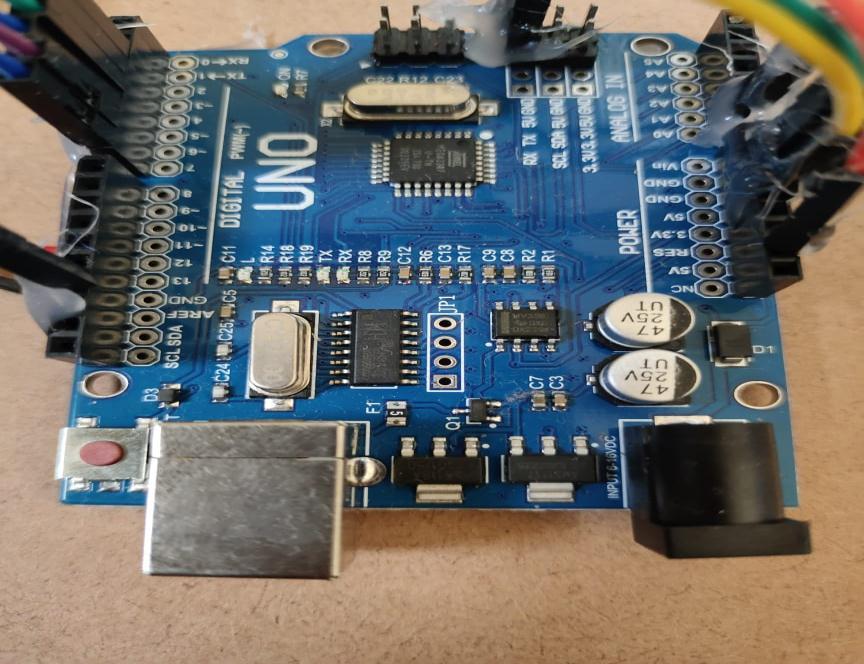
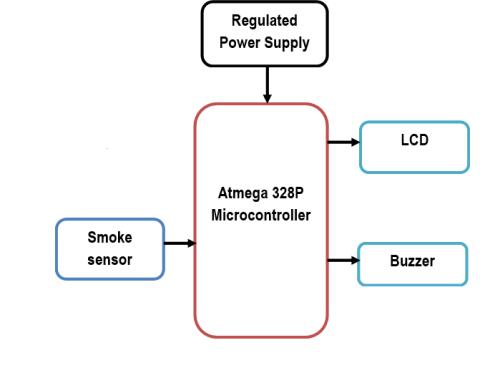
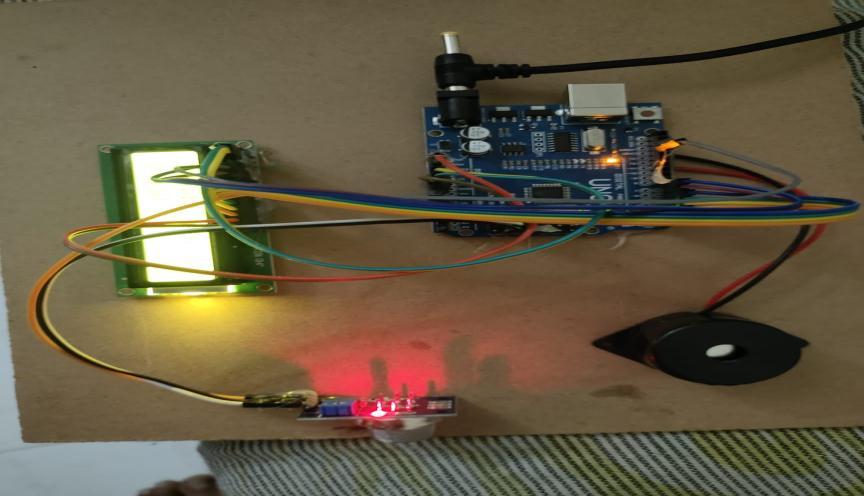
The Arduino UNO is built around the ATmega328P microcontroller.Incomparisontootherboards,suchasthe ArduinoMega,itissimpletouse.Theboardismade upof digitalandanalogueI/Opins,shields,andothercircuits.The Arduino UNO has six analogue input pins, fourteen digital pins,aUSBconnector,apowerjack,andanICSP(In-Circuit Serial Programming) header. It's written in IDE, which stands for Integrated Development Environment. It is compatiblewithbothonlineandofflineplatforms.
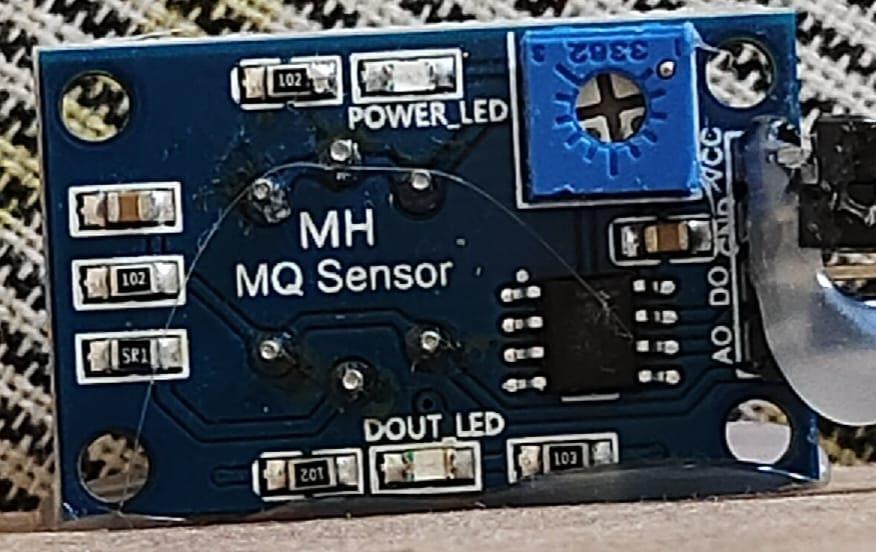
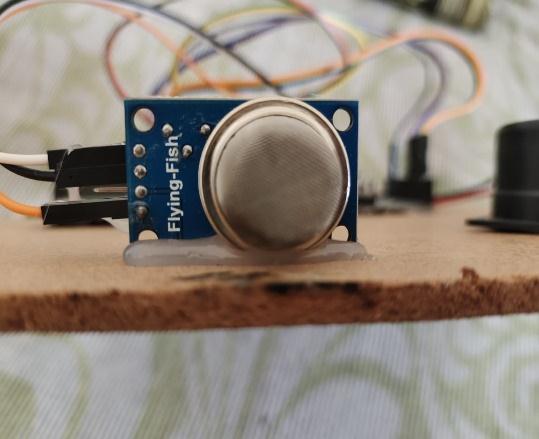
2. MQ2 sensor: The MQ-2 is a sensor for smoke and combustible gases. It has a detection range of 30010000ppm for flammable gases. Its most common applicationisindomesticgasleakdetectionanddetectors withahighsensitivitytosmoke.
3. Connecting Wires:
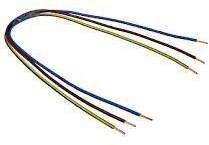
Wiresaretheconductiveconnectionsbetweentheelements in contact in any electronic circuitry. They have zero resistanceandprovideperfectconnectionsintheory.They appearonthebreadboardasnicelycolouredjumperwires.
5. Buzzer:
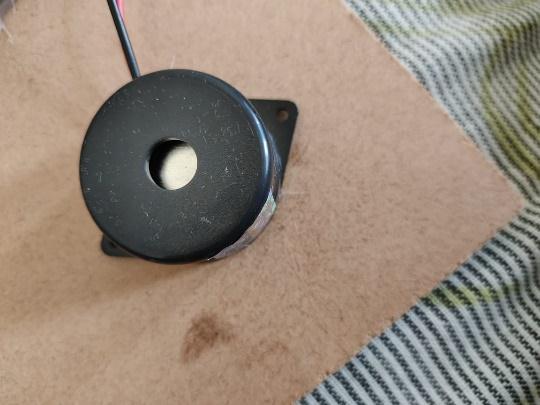
Sensor-Buzzerisabuzzerthatispassive.Itislikeamagnetic speaker,requiresvoltagewithdifferentfrequenciesinorder toproducesound.Whenthefrequencyincreases,thepitch becomeslouder.
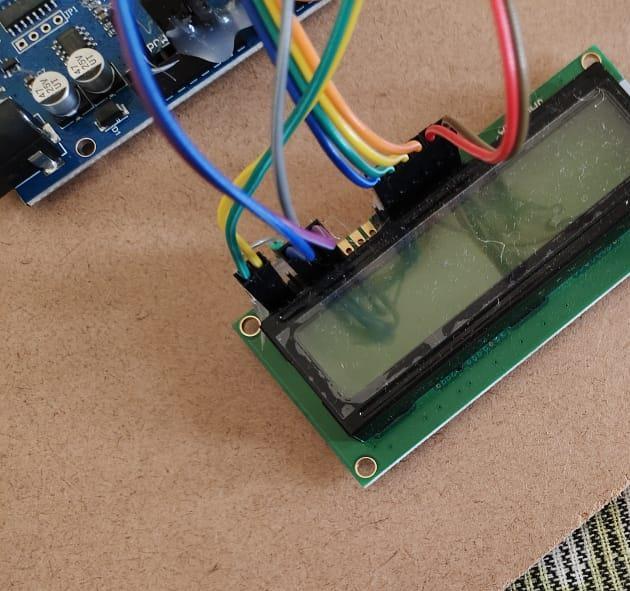
Toprovideauserinterface,wecanconnectaliquidcrystal display (LCD) to an Arduino. LCDs are commonly used to displaydataindevicessuchascalculators,microwaveovens, andavarietyofotherelectronicdevices.
7. Arduino IDE compiler:
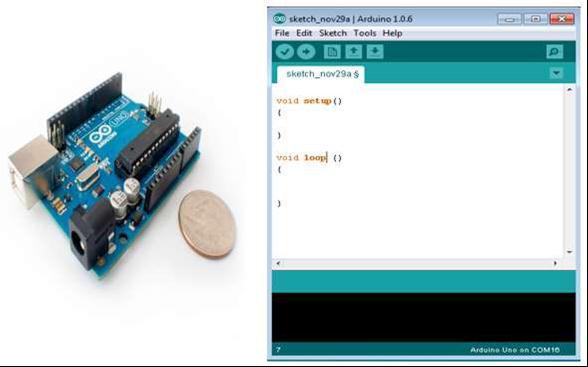
Arduino is an open-source electronics platform built primarily on user-friendly hardware and software. To uploadourprogrammeintothemicrocontroller,theArduino IDE employs an AVR-GCC compiler and AVR-dude. The Arduino IDE is open-source software for writing and uploading code to Arduino boards. The IDE application is compatible with a variety of operating systems, including Windows, Mac OS X, and Linux. It is compatible with the programminglanguagesCandC++.IDEisanabbreviation forIntegratedDevelopmentEnvironment.
III. MODELING AND ANALYSI
II. iii. Methodology
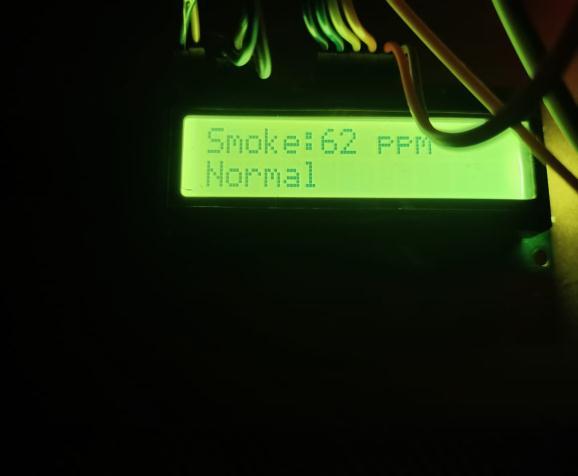
When you turn on the device, the Arduino initializes the sensormoduleandtheLCDdisplay.Itbeginstoreaddata fromtheMQ-02sensor.Thedataisreadfromthesensor's analogue output pin. The read data is in the form of an analogue voltage that is digitalized using an ADC channel built into the device. Because the Arduino board's ADC channelsare10-bitlong,thedigitalizedreadingrangesfrom 0 to 1023. After calibration, the ADC reading is directly proportionaltothesmokeconcentrationinPPMbyafactor ofone.Thereadingissavedinavariableandshownonthe LCDscreen.
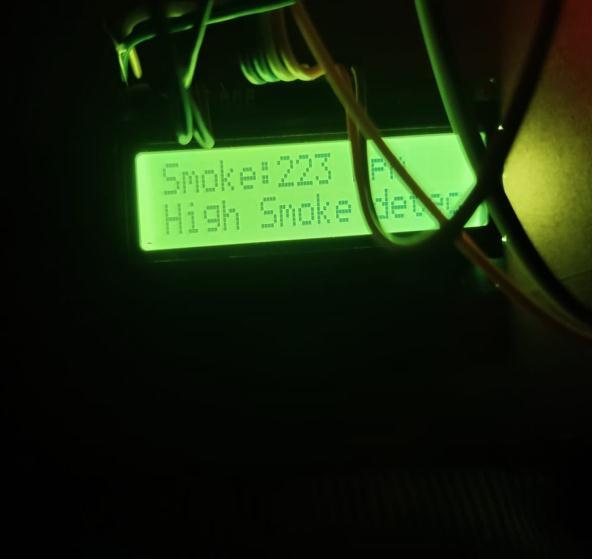
The reading is compared to a calibrated threshold that representsthedangerlevelofsmokedetection.Ifthesmoke concentration in PPM exceeds the threshold value, the Arduino board sends a HIGH pulse to the respective controllerpin,activatingthealarmindicatorintheformof an LED and activating the DC motor used as exhaust. Otherwise, the LED is kept off by passing a LOW at the respective controller pin, and the motor is kept in top conditionbypassingaLOWatthepinscontrollingthemotor inputsignals,untiltheconcentrationofsmokeinPPMdoes notexceedthedangerouslimit.
ExaminetheprojectcodetoseehowtheportableArduino boardreadsdatafromtheMQ-02sensor,storesit,displaysit on the LCD screen, compares it to a threshold value, and activates the motor and LED indicator when a dangerous levelofsmokeconcentrationisdetected.
IV. RESULTS, DISCUSSION, AND CONCLUSION
The project "Smoke alert system for industries" has been designed and tested successfully. It was created by combining features from all of the hardware components used.Everymodule'spresencehasbeencarefullyconsidered and placed, resulting in the best possible operation of the unit.Second,theprojectwassuccessfullyimplementedby utilisinghighlyadvancedICsandgrowingtechnology.Since thefirstgenerationofsmokedetectorswasreleased,there have been a number of advancements to both reduce detection time while also decreasing detector'sactivation whencombustionproductsarenotpresent.Smokedetectors and alarms are evolving from simple smoke detectors to combinationdetectorsandmulticriteriadetectors.
The future will be multicriteria detection, in which the detector will be more of a sensor, detecting combustion productssuchascarbonmonoxide,carbondioxide,sulphur dioxide,andnitrogenoxidesaswellasheatandparticulate matter.Sensorswillalsobeabletodetectortrackwhethera room is occupied or not, and will be integrated with occupantnotificationandevacuation.Thedevelopment of more advanced algorithms and artificial intelligence, both withinthesensorandthefront-endcontrolunit,willreduce thetimebetweenthestartofaneventanditsnotification.
It is not unlikely that detection technology will be able to detectanimpendingfireatthatstageratherthanwhenitis flaming.Atthesametime,thismayreducethelikelihoodof anunwantedactivationoccurring.Withinthenextdecade, video image detection (VID) will become more common, allowing the image of smoke or flame to be isolated and detectedfromwithinaroomorspaceusinganalytics.The VIDsystemwouldalsobeabletodetectifsomeoneisinthe space and, through integration with the notification appliances,provideanexitpath.
V. ACKNOWLEDGEMENT
Wewouldliketoexpressourspecialthankstoour mentor Dr. G. Prasad Acharya who gave us a golden opportunitytodothiswonderfulprojectonthistopicwhich also helped us in doing a lot of research and we came to knowaboutsomanynewthings.Wearereallythankfulto them.Secondly,wewouldalsoliketothankmyfriendswho helped us a lot in finalizing this project within the limited timeframe.
VI. REFERENCES
1. M. Kironji, “Evaluation of Fire Protection System in Commercial Buildings for Fire Safety Optimization”, InternationalJournalofScientificandResearchPublication, vol.5,No.10,pp. 2250-3153,2015.
2.V. Pati,S. Joshi,R.Sowmianarayanan,M.Vedavahi,&R. Rana, “Simulation of Intelligent Fire Detection and Alarm SystemforaWarship”. InstituteofArmamentTechnology. Vol. 39,pp. 79-94,1989.
3. G. Heskestad, “Escape Potentials from Apartments Protected by Fire Detectors in High-Rise Building”, Department of Housing and Urban Development, Factor Mutual Research Corp., Norwood, Massachusetts. Final TechnicalReport,1984.
4.A. Lerardi,& J. Barnett, “AMethodology for Predicting Smoke Detector Response”. WPI Center for Fire Safety Studies,Worcester,2000.Retrievedfrom:ierardi@wpi.edu, on2ndApril2017.
5. M. Wieder, & C. Smith, “Fire Inspection and Code Enforcement”,(6thEdition.),OklahomaCity,FireProtection Publication,OklahomaStateUniversity,1998.
6. N. Langewisch, N. “A Review of Automatic Sprinkler Systems and Fire Detection Systems within Missouri”, OccupationalSafetyintheFireService.