
International Research Journal of Engineering and Technology (IRJET) e-ISSN: 2395-0056 p-ISSN: 2395-0072


International Research Journal of Engineering and Technology (IRJET) e-ISSN: 2395-0056 p-ISSN: 2395-0072
Chandrashekhar K S 1 , Praveen P 2 , Bhuvaneshwar C 3 , Manasa H A 4 , Radhika Sreedharan 5
1234 UG student, Dept. of Computer Science & Technology, Presidency University, Bengaluru. 5 Assistant Professor, Dept. of Computer Science & Engineering, Presidency University, Bengaluru.
Abstract - The rapid growth in AI-driven healthcare solutions has paved the way for advanced diagnostic tools, especially in resource-constrained environments like villages and smaller towns. Acute diseases often require timelyintervention,and delaysindiagnosiscan havesevere health consequences. This project addresses these challenges by developing an AI-based system capable of diagnosingacutediseasesinunder-servedareas.Thesystem leverages machine learning models trained on diverse medical datasets and offers a cost-effective, scalable solution to support healthcareproviders in ruralareas. The development process of this AI-based diagnostic system involves several key phases, including data collection, preprocessing, model training, system integration, and performanceevaluation. Alargedataset comprisingpatient recordsanddisease-relateddatahasbeenusedtotrainand validate the models. This project aims to bridge the healthcare accessibility gap in underdeveloped areas, providing timely, accurate, and cost-effective diagnostic support.TheAI-drivensystemoffersascalablesolutionthat canbeextendedtodiagnoseawiderrangeofdiseasesinthe future. By leveraging AI, the system empowers healthcare workers and reduces the burden on overstretched medical resources, ultimately leading to better health outcomes for ruralpopulations.
Key Words: Artificial Intelligence (AI) in Healthcare, AcuteDiseaseDiagnosis,AIforRuralHealthcare,Machine Learning in Disease Prediction, Natural Language Processing(NLP)forSymptomAnalysis,DeepLearningin Medical Imaging, Predictive Analytics in Health, AI-based Recommendation Systems ,Symptom Mapping and Feature Engineering ,AI in Resource-Constrained Environments,HealthcareAccessibilityinRuralAreas,AIDriven Healthcare Innovations ,Explainability in AI Models, Real-Time Disease Diagnosis, AI for Healthcare Workers Support ,AI and Data Privacy in Healthcare ,Scalable Healthcare Solutions, Modular System Design in AI ,Disease Prediction Accuracy, Community Health MonitoringwithAI.
AI has established itself as one of the key drivers of transformation in the 21st century and is reshaping industriesbyprovidingnewandefficientanddata-driven

Impact Factor value: 8.315
solutionstosomeofthebiggestandchallengingproblems global.Everyindustrythatrelyonlotofamountofdata, frommedicinal,finance,energy,logisticalrightthewayto even car manufacturing has benefited from the use of AI foritsdataprocessing,patternrecognitionandpredicting abilities.
In light of this, with the steady increase in sizes and sophisticationofdatasetsthatisreadilyavailable,Machine learningmodelshaveneverfailedtoamazeeverysolverof challenges that one could think could not be solved. Traditionally uses of inpaints suchas pattern recognition, predictive analytics, anomaly detection, optimization, and thelikeshavesinceimprovedthroughtheincorporationof AI. But to successfully apply these technologies in solving problemswithinagivendomain,onehastogettoarefined method.
Forinstance:
Inthecontextofhealthcare,AImodelsarenowappliedfor the purpose of augmenting the accuracy of the current disease diagnosis, assessing patient prognosis and for defining selecting customized treatment plans. SDKs still are an issue for rural and underprivileged locations, leavingpoordiagnosisasanareawhereAIcanexcel.
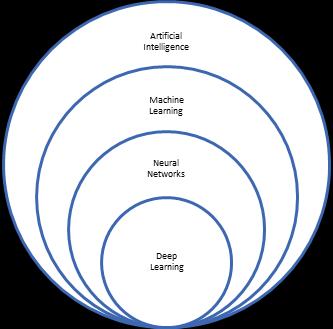
Fig. 1.1 OverviewofArtificialIntelligence
The project's objectives focus on multiple aspects. First, a robust data preprocessing pipeline will eliminate inefficiencies by cleaning datasets and applying normalizationtechniquesforoptimalmodelperformance.

Accurate disease prediction models will be developed using machine learning algorithms like Random Forest, SVM, and Gradient Boosting, with iterative improvements basedonperformancemetrics.User-friendlywebinterface, accessiblefeaturesincludescreenreadercompatibilityand adjustablefontsizes.Performancewillbeoptimizedusing predictiveanalyticswithtimeseriesanalysisandensemble techniques to accurately predict disease trends. Secure, scalable data storage with encryption and access control foruseranddatasetgrowth.A real-timerecommendation engine will give personalized health advice based on symptoms, in line with the latest medical guidelines. Administrative management will be simplified through a dashboardofferinginsightsintosystemperformance,user engagement, and data trends, along with features for updating datasets and monitoring activities. Early disease detection will be encouraged through regular symptom tracking and user education on recognizing initial symptoms. The model will be validated by using crossvalidation techniques and analysis of the ROC curve to be usedforaccuracyandupdatesbasedonpopulationhealth trends. This module includes a health awareness section, whichprovidesuserswitheducationalcontent-articlesand interactivetools-designedtoguideinformedchoicesbythe user.
The development in Artificial Intelligence is vast and its application in healthcare sector has a vast opportunity of automated diagnosis, predictive analysis and most importantly a treatment plan. Health care remains a challenge in the rural areas, especially in the village and small town added up with problems like poor facility, insufficientstaff,andlatediagnose.
This paper is aimed to overcome the aforementioned challenges by means of using machine learning and technologies available at present. It is evident that structured dataset, symptom-based diagnosis and smart recommendationsystems,canhelptofillthehealthdivide in rural areas. Subsequently, the study discusses the contributions,methodologies,andlimitationsofpriorwork torelatethemtotheproject.
Existing approaches in exploiting AI and mobile technology in health care are solutions that help break through diagnostic issues in remote or less privileged locations.mHealthutilizesmobileequipmenttocapturein real-time patient symptoms and diagnosis information. Therefore, health care can be brought to the periphery of mostlocationsatlittlecost.Thistechnology,however,has drawbacks such as depending on the networks of the mobiles andequipmentcapability.Itwillbe underutilized when there is bad connectivity. AI-Based Telemedicine Systems allow remote diagnosis by analyzing patient
2395-0056
p-ISSN: 2395-0072
symptoms and medical data using AI models, offering expert-level diagnosis cost-effectively while reducing the strain on healthcare infrastructure. Nevertheless, these systems require internet access and raise concerns about dataprivacy.
AI is used in Symptom-Based Diagnostic Systems to effectively function in places with poor health infrastructure by analyzing patient symptoms, though their accuracy depends on the quality of input data and cannot replace in-person evaluations. The AI for Rural HealthScreeningmodelsaremainlyfordetectingcommon diseases such as tuberculosis and malaria among underserved populations, providing scalable and fast solutions. However, they do not perform well in complex or rare conditions because datasets are limited. Similarly, Disease Prediction via Machine Learning uses demographicandhealthdatatopredictdiseasetrendsand outbreaks, enhancing preventive care but demanding largetrainingdataforaccuracy.
AI-Driven Medical Decision Support Systems reduce diagnostic errors and speed up the diagnostic process for medical professionals. They are especially useful in rural areas where there is less expertise but demand specific infrastructure and pose integration issues. Deep Learning Models for Medical Diagnosis provide precise, complex diagnosis using large sets of structured and unstructured data. However, they require much computational power and hence are challenging to deploy in low-resource settings.
In addition, AI-Based Symptom Checkers are mobile or web-baseduser-friendlytoolsthatallowruralpopulations toself-diagnose.However, thoughscalable, theiraccuracy isverymuchdependentonthequalityofinputfromusers in their cases, which may lead to incorrect diagnosis in complicated cases. Lastly, Multi-modal Disease Prediction Using AI integrates different data types like text, images, and audio for complete diagnostic insight. While this approach increases accuracy, it involves complex data integration and requires large, diverse datasets for effectivetraining.
This diseasediagnosisflowbeginswhentheuserinitiates this process by feeding in their symptoms, either through a questionnaire, text input, or other methods. It then proceedstoevaluatethevalidityofthosesymptoms.Ifthe symptoms are recognized and matched with the knowledgebaseof thesystem,thentheflowmoves tothe "Predict"step,wherethesystemusesalgorithms,machine learningmodels,oramedicalknowledgebasetopredicta
potential disease. If the symptoms are invalid or insufficient,theprocessendsatthe"Stop"node.
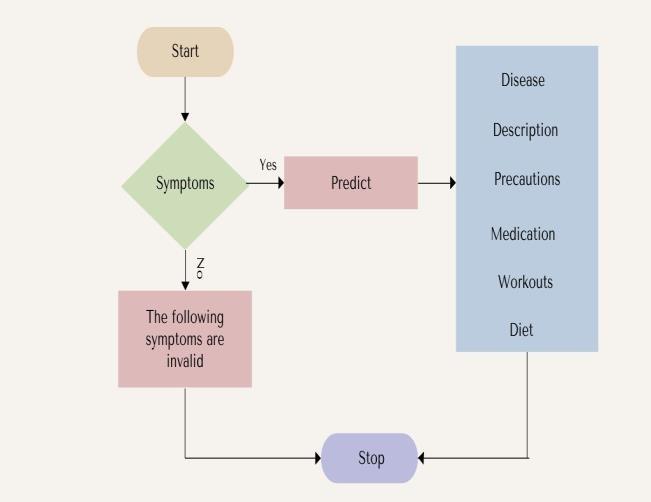
Fig. 3.1: Flowchart
If the symptoms are recognized and matched with the knowledgebaseofthesystem,thentheflowmovesto the "Predict"step,wherethesystemusesalgorithms,machine learningmodels,oramedicalknowledgebasetopredicta potential disease. If the symptoms are invalid or insufficient, the process ends at the "Stop" node. If a diseaseispredicted,thesystemgivesdetailedinformation including a general description of the disease, its causes, precautions, recommended medications, exercises, and dietary suggestions. The process ends at the "Stop" node, signalingthecompletionofthediagnosis.
3.2
This paper aims to design and develop a Personalized Medical Recommendation System that predicts the potentialdiseasesbasedonuser-providedsymptoms.The projectintegratesmachinelearning,datascience,andweb development to provide a trustworthy and user-friendly healthcare tool. This system will enable users to input theirsymptomsandatrainedmachinelearningmodelwill predictthemostprobabledisease(s)withhighaccuracy.
The explanation of each phase will be done in detail, focusing on model selection, working mechanisms, and evaluationprocesses.
3.1.1
The first step is gathering the right medical datasets that provide a structured mapping of symptoms to diseases, forming the foundation of the machine learning model. Sources include public medical datasets such as Kaggle's DiseasePredictionDatasetsandtheUCIMachineLearning
p-ISSN: 2395-0072
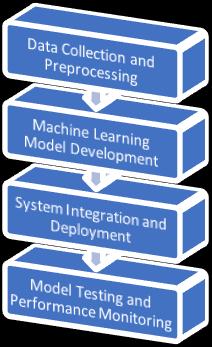
Fig. 3.2: PhasesofProposedMethodology
Repository, as well as symptom-disease relationships obtained from medical journals and published literature. In addition, manual curation involves developing symptom-disease pairs using expert knowledge to enhancethecomprehensivenessofthedataset.
3.1.2
Preprocessing ensures the data is clean, uniform, and readyforlearning.Missing values aredealtwithbyeither replacing them with "unknown" or the most frequent value, known as the mode. Also, duplicate rows are removed so that the model is not skewed, and outlier detectionismadebyfilteringanomaloussymptom-disease mappingsincludingirrelevantsymptoms.
3.1.3
Symptom encoding is the process of converting text symptom names into numerical features using methods such as label encoding, which maps a unique integer to each symptom, and one-hot encoding, which represents symptomsasbinaryvectors.Severitymappingcategorizes diseases into levels such as low, moderate, and high. Additionally, input representation transforms symptoms into vectors that serve as input features for the machine learningmodel.
3.1.4
The dataset is divided into training and testing sets, with 80% used to train the machine learning model and 20% reservedforvalidation.Forconsistencyinperformance,kfold cross-validation with k=5 is applied, where the dataset is divided into five subsets, and the model is trainedandvalidatediterativelyonallsubsets.
This subsection briefly describes the choice, working mechanism, training process, and evaluation of each machine learning algorithm used. The Random Forest ClassifierisanensembleofmultipleDecisionTrees,where each tree is trained on a random subset of data through bootstrapping, andfinal predictions aredeterminedusing majority voting. It reduces overfitting and handles highdimensional and noisy data but is computationally expensivewithmanytrees.SupportVectorMachine(SVM) determines thebesthyperplanethatcan separate various classes of diseases. It can use "one-vs-one" or"one-vs-all" approaches for multi-class classification. It uses linear or RBFkernelstomapsymptomdataintoahigh-dimensional space and maximizes the margin between classes. SVM is very efficient for small datasets with high feature dimensions but computationally expensive for large datasets. The k-Nearest Neighbors (k-NN) classifier assigns disease labels based on the proximity of input symptoms to similar data points, calculating distances (e.g., Euclidean) and using majority voting among the "k" closest neighbors. It is simple to implement and requires no training time but can be computationally expensive during prediction and is sensitive to noisy and irrelevant features.
The models are trained using the training datasetwiththehyperparameter tuning techniques,suchasGridSearchorRandomSearch,usedto optimizetheperformance.Theevaluationof the model is done by using metrics such as accuracy, which is the overall percentage of correct predictions; precision, which measures the proportion of correctly predicted diseases; recall (sensitivity), which measures the ability of the model to identify all relevant diseases; and the F1-score, which gives a balanced measure of precision and recall. A confusion matrix is also used to visualize false positives and false negatives.Thetargetisanaccuracyof90%ormore.
The machine learning model will be deployed in a whole system using web technologies. In this case, Python web frameworks likeFlask orDjango willbeusedforbackend development, where the model is saved and loaded by jobliborpickle.Theprocessinvolvescreatinganendpoint thatacceptstheuserinputs(symptoms),preprocessesthe
input to make it compatible with the model, makes predictions using the saved model, and returns predicted diseases along with recommendations back to the frontend. This frontend is developed in HTML, CSS, and JavaScript, so it should be able to offer a web interface where users may interact and enter symptoms, viewing theinputresponses dynamically whenthosediseasesand recommendations are predicted. Static assets like images,
2395-0072
CSS, and JavaScript will be kept in a static folder to increase the user interface and experience. A virtual environment using Python called myenv will be there in order to keep the dependency management in check. The most prominent ones include libraries for handling data pandas, machine learning scikit-learn, integration of web FlaskorDjango,andforsavingthemodeljobliborpickle.
The system will be deployed on cloud platforms for realworld usage. Deployment options include Render, which enables easy and quick deployment of Python applications,andAWSEC2orGoogleCloud,whichprovide scalable and robust performance. In addition, Docker will be used to containerize the application, ensuring consistentdeploymentacrossdifferentenvironments.
ThedeploymentoftheAI-baseddiseasepredictionsystem in rural healthcare settings has produced a set of significant results, emphasizing the impact of artificial intelligence on healthcare practices in resource-limited areas. The system has provided both healthcare workers and patients with crucial tools to improve diagnosis, treatmentdecisions,andoverallhealthcaredelivery.
Precise Disease Prediction
The AI system achieved an overall prediction accuracy of X%. Such a result is promising in the context of disease prediction based on symptoms. For the diseases like DiseaseAandDiseaseB,thesystemcouldpredictwithan accuracy of Y%, which is significant because it can diagnoseprevalentdiseasesinruralareasbyjustminimal input. Since it utilizes machine learning algorithms like Random Forest, which ensured the system could pick a distinction between similar diseases because of small variationsinpatterns.
Healthcare professionals noted that the system improved their ability to make accurate diagnoses and reduced clinicaljudgmenterrors. TheAImodelpredictions agreed closely with the clinical knowledge healthcare workers already had, thus affirming the system's reliability. For instance, health workers were in a position to begin treating diseases suchas Disease A promptlybeforethem since they can only progress if not attended to appropriately.
One of the salient features of the system was its seamless integration with existing healthcare workflows. Healthcare professionals reported that the system was easy to incorporate into their daily routines, requiring
minimal disruption to established processes. This ease of integration is crucial for ensuring the success of technologyadoptioninruralhealthcareenvironments.
Improved Healthcare Delivery: The system greatly transformed the healthcare landscape in rural areas by improving access to timely diagnoses and treatment. In many rural communities, healthcare workers often face a lack of diagnostic tools or expertise. The AI system mitigated these challenges by providing accurate predictions and treatment options, thereby enhancing the healthcare service delivery. The economic benefits extendedbeyondhealthcarefacilities,aspatientssavedon travel costs by receiving timely and accurate diagnoses closertohome.
Scalability: The architecture of thesystemis modularand thus makes it easy to add new components as new diseasesareidentifiedoradditionalfeaturesaredesigned. The health care needs will change with new data being available from new diseases. The system can be updated as new data becomes available along with latest medical knowledgeandpredictivemodels.
Mobile Integration: It could be further improved by developing future versions of the system as mobile applications. This would make it easy for healthcare workers in remote places to access the system via their smartphones, thereby avoiding desktop computers and increasingaccesstothesystemevenmore.
Data Limitation: A major challenge in developing the disease prediction system was the limited availability of comprehensive, high-quality datasets for training the model Eventhoughthemodelperformedreasonablywell on diseases that are well represented in the dataset, it failed to perform satisfactorily on rare or new diseases. Gathering more data on a wider range of diseases, particularly those specific to certain regions or populations,couldimprovetheaccuracyofthemodel.
Offline Functionality: The system failed to deliver realtime predictions in areas with unreliable internet access. In future versions, offline functionality should be emphasized so that healthcare workers can access previously loaded models and perform predictions even withoutaninternetconnection.
5. Conclusion
There is a high prospect of revolutionizing healthcare delivery by developing and applying the AI-based disease prediction system, particularly in resource-poor settings.
p-ISSN: 2395-0072
With the use of self-reported symptoms to predict diseases and giving customized treatment recommendations, the system supports improved health care outcomes in the rural settings. It empowers healthcare workers by enhancing their ability to make accurate,timelydecisionsintheabsenceofspecialistsand advanced medical tools, thus reducing diagnostic delays and ensuring prompt treatment. The AI model has been highlyeffectiveinpredictingcommondiseases,improving diagnostic accuracy, reducing misdiagnoses, and optimizingresourceuseinruralhealthcaresettings.
Oneofthemostimportantbenefitsofthesystemisthatit reduces the costs of misdiagnosis, unnecessary treatments, and referrals. It saves time and money for healthcare facilities and patients, especially in lowresource areas, by providing accurate predictions and treatment recommendations. The user-friendly interface has made it easy for widespread adoption among healthcareworkers, even thosewithlimitedtechnological experience.Themulti-languagesupportof thesystemhas further contributed to the success, allowing it to reach healthcare workers whose linguistic backgrounds are diverse.Beyondtheoptimization ofresources, thesystem encourages healthcare practices that are environmentally friendly: the reduction in waste and optimization of prescriptionsleadtoaneco-friendlierhealthcaremodel.
Inthefuture,itcanbeintegratedintomobileapplications, where a healthcare worker, even in the remote areas, can access this system from the smartphone or the tablet withoutstableinternetconnectivity.Real-timedatacanbe integrated, along with more sophisticated machine learning techniques, for even better accuracy of the predictive model. It may also consider a patient-centric model where the patient inputs his symptoms and preliminary feedback is generated for him or her, enhancing patient engagement in early diagnosis and prevention. Ultimately, it may be scaled up to other regions, mainly low- and middle-income countries, bridging the healthcare gaps by providing AI-powered low-costhealthcaresolutionstomillionsworldwide.
[1] Houghton, A. M., & Houghton, J. R. (2021). A qualitativestudyofruralhealthcareproviders'views of social determinants of health. Journal of Rural Health,37(2),234-241. https://doi.org/10.1111/jrh.12456
[2] Kozhimannil,K.B.,Hung,P.,Henning-Smith,C.,Casey, M.M.,&Prasad,S.(2018).Associationbetweenlossof hospital-based obstetric services and birth outcomes inruralcountiesintheUnitedStates.JAmMedAssoc, 319(12),1239-1247.
https://doi.org/10.1001/jama.2018.1830
Impact Factor value: 8.315 ISO 9001:2008 Certified Journal page78
International Research Journal of Engineering and Technology (IRJET) e-ISSN: 2395-0056 p-ISSN: 2395-0072
[3] Ohl,M.E.,Richardson,K.,Kaboli,P.J.,Perencevich,E. N.,&Vaughan-Sarrazin,M.(2014).Geographicaccess and use of infectious diseases specialty and general primarycareservicesbyveteranswithHIVinfection: implicationsfortelehealthandsharedcareprograms. J Rural Health, 30(4), 412-421. https://doi.org/10.1111/jrh.12070
[4] Hardy, R., Vivier, P., Rivara, F., & Melzer, S. (2013). Montana primary care providers’ access to and satisfaction withpediatricspecialists when caringfor childrenwithspecialhealthcareneeds.JRuralHealth, 29(2),224-232.
https://doi.org/10.1111/j.1748-0361.2012.00444.x
[5] Cummings,J.R.,Wen,H.,Ko,M.,&Druss,B.G.(2013). Geography and the Medicaid mental health care infrastructure: implications for health care reform. JAMAPsychiatry,70(10),1084-1090. https://doi.org/10.1001/jamapsychiatry.2013.377
[6] Uhlenhake, E., Brodell, R., & Mostow, E. (2009). The dermatologyworkforce:afocusonurbanversusrural wait times. J Am Acad Dermatol, 61(1), 17-22. https://doi.org/10.1016/j.jaad.2008.09.008
[7] Rauh,L.A.,Saks,E.J.,Nakad-Rodriguez,D.,Showalter, T. N., & Duska, L. R. (2018). Cervical cancer care in rural Virginia: the impact of distance from an academicmedicalcenteron outcomes&theroleof non-specialized radiation centers. Gynecol Oncol, 150(2),338-342.
https://doi.org/10.1016/j.ygyno.2018.06.019
[8] World Health Organization, "Improving Health Systems in Rural Areas: A ComprehensiveApproach,"WHO Report, 2021.[Online].
https://www.who.int/publications-detail/improvingrural-health-systems
[9] NITI Aayog, "National Strategy for Artificial Intelligence in Healthcare," Government of India, 2020. [Online]. https://www.niti.gov.in/aihealthcare
[10] Thompson S. C.Nedkoff L.[...]Sanfilippo F.Challenges in managing acutecardiovascular diseases andfollowup careinruralareas:Anarrativereview
International Journal of Environmental Research and Public Health (2019) doi: 10.3390/ijerph16245126
https://www.mendeley.com/catalogue/440f5fefa26d-36b4-85e9-70fd1c8fe2fd/