
International Research Journal of Engineering and Technology (IRJET) e-ISSN: 2395-0056
Volume: 13 Issue: 04 | Apr 2026 www.irjet.net p-ISSN: 2395-0072

International Research Journal of Engineering and Technology (IRJET) e-ISSN: 2395-0056
Volume: 13 Issue: 04 | Apr 2026 www.irjet.net p-ISSN: 2395-0072
Shekhar Sinha1 , Akhand Pratap Singh2 ,M.Tech. Scholar1 , Assistant Professor2
Department of Civil Engineering
Shri Rawatpura Sarkar University,
Raipur Chhattisgarh
Abstract - In today's world, where cities are growing quickly and infrastructure is expanding, road networks are very important for connecting cities, suburbs, and rural areas. This helps the economy grow and people move around. But the rising costs of traditional road building materials and growing environmental concerns have become big problems for the pavement industry. To solve these problems, we need to use more sustainable and cost-effective materials that don't hurt the structural performance or service life of pavements.
India has one of the largest road networks in the world, but it also has a lot of problems with managing the rapidly growing amount of solid waste, such as plastic waste, old tires, and used oils. The use of waste materials in bituminous mixes has become very popular in recent years as a way to be more environmentally friendly and follow the rules of a circular economy. Prior research has shown that waste materials, including polyethylene (LDPE, HDPE), polyethylene terephthalate (PET), crumb rubber, industrial by-products, and waste engine oil, can be effectively employed as modifiers in bituminous mixtures. Adding these materials has been shown to improve important performance factors for flexible pavements, such as Marshall Stability, resistance to rutting, moisture susceptibility, and overall durability. Research also shows that a controlled amount of waste materials (up to about 25–30%) can be used without harming the mix's engineering properties.
In the current sustainability-driven environment, especially in developing areas and rural infrastructure projects, using wastemodified bituminous mixes has many benefits, such as lower costs, better pavement performance, less waste going to landfills, and a smaller carbon footprint. So, using waste materials to build flexible pavement is a promising and environmentally friendly way to build transport infrastructure in the future
Keywords: Flexible pavement, Waste Plastic, Crumb Rubber Modified Bitumen (CRMB), Waste Engine Oil, Sustainable Road Construction.
1. Introduction
The present state of affairs shows that people keep increasing their numbers while they use plastic polymers and cars which lead to intensified pollution problems from waste polymer accumulation. The public faces multiple challenges in their daily activities because waste polymers require decomposition. The existing waste materials need immediate disposal because their non-decomposition will cause them to remain in nature for centuries which will worsen environmentalpollution.Thematerialscanbeeffectivelydecomposedthroughrecyclingorrepurposingwasteintouseful applications. Scientists have developed new ways to handle waste materials through their recent research work. Private companiesandhighwayagencieshavesuccessfullycompletedresearchprojectsthatestablishedsustainablemethodsfor using waste polymers in road construction work to enhance project performance. The studies focus on two main objectives,whichincludeestablishingsecurewastedisposalmethodsthatwillcreateeconomicvalueanddevelopingcosteffective road construction solutions. The research shows that waste materials can replace conventional construction materialsinmostapplications.Theresearchfocusesondevelopingnewwastematerial managementsolutionsthroughits workoninnovativewastematerialrecyclingtechnologies.
2. Literature Review
Vashisht and Saini (2017) utilized waste plastic and CRMB in the flexible pavement. In this study, the wet and dry process was adopted for preparing the modified bitumen. Samples were prepared according to the ministry of road transportandhighway(MORT&H)specification.Inthewetprocess,firstbitumenwasheatedatthetemperatureof160°C andtemperaturewasrecordedatthetimeofsofteningofmaterial.Later,wastematerialwasaddedinthemixforavoiding agglomerationinthematerial.Inthis%ofmodifiedagentvaryfrom1%to16%.Inthedryprocess,itwasonlydonewith plasticwastebycuttingitintosmallsizeofaround3mm-6mmandmixedwiththeaggregateatthetemperatureof165°C. Ontheotherhand,bitumenwasheatedatatemperatureof160°Cforhavinggoodbindingstrength.Afterthatsamplewas
International Research Journal of Engineering and Technology (IRJET) e-ISSN: 2395-0056
Volume: 13 Issue: 04 | Apr 2026 www.irjet.net p-ISSN: 2395-0072
madewith8%ofplasticwasteand16%ofplasticwaste.Inthepresentstudy,CRMBwasnotutilizedinordertomakethe samplebecauseofthepoorbondingquality(i.e.b/wCRMBandaggregates).
Aspertheresult,impactvaluewasfoundtobeincreasedupto10%duetotheadditionofplasticwaste(i.e.workedasa coating material for aggregate). The specific gravity of plain and modified aggregates was found to be same while penetrationvalueandductilityvalueofmodifiedbitumenwaslowerthantheconventionalone.
Kawade et al. (2018) investigated a study on design and qualitative analysis of flexible pavement containing waste materials.Thewastematerialsutilizedinthisstudyasthereplacementofnaturalaggregateswerenamelycrushedstone, steelslag,recycledconcreteandCRMB(bycuttingwasterubbertiresinpiecesthatcouldpassthrough2.36mmsieveand were retainedon1.18 mmsieve.Marshall Stabilitytest wasperformedfor eachtypeof mixescontainingdifferent waste materialasthereplacementofaggregatesandVG-30bitumenmix.Inthecaseofsteelslag,theimpactvalueandcrushing value was found to be around 9.33% and 15.42% respectively which is appropriate for highways construction as per to Indian road congress (IRC). While impact value and crushing value of recycled concrete aggregate was 24.69% and 31.47%respectivelywhicharenotaspertheIRC’sspecifications?MarshallStabilityandtheflowvalueofmixcontaining steelslagwerefoundtobe990.6kgand2.1mmrespectively,whichsatisfiestheIRC'sguidelines.
Sharma et al. (2018) examined the performance of bituminous paving mix containing waste plastic. The material used was crushed basalt type of course aggregate 20 mm, crushed basalt type of fine aggregate 2.36 and down,80/100 penetrationgradebitumen,basaltstonedust,andcementasamineralfiller.Whilethewasteplasticsnamelypolyethylene terephthalate (PET), polypropylene (PP), polystyrene (PS), polyvinyl chloride (PVC), low-density polyethylene (LDPE), high-densitypolyethylene(HDPE)wasusedintheshreddedform.MarshallStabilitytestwascarriedoutwithvarying%of plastic waste in order to check the stability of the mix. Later, a comparison b/w the results of BC (Bituminous concrete) mix with waste plastic and plain BC mix was made. Consequently, the stability value of optimum plastic content OPC (optimum plastic content) was found to be 30.1, which was much higher than the optimum bitumen content OBC (optimum bitumen content). The volume of voids in BC mix containing plastic waste was found lower than the plain BC mix.TheseresultswerewithintheparametersofMORT&H-2001specifications.
The test concluded that the OPC mix showed higher stability as compared to OBC mix and intermolecular binding b/w bitumenandwasteplasticenhancesthestrength,durability,andlifeofroads.
Sarma and Srikanth (2018) utilised waste polythene in the bituminous paving mix design. The materials used in the study were bitumen, aggregate and waste plastic. Marshall Stability test was performed and carried out in two parts to determine optimum bitumen content (OBC) and optimum plastic content (OPC). Different samples were made with different ratio of bitumen, aggregates, and plastic. After that test was conducted at the temperature of 60°c to check the OBC which was found to be 5.8%. Later, disposed milk packets were used to determine OPC. The specific gravity and softening point were taken from the report of milk packets manufacturer and report specified the specific gravity and softening point value around 0.92 and 115°C respectively. So according to the result, the value for plastic content corresponding to maximum stability was equal to 10%. The value of binder content corresponding to maximum bulk specificgravitywasfoundtobeequalto7.5%.Averageoftheabovevaluescameouttobe8.75%.
The resultsfromtheteststatedthat,theOBC was5.8%andthe OPC wasconcludedto be8.75%. Thus,it wasconcluded that addition of plastic waste material content in bitumen increases the stability as comparison to conventional bituminousmix.
Anand & Raju (2024) conducted a study on the utilization of waste plastic in bituminous concrete mix for road construction. They examined the mechanical properties of bituminous mix modified with two different plastic wastes (thicknessmorethan40micronsandlessthan40microns)usingthedryprocess. Thestudyevaluatedparameterssuchas MarshallStability,Flow,IndirectTensileStrength(ITS),andRetainedStability. Theirfindingsrevealedthatwasteplasticmodified bituminous mixes performed better than conventional mixes, exhibiting improved abrasion value, crushing strength, impact value, and water absorption resistance The research also emphasized the economic and environmental benefits of utilizing locally available aggregates and reducing plastic waste through road construction. The study concludedthatreplacingbasebitumenwithwasteplastic is botheconomicalandenvironmentallyfriendly.
Garg & Duggal (2024) investigated the use of waste plastic in bituminous mixes to enhance pavement durability and resistance to moisture damage. The study highlights that while waste plastic improves anti-stripping properties; its widespread adoption faces challenges such as financial constraints, technological limitations in hot mix plants, and inconsistent supply of high-quality waste plastic. They identified key obstacles, including high initial costs, lack of
International Research Journal of Engineering and Technology (IRJET) e-ISSN: 2395-0056
Volume: 13 Issue: 04 | Apr 2026 www.irjet.net p-ISSN: 2395-0072
awareness, and difficulties in integrating plastic into current production processes. The authors emphasized that overcoming these barriers requires supportive regulations, technological advancements, and improved supply chain mechanismstofacilitatebroaderuseofwasteplasticinroadconstruction.
Chaturvedi et al. (2025) conductedalaboratoryinvestigationonthemodificationofbituminousmixdesignusingplastic wasteandcrumbrubber.ThestudyaimedtoevaluatethemechanicalpropertiesofStoneMasticAsphalt(SMA)mixes by incorporating plastic waste (PET bottles) and crumb rubber as modifiers. The experimental analysis included Marshall Stability,flowvalue,voidsinmineralaggregates(VMA),andindirecttensilestrength(ITS).Theresultsindicatedthat the optimum plastic waste content was 6.3%, which provided higher stability, improved fatigue life, and enhanced rutting resistance compared to conventional bituminous mixes. The study concluded that modifying SMA with plastic waste and rubbercanenhancepavementdurabilitywhilepromotingsustainableroadconstructionpractices.
2.1 Research Objectives
TheprocessreducesbitumenconsumptionthroughpartialreplacementwithwastematerialssuchaswasteLDPE andHDPEandCRMBandmotoroilandsteelslag.
The pavement construction process uses waste material to build environmentally sustainable structures which achievecostsavingswhilemaintainingessentialconstructionrequirements.
Theprocessdecreasesgreenhousegasemissionswhileithelpstopreserveavailablespaceinlandfills.
3. Methodology
International Research Journal of Engineering and Technology (IRJET) e-ISSN: 2395-0056
Volume: 13 Issue: 04 | Apr 2026 www.irjet.net p-ISSN: 2395-0072


Problem Identification
Material Collection
Prepare Design Mix & Suitable Testing

Result Analysis

Appropriate or Not
Design for Bituminous Mix If No If Yes

International Research Journal of Engineering and Technology (IRJET) e-ISSN: 2395-0056
Volume: 13 Issue: 04 | Apr 2026 www.irjet.net p-ISSN: 2395-0072
3.1 Selection of Material
The study used VG10 and 80/100 penetration grade bitumen together with multiple waste materials for testing purposes. The research team created different samples which contained different material combinations. The researchers chose waste materials according to their chemical properties which the next subsection of this chapter describesindetail.
3.1 Chemical Composition
3.2 Chemical Composition of
(CHEMIK 2013, 67, 5, 435?445)
International Research Journal of Engineering and Technology (IRJET) e-ISSN: 2395-0056
Volume: 13 Issue: 04 | Apr 2026 www.irjet.net p-ISSN: 2395-0072
Table 3.3 Chemical Composition of Waste Engine Oil (Ikhajiagbe, et.al P.,2024)
Table 3.4 Physical Composition of CRMB (Behnia, A et.al ., 2017.)
Table 3.5 Chemical Composition of CRMB (Donga et.al., 2016.)
International Research Journal of Engineering and Technology (IRJET) e-ISSN: 2395-0056
Volume: 13 Issue: 04 | Apr 2026 www.irjet.net p-ISSN: 2395-0072
India produces large quantities of waste according to multiple research studies and various reports which show that manyofthesewastematerialscanbereusedforbuildingroads.TheFICCIreportstatesthatIndiagenerates3.5million tonnesofplasticwasteeveryyearwhichprimarilycomesfromhouseholdwasteincludingplasticbagsandbottlesand packaging materials. The waste stream mainly consists of single-use plastics which require recycling for their decomposition. The plastic waste from these products creates major environmental pollution which harms both terrestrial and aquatic ecosystems. The development of new methods which enable their application as road constructionmaterialshasproducedsuccessfuloutcomes.TheNationalRuralRoadDevelopmentAgencyreportedthat in2016,7,600kmofroadswerebuiltusingwasteplastic,demonstratingthefeasibilityofthismethod.Indiaisamong thetopcountriesthatproducewastetyresinlargequantities.LalatenduMishraconductedresearchwhichfound that worldwide about 1.5 billion tyres get produced each year while an identical number of tyres get disposed. India produces 6 to 7 percent of the global waste tyre generation according to current estimates. The recycling rate for discarded tyres remains low at 8 to 10 percent after three decades of recycling attempts while 10 to 12 percent of discarded tyres undergo incineration to produce fuel. More than 70 percent of the waste ends up in unlicensed dumping sites and landfills which create major dangers to the environment. Road construction projects benefit from using waste tyres because they solve landfill space problems while offering a green waste disposal method. Waste engineoilfromvehiclescombineswithplasticandrubberwastetocreateamajor environmentalproblemthroughout thenation.TheoilrecyclingfactoriesinIndiacanhandleonlyhalfofthewasteoilthatfactoriesgenerateaccordingto their current recycling capacity. The 45 to 50 percent of oil which remains after processing gets thrown away which creates environmental damage. Researchers found that using processed waste oil together with bituminous mixtures results in better road performance and lower construction expenses. The method creates a waste oil management solutionthatisbothsustainableandcost-effective.Indiacandecreaselandfillwasteandpollutionwhilebuildingroads throughtheuseofplasticandtyreandwasteoilmaterials.India still producessubstantial wastematerialswhichcan beusedforroadconstructionaccordingtorecentresearchandreporting.
a) DryProcess
b) WetProcess
Dry Process: The dry process starts with the heating of aggregates to specific temperatures which leads to the application of shredded materials or waste liquids into the hot aggregate chamber. This application creates a shiny surface which protects the aggregates from bitumen application. The construction of roads uses this process as its primarymethod.
International Research Journal of Engineering and Technology (IRJET) e-ISSN: 2395-0056
Volume: 13 Issue: 04 | Apr 2026 www.irjet.net p-ISSN: 2395-0072

Aggregate
Heating up Aggregates at Particular Temperature
Addition of Waste Material in Hot Aggregates Chamber
Addition of Hot Bitumen at 160°C Temp
Wet Process: Inthisbitumenheatingmethod,thehotbitumen(160°C)iskeptreadyandpiecesofwasteareblended withbitumen.Themixturethusobtainedisthenspreadontheuppersurfaceoftheroad,butfortheearnestprocessof roadwork,thewidelybelievedmethodiscompactingwithfilms.
International Research Journal of Engineering and Technology (IRJET) e-ISSN: 2395-0056
Volume: 13 Issue: 04 | Apr 2026 www.irjet.net p-ISSN: 2395-0072
3.4Test Conducted on Bitumen with Different Waste by Using Wet Process
1. Penetration Test (IS 1203:1978):- The penetrometer device performs bitumen penetration assessment through its testing process. The testing process needs to follow the established standards of IS 1203. The penetration test determines how soft or hard the bituminous mix material exists. Bitumen comes in different gradeswhicheachpossesstheirparticularpenetrationmeasurement.Thepenetrationtestestablishesthatthe 80/100 penetration grade should produce results between 80 and 100. The penetration test requires specific testing parameters which include load and duration and temperature settings because the results show measurementsinmillimeters(mm).
2. Ductility Test (IS 1208:1978):- The ductility test measures the bitumen's capacity to maintain its structural integrity. The testing process evaluates how far bitumen material can stretch before breaking. Road constructionneedsductilityasitsfundamentalmaterialproperty.Bitumenstretchingcapacityreductionleads to road cracks because it weakens the strength of bituminous materials. The sample undergoes testing under particular speed and temperature conditions which produce ductility test results shown in centimeters. The ductilitytestfollowsthetestingstandardsestablishedbyIS1208
International Research Journal of Engineering and Technology (IRJET) e-ISSN: 2395-0056
Volume: 13 Issue: 04 | Apr 2026 www.irjet.net p-ISSN: 2395-0072
3. Softening Point Test (IS 1205:1978)- Thesofteningpointtestdeterminesthetemperatureatwhichbitumen material becomes soft. The process requires full compliance with IS 1205 standards. The softening point test usestheringandballapparatustoconductitsassessment.Thesamplereachesitssofteningpointwhenitfails tosupporttheball'sweightandtouchesthesteelplate.
4. Specific Gravity Test (IS 1202:1978) - The specific gravity test of bitumen measures the specific gravity whichcomparesthemassofbituminousmaterialatspecificvolumewithspecifictemperaturetowatervolume at the same temperature. The process requires implementation through density bottle usage according to IS 1202standards.
Thecreatedsamplesincludedengineoilatconcentrationsof0%,2%,4%,6%,8%and10%CRMBpowderat0%,2%, 5%,8%and10%concentrationsandLDPEwasteat0%,2%,5%,7%and9%concentrations.ThetestingusedVG10 and80/100bitumengradetogetherwithHDPEwasteandsamplesthatcontained2%LDPEcombinedwith3%HDPE and4%engineoiland3%HDPEcombinedwith4%engineoiland5%CRMBpowderand4%engineoilcombinedwith 5%CRMBpowderand2%LDPEand5%CRMBpowdercombinedwith2%LDPEand3%HDPE.
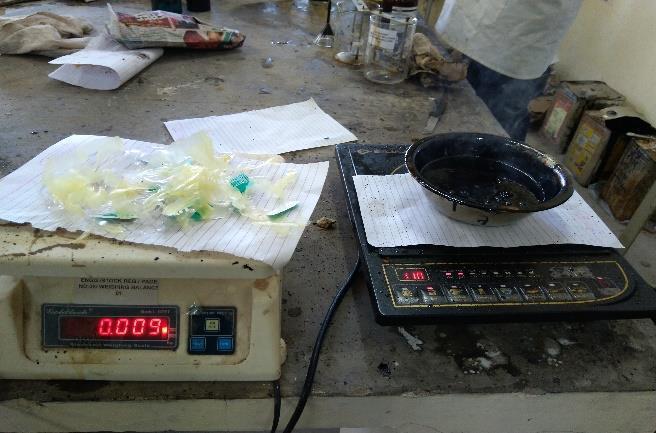
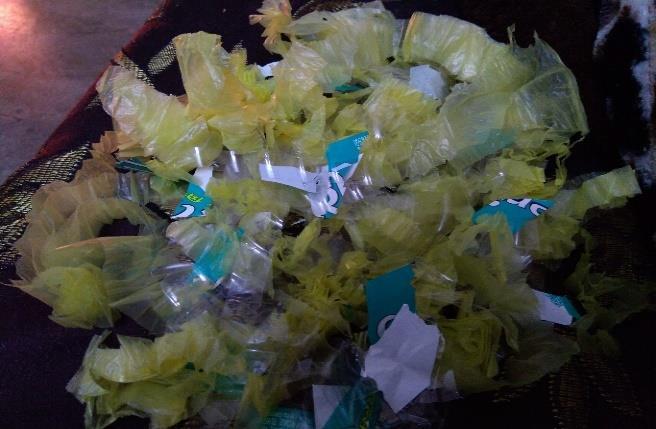
3.6
The researchers conducted multiple experiments through the application of a wet method. The scientists used a hot plate to raise bitumen temperature until it reached its melting point. The material was heated on the induction plate until it reached a temperature of 160°C which took several minutes to achieve. The boiling point of bitumen was reachedsotheteamintroducedshreddedwastematerialandstirredforthirtyminutes.Theresearchersusedbitumen to create a separate mold after completing all mixing processes for their testing purposes. The mold underwent a cooling process for thirty minutes before the researchers transferred it to a water bath chamber which maintained a temperature of 25°C for one hour. The researchers conducted multiple tests on the sample after one hour which includedtestingforbitumenpenetrationandspecificgravityandsofteningpointandductility.
4. Result Analysis
4.1 Testing of Bitumen with Waste LDPE
Penetration Test Result of Bituminous Mix with Waste LDPE
PenetrationtestcarriedoutbyfollowingproperguidelineofIScodeIS1203withdifferentsampleofbitumenwith0%, 3%,6%,and9%LDPE.
International Research Journal of Engineering and
Volume: 13 Issue: 04 | Apr 2026 www.irjet.net
Table 4.1 Penetration Test Result of Bitumen with Waste LDPE
Compositions
-0056
-ISSN: 2395-0072
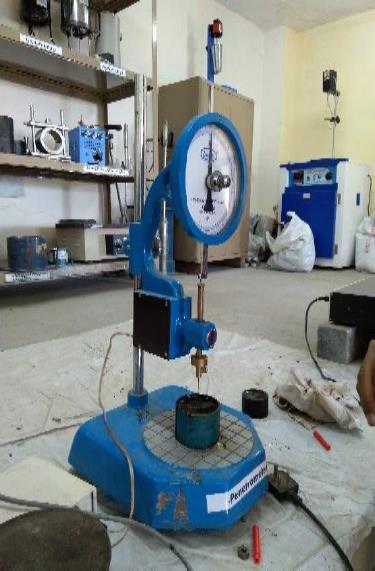
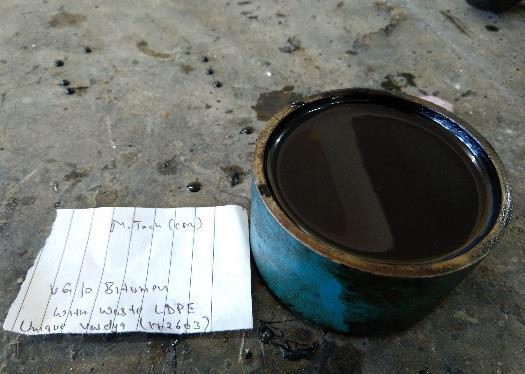
4.2 Testing of Bitumen with Mixed Composition of Waste HDPE, LDPE, Engine Oil and CRMB Powder
4.2.1 Penetration test result of bitumen with waste HDPE, LDPE, Engine oil and CRMB powder.
Penetration test carried out by following proper guideline of IS code IS 1203 by making different sample of bitumen by making four samples mixed composition of different waste content with VG10 bitumen. Samples were made with 2% LDPE+3%HDPE+4%Engineoil,3%HDPE+4%Engineoil+5%CRMBpowder,4%Engineoil+5%CRMBpowder+2% LDPEand5%CRMBpowder+2%LDPE+3%HDPE.
Table 4.21 Penetration Test Result of Bitumen with Waste HDPE, LDPE, Engine Oil and CRMB Powder
with Different Compositions
2%LDPE+3%HDPE+4%EngineOil
3%HDPE+4%EngineOil+5%CRMBPowder
4%EngineOil+5%CRMBPowder+2%LDPE
5%CRMBPowder+2%LDPE+3%HDPE
International Research Journal of Engineering and Technology (IRJET) e-ISSN: 2395-0056
Volume: 13 Issue: 04 | Apr 2026 www.irjet.net p-ISSN: 2395-0072
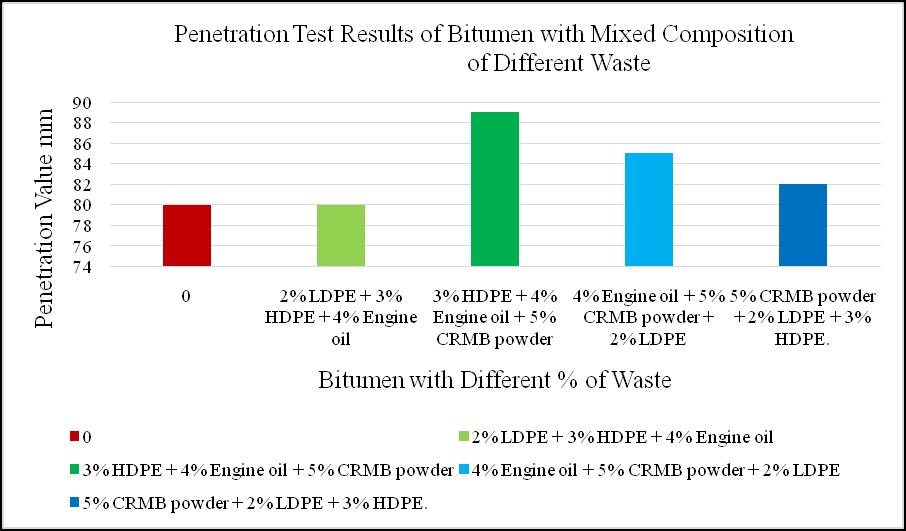
Figure 4.25:- Penetration Test Results Graph of Bitumen with Mixed Composition of Different Waste
ThePenetrationtestwhichwasconductedbyusingpenetrometershowsthat,sampleshaving3%HDPE+4%Engineoil+ 5%CRMBpowderishavingmaximumpenetrationvalue.
4.6.2 Softening Point Test Result of Bitumen with Waste HDPE, LDPE, Engine Oil and CRMB Powder
Softening pointtest wasconductedwithdifferent sampleswithmixedcompositionof different wastecontent with VG10 bitumen.Samplesweremadewith2%LDPE+3%HDPE+4%Engineoil,3%HDPE+4%Engineoil+5%CRMBpowder, 4%Engineoil+5%CRMBpowder+2%LDPEand5%CRMBpowder+2%LDPE+3%HDPE
Table 4.22 Softening Point Test Result of Bitumen with Waste HDPE, LDPE, Engine Oil and CRMB Powder. Sample with Different Compositions
2%LDPE+3%HDPE+4%EngineOil
3%HDPE+4%EngineOil+5%CRMBPowder
4%EngineOil+5%CRMBPowder+2%LDPE
5%CRMBPowder+2%LDPE+3%
International Research Journal of Engineering and Technology (IRJET) e-ISSN: 2395-0056
Volume: 13 Issue: 04 | Apr 2026 www.irjet.net p-ISSN: 2395-0072
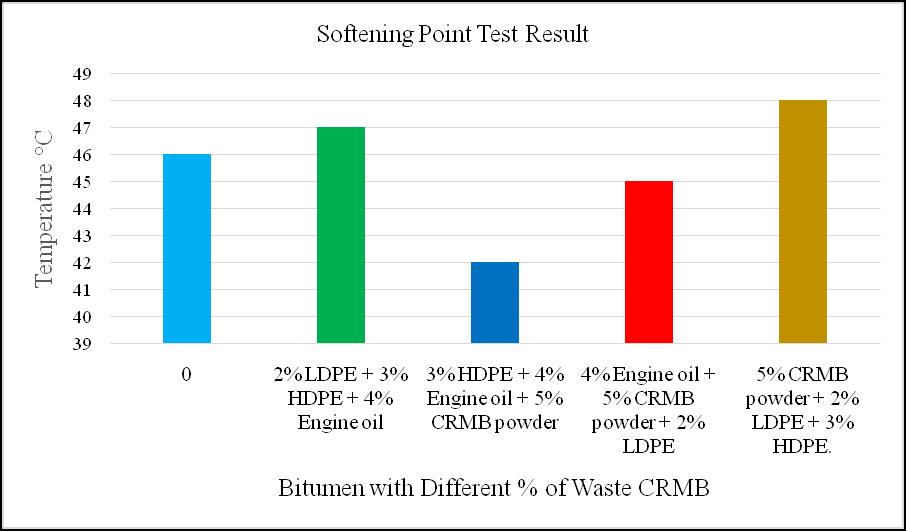
Figure:-4.26 Softening Point Test Result Graph
Insofteningpointtestresult,thetestwasconductedwithfourdifferentsamplemadewithdifferentcompositionandOn thebasisofresult,samplehaving5%CRMBpowder+2%LDPE+3%HDPEshoesmaximumsofteningpointvalue.
4.6.3 Ductility Test Result of Bitumen with Waste HDPE, LDPE, Engine Oil and CRMB Powder
DuctilitytestwasdonewithproperguidelineofIS1208,bymakingdifferentsampleswithmixedcompositionofdifferent wastecontentwithVG10bitumen.Samplesweremadewith2%LDPE+3%HDPE+4%Engineoil,3%HDPE+4%Engine oil+5%CRMBpowder,4%Engineoil+5%CRMBpowder+2%LDPEand5%CRMBpowder+2%LDPE+3%HDPE.
Table 4.23 Ductility Test Result of Bitumen with Waste HDPE, LDPE, Engine Oil and CRMB Powder
with Different Compositions
2%LDPE+3%HDPE+4%EngineOil
3%HDPE+4%EngineOil+5%CRMBPowder
4%EngineOil+5%CRMBPowder+2%LDPE
5%CRMBPowder+2%LDPE+3%HDPE
International Research Journal of Engineering and Technology (IRJET) e-ISSN: 2395-0056
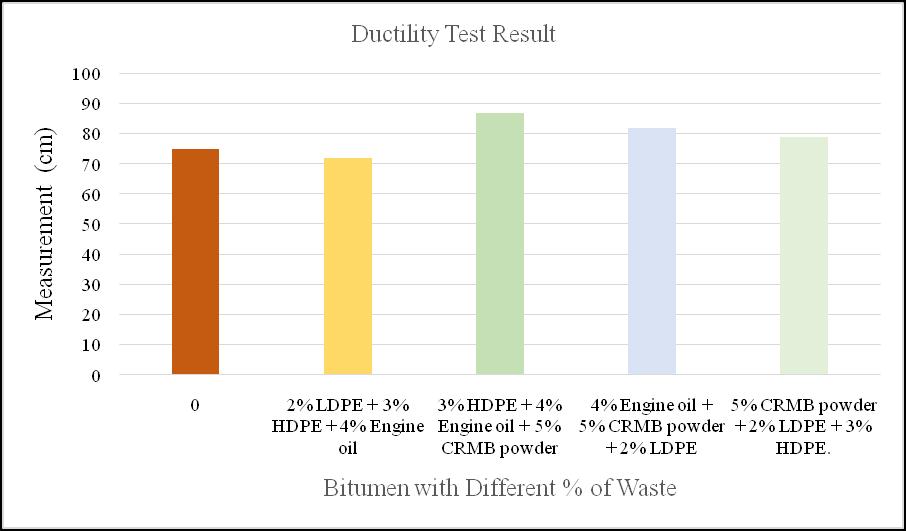
Figure 4.27:- Ductility Test Graph of Bitumen with Mixed Composition
Inductilitytestresult,thetestwasconductedwithfourdifferentsamplemadewithdifferentcompositionandOnthebasis ofresult,samplehaving3%HDPE+4%Engineoil+5%CRMBpowdershoesmaximumductilityvalue.
4.6.4 Specific Gravity Test Result of Bitumen with Waste HDPE, LDPE, Engine Oil and CRMB Powder.
Specific gravity test result was conducted by two different specific gravity bottles of different size for different samples withmixedcompositionofdifferentwastecontentwithVG10bitumen.Samplesweremadewith2%LDPE+3%HDPE+ 4% Engine oil, 3% HDPE + 4% Engine oil + 5% CRMB powder, 4% Engine oil + 5% CRMB powder + 2% LDPE and 5% CRMBpowder+2%LDPE+3%HDPE.
Table 4.24 Specific Gravity Test Result of Bitumen with Waste HDPE, LDPE, Engine Oil and CRMB Powder
Sample with Engine Oil Waste
Volume: 13 Issue: 04 | Apr 2026 www.irjet.net p-ISSN: 2395-0072 © 2026, IRJET | Impact Factor value: 8.315 | ISO 9001:2008 Certified Journal | Page44
2%LDPE+3%
+4%
3%HDPE+4% EngineOil+5%
4%EngineOil+5%
Powder+2% LDPE
5%CRMBPowder+ 2%LDPE+3%
International Research Journal of Engineering and Technology (IRJET) e-ISSN: 2395-0056
Volume: 13 Issue: 04 | Apr 2026 www.irjet.net p-ISSN: 2395-0072
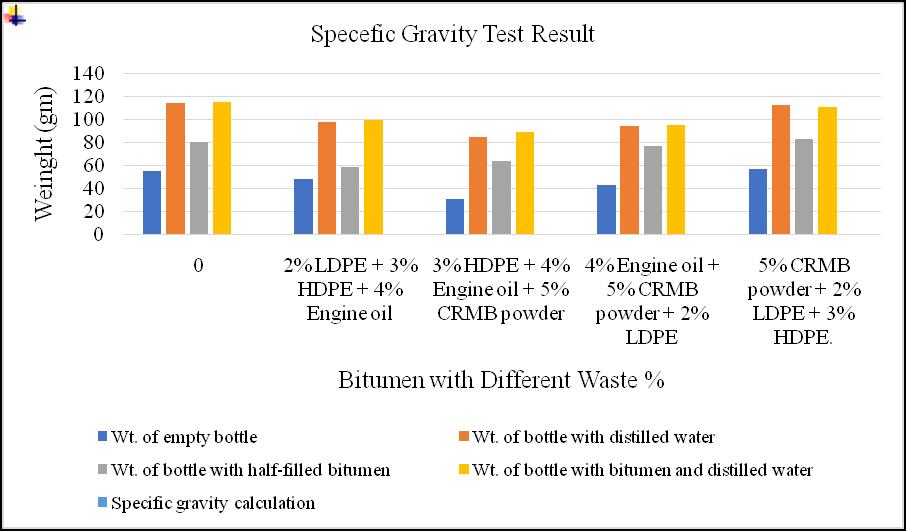
Figure 4.28:- Specific Gravity Test Graph of Bitumen with Mixed Composition
In specific gravity test, test was conducted with different size of bottles and different samples of modified bitumen and resultofallsampleswerealmostsame.
4.6.5 Marshall Stability Test Result of Bitumen with Waste HDPE, LDPE, Engine Oil and CRMB Powder.
MarshallStabilitytestresultwasconductedbymakingsampleofbitumenwithdifferentsampleswithmixedcomposition ofdifferentwastecontentwithVG10bitumen.Samplesweremadewith2%LDPE+3%HDPE+4%Engineoil,3%HDPE+ 4%Engineoil+5%CRMBpowder,4%Engineoil+5%CRMBpowder+2%LDPEand5%CRMBpowder+2%LDPE+3% HDPE.
Table 4.25 Marshall Stability Test Result of Bitumen with Waste HDPE, LDPE, Engine Oil and CRMB Powder
Bitumen Content in %
Stability of Convention al mix 0% (KN)
Stability of mix having 2 % LDPE + 3 % HDPE + 4% Engine Oil
Stability of mix having 3 % HDPE + 4% Engine Oil + 5 % CRMB Powder
Stability of mix having 4% Engine Oil + 5 % CRMB Powder + 2 % LDPE
Stability of mix having 5 % CRMB Powder + 2 % LDPE + 3 % HDPE
International Research Journal of Engineering and Technology (IRJET) e-ISSN: 2395-0056
Volume: 13 Issue: 04 | Apr 2026 www.irjet.net p-ISSN: 2395-0072
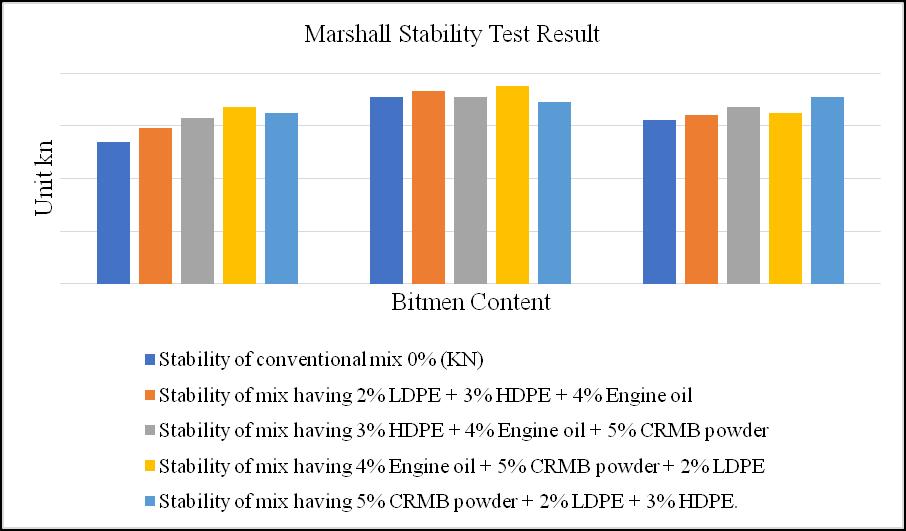
Fig. 4.29 Marshall Stability Test Result Graph of Mixed Composition with Bitumen
Marshallstabilitytestwasconductedwithfourdifferentsampleofmixedcompositionandaccordingtotheresult,sample havingStabilityofmixhaving4%Engineoil+5%CRMBpowder+2%LDPEwasteisshowingmaximumstabilityvalue.
5 Discussion and Conclusion
5.1 General
The research investigated various waste materials which included LDPE and HDPE as well as CRMB powder and waste engine oil which were used to replace bitumen through different ratios based on the details provided in Chapter 3. The researcherscreatedasetofsampleswhichusedVG10gradeor80/100gradebitumentogetherwithdifferentproportions of waste additives. The researchers selected waste materials based on their chemical properties which matched the requirements of Indian Standard specifications. The study examined the effects of different waste material combinations whichincludedLDPEat0%,3%,6%,and9%andwasteengineoilat0%,2%,4%,6%,8%,and10%andCRMBpowderat 0%, 2%, 5%, 8%, and 10% and HDPE at 0%, 2%, 5%, 7%, and 9%. The researchers produced composite mixtures by combiningmaterialswhichincluded2%LDPEplus3%HDPEplus4%engineoiland3%HDPEplus4%engineoilplus5% CRMB powder and 4% engine oil plus 5% CRMB powder plus 2% LDPE and 5% CRMB powder plus 2% LDPE plus 3% HDPEwhichwereallmixedwithVG10or80/100gradebitumen.
5.2 Discussion and Conclusion
TheresearchemployedseveralwastematerialsforbitumenmodificationwhichincludedLDPE,HDPE,CRMBpowder,and waste engine oil. The study found that LDPE addition decreased penetration value until LDPE content reached a certain pointwhichcausedpenetrationvaluetoincrease.ThesofteningpointtestshowedthatincreasingLDPEcontentresulted in lower softening point values for modified bitumen. The ductility showed an initial decline before it increased again whenLDPEcontentincreasedincomparisontothestandardmix.AllLDPE-modifiedsamplesdisplayedconsistentspecific gravity measurements that remained unchanged throughout the testing process. The penetration value for waste engine oil samples showed an initial decrease which turned into an increase at higher content levels with 8% as the maximum effectiverange.Theductilityandsofteningpointtestresultsshowedthatthebestperformanceoccurredwith6%engine oilcontentwhichindicatesthisratioworkswellforbitumenblending.
The use ofCRMB powder resultedin better penetration and ductilityandsoftening point performance up to 8%content which shows that this amount represents the optimal usage level with VG10 bitumen. HDPE-modified bitumen showed decreased penetration values at 2% HDPE but subsequent content increases caused penetration values to rise until they
International Research Journal of Engineering and Technology (IRJET) e-ISSN: 2395-0056
Volume: 13 Issue: 04 | Apr 2026 www.irjet.net p-ISSN: 2395-0072
reached 7%. The ductility exhibited a pattern of first decreasing before it began to increase when HDPE content was increased.Thesofteningpointincreasedwith2%HDPEbutthenbegantodroponceadditionalHDPEwasintroduced.The compositioncontaining3%HDPEcombinedwith4%engineoiland5%CRMBpowderproducedthegreatestpenetration measurementamongallwastematerialmixtures.Thesamplecontaining5%CRMBpowdercombinedwith2%LDPEand 3%HDPEachievedthehighestsofteningpointmeasurement.Themixturecontaining3%HDPEand4%engineoiland5% CRMB powder showed better ductility performance than all other tested mixtures. The specific gravity measurements showednosignificantvariationsthroughoutalltestedmaterialcombinations.
Thepresentstudycan beexpandedthroughresearchby usinghigher percentagesof wastematerialstoreplace bitumen through their individual applications and their combined use. The research team will introduce more suitable waste materialsbasedontheirphysicalandchemicalanalyses.Futureresearchwillexaminehowdifferenttrafficflowpatterns andtemperaturestressorsimpactpavementfailurethroughtheirvariousloadingeffects.
1. Ahmad, M.S. (2014). Low-density polyethylene modified dense graded bituminous macadam. International Journal ofEngineeringTrendsandTechnology,16,pp.366–372.
2. Ahmadinia,E.,Zargar,M.,Karim,M.R.,Abdelaziz,M.andShafigh,P.(2011).Usingwasteplasticbottlesasanadditive forstonemasticasphalt.Materials&Design,32(10),pp.4844–4849.
3. Akbulut,H.,Gürer,C.,Çetin,S.andElmacı,A.(2012).Investigationofusinggranitesludgeasfillerinbituminoushot mixtures.ConstructionandBuildingMaterials,36,pp.430–436.
4. Arabani, M., Mirabdolazimi, S.M. and Sasani, A.R. (2010). The effect of waste tire thread mesh on the dynamic behaviorofasphaltmixtures.ConstructionandBuildingMaterials,24(6),pp.1060–1068.
5. Bansal,S.,Misra,A.K.andBajpai,P.(2017).Evaluationofmodifiedbituminousconcretemixdevelopedusingrubber andplasticwastematerials.InternationalJournalofSustainableBuiltEnvironment,6(2),pp.442–448.
6. Behnia,A.,Ranjbar,N.,Chai,H.K.,Abdullah,A.I.andMasaeli,M.(2017).Fracturecharacterizationofmulti-layerwire mesh rubberized ferrocement composite slabs by means of acoustic emission. Journal of Cleaner Production, 157, pp.134–147.
7. Bhageerathy, K.P., Alex, A.P., Manju, V.S. and Raji, A.K. (2014). Use of biomedical plastic waste in bituminous road construction.InternationalJournalofEngineeringandAdvancedTechnology(IJEAT),pp.2249–8958.
8. CHEMIK(2013).67(5),pp.435–445.
9. Donga,P.D.,Shah,D.andBhavsar,J.K.(2016).Impactresistanceofwasterubberfibersilicafumeconcrete.Journalof CivilEngineeringandEnvironmentalTechnology,3(4),pp.274–279.
10. Ghalayan, P. and Rana, E.S. (2017). Partial replacement of bitumen by using plastic waste in bitumen concrete. InternationalJournalofLatestResearchinEngineeringandComputing,5(2),pp.7–12.
11. Hınıslıoğlu, S. and Ağar, E. (2004). Use of waste high density polyethylene as bitumen modifier in asphalt concrete mix.Fuel,58(3–4),pp.267–271.
12. Ikhajiagbe, B., Anoliefo, G.O., Omoregbee, O. and Osigbemhe, P. (2014). Changes in the intrinsic qualities of a naturallyattenuatedwasteengineoilpollutedsoilafterexposuretodifferentperiodsofheatshock. Resourcesand Environment,4(1),pp.45–53.
13. IS 1202:1978. Methods for Testing Tar and Bituminous Materials: Determination of Specific gravity. Bureau of IndianStandards,NewDelhi,India.
14. IS 1203:1978. Methods for Testing Tar and Bituminous Materials: Determination of Penetration. Bureau of Indian Standards,NewDelhi,India.
International Research Journal of Engineering and Technology (IRJET) e-ISSN: 2395-0056
Volume: 13 Issue: 04 | Apr 2026 www.irjet.net p-ISSN: 2395-0072
15. IS1205:1978.MethodsforTestingTarandBituminousMaterials:DeterminationofSofteningpoint.BIS,NewDelhi.
16. IS1208:1978.MethodsforTestingTarandBituminousMaterials:DeterminationofDuctility.BIS,NewDelhi.
17. IS2386Part(3):1963.Methodsoftestforaggregatesforconcrete.BureauofIndianStandards,NewDelhi.
18. Jambeck,J.R.,Geyer,R.,Wilcox,C.,Siegler,T.R.,Perryman,M.,Andrady,A.,Narayan,R.andLaw,K.L.(2015).Plastic wasteinputsfromlandintotheocean.Science,347(6223),pp.768–771.
19. Karaşahin, M. and Terzi, S. (2007). Evaluation of marble waste dust in the mixture of asphaltic concrete. ConstructionandBuildingMaterials,21(3),pp.616–620.
20. Kawade, N., Chalke, S., Dawale, N., Jangam, U., and Parulekar. (2018). Design and Qualitative Analysis of Flexible PavementbyUsingWasteMaterial.InternationalEngineering,Science&TechnologyResearchJournal
2026, IRJET | Impact Factor value: 8.315 | ISO 9001:2008