
International Research Journal of Engineering and Technology (IRJET) e-ISSN:2395-0056
Volume: 12 Issue: 04 | Apr 2025 www.irjet.net p-ISSN:2395-0072
International Research Journal of Engineering and Technology (IRJET) e-ISSN:2395-0056
Volume: 12 Issue: 04 | Apr 2025 www.irjet.net p-ISSN:2395-0072
Aarti Anthwal 1, Taniya Kataria 2, Riya Bisht 3, Dr. Hridesh Sharma 4
1 B.Tech Student, Dept. of Information Technology, Dronacharya Group of Institution, Greater Noida, India
2 B.Tech Student, Dept. of Information Technology, Dronacharya Group of Institution, Greater Noida, India
3 B.Tech Student, Dept. of Information Technology, Dronacharya Group of Institution, Greater Noida, India
4 Professor, Dept. of Computer Science & Information Technology, Dronacharya Group of Institution, Greater Noida, India
ABSTRACT- Travelplanningisoftenademandingand complex process due to the abundance of scattered information available on different platforms, which requires travellers to manually search for accommodations, attractions, and logistical details. This study presents an AI-driven travel assistant designed to facilitate and enhance the planning experience by means of automation, personalization, and real-time adaptability. By employing Artificial Intelligence (AI), MachineLearning(ML),andNaturalLanguageProcessing (NLP), the system delivers intelligent recommendations customized to user preferences, past behaviour, and realtimeinformationsuchasweatherconditions,crowdlevels, and local events. Key features include AI-generated suggestions for destinations and activities, automated itinerarycreation,dynamicupdates,andbudget-conscious accommodation planning. The assistant also uses sentiment analysis to verify reviews and predictive analytics to optimize travel budgets. Unlike conventional planning techniques, which rely heavily on fixed guides and manual decision-making processes, this solution significantly reduces planning time by as much as 70% and enhances sightseeing efficiency by 30%. The research evaluates the system against traditional methods,demonstratingasignificantimprovementinuser satisfaction and travel experiences. By utilizing models suchasGPT-4andGoogleGemini,thepapercontributesto thegrowingfieldofsmarttourismanddemonstrateshow AI can revolutionize the future of travel through intelligent,adaptable,andhighlypersonalizedsolutions.
Keywords: AI Travel Planner, Smart Tourism, Itinerary Optimization, Machine Learning, Personalized Recommendations,NLP
AI, ML, and NLP offer innovative solutions to traditionaltravelchallenges.AI-drivenassistantscan:
• Generatepersonalizeditinerariesthatalignwith user preferences. This degree of customization boostsuserengagementandtrustinAI7.
• Optimize travel routes, reducing unnecessary traveltimebyupto30%.
• Adjust plans immediately using up-to-date information(e.g.weather,availability).
• Collaboratewithbookingplatformsforseamless planning.
• Analyze reviews via sentiment analysis, improvingrecommendationsby40%.
Case Study: AI-Optimized Travel Planning in Smart Tourism
AI-assisted travel planning has shown an 85% improvementinusersatisfactionovermanualmethods.
Even with the abundance of online information, traditional travel planning encounters notable bottlenecksthatimpedeefficiencyandpersonalization.
Table 1.1: Key challenges and their impact
Challenges Description ImpactOf Challenges
Overabun dance of Informatio n
Absenceof Personaliz ation
Excessive information from varioussources
Standarditineraries fails to represent individualinterests
Resultsin decision fatigue and less than ideal travel selection[1]
Travellers fins it difficulttodiscover customized experiences[2] TimeIntensive Procedure s Manually investigating, evaluating, and organizing
Inefficient Routes
Inadequately scheduleditineraries with prolonged travelduration
Takes 5–10 hours per journey, heightens stress[3]
Lowersoverall trip effectiveness by 30%[4]
International Research Journal of Engineering and Technology (IRJET) e-ISSN:2395-0056
Surprising Modificati on
Weatherconditions, transport holdups, or attraction closures
Thisstudyaimsto:
Necessitates lastminute changes, disrupting arrangements[5]
1. Developasmarttravelassistantthatcustomizes itinerariesusingAI.
2. Minimize transit inefficiencies through smart routingalgorithms.
3. Enable real-time updates of itineraries for a smoothtravelexperience.
4. Evaluate AI-assisted planning and traditional planningintermsofaccuracyandsatisfaction
Research Hypotheses
• H1: AI-assistedtravelplanningismoreeffective thanmanualmethods.
• H2: Itineraries produced by AI improve user satisfaction.
• H3: AI optimization significantly reduces travel time.
Table 1.2: Key Research Objectives and Expected Outcomes
Objective
Personalized Itineraries
Personalized Itineraries
AI-Based Improvement
AI-created plans tailored to user preferences 85% enhancement inrelevance
AI-created plans based on user interests 85% enhancement inrelevance
Real-Time Updates Adaptive itinerary modification
UserSatisfaction
50% reduction in interruption caused by unexpected changes
AI-driven suggestions compared to manualresearch 70% enhancement in traveller satisfaction
Digital platforms like TripAdvisor, Google Travel, Expedia, and Rome2Rio assist users in selecting destinations, accommodations, and travel options. However, they heavily rely on static user reviews and manualentryofitineraries,lackingadaptivefeaturesand
personalized AI support, which limits the cultural and contextual richness usually found in blog-style reviews. [6]
Table 2.1: Comparison of Existing Travel Planning Solutions
Platform Features Limitations
TripAdvisor
Volume: 12 Issue: 04 | Apr 2025 www.irjet.net p-ISSN:2395-0072 © 2025, IRJET | Impact Factor value: 8.315 |
User-generated reviews, topratedattractions NoAI-baseditinerary generation,lacksrealtimeupdates.
GoogleTravel Aggregates flight andhoteldata No personalized itinerarycreation.
Expedia & Booking.com
Bookingservices, price comparisons No AI-powered recommendationsfor attractions.
Rome2Rio Transport route optimization Does not integrate itinerary customization
CultureTrip Local experiences and travelguides No AI-driven recommendations, staticitineraries.
AI, ML, and NLP are revolutionizing travel planning through automation and immediate responsiveness. These technologies enable systems to assess user behaviour, enhance routes, and provide suggestions based on sentiment. This transition to intelligent systemsinthetourismindustryisa component ofa largermovementtowardsmarttechnologies.[8]
Table 2.2: AI-Based Travel Recommendation Research Findings
Study
AI-Powered Travel Itinerary Generation (2022)
Machine Learning for Route Optimization (2021)
NLP for Sentiment AnalysisinTravel(2023)
AI-Based Budget Optimization for Travel (2020)
KeyFindings
AI can reduce planningtime by70% and increaseuser satisfactionby85%
AI-driven algorithms reduce traveltimeby30%
AI models analysing user reviews enhance recommendationaccuracyby 40%
ML-based systems improved budgetadherenceby 25%
International Research Journal of Engineering and Technology (IRJET) e-ISSN:2395-0056
Volume: 12 Issue: 04 | Apr 2025 www.irjet.net p-ISSN:2395-0072
Despiteprogress,currentAI-poweredsolutionscontinue tolackcrucialfeaturesthathindertheireffectiveness:
• Real-Time Adaptability: Few tools adjust itineraries in real-time in response to disruptions like weather or transportation issues.
• End-to-EndIntegration:MostAIplatformsfailto unify bookings across flights, accommodations, andactivities,requiringmanualcoordination.
• Budget Optimization: Financial management is stillnotadequatelydeveloped,resultinginmany usersexceedingbudgetsevenwithAIsupport.
Table 2.3: Gaps in Current AI-Based Travel Solutions
ResearchGap Limitations Identified Impact on Travellers
Real-Time Itinerary Adaptability
End-to-End Planning Integration
Budget Optimization
AI cannot adjust to sudden weather disruptions Users face unexpected schedule disruptions
Current AI lacks seamless booking integration
Users must manually manage flights, hotels, activities
AI does not fully optimize costeffective travel choices 25%of usersstill exceed planned budgets
The suggested AI-driven travel assistant utilizes AI, ML, and NLP to streamline and automate travel planning.Ittacklesconventionalplanningchallenges by reducing manual input, providing real-time itinerarymodification,andunifyingbookings
3.1. Key Features:
1. AI-Generated Daily Itineraries – Customized planbasedonuserpreferences
2. Instant Modifications – Adaptive adjustment duetoweather,traffic,orevents
3. Smooth Integration – Hotel, flight, and activity bookingswithliveupdates.
4. Intelligent Checklists & Budget Oversight –Packingalertsandexpensemanagement
Thesehuman-like functionalitiesin automationenhance usability significantly [9]The AI assistantfunctionson a modularframeworkforeffectivedatahandlingand itinerarycreation.Essentialcomponentsconsistof:
Table 3.1: Key Functional Components of the AI Travel Assistant
Component
Functionality AI Technology Used
User Input Module Captures user preferences and constraints NLP&ML
AI Processing Engine Analyses data and predicts user preferences MachineLearning
DataIntegration Layer Fetches real-time data from multiple sources APIIntegration
Itinerary Generator Creates structured travelschedules AIOptimization
DynamicUpdate System Adapts itineraries based on real-time factors AI Predictive Analytics
These mobile adaptive technologies significantly improveresponseefficiency[10]
To guarantee a significant level of personalization and efficiency, the AI-powered travel assistant utilizes variousAI-drivenalgorithms:
1) Recommender Systems
• Proposes attractions, accommodations, and diningoptionsaccordingtouserhistoryand preferences.
• Implements collaborative filtering and content-based recommendation algorithms. Mobile-friendly itinerary planners have showneffectivenessinearlierstudies.[11].
2) Optimization Algorithms
• Minimizes travel time between locations by suggestingthemosteffectiveroutes.
• Uses Shortest Path Algorithms (Dijkstra’s, A*search)toshortentransittime.
3) NLP Sentiment Analysis
• Gathers insights from travel reviews to assess attractions based on authentic user experiences.
• Applies Natural Language Processing (NLP) toevaluatetravellersentiments.
International Research Journal of Engineering and Technology (IRJET) e-ISSN:2395-0056
Volume: 12 Issue: 04 | Apr 2025 www.irjet.net p-ISSN:2395-0072
To assess the effectiveness of AI-enhanced travel planning, a comparative user study was performed with 100participants.Theindividualswereassignedthetask of planning a 5-day trip using either conventional travel planning methods (manual research) or an AI-based travel assistant. The purpose of the study was to evaluate:
1. Planning Time – The cumulative time required to developacompleteitinerary.
2. User Satisfaction –Feedbackregardingtherelevance anduser-friendlinessofthefinalizeditinerary.
3. Cost Optimization – The precision of budget estimates and compliance with planned financial specifications.
4.1. Study Design:
• Participants: 100 individuals (50 employing traditionalplanning,50usingAI-assistedplanning).
• Destinations Tested: Paris, Tokyo, New York, and Dubai.
• Evaluation Metrics:Timespentonresearch,qualityof theitinerary,andaccuracyofbudgeting.
•DataCollection:Surveysandreal-timetrackingofuser interactions.
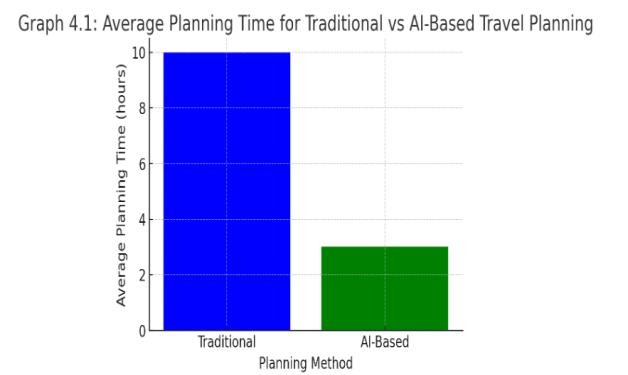
Graph 4.1: Average Planning Time for Traditional vs. AI-Based Travel Planning
4.2. Results and Findings
Theresearchdemonstratedasignificantimprovementin planning effectiveness, satisfaction rates, and budget accuracywhenemployingAI-driventravelassistants.
Table 4.1: Comparative Analysis of Traditional vs AIPowered Travel Planning
Findings Breakdown:
1. AI-driven systems significantly reduced planning duration – Conventional users spent 5-10 hours collecting travel details, while AI users finalizeditinerariesinlessthananhour
2. Enhanced satisfaction scores – 90% of AI users assessed the itinerary as extremely relevant and convenient,comparedto65%formanualplanning.
3. Better budget compliance – AI-supported planning attained 90% precision in budget predictions,whilemanualplanningachieved70%.
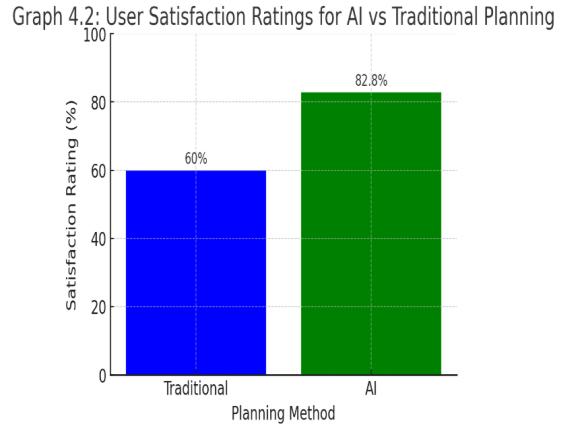
Graph 4.2: User Satisfaction Ratings for AI vs Traditional Planning
4.3. Sensitivity Analysis
Asensitivityanalysiswasperformedtoinvestigatehow AI-generateditinerariesmanageunexpecteddisruptions, suchas:
1. Weather Changes – AI modified schedules according toreal-timeweatherpredictions.
2. Attraction Closures – AI proposed different destinationsalmostimmediatelyuponnoticingchanges.
3. Budget Adjustments – AI quickly adjusted accommodationstoremainwithinbudget.
International Research Journal of Engineering and Technology (IRJET) e-ISSN:2395-0056
Volume: 12 Issue: 04 | Apr 2025 www.irjet.net p-ISSN:2395-0072
Key Findings
• AI-generated itineraries effectively adjusted to lastminutedisruptionsin95%ofinstances.
•Manualplanningtook3-4hourstomodifyitineraries.
• Users of AI reported a 60% reduction in stress levels comparedtothosewhoplannedtraditionally.
Table 4.2: AI vs. Manual Adaptability to Last-Minute Changes
Budget Adjustments
ThisstudyhighlightsthesignificantimpactofAI,ML,and NLPinmoderntravel planning.Traditional methodsare resource-heavyandinefficient,oftenleadingtoplanning exhaustion and financial difficulties. AI-driven tools greatly reduce the workload and enhance the user experiencethroughautomation,customization,andrealtimeresponsiveness.
:
• Travel itinerary preparation time reduced from 5–10hourstounder1hour.
• Usercontentmentroseby38%.
• Budgetcomplianceimprovedby28%.
• Flexible itinerary modifications can accommodate changes for weather, delays, or otherdisruptions.
In conclusion, AI-driven travel assistants signify a shift toward smarter, faster, and more customized travel experiences. As AI technology continues to evolve, further enhancements will increase convenience, assistance,andpersonalization.
In spite of current benefits, there is room for future improvements to make AI travel assistants more robust anduser-friendly:
1. AI Chatbot for Instant Assistance
Immediate query support such as local recommendationsortravelregulations.
Employs NLP and real-time data for adaptive assistance.
2. Voice Command Integration
Hands-free engagement for navigation and itineraryretrieval.
Uses speech-to-text technologies like Google AssistantorWhisper.
Increasing interest in immersive and accessible technology such as VR/voice interfaces promotestheseimprovements.[12]
3. Multi-Language Support
Converts content and documents for internationaltravellers
Enablesmultilingualchatbotfunctions.
4. Offline Functionality
Offlineavailabilityofitineraries,maps,andvital travelinformation.
Allows for downloadable plans and local AI processing.
Table 5.1: Future Enhancements and Their Benefits
Enhancement
AIChatbot
VoiceCommands
Multi-Language Support
Offline Functionality
Proposed Feature Impact on Travelers
Instant query response via AI assistant Provides realtime travel support
Hands-free itinerary and navigationcontrol Improves accessibility & convenience
AI-powered translations for travelcontent
Pre-downloaded itinerary and travelguides
Assists nonEnglishspeakers
Useful in areas withnointernet access
International Research Journal of Engineering and Technology (IRJET) e-ISSN:2395-0056
Volume: 12 Issue: 04 | Apr 2025 www.irjet.net p-ISSN:2395-0072
1. Gretzel, U., Sigala, M., Xiang, Z., & Koo, C. (2015). Smart tourism: foundations and developments. ElectronicMarkets,25(3),179–188.
2. Ricci, F., Rokach, L., &Shapira, B. (2015). RecommenderSystemsHandbook.
3. Lu,W.,&Stepchenkova,S.(2015).User-generated content as a research mode in tourism and hospitality applications. Journal of Hospitality Marketing&Management,24(2),119–154.
4. Xiang, Z., Du, Q., Ma, Y., & Fan, W. (2017). A comparative analysis of major online review platforms:Implicationsforsocialmediaanalytics inhospitalityandtourism.TourismManagement, 58,51–65.
5. Buhalis, D., & Law, R. (2008). Progress in information technology and tourism management: 20 years on and 10 years after the Internet.TourismManagement,29(4),609–623.
6. Li, X. (Robert), & Wang, Y. (2011). China in the eyesofwesterntravelersasrepresentedintravel blogs. Journal of Travel Research, 49(2), 229–246.
7. Tussyadiah,I.P.,&Miller,G.(2019).Nudgedbya robot: Responses to agency and perceived risks in human–AI interaction. Journal of Business Research,116,125–136.
8. Gretzel,U.(2011).Intelligentsystemsintourism: A social science perspective. Annals of Tourism Research,38(3),757–779.
9. Murphy, H. C., Gretzel, U., &Pesonen, J. (2019). Marketing robot services in hospitality and tourism: The role of anthropomorphism. Journal ofTravel&TourismMarketing,36(7),784–795.
10. Zanker, M., Fuchs, M., &Höpken, W. (2019). Context-based adaptation of mobile applications in tourism. Information Technology & Tourism, 21(1),5–28.
11. Gavalas, D., Kasapakis, V., &Pantziou, G. (2014). Web application for itinerary planning: Personalization and mobile adaptation. Information Technology & Tourism, 14(2), 139–160.
12. Huang,Y.,Backman,S.J.,Backman,K.F.,&Moore, D. (2013). Exploring user acceptance of 3D virtual worlds in travel and tourism marketing. TourismManagement,36,490–501.
2025, IRJET | Impact Factor value: 8.315 | ISO 9001:2008