
International Research Journal of Engineering and Technology (IRJET) e-ISSN: 2395-0056
Volume: 13 Issue: 04 | Apr 2026 www.irjet.net p-ISSN: 2395-0072

International Research Journal of Engineering and Technology (IRJET) e-ISSN: 2395-0056
Volume: 13 Issue: 04 | Apr 2026 www.irjet.net p-ISSN: 2395-0072
Harshavardhini Budupula1, Yamuna Bezawada2, Nagaswetha Chennu3, Teja Boyina4, Dr. Ch. Ram Babu5
¹Final Year B.Tech Students, ²Associate Professor - Department of Electronics and Communication Engineering Seshadri Rao Gudlavalleru Engineering College, Gudlavalleru, Andhra Pradesh, India
Abstract: Ensuring the effectiveness of medications relies heavily on their secure storage and accurate tracking, particularly within hospitals, pharmacies, and supply chains. This initiative introduces a monitoring system for medicine storagebuiltonIoTprinciples,utilizingArduino,
GSM, and GPS to deliver continuous environmental oversight, location data, and automatic notifications. Temperature and humidity sensors are used to perpetually check storage environments, guaranteeing that drugs stay within their required climatic ranges. An Arduino board analyzes the sensor readings and interfaces with a GSM component to dispatch immediate text message warnings to responsible staff should conditions stray beyond safe levels. A GPS unit also supplies live location information, allowing for vigilant oversight duringtransitto mitigate misplacementorpilferage. Information can be recorded and sent to a cloudbased service for distant monitoring, empowering medical staff and supply chain supervisors to base their choices on current data. This approach improves drug security, minimizes spoilage from incorrect storage, and helps adhere to regulatory standards for pharmaceutical preservation. Merging IoT functionality with GSM and GPS connectivity, the suggested system presents an economical, compact, and dependable method for supervising medicine storage, applicable to both fixed installationsandmovinglogistics.
Numerous accidents involving avenues are caused by weariness,exhaustion,andotherfactors.Approximatelyhalf ofall accidents occur on the streets.Avenue accidentscould be caused by inadequate usage, which should rise if the driver is drunk or drowsy. It has been demonstrated that driver fatigue and intoxication are major contributors to traffic accidents. Additionally, this has made it very challenging to create a machine that would prevent this issue.IOT-based innovation istypicallyfarmorepractical to deal with because it runs on a real-time device and can transmitanydataorinformationwithouthumaninteraction. Becauseofitsnature,wearinessisaprotectionissuethatno
US in the world has yet to effectively handle. Drowsiness is presentlyverydifficulttodetectorinvestigate,incontrastto alcohol and drugs, which have obvious key signs and assessments that can be obtained with ease. An IOT-based deviceisdesignedtoavoidmanyaccidentscausedbysleepy drivers' behavioral and mental changes by concentrating on driving force's eye moments and health difficulties like coronary heart attack, vertigo, and various fitness issues. After focusing on the drowsiness aspect of it, we will evaluate other health markers like pulse and alcohol detection. Benefiting from sleepy riding is a relatively new strategy that can be put into practice. However, this study investigates how IOT-based innovation would use IOT sensorsandmethodologiestoprovidepropelleddimensions ofservicesand,inessence,changehowindividualslivetheir daily lives. Because of its nature, weariness is a safety concern that no nation in the world has sufficiently addressed. Drowsiness can be exceedingly challenging to quantify or identify, in contrast to alcohol and drugs, which have widely available tests and unambiguous key signs. An IOTbaseddeviceaimstopreventnumerousaccidentscaused bysleepydrivers'behavioralandmentalchangesbyfocusing on motive force's eye moments and health difficulties including heart attacks, dizziness, and other fitness issues. Thisassignment'smainobjectiveistodevelopasystem that can effectively predict the motive force's health characteristicsanddrowsiness,utilizingsensorstonotifythe motive force and lower the increasing number of injuries. Over the course of the assignment, we will address the followingproblems:
1) IdentifyingSleepinessinDrivers
2) AlcoholDetection
3) PulseRateMonitoringSystem
4) IOTandGSM
The primary purpose of this device is to track the driving force's face expressions and eye movements. The apparatus willissueawarningifthemotiveforceseemsdrowsy.When
International Research Journal of Engineering and Technology (IRJET) e-ISSN: 2395-0056
Volume: 13 Issue: 04 | Apr 2026 www.irjet.net p-ISSN: 2395-0072
drowsinessisidentified,thedriverisalertedwithabuzzer.A variety of motive force characteristics, such as pulse rate, alcoholic condition, and eye blink, are measured by heartbeat, alcohol, and eye blink sensors. There are many items that show the potential degree of driver fatigue in different types of vehicles. The same characteristics are providedbythedrivingforcesleepinessdetectionandhealth tracking device, but with better results and further advantages. It also alerts the client when the level of drowsinessreachesaspecificsaturationfactor.
1) This research presents an IoT-based driving force drowsiness and fitness parameter detection system. This gadgethasabuzzertowarnthedriverwhenheissleepyand a USB digicam for the EyeBlink Monitoring System. Additionally,theyhavecoveredthelocationofaGPStosong motiveforce.Inthissituation,theadministratorwillmonitor system characteristics and notify friends and family in the eventofanemergency.Wearabletemperatureandheartbeat sensors are used to track the health of drivers. Alcohol sensors are used to identify alcoholic conditions of motive force.Whenthelevelofalcoholexceedsathreshold,thecar's speed decreases and it stops (speed limiters are available). Thegoalofthisprojectistocreateanaffordablegadgetthat canbeusedinavarietyofcarsandsavelives.AUSBdigicam isused todetectdrowsiness,anda built-inPythonlibraryis usedtoprocessthedata.Abuzzerisusedtosoundanalertif the driver is sleepy. Additionally, the device continuously monitors health data, such as heart rate and driving force frame temperature. By using GPS to locate him, friends of a doctor or driving force can reach him in an emergency. Consequently,thetwistoffateratiocanbereduced.
2) The evaluation of eye state evaluationbased techniques and suggested device and distraction detection strategieshasbeencompletedinthisstudy.Whencompared to other methods, they found that Eye Nation evaluation is superior (nonintrusive, low computing cost, strong, accurate).Wearable smart glassesarethe primary tool used by the proposed system to identify sleepiness. Sleep detection theory: 0–2 to 0–4 seconds to blink (usually) A person is deemed to be asleep if their eyelids are closed for longerthanthirtyseconds.TheproposedsmallbandpassCR light sensor is intended for wearable smart glasses that are lightweight, inexpensive, and may have a higher signal-tonoiseratio(SNR)thanindustrialones.DFDRecognitionlogs thestudent,nose,andeyeballshapes.Itdetectswhetherthe eyes are closed or open. If closed and drowsiness is noted, DFD uses BLE to transmit a warning message to the IVI telematicsplatform.
3) To identify driving force tiredness and the point at which a driver is sleepy, they have employed AI-based, far improved algorithms. In 2015, there were 4,64,674 injuries in India. The primary cause of these injuries is either the driver is sleepy or does not adhere to the guest laws. When compared to the United States, India offers a better avenue twist of fate price. Lane detection, heart rate, and guide wheelmotionpatterndetectionaresomeofthefeaturesthat havebeenusedthusfartoidentifydrivers'fatigue.Aperson isconsidereddrowsyiftheyclosetheireyesforfiveseconds, but we require more time to assess a person's level of sleepiness,andthepriceatwhichtheyaredrowsyisalsono longer taken into account. They used the Python open CV library to convert the video into frames. To identify the framesinwhichtheindividualissleepy,theyhaveemployed theEyeelementRatio(EAR).Itiscomputedbysummingthe two distances from the eye's top stop to its bottom quit, which are then divided by the horizontal distance. of the focus.Neuralnetworkclassifiersanddecisiontreeclassifiers have been employed. Although the neural community classifierhasproducedresultsthatarealmostidentical,they claimed that the DT classifier is superior to all other classifiers for that mission. Therefore, we will classify the difficulty as either drowsy or non-drowsy using any of the twoclassifiers.
4) An IOT-based sleepiness detection and emergency notification gadget is a safety innovation that helps prevent accidentscausedbysleepydrivers.Accordingtoanumberof studies,the motiveforce'stirednessis responsible for about 20% of all traffic accidents. The first part uses an alcohol sensor to measure the amount of alcohol in the driver's breath.Ifthealcoholcontentishigherthantheedgecost,the driverisconsideredtobeintoxicated,abuzzermaysound,a "alcohol detected" message will appear on the liquid crystal display, and the car will not start. The next component requires the motive force to wear sunglasses with an eyeblink sensor at some point during his journey in order to detect sleepiness. A buzzer may sound, a "drowsiness detected" message may appear on the liquid crystal display, and the motor pace may be lowered if the driver does not blink his eyes for a few seconds. In the last part, the notificationsystemisusedafterthealertdevice.Ifthedriver is found to be intoxicated and sleepy, a message and the locationdatamaybesenttotheTelegramsoftware,allowing the user to use this information to save the driver who is in danger. A number of causes are involved in car accidents, suchasdrunkdriving,speeding,andvariousdistractionslike texting whiledriving,conversing withothers, gambling with children,andsoon.Sleepingatthewheelisoneofthecrucial components. Many drivers are unable to control their cars duetovariousfactors,whichcanleadtoseriousinjuriesand
International Research Journal of Engineering and Technology (IRJET) e-ISSN: 2395-0056
Volume: 13 Issue: 04 | Apr 2026 www.irjet.net p-ISSN: 2395-0072
even death. It is crucial to disclose the driver's tiredness in ordertopreventinjuriessinceafatigueddriverwhonodsoff whiledrivingisunabletomaintaincontrolofthevehicle.
5) AsleepinessdetectionsystembasedonGoogleGlass is proposed in this paper. In order to monitor the frequency of eye blinks, a proximity sensor is attached to the glass. operating a vehicle. Twenty three seasoned drivers ten adult males and thirteen girls were tested for this. It occurredbetween8a.m.and8p.m.foundthattheproximity sensor's threshold algorithm can consistently detect eye blinks, demonstrating the viability of utilizing Google Glass to detect operator tiredness and potentially placing sleepy driversatgreaterriskthandistracteddrivers.
Two microcontrollers make up our suggested system: The ignition key, ignition relay, buzzer, eyeblink sensor, pulse sensor, temperature,andalcohol sensorareall connectedto the Arduino Nano and ESP32. The ESP8266 board is linked to the GPS, GSM, and water sprinkler. The cloud server receivesallofthedatafromthesesensors.Weareemploying two microcontrollers because the Arduino lacks internet access,whichiswhytheESP8266isbeingused.
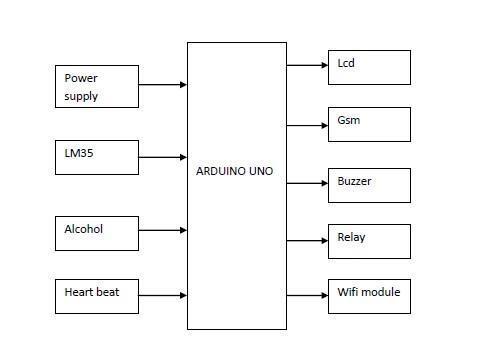
Fig. 1. BlockdiagramoftheproposedSystem.
Fig. 1 describes the block diagram of As we have seen the majorconnectionsintheblockdiagram,nextistoinsertthe SIMcardintotheGSM.
ARDUINO UNO:
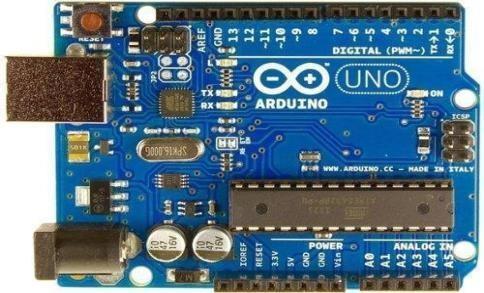
Fig. 2 describes the ATmega328P-based Arduino UNO microcontrollerboard,whichfeaturessixanaloginputs,a16 MHz ceramic resonator, a USB connector, a power jack, an ICSP header, a reset button, and fourteen digital input/outputpins.AregularUSBcablecanbeusedtoeasily connecttheboardtoacomputer.Thismicrocontrollerboard isreasonablypricedandreadilyavailable[13].
ESP8266:
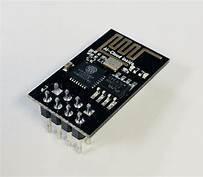
Fig. 3 describes the ESP8266, a low-cost WiFi module from the ESP series that can be used worldwide for remotely controlling electronic tasks. It is capable of connecting to WiFi networks due to its integrated microprocessor and 1 MB of flash memory. The module communicates using WiFi signalsthroughitsbuilt-inTCP/IPprotocolstack.Itoperates ata maximumvoltageof 3.3V,and applying5V maydamage themodule.
Relay:
International Research Journal of Engineering and Technology (IRJET) e-ISSN: 2395-0056
Volume: 13 Issue: 04 | Apr 2026 www.irjet.net p-ISSN: 2395-0072
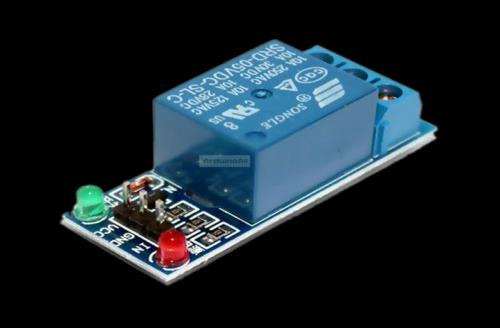
Fig. 4 describes the relay module, an electrically operated switch controlled by an electromagnet. A low-power signal fromamicrocontrolleractivatestheelectromagnet,whichin turn opens or closes an electrical circuit. The relay consists of a coil (electromagnet), an iron core, a movable armature, and contact terminals. When energized, the electromagnet attracts the armature, changing the state of the contacts. When de-energized, a spring returns the armature to its original position, either opening or closing the circuit dependingontherelayconfiguration.
Pulse Sensor:
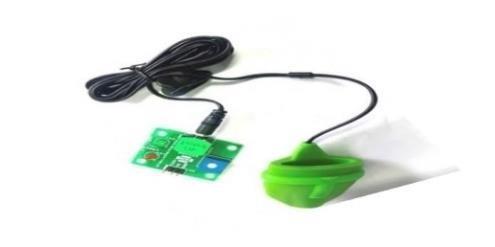
Fig. 5 describes the pulse sensor, where when the heart pumpsblood,thevolumeofbloodvesselschanges,creatinga pulse wave that the pulse sensor monitors. The user simply touches the sensor with their finger to determine the pulse wavestatus,whichisthenshownonthedashboard.
LCD:
LCD stands for Liquid Dynamic Display. Large unfold usage substitutionisbeingdiscoveredbyLCD.theabilitytodisplay images, numbers, and letters. LEDs, on the other hand, can belimitedbyquantityplusafewnumbers.Byintegratingthe sterile management within the LCD, the CPU is relieved of thetaskofsterilizingtheLCD.
BUZZER:
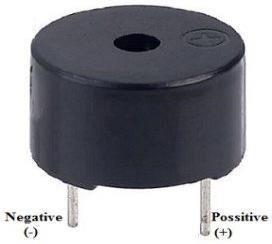
Fig. 6 describes the buzzer. Beepers and buzzers are examplesofaudiosignalingcomputingdevicesthatmightbe electromechanical, piezoelectric, or mechanical. Converting thesignfromaudiotosoundisthemostessentialfeatureof this. It is typically powered by DC voltage and utilized in computers, printers, timers, alarms, and other devices. It is made up of two extremely accurate, negative pins. The '+' symbol or a longer terminal is used to symbolize this fantastic terminal. This terminal is connected to the GND terminal and is powered by the helpful resource of 6 volts, whereas the horrible terminal is denoted by the "-" symbol orfastterminal.
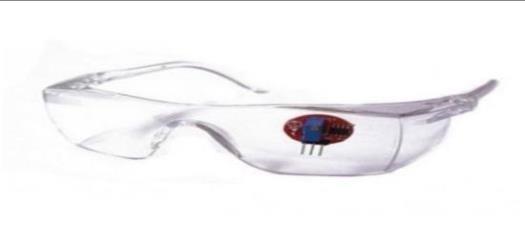
Fig. 7 describes the Eye Blink uses infrared to detect eye blinks. Its values change with each blink of the eye. The outputishighiftheeyeisclosed,andviceversa.Thebuzzer is then triggered by the values it receives, and after three times,thewatersprayisactivated.
International Research Journal of Engineering and Technology (IRJET) e-ISSN: 2395-0056
Volume: 13 Issue: 04 | Apr 2026 www.irjet.net p-ISSN: 2395-0072
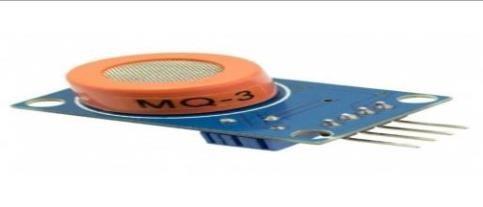
Fig. 8 describes a Metal Oxide Semiconductor (MOS) sensor, whichiswhattheMQ3is.Itishighlysensitivetoalcoholand resilient to smoke and gasoline. The sensor's conductivity increasesastheconcentrationofalcoholgasrises,signifying thepresenceofthegasthroughtheflashingofitsLED.
GSM:
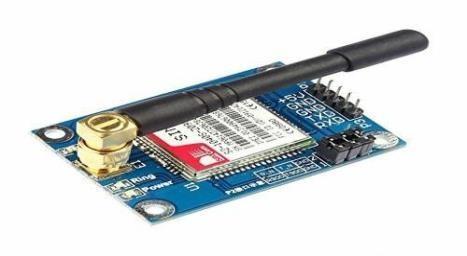
Fig.9describesthehardwareelementthatenableselectronic devices to interact via the GSM network is called a GSM module (Global System for Mobile Communications). Sending and receiving SMS messages, making voice conversations, and accessing mobile data services are all made possible by its role as a bridge between a microcontroller (or othercomputer devices)andthe mobile network.
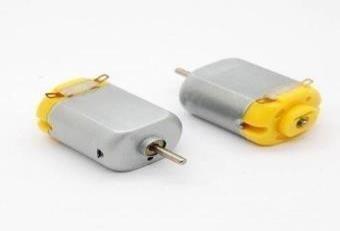
Fig. 10 describes any rotating electrical device that transforms direct current electrical energy into mechanical energyisreferredtoasaDCmotor.Themostprevalentkinds depend on the forces generated by magnetic fields. Almost everykindofDCmotorhasaninternalelectromechanicalor electronic device that occasionally reverses the direction of currentflowinaportionofthemotor.SinceDCmotorscould be driven by the directcurrent lighting power distribution systemsthatwerealreadyinplace,theywerethefirsttypeof motortobewidelyemployed.
Arduino isan open-sourceassociationfor programming and PCtools.Theactivityandconsumermastermind who builds and works with microcontroller-based motion sheets is advised to visit the Arduino Community. These alternative sheetsareidentifiedasopensupplyprototypestagesknown as Arduino Modules. The microcontroller board that has been smoothed out shows up in a variety of growth board bundles. Using the Arduino IDE, which incorporates the C programming language, is the transcendentally felt programmingapproach.ThisgivesyouaccesstoanArduino library that is diligently creating a perception of an open supplynetwork.
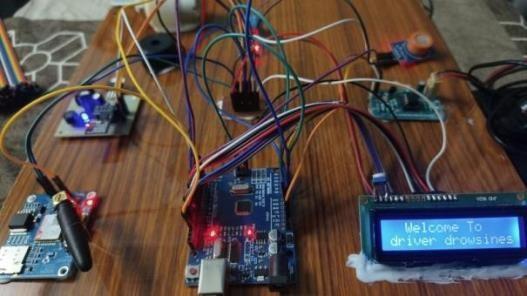
To identify the health parameter and drowsiness, our suggested methodrequires thedrivertowear gogglesanda pulsesensor.All of the partscomeon when the ignitionkey is turned on, and a pulse sensor measures the driver's heartbeat, which is then shown in the cloud. The eye blink sensor on the goggles will detect and sound a buzzer if the driver'seyesareclosedforlongerthanfourseconds. Similarly, if the driver's eyes are closed three times, the ignition key will automatically turn off and water will be sprayed on their face. Our suggested system's MQ3 sensor identifies the driver's level of intoxication, which is then recorded in the cloud and communicated to the family member along with the driver's position. Our suggested system's ultrasonic sensor identifies things whenever a driver is sleepy, intoxicated, or ill due to a health parameter and notifies the driver via a buzzer, thereby reducing accidents.
International Research Journal of Engineering and Technology (IRJET) e-ISSN: 2395-0056
Volume: 13 Issue: 04 | Apr 2026 www.irjet.net p-ISSN: 2395-0072
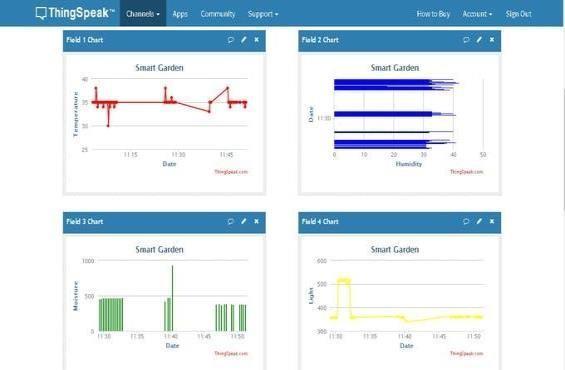
Fig. 12. ResultsandDiscussions
1) Hotspot:Inordertooperateoursuggestedsolution, thehotspotmustfirstbeturnedon.
2) Adaptor: In order to turn on every component, the adaptormustnextbeswitchedon.
3) Pulse sensor: In order to assess his heartbeat and address one of the health parameters, the driver is required towearapulsesensor.
4) Goggles: In order to identify tiredness, the driver mustweargoggles.
5) Buzzer: The buzzer activates if it detects both drowsinessandanobstruction.
6) Water sprinkler: If the driver's drowsiness is detectedthreetimes,waterissprayedontheirface.
7) Ignition key: When the watersprinkler is turned on andalcoholisdetected,theignitionkeygoesoff.
8) Cloud:Itshowsthepulsevalue;ifthedriverhasnot consumed alcohol, it is shown as green; if they have, it is shown as red. Next, the ignition key value appears as ON/OFF. The map shows the driver's location and indicates whetherornottheyaresleepy.
Around 21% of traffic accidents worldwide are caused by sleepy driving, and this percentage is continually rising. In contrast, drunk driving is responsible for about 28% of accidents, and this number is rising quickly. The analysis of all the available research papers revealed that while each study used a different method for identifying driver drowsiness, they all used comparable strategies to lessen or prevent it. The eye state analysis-based techniques are the
superior methodology for detecting drowsiness/fatigue, according to our comparisons of various drowsy detection techniques. Eye-state analysis-based techniques have numerousadvantages,includingminimalcomputationcosts, high accuracy, high robustness, and non-intrusiveness. Certain data, such as temperature, heart rate, and alcohol consumption, are measured in some research articles, and the car stops or slows down in response. Our objective is to put in place a system that guarantees driver safety and preventsautoaccidentsbasedonthesefindings.
[1] Ashwini, Veda M, Smitha S, Divya Krishna, and Pooja Suresh Talekar's 2020 IRJET article, "IOT Based Driver DrowsinessandHealth MonitoringSystem"
[2] Wan-Jung Chang, Liang-Bi Chen, and YuZung Chiou's 2018 IEEE article, "Design and Implementation of a Drowsiness-FatigueDetection System Based on Wearable Smart GlassestoincreaseRoadSafety."
[3] Challa Yashwanth and Jyothi Singh Kirar's 2019 IEEE article, "Driver's Drowsiness Detection."
[4] Jagadish N, S Sujay Kumar, and Sumanth H S, "Drowsiness Detection and Emergency NotificationSystem,"IRJETpaper,2021.
[4] JiboHe,WilliamChoi,YanYang,JunsiLu,XiaohuiWu,and Kaiping Peng's 2017 Elsevier publication, "Detection of Driver Drowsiness using wearable Devices: A Feasibility StudyoftheProximitySensor."
[5] Akhil Kondapaneni, C. Hemanth, and R. G. Sangeetha's 2020 SPRINGER article, "A Smart Drowsiness Detection SystemforAccident Prevention."
[6] Emma Perkin, Chiranjibi Sitaula, and Faezeh Marzbanrad's 2021 IEEE paper, "Challenges of Driver Drowsiness Prediction: The remaining steps of implementation."
[7] V. Sanjay Kumar, Ashwin Balaji, and E. Prabhu's 2020 Elsevier publication, "Smart driver assistance system using RaspberryPiandsensornetworks."
[8] The 2018 IJERT paper "Automatic Driver Drowsiness AlertandHealthMonitoring System using GSM" by Bhavana T.Petkar,BhagyaC,GaganTK,andLokeshaK.
International Research Journal of Engineering and Technology (IRJET) e-ISSN: 2395-0056
[9] Dr. K.S. Tiwari, Supriya Bhagat, Nikita Patil, and Priya Nagare's 2019 IJRAR article, "IoT Based Driver Drowsiness andHealthMonitoring System."
[10] Ruoxue Wu's 2016 IEEE paper, "RealTime DriverDrowsinessDetectionSystem UsingFacial Features."
[11] V B Navya Kiran, Raksha R, Anisoor Rahman, Varsha K N, and Dr. Nagamani N P's 2020 IJERT article, "Driver Drowsiness Detection."
[12] S. Uma and R. Eswari's 2021 SPRINGER study, "Accident prevention and safety assistance using IOT and machinelearning."
Volume: 13 Issue: 04 | Apr 2026 www.irjet.net p-ISSN: 2395-0072 © 2026, IRJET | Impact Factor value: 8.315 | ISO 9001:2008 Certified