
International Research Journal of Engineering and Technology (IRJET) e-ISSN: 2395-0056
Volume: 12 Issue: 11 | Nov 2025 www.irjet.net p-ISSN: 2395-0072
International Research Journal of Engineering and Technology (IRJET) e-ISSN: 2395-0056
Volume: 12 Issue: 11 | Nov 2025 www.irjet.net p-ISSN: 2395-0072
Prof. Sanjay M. Malode1 , Vaishnavi Rajesh Gahlod2, Nikita Vijay Yende3 , Pooja Pradip Naikwade4
1,U.G. Professor, Department of Artificial Intelligence and Data Science Engineering, K.D.K.College of Engineering, Nagpur, Maharashtra, India 2,3,4,Student, Department of Artificial Intelligence and Data Science Engineering, K.D.K. College of Engineering, Nagpur, Maharashtra, India ***
Abstract - The paper focuses on an IoT-based robot that users can control with hand gestures. The primary objective of the project is to develop a smart robotic system that recognizes and responds to hand gestures in real-time. The algorithm is based on control with the help of c++, and recognizing gestures, thereby enabling quick and efficient processing. Accelerators or a vision module detect movement of the hands with the sensors. The data is processed by a microcontroller, such as an ESP32 Wireless modules like Bluetooth or Wi-Fi transmit the data, allowing the hand to communicate with and control the robot. It connects to an Internet of Things (IoT) platform for remote monitoring, control, and analysis. Here, we propose a new and natural control interface for these robotic systems based on gesture recognition, IoT connectivity, and AI-based intelligence.
Keywords: Hand gesture recognition; Data transmission, Omnidirectional; Human-computer interaction. Signal recognition.
OurprojectinvolvesbuildinganIoT-basedhandgesture-controlledrobot.TheIoTandAItechnologiesareintegratedintothis minifour-wheeler,enablingittomoveinalldirectionswithoutmanualcontrol,eliminatingtheneedformanualcontrols The systemis builtona mini four-wheeled robotic platform,whichiscapable of moving forward, backward, left, right, as well as stopping,allwithspecifichandgestures.Therobot’sIoTconnectivityallowsforremotemonitoringandcontrol,makingiteasy, simple, and convenient to operate. This real-time gesture recognition, combined with wireless IoT communication, makes roboticssmarter,quicker,moreresponsive,andmoreinteractive.Suchanapproachisemployedtoimproveusabilityandgive risetonewapplicationsinassistivetechnology,healthcare,industrialautomation,smarthomes,anddefensesystems.
The author explains about the [1] “an IoT system that allows users to control devices by using simple hand gestures. The modelusesacameratodetectmovementsandswitchestheappliancesonoroffwithouttheneedtotouchathing”.Itisagood exampleofhowgesturecontrolcanmakeeverydaydeviceuseeasierandmorenatural.
Theauthorin [2]introducesLEXIBOT,aminiaturepersonalassistantrobotcontrolled withhandgestures.Anaccelerometer detectstheuser’shandmovementsandturnsthemintocommandsfortherobot.Theresultsshowthatsimplegesturescanbe usedinsteadofbuttonsorvoicecontrol,makingiteasierandnaturaltouse.
In[3], the authorsdesignanArduino-based robot that moves according to hand gestures.An accelerometersenses the hand gestures by users and translates this movement into commands that are sent to the robot. Tests showed that the robot respondsquicklyandcorrectlytodifferentgestures.TheworkshowshowbasicsensorsandIoTtechnologycanmakegesturecontrolledrobotseasytobuildanduse.
In [4], the authors build a basic Arduino-based robot that operates by hand gesture, hand-tilt An RF transmitter sends the gesturesignals to the robot, removing the need for buttons or joysticks. With separate transmitter and receiver sections, the systemprovidesaneasyandnaturalwaytocontroltherobotandcanbeimprovedfurtherforadvancedpurposes.
Theauthorin [5]developsagesture-controlledroboticcarthatmovesbasedonhandgesturesdetectedbyanaccelerometer sensor.Motordriverscontrolthecar’sfourgearmotors,allowingittorespondsmoothlytoeachgesture.Thestudyshowsthat theuseofgesturecontrolsimplifiestheuseofroboticvehiclesmoreeasilyandnaturally,whichgivesrisetonewapplications.
International Research Journal of Engineering and Technology (IRJET) e-ISSN: 2395-0056
Volume: 12 Issue: 11 | Nov 2025 www.irjet.net p-ISSN: 2395-0072
In [6], the authors create a novel web-based hand gesture recognition model to implement a gesture-controlled system for every directional autonomous vehicle. By removing the need for systems, wearable technology, specialized hardware, or complicated setups, this is applicable for future works that expand the potential for deploying intuitive, touch-free control systemsacrossreal-worlddomains.
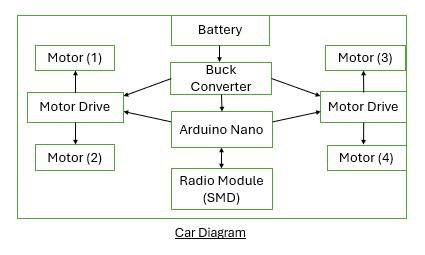
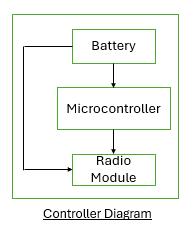
This project includes an invention of a gesture-controlled robotic vehicle that is capable of moving in any direction. It is a mecanum, and it is controlled by an ESP32 microcontroller. The hand gesture controller is commanded by the MPU6050 sensor to follow the positioning and the tilt of the user’s hand. A transmitter module based on the ESP32 will act upon the sensordataandwilltransmitwirelessinputtotheESP-NOWprotocoltotherobot,asthecontrolsignalsrequired. TheESP32 receiver installed on the robot deciphers these and drives the robot with four separate DC motors with the help of motor drivers. Inthisdesign,all directionsarecapableof movement in every direction,including forward,backward, sideways,and even diagonal directions The mecanum wheels together with ESP-NOWcommunication form a system thatcreates a system thatprovidesquickcontrolandmanoeuverability,whichcanbeapplicableinroboticsandhumaninteraction.
ItiscontrolledbythewirelesscontrolofhandgesturesusingESP-NOWandreal-timecontrol.GestureDetection:Itisasensor thatisanMPU6050accelerometerandagyrosensoronaglove,andisabletomeasurethetiltanglesofthehandinasequence ofdirections.
1. DataTransmission:ESP32onthegloveissuesthetranslationofthesensordata;thesensordataistransmittedusing thewirelessESP-NOWprotocol.ThisallowsthedevicestointeractamongstthemselveswithorwithoutWi-Fiandthe internet.
2. SignalReception:TheESP32module,whichhasbeenattachedtotherobot,receivestheinformationaboutthegesture perseandprocessesittounderstandthedirection,aswellasthespeed.
3. Motor Control: Two-channel motor drivers are used to drive the four DC motors with the channel-decoded signals. Contributions made by the motors to motion are inseparable. These mecanum wheels can move the robot without turning in different directions, but with the assistance of special rollers that provide the wheels with an angle of 45 degrees.
4. TheOmnidirectionalMovement:Thehandgesturevaries,whichisbasedonthehandgesture:
Forwardtilt– movesforward
Backwardtilt–movesbackward
Lefttilt–movesleft(strafing)
Righttilt–movesright
Diagonaltiltcombination–diagonalmovementorrotation
The system comprises an accelerator and a microcontroller to detect hand gestures. C++ interprets such gestures and transmitstheinformationwirelesslytotherobotthroughIoT(Wi-Fi/Bluetooth).Themotorcontrolconvertsthemotorcontrol commandsintoatransducerthatdrivestherobot.Thesystemisalsotestedintermsofaccuracy,speed,andreliabilitybefore itsactualimplementation.Thefollowingstepsareincludedinthemethodology:
1. ComponentSelection:Selectappropriatehardware,suchasESP32,accelerator(MPU6050),motordriver,DCmotors, andIoTmodule.
2. SystemDesign:AssemblethehardwareandsoftwarecontroloftherobotusinggesturesandcombineIoTandAI.
3. Gesture Detection: Monitor the motion of the hands using the accelerometer and transmit the motion data to the microcontroller.
4. SignalProcessing:UsingC++algorithms,processtherawsensordataandidentifythe specificgestures,e.g.,forward, backward,left,right,aswellasstop.
5. IoTCommunication:TransmittheidentifiedgesturecommandswirelesslyusingWi-Fi/Bluetoothtotherobot.
International Research Journal of Engineering and Technology (IRJET) e-ISSN: 2395-0056
Volume: 12 Issue: 11 | Nov 2025 www.irjet.net p-ISSN: 2395-0072
6. MovementControl:Therobotmovesforward,backward,left,right,andstopsdependingonthereceivedcommands
7. Testing&Optimization:Testthesystemintermsofaccuracy,latency,andreliability.
8. Deployment:Implementthesystemintheactualfieldwhereremoteandcontactlessapplicationsofcontrolledrobots aretobeaccomplished
6. OBJECTIVES
Todesignahand-gesture-controlledrobotthatrespondstohandgestures.
TointegrateIoTforremotecontrol
Todevelophandgesturerecognition.
Toimplementrobotnavigationthatallowstherobottomoveindifferentdirectionsbasedonhandgestures.
Tocreateauser-friendlyinterfacethathelpsuserseasilycontroltherobot.
Toimprovetheaccuracyandreliabilityofthehandgesturerecognitionsystem.
7. BENEFITS
Innovativecontrolmethod:Handgesturecontrolprovidesauniqueandeasywaytointeractwiththerobot.
Increasedaccessibility.
Improvedsafety:Therobotcanbecontrolledfromadistance,whichlowersthechanceofaccidentsorinjuries.
Thehandgesturecontrolsystemoffersanenjoyableandengagingwaytointeractwiththerobot.
Thetechnologycanworkinmanyfields,likehealthcare,education,andentertainment.
Scalability
8.1. Software Components:
C++:Itisahigh-levelprogramminglanguagethatisusedtodrivethemicrocontrollerandthemotordrivers.
Arduino IDE: It is the primary software tool that is used to write, compile, and upload code to the Arduino microcontrollerembeddedinthehand-gesture-controlledrobot.
8.2. Hardware Components:
ESP32: ESP32 is the primary microcontroller unit that interprets the data of the gesture and implements wireless communicationviaESP-NOWorWi-Fi.
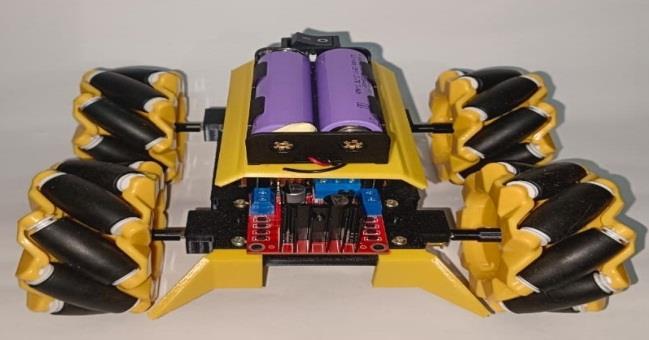
N20 Gear Motor (100 RPM): This motor is a powerful motor needed to provide the power necessary to give the torqueandspeedtorotatealltheMecannumwheels.
Motor driver(HR8833):Thisisa componentthat controls theDCmotorsregarding thedirection theyshould move andtheirspeed.
MPU6050Sensor:Thissensoris employedtodetectmovementsinahandviareadingofthe accelerometersaswell asgyroscopesusedingivingtherobotdirectionstomove.
PCBCircuitBoard(6x4):Thisservesastheinitialpoint inbuildingaswell asaffixingalltheelectroniccomponents withinawell-structuredpositioning.
Mecanum wheels (4x): These are special wheels that enable the robot to move in any direction, including forward, backward,sideways,anddiagonal.
LithiumBattery(18650):Thisbatteryisusedtoprovidetherobotwiththepowertopowerthemotorsandelectrical components.
BatteryHolder(2S):ThisisusedtoprovideasecureconnectionoftheLi-ionbatterieswiththecircuit.
Battery Charging Module: This module provides the ability to safely charge the Li-ion batteries without removing themfromthesystem.
Male/Female Header Pins: These connectors allow removable connections between the ESP32 module, the sensor module, andthemotordrivermodule.
International Research Journal of Engineering and Technology (IRJET) e-ISSN: 2395-0056
Volume: 12 Issue: 11 | Nov 2025 www.irjet.net p-ISSN: 2395-0072
On/OffSwitch:Thisisaswitchthatis employedinswitchingthemainpowersupplytotherobotonoroff,toavoid awkwardoperation.
2-PinPitchScrewTerminal:Thisscrewconsistsofsimplecomponentsof4conductorswithcertainpowerlinesand motorlinkstothePCB.
JumperWires:Thesearewire-fedwiresconnectingthedifferentcomponentsonthePCBwithoneanotherandwith modules.
Gloves:Theusersshouldbecapableofworkingwiththesegloves,andusingthem, theycanattachthegesturesensor (MPU6050)andthusbecapableof.
OtherComponents:Theyaremiscellaneousminorcomponents,i.e.,screws,connectors,andreinforcementmaterials thatareusedduringassembly.
Model Structure: It refers to the body and physical chassis, which are utilized to ensure that the electronic and mechanicalcomponentsareheldinplace.
PROTYPE
International Research Journal of Engineering and Technology (IRJET) e-ISSN: 2395-0056
Volume: 12 Issue: 11 | Nov 2025 www.irjet.net p-ISSN: 2395-0072
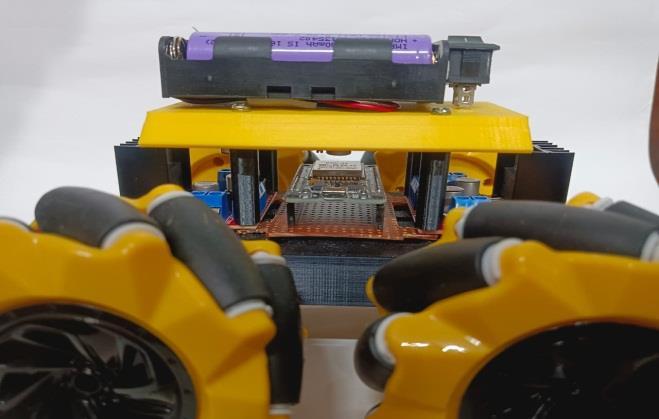
The IoT-Based Hand Gesture-Controlled Robot proves that the process of human-robot communication can be easier, in additiontobeingimprovedbytechnology.Thebuttonsorremotesarenotusedininteractingwiththerobot; rather,thehands aremovedbytheusers.Thistypeofrobothasbeenusedintherealworld,e.g.,assistingthedisabled,contaminatingrobotsin unsafeareas,andonoccasionsdoingworkthatdoesnotallowthepresenceofahumanbeing. Itisacheapsystemthatisnot hardtoinstall.WirelessconnectivityandAIcanalsobeimproved.Therefore,alargepotentialofthistechnologyisexpectedin actualpracticeinsmartindustriesanddailylifeinthenearfuture.
Inthefuture,theAI-basedgesturelearningtechnologywillenabletheserobotstousegesturelearning,whichmeansthatthey areuser-friendlysincetheycanknowthesinglegesturesofdifferentusers.HavingthethematicsconnectedtotheIoTsystems, theiruserswillbeabletomonitorandremotelycontroltherobotsviaasmartphoneoraclouddashboard.Thiswilladdmore applications for them in home automation, surveillance, and warehouses. The usage of 5G or Wi-Fi 6 will allow real-time control without the delays. Old or physically challenged people can also be facilitated with this technology since it is also possibletotouchthesmartmobilitytoolwithoutcharge.
[1] D.Balazh,VasylMrak,A.Sydor,V.Andrushchak,BohdanRusyn,TarasMaksymyuk,“IntelligentIoTControlSystembasedon HandGestureRecognition”,AdvancedIndustrialConferenceonTelecommunications,2023.
[2] T. Rajasekar, P. Mohanraj, P. Madhumitha, S. Nanthitha, S. Naveena, “LEXIBOT: Gesture Controlled Personal Assistant Companion”,5th InternationalConferenceonSmartElectronicsandCommunication(ICOSEC),2024.
[3] M. Muqeet, Bushra Raahat, Narjis Begum, Mohammad Abul Nabeel Hasnain, Afreen Mohammed, “IoT-Based Implementation of Gesture-Controlled Robot”, International Conference on Advances in Electronics, Computers and Communications,2023.
[4] B Devi Sree, K. S. Varsha, D. Subbulekshmi, S.Angalaeswari, T. Deepa, “Design of Hand Gesture Controlled Robot using Arduino”,InternationalConferenceonElectricalEnergySystems,2024.
[5] PatelKathan,RonakMakwana,DhruvilBhavsar,SandeepChauhan,ShrijiGandhi,“IoT-BasedHandGestureControlRobot”, InternationalJournalofEngineeringResearch&Technology(IJERT),2278-0181Vol.12Issue09,September2023.
[6] HumaZia,BaraFteiha,MahaAbdulnasser,TaflehSaleh,FatimaSuliemn,“Gesture-controlledomnidirectionalautonomous vehicle:Aweb-basedapproachforgesturerecognition”,volume26,July2025.
International Research Journal of Engineering and Technology (IRJET) e-ISSN: 2395-0056
Volume: 12 Issue: 11 | Nov 2025 www.irjet.net p-ISSN: 2395-0072
[7] IJ Ding, JL Su, “Designs of human-robot interaction using depth sensor-based hand gesture communication for smart material-handling robot operations”, Proceedings of the Institution of Mechanical Engineers, Part B: Journal of Engineering Manufacture,237(3)(2023),pp.392-413,2023.
[8] R. Swarup, K. Banerjee, S. Sehgal, “Hand gesture controlled smart car using image recognition”, ir.juit.ac.in, J Electr Syst, 20(7s)(2024),pp.2349-2355,2024.




VaishnaviRajeshGahlod, Currentlystudyingin Artificial IntelligenceandData Science
Engineering,RTMNU, Nagpur
NikitaVijayYende, Currentlystudyingin Artificial IntelligenceandDataScience Engineering,RTMNU,Nagpur
PoojaPradipNaikwade, Currentlystudyingin Artificial IntelligenceandData Science
Engineering,RTMNU, Nagpur
Dr.SanjayM.Malode, WorkingasaProfessorin Artificial IntelligenceandDataScience Engineering,RTMNU,Nagpur.
2025, IRJET | Impact Factor value: 8.315 | ISO 9001:2008