
International Research Journal of Engineering and Technology (IRJET) e-ISSN:2395-0056
Volume:12Issue:03|Mar2025 www.irjet.net p-ISSN:2395-0072
International Research Journal of Engineering and Technology (IRJET) e-ISSN:2395-0056
Volume:12Issue:03|Mar2025 www.irjet.net p-ISSN:2395-0072
Harshita Kandpal1 , Talha Usmani1, Ayaan Khan1, Bakhtiyaar Khan1, and Dr. Ankita Srivastava2
1Student, Department of Computer Science & Engineering, Integral University, Lucknow INDIA
2Assistant Professor, Department of Computer Science & Engineering, Lucknow INDIA
Credit card fraudisahugethreatto financial security,makingitimperativethatstrongfraud detection modelsbe built. Thisworkinvestigatestheuseof machine learningalgorithmsforfrauddetectionintransactions with highprecision. Wepreparethe datasetforuse withfeature scalingmethodslikeStandard Scaler toimprovetheperformanceof models.Differentmachine learningmodels,suchasLogistic Regression, Decision Trees, Random Forest, and Support Vector Machines, areusedand comparedintermsofperformancemetrics likeaccuracy,precision,recall,andF1-score.The comparison indicatestheadvantagesand disadvantages of each model, and the most suitable method for fraud detection is suggested. Experimental findings confirm that although higher accuracy is found in some models, others present better recall that is essential to reduce false negatives in fraud identification. This paper adds to efforts aimed at making financial security even better by defining the most appropriate machine learningalgorithmforcreditcardfrauddetection.
Keywords: CreditCardFraudDetection,MachineLearning,LogisticRegression,FraudPrevention,ModelComparison
Credit card fraud is a serious issue that affects numerous individuals and companies worldwide. The scammers employ different techniques, such as stolen card information, identity theft, and counterfeit transactions, to purchase goods without authorization. The greater number of individuals making electronic payments, the more sophisticated the methodsbecomeforcommitingfraud,renderingthepreviousmethodsoffrauddetectionobsolete. Toaddressthisissue, machine learning has proven to be a robust technique for identifying suspicious transactions. Unlike other approaches, machinelearningalgorithmsprocesshugevolumesof transactiondata,recognizepatterns,andlearntoidentifygenuine transactions and fraudulent ones. With each additional data set processed, the models keep on improving, enabling transactions to be detected at a faster and more precise rate. In this research, we investigate how machine learning, specificallylogistic regression, canbeused to improvecredit cardfraud detection. We preprocess transaction data, perform feature scaling, and measure the performance of the model using important metrics like accuracy, precision, recall, and F1-score. The aim is to create an effective fraud detection system that reduces false positives while accurately detecting fraudulent transactions. This study emphasizes the significance of sophisticated fraud detection methodsinthebankingindustryandshowshowmachine learning canassistinsafeguardingcustomers andcompanies againstfinancialloss.
International Research Journal of Engineering and Technology (IRJET) e-ISSN:2395-0056
Volume:12Issue:03|Mar2025 www.irjet.net p-ISSN:2395-0072
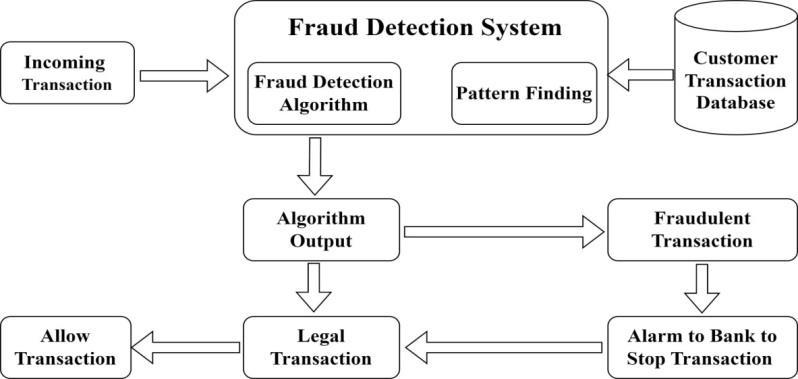
Creditcardfrauddetectioninvolvesidentifyingunauthorizedtransactionsmadeusingstolenorcompromisedcreditcard information. Fraud detection involves analyzing transaction patterns to identify fraudulent activities. ML models, like logistic regression, learn from past data to detect anomalies. Feature scaling improves accuracy, and evaluation metrics like precision and recall ensure effectiveness. ML enhances fraud detection, reducing financial losses and improving security.
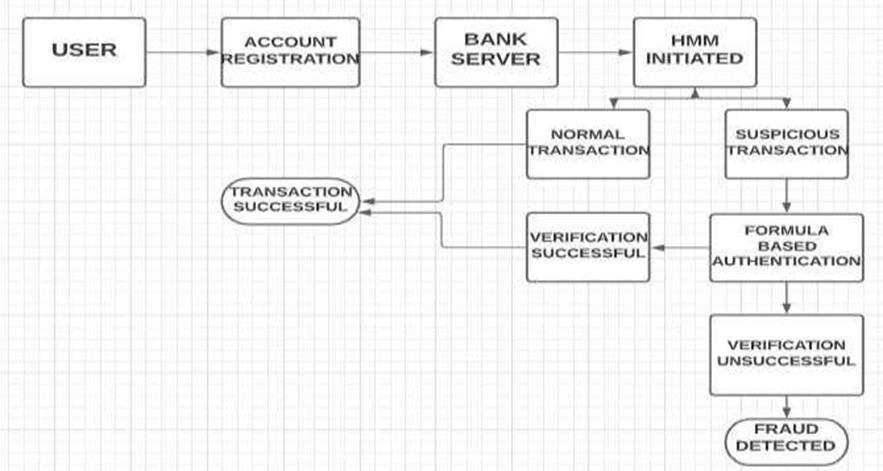
Researchers haveuseddifferentmachine learningmethodstoenhancecredit card fraud detection.Conventionalrulebased systems,whileeffective toacertain degree,arenot abletoidentifychangingfraud patterns. Machine learning models,however,scanlargeamountsofdata,findunderlyingpatterns, andlearnover time toidentifyfraud moreeffectively.
Anumberof experimentshavetriedoutvariousML algorithms. Logistic regression, decision trees, and support vector machines (SVM) have beenextensivelyusedbecausetheycanclassify transactions aslegitimateorfraudulent.Advanced models such as neural networks and deep learning have also proved to be highly accurate but are very computationally intensive.
Data preprocessingmethods, includingfeature scaling andclass imbalancehandling(asfraudulent transactions are far less common than legitimate ones), are important in enhancing model performance. Researchers highlight evaluationmetrics suchasprecision,recall,andF1-scoretoensurethat modelsnot onlyidentifyfraud but alsoreduce false positives. Recent research also examines hybrid models, in which several algorithms collaborate to enhance fraud detection.Real-time fraud detectionwithML isalsobecoming increasingly popular,enablingbanks and financial institutionstoactquicklyagainstsuspicioustransactions.
Mostresearchers haveworkedon supervised learning, where models are trainedwithlabeled transaction data toseparatefraudulent andgenuinetransactions.Researchhasestablishedthat logistic regression, decision trees, and supportvectormachines(SVM)arepopularlyappliedforthispurpose.
Dal Pozzolo et al. (2015) showedhowlogistic regressioncombinedwithmethodssuchasdata resamplingcancontributesubstantiallytoimprovingfrauddetectionprecision.
International Research Journal of Engineering and Technology (IRJET) e-ISSN:2395-0056
Volume:12Issue:03|Mar2025 www.irjet.net p-ISSN:2395-0072
West and Bhattacharya (2016) highlightedthenecessityofapplyingprobabilityscoresfromlogisticregression todeterminefinancialriskandidentifysuspicioustransactions.
3.2.
Someargue thattheuseoflabeled dataonlyisrestrictivebecausefraudstersadapttheirmethods all the time. Toaddressthis,unsupervisedlearningapproacheslikeclusteringandanomalydetectionhavebeenconsidered.
Chandolaet al. (2009) pointedouthow unsupervisedmethodssuchask-means clustering and auto encodersareabletoidentifyemergingpatternsoffraudwithoutlabeleddata.
Carcilloet al. (2019) demonstratedthat hybrid models, whichintegratelogistic regression with deep learning,improvethecapacitytodetectfraudmoreefficiently.
One of thegreatestdifficultiesin fraud detection is thatonly averysmallpercentageoftransactionsarefraudulent,somodelscannotlearn from them. Totryto solvethis, researchers haveinvestigateddatabalancingmethods:
Chawlaet al. (2002) presentedthe SMOTE (Synthetic Minority Over-sampling Technique) togeneratesynthetic fraudsamplesforenhancingmodelperformance.
Bahnsenet al. (2016) createdcost-sensitive logistic regression, whichimposesgreaterpenaltiesonincorrectlyclassifyingfraudcases,catchingmorefraudulenttransactions.
Selectingappropriatefeatures iskeytoenhancingfraud detection accuracy.Researchhasinvestigatedvariousmethodsofdeterminingthemostsignificanttransactionfeatures.
Phua et al. (2004) statedthattransactionvolume, frequency, and customerusagepatternareprincipalcontributingfactorstowarddetectingfraud.
Carcillo et al. (2019) utilizedRecursive Feature Elimination (RFE) and Principal Component Analysis (PCA) todeleteirrelevantdatatomakethemodelmoreefficient.
Logisticregressionhasbeenusedasamatterofcourse,butithasalsobeenexploredwithothermachinelearningmodels todetermineitsstrengthsandweaknesses.
Abdallah et al. (2016) discoveredthatdespitetheexistenceofimprovedmodels such as Random Forest and GradientBoostingMachines(GBM),logisticregressionisstillviablesinceitiseasyandcheapertoemploy.
Tsai et al. (2009) claimedthat inactualfinancescenarios, individualstypicallyemploylogistic regression since it issimpletocomprehendandadherestobankingregulations. Overall, the literatureshowsthat machine learninghighlyimprovesourcapabilitytoidentifyfraud,avoidsmonetarylosses, andsafeguardselectronic transactions.Muchhasbeendoneoncredit card fraud detectionbyresearchersusingmachine learning.Logistic regressionisstilla good baseline model,butenhancementsin hybrid models, anomaly detection, and feature engineeringhaveled toincreasinglycomplexfraud detection systems in recenttimes. Future research shouldpersistindevelopingexplainableAI-based fraud detectionwiththeabilitytolearntodetectemergingfraud schemes.
The data set includes September 2013 credit card transactions by European cardholders. This dataset contains transactionsperformedovertwo dayswhere we have 492 fraudsamong284,807 transactions.Thedataisextremely skewed;thepositiveclasses(frauds)represent0.172%oftotaltransactions.
Ithasonlynumericinputfeatureswhich areoutputsof a PCA transformation.Wecan'tgivethe original features andadditionalbackground informationregardingthe datadue to confidentiality reasons. Features V1, V2 … V28 are the
International Research Journal of Engineering and Technology (IRJET) e-ISSN:2395-0056
Volume:12Issue:03|Mar2025 www.irjet.net p-ISSN:2395-0072
principal componentswhichwe have derivedwith PCA,'Time' and 'Amount' arethe only features whicharenottransformedusingPCA. Feature 'Time'holdsthe secondsbetween each transaction and theinitialtransaction in thedata.Feature 'Amount' is the transaction Amount, this feature can beappliedfor examplebasedcost-sensitive learning. Feature 'Class' is the response variable and itholdsvalue 1forfraud and 0for non-fraud.

Theprojectisfocusedondetectingcreditcardfraudusingmachinelearning,andithasmainlybeenworkedoninJupyter Labbecauseit'sfastandconvenientforrunningPythoncode.
Thedatawasdownloadedfrom Kaggle,awebsitethatoffersresearchdatasets. The dataset has 31 columns: 28 of them (V1 to V28) aretransformedfeaturestoensuresensitivedataisnotrevealed. Theotherthree columns are Time (representingthe time difference between transactions), Amount (the transactionamount), and Class (representingwhetheratransactionisreal(0)ornot(1)).WeusedPython librariessuchasNumPy and Pandasfor data analysis, Matplotlib and Seaborn forplotting graphs, andScikit-learn for machine learningfor the project.Theyare freeandopen-sourceandarecomplementaryinnaturetodesignandtestvariousfrauddetectionmodelswithease.
5.1
Thedatasetusedforthisstudyconsistsoftransactionrecordscontainingbothfraudulentandnon-fraudulenttransactions. Thedataisobtainedfrompubliclyavailablesourcesorfinancialinstitutions.Eachtransactionischaracterizedbymultiple features,includingtransactionamount,time,location,andcustomerdetails.
5.2
Toensurethedatasetissuitableforuse,thefollowingpreprocessingstepsareperformed:
Handling Missing Values: If any Missing values are present then those are addressed using imputation techniquesorremoval.
FeatureScaling:Sincelogisticregressionissensitivetofeaturemagnitudes,numericalattributesarescaledusing StandardScaler tonormalizethedata.
Encoding Categorical Variables: Categorical features, if present, are converted into numerical representations usingone-hotencodingorlabelencoding.
International Research Journal of Engineering and Technology (IRJET) e-ISSN:2395-0056
Volume:12Issue:03|Mar2025 www.irjet.net p-ISSN:2395-0072
Handling Class Imbalance: As fraud detection datasets are typically imbalanced which lead to less accurate result,so,techniquessuchas oversampling(SMOTE) or undersampling areappliedtobalancetheclasses.
5.3 Feature Selection
Relevantfeaturesareselectedusing:
CorrelationAnalysis:Identifyingfeatureshighlycorrelatedwithfraudulenttransactions.
RecursiveFeatureElimination(RFE):Removingirrelevantorredundantfeatures
5.4 Model Implementation
Theimplementationfollowsthesesteps:
Implementandcomparemultiple MachineLearningAlgorithms:
LogisticRegression
K-NearestNeighbors
DecisionTree
RandomForest
XGBoost
Splittingthedatasetintotwopartsi.e.training(80%)andtesting(20%)sets.
TrainingthedifferentMLalgorithmsmodelusingthetrainingset.
5.5 Model Evaluation
Thetrainedmodelisevaluatedusing:
Accuracy:Overallcorrectnessofpredictions.
Precision:Fractionofidentifiedfraudulenttransactionsthataretrulyfraud.
Recall(Sensitivity):Abilitytodetectfraudulenttransactions.
F1-score:Balancesprecisionandrecall.
ROC-AUC Score: Measures the model’s ability to differentiate between fraudulent and non-fraudulent transactions.
6. Model Evaluation and Performance Analysis
A logisticregressionmodel ischosenduetoitsinterpretabilityandefficiency
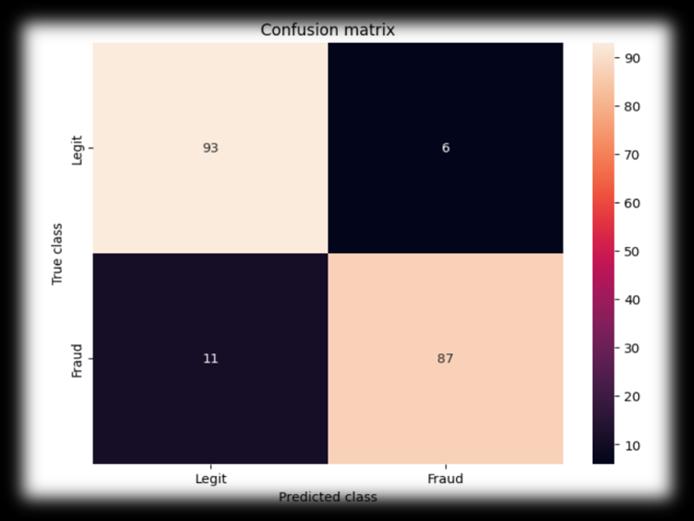
To assess the effectiveness of the logistic regression model for credit card fraud detection, a confusion matrix was generated, as shown in Figure [4]. The confusion matrix provides insights into the model’s classification performance by comparingpredictedlabelswithactualtransactionclasses.
6.1 Confusion Matrix Interpretation
Theconfusionmatrixinfig4consistsoffourkeycomponents:
TruePositives(TP)=87 →Representsthat87Fraudulenttransactionsarecorrectlyidentifiedasfraud.
TrueNegatives(TN)=93 →Representsthat93Legitimatetransactionsarecorrectlyclassifiedaslegitimate.
FalsePositives(FP)=6 →Representsthat6Legitimatetransactionsaremisclassifiedasfraud.
FalseNegatives(FN)=11 →Representsthat11Fraudulenttransactionsaremisclassifiedaslegitimate.
6.2 Performance Metrics
Toquantitativelyassessthemodel'sperformance,keyevaluationmetricswerecalculated:
1. Accuracy measurestheoverallcorrectnessofthemodel:
International Research Journal of Engineering and Technology (IRJET) e-ISSN:2395-0056
Volume:12Issue:03|Mar2025 www.irjet.net p-ISSN:2395-0072
2. Precision indicateshowmanyofthepredictedfraudcaseswereactuallyfraud:
Ahighprecisionsuggeststhatthemodelisreliableindetectingfraudwithminimalfalsealarms.
3. Recall representstheproportionofactualfraudcasesthatwerecorrectlydetected:
A recall of 88.8% implies that 11.22% of fraudulent transactions were missed, which could pose a financial risk.
4. FalsePositiveRate(FPR) showstheproportionoflegitimatetransactionsmisclassifiedasfraud:
AlowFPRindicatesthatlegitimateusersarenotfrequentlyinconveniencedbyfalsefraudalerts
7. Results
After implementinga Logistic Regression model forcreditcard fraud detection, theperformance of the model was evaluated using a confusion matrix and key classification metrics. The results demonstrate the effectiveness of the modelinidentifyingfraudulenttransactionswhilemaintainingaccuracyinlegitimatetransactionclassification.
International Research Journal of Engineering and Technology (IRJET) e-ISSN:2395-0056
Volume:12Issue:03|Mar2025 www.irjet.net p-ISSN:2395-0072
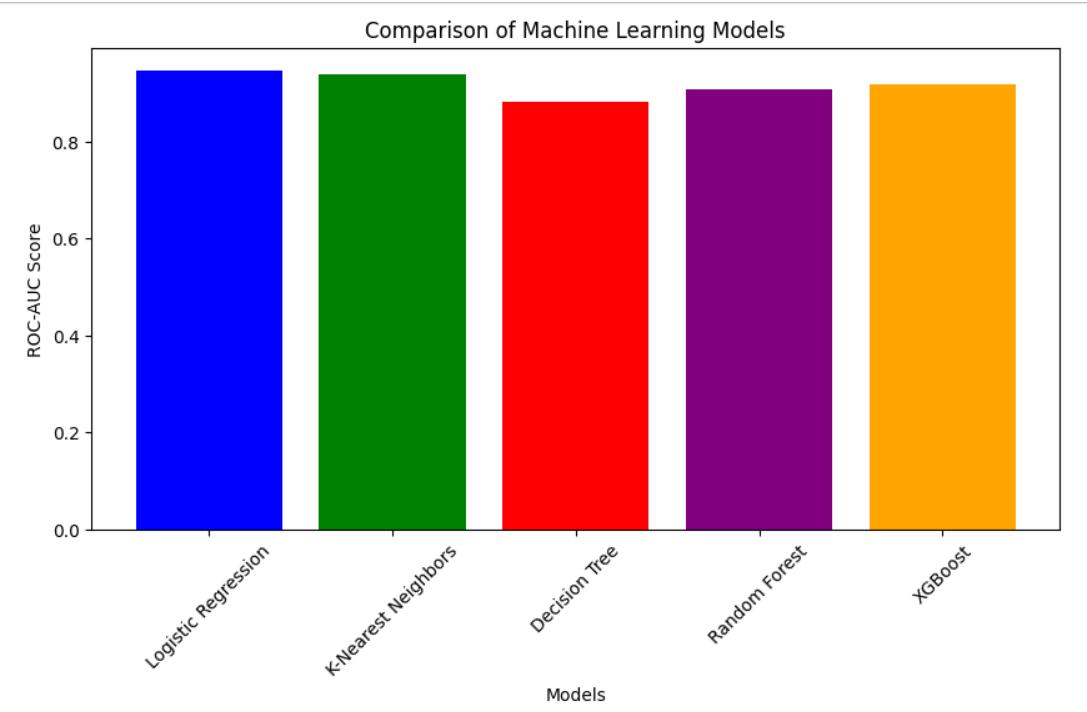
ROC-AUCscoresfordifferentmachinelearningmodels
Logistic Regression (Blue) and K-Nearest Neighbors (Green) havehighROC-AUC scores,bothreflectingexcellentfraudulentdetectionperformance.
DecisionTree(Red)hascomparativelylowerROC-AUC score;thereforeitmightnotbegoodatgeneralizingfraud detection.
Random Forest (Purple) and XGBoost (Orange)arebetterthan Decision Tree butworsethanLogistic Regression andKNN.
Conclusion
In this project, we developed a credit card fraud detection system using Logistic Regression , K-Nearest Neighbors, DecisionTree,RandomForest,andXGBoost.Themodelwastrainedonadatasetcontainingbothlegitimateandfraudulent transactions, with feature scaling applied using Standard Scaler to enhance performance. The evaluation was performed usingaconfusionmatrixandclassificationreport,providingkeyinsightsintothemodel'saccuracyandeffectiveness.
Inthisstudy, wetestedand comparedseveralmachine learning models, including Logistic Regression, K-Nearest Neighbors, Decision Tree, Random Forest, and XGBoost,in ordertodeterminethe most effectivewayofdetectingfraud.
Our experimental resultsindicatedthat Logistic Regression and K-Nearest Neighborshadthe highest ROC-AUC scores,astheywereefficientindifferentiatingfraudulentcases.Decision Treeshadpoorperformanceasthey were pronetooverfitting,whileRandomForestandXGBoosthadsomeimprovementsbutwerenotabletooutperformthebasic models.
Tohandlethestronglyimbalanced nature of fraud detection datasets,methodssuchasSMOTE oversampling, undersampling,andcost-sensitivelearningwereemployedtoenhancemodelperformance.Precision,recall,F1-score,and ROC-AUC-basedperformancemeasurescapturedtheaccuracyvs.frauddetectionsensitivitytrade-offs.
The studydeterminesthat a combination of featurenormalization,balanceddatamanagement, andabettermodel selectionmethodismostcriticaltoeffective fraud detection. Futurestudiescaninvestigatedeep learningarchitectures, anomaly detection techniques, and real-time fraud prevention systems tofurtherenhance detection accuracy. Implementing the bestperforming model in a real-worldbankingenvironmentcanpotentiallyresultinaradical decrease infraudandenhancebankingsecurity.
International Research Journal of Engineering and Technology (IRJET) e-ISSN:2395-0056
Volume:12Issue:03|Mar2025 www.irjet.net p-ISSN:2395-0072
References
1. Bahnsen, A. C., Aouada, D., Stojanovic, A., & Ottersten, B. (2016). Feature engineering strategies for credit card fraud detection. ExpertSystemswithApplications,51,134-142.https://doi.org/10.1016/j.eswa.2015.12.030
2. Bhattacharyya, S., Jha, S., Tharakunnel, K., & Westland, J. C. (2011). Data mining for credit card fraud: A comparative study. DecisionSupportSystems,50(3),602-613.https://doi.org/10.1016/j.dss.2010.08.008
3. Carcillo, F., Le Borgne, Y., Caelen, O., Bontempi, G., & Jansen, B. (2019). Combining unsupervised and supervised learningincreditcardfrauddetection. InformationSciences,479,448-460.https://doi.org/10.1016/j.ins.2018.01.015
4. Chandola, V., Banerjee, A., & Kumar, V. (2009). Anomaly detection: A survey. ACMComputingSurveys,41(3), 1-58. https://doi.org/10.1145/1541880.1541882
5. Chawla, N. V., Bowyer, K. W., Hall, L. O., & Kegelmeyer, W. P. (2002). SMOTE: Synthetic minority over-sampling technique. JournalofArtificialIntelligenceResearch,16,321-357.https://doi.org/10.1613/jair.953
6. Dal Pozzolo, A., Boracchi, G., Caelen, O., Alippi, C., & Bontempi, G. (2015). Credit card fraud detection: A realistic modeling and a novel learning strategy. IEEETransactionsonNeuralNetworksandLearningSystems,29(8), 37843797.https://doi.org/10.1109/TNNLS.2017.2736643
7. López-Rojas,E.A.,Elmir,E.A.,&Axelsson,S.(2016).PaySim:Afinancialmobilemoneysimulatorforfrauddetection. 2016 28th European Modeling and Simulation Symposium (EMSS), 249-255. https://doi.org/10.1109/EMSS.2016.7733251
8. Phua,C.,Lee,V.,Smith,K.,&Gayler,R.(2004).Acomprehensivesurveyofdatamining-basedfrauddetectionresearch. ArtificialIntelligenceReview,34(4),1-14.https://doi.org/10.1007/s10462-004-4304-x
9. Tsai,C.F.,Lin,C.Y.,Hu,Y.H.,&Yao,G.T.(2009).Creditscoringusingahybridmodel:Acomparisonbetweenlogistic regression and artificial neural networks. Expert Systems with Applications, 36(2), 365-373. https://doi.org/10.1016/j.eswa.2007.10.045
10. West, J., & Bhattacharya, M. (2016). Intelligent financial fraud detection: A comprehensive review. Computers & Security,57,47-66.https://doi.org/10.1016/j.cose.2015.09.005
11. Abdallah, A., Maarof, M. A., & Zainal, A. (2016). Fraud detection system: A survey. JournalofNetworkandComputer Applications,68,90-113.https://doi.org/10.1016/j.jnca.2016.04.003