
International Research Journal of Engineering and Technology (IRJET) e-ISSN: 2395-0056
Volume: 12 Issue: 10 | Oct 2025 www.irjet.net p-ISSN: 2395-0072
International Research Journal of Engineering and Technology (IRJET) e-ISSN: 2395-0056
Volume: 12 Issue: 10 | Oct 2025 www.irjet.net p-ISSN: 2395-0072
Ubai M. Bubere1 , Dr. Uma S. Kale 2 ,
1Student, Department of Civil Engineering, MHSSCE Mumbai, Maharashtra , India
2Assistant Professor, Department of Civil Engineering, MHSSCE Mumbai, Maharashtra , India
Abstract - Mining underpins modern economies but faces rising technical, environmental, and social pressures. This paper combines three complementary strands of recent scholarship: (i) a historical review of global mining development, (ii) advances in operations research (OR) applied to mine design, production and transportation, and (iii) the socio-economic realities of artisanal and small-scale mining (ASM)inTanzania. Togethertheseinsightshighlight the sector’s technological progress, the importance of mathematical modelling for sustainable mine planning, and the urgent need to formalize small-scale operations to enhance safety, economic returns, and environmental stewardship.
Key Words: Mining industry ,Operations research ,Mine planning ,Open-pit design ,Underground mining ,Block model ,Mine production sequencing ,Artisanal and smallscalemining(ASM),Tanzania,Sustainablemining,Resource management,Environmentalimpact
1.INTRODUCTION
From Paleolithic ochre pits to twenty-first-century multinational corporations, mining has evolved into a capital-intensive,technology-drivenindustry.Yetsmall-scale extractionpersistsworldwide,employingmillionsandoften coexisting withhighly mechanized operations.Integrating historical, operational, and community-level perspectives provides a richer understanding of how mining can meet futureresourcedemandsresponsibly
IrjetTemplatesampleparagraph.Defineabbreviationsand acronymsthefirsttimetheyareusedinthetext,evenafter theyhavebeendefinedintheabstract.Abbreviationssuchas IEEE,SI,MKS,CGS,sc,dc,andrmsdonothavetobedefined. Donotuseabbreviationsinthetitleorheadsunlesstheyare unavoidable.
Archaeologicalevidencetracesorganizedmineralextraction back over 40,000 years. Ancient Egyptians, Greeks, and Romans developed sophisticated techniques such as hydraulicminingandfire-setting.TheIndustrialRevolution accelerateddemandformetals,whilethetwentiethcentury
introducedexplosives,mechanizeddrilling,andlarge-scale open-pitmethods.Today,miningsuppliesessentialinputs for energy transition technologies, including rare earth elementsandbatterymetals
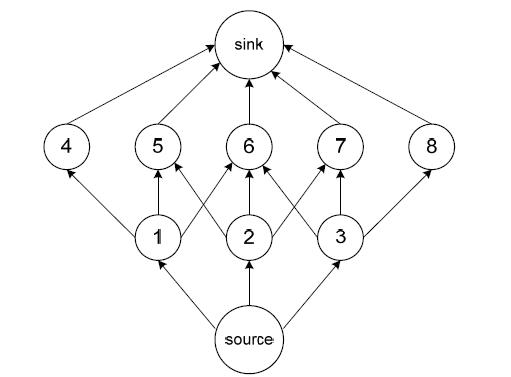
Modern mines are complex systems where profitability dependsonoptimaldesignandscheduling.ORmethods linear and mixed-integer programming, network flow models,andstochasticoptimization arenowstandardfor:
MineDesign:determiningultimatepitlimitsviamaximumclosurenetworkmodels.
ProductionSequencing:decidingwhichoreblockstoextract each period to maximize net present value while meeting geotechnicalconstraints.
Transportation Logistics: optimizing truck fleets, haulage routes,andtrainschedulestocutcostandemissions.
Benchmark algorithms such as the Lerchs–Grossmann approach for open-pit design and Steiner-tree models for underground layouts illustrate the growing mathematical sophisticationofthefield.
Contrasting sharply with high-tech operations, Tanzania’s ASM sector employs an estimated 0.5–1.5 million people. Gold extraction occurs mainly in the Lake Victoria greenstonebelt,whereminersusehandtoolsandmercury amalgamation. Challenges include unsafe shafts, rudimentaryprocessing,limitedaccesstofinance,andweak enforcement of licensing and environmental standards. Nevertheless,ASMcontributesupto10%ofnational gold outputandremainsacruciallivelihoodstrategy.Policiesthat formalize property rights, provide training, and introduce cleanertechnologies(e.g.,gravityconcentration,retortsfor mercury capture) could significantly raise incomes and reduceecologicaldamage.
International Research Journal of Engineering and Technology (IRJET) e-ISSN: 2395-0056
Volume: 12 Issue: 10 | Oct 2025 www.irjet.net p-ISSN: 2395-0072
The juxtaposition of cutting-edge OR modelling with informalASMrealitiesrevealsadualminingeconomy.Key recommendationsinclude:
1. Technology Transfer: simplified block-model planningtoolsadaptedforsmalloperators.
2. Capacity Building: government–academic partnerships for training in mine safety and mineral processing.
3. Sustainability Metrics: integration of life-cycle assessment and community impact indicators into both large-scaleandartisanalplanning.
4. Data-Driven Governance: use of GIS and remote sensing to monitor ASM sites and enforce environmental safeguards.
3. CONCLUSIONS
Mining’sfuturedependsonbalancingefficiencywithequity. Historical trendsshowcontinuousinnovation;currentOR techniques demonstrate the power of analytics; and the Tanzaniancaseunderscoresthehumandimension.Bridging theseworldscandeliverresponsibleresourcedevelopment that benefits both global supply chains and local communities.
ACKNOWLEDGEMENT
Theauthorswouldliketoexpresstheirsinceregratitudeto Dr. Uma S. Kale, Assistant Professor, Department of Civil Engineering, M.H. Saboo Siddik College of Engineering, Mumbai,forherinvaluableguidance,encouragement,and continuoussupportthroughoutthecourseofthisresearch work.Theauthorsarealsothankfultothe Department of Civil Engineering forprovidingthenecessaryfacilitiesand resourcestocarryoutthisstudy.Finally,theauthorsextend
their appreciation to all colleagues and friends who contributed directly or indirectly to the successful completionofthispaper.
[1] Khayal,O.M.E.S.,&Elagab,E.B.(2022).AReviewStudy inMiningIndustry.InternationalJournalofEngineering AppliedSciencesandTechnology(IJEAST),7(6),1–14. Published October 2022. (Source file: 0114Tesma0706IJEAST.pdf)
[2] Kozan,E.,&Liu,S.-Q.(2011).OperationsResearchfor Mining: A Classification and Literature Review. Mathematical Sciences, Queensland University of Technology.(Sourcefile:ASOR-B2011.pdf)
[3] Mdee,O.J.(2015).PotentialofArtisanalandSmall-Scale GoldMinesforEconomicDevelopmentinTanzania:A Review.JournalofGeologyandMiningResearch,7(2), 11–18. DOI: 10.5897/JGMR14.0217. (Source file: journal1424880243_FebruaryIssue.pdf)

Bubere Ubai Muqtadir is an undergraduatestudentintheCivil Engineering Department at M.H. Saboo Siddik College of Engineering.Hisresearchinterests focus on structural behavior, sustainable materials, and constructionpractices.Heaspires to contribute innovative ideas to the civil engineering industry through academic and practical research.

Kale Uma Santosh isanAssistant Professor in the Department of Civil Engineering at M.H. Saboo Siddik College of Engineering, Mumbai. She specializes in Environmental Engineering and has significant experience in teaching and research in this domain. Her work focuses on sustainable environmental practices, water treatment technologies, and environmental impactassessment