
International Research Journal of Engineering and Technology (IRJET) e-ISSN: 2395-0056
Volume: 13 Issue: 03 | Mar 2026 www.irjet.net p-ISSN: 2395-0072
International Research Journal of Engineering and Technology (IRJET) e-ISSN: 2395-0056
Volume: 13 Issue: 03 | Mar 2026 www.irjet.net p-ISSN: 2395-0072
S. Usha Nandhini 1 , L. Inbathamizh 2 , M. S. Sowmya Narayan 3 , Rean Vergis Manu 4
1Assistant Professor, Department of Biotechnology, Sathyabama Institute of Science and Technology, Chennai, India
2 Assistant Professor, Department of Biotechnology, Sathyabama Institute of Science and Technology, Chennai, India
3 Bachelor of Technology, Department of Biotechnology, Sathyabama Institute of Science and Technology, Chennai, India
4 Bachelor of Technology, Department of Biotechnology, Sathyabama Institute of Science and Technology, Chennai, India
Abstract - Alzheimer’s disease (AD) is a progressive neurodegenerative disorder marked by memory loss and cognitive impairment, primarily associated with the abnormal aggregation of amyloid-β (Aβ) peptides in the brain. The accumulation of Aβ initiates a cascade of pathological events, including synaptic dysfunction, oxidative stress, neuroinflammation, and neuronal death. Although several therapeutic strategies have been developed to target amyloid pathology, most have shown limited success, largely due to the complex and multifactorial nature of the disease. Plant-derived phytochemicals are emerging as promising candidates for ADmanagementbecauseoftheirnaturalorigin,structural diversity, and ability to interact with multiple biological targets. This review summarizes recent computational studies that explore the anti-amyloid potential of phytochemicals using silico techniques. Molecular docking analyses indicate that various flavonoids, polyphenols, and terpenoids exhibit favorable binding interactions with key AD-related targets such as amyloid-β aggregates, βsecretase (BACE1), acetylcholinesterase, and tau-related enzymes.Networkpharmacologyapproachesfurtherreveal that these compounds influence interconnected protein networks involved in amyloid processing, oxidative stress regulation, and neuronal survival. In addition, in silico pharmacokinetic and toxicity predictions suggest that several phytochemicals possess acceptable drug-likeness properties, including predicted blood–brain barrier permeability and low toxicity. Molecular dynamics simulationsreportedinselectedstudiessupportthestability of phytochemical–protein complexes under simulated physiological conditions. Overall, this review highlights the usefulnessofcomputationalandnetwork-basedapproaches in identifying plant-derived compounds with multi-target potential, providing a foundation for future experimental andtherapeuticstudiesinAlzheimer’sdisease.
Key Words: Alzheimer’s disease; Amyloid-β; Phytochemicals; In silico studies; Molecular docking; Network pharmacology; Neurodegeneration; Druglikeness
1.1
Alzheimer’s disease (AD) is the most prevalent neurodegenerative disorder, affecting millions worldwide and contributing significantly to disability and healthcare burden. Clinically, AD is characterized by progressive decline in memory, executive function, and learning capacity caused by complex molecular and cellular disturbances. A central pathological feature is the accumulation of amyloid-β (Aβ) peptides produced from proteolytic cleavage of amyloid precursor protein (APP). Under pathological conditions, Aβ fragments misfold and assemble into soluble oligomers and insoluble extracellular plaques that disrupt neuronal communicationandsynapticfunction(SelkoeDandHardy J etal., 2016;Roda etal., 2022).Soluble Aβ oligomers are particularly neurotoxic, impairing hippocampal long-term potentiation, disrupting calcium homeostasis, destabilizing neuronal membranes, and triggering oxidativestresspathways(Zhang etal., 2023).Theseearly synaptic disturbances represent some of the earliest detectable events in AD progression. Amyloid pathology alsointeractswithotherneurodegenerativeprocesses.Aβ accumulation promotes hyperphosphorylation and neurofibrillary tangle formation through multiple signaling pathways, establishing a pathological feedback loop that accelerates neuronal dysfunction (Roda et al., 2022;Nam etal., 2025).Taupathologycorrelatesstrongly with cognitive decline and disease severity, highlighting the synergistic relationship between Aβ and tau in AD progression (Nam et al., 2025; Zhang et al., 2023). Consequently, targeting a single pathway may be insufficienttohaltdiseaseprogression.
International Research Journal of Engineering and Technology (IRJET) e-ISSN: 2395-0056
Volume: 13 Issue: 03 | Mar 2026 www.irjet.net p-ISSN: 2395-0072
Therapeutic strategies have therefore largely focused on reducing Aβ production or enhancing its clearance. Approaches such as β-secretase (BACE1) inhibition and monoclonal antibodies targeting amyloid aggregates can reduceplaque burdenonimaging; however, clinical trials have shown only modest cognitive improvements (Tonegawa-Kuji et al., 2025; Perneczky et al., 2023). Several factors contribute to this limitation. Many antibody therapies primarily target insoluble fibrillar plaques rather than the smaller soluble oligomers responsibleformajorsynaptictoxicity(Tolar etal., 2020). In addition, Aβ deposition begins decades before clinical symptoms appear, meaning that by the time AD is diagnosed,downstreamprocessessuchastauaggregation, neuroinflammation, and neuronal loss are already established(SelkoeDandHardyJ etal., 2016;Zhang etal., 2023). Further challenges include limited drug delivery across the blood–brain barrier for large antibody molecules and safety concerns such as amyloid-related imaging abnormalities (ARIA), which include cerebral edema and microhemorrhages (Cummings et al., 2025; Tonegawa-Kuji et al., 2025; Eric Larson et al., 2012). Moreover,ADisnowwidelyrecognizedasamultifactorial disorder involving tau pathology, chronic neuroinflammation, oxidative stress, mitochondrial dysfunction, and vascular impairment in addition to amyloid accumulation (Nam et al., 2025; Yiannopoulou & Papageorgiou et al., 2020). These complexities highlight thelimitationsofsingle-targettherapeuticstrategies.
In this context, phytochemicals bioactive compounds derived from plants have gained attention as potential multi-target therapeutic candidates. Classes such as flavonoids, polyphenols, and terpenoids exhibit antioxidant, anti-inflammatory, cholinesterase-inhibitory, anti-aggregatory, and kinase-modulating activities that correspond to multiple pathological pathways of AD. Compared with many synthetic drugs, phytochemicals often demonstrate lower toxicity and favorable pharmacokineticprofiles,makingthemattractivescaffolds for CNS-directed drug discovery. Computational studies support their therapeutic potential, with in silico docking analyses showing that spice-derived phytochemicals exhibit strong binding affinity toward targets such as BACE1 and AChE, suggesting modulation of both amyloidogenic and cholinergic pathways (Alom et al., 2023).Additionaldockingandmoleculardynamicsstudies indicate that dietary flavonoids including quercetin, catechins, and resveratrol can inhibit Aβ1-40 and Aβ1-42 aggregation by stabilizing non-aggregating conformations or blocking key aggregation sites (Mariyana Atanasova et
al., 2024). Computational analyses have also identified phytochemicals capable of inhibiting tau-associated kinases such as MAPK14 and GSK3β, which contribute to tauhyperphosphorylation(ZhengZhaoetal.,2024).These findings highlight the broader multi-pathway potential of phytochemicals in addressing both amyloid and tau pathology. Given the growing volume of computational evidence, a systematic synthesis of phytochemical-based anti-amyloid research is needed. Therefore, this review integrates findings from molecular docking, molecular dynamics simulations, network pharmacology, and ADMET prediction studies published between 2018 and 2025.Throughthisintegratedanalysis,thereviewaimsto map phytochemical interactions with key AD-related targets, evaluate their multi-target potential, and identify promising lead compounds for future experimental validation.
Computational evaluation of anti-amyloid phytochemicals often begins with molecular docking, a widely used technique that predicts how strongly and in what orientation a compound binds to Alzheimer’s disease–related target proteins. This approach is central to earlystagedrugdiscoverybecauseitenablesrapidscreeningof interactions across multiple pathological proteins implicatedinAD,includingBACE1,γ-secretase,presenilin1/2, tau, and amyloid-β (Mouchlis et al., 2020). The structural diversity of these targets requires flexible computationaltoolscapableofevaluatingabroadrangeof ligand–protein interactions. Docking helps identify binding pockets, estimate binding affinity, and detect stabilizing interactions such as hydrogen bonds and hydrophobiccontacts.Thesepredictionsindicatewhether a phytochemical may inhibit enzymatic activity, disrupt substratebinding,ormodulatepathogenicconformational changes. Such analysis is particularly important for phytochemicals, which often contain chemically diverse structures such as polyphenolic rings, aromatic substitutions, and glycosylation groups that influence binding behavior (Martiz et al., 2022). As a first line screening tool, docking enables rapid prioritization of natural compounds capable of inhibiting amyloidogenic cleavage, blocking Aβ aggregation, or modulating taurelated pathways. It also supports efficient virtual screening of phytochemical libraries, which is faster and morecost-effectivethanconventionalbiochemicalassays. Because AD involves multiple interacting pathways, docking also helps identify compounds with potential multi-target activity, making it an essential tool for phytochemical-based AD drug discovery (Bhogal et al., 2025;Chitranshi etal., 2021).
International Research Journal of Engineering and Technology (IRJET) e-ISSN: 2395-0056
Volume: 13 Issue: 03 | Mar 2026 www.irjet.net p-ISSN: 2395-0072
While docking provides a static representation of ligand binding, molecular dynamics (MD) simulations evaluate whether these interactions remain stable under physiologicalconditions.MDmodelsatomicmotionwithin ligand–protein complexes while accounting for solvent effects,temperaturefluctuations,andstructuralflexibility. This is particularly important in Alzheimer’s disease because proteins such as Aβ and tau exhibit significant conformational plasticity, making their interactions with smallmoleculeshighlydynamic.MDanalysisis especially valuable for phytochemicals, which often contain flexible aromatic frameworks and multiple rotatable bonds that can adopt different conformations within the binding pocket (Bhogal et al., 2025). By simulating molecular motion over time, MD reveals whether stabilizing interactionspersistandwhetherstructuralchangesinthe protein influence ligand affinity. Key parameters such as RMSD, RMSF, and hydrogen-bond stability indicate whether a compound remains stably bound or becomes destabilized during simulation. These metrics also help distinguish compounds with similar docking scores by identifyingthosewithstrongerdynamiccompatibility.MD simulationscanfurtherestimatebindingfreeenergyusing MM-PBSA or MM-GBSA methods, refining the ranking of promising compounds. By complementing docking predictions,MDstrengthensconfidenceinphytochemicals that demonstrate both strong binding and dynamic stability, providing a more reliable basis for selecting candidates for experimental validation in AD research (Amani A. Eshtiwi et al., 2023; Martiz et al., 2022; Chitranshi etal., 2021).
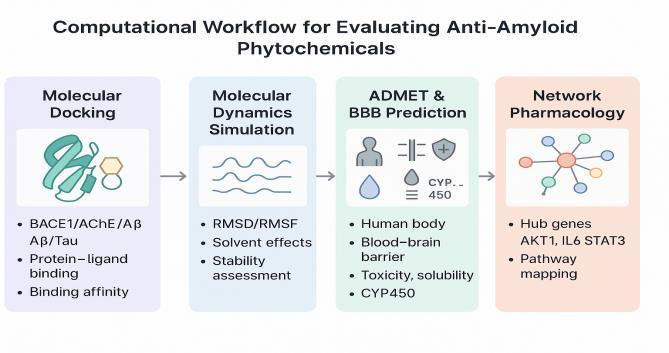
Many natural compounds display excellent binding properties but fail due to inadequate pharmacokinetic or safetyprofiles.ADMETmodelsareessentialforpredicting absorption, distribution, metabolism, excretion, and toxicity, enabling early identification of compounds with poor pharmacokinetic behavior (Mouchlis et al., 2020). These predictions significantly reduce the likelihood of late-stage drug failure and help guide chemical optimization.ThisisparticularlyimportantinAlzheimer’s disease, where therapeutic molecules must cross the blood–brain barrier while maintaining safety and metabolic stability. Only a fraction of phytochemicals naturally possesses the physicochemical properties required for efficient CNS penetration, making ADMET screening indispensable. Tools such as SwissADME, pkCSM,andADMETlabprovidepredictionsregardingoral bioavailability, BBB penetration, toxicity risks, P450 interactions, solubility, and other pharmacokinetic features (Martiz et al., 2022). These platforms integrate machine learning models and extensive curated datasets to improve predictive power. Even compounds with strong docking scores may be unsuitable if they display poor ADMET characteristics, highlighting the importance of integrating these predictions early in computational screening pipelines. For example, compounds with poor solubility or high predicted toxicity must be modified beforeadvancing.Bycombiningstructuralevaluationwith pharmacokinetic assessment, researchers can focus on phytochemicals that are not only biologically active but alsopossessthepropertiesnecessaryforCNSdeliveryand therapeuticviability.(Chitranshi etal., 2021)
2.3 ADMET and Drug-Likeness Prediction
In addition to binding affinity and stability, drug-likeness plays a major role in determining whether a phytochemical can serve as a viable therapeutic agent.
Because Alzheimer’s disease is driven by interconnected pathological processes including neuroinflammation, oxidative stress, metabolic dysregulation, amyloid accumulation, and tau hyperphosphorylation network pharmacology provides an essential systems-level perspective for evaluating phytochemicals (Wen et al., 2025). Natural compounds typically exert their effects on multiple biochemical pathways simultaneously, making traditional single-target drug models insufficient for evaluating their true therapeutic potential. Instead of focusing on a single protein, this approach maps how natural compounds interact with multiple targets simultaneously, revealing broader therapeutic patterns. NetworkmodelsroutinelyidentifyhubgenessuchasIL6, STAT3, SRC, and AKT1, which play central roles in signaling pathways relevant to neuronal survival, inflammatory cascades, and amyloid metabolism (SharifiRad etal., 2022).Targetenrichmentandpathwayanalysis further clarify how these interactions influence diseaserelevant pathways, such as PI3K-Akt signaling, MAPK cascades,synapticplasticityregulation,andmitochondrial pathways. By integrating compound–target predictions, protein–protein interaction networks, and pathway enrichment results, network pharmacology helps clarify
International Research Journal of Engineering and Technology (IRJET) e-ISSN: 2395-0056
Volume: 13 Issue: 03 | Mar 2026 www.irjet.net p-ISSN: 2395-0072
how phytochemicals influence large-scale molecular networks rather than isolated mechanisms. Many studies further validate these predicted targets through docking and MD simulations, strengthening the mechanistic evidence for multi-target activity (Zeng etal., 2019). This integrated approach makes network pharmacology especiallyvaluablefornaturalproducts,whichoftenexert synergistic effects across multiple disease pathways and mayofferadvantagesoversingle-targetsyntheticdrugsin complexdisorderslikeAD(Zhao etal., 2025;Aktary etal., 2025).
Table 2.1: Computational Methods Used to Evaluate Anti-Amyloid Phytochemicals
Method Purpose Strengths Limitations
Molecular Docking Predicts bindingof phytochemic alswithAD targets (BACE1, AChE,Aβ, tau)
Molecular Dynamics (MD) Evaluates stability of ligand–protein complexes
ADMET Prediction Assesses druglikeness, BBB permeability, andtoxicity
Fast and costeffective; suitable for large compoun d screening
Captures protein flexibility and solvent effects
Filters unsuitabl e compoun dsearly
Network Pharmacolo gy Identifies multi-target interactions and pathways Provides systemslevel insight
Uses static protein structuresand simplified scoring
Computationa lly expensive; limited simulation time
Limited datasets; weaker correlation with in vivo results
Dependent on database quality; may oversimplify networks
3. Phytochemical Classes with Anti-Amyloid Potential
3.1 Phytochemicals
Phytochemicalsconstituteoneofthemostdiversenatural reservoirs ofbioactivecompounds, andgrowing evidence over the past decade indicates that several structural
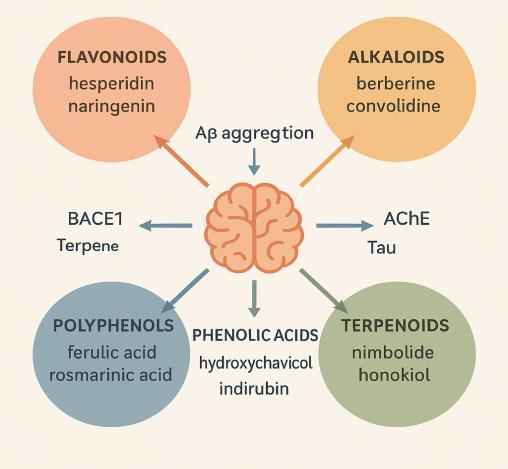
classes including flavonoids, alkaloids, terpenoids, polyphenols, and phenolic acids exert significant antiamyloid and neuroprotective activities relevant to Alzheimer’s disease. These natural molecules possess unique structural scaffolds, often with multiple hydroxyl groups, aromatic rings, or heterocyclic frameworks that allow them to interact with diverse molecular targets involved in AD pathology. Flavonoids such as hesperidin, naringenin, and hesperetin have been repeatedly highlighted for their potent inhibitory effects on BACE1, AChE, and BChE, with hesperidin demonstrating low micromolar inhibition and noncompetitive binding behavior that complements its strong antioxidant and free-radical–scavengingcapacity(Lee etal., 2018).Beyond direct enzymatic inhibition, these compounds influence cholinergic transmission, prevent disruption of synaptic function, and counter early oxidative insults that precipitate neuronal vulnerability. Alkaloids, including berberine, palmatine, and convolidine, contribute an additional therapeutic dimension by interacting with multipletargetssuchasBACE1,AChE,taukinases,andAβ aggregation interfaces, often with stronger binding affinities than their flavonoid counterparts (Wang et al., 2022). Convolidine, for example, has shown submicromolar inhibition of BACE1, while berberine continues to be recognized for its multitarget neuroprotective properties, including modulation of inflammatory signaling, mitochondrial stabilization, and attenuationoftauphosphorylation(Gheidari etal., 2024). Together, these phytochemical classes demonstrate the capacity to intervene at several pathological checkpoints within the amyloid cascade and cholinergic dysfunction that characterize AD, highlighting their potential as multifaceted therapeutic agents (Mirza et al., 2022 and sukriti etal., 2023).
© 2026, IRJET | ImpactFactorvalue: 8.315 | ISO 9001:2008Certified Journal | Page875
International Research Journal of Engineering and Technology (IRJET) e-ISSN: 2395-0056
Volume: 13 Issue: 03 | Mar 2026 www.irjet.net p-ISSN: 2395-0072
Terpenoidsrepresentanotherstructurallydiverseclassof phytochemicals with substantial anti-Alzheimer’s potential.Compoundssuchasnimbolide,honokiol,ursolic acid, and carnosic acid have demonstrated inhibitory actionsagainstAChE,BACE1,GSK-3β,andAβaggregation, reflecting their broad mechanistic range (Awasthi et al., 2018). These terpenoids often feature lipophilic frameworks that facilitate interactions within hydrophobic pockets of AD-related enzymes and aggregation-proneproteins.Nimbolideandhonokiolshow strong docking affinities that correlate with enzymatic inhibition and neuroprotective activity in various vitro and computational models (Youn & Jun et al., 2024). Honokiol has been shown to inhibit BACE1, AChE, and GSK-3β within low to moderate micromolar ranges, suggesting a strong potential to modulate both amyloidogenic and tau-related pathways. Carnosic acid further contributes by exerting synaptic protection through modulation of oxidative and inflammatory cascades, supporting neuronal resilience under various stressconditions(Upadhayay etal., 2025).Phenolicacids, represented by hydroxychavicol and indirubin, provide complementary mechanisms by modulating key regulatory proteins such as COMT, HSP90AA1, GAPDH, and GSK-3β. These compounds participate in PI3K/Akt, cAMP, HIF-1, and Rap1 signaling, influencing tau phosphorylation, mitochondrial homeostasis, and neuroinflammatory responses. Their structural simplicity beliestheirpharmacologicalversatility,andthecombined structural diversity of terpenoids and phenolic acids enablesthemtooccupyuniquebindingpocketsandexert multiprongedeffectsthatextendbeyondsimpleenzymatic inhibition, reinforcing their significance within natural product–based AD drug discovery (sara zareei et al., 2024).
Polyphenols such as ferulic acid, rosmarinic acid, and thonningianinAcontributeyetanotherimportantclassof neuroprotective molecules capable of modulating Aβ aggregation, tau fibrillization, cholinesterase activity, and mitochondrialfunction(Mirza etal., 2022).Owingtotheir antioxidant and anti-inflammatory nature, polyphenols frequently counteract early neuronal toxicity andsupport synaptic integrity. Ferulic acid, widely studied for its antioxidantpotency,hasdemonstratedinhibitionofAChE and attenuation of Aβ fibril formation in vitro, offering biochemical evidence of its dual protective action (Mugundhan etal., 2024). Rosmarinic acidandits related derivatives further suppress Aβ oligomerization, reduce plaque maturation, and stabilize neuronal redox balance by mitigating ROS overproduction. Thonningianin A, a more structurally complex polyphenol, has shown strong affinity for both Aβ and tau proteins, reflecting true multitarget potential and suggesting broader modulation
of protein misfolding pathways. These polyphenolic compounds often exhibit favorable docking scores and stable MD trajectories that support their structural compatibilitywithrelevantADtargets(SelvanKaviyarasu et al., 2025). Additionally, they participate in regulating inflammatory mediators, restoring mitochondrial membrane potential, and controlling apoptotic pathways processes central to preventing progressive neuronal degeneration. Their activity across diverse mechanistic domains reinforces the idea that multiphenolic scaffolds may be particularly well suited to addressing the multifactorial complexity of AD pathology (zeng etal., 2022).
Thetherapeuticpromiseofthesephytochemicalclassesis further supported by integrated computational and experimental validation strategies (Upadhayay et al., 2025).MoleculardockingandMDsimulationsconsistently demonstrate that compounds from these classes bind stably to AD-related targets, often achieving binding energies that rival or exceed those of established inhibitors. Dynamic stability assessments reveal whether these interactions remain intact under physiologically relevantconditions,strengtheningconfidenceintheirtrue biologicalutility.Networkpharmacologyaddsanessential systems-level perspective, revealing how these compounds interact with interconnected signaling axes suchasPI3K/Akt,calciumregulation, neuroactiveligand–receptorpathways,andstress-responsenetworks(Youn& Jun et al., 2024). These models help identify hub genes, regulatory nodes, and potential synergistic interactions betweenphytoconstituents,highlightingtheirmulti-target therapeuticpromise.Invitrovalidation includingassays of AChE inhibition, BACE1 activity suppression, antiamyloid aggregation effects, and tau phosphorylation reduction provides experimental reinforcement for computational predictions, confirming the biological relevanceofthesenaturalscaffolds(Gheidari etal., 2024). Together, flavonoids, alkaloids, terpenoids, polyphenols, and phenolic acids represent a comprehensive and mechanistically diverse group of phytochemicals with promisingmulti-targetefficacy,offeringvaluablechemical templates for the development of next-generation therapeuticsaimedatmodifyingthecourseofAlzheimer’s disease (Lee et al., 2018 and Kakarla Ramakrishna et al., 2024).
International Research Journal of Engineering and Technology (IRJET) e-ISSN: 2395-0056
Volume: 13 Issue: 03 | Mar 2026 www.irjet.net p-ISSN: 2395-0072
Table 2: Major Phytochemical Classes with AntiAlzheimer’sPotential
Phytochemic alClass Key Compounds
Major AD Targets
Mechanistic Actions
Flavonoids Hesperidin, Naringenin, Hesperetin
Alkaloids Berberine, Palmatine, Convolidine
Terpenoids Nimbolide, Honokiol, Ursolic acid, Carnosicacid
Polyphenols Ferulic acid, Rosmarinic acid, Thonningianin A
Phenolic Acids Hydroxychavic ol,Indirubin
Senna auriculata (plant) Lucenin-II, Stellarin-II
BACE1, AChE, Aβ aggregati on
BACE1, AChE, Tau kinases
AChE, BACE1, GSK-3β
Antioxidant, cholinergic modulation, Aβ inhibition
Antiinflammator y, multitarget binding
Multienzyme inhibition, synaptic protection
AChE, Aβ, Tau Antioxidant, antiamyloid, mitochondri al protection
COMT, GSK-3β Tau modulation, PI3K/Akt regulation
PDE5 cGMP signaling, antioxidant & antiinflammator y
4. Network Pharmacology Insights for AntiAmyloidPhytochemicals
4.1 Phytochemical Composition and Structural Features of S. auriculata
Senna auriculata, also known as Cassia auriculata, has recently gained attention as a medicinal plant with promising neuroprotective properties, largely attributed
to its rich content of flavonoids, polyphenols, and anthraquinones. Recent phytochemical analyses have identified flavone C-glycosides such as lucenin-II and stellarin-II as major bioactive constituents, along with a broaderrepertoireofphenoliccompoundsthatcontribute to its antioxidant and anti-inflammatory profile (Alshehri et al., 2021 and Bellavite et al., 2023). These molecules possess structural features that are frequently associated with therapeutic activity against neurodegenerative pathways, including aromatic rings capable of π–π interactions, hydrogen-bond donors essential for enzyme binding,andglycosidiclinkagesthatenhancestabilityand bioavailability(Sungad etal., 2024).Thepresenceofthese diverse chemical scaffolds provides S.auriculata with the capacity to interact across multiple neurobiological pathways relevant to Alzheimer’s disease. Its phytochemical complexity mirrors that of many plants traditionally used for cognitive enhancement or neuroprotection, and recent studies increasingly support the relevance of its flavonoid-rich composition for mitigating early pathological triggers of AD such as oxidative stress, impaired neurotransmission, and proinflammatory signaling (Sanchez et al., 2023).
A distinctive mechanistic insight into S. auriculata emerges from the discovery that its flavone C-glycosides strongly inhibit phosphodiesterase-5 (PDE5), a regulator of cGMP signaling implicated in synaptic plasticity and neuronal survival. Molecular docking and molecular dynamics simulations have demonstrated exceptionally strong binding of lucenin-II and stellarin-II to the active siteofPDE5,withbindingfreeenergiesof−38.8kcal/mol and −34.59 kcal/mol, respectively, values that exceed those of several known PDE5 inhibitors. In vitro assays furthervalidatethesecomputationalpredictions,showing that extracts enriched in these flavonoids produce more than 50% inhibition of PDE5 activity at 100 μg/mL (Peixoto et al., 2015). Because PDE5 regulates cGMPdependent signaling pathways, its inhibition enhances neuroplastic responses, supports long-term potentiation, and improves cerebrovascular perfusion, all of which are processes that decline early in Alzheimer’s disease (Newby et al., 2022 and Ribaudo et al., 2020). Although PDE5isnottraditionallyconsideredacoreamyloidtarget, its modulation has been associated with improved cognitive function and attenuation of Aβ pathology in several experimental models of AD. Therefore, the strong PDE5-targeted activity of S. auriculata suggests a novel therapeutic angle that complements classical amyloidcentric strategies while also providing a mechanistic bridge between vascular, synaptic, and cognitive dimensions of the disease (Qu et al., 2024).
© 2026, IRJET | ImpactFactorvalue: 8.315 | ISO 9001:2008Certified Journal | Page877
International Research Journal of Engineering and Technology (IRJET) e-ISSN: 2395-0056
Volume: 13 Issue: 03 | Mar 2026 www.irjet.net p-ISSN: 2395-0072
Beyond its PDE5-targeted effects, the broader classes of phytochemicals found abundantly in S. auriculata particularly flavonoids and polyphenols align closely with well-established mechanisms of anti-Alzheimer’s activity documented across numerous medicinal plants (Kruszka et al., 2025 and Rębas et al., 2025). Extensive research supports that these compounds exert potent antioxidant effectsbyscavengingreactiveoxygenspecies, upregulating endogenous antioxidant enzymes, and mitigating mitochondrial dysfunction (Calderaro et al., 2022). They also demonstrate anti-inflammatory properties by modulating NF-κB, Nrf2, and cytokine signalingpathways,therebyreducingmicroglialactivation and neuronal stress (Uddin et al., 2020). Given that oxidative imbalance and chronic neuroinflammation are centralamplifiersofamyloidandtaupathology,theability of these phytochemicals to intervene early in these cascades provides significant therapeutic value (Li et al., 2022). Moreover, reviews consistently show that flavonoids and polyphenols can inhibit AChE, reduce Aβ oligomerization, interfere with fibril maturation, and modulate tau phosphorylation (Vicente-Zurdo et al., 2024).Eventhoughthesespecificmechanismshaveyetto be directly validated within S. auriculata, the strong mechanistic parallels between its phytochemical profile and that of other neuroprotective plants suggest that similar anti-amyloid properties are likely. As such, the plant's flavonoid- and polyphenol-rich extracts can be reasonably positioned within the broader framework of multi-target agents capable of addressing the complex interplayofoxidativestress,amyloidburden,andsynaptic dysfunctioncharacteristicofADprogression(Jalouli etal., 2025 and Minocha et al., 2022).
The convergence of computational prediction and experimentalvalidationfurtherstrengthensthecasefor S. auriculata as a viable source of neuroprotective phytochemicals (Ghosh et al., 2023). Docking and MD simulations confirm that its constituent molecules bind stably to PDE5, while analogous phytochemicals from related species are repeatedly shown to exhibit strong affinity for key Alzheimer’s targets such as AChE, BACE1, Aβ monomers and fibrils, and tau kinases. Network pharmacology studies from broader phytochemical research highlight the ability of structurally similar molecules to modulate PI3K/Akt signaling, enhance mitochondrial stability, and suppress neuroinflammatory mediators (Pradeep et al., 2025). In vitro assays complement these computational insights by demonstrating direct effects such as suppressionof AChE and BACE1 activity, attenuation of oxidative stress, and
reduction of pro-inflammatory markers. Although direct anti-amyloid evidence for S. auriculata remains limited, the mechanistic overlap between its phytochemical constituents and well-characterized anti-Alzheimer’s compounds strongly supports its potential as a multitarget therapeutic contributor. Collectively, thesefindings indicate that S. auriculata may serve not only as an antioxidant and anti-inflammatory neuroprotective agent butalsoasapromisingcandidateforfutureexperimental exploration against amyloidogenic pathways, thereby positioningthisplantasavaluableadditiontothenaturalproduct–based drug discovery landscape for Alzheimer’s disease(Alom etal., 2023).
Molecular docking is one of the most widely used computational techniques for predicting ligand–protein interactions, but it has several inherent limitations that restrictitspredictiveaccuracyinAlzheimer’sdisease(AD) research (Khanna et al., 2023). Docking relies on static, pre-defined protein structures, meaning the conformational flexibility of enzymes like BACE1, AChE, and tau kinases is not fully captured. This becomes a critical weakness because AD-related proteins exhibit dynamic binding pockets and undergo conformational shifts that strongly influence ligand affinity. Additionally, simplified scoring functions cannot reliably distinguish between true binders and false positives, particularly for phytochemicals that possess large, flexible, and highly polar structures. As a result, docking often overestimates binding affinity for certain compounds while overlooking others that may possess more realistic biological activity (Pradeep et al., 2025). These limitations have meaningful implications forphytochemical-basedADresearch, where naturalcompoundsdisplaydiversechemicalscaffoldsthat are not always compatible with standard docking algorithms.Furthermore,dockingfrequentlyfailstomodel solvation effects, metal ion coordination, or induced-fit changes factors that significantly affect amyloid- and tau-related target interactions. In the context of drug discovery, thiscanleadtotheprioritizationofcandidates that perform well computationally but lack biological relevance in vitro or in vivo systems. Therefore, while docking remains a valuable initial screening tool, its results must beinterpreted cautiously andvalidatedwith complementary computational and experimental approaches to reduce the risk of misleading conclusions aboutphytochemicalefficacyinADpathways(Guerguer et al., 2025).
International Research Journal of Engineering and Technology (IRJET) e-ISSN: 2395-0056
Volume: 13 Issue: 03 | Mar 2026 www.irjet.net p-ISSN: 2395-0072
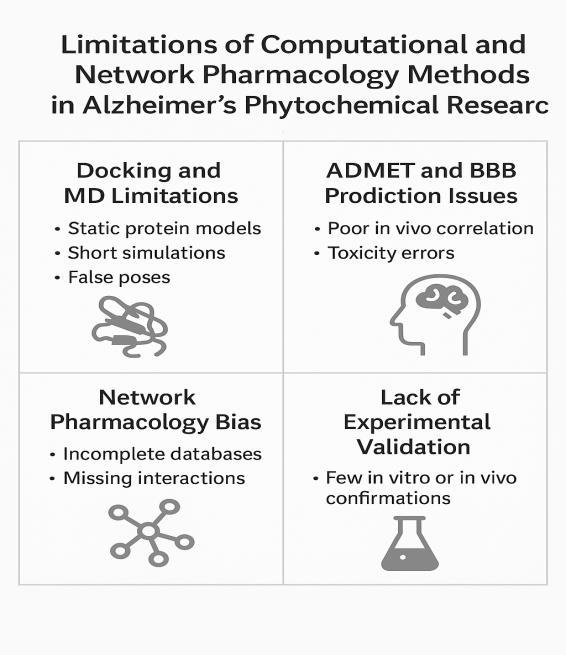
Figure 3: Key Limitations of Computational and Network Pharmacology Approaches in AD Phytochemical Research
Molecular dynamics simulations provide far deeper insight into protein–ligand interactions than docking, but they also carry notable challenges that affect their reliability in AD-related phytochemical research. MD requiresextensivecomputationalpower,andmoststudies operate within short simulation windows typically 10–100 nanoseconds. Such timescales are insufficient to model major conformational rearrangements in proteins like amyloid-β, tau, or gamma-secretase, all of which undergoslow,complexstructuraltransitions.Additionally, inaccuracies inforcefields canleadtoincorrect sampling of ligand orientations, especially for phytochemicals with unusual glycosidic, aromatic, or polyphenolic groups that arenot optimally parameterizedinstandardMD libraries (Wen et al., 2025). These constraints create substantial uncertaintywhenevaluatingthestabilityofligandbinding in AD targets. Since phytochemicals often interact with intrinsicallydisorderedproteinssuchasAβandtau,short MD simulations may fail to capture critical intermediate states, aggregation-prone conformations, or long-range structural shifts (Pradeep et al., 2025). Furthermore, the high flexibility of natural compounds increases the likelihoodofsimulationartifacts that may appearas false stabilization or misleading interaction patterns. In drug development contexts, this may contribute to false confidence in weak candidates or the dismissal of compounds that could behave differently under physiological conditions. Thus, while MD is a crucial extension of docking, it must be interpreted alongside
experimental assays and advanced enhanced-sampling techniques to provide accurate mechanistic insights (Guerguer et al., 2025).
ADMETpredictiontools suchaspkCSM,SwissADME,and ADMETlab playavitalroleinassessingthedrug-likeness of phytochemicals, yet they remain limited by significant uncertainties that affect translational potential. These models rely heavily on pre-existing datasets, which are often biased toward synthetic, small-molecule pharmaceuticals rather than complex natural products. Phytochemicalstypicallycontainmultiplerings,glycosidic bonds, and large polar regions that violate Lipinski rules, making them poorly represented in ADMET training datasets. As a result, predictions for blood–brain barrier penetration, cytochrome P450 metabolism, and toxicity risks may be inaccurate or inconsistent when applied to plant-derived compounds (Wen-Ye et al., 2022). Furthermore, ADMET models struggle to account for metabolic biotransformation, especially for phytochemicals that undergo rapid conjugation, hydrolysis, or microbial degradation in vivo. These transformations can significantly alter biological activity, sometimes producing metabolites that are either more potent or more toxic than the parent compound outcomes that current in silico tools rarely predict effectively. In the context of AD, where central nervous system penetration is a strict requirement, inaccurate ADMET predictions may lead to the dismissal of compounds that are CNS-active or the advancement of molecules unlikely to succeed in vivo models. Therefore, while computational ADMET screening is indispensable for early-stage filtering, it must be integrated with empirical pharmacokinetic and toxicity studies to avoid misinterpretation of phytochemical potential (Patil et al., 2024).
Network pharmacology has become a powerful approach for understanding multi-target actions of phytochemicals, but its effectiveness is constrained by several methodological challenges. Most network models rely on heterogeneous datasets consolidated from databases that may contain incomplete, outdated, or low-confidence annotations. This is particularly problematic for phytochemicals,forwhichexperimentallyvalidatedtarget information is sparse, leading to reliance on predicted interactionsthatmaynotreflecttruebiologicalactivity.In addition,networkmodelsoftenassumelinearandadditive interactions between pathways, overlooking the nonlinear, dynamic feedback loops characteristic of AD pathology (Li et al., 2025). These limitations complicate the interpretation of network-derived insights, especially
International Research Journal of Engineering and Technology (IRJET) e-ISSN: 2395-0056
Volume: 13 Issue: 03 | Mar 2026 www.irjet.net p-ISSN: 2395-0072
when predicting multi-target synergy or identifying hub genesfortherapeuticmodulation.InADresearch,network models may incorrectly inflate the relevance of pathways simply because they are better studied or more represented in databases, contributing to biased mechanistic conclusions. Moreover, experimental validation of multi-target predictions is extremely challenging because phytochemicals act across diverse molecular systems, and isolating their individual contributionsrequiresextensiveinvitroandinvivowork. Without such validation, network predictions remain hypothetical andmay misguidetherapeutic prioritization. Thus, while network pharmacology is invaluable for generatinghypothesesandmappingcomplexinteractions, it must be treated as an exploratory tool that requires careful confirmation through laboratory-based approaches(Aktary etal., 2025andPradeep etal., 2025).
6.1 Structural and Predictive Limitations in Docking, MD, and ADMET Modeling
Despite major advancements in computational drug discovery, several limitations continue to challenge the accurate evaluation of phytochemicals for Alzheimer’s disease. Molecular docking remains widely used, yet its relianceonstaticproteinstructuresandsimplifiedscoring functions causes significant discrepancies between predicted and actual binding behavior (Hamdan et al., 2022). These inaccuracies are amplified in AD research duetothedynamicandintrinsicallydisorderedregionsof targets such as Aβ and tau, which cannot be captured through rigid docking models. Molecular dynamics simulationsprovideamorerealisticdepictionofprotein–ligandinteractions,buttheyareoftenconstrainedbyshort timescales and high computational cost, limiting their ability to represent large-scale conformational changes that govern binding stability (Piccialli et al., 2022). Similarly, ADMET and blood–brain barrier (BBB) predictions suffer from dataset limitations, especially structurally diverse phytochemicals that fall outside typical drug-like chemical space. As a result, computational models frequently misclassify BBB permeability or metabolic stability, leading to false positives or premature elimination of promising compounds. These limitations highlight the continued need for refined scoring algorithms, ensemble docking, enhanced force fields, and improved machine-learningbasedADMETmodelsthatcanbetteraccountfornaturalproduct complexity. (Zhao et al., 2024 and Mishra & Krishnamurthy,2024)
Network pharmacology has transformed natural-product research by enabling multi-target predictions, yet it suffersfrommajorstructuralweaknesses.Theaccuracyof networkmodelsdependsonthecompletenessandquality ofunderlyingdatabases,manyofwhicharebiasedtoward well-studied compounds and canonical signaling pathways. Phytochemical–target interactions are especially underrepresented, resulting in network topologies that overlook several relevant proteins or incorrectly exaggerate the role of others (Friel et al., 2019).Furthermore,Alzheimer’sdiseaseinvolvescomplex crosstalk between amyloid, tau, inflammatory, and metabolic pathways, but many computational networks oversimplify this interconnected biology into linear or partially connected models. Synergistic or antagonistic actions of phytochemicals central to botanical therapeutics are rarely captured, limiting the predictive strengthofmulti-targetmodeling(Kurt etal., 2025).Even when network predictions identify hub genes or key pathways, the absence of integrated multi-omics data reduces mechanistic clarity. These issues underscore the needforexpandedphytochemicaldatabases,standardized interaction scoring, and hybrid computational pipelines that merge network pharmacology with transcriptomics, proteomics, and metabolomics to reflect disease complexity more accurately. (Ye et al., 2022 and Rahman etal., 2020)
A consistent weakness across nearly all computational studiesonADphytochemicalsisthelimitedtranslationof In silico predictions into biological validation. Many studies conclude at docking, MD, or network analysis withoutconfirmingthepredictedactivitythroughinvitro enzyme assays, anti-aggregation experiments, or cellbasedneuroprotectionmodels(Waiwut etal., 2025).This gap is particularly problematic in Alzheimer’s research, where complex molecular events such as oligomer formation, tau phosphorylation, mitochondrial collapse, and microglial activation cannot be reliably inferred from computational statistics alone (Aktary et al., 2025). Even when experimental work is performed, it often focusesonisolatedtargetssuchasAChEorBACE1,leaving multi-target predictions untested. Moreover, phytochemicalsfrequentlysufferfromlowbioavailability, poor stability, or rapid metabolism, meaning that strong computational predictions may still fail in biological systems. Future progress requires standardized pipelines wherecomputationaloutputsaresystematicallylinkedto biochemical assays, cell-line validation, and eventually in vivo testing. Integration of machine learning, improved trainingsets,anddeeperstructuralcharacterizationofAD
International Research Journal of Engineering and Technology (IRJET) e-ISSN: 2395-0056
targets may further enhance predictive accuracy. Ultimately, computational tools must evolve from hypothesis-generating methods into components of a unified discovery pipeline that consistently converges with experimental evidence. (Lin & Sun et al., 2025)
Conclusion
Phytochemicals continue to emerge as promising multitarget candidates for addressing the complex and multifactorial nature of Alzheimer’s disease, offering therapeutic potentialthatextendsbeyondthecapabilities of single-target synthetic drugs. Over the past decade, advances in computational methodologies spanning molecular docking, molecular dynamics simulations, ADMET prediction, pharmacophore modeling, and network pharmacology have significantly accelerated the early discovery and mechanistic characterization of these natural compounds. Collectively, these tools have enabled deeper insights into phytochemical interactions withkeyAlzheimer’s-relatedtargets,includingAβ,BACE1, AChE, tau kinases, oxidative stress regulators, and inflammatory mediators. However, despite these capabilities, persistent limitations in computational precision, dataset completeness, multi-target modeling accuracy, and biological validation continue to restrict their translational impact. Many phytochemicals demonstrate strong binding energies, stable MD trajectories, or promising network connectivity, yet remain untested in biological systems, highlighting the critical gap between In silico predictions and real-world therapeutic relevance. Future research must focus on integrating multi-omics data, improved blood–brain barrier modeling, machine learning–based predictive algorithms,androbust experimentalpipelinestoenhance the reliability of computational findings. Standardizing network pharmacology workflows and expanding phytochemical–target databases will further strengthen systems-level insights and reduce false-positive predictions. Ultimately, the successful development of phytochemical-based therapeutics will depend on close collaboration between computational and experimental approaches, enabling the identification and validation of biologically relevant candidates for Alzheimer’s disease drug development.
References
1. Aktary, N., Jeong, Y., Oh, S., Shin, Y., Sung, Y., Rahman, M., Santiago, L., Choi, J., Song, H., Nurkolis,F.,Ribeiro,R.,Park,M.,&Kim,B.(2025). Unveiling the therapeutic potential of natural products in Alzheimer’s disease: Insights from in vitro, in vivo, and clinical studies. Frontiers in Pharmacology, 16, 1601712.
2. Alom, M. M., Bonna, R. R., Islam, A., Alom, M. M., Rahman,M.M.,Faruqe,M.O.,Khalekuzzaman,M., Zaman, R., & Islam, M. N. (2023). Unveiling neuroprotective potential of spice plant–derived compounds against Alzheimer’s disease: Insights from computational studies. InternationalJournal of Alzheimer’s Disease, 2023, 8877757.
3. Alshehri, Mohammed M., Quispe, Cristina, Herrera-Bravo, Jesús, Sharifi-Rad,Javad,Tutuncu, Sena,Aydar,ElifFeyza,Topkaya,Cansu,Mertdinc, Zehra,Ozcelik,Beraat,Aital,Mahima,Kumar,N.V. Anil, Lapava, Natallia, Rajkovic, Jovana, Ertani, Andrea, Nicola, Silvana, Semwal, Prabhakar, Painuli, Sakshi, González-Contreras, Carlos, Martorell, Miquel, Butnariu, Monica, Bagiu, Iulia Cristina, Bagiu, Radu Vasile, Barbhai, Mrunal D., Kumar, Manoj, Daştan, Sevgi Durna, Calina, Daniela, Cho, William C., A Review of Recent Studies on the Antioxidant and Anti-Infectious Properties of Senna Plants, Oxidative Medicine andCellularLongevity, 2022, 6025900, 38 pages, 2022.
4. Atanasova, M. (2025). Small-Molecule Inhibitors of Amyloid Beta: Insights from Molecular Dynamics Part B: Natural Compounds. Pharmaceuticals, 18(10), 1457.
5. Bellavite,P.(2023).NeuroprotectivePotentialsof Flavonoids: Experimental Studies and Mechanisms of Action. Antioxidants, 12(2), 280.
6. Bhogal, I., Pankaj, V. & Roy, S. Identifying RAGE inhibitors as potential therapeutics for Alzheimer’s disease via integrated in-silico approaches. Sci Rep 15, 17730 (2025).
7. Calderaro et al., 2022 Calderaro, A., Patanè, G., Tellone, E., Barreca, D., Ficarra, S., Misiti, F., & Laganà, G. (2022). The neuroprotective potentiality of flavonoids on Alzheimer’s disease. International Journal of Molecular Sciences, 23(23), 14835.
8. Chitranshi, N., Kumar, A., Sheriff, S., Gupta, V., Godinez, A., Saks, D., Sarkar, S., Shen, T., Mirzaei, M., Basavarajappa, D., Abyadeh, M., Singh, S. K., Dua, K., Zhang, K. Y. J., Graham, S. L., & Gupta, V. (2021). Identification of Novel Cathepsin B Inhibitors with Implications in Alzheimer’s Disease: Computational Refining andBiochemical Evaluation. Cells, 10(8), 1946.
9. Cummings, Jeffrey L. (2025). Maximizing the benefit and managing the risk of anti-amyloid monoclonal antibody therapy for Alzheimer's disease: Strategies and research directions.
Volume: 13 Issue: 03 | Mar 2026 www.irjet.net p-ISSN: 2395-0072 © 2026, IRJET | ImpactFactorvalue: 8.315 | ISO 9001:2008Certified Journal | Page881
International Research Journal of Engineering and Technology (IRJET) e-ISSN: 2395-0056
Volume: 13 Issue: 03 | Mar 2026 www.irjet.net p-ISSN: 2395-0072
Neurotherapeutics, Volume 22, Issue 3, e00570.
10. Amani A. Eshtiwi, Dan L. Rathbone (2023). A modified bonded model approach for molecular dynamics simulations of New Delhi Metallo-βlactamase. Journal of Molecular Graphics and Modelling,Volume121,2023,108431,ISSN10933263.
11. Friel H. Biopharmaceutical Monotargeting versus ‘Universal Targeting’ of Late-Onset Alzheimer’s Disease Using Mixtures of Pleiotropic Natural Compounds. Journal of Alzheimer’s Disease Reports. 2019;3(1):219-232.
12. Gheidari, D., Mehrdad, M. & karimelahi, Z. Virtual screening, ADMET prediction, molecular docking, and dynamic simulation studies of natural productsasBACE1inhibitorsforthemanagement of Alzheimer’s disease. Sci Rep 14, 26431 (2024).
13. Ghosh S, Singha PS, Ghosh D. Neuroprotective compounds from threecommon medicinal plants of West Bengal, India: a mini review. Explor Neurosci. 2023; 2:307–17.
14. Guerguer et al., 2025 Guerguer, F., Bouribab, A., Karim, E., Khedraoui, M.,Amegrissi,F.,Raouf,Y.,Samadi,A.,&Chtita,S. (2025). Moroccan natural products for multitarget-based treatment of Alzheimer’s disease: A computational study. PLOS ONE, 20, e0313411.
15. Hamdan, A., Alharthi, F., Alanazi, A., El-Emam, S., Zaghlool, S., Metwally, K., Albalawi, S., Abdu, Y., Mansour, R., Salem, H., Elmageed, Z., & AbuElfotuh, K. (2022). Neuroprotective effects of phytochemicals against aluminum chloride–induced Alzheimer’s disease through ApoE4/LRP1, Wnt3/β-catenin/GSK3β, and TLR4/NLRP3 pathways. Pharmaceuticals, 15(8), 1008.
16. Hampel, H., Hardy, J., Blennow, K. et al. The Amyloid-β Pathway in Alzheimer’s Disease. Mol Psychiatry 26, 5481–5503 (2021).
17. Jalouli, M., Rahman, M., Biswas, P., Rahman, H., Harrath, A., Lee, I., Kang, S., Choi, J., Park, M., & Kim, B. (2025). Targeting natural antioxidant polyphenols to protect neuroinflammation and neurodegenerative diseases: A comprehensive review. Frontiers in Pharmacology, 16, 1492517.
18. Ramakrishna, K., Karuturi, P., Siakabinga, Q., T.A., G.,Krishnamurthy,S.,Singh,S.,Kumari,S.,Kumar, G. S., Sobhia, M. E., & Rai, S. N. (2024). Indole-3
Carbinol and Diindolylmethane Mitigated βAmyloid-Induced Neurotoxicity and AcetylcholinesteraseEnzymeActivity:InSilico,In Vitro,andNetworkPharmacologyStudy.Diseases, 12(8), 184.
19. Khanna,S.,Selvaraj,D.,Tyagi,M.,D.,&Jayaram,S. (2023).Anintegratednetworkpharmacologyand molecular modelling study of phytoconstituents targeting Alzheimer's disease. Medicine in Omics, 100031.
20. Kruszka, J., Martyński, J., Szewczyk-Golec, K., Woźniak, A., & Nuszkiewicz, J. (2025). The roleof selected flavonoids in modulating neuroinflammation in Alzheimer’s disease: Mechanisms and therapeutic potential. Brain Sciences, 15(5), 485.
21. Kurt, B., Evcil, M., & Baran, A. (2025). In silico exploration of plant extracts as AChE inhibitors: Insights frommoleculardynamics andMM/GBSA analysis forAlzheimer's drug development. Black SeaJournalofEngineeringandScience,17(2),48–62.
22. Larson,E.(2012),PC-04:Thefulldementiaworkup then and now: Practical suggestions for primary care. Alzheimer's & Dementia, 8: P1-P2.
23. Lee,S.,Youn,K.,Lim,G.,Lee,J.,&Jun,M.(2018).In silico docking and in vitro approaches toward BACE1 and cholinesterase inhibitory effects of citrus flavanones. Molecules, 23(7), 1509.
24. Li et al., 2022 Li, J., Sun, M., Cui, X., & Li, C. (2022). Protective effects of flavonoids against Alzheimer’s disease: Pathological hypothesis, potential targets, and structure–activity relationship. International Journal of Molecular Sciences, 23(17), 10020.
25. DarwinLi. (2025). Identifying natural inhibitors againstFUSproteinindementiathroughmachine learning, molecular docking, and dynamics simulation. Front. Neuroinform., 05 February 2025. Volume 18 - 2024.
26. Lin,Z.,&Sun,M.(2025).Phytochemicalregulation of CaMKII in Alzheimer’s disease: A review of molecular mechanisms and therapeutic potential. Pharmacological Research, 107790.
27. Martiz RM, Patil SM, Ramu R, M. K. J, P. A, et al. (2022). Discovery of novel benzophenone integrated derivatives as anti-Alzheimer’s agents targetingpresenilin-1andpresenilin-2inhibition: A computational approach. PLOS ONE 17(4):
© 2026, IRJET | ImpactFactorvalue: 8.315 | ISO 9001:2008Certified Journal | Page882
International Research Journal of Engineering and Technology (IRJET) e-ISSN: 2395-0056
Volume: 13 Issue: 03 | Mar 2026 www.irjet.net p-ISSN: 2395-0072
© 2026, IRJET | ImpactFactorvalue: 8.315 | ISO 9001:2008Certified Journal | Page883 e0265022.
28. Minocha,T.,Birla,H.,Obaid,A.,Rai,V.,Sushma,P., Shivamallu, C., Moustafa, M., Al-Shehri, M., AlEmam, A., Tikhonova, M., Yadav, S., Poeggeler, B., Singh, D., & Singh, S. (2022). Flavonoids as promisingneuroprotectantsandtheirtherapeutic potential against Alzheimer’s disease. Oxidative Medicine and Cellular Longevity, 2022, 6038996.
29. Mirza, F., Zahid, S., Amber, S., Sumera, S., Jabeen, H., Asim, N., & Shah, S. (2022). Multitargeted molecular docking and dynamic simulation studies of bioactive compounds from Rosmarinus officinalis against Alzheimer’s disease. Molecules, 27(21), 7241.
30. Mishra, A., & Krishnamurthy, S. (2024). Recent advancements in the role of phytochemicals and medicinal plants in prophylaxis and management of Alzheimer’s disease. Iranian Journal of Basic Medical Sciences, 27(11), 1357–1369.
31. Mouchlis, V. D., Melagraki, G., Zacharia, L. C., & Afantitis,A.(2020).Computer-AidedDrugDesign of β-Secretase, γ-Secretase and Anti-Tau Inhibitors for the Discovery of Novel Alzheimer’s Therapeutics. International Journal of Molecular Sciences, 21(3), 703.
32. Mugundhan, V., Arthanari, A., & Parthasarathy, P. (2024). Protective effect of ferulic acid on acetylcholinesterase and amyloid beta peptide plaque formation in Alzheimer’s disease: An in vitro study. Cureus, 16(4), e54103.
33. Nam,Y.,Shin,S.J.,Kumar,V. etal. Dualmodulation of amyloid beta and tau aggregation and dissociation in Alzheimer’s disease: a comprehensive review of the characteristics and therapeuticstrategies. TranslNeurodegener 14,15 (2025).
34. Danielle Newby, Are phosphodiesterase Type 5 inhibitors potential therapies for Alzheimer’s disease and related dementias? Brain Communications, Volume 4, Issue 5, 2022, fcac260.
35. NilPatila,RupalDhariwala,ArifullahMohammed, Lee Seong Weic, Mukul Jaina. Network pharmacology-based approach to elucidate the pharmacologicmechanismsofnaturalcompounds from Dictyostelium discoideum for Alzheimer's disease treatment. Heliyon, Volume 10, Issue 8, e28852.
36. Peixoto, Christina Alves, Nunes, Ana Karolina Santana, Garcia-Osta, Ana, Phosphodiesterase-5 Inhibitors: Action on the Signaling Pathways of Neuroinflammation, Neurodegeneration, and Cognition, Mediators of Inflammation, 2015, 940207, 17 pages, 2015.
37. Robert Perneczky, Frank Jessen, Timo Grimmer, Johannes Levin, Agnes Flöel, Oliver Peters, Lutz Froelich, Anti-amyloid antibody therapies in Alzheimer’s disease, Brain, Volume 146, Issue 3, March 2023, Pages 842–849.
38. Piccialli, I., Tedeschi, V., Caputo, L., D’Errico, S., Ciccone,R.,DeFeo,V.,Secondo,A.,&Pannaccione, A. (2022). Exploring the therapeutic potential of phytochemicals in Alzheimer's disease: Focus on polyphenols and monoterpenes. Frontiers in Pharmacology, 13, 876614.
39. Pradeep,S.,Chakith,M.,Sindhushree,S.,Reddy,P., Sushmitha, E., Purohit, M., Suresh, D., Shivananju, N., Silina, E., Manturova, N., Stupin, V., Kollur, S, Shivamallu, C., & Achar, R. (2025). Exploring sharedtherapeutictargetsforAlzheimer’sdisease and glioblastoma using network pharmacology and protein–protein interaction approach. Frontiers in Chemistry, 13, 1549186.
40. Lihang Qu, Kaijian Sun1, Zhouyu Jiang, Ting Wang, Linlin Chen, Chunjian Shen and Ruidong Gu. Mechanism investigation of highly selective inhibitors toward phosphodiesterase 5 and 6 via the in vitro calculation and simulation.Front. Chem., 08 August 2024. Sec. Medicinal and Pharmaceutical Chemistry. Volume 12 - 2024.
41. Rahman, M., Rahman, M., Biswas, P., Hossain, M., Shuvo, R., Hannan, M., Uddin, M., & Rhim, H. (2020). Potential therapeutic role of phytochemicals to mitigate mitochondrial dysfunctions in Alzheimer's disease. Antioxidants, 10(1), 23.
42. Rębas,E.(2025). Roleof Flavonoids in Protecting Against Neurodegenerative Diseases Possible Mechanisms of Action. International Journal of Molecular Sciences, 26(10), 4763.
43. Giovanni Ribaudo, Alberto Ongaro, Giuseppe Zagotto, Maurizio Memo, and Alessandra Gianoncelli.TherapeuticPotentialof hodiesterase Inhibitors against Neurodegeneration:The Perspective of the Medicinal Chemist. ACS ChemicalNeuroscience2020 11 (12),1726-1739.
44. Roda, Alejandro R.1; Serra-Mir, Gabriel1; Montoliu-Gaya, Laia2; Tiessler, Lidia1; Villegas,
International Research Journal of Engineering and Technology (IRJET) e-ISSN: 2395-0056
Volume: 13 Issue: 03 | Mar 2026 www.irjet.net p-ISSN: 2395-0072
Sandra PhD1, *. Amyloid-beta peptide and tau protein crosstalk in Alzheimer’s disease. Neural Regeneration Research 17(8): p 1666-1674, August2022.
45. Arias-Sánchez,R.A.,Torner,L.,&FentonNavarro, B. (2023). Polyphenols and Neurodegenerative Diseases: Potential Effects and Mechanisms of Neuroprotection. Molecules, 28(14), 5415.
46. Selkoe, D. J., & Hardy, J. (2016). The amyloid hypothesis of Alzheimer’s disease at 25 years. EMBO Molecular Medicine, 8(6), 595–608.
47. Selvan Kaviyarasu, S., Manivannan, S., & Padmanabhan, B. (2025). Virtual screening and moleculardynamicsofanti-Alzheimercompounds from Cardiospermum halicacabum via GC-MS. Front. Chem., 04 April 2025. Sec. Theoretical and Computational Chemistry. Volume 13 - 2025.
48. Sharifi-Rad, J., Rapposelli, S., Sestito, S., HerreraBravo, J., Arancibia-Diaz, A., Salazar, L. A., Yeskaliyeva, B., Beyatli, A., Leyva-Gómez, G., González-Contreras, C., Gürer, E. S., Martorell, M., & Calina, D. (2022). Multi-Target Mechanisms of PhytochemicalsinAlzheimer’sDisease:Effectson Oxidative Stress, Neuroinflammation and Protein Aggregation. Journal of Personalized Medicine, 12(9),1515.
49. Sukriti, S., Anand, P., & Verma, R. (2023). Screening of Multitarget-Directed Natural Compounds as Drug Candidates for Alzheimer’s Disease Using InSilico Techniques:Their ExtractionandInVitroValidation. ACS Omega 2023 8(41),38118-38129.
50. Renuka Sunagad*, Kavita R. N., Rani Bhandarkavathe, Exploring the Therapeutic Potential of Senna auriculata Linn: A Comprehensive Review, Int. J Pharm. Sci., 2024, Vol2,Issue12,2811-2819.
51. Tolar, M., Abushakra, S., Hey, J.A. et al. Aducanumab, gantenerumab, BAN2401, andALZ801 the first wave of amyloid-targeting drugs for Alzheimer’s disease with potential for near term approval. Alz Res Therapy 12, 95 (2020).
52. Tolar, M., Hey, J., Power, A., & Abushakra, S. (2021). Neurotoxic Soluble Amyloid Oligomers Drive Alzheimer’s Pathogenesis and Represent a Clinically Validated Target for Slowing Disease Progression. International Journal of Molecular Sciences,22(12),6355.
53. Tonegawa-Kuji R, Hou Y, Hu B, Lorincz-Comi N, Pieper AA, et al. (2025). Efficacy and safety of passive immunotherapies targeting amyloid beta in Alzheimer’s disease: A systematic review and meta-analysis. PLOS Medicine 22(3): e1004568.
54. Uddin,M.,Kabir,M.,Niaz,K.,Jeandet,P.,Clément, C., Mathew, B., Rauf, A., Rengasamy, K., SobarzoSánchez, E., Ashraf, G., & Aleya, L. (2020). Molecular insight into the therapeutic promise of flavonoids against Alzheimer’s disease. Molecules, 25(6),1267.
55. Upadhayay, P.,Sinha, S., Kumar, N., Singh, S., Jain, P., Panchawat, S., & Rai, N. (2025). Identification of therapeutic potential of hydroxychavicol against Alzheimer’s disease: An integrated network pharmacology, molecular docking, and dynamic simulation study. Journal of Aging Research
56. Vicente-Zurdo, D., Gómez-Mejía, E., RosalesConrado, N., & León-González, M. (2024). A comprehensive analytical review of polyphenols: Evaluating neuroprotection in Alzheimer’s disease. International Journal of Molecular Sciences,25(11),5906.
57. Waiwut, P., Takomthong, P., Anorach, R., Lomaboot, N., Daodee, S., Chulikhit, Y., Monthakantirat, O., Khamphukdee, C., & Boonyarat, C. (2025). Pharmacological evaluation of a traditional Thai polyherbal formula for Alzheimer’sdisease:Evidencefrominvitroandin silico studies. International Journal of Molecular Sciences,26(13),6287.
58. Wang, S., Huang, Y., Hu, Y., Huang, Y., & Wu, Y. (2022). Potential bioactive compounds and mechanismsof Fibraurearecisa forthetreatment of Alzheimer’s disease analyzed by network pharmacology and molecular docking prediction. Frontiers in Aging Neuroscience, 14, 1052249.
59. Wen, S., Han, Y., Li, Y., & Zhan, D. (2025). Therapeutic mechanisms of Medicine Food Homology plants in Alzheimer’s disease: Insights from network pharmacology, machine learning, and molecular docking. International Journal of MolecularSciences,26(5),2121.
60. Ye, X., Wang, H., Cheng, S., Xia, L., Xu, X., & Li, X. (2022).Networkpharmacology–basedstrategyto investigate the pharmacologic mechanisms of CoptidisRhizoma forthetreatmentofAlzheimer's disease. Frontiers in Aging Neuroscience, 14, 890046.
© 2026, IRJET | ImpactFactorvalue: 8.315 | ISO 9001:2008Certified Journal | Page884
International Research Journal of Engineering and Technology (IRJET) e-ISSN: 2395-0056
Volume: 13 Issue: 03 | Mar 2026 www.irjet.net p-ISSN: 2395-0072
61. Yiannopoulou KG, Papageorgiou SG. Current and Future Treatments in Alzheimer Disease: An Update. Journal of Central Nervous System Disease.2020;12.
62. Youn, K., & Jun, M. (2024). Determination of Potential Lead Compound from Magnolia officinalis for Alzheimer’s Disease through Pharmacokinetic Prediction, Molecular Docking, DynamicSimulation,andExperimentalValidation. International Journal of Molecular Sciences, 25(19),10507.
63. Zareei, S., Pourmand, S., Eskandarzadeh, M. et al. In silico anti-alzheimer study of phytochemicals fromLamiaceaefamilythroughGSK3-βinhibition. SciRep14,834(2024).
64. Zeng, L., Chen, P., & Wang, J. (2022). A Tau Pathogenesis-Based Network Pharmacology Approach for Exploring the Protections of Chuanxiong Rhizoma in Alzheimer’s Disease. Frontiers in Pharmacology 21 April 2022 Sec. Neuropharmacology Volume 13 - 2022.
65. Zeng,X,Yu, S.,Chen, Y.,Luo,H., Yang, W.,&Du, J. (2019). A combined molecular biology and network pharmacology approach to investigate the multi-target mechanisms of Chaihu Shugan San on Alzheimer’s disease. Biomedicine & Pharmacotherapy Volume 120, December 2019, 109370
66. Zhang, Y., Li, X., Zhang, L., & Sun, X. (2023). Amyloidβ-based therapyforAlzheimer’sdisease: challenges, successes andfuture. AgeingResearch Reviews,92,101916.
67. Zhao, Z., Yan, J., Huang, L., & Yang, X. (2025). Phytochemicals modulating Alzheimer’s disease pathways:Anetworkpharmacologyandsystemsbiology evaluation. Biomedicine & Pharmacotherapy,156,113234.
68. Zhao, Z., Yan, J., Huang, L., & Yang, X. (2024). Phytochemicals targeting Alzheimer's disease via the AMP-activated protein kinase pathway: Effects and mechanisms of action. Biomedicine & Pharmacotherapy,173,116373.
2026, IRJET | ImpactFactorvalue: 8.315 | ISO 9001:2008Certified