
International Research Journal of Engineering and Technology (IRJET) e-ISSN: 2395-0056
Volume: 13 Issue: 03 | Mar 2026 www.irjet.net p-ISSN: 2395-0072
International Research Journal of Engineering and Technology (IRJET) e-ISSN: 2395-0056
Volume: 13 Issue: 03 | Mar 2026 www.irjet.net p-ISSN: 2395-0072
Rohit J. Wakode1 , Anuprit G. Sawadatkar2 , Pragati S. Pimpalkar3 , Gauri A. Chandane4 , Abhishek j. Mandlik5 , Dr. Sajidullah S. Khan6
1Student, Computer Science & Engineering, Anuradha College of Engineering and Technology, Chikhli
2Student, Computer Science & Engineering, Anuradha College of Engineering and Technology, Chikhli
3Student, Computer Science & Engineering, Anuradha College of Engineering and Technology, Chikhli
4Student, Computer Science & Engineering, Anuradha College of Engineering and Technology, Chikhli
5Student, Computer Science & Engineering, Anuradha College of Engineering and Technology, Chikhli
6 Professor, Computer Science & Engineering, Anuradha College of Engineering and Technology, Chikhli
Abstract - Traditional manual appointment scheduling in healthcare often leads to administrative burdens, high noshow rates, and fragmented medical records. This paper presents Asclepius, an intelligent, web-based healthcare managementsystemdesignedtosimplifydoctorbookingand medical record handling. The system employs a tripartite architectureconsistingofaPatientPortal,DoctorDashboard, and Admin Console to facilitate real-time appointment bookingandsecuredatamanagement.Byleveragingmodern web technologies such as React.js and Node.js, Asclepius minimizes paperwork and enhances healthcare accessibility. The implementation focuses on Role-Based Access Control (RBAC) and automated reminders to improve operational efficiency and data safety.
Initial findings suggest that the implementation of such an intelligent system significantly improves healthcare accessibility while maintaining high standards of data safety through robust authentication frameworks. This paper explores the methodology, implementation, and future potential of the Asclepius system as a scalable solution for modern medical facilities.
Key Words: Healthcare Management System, Digital Health Records, Appointment Scheduling, React.js, RBAC, Node.js, Asclepius.
The modern healthcare landscape requires a shift from manual,paper-basedsystemstodigitalsolutionsthatensure accuracy and efficiency. Asclepius is developed as a responsive web application to serve as a reliable bridge betweenclinicalnecessityandmoderndigitalconvenience. The primary objective is to enable patients to search for medical professionals by specialty, location, and real-time availability, thereby reducing the time spent on administrative scheduling. By integrating automated reminders,theplatformspecificallytargetsthereductionof patientno-shows,whichisasignificantchallengeinexisting manualsystems.
Beyondsimplescheduling,thesystemisdesignedtoprovide a user-friendly and responsive healthcare platform that prioritizesdigitalrecordmanagement.Bytransitioningtoa
web-based model, the system aims to minimize physical paperworkandcentralizedataforbetteraccessibility.This approach ensures that both patients and providers can interactwithastreamlinedinterfacethathandlescomplex logisticaltasksinthebackground.
Theintroductionofthissystemaddressescriticalgapsinthe currenthealthcareinfrastructure,suchasschedulingconflicts and heavy administrative burdens. By providing a secure platform for digital health records, Asclepius ensures that patientdataisnotonlyorganizedbutalsoprotectedthrough modern authentication methods. This foundational shift toward a digital-first approach marks a significant improvementinhowhealthcareservicesaredeliveredand managed.
The contemporary healthcare sector stands at a critical juncture where the limitations of traditional, paper-based administration have become unsustainable. For decades, medicalfacilitieshaveoperatedunderafragmentedmodel where patient data exists in physical silos, and scheduling reliesonthemanualenduranceofadministrativestaff.This "analog" approach is increasingly incompatible with the speed and precision required by modern medicine. The developmentofAsclepiusrepresentsastrategicintervention intothislandscape,utilizingaresponsivewebarchitectureto redefinetherelationshipbetweenthepatient,theprovider, andtherecord.Byprioritizinga"digital-first"philosophy,the platform does not merely digitize existing problems but fundamentallyre-engineerstheworkflowtoeliminatethem.
One of the most profound challenges in the current healthcare infrastructure is the lack of seamless interoperability. In a manual system, a patient’s medical history is often tethered to a specific physical folder or a proprietary local server. If a patient moves or requires a specialist, the "portability" of that data involves manual requests,faxing,orphysicaltransport,allofwhichintroduce delaysandtheriskofdataloss.Asclepiusaddressesthisby servingasacentralizeddigitalbridge.Becausethesystemis built as a web-based application, it allows for the secure, cloud-based retrieval of records from any authorized terminal.Thisensuresthatclinicalnecessity theimmediate need for a doctor to see a patient’s allergies, previous surgeries,ormedicationhistory ismetwithmoderndigital convenience.
International Research Journal of Engineering and Technology (IRJET) e-ISSN: 2395-0056
Volume: 13 Issue: 03 | Mar 2026 www.irjet.net p-ISSN: 2395-0072
The platform’s search functionality further enhances this accessibility. By allowing patients to filter medical professionalsbyspecialty,location,andreal-timeavailability, thesystemdemocratizeshealthcare access.Itremovesthe "gatekeeper"fatiguewherepatientsmustspendhoursonthe phone navigating directory lists. Instead, the logic-heavy backendprocessesthousandsofdatapointstopresentthe patientwithatailoredlistofavailablecareoptions.
This transparency not onlyempowers the patient butalso optimizesthedoctor’sschedule,ensuringthatspecialistsare matchedwiththecasesthatrequiretheirspecificexpertise. Inthemanualhealthcaremodel,the"no-show"rateisasilent epidemicthatdrainsinstitutionalresources.Whenapatient misses anappointment without notice, it results ina dead periodfortheclinician,wastedadministrativepreparation, andamissedopportunityforanotherpatientwhocouldhave beentreatedinthattimeslot.Asclepiustargetsthisspecific inefficiencythroughtheintegrationofautomatedreminders andreal-timesynchronization.Byshiftingtheresponsibility of follow-up from human receptionists to an automated notificationengine,theplatformensuresthatpatientsreceive timelypromptsviatheirpreferreddigitalchannels. The reduction of administrative burden is not merely a convenience; it is an economic necessity. When administrativestaffarefreedfromtherotetaskofmanual scheduling and phone-based reminders, they can be redeployedtomorecomplextasks,suchaspatientadvocacy orfinancialcounseling.Thetransitionfromamanualsystem to an automated one effectively lowers the operational overhead of the clinic. Furthermore, by minimizing scheduling conflicts through a "single source of truth" calendar,Asclepiuspreventsthedouble-bookingerrorsthat frequently occur in paper logs, thereby enhancing the professionalreputationofthemedicalfacilityandincreasing patient trust. As healthcare migrates to the web, the "protectionofsensitivepatientdata"becomestheparamount concern.TheAsclepiusarchitectureisbuiltontheprinciple thatdigitalrecordsmustbemoresecurethanphysicalones. In a manual system, a physical file can be misplaced, destroyedinafire,oraccessedbyanyonewithphysicalentry to a file room. Conversely, Asclepius implements a robust technicalfoundationusingmodernauthenticationmethods, such as Multi-Factor Authentication (MFA) and granular Role-BasedAccessControl(RBAC).
Thesesecuritylayersensurethatwhileasurgeoncanviewa patient'smedicalhistory,abillingclerkmightonlyseethe insuranceinformation,andathirdpartyhasnoaccessatall. Theuseofasecuredatabasestructure(utilizingMongoDBor PostgreSQL)ensuresthatdataisencryptedboth"atrest"and "in transit." This means that even in the event of an intercepted transmission, the data remains unreadable to unauthorized actors. By meeting international healthcare data protection laws and standards, Asclepius provides a leveloflegalandethicalsecuritythatmanualsystemssimply cannot match. This "foundational shift" ensures that the
digitalization of records is not a vulnerability, but a fortificationofpatientprivacy.Acommonfailureoflegacy digitalsystemsisalackoffocusontheuserexperience(UX). Manyearlyhealthcareapplicationswerebuiltwithpowerful backendsbutinterfacessocomplexthattheyincreasedthe timerequiredforaconsultation.Asclepiusbreaksthistrend by utilizing a responsive frontend built with React.js and Tailwind CSS. The goal is to provide a "user-friendly and responsivehealthcareplatform"thatfeelsintuitivetobotha tech-savvypatientandaveteranclinician.
Forthedoctor,theinterfaceisdesignedtoreducecognitive load.Informationispresented in a streamlined dashboard wherethemostcriticalvitalsandrecentnotesareprioritized. Forthepatient,theinterfacemimicsthesimplicityofmodern consumer applications, making it easy to book an appointmentorviewaprescriptiononasmartphone.This focuson"frontendusability" isessential forhighadoption rates.Ifasystemisdifficulttouse,userswillreverttomanual workarounds; by making the digital path the easiest path, Asclepius ensures that the transition to a digital-first approachispermanentandeffective.
Existinghealthcaresystemsoftenfacechallengesregarding interoperability and data security. Standard architectural practices for healthcare management emphasize the protectionofsensitivepatientdatafromunauthorizedaccess andcyberattacks.Asclepiusaddressesthesebyimplementing a robust technical foundation that focuses on meeting healthcaredataprotectionlawsandstandards.Unlikelegacy systemsthat maysuffer from scalabilityissues underhigh traffic, the proposed architecture is designed to maintain performancewhileensuringdigitalrecordsremainsecure.
Themethodologyinvolvesidentifyingexistingproblemslike no-shows and administrative burdens to define comprehensive system features. Analysis of user requirementsforpatients,doctors,andadminsensuresthat the functional design meets the specific needs of each stakeholder. By studying existing manual systems, the developmentteamhasidentifiedthenecessityforaunified platform that integrates frontend usability with backend security.
Tobridgethegapbetweendisparatehealthcareproviders, the architecture must move beyond proprietary silos. By adopting international standards like HL7 FHIR (Fast HealthcareInteroperabilityResources),Asclepiusenablesthe seamlessexchangeofelectronichealthrecords(EHR)across different clinics and laboratories. This technical interoperability ensures that a patient’s medical history follows them throughout their care journey, reducing redundant testing and providing clinicians with a holistic viewofpatienthealthinreal-time.
International Research Journal of Engineering and Technology (IRJET) e-ISSN: 2395-0056
Volume: 13 Issue: 03 | Mar 2026 www.irjet.net p-ISSN: 2395-0072
In an era of increasing ransomware threats, the robust technical foundation of the system relies on end-to-end encryption and a zero-trust architecture. Beyond basic password protection, the platform integrates Multi-Factor Authentication(MFA)andRole-BasedAccessControl(RBAC) toensurethatsensitivedataisaccessibleonlytoauthorized personnel.Thisrigoroussecurityframeworkisdesignednot justforperformance,buttoremainstrictlycompliantwith global mandates such as HIPAA and GDPR, shielding the institutionfrombothlegalliabilityanddatabreaches.
Addressingthescalabilityissuesoflegacysystemsrequiresa shift toward microservices and containerization. By decoupling the system’s functions such as billing, scheduling, and clinical documentation the platform can independently scale specific modules during peak traffic hours. This elastic infrastructure ensures that the user experienceforbothdoctorsandpatientsremainsfluidand responsive,preventingthesystemlatencythatoftenplagues older,monolithicserverenvironmentsduringhigh-demand periods.
Thetransitionfrommanualtodigitalnecessitatesafrontend thatprioritizesusabilityfordiverseusergroups.Forpatients, this means an intuitive mobile interface for accessing lab results;fordoctors,itinvolvesastreamlineddashboardthat highlights critical vitals without causing "alert fatigue." By synthesizing the requirements of patients, doctors, and adminsintoasingleunifiedplatform,thedesignbridgesthe gap between complex backend security and a simplified, accessibleuserinterfacethatencourageshighadoptionrates acrosstheboard.
The integration of modern security frameworks like JSON WebTokens(JWT)andRole-BasedAccessControl (RBAC) setsahighstandardfordataintegrity.Thesestandardsare essentialformaintainingtrustinadigitalenvironmentwhere sensitivemedicalinformationisshared.Theprojectadheres tothesearchitecturalstandardstopreventcommonpitfalls suchasdataleakageorunauthorizeddatamodification.
ThedevelopmentofAsclepiusfollowsastructuredsystem analysisanddesignmethodology,beginningwiththorough requirementgathering.Thisinitialphasefocuseson identifyingthespecificpainpointsofmanualappointment systems,suchasno-showsandschedulingconflicts Followingthis,adetailedsystemanalysisisconductedto mapoutthedistinctfunctionalitiesrequiredforthePatient Portal,DoctorDashboard,andAdminPanel.
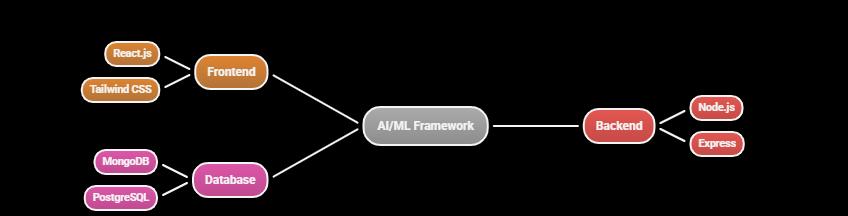
Inthedesignphase,thearchitectureismeticulouslyplanned toincludearesponsivefrontend,alogic-heavybackend,anda securedatabasestructure.Thetechnologystackiscarefully selectedtoensurehighperformance:
• Frontend: React.js and Tailwind CSS are used to buildamodern,responsiveuserinterface.
• Backend: Node.jsandExpressmanagetheAPIsand server-sidelogic.
• Database: MongoDB or PostgreSQL is utilized for secureandpersistentdatastorage.
The methodology also incorporates a rigorous testing and validationcycle.Thisinvolvesfunctionaltesting,integration testing, and performance testing to ensure the system is reliableundervariousconditions.Oncevalidated,thesystem isdeployedonasecureserverwithcontinuousmonitoringto handleupdatesandpotentialscalabilitychallenges.
Thebackendinfrastructure,poweredbyNode.jsandExpress, serves as the central nervous system of the platform, handlingcomplexbusinesslogicandrouting.Node.js'snonblocking,event-drivenI/Omodelisparticularlysuitedfora healthcareplatformthatmustmanageconcurrentrequests such as multiple doctors accessing records while patients book appointments simultaneously. Express simplifies the creationofrobustRESTfulAPIs,facilitatingacleanseparation ofconcernsbetweenthedataprocessinglayerandtheuser interface.Thisarchitectureallowsfortheimplementationof heavy server-side logic, such as automated scheduling algorithms and complex data validation, without compromisingthespeedorresponsivenessofthesystem.
TheAsclepiussystemrepresentsasignificantsteptoward thedigitalizationofhealthcaremanagement.Byfocusingon acleandesignandarobusttechnicalfoundation,itservesas an efficient bridge between clinical necessity and modern digital convenience. Through the integration of real-time scheduling,securedigitalrecords,andautomatedreminders, the platform effectively reduces administrative overhead andimprovespatientaccessibility.
Thetransitionfrommanualprocessestoanautomatedwebbased application addresses long-standing issues in the healthcaresector,suchashighno-showratesandexcessive paperwork.TheuseofmoderntechnologieslikeReact.jsand Node.js ensures that the system is not only functional but alsoscalableforfuturegrowth.Thisprojectdemonstrates thatawell-structureddigitalportalcanenhanceoperational efficiency for both doctors and administrators while providingasuperiorexperienceforpatients.
Ultimately, Asclepius is designed to evolve alongside the healthcareindustry.Withplannedadvancementsinmobile accessibility, telemedicine, and digital prescriptions, the platform is positioned to remain a relevant and powerful tool in the ongoing digital transformation of medical services. It serves as a blueprint for secure, user-centric healthcaremanagementsystems.
International Research Journal of Engineering and Technology (IRJET) e-ISSN: 2395-0056
Volume: 13 Issue: 03 | Mar 2026 www.irjet.net p-ISSN: 2395-0072
Theglobalhealthcarelandscapeiscurrentlyundergoinga seismic shift, transitioning from antiquated, paper-based administrativeworkflowstowardastreamlined,data-driven digitalecosystem.Attheheartofthistransformationisthe Asclepius system, a platform engineered to address the systemicinefficienciesthathavehistoricallyplaguedmedical institutions.Byharmonizingclinicalnecessitywithmodern digital convenience, Asclepius serves as more than just a managementtool;itactsasafoundationalblueprintforthe future of medical administration. This evolution is predicated on three core pillars: architectural integrity, operationaloptimization,andaforward-thinkingapproach topatient-centriccare.
Theefficacyofanydigitalhealthcaresolutionismeasuredby its ability to maintain high performance without compromising the sanctity of patient data. The Asclepius systemachievesthisthroughacarefullycuratedtechnology stack. By utilizing React.js for the frontend, the platform provides a highly responsive and intuitive interface. This choiceiscriticalbecausemedicalprofessionalsoftenoperate in high-pressure environments where interface lag or unintuitivenavigationcanleadtosignificantdelaysincare.
For Patients: The platform offers "superior experience"throughaccessibility.Gonearethedays of waiting on hold to book an appointment or travelingtoaclinicjusttopickupalabreport.The patient-facing side of the portal provides a selfserviceenvironmentwhereuserscanmanagetheir health on their own terms, fostering a sense of agencyandtrust.
For Doctors: Thesystemactsasaclinicalassistant. Bypresentingdatainaclean,organizedmanner,it reduces"cognitiveload."Doctorscanviewtrendsin apatient’svitals,reviewpreviousprescriptions,and document new visits without navigating through clunky,outdatedmenus.
For Administrators: Thesystemprovidesabird’seye view of the facility’s health. From monitoring appointment volumes to ensuring that data protectionlaws(suchasHIPAAorGDPR)arebeing met, the administrative dashboard provides the tools necessary for high-level management and complianceoversight.
TheimplementationofAsclepiusiscenteredaroundthree primary modules, each tailored to specific user roles. The Patient Portal is designed for maximum accessibility, allowinguserstosearchfordoctorsbyspecialtyandlocation whileprovidingasecurespacetoviewtheirmedicalhistory. This module integrates real-time scheduling, enabling patients to see live availability and book appointments instantly.
TheDoctorDashboardservesastheprimarymanagement toolforhealthcareproviders.Itallowsdoctorstoviewtheir
dailyschedules,managepatientappointments,andaccess digitalhealthrecordssecurely.Bydigitizingtheserecords, thesystemreducesthetimespentonmanualfileretrieval andminimizestheriskoflostormisplacedinformation. Finally,theAdminConsoleprovidesthenecessaryoversight to keep the system running smoothly. This module is responsibleformonitoringsystemtraffic,verifyingdoctor credentials,andensuringthatsecurityprotocolslikeRBAC are correctly enforced. Together, these modules create a cohesive ecosystem that automates the logistical side of healthcare,allowingproviderstofocusmoreonpatientcare andlessonadministration.
[1] M. A. Kabir and S. Wang, "Web-based Medical AppointmentSystem:APatient-CentricDesign,"Journal ofSoftwareEngineeringandApplications,vol.14,no.5, pp.165-182,May2021
[2] A. G. Gadziko and T. Makamure, "Implementing RoleBased Access Control (RBAC) in Hospital Information Systems,"InternationalJournalofComputerScienceand Security(IJCSS),vol.15,no.2,pp.45-58,2021
[3] 3S.TilakandR.Khanna,"AComparativeStudyofMERN Stack and Traditional LAMP Stack for Healthcare Applications," International Research Journal of EngineeringandTechnology(IRJET),vol.8,no.12,pp. 1012-1018,Dec.2021
[4] J.S.MooreandK.L.Fisher,"TheImpactofAutomated Reminders on Reducing Patient No-Show Rates: A SystematicReview,"HealthInformaticsJournal,vol.27, no.3,2021