
International Research Journal of Engineering and Technology (IRJET) e-ISSN: 2395-0056
Volume: 13 Issue: 02 | Feb 2026 www.irjet.net p-ISSN: 2395-0072
International Research Journal of Engineering and Technology (IRJET) e-ISSN: 2395-0056
Volume: 13 Issue: 02 | Feb 2026 www.irjet.net p-ISSN: 2395-0072
Mr. B. Upender 1, Roshini. P2, Vinayak Reddy. N 3, Aishwika.M4, Reshwanth Reddy.M5
1Asst.Professor in Department of IT, TKR College of Engineering and Technology, Telangana, India 2345BTECH Students in Department of IT, TKR College of Engineering and Technology, Telangana, India ***
Abstract - With the rapid digitalization of healthcare systems, ensuring the authenticity of prescriptions and the integrity of medicines has become a critical challenge. This paper presents the design and implementation of a Secure EPrescription System with Medicine Verification using the Django web framework. The proposed system introduces a multi-levelsecurityarchitectureinvolvingAdmin,Distributor, Doctor, Patient, and Pharmacy modules to prevent prescription forgeryandcounterfeit medicineusage. Patients register in the system and are approved by the administrator before accessing medical services. Medicines added to the system are not trusted immediately; instead, they are sent for distributor verification, where only approved medicines become eligibleforprescription.Doctorscanprescribeverified medicines to approved patients and generate a unique SHA256 hash-based QR code, which is securely delivered to the patient via email. Pharmacies authenticate prescriptions by scanning the QR code, which validates both the prescription data and the distributor approval status of the medicine. The system successfully detects tampered or unverified medicines and blocks unauthorized prescriptions. Experimental results demonstrate that the proposed approach enhances prescription security, ensures medicine authenticity, reduces manualintervention, andprovidesareliable,transparent,and tamper-resistant digital prescription workflow while maintaining patient confidentiality.
Key Words: Block chain, E-Prescription, Medicine Tracking, Smart Contracts, Healthcare Security, Drug Supply Chain, Data Integrity, Patient Privacy.
In recent years, the healthcare sector has undergone significant digital transformation with the adoption of electronic systems for medical data management, teleconsultation, and e-health services. Despite these advancements, one of the persistent challenges faced by healthcare providers is ensuring the authenticity and securityofmedicalprescriptions.Traditional paper-based prescriptionsarepronetoseveralissuessuchasillegibility, forgery, and unauthorized duplication, which can lead to severe consequences including incorrect medication dispensing and drug misuse. Hence, there is a growing demand for a secure, verifiable, and automated system to handleprescriptionselectronically.
The Secure E-Prescription System proposed in this work aims to address these challenges by providing a reliable, transparent,andefficientprescriptionmanagementprocess. ThesystemutilizestheDjangowebframeworktointegrate multiple stakeholders Admin, Doctor, Patient, and Pharmacy within a single digital platform. The Admin verifies and approves patient registrations to ensure data authenticity. Once approved, Doctors can view patient details, record medical issues, and prescribe medicines directly through the system. Each prescription is secured using a SHA-256 hashing algorithm, and a QR code is generatedtorepresentthishash.ThePharmacyverifiesthe prescription’sauthenticitybyscanningtheQRcode,which retrievesandvalidatesthecorrespondingrecordfromthe database.
Thissystemnotonlyenhancesprescriptionsecuritybutalso improvesaccessibility,eliminatesmanual paperwork,and minimizestheriskoffraudulentactivities.Furthermore,it ensuresthatonlyapprovedpatientsandauthorizedmedical professionalsparticipateintheprocess,maintainingstrict data confidentiality and compliance with healthcare data standards. Through this implementation, the proposed model demonstrates a practical and scalable approach towardbuildingasecuredigitalhealthcareecosystem.
Traditional e-prescription systems rely heavily on centralizeddatabasesmanagedbyhospitalsorthird-party service providers. These systems are susceptible to single points of failure, cyberattacks, and unauthorized access. Prescription data can be altered or misused, leading to serious medical and legal consequences. Moreover, interoperability issues between healthcare providers and pharmacies further complicate secure prescription exchange. In parallel, the pharmaceutical supply chain suffers from limited visibility and traceability. Counterfeit andexpiredmedicinescaninfiltratethedistributionprocess due to inadequate tracking mechanisms. Patients and healthcareprofessionalsoftenlackreliablemeanstoverify the authenticity and origin of drugs. These challenges highlight the urgent need for a secure, transparent, and tamper-proofsystemthatcanmanageprescriptionswhile trackingmedicinesthroughouttheirlifecycle.
International Research Journal of Engineering and Technology (IRJET) e-ISSN: 2395-0056
Volume: 13 Issue: 02 | Feb 2026 www.irjet.net p-ISSN: 2395-0072
Blockchain technology provides a decentralized ledger wheretransactionsarepermanentlyrecordedandcannotbe alteredoncevalidated.Inablockchain-basede-prescription system,prescriptionsgeneratedbyauthorizeddoctorsare storedasimmutablerecords,ensuringauthenticityandnonrepudiation. Smart contracts automate prescription validation,accesscontrol,andmedicinedispensing,reducing human intervention and errors. Furthermore, integrating medicine tracking with blockchain enables end-to-end traceabilityofpharmaceuticalproductsfrommanufacturers topatients.Eachstageofthesupplychainisrecordedonthe ledger, allowing stakeholders to verify drug origin, movement, and compliance in real time. This approach significantlyimprovesdataintegrity,enhancespatienttrust, andstrengthensoverallhealthcaresecurity.
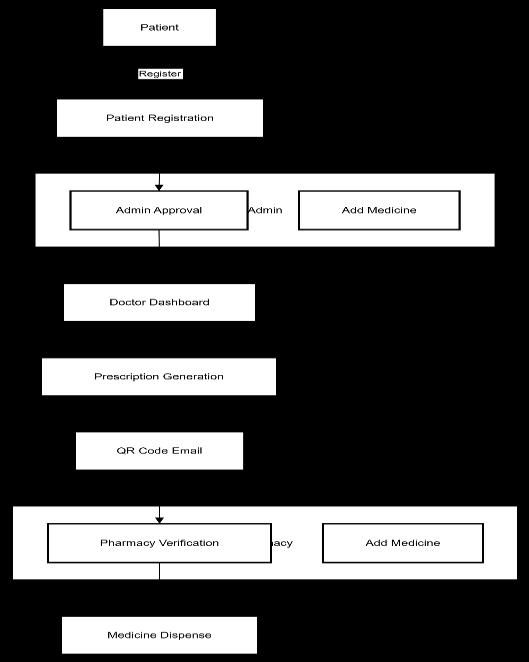
TheproposedsystemisaSecureE-PrescriptionandMedicine Verification System designed to enhance the security, authenticity,and efficiencyof prescription managementin modern healthcare environments. The system provides a centralized digital platform involving Administrator, Distributor,andDoctor,Patient,andPharmacymodulesto ensure end-to-end verification of both prescriptions and medicines.Patientsregisterinthesystembysubmittingtheir personal and medical details, which are verified and approved by the administrator to ensure that only authenticateduserscanaccesshealthcareservices.Medicines are added to the system by the administrator and are not trusted immediately; instead, they are forwarded to a distributor verification module, where each medicine is carefully reviewed and either approved or rejected. Only distributor-approved medicines are made available for doctors to prescribe, thereby preventing the use of counterfeit or tampered medicines. Doctors can view approved patient details and prescribe only verified medicines. For every prescription, the system generates a unique SHA-256 hash-based QR code, which securely
encapsulates the prescription data. This QR code is automaticallysenttothepatientviaemail,enablingsecure storage and easy sharing. Pharmacies authenticate prescriptionsbyscanningtheQRcode,whichvalidatesboth theprescriptiondetailsandthedistributorverificationstatus ofthemedicineinrealtime.Ifthemedicineisunverifiedor tampered,thesystemimmediatelyalertsthepharmacy.By implementing role-based access control, cryptographic hashing, QR-code-based verification, and distributor-level medicine validation, the system effectively eliminates prescriptionforgery,detectsfakemedicines,reducesmanual errors, and ensures transparency across all healthcare stakeholders. The proposed system replaces traditional paper-basedprescriptionswitha secure,tamper-resistant, andefficientdigitalworkflow.
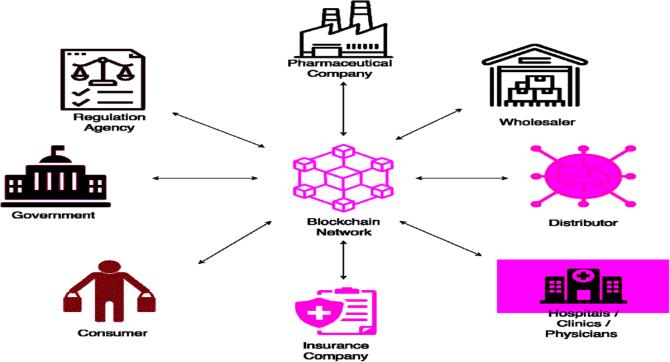
The system architecture is designed around a centralized coordinating center that manages and supervises multiple distributedentitiesinvolvedinthehealthcareworkflow.Key stakeholderssuchasregulatoryagencies,institutionalreview boards,sponsors,datasafetymonitoringboards,andanalysts interactwiththecoordinatingcentertoensurecompliance, governance,anddataanalysis.Dataiscollectedfrommultiple subject sites, where users or patients generate clinical or prescription-related information, which is securely transmitted to the coordinating center. The coordinating centervalidates,aggregates,andprocessesthisdatabefore sharing it with authorized stakeholders. This architecture ensures controlled data flow, regulatory oversight, data integrity,andefficientcoordinationamongallparticipating entities,makingitsuitableforsecurehealthcare,clinical,and e-prescriptionmanagementsystems.
International Research Journal of Engineering and Technology (IRJET) e-ISSN: 2395-0056
Volume: 13 Issue: 02 | Feb 2026 www.irjet.net p-ISSN: 2395-0072
In the proposed system architecture, secure data flow is ensuredthroughrole-basedaccesscontrolandcryptographic authentication mechanisms. Each stakeholder, including physicians,pharmacies,distributors,regulators,andpatients, isassignedauniquedigitalidentity.Alltransactionssuchas prescription generation, medicine dispensing, and supply chainupdatesareauthenticatedbeforebeingrecorded.This controlled access prevents unauthorized modification of prescriptionrecordsandensuresthatsensitivemedicaldata is accessed only by permitted entities. The architecture thereby enhances confidentiality, accountability, and trust acrossthesystem.
Theproposedarchitectureintegratesblockchaintechnology asthecorelayertomaintaintransparencyandtraceability throughoutthemedicinelifecycle.Everytransaction from prescription issuance to drug manufacturing, distribution, and final consumption is stored asan immutable record. Smart contracts automate verification processes, ensuring thatonlyvalidprescriptionstriggermedicinedispensingand supplyupdates.This transparentandtamper-proofdesign enables real-time tracking of medicines, helps detect counterfeitdrugs,andprovidesregulatorswithreliableaudit trails, thereby strengthening overall system integrity and patientsafety.
Theproposedsecuree-prescriptionandmedicinetracking platform is implemented using a layered architecture that integrates blockchain technology with a web-based healthcareapplication.Thesystemconsistsofuserinterfaces for doctors, pharmacies, distributors, regulators, and patients,abackendapplicationserverforbusinesslogic,and ablockchainnetworkforsecuredatastorageandvalidation. Smart contracts are deployed to manage prescription creation, verification, medicine tracking, and access permissions. All sensitive data is encrypted before being recorded on the blockchain, ensuring data privacy and integrity.Theimplementationfocusesonscalability,security, andinteroperabilitywithinthehealthcareecosystem.
Smartcontractsformthecoreoftheproposedsystemandare responsible for automating critical healthcare operations. When a physician generates an e-prescription, the prescription details are validated and converted into a blockchain transaction. The smart contract verifies the doctor’s authorization, prescription validity, and medicine
availabilitybeforeapproval.Onceapproved,theprescription becomes immutable and can be accessed by authorized pharmacies for dispensing. This automated approach eliminates manual intervention, prevents prescription tampering,andensuresnon-repudiationofmedicalrecords.
Themedicinetrackingmoduleisimplementedbyrecording each stage of the drug supply chain as a blockchain transaction. Pharmaceutical manufacturers register medicineswithuniqueidentifiers,whichareupdatedasthe drugs move through wholesalers, distributors, and pharmacies. Each transaction is time-stamped and cryptographically linked to previous records, creating a transparent and tamper-proof audit trail. Patients and regulatoryauthoritiescanverifymedicineauthenticityand track its origin using the blockchain ledger. This implementation significantly reduces counterfeit drug circulationandimprovestrustinthepharmaceuticalsupply chain.
The experimental results demonstrate that the proposed blockchain-based e-prescription and medicine tracking system significantly improves security, transparency, and dataintegritycomparedtoconventionalcentralizedsystems. Allprescriptionrecordsandsupplychaintransactionswere successfully stored as immutable blockchain entries, preventingunauthorizedmodificationandensuringend-toend traceability. Performance evaluation showed that prescription verification andmedicine tracking operations werecompletedwithinacceptabletimelimits,withminimal latencyintroducedbysmartcontractexecution.Thesystem maintained high accuracy in validating prescriptions and detecting invalid or duplicate entries. Additionally, decentralizeddatastorageimprovedsystemreliabilityand availability,evenunderincreasedtransactionloads.Overall, theresultsconfirmthattheproposedarchitectureisefficient, scalable, and well-suited for secure healthcare and pharmaceuticalmanagementapplications.
TheproposedSecureE-PrescriptionSystemUsingQRCode Verification successfully addresses the critical issues of prescription forgery, data tampering, and unauthorized access in healthcare management. By integrating DjangobasedwebtechnologywithQRcodeencryption,thesystem ensures that each prescription generated by the doctor is both unique and verifiable. The Admin module adds an additionallayerofsecuritybyvalidatingpatientregistrations beforeallowingaccess,whilethePharmacymoduleenables seamless verification of prescriptions through QR code scanning. This approach enhances transparency and trust amongallstakeholders doctors,patients,andpharmacies
International Research Journal of Engineering and Technology (IRJET) e-ISSN: 2395-0056
Volume: 13 Issue: 02 | Feb 2026 www.irjet.net p-ISSN: 2395-0072
by maintainingan immutable record of medical data.It also reduces human errors, eliminates paper-based inefficiencies, and ensures quick and secure medication dispensing. Overall, the system demonstrates how digital technology can be effectively utilized to improve the reliability and safety of the prescription process. Future improvements may include integrating blockchain for decentralizedstorage,AI-based prescriptionanalytics,and mobileappsupportforreal-timeprescriptiontrackingand notifications,therebymakingthesolutionmorescalableand adaptableforlargehealthcarenetworks.
Futureenhancementsoftheproposedsystemcanfocuson improving scalability, interoperability, and real-world adoption. The platform can be extended by integrating advanced consensus mechanisms and layer-2 solutions to reducetransactionlatencyandcost.Incorporatingartificial intelligenceanddataanalyticscanenablepredictiveinsights such as demand forecasting, anomaly detection, and early identificationoffraudulentactivitiesinthemedicinesupply chain. Interoperability with existing hospital information systems and national healthcare databases can further enhanceusability.Additionally,mobileapplicationsupport andintegrationwithInternetofThings(IoT)devices,suchas smart packaging and sensors, can enable real-time monitoring of medicine conditions, thereby strengthening patientsafetyandoverallsystemeffectiveness.
Wewouldliketoexpressoursinceregratitudetoallthose whohavecontributed,directlyorindirectly,tothesuccessful completionof thisproject. Weare extremelythankful and indebtedtoDr.N.Satyanarayanaforhisvaluableguidance, constant encouragement, and insightful suggestions throughout the course of this project. His expertise and support played a crucial role in shaping our work and motivatingustoachieveourobjectives.Wealsoextendour heartfelt thanks to Mr. B. Upender for his continuous support,constructivefeedback,andcooperationduringthe development of this project. His guidance and encouragementwereinstrumentalinovercomingchallenges andensuringthesuccessfulcompletionofourwork.Weare gratefultoallthefacultymembersandstaffwhoprovided theirassistanceandsupportwheneverrequired.Finally,we would like to thank our parents and friends for their constant motivation, patience, and moral support throughoutthisendeavor,whichgreatlycontributedtothe successfulcompletionofthisproject.
[1] A.Azaria,A.Ekblaw,T.Vieira,andA.Lippman,“MedRec: Using Blockchain for Medical Data Access and PermissionManagement,”Proc.IEEEInt.Conf.OpenBig Data (OBD), Vienna, Austria, 2016, pp. 25–30. DOI:10.1109/OBD.2016.11
[2] K. Kuo, L. Kim, and A. Ohno-Machado, “Blockchain Distributed Ledger Technologies for Biomedical and HealthCareApplications,”J.Amer.Med.Inform.Assoc., vol. 24, no. 6, pp. 1211–1220, 2017. DOI:10.1093/jamia/ocx068
[3] M.A.Engelhardt,“HitchingHealthcaretotheChain:An IntroductiontoBlockchainTechnologyintheHealthcare Sector,” Technology Innovation Management Review, vol. 7, no. 10, pp. 22–34, 2017. DOI:10.22215/timreview/1111
[4] S. Saberi, M. Kouhizadeh, J. Sarkis, and L. Shen, “Blockchain Technology and Its Relationships to Sustainable Supply Chain Management,” Int. J. Production Research, vol. 57, no. 7, pp. 2117–2135, 2019.DOI:10.1080/00207543.2018.1533261
[5] P. K. Sharma, S. Y. Moon, and J. H. Park, “Block-VN: A Distributed Blockchain-Based Vehicular Network ArchitectureinSmartCity,”IEEEAccess,vol.5,pp.223–232,2017.DOI:10.1109/ACCESS.2017.2780180