
International Research Journal of Engineering and Technology (IRJET) e-ISSN: 2395-0056
Volume: 12 Issue: 04 | Apr 2025 www.irjet.net p-ISSN: 2395-0072
International Research Journal of Engineering and Technology (IRJET) e-ISSN: 2395-0056
Volume: 12 Issue: 04 | Apr 2025 www.irjet.net p-ISSN: 2395-0072
Vishal Yadav1 , Asst. Prof. Ankit Shah2
1Vishal Yadav, Department of Applied instrumentation ,LD College of engineering, Ahmedabad 2Asst. Prof. Ankit Shah, , Department of Applied instrumentation ,LD College of engineering, Ahmedabad
Abstract - Accurate reference tracking with minimal steady-state error remains a critical objective in control system design, particularly for complex trajectories such as step and ramp signals. Traditional discrete-time PID controllers oftenfallshort in handlingsuchprofiles,especially under dynamic conditions and external disturbances. To overcome these challenges, this study proposes a two-degreeof-freedom (2-DOF) control framework aimed at enhancing tracking accuracy and robustness. . A novel integration of the Auxiliary Aryabhatta’s Identity Equation is introduced to support unified tracking of both step and ramp references trajectory within the same control strategy. The proposed methodology is experimentally validated on a single board heater system, where it is tested on reference trajectory both step andrampingtemperatureprofiles.Resultsdemonstratea significant reduction in steady-state error and improved disturbance rejection compared to standard PID control, confirming the effectiveness of the hybrid reference tracking design.
Key Words: 2DOF Controller, Single board heater system, reference trajectory tracking, FOPDT model Real time heater control.
1.INTRODUCTION
The proportional integral derivative(PID) is the most populartechniqueinbothacademicandindustrialcontexts. Formanyapplication,PIDcontrollersareeasytoimplement andworkwell,particularlywhenthesystemdynamicsare well understood and reasonably stable. But conventional control system, especially those with a single degree of freedom(1DOF)structurelikePID,haveseriousdrawback that impair how well they work in practical situation . in 1DOF system, the same control is used to manage both setpointchangesanddisturbances.Thismakesitdifficultto optimizeperformanceforbothatthesametime,improving oneaspectoftenworsenstheother.Traditionalcontrollers may struggle with overshoot, sluggish response, or oscillationwhenthereferenceinputchangessuddenly.Ifthe system model changes due to environment factors, load variations,oragingcomponents,thecontrollermaybecome unstableorperformpoorly.PIDandotherbasiccontroller reacts to error to errors after they occur , instead of anticipating them. They lack a feedforward path that can improvespeedandandprecision.Thelimitationhasdriven theevolutiontowardsmoreadvancedstrategies,oneofthe
most prominent being the Two Degree of Freedom controller. The architecture of 2DOF controller is more adaptablethanthatofconventionalcontrolsystems.itoffer two distinct control routes to handle tracking and disturbance rejection instead of single control loop. The controller that takes control action before a disturbance disruptstheplantareknownasfeedforwardcontroller.This control system component is in charge of controlling the controllersresponsetovariationinthesetpointorreference input. In order to identify any discrepancies between the systemsactualandintendedfunction,feedbackisused.The objective of the controller is to improve tracking performance, robust disturbance rejection and decoupled tuning.
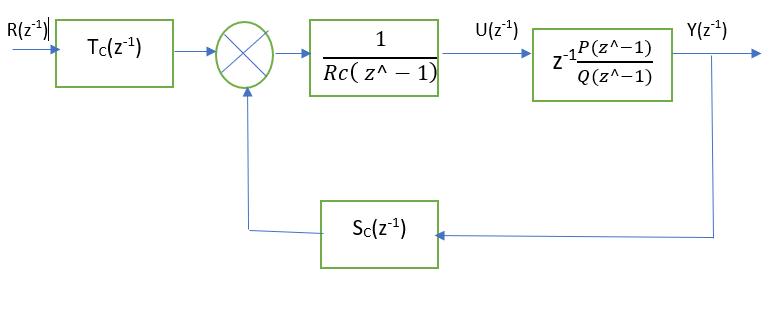
Bothcontinuous-timeanddiscrete-timesystemscanusethe feedback control mechanism described above. The plant, controlleroutput,andreferenceareR(z 1),U(z 1),andY(z 1). outputsignals,inturn.Assumingthatacontinuous-timeplant modelissampledatagivensamplingtimeTs,wemayquickly extractthediscreteplant'stransferfunctionasshown,


Indiscrete-timecontrolsystems,theplantorsystemmodelis typically expressed in terms of polynomials in z 1, where P(z 1)andQ(z 1)areusedtorepresentthenumeratorand denominatorofthetransferfunction,respectively.Thesetwo polynomialsaresaidtobeco-primewhentheydonotshare anycommonfactorsotherthanaconstant,ensuringthatthe systemisminimalandcontrollable.Thevariablekrepresents theinputdelayortimelagpresentinthesystem,whichisa commonfeatureinmanypracticalprocesses.
International Research Journal of Engineering and Technology (IRJET) e-ISSN: 2395-0056
Volume: 12 Issue: 04 | Apr 2025 www.irjet.net p-ISSN: 2395-0072

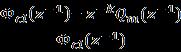
Ym(z-1)=FmR(z-1)=z-k R(z-1)
The term ϕcl(z 1) represents the desired characteristic polynomial,whichisderivedbyselectingappropriateclosedloop pole locations based on predefined performance specifications such as settling time, damping ratio, and systemstability.
ThepolynomialsRc(z-1),Sc(z 1),andTc(z 1)arethecontroller parametersexpressedintermsofz−1.
The general control law equation in terms of these polynomialsareobtainedas:
The equation can be solved to obtain the polynomials R1(z 1)andS1(z 1).
1.2 Formulation of the Auxiliary Aryabhatta identity for polynomial reference inputs
The Auxiliary Aryabhatta's Identity Equation is used to determine the polynomial T1(z 1) in order to remove the steady-stateinaccuracycausedbythepolynomialreference signal. This method will help find the discrete polynomial Tc(z 1) for a structure with two degrees of freedom. Let's lookatareferencesignal,representedbythepolynomial
r(t)=tp,wherepisthepolynomial'sdegree.


U(z-1)= R(z-1)- Y(z-1)
Eliminating the identical terms and settling the resulting expressionequal.
Thegeneralformgivenby,

To maintain a lower order for the desired closed-loop transfer function compared to the controller polynomial Tc(z 1), it is essential to simplify the transfer function by eliminating shared factors between the numerator and denominator.However,thissimplificationmustbecarried outwithcaution.Onlythosefactorsassociatedwithstable zeros,meaningrootsthatlieinsidetheunitcircleinthezdomain,shouldbecanceled.
Tomanagethis,thenumeratorpolynomialP(z 1)istypically brokendownintotwopartsbasedonthelocationofitszeros. Thefirstpartincludesdesirable(or"good")factors,which haverootswithintheunitcircleandcanbesafelycancelled. Thesecondpartconsistsofundesirable(or"bad")factors, correspondingtozerosoutsidetheunitcircle,whichmustbe retainedduringcontrollerdesign.
N=Nb Ng
Toguaranteethatthesystemachievesunitygaininsteady state, a constant factor γ is added to ensure that the requirement����(1)=1ismet.Thisconditioncompletesthe structure required to provide the intended steady-state response,makingthepolynomialT��fullyspecified.
Tc=γQg R1
Lets assume that RC=PgR1 and SC=S1 then the equation become easier by doing cancellation of common factor .Furthermore,bymatchingthenumeratorpolynomialterms, wederivetheAryabhatta’sidentityasfollows
Q(�� 1)��1(�� 1)+�� ������(�� 1)��1(�� 1)=Φcl(z-1)
Thisreferencewaveform'sZ-transformisprovidedby R(z-1)=

Here,adiscretepolynomialintermsof�� 1 isrepresentedas ��1(�� 1).

= 1- =

TheZ-transform'sfinalvaluetheoremstatesthatinorderto eliminate the steady state error caused by a polynomial referenceinput,theterm(1−�� 1) p+1 mustbeafactorofthe expression������(�� 1)−�� ��P��(�� 1).Thisconditionallowsforthe establishmentofthefollowingrelationship:
ϕcl(z−1)−z−kPm(z−1)=(1−z−1)p+1K(z−1)
In this case, ��(�� 1) represents an unidentified discrete polynomialthatrequiresdetermination.Theequationcanbe recastasfollowsbychangingthetermfromEquation.
ϕcl(z 1)=z kPb(z 1)T1(z 1)+(1−z 1)p+1K(z 1)
BothT1 (�� 1)and��(�� 1)areregardedinthisparadigm as unknown discrete-time polynomials that need to be calculatedduringthecontrollerdesignphase.TheAuxiliary Aryabhatta Identity Equation is the name given to the formulationfoundinEquation10.
Usually utilized in applications needing exact temperature control,asingleboardheatersystemisasmall,integrated devicemadetoprovideheatingthroughacontrolledprocess. A heating element, control mechanisms, sensors, and occasionallyauserinterfaceareallincorporatedintoasingle circuitboardorplatforminthiskindofdevice.Thesystem's easeofuseandeffectivenessmakeitappropriateforavariety ofuses,includingconsumerelectronics,medicalequipment, and industrial and automobile heating systems. These systemsaremadetobesmall,simpletoinstall,andenergy-
International Research Journal of Engineering and Technology (IRJET) e-ISSN: 2395-0056
Volume: 12 Issue: 04 | Apr 2025 www.irjet.net p-ISSN: 2395-0072
efficient. When precise temperaturecontrol is needed and spaceisatapremium,theheatingsystemisveryhelpful.All components are integrated into a single board, reducing spacerequirements.
Thesesystemsaredesignedtominimizeenergyconsumption whilemaximizingheatingoutput.
Thesystemusesvariouscontrolalgorithmsandsensorsto maintain the desired temperature rangeThe system is engineered for long-term use in harsh environments, with protectionagainstthermaloverloadsandelectricalfaults.
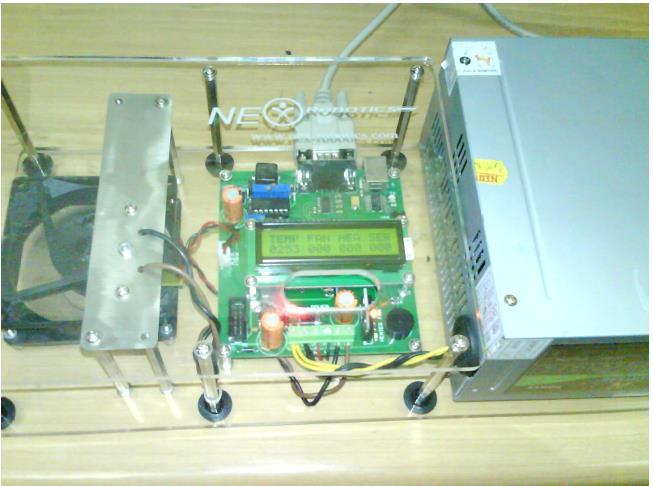
Attheheartofthesystemisanichromecoilthatactsasthe heating element. When an electric current passes through thiscoil,itgeneratesheatduetoitsresistivenature.Aniron plateisplacednearthecoil(approximately3.5mmaway)to absorbandretainthisheat.Thetemperaturesensor,typically athermistororthermocouple,ispositionedclosetotheplate toaccuratelymeasureitssurfacetemperatureinrealtime. This temperature data is sent to the ATmega16 microcontroller,whichservesasthebrainofthesystem.The controller compares the measured temperature with the desiredreferencetemperatureorsetpoint. Toregulatethe heat output, the system employs Pulse Width Modulation (PWM). By varying the duty cycle of the PWM signal, the controller adjusts the power supplied to the heating coil, therebycontrollingtherateoftemperatureincrease.When the system exceeds the desired temperature, a 12V fan locatedbeneaththeheaterisactivatedtocooldowntheiron plate,ensuringthatthesystemremainswithinsafeoperating limits. AnLCDdisplaymountedontheboardshowsreal-time datasuchascurrenttemperature,heaterandfanstates,and serial communication status, providing a user-friendly interface. This continuous process of measurement, comparison, and correction allows the SBHS to track
reference trajectories like step, ramp, signals while maintainingstableandaccuratetemperaturecontrol.
A16x2 displaymountedabovethemicrocontrollerdisplays key system parameters, including the plate temperature, heater and fan input levels, and real-time commands transmittedviatheserialport.Theentiresetupfunctionsasa closed-loopfeedbackcontrolsystem,capableofmaintaining atargettemperatureortrackingaspecifiedreferencesignal. Additionally, a user-friendly interface is available for monitoring, parameter adjustment, and real-time control, making the SBHS a versatile platform for control system experimentationandvalidation
Theresultanalysissectionpresentsadetailedoverviewof the steps taken to design and validate the 2-Degree-ofFreedom (2-DOF) controller for the Single Board Heater System(SBHS).
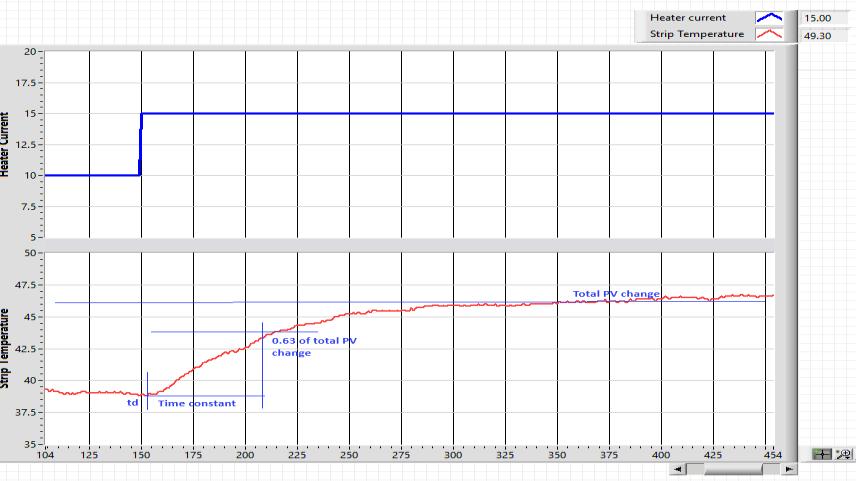
Thefirststepinouranalysisinvolvedidentifyingthedynamic behavioroftheSBHS.Thiswasdoneusinganopen-looptest tocapturethesystem'sresponse.Intheopen-looptest,astep inputwasappliedtothesystem(inthiscase,aPWMsignal appliedtotheheater).Thesystem'stemperatureresponse was recorded over time. The recorded output was then analyzedtoderivethesystem'stransferfunction.Basedon theobservedbehavior,itwasfoundthatthesystemcouldbe approximatedasafirst-ordertransferfunction.
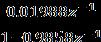
Thisthefirstordermodel,
G(s) =

Nowdiscretizethisgivencontinuoustransferfunction
G(z) =
International Research Journal of Engineering and Technology (IRJET) e-ISSN: 2395-0056
Volume: 12 Issue: 04 | Apr 2025 www.irjet.net p-ISSN: 2395-0072
Withrisetimeof20sec.
Φcl =1-2z-1ρcosω+ρ2z-2
Φcl =1+0.5879z-1 +0.6304z-2
Astepmodelisgivenby,
1(z) =

Here,Rc =Bg R1
Φcl =Ab R1+z-kBbS1
Wegot
Rc =0.01988-0.03244z-1+0.6304z-2
Sc =AgS1 =0.0425-0.04189z-1
Tc =γAgT1 =(0.0425)(1-0.9858z-1)
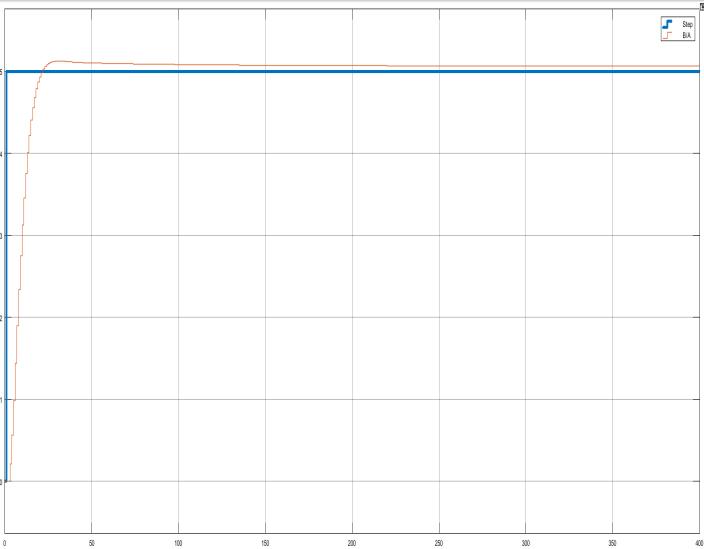
Fig.4.simulationof2DOFforstepsignal
This is the testing with hardware as we can see we have setpoint 25 with fan speed 0 our controller is very nicely followingthetrajectorythatmeansitistrackingthesetpoint. the heater current is our manipulating or we can say controller effort . It will show more effort whenever our temperaturewillnotfollowthesetpoint.
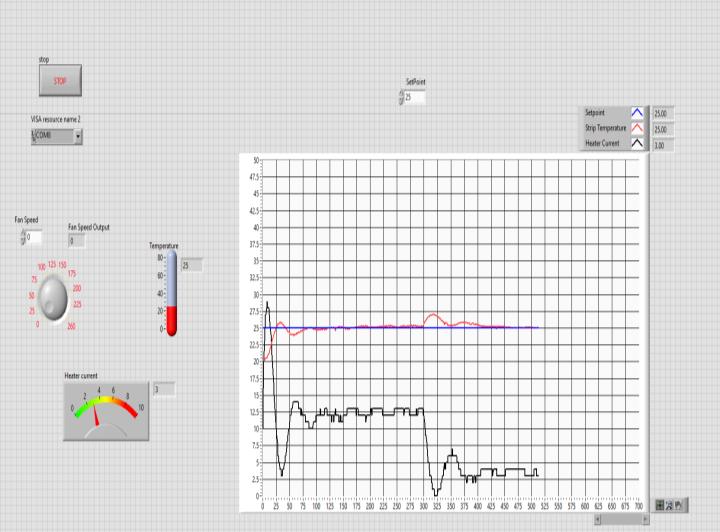
Fig.5.Trackingperformanceof2DOFforstepsignal
Thisisanotherreal-timeexperimentconductedonthesame plantmodel,butwithadifferenttestcondition.Inthiscase, thefanremainsONduringsetpointtrackingandOFFduring disturbance rejection, which is opposite to the previous setup. The intention is to examine how the controller performsunderreversedactuatorconditions.Interestingly, the designed 2-DOF controller still manages to track the reference signal effectively and shows good disturbance rejection, demonstrating its adaptability. This test further validates the robustness of the controller under varying hardware conditions and control actions. In this fan speed=100 for setpoint tracking as we can see it is settle around200secandfanspeed=0fordisturbancerejection.
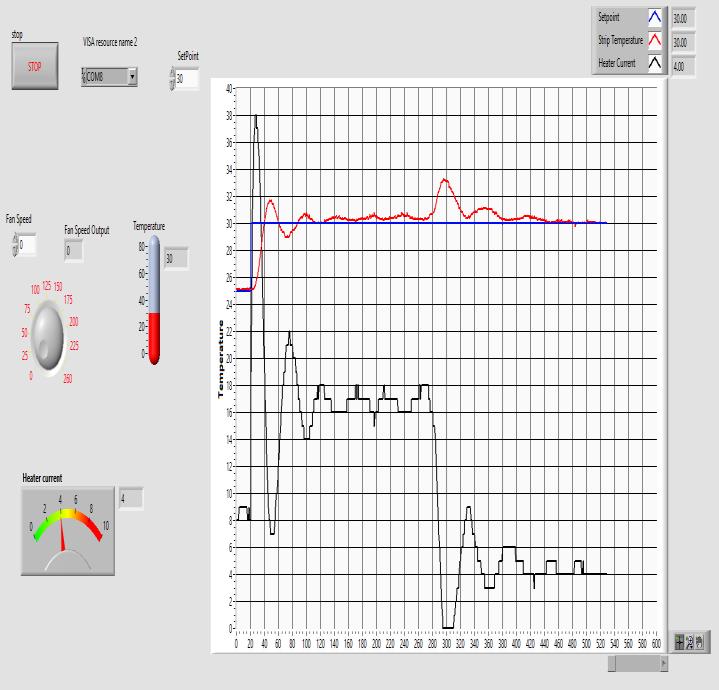
Fig.6.experimentalresultofbothsetpointtracking &disturbancerejection
International Research Journal of Engineering and Technology (IRJET) e-ISSN: 2395-0056
Volume: 12 Issue: 04 | Apr 2025 www.irjet.net p-ISSN: 2395-0072
Result analysis for ramp reference
Datafromanopen-loopstepresponsewasusedtoidentifya second-order transfer function model of the system. Importantparameterslikenaturalfrequency,dampingratio, andsystemgainwerecalculatedbyexaminingthesystem's responsetoastepinput.Thediscrete-timetransferfunction wasthenbuiltusingtheseparameters.Thecontrollerdesign andperformanceassessmentarebasedonthisparadigm
G(s) = Letsdiscretize
G(z) =
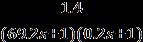
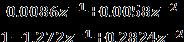
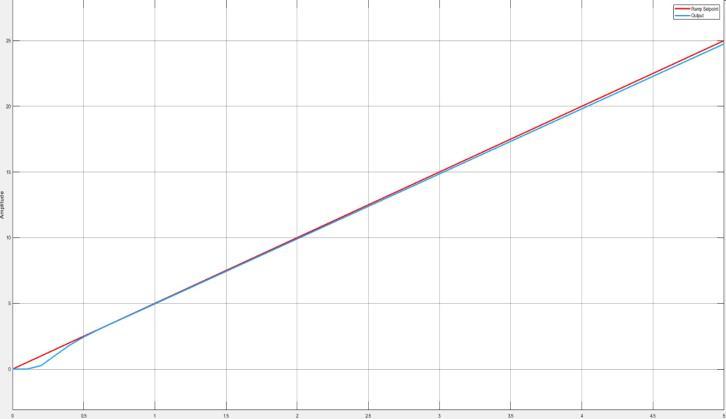
Fig.7.Simulationof2DOFforrampreference
4. Performance evaluation of controller
Parameter Research paper model Designedmodel
Risetime(sec) 127sec 20sec
Settling time (sec) 325 200
Disturbance rejection(sec) 600 450
Software Scilab Labview
Fig.7.Comparisionofperformance
Thisistheevaluationofcontrollerwiththenewmodeland thegivenmodel.
Two-Degree-of-Freedom (2DOF) controller for the Single Board Heater System (SBHS) to achieve more accurate reference trajectory tracking. Compared to conventional controllers, the 2DOF controller showed improved
performance, especially in handling both step and ramp inputs. The experimental results confirmed that the controller not only follows the desired trajectory more closely but also effectively reduces the impact of external disturbances.Thesefindingssuggestthatthe2DOFcontrol approach offers a practical and efficient solution for temperatureregulationinreal-timeembeddedsystemslike the SBHS, with clear advantages over traditional control methods.
[1] R.P.Borase,D.Maghade,S. Sondkar,andS.Pawar,“A reviewofPIDcontrol,tuningmethodsandapplications,” InternationalJournalofDynamicsandControl,vol.9,pp. 818–827,2021.
[2] O. A. Somefun, K. Akingbade, and F. Dahunsi, “The dilemmaofPIDtuning,”AnnualReviewsinControl,vol. 52,pp.65–74,2021.
[3] K.J.˚Astr¨omandB.Wittenmark,Computer-controlled systems:theoryanddesign.CourierCorporation,2013.
[4] A. B. Bishop, Introduction to discrete linear controls: theoryandapplication.Elsevier,2014.
[5] I. Landau, “The RST digital controller design and applications,”ControlEngineeringPractice,vol.6,no.2, pp. 155–165, 1998.D. Kornack and P. Rakic, “Cell Proliferation without Neurogenesis in Adult Primate Neocortex,”Science,vol.294,Dec.2001,pp.2127-2130, doi:10.1126/science.1065467.
[6] E. Ostertag and E. Godoy, “RST-controller design for sinewave refer ences by means of an auxiliary diophantineequation,”inProceedingsofthe44thIEEE Conference on Decision and Control. IEEE, 2005, pp. 6905–6910.
[7] M. Vidyasagar, Control Systems Synthesis: A FactorizationApproach,PartII.SpringerNature,2022.
[8] K. M. Moudgalya, Digital control. Wiley Interscience, 2007.
[9] M.Sebek,H.Kwakernaak,D.Henrion,andS.Pejchova, “Recentprogressinpolynomialmethodsandpolynomial toolbox for matlab version 2.0,” in Proceedings of the 37thIEEEConferenceonDecisionandControl(Cat.No. 98CH36171),vol.4.IEEE,1998,pp.3661–3668.
[10] I.D.LandauandG.Zito,Digitalcontrolsystems:design, identificationandimplementation.Springer,2006,vol. 130.
[11] S. Mehta, P. Shah, and V. Vaidya, “Design and comparativestudyofPIDcontrollertuningmethodfrom IMCtuned2-DOFpoleplacementparameterstructure
International Research Journal of Engineering and Technology (IRJET) e-ISSN: 2395-0056
Volume: 12 Issue: 04 | Apr 2025 www.irjet.net p-ISSN: 2395-0072
for the DC motor speed control application,” in 2013 Nirma University International Conference on Engineering(NUiCONE).IEEE,2013,pp.1–4.
[12] H. D. Raut, A. Singh, and M. Patil, “Design of digital controller using pole placement method,” in 2009 International Conference on Control, Automation, CommunicationandEnergyConservation.IEEE,2009, pp.1–5.
[13] M. Anilkumar, N. Padhiyar, and K. Moudgalya, “LexicographicoptimizationbasedMPC:Simulationand experimental study,” Computers & Chemical Engineering,vol.88,pp.135–144,2016.
[14] P. S. Thakar, A. Markana, and P. B. Miyani, “Robust temperaturetrackingandestimationforresistiveheater circuitboardwithimplementation,”AdvancedControl for Applications: Engineering and Industrial Systems, vol.5,no.2,p.e147,2023.
[15] H. Pouliquen, K. Elloumi, and M.-X. Wang, “Real time PWM control converters using three elements polynomialregulators,”inPESC’92Record.23rdAnnual IEEE Power Electronics Specialists Conference. IEEE, 1992,pp.451–458M.
[16] Markana Anilkumar, Ankit Shah , 2025 International Conference on Sustainable Energy Technologies and Computational Intelligence (SETCOM) | 979-8-33152054-0/25/$31.00 ©2025 IEEE | DOI: 10.1109/SETCOM64758.2025.10932450
2025, IRJET | Impact Factor value: 8.315 |