
International Research Journal of Engineering and Technology (IRJET) e-ISSN: 2395-0056
Volume: 12 Issue: 05 | May 2025 www.irjet.net p-ISSN: 2395-0072
International Research Journal of Engineering and Technology (IRJET) e-ISSN: 2395-0056
Volume: 12 Issue: 05 | May 2025 www.irjet.net p-ISSN: 2395-0072
1 M.Tech Student, L.J. University, Ahmedabad
2 Assistance Professor, Structural Engineering Department, L.J. University, Ahmedabad, India.
Abstract - This research examines the seismic response of high-rise multi-functional buildings with attached podium structures, emphasizing the backstay effect as outlined in IS: 16700 (2017). A structural model was developed usingETABS to study the behavior of a tower-podium configuration subjectedto lateral seismic forces. Two analytical approaches equivalent static analysis and response spectrum analysis were applied. The findings reveal that the presence of the podium significantly influences shear force distribution and induces differential displacements among structural walls, underliningthe importance ofmeticulous designstrategiesto reduce potential negative impacts on overall structural integrity.
Key Words: BackstayAnalysis,podium,sensitiveanalysis, Etabs,HighRise,Shearreversal
1. INTRODUCTION
Inhigh-riseconstruction,thelowersectionofthestructure is commonly known as the podium. This portion typically featuresalargerfloorareaandoffersgreaterresistanceto seismicforcescomparedtothetoweritsupports.Criticalto thepodium’sperformancearethefloorandroofslabs,which functionasdiaphragmsbytransmittingshearandflexural forces to the vertical structural elements. Within these diaphragms,collectorelementsoperateunderaxialtension and compression to gather and direct the seismic forces towardwallsandframes,facilitatingeffectiveloadtransfer.
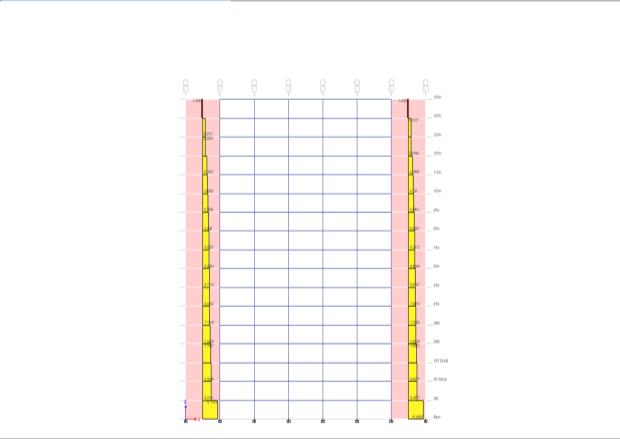
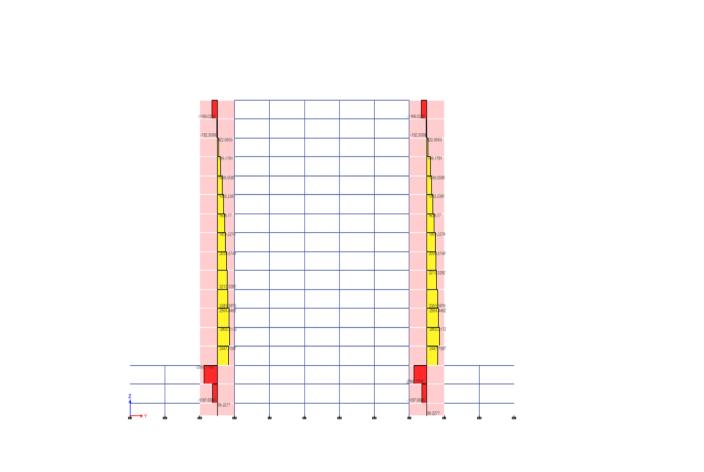
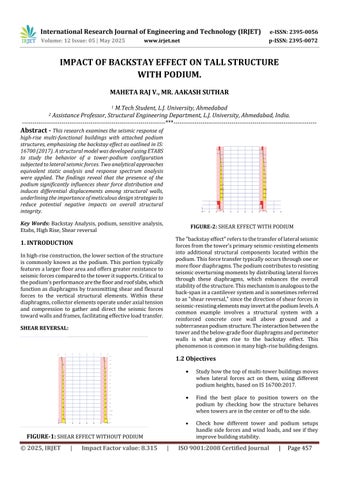
The"backstayeffect"referstothetransferoflateralseismic forcesfromthetower’sprimaryseismic-resistingelements into additional structural components located within the podium.Thisforcetransfertypicallyoccursthroughoneor morefloordiaphragms.Thepodiumcontributestoresisting seismicoverturningmomentsbydistributinglateralforces through these diaphragms, which enhances the overall stabilityofthestructure.Thismechanismisanalogoustothe back-spaninacantileversystemandissometimesreferred toas"shearreversal,"sincethedirectionofshearforcesin seismic-resistingelementsmayinvertatthepodiumlevels.A common example involves a structural system with a reinforced concrete core wall above ground and a subterraneanpodiumstructure.Theinteractionbetweenthe towerandthebelow-gradefloordiaphragmsandperimeter walls is what gives rise to the backstay effect. This phenomenoniscommoninmanyhigh-risebuildingdesigns.
Studyhowthetopofmulti-towerbuildingsmoves when lateral forces act on them, using different podiumheights,basedonIS16700:2017.
Find the best place to position towers on the podium by checking how the structure behaves whentowersareinthecenterorofftotheside.
Check how different tower and podium setups handlesideforcesandwindloads,andseeifthey improvebuildingstability.
International Research Journal of Engineering and Technology (IRJET) e-ISSN: 2395-0056
Volume: 12 Issue: 05 | May 2025 www.irjet.net p-ISSN: 2395-0072
Use the results to help design safer and stronger high-risebuildingsthatcanbetterresistwindand otherlateralforces.
(1) Mehair Yacoubian , Nelson Lam , Elisa Lumantarna , John L. Wilson , Effects of podium interference on shear force distributions in tower walls supporting tall buildings, Engineering Structure .
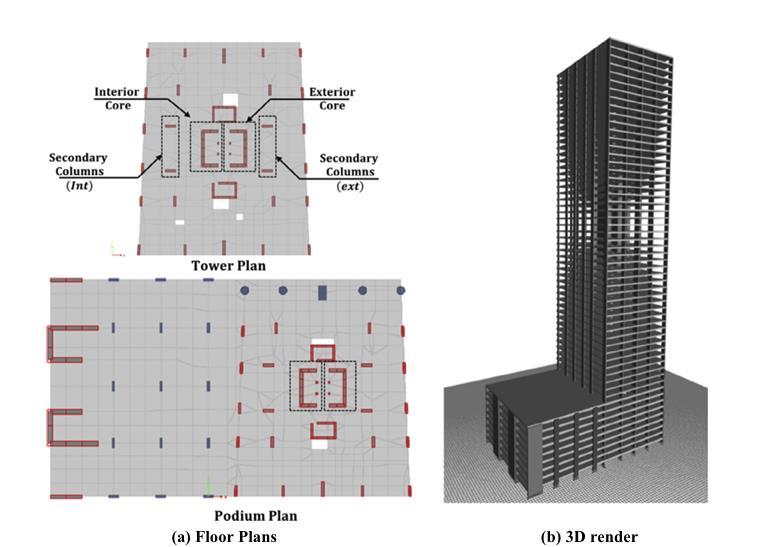
Thisstudyexplorestheimpactofpodiumstructuresonthe structuralbehaviorofcoupledtowerwallsintallbuildings. The presence of a podium can create varying levels of restraint,whichdisruptsuniformlateral displacementand induces in-plane strut actions in the floor slabs near the podium-towerconnection.Notably,theanalysisrevealedthat shearforcestendtoconcentrateintheinnertowerwalljust above the podiumjunction, a direct resultof the podium’s constraining effects. To illustrate the importance of accurately assessing shear demands, a comprehensive nonlinear model was employed. This model highlights the critical shearbehaviorandthecomplexinterplaybetween axialloads,flexuralresponse,andshearforcesintheplanar wallsofpodium-supportedtowers.
(2) Hardik B. Rangani1 and Dr. Vinubhai R. Patel2,Benefits of Backstay Effect in Design of Podium Structure for Tall Building as Per IS 16700:2017, International Journal of Advanced Research in Science, Communication and Technology (IJARSCT).
This research investigates the influence of podium structureslocatedatthebaseofhigh-risebuildingsontheir seismicresponse.Itfocusesonhowpodiumscontributeto lateral force resistance through the backstay effect, impactingbothdisplacementpatternsandforcedistribution
within the tower. Through simulation-based analysis, the studyevaluatesvariousconfigurationsbyalteringpodium and tower heights, as well as tower positioning (central versus offset), to assess their effect on structural performance during earthquakes. The objective is to determine optimal design strategies that minimize lateral movementandenhanceseismicresilience.Theinclusionofa backstaydiaphragmincreasesthe building'soverall mass, resulting in higher base shear an effect that is more significantintallerbuildingsthaninshorterones.Insystems withathree-storypodium,accountingforthebackstayeffect has been shown to reduce lateral displacement by approximately 20–25% compared to a standalone tower. Theadditionofretainingwallsfurtherenhancesthiseffect, maintaining story drift within allowable limits (roughly 0.004 times the floor height). Moreover, as the podium heightincreases,sodoesthemagnitudeofthebackstayforce attheinterfacebetweenthepodiumandthetower.
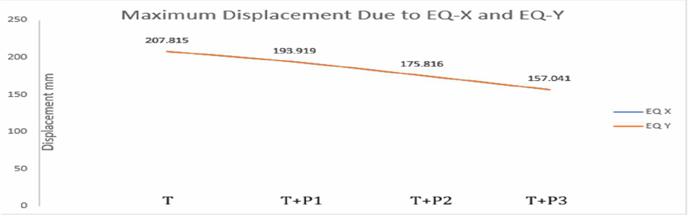
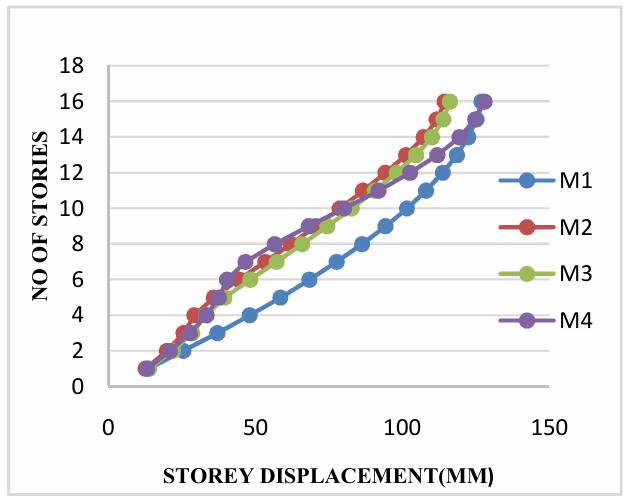
Figure 4: MaximumDisplacementinBothDirection
(3) Kush Shah 1, Hiren Desai 2 and Dhara Shah 3, Effect of Backstay on 3B+G+20 Storey R.C.C Building, National Conference on Structural Engineering NCRASE – 2020
This project involved the analysis of a 3B+G+20-story structure featuring a high-rise tower and a subterranean podium to evaluate its seismic performance. A total of six models were created using different stiffness modifiers to examine how the stiffer podium influences lateral force distribution, structural behaviour, and overall design. Particular emphasis was placed on the Backstay Effect, where the podium contributes to lateral load resistance, thereby altering the force transfer dynamics between the tower and the podium. The study also investigated the impactofdiaphragmopeningswithinthepodiumonstress patterns and force flow. The aim was to enhance understanding of how podium configurations influence seismic resilience. The findings indicate that whether the podiumandtowerareanalysedjointlyorindependentlyhas asubstantialeffectonthemagnitudeanddirectionofforces inkeystructural componentssuchasdiaphragms, beams, shearwalls,andcolumns.Designingthepodiumandtower separatelyorlimitingtheanalysistoasmallareaaroundthe towercanresultineitherconservativeorinsufficientsizing ofstructuralelements,potentiallycompromisingsafetyand performance. Therefore, design decisions should be
International Research Journal of Engineering and Technology (IRJET) e-ISSN: 2395-0056
Volume: 12 Issue: 05 | May 2025 www.irjet.net p-ISSN: 2395-0072
informedbythoroughsensitivityanalysestoensureaccurate andreliableoutcomes.
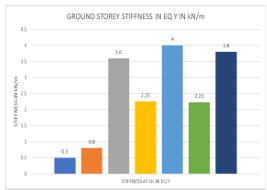
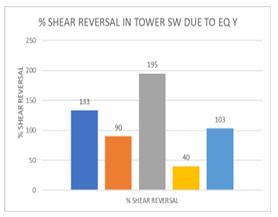
Figure 6: ShearReversalinEQ-Y
(4) Mohammed Danish and Prof.Sunil Kumar, StudyonEffectofPodiumInterferenceonHighRise Building for Seismic Loads, International Journal of Advanced Research in Science, Communication and Technology (IJARSCT)
Thisresearchexploreshowpodiumstructuresinfluencethe seismic behavior of high-rise buildings, particularly in developmentsfeaturingmultipletowers.Itunderscoresthe importance of precise seismic design, especially in areas near the podium roof and tower base, where structural elements such as beams, columns, and walls require enhanced reinforcement to perform effectively during earthquakes. The study evaluates the ductility and performance of key components using ETABS software, employing linear static analysis and response spectrum methods to simulate various combinations of podium and tower heights. The results show that podiums often broaderatlowerlevelstoaccommodatemixed-usefunctions significantly affect shear force distribution and introduce differential restraints that can alter overall building response. By comparing buildings with and without podiums, the study provides a detailed understanding of how podium integration modifies top displacement and
stresspatternswithinthestructure.Theoutcomeshighlight thatrigorousdesignstrategiesandseismiccodecompliance areessentialtoensurethestructuralintegrityanddurability of multi-tower configurations. Moreover, the findings reinforcethenecessityfortargetedreinforcementincritical zones to optimize the performance of concrete structural systemsduringseismicevents.
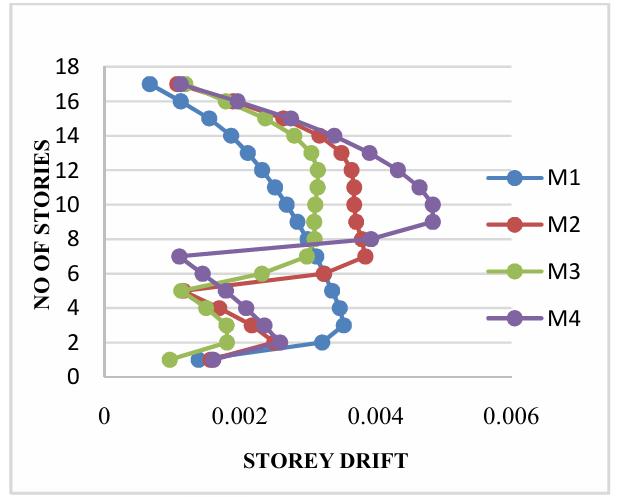
(5) KishanChampaneriya,VishalB Patel, Effectof Backstay onTallStructure with Podium Structure, International Journal of Advanced Research in Science,CommunicationandTechnology(IJARSCT)
Theresearchexplorestheinfluenceofpodiumstructureson backstayforcesintallbuildings,highlightingseveralcritical findings. It reveals that the presence of a podium significantlyreducestheoverturningmomentatthebaseof the structure, achieving reductions of about 88% with a perimeterwalland15%withoutitcomparedtoastandalone towerstructure.Additionally,increasingthepodiumheight anddiaphragmthicknesscorrelateswithareductionintop storydisplacement(approximately30%)andanincreasein backstay forces, particularly in structures with thicker diaphragms. The area of the podium also affects backstay forces,withlargerpodiumareasleadingtohigherforces;for
International Research Journal of Engineering and Technology (IRJET) e-ISSN: 2395-0056
Volume: 12 Issue: 05 | May 2025 www.irjet.net p-ISSN: 2395-0072
instance,a35sq.meterpodiumareashowsa30%reduction inbackstayforcescomparedtoa55sq.meterarea
1. ImpactofPodiumonSeismicBehavior:Thepresenceof a podium in high-rise buildings plays a crucial role in altering seismic response, notably influencing how lateral forces are distributed and causing varying displacements at the connection zones between the towerandpodium.
2. Role of Backstay Effect: Seismic loads are partially transferred from the tower to the podium through horizontalfloordiaphragms,aphenomenonknownas thebackstayeffect.Thisresultsinreversedshearforces and changes in how loads travel through structural elements.
3. Insights from Structural Analysis: Simulation results usingETABS,applyingbothstaticanddynamicanalysis methods, show that variables like podium height and diaphragm rigidity significantly affect the building’s lateralmovementandinternalforcedistribution
4. ImportanceofIntegratedDesign:Designingthetower andpodiumasseparatesystemsmayleadtoinaccurate force estimations. A unified approach to analysis ensures safer, more efficient structures by accurately reflectinginteractioneffects.
5. RelevanceofDesignStandards:Toachievedurableand earthquake-resistantbuildings,itisessentialtofollow seismicdesignguidelinessuchasIS:16700(2017)and include the dynamic interplay between podium and towerintheengineeringprocess.
[1] B.o.I Standards :16700:2017, “Criteria for Structural Safety of Tall Concrete Buildings,” India, Bureau of IndianStandards,2017
[2] B.o.I Standards, IS:13920:2016 – Ductile Design and DetailingofReinforcedConcreteStructuressubjectedto SeismicForces,India,BureauofIndianStandards,2016.
[3] B.o.I Standards, IS: 1893(PART-1):2016 – Criteria for EarthquakeResistantDesignofStructures,India
[4] B.o.IStandards,IS:875(PART-3):2015–DesignLoads (OtherthanEarthquake)forBuildingsandStructures–Code of Practice Part-3 Wind Loads, India, Bureau of IndianStandards,2015
[5] B.o.I Standards, IS: 456:2000 - Plain and Reinforced Concrete,India,BureauofIndianStandards,2000
[6] Effects of podium interference on shear force distributionsintowerwallssupportingtallbuildings
[7] Benefits of Backstay Effect in Design of Podium Structure for Tall Building as Per IS 16700:2017(IJARSCT-VOL2JUNE2022)
[8] Effect of Backstay on 3B+G+20 Storey R.C.C Building (NCRASE-2020)
[9] Study on Effect of Podium Interference on High Rise BuildingforSeismicLoads
[10] Effect of Backstay on Tall Structure with Podium Structure(IJARCCT-JULY-2021)
[11] Backstay Effect of Diaphragm in Tall Building (IJITEE VOL-9JAN2020)
[12] Effects of podium interference on shear force distributionsintowerwallssupportingtallbuildings
[13] Seismic Analysis of G+12 Multistory Building Varying ZoneandSoilType(SSRG-IJCEJUNE-2017)
[14] SeismicPerformanceAssessmentofRCCBuildingwith Podium