
International Research Journal of Engineering and Technology (IRJET) e-ISSN: 2395-0056
Volume: 13 Issue: 04 | Apr 2026 www.irjet.net p-ISSN: 2395-0072

International Research Journal of Engineering and Technology (IRJET) e-ISSN: 2395-0056
Volume: 13 Issue: 04 | Apr 2026 www.irjet.net p-ISSN: 2395-0072
Harsh Makadiya¹, Sahil Pathan¹, Mohini Yedshikar¹, Aarti Kumari²
¹ Students, Ajeenkya DY Patil University, Pune, India
² Professor, Ajeenkya DY Patil University, Pune, India
Abstract - Timelyidentificationofcorn(maize)leaf diseases is important for preventing yield loss and reinforce precision framing systems. Conventional RGBbased deep learning methods have shown strong classificationcapabilitiesfor plantdiseaseidentification, with CNN models getting high accuracy in regulated settings These methods often fail multiple time to capture subtle or early-stage disease symptoms. Hyperspectral imaging addresses the limitation by providing accurate spectral–spatial information/data across hundreds of narrow bands, enabling more sensitive identification of physiological changes in plant tissue. Acknowledging these advancements, this study proposes a hyperspectral imaging–based deep learning framework tailored for early maize leaf disease detection. The framework includes a standardized preprocessing, spectral–spatial modelling, and 3D-CNNbased feature extraction inspired by state-of-the-art HSI classification techniques. Information from maize disease–specific CNN architectures and real-time detection systems support the design of a robust and field-adaptable model.The methodological foundationis aligned with modern deep learning principles and optimizationstrategieshighlightedbySchmidhuber.The combinationofhyperspectralimaginganddeeplearning models provides significantly improved solution for early detection of disease and improving technology in precision agriculture. This solution will fill the gap between HSI research and operational crop disease monitoring,providingapromisingsolutionforadvanced early-warningsystemsincorn(maize)cultivation.
Key Words - Hyperspectral imaging, maize disease detection, deep learning, spectral–spatial analysis, 3D-CNN,precisionagriculture
1. Introduction
Maize (corn) is a cornerstone of global food security, withannualproductionexceedingonebilliontons.While traditional RGB-based deep learning methods have proven effective for plant disease classification [1][4], particularly with CNN models in controlled environments [2], they often struggle to identify subtle or early-stage symptoms. Hyperspectral imaging (HSI) surmountsthisbarrierbycapturingrichspectral–spatial information across hundreds of narrow bands, facilitating the sensitive detection of physiological
changes within plant tissue [8][11]. Building on these capabilities, this study proposes a deep learning framework specifically designed for the early detection of maize leaf disease using HSI. The methodology integrates standardized preprocessing, spectral–spatial modelling, and 3D-CNN-based feature extraction, drawing upon state-of-the-art HSI classification techniques [10]. Furthermore, insights from maizespecific CNN architectures and real-time detection systems[6],[7]areutilizedtoensurethemodelisrobust and adaptable to field conditions. This research addresses a critical need, as leaf diseases and biotic stress account for approximately 23% of global maize production losses, significantly threatening food security. Therefore, the timely detection of these pathologies is essential for protecting yields, ensuring rapid response, and promoting sustainable farming practices.
Maize leaf has direct impact to the crop yield, grain quality and at last income of farmers. Conventional methodsofidentifyingmaizeleafdiseasedependsonthe visual examination and manual checking, which can be labour intensive and ineffective during initial stages of infection when symptoms may be subtle or not visible. The HSI provides accurate spectral-spatial data beyond the visible spectrum, allowing detection of slight biochemical alterations that occur prior to the appearance of visible symptoms. When deep learning models are combined with HSI it can drive automated precise and early identification systems that function reliablyinpracticalagricultureenvironments
Deep learning models using RGB leaf images have demonstrated that it effectively classifies plant diseases, including those effect maize, but it significant depends on visible symptoms. The performance of deep learning model decreases when early detection of disease comes in part, where come the Hyperspectral imaging which performs considerable better in early detection or monitoringofstressordisease.Multipleexistingstudies concentrate on RGB imagery and fail to fully utilize the extensive spectral information present in hyperspectral imaging. Practical issues like high dimensionality,
International Research Journal of Engineering and Technology (IRJET) e-ISSN: 2395-0056
Volume: 13 Issue: 04 | Apr 2026 www.irjet.net p-ISSN: 2395-0072
spectral redundancy, and the high computational costs have become the problem to widespread adaptation of hyperspectral imaging-based approaches, highlighting a distinctresearchgapthatthisstudyintendstofill.
This study introduces a deep learning framework using hyperspectral imaging for the early diagnosis of maize leafdiseases.Themaincontributionsare:
Collection and processing of healthy and diseased maizeleaveshyperspectralimages.
Preparation and spectral-spatial augmentation strategydesignfor improvinggeneralization.
Design of deep learning architecture (3DCNN/hybrid spectral–spatial model) for hyperspectralinputs.
Testing of early detection performance, classification performance and computational feasibilityunderrealisticdeploymentsettings.
Thetargetistodiscoverindicatorsofdiseasesymptoms before they become visible, allowing earlier treatments andminimizing croplosses.
Section II reviews related work on maize disease detectionusingRGBimageryandhyperspectralimaging. Section III describes the proposed methodology with hyperspectral imaging and deep learning framework. Section IV shows the experimental results, performance analysis and graphs. Section V tells the practical considerations, limitations, and real-world applicability. Section VI concludes the paper and outlines future researchdirections.
Deep learning has revolutionized the plant disease identification process through which automatic classification and effective feature extraction can be carriedouton leafimages.Betterresultswere obtained by previous work using mainly RGB images, and convolutional neural networks (CNNs), enjoying good performance under controlled conditions, but with poor capabilities to identify very early signs. To tackle these issues, hyperspectral imaging and spectral–spatial deep learning models have become available in the latest literaturethatcontainbiochemicalpropertiesnotvisible to RGB sensors. This section presents important research related to RGB-based maize disease detection andhyperspectraldeeplearningfromtheperspectiveof theirparadigm,performanceanditsapplicabilityinearly diagnosisofmaizeleafdiseases,intermsofstrengthand weakness.
Detecting plant diseases is key application of AI with precision agriculture. The application of Deep learning and computer vision has enhanced the capacity to automatically detect plant diseases from leaf images. Early research primarily used centred on RGB imagebased models. Recent studies have shifted towards hyperspectral imaging to achieve earlier and more accuratedetection.
Poornam and Devaraj [1] shows that convolutional neural network (CNN) can effectively identify healthy and diseases plant leaves from RGB images when combined with preprocessing and data augmentation. Likewise, Ferentinos [2] assessed multiple CNN architectures on a dataset of 87848 images spanning 58 plants disease categories, attaining an accuracy 99.53%. the study by Mohanty and colleagues [4] demonstrated the robust potential of deep learning for automated disease diagnosis by employing deep CNN models to classify plant disease across various crops using a dataset of over 54000 images. however, these, methods onRGBimage’sandcanonlyidentifydiseaseoncevisible symptomshaveemerged
Numerous studies have specifically targeted the detection of maize disease. The study by Priyadharshini and colleagues [7] introduced a deep CNN model built upon a modified LedNEt architecture for classifying maize leaf diseases, demonstrating promising performance on a custom dataset. The study by Bachhal et al. [6] introduce a real time maize disease detection systemleveraging deepconvolutionneural network and segmentation methods. While these methods enhance detection performance, they remain reliant on visible systemscapturedviaRGBimages.
To gain broader understanding of developments in this fieldsUpadhyayaeal.[3]present’sathoroughreviewoff deep learning methods for plant diseases detection covering CNNs vision transformers and generative importance of AI in precision agriculture. Furthermore, Schmidhuber [5] offered a foundational overview of deep learning architectures, establishing the theoretical ground work for numerous contemporary computer visionmodels.
Recent studies have investigated hyperspectral imaging asa viablealternativetorgbimagingfor detecting plant disease Hyperspectral imaging captures detailed spectraldataacrossnumerouswavelengths,allowingfor the early detection of biochemical changes in plants before visible symptoms emerge. Guerri et al. [8] examined deep learning methods for agricultural hyperspectral image analysis, high; light the efficacy of models like autoencoders and cnns in extracting spectral-spatial features. Li and colleagues [9] also exploreddeeplearningmethodsforhyperspectralimage
International Research Journal of Engineering and Technology (IRJET)
Volume: 13 Issue: 04 | Apr 2026 www.irjet.net p-ISSN: 2395-0072
classification emphasizing challenges like high dimensionalityandspectralredundancy.
Chen et al. [10] introduced CNN designed to extract spectral-spatial features from hyperspectral images demonstrating superior performance over traditional approaches. Similarly, Signoroni and colleagues [11] examined the integration of hyperspectral imaging and deep learning across multiple fields, highlighting its promiseforcomplexpatternrecognition.
In summary, while existing research indicates that deep learning models utilizing RGB images can achieve high classification restricted to identifying only visible diseases symptoms. Hyperspectral imaging offers a promising approach for diseases detection by capturing spectral data indicative of plant health. Consequently, this study concentrates on leaving deep learning methods to analyze hyperspectral data for enhanced detectionofmaizeleafdiseases.
Ingeneral,theliteratureofferesthat'theRGB-basedCNN methods achieve good disease classification performances but they rely on visible symptoms and therefore inefficiently applicable for actual early detection'. Maize-dedicated studies confirm this constraint indicating that RGB images by themselves have difficulties in the detection of presymptomatic infestations. Yet, with respect to hyperspectral imaging and deep learning, previous studies explain that the spectral–spatial models like 3D CNNs are able to quantify fine biochemical reorganizations occurring in plant tissues and hence allow an early detection of the disorder. To the best of our knowledge, few studies integrate HSI and deep learning under maize disease recognition, presenting great demand for designing a specialized early-detection strategy that this research aimstodeliver.
The proposed methodology combines hyperspectral imaging with deep learning models to detect or identify Corn(maize) leaf diseases at an early stage by capturing spectral–spatial information that RGB images cannot capture. The workflow of the model includes data acquisition, preprocessing, spectral–spatial modelling, modeltraining,andevaluation.
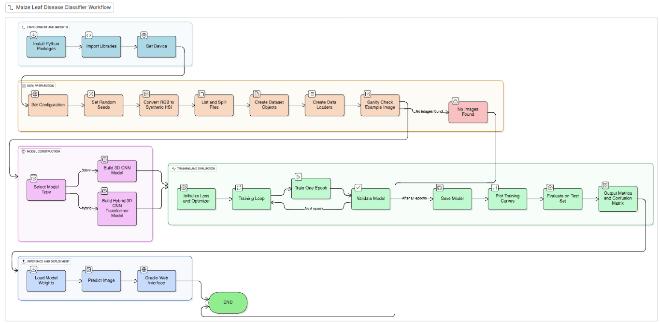
Fig.1illustratestheoverallworkflow,whichconsists ofdataacquisition,preprocessing,spectral–spatial modelling,modeltraining,andevaluationgeneratedby Eraser
The framework targets pre-visible symptom stages by using hyperspectral reflectance signatures from healthy and infected maize leaves. Hyperspectral images are captured across numerous narrow spectral bands, providing detailed information about biochemical and structural changes in leaves. A 3D convolutional neural network (3D-CNN) is then used to extract and classify spectral–spatial features from these high-dimensional datacubes.
The Hyperspectral imaging technique captures the information across hundreds of narrow and continuous spectral bands, providing a complete spectral signature for every pixel in an image. Dissimilar to RGB imaging, which has limitation to three colour channels i.e. red, green, blue, Hyperspectral imaging (HSI) enables detailed analysis of biochemical and physiological variations in plant tissue. Such variations include changes in pigment concentration, moisture levels, and cellular structure factors that often occur before visible disease symptoms appear. Recent reviews have emphasized the strong potential of HSI in agricultural stress and disease analysis, especially when combined withadvancedmachinelearningtechniques[8],[9].
Deep learning models provides an effective means to exploit the high-dimensional nature of hyperspectral data. Since HSI contains both spectral and spatial information,specializedDLarchitecturessuchas1D,2D, and particularly 3D Convolutional Neural Networks (CNNs) are required to jointly model spectral–spatial dependencies [8], [10]. Chen et al. [10] demonstrated that 3D-CNNs outperform traditional 2D models by capturing complex spectral–spatial structures within hyperspectral cubes, makingthem well-suited forsubtle pattern recognition tasks, such as early disease detection.
International Research Journal of Engineering and Technology (IRJET) e-ISSN: 2395-0056
Volume: 13 Issue: 04 | Apr 2026 www.irjet.net p-ISSN: 2395-0072
Furthermore, multidisciplinary analyses have shown that deep learning significantly enhances the interpretability and classification performance of hyperspectral data across various application domains, includingagriculture[11].Thesereportsunderscorethat the fusion of HSI as have been done with the Deep learning models; becomes capable systems to early detect plant stress at an earlier stage than with typical RGB-based approaches that depends exclusively on visiblesymptoms.
Thus,the integrationofhyperspectralimaginganddeep learning provides a powerful source to develop early maize disease detection system which identifies infections according to non-symptomatic spectral signals.
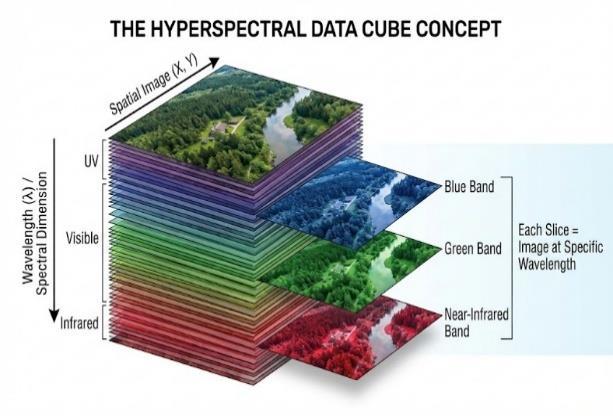
Fig.2ThehyperspectraldatacubeGeneratedbyGemini Probypromptcreateanimagetoillustratestheconcept ofthehyperspectraldatacube,whereeachslice representsanimageataspecificwavelength.
The Hyperspectral images of Corn(maize) leaves are collected under controlled environment or semi-field conditions.EachHyperspectralimagecubeconsistsof:
SpatialDimensions:Height×Width
Spectral dimension: Its value is typically in, hundreds of wavelength bands (for example, 400–1000nm)
The dataset contains images of maize healthy leaves, leaves infected by common maize diseases like rust, blight, and gray leaf spot The design ensures that the modellearnsdiseaserelatedbiochemicalchangesrather thandependingononlyvisiblepatternsonleaves
The Hyperspectral images data is noisy and redundant; thus, preprocessing of data is necessary. The following steps are applied to remove noisy and reduce redundance:
1. Removing of noise by discarding the unstable bandwidthsnearthespectrumedges
2. Using white and dark reference images to correctsensoreffectsforreflectancecalibration
3. Using min-max or z-score scaling for Spectral normalizationtostandardizepixelspectra
4. Extraction of Region of Interest (ROI) for diseasedandhealthypateches.
5. Using PCA or Band selection for dimensionality reduction to reduce redundancy and reduce computationalcost
Theseprocedureshelp toincreasethe qualityofsignals andtherebyfacilitatetraining.
Toavoidoverfittingfromhigh-dimensionalHSIdataand spectral–spatial data augmentation we have used, techniquessuchas:
Randomcropping,rotation,andflipping.
SpectraljitteringandGaussiannoiseaddition.
Mixup and CutMix applied to hyperspectral cubes.
These techniques increase variability and preserving meaningfulspectralinformation.
Dissimilar to RGB images with three channels, hyperspectral data may contain multiple channels from dozens to hundreds of channels. A 3D-CNN technique is therefore used to learn spectral and spatial patterns together. The 3D convolutions work along the height, width,andspectraldimensionstocapture:
Spectralsignaturesofdiseaseprogression.
Textureandshapefeaturesinleaftissue.
Biochemical variations that come first before visiblesymptoms.
The architecture of the model draws inspiration from established hyperspectral CNN designs but is adapted specialforthemaizediseasedetectionproblem.
Themodelarchitectureincludes:
Input layer which receives 3D hyperspectral datacubes.
International Research Journal of Engineering and Technology (IRJET) e-ISSN: 2395-0056
Volume: 13 Issue: 04 | Apr 2026 www.irjet.net p-ISSN: 2395-0072
Stacked spectral-spatial convolutional blocks (3D convolutions + batch normalization + ReLU).
Optional spectral attention modules to emphasizeinformativewavelengthranges.
Dimensionalityreductionlayerstotransform3D featuresintoa2Drepresentation.
Fully connected layers for classification into diseasecategories.
A SoftMax output layer to produce class probabilities.
The design is optimized to detect early-stage symptoms bylearningsubtlespectralcontrastsbetweenclasses.
Adam optimizer is used to train the model along with cross-entropy loss, early stopping conditions and learningratedecay.Performanceofthemodelcalculated using accuracy, precision, recall, f1-score, confusion matrices. the goal is to outperform the tradition RGBbasedmodelsbydetectinginfectionsbeforevisiblesigns appear whereTP,TN,FP,andFNrepresentTruePositives,True Negatives, False Positives, and False Negatives, respectively.
The Training and validation curves are monitored to ensurestableconvergence.
The training and validation loss curves (Fig. 3) conveys that the 3D-CNN technique converged steadily, with the trainingloss reducingfrom 0.62to 0.33 over10 epochs. The validation loss fluctuates between epochs 5 and 7, which can be credited to class imbalance and the synthetic nature of hyperspectral image data. Despite this,themodelexhibitsstableconvergenceafterepoch7.
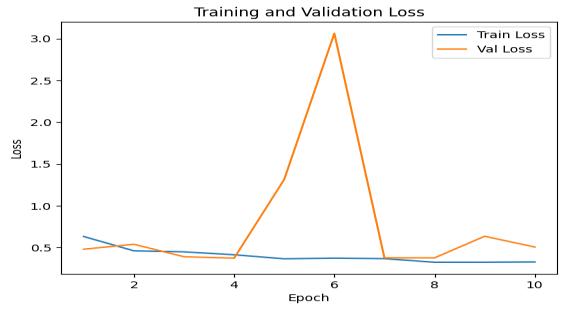
Fig.3.TrainingvsValidationLossfor3D-CNNmodel.
(The training loss decreases steadily while validation loss stabilizes, indicating proper convergence.) Adapted from[12]
The training and validation accuracy curves (Fig. 4) shows that the model achieves consistent improvement, reaching a peak validation accuracy of 84.43%. The dip in validation accuracy around epoch 6 is due to misclassification in minority classes (e.g., Rust and Gray LeafSpot),butthemodelquicklyrecovers.
So,theOverallmodelaccuracyis84.43%onthetestset.
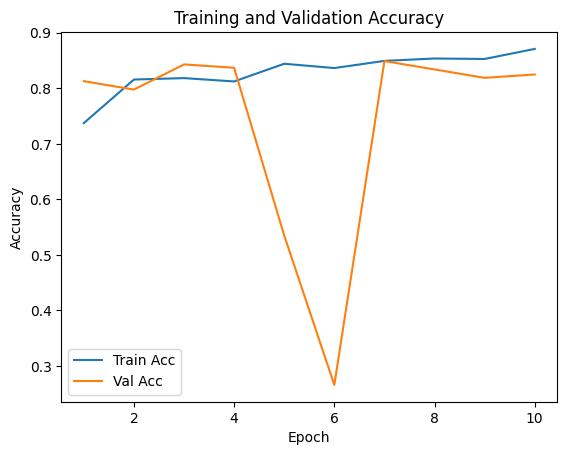
Fig.4. TrainingvsValidationAccuracyfor3D-CNN model.
(Themodelreachesapeakvalidationaccuracyof~84%, with minor fluctuations around epoch 6.) Adapted from [12]
Theconfusionmatrix(Fig.5)providesinformationabout how well the model differentiates between maize leaf diseases:
International Research Journal of Engineering and Technology (IRJET) e-ISSN: 2395-0056
Table 1. Performance Metrics for Hyperspectral CNN Model.Adaptedfrom[12]
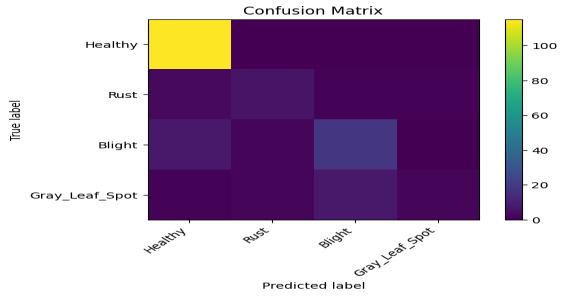
Fig.5.ConfusionMatrixofthe3D-CNNonTestSet.
(Healthy leaves achieve perfect recall; Rust and Gray Leaf Spot show moderate misclassification due to class imbalance.)Adaptedfrom[12]
KeyObservation
Themodelachievesstrong performanceforHealthyand BlightmaizeleafbutforRustandGrayLeafSpotrequire
More balanced dataset for Rust and Gray leaf spot
BettersyntheticHSImodelling
More Advanced architectures (e.g., 3D-CNN + Transformerhybrid)
4.3 Discussion
The 3D-CNN model achieves a test accuracy of 84.43% on the hyperspectral dataset, with strong performance on the Healthy class, demonstrating robust distinguish between healthy and diseased tissue. Performance for RustandGrayLeafSpotislower,which ismainlydueto class imbalance and overlapping of spectral characteristics between lesions. The confusion matrix confirms that there is misclassifications between blight and gray leaf spot disease, then also the overall results
still support the feasibility of using hyperspectral data cubestoexploreearlydetectionstrategies
Experiment is done on a Python-based deep learning environment using a GPU-enabled Google Colab setup [12]. Below is the content which summarizes the hardware, software, dataset configuration, and training proceduretosupportreproducibility.
5.1 Hardware Configuration
Processor:IntelXeon(GoogleColabvirtualCPU)
GPU:NVIDIATeslaT4(16GBVRAM)
RAM:12.7GB
Environment:GoogleColabPro(Python3.10)
5.2 Software and Libraries
PyTorch2.0andTorchvision0.15
OpenCV4.8,NumPy1.24,scikit-learn1.2
Matplotlib3.7forvisualization
Gradio 4.0 for building a simple graphical user interface
Timm library for Transformer-based components
The RGB maize leaf dataset contains more than 1000 images per class Healthy, Rust, Blight, and Gray Leaf Spot. Then a 31-band hyperspectral dataset is then synthetically generated from the RGB images using an HSI simulation model described in Section III. Then the data are split into three parts 70% of data for training, 20%dataforvalidation,and10%ofdatatesting
5.4 Model Hyperparameters
Thehyperparametersofthemodelare:
Learningrate:0.001
Epochs:10
Batchsize:16
Optimizer:AdamOptimizer
Lossfunction:cross-entropyloss
Inputdimensions:
Architectures: 3D-CNN and hybrid 3D-CNN + Transformer
Volume: 13 Issue: 04 | Apr 2026 www.irjet.net p-ISSN: 2395-0072 © 2026, IRJET | Impact Factor value: 8.315 | ISO 9001:2008
International
Volume: 13 Issue: 04 | Apr 2026 www.irjet.net
For preventing the overfitting, the models are trained with early stopping condition based on validation loss. Eachepochconsists ofa forwardpass,backpropagation, parameter updates, and computation of training and validation metrics. After training, the best-performing model is saved and tested on the test set. The setup provides an efficient environment for handling hyperspectral tensors and comparing model variants aftereachepoch.
The study presents a model with hyperspectral imaging and deep learning framework for early detection of maizeleafdiseases.Theproposedmodel achieveda test accuracy of 84.43% across all maize leaf conditions healthy, rust, blight, and gray leaf spot. While performance is highest for Healthy class and slightly lower minority disease classes due to class imbalance and spectral overlap, the results validate that synthetic or real hyperspectral signatures in combination with deep learning can be key component for an accurate detectionofearly-stagediseasescomparedtoRGBbased methods. This research illustrates the potential for hyperspectral deeplearning algorithmsincost-effective, accurate monitoring of crop diseases at scale and paves thewayforfield-basedimplementationsin thefuture.
Thus, the proposed framework has achieved promising results, but there are several parts where improvement can be done. Below are the ways through which further improvement can be done which will improve performanceandpracticalimpact:
Integration with real hyperspectral sensors: Collecting real HSI data which will provide more reliable and accurate spectral information.
Focusonearly-stagesamples: Gatheringmore early-stage data will allow a more demanding evaluation of true pre-symptomatic detection capability.
Class-balanced dataset expansion: Collecting more data for minority classes for e.g. Rust or GrayleafSpot.
Real-time field deployment: Building mobile applications, drones, or portable hyperspectral devices for real-time devices for user-friendly diseasediagnosis.
Multimodal fusion: In Future work we may combine RGB, HSI, thermal, and LiDAR data to
build more robust, accurate field-ready crop healthmonitoringsystems.
[1] Poornam, S., and A. Francis Saviour Devaraj. "Image based Plant leaf disease detection using Deep learning."International journal of computer communicationandinformatics3.1(2021):53-65.
[2] K. P. Ferentinos, “Deep learning models for plant disease detection and diagnosis,” Computers and Electronics in Agriculture, vol. 145, pp. 311–318, Feb. 2018,doi:10.1016/j.compag.2018.01.009.
[3] A. Upadhyay et al., “Deep learning and computer vision in plant disease detection: a comprehensive review of techniques, models, and trends in precision agriculture,” Artificial Intelligence Review, vol. 58, no. 3, Jan.2025,doi:10.1007/s10462-024-11100-x.
[4] Mohanty, Sharada P., David P. Hughes, and Marcel Salathé. "Using deep learning for image-based plant disease detection."Frontiers in plant science7 (2016): 215232.
[5] J. Schmidhuber, “Deep learning in neural networks: Anoverview,”NeuralNetworks,vol.61,pp.85–117,Oct. 2014,doi:10.1016/j.neunet.2014.09.003.
[6]Bachhal,Prabhnoor,VinayKukreja,andSachinAhuja. "Real-time disease detection system for maize plants using deep convolutional neural networks."International Journal of Computing and DigitalSystems14.1(2023):10263-1027
[7] R. A. Priyadharshini, S. Arivazhagan, M. Arun, and A. Mirnalini, “Maize leaf disease classification using deep convolutional neural networks,” Neural Computing and Applications, vol. 31, no. 12, pp. 8887–8895, May 2019, doi:10.1007/s00521-019-04228-3.
[8] Guerri, Mohamed Fadlallah, et al. "Deep learning techniques for hyperspectral image analysis in agriculture: A review."ISPRS Open Journal of Photogrammetry and Remote Sensing12 (2024): 100062.
[9] Li, Shutao, et al. "Deep learning for hyperspectral image classification: An overview."IEEE transactions on geoscienceandremotesensing57.9(2019):6690-6709.
[10] Y. Chen, H. Jiang, C. Li, X. Jia and P. Ghamisi, "Deep Feature Extraction and Classification of Hyperspectral Images Based on Convolutional Neural Networks," in IEEE Transactions on Geoscience and Remote Sensing, vol. 54, no. 10, pp. 6232-6251, Oct. 2016, doi: 10.1109/TGRS.2016.2584107.
International Research Journal of Engineering and Technology (IRJET) e-ISSN: 2395-0056
[11] Signoroni, Alberto, et al. "Deep learning meets hyperspectral image analysis: A multidisciplinary review."Journalofimaging5.5(2019):52.
[12] google.colab link Harsh Makadiya: https://colab.research.google.com/drive/1ATdxviPtcdg YRaBChpSxCeeJDTVNMz2w?usp=sharing
Volume: 13 Issue: 04 | Apr 2026 www.irjet.net p-ISSN: 2395-0072 © 2026, IRJET | Impact Factor value: 8.315 | ISO 9001:2008