
International Research Journal of Engineering and Technology (IRJET) e-ISSN: 2395-0056
Volume: 13 Issue: 04 | Apr 2026 www.irjet.net p-ISSN: 2395-0072

International Research Journal of Engineering and Technology (IRJET) e-ISSN: 2395-0056
Volume: 13 Issue: 04 | Apr 2026 www.irjet.net p-ISSN: 2395-0072
Tushar Bhosale1, Jaydeep Shinde2, Kiran Kumar3
Engie Energy India Pvt Ltd Pune INDIA
Abstract - Ground mounted solar PV power plants are increasingly deployed as part of global efforts to transition to renewable energy. However, their development significantly alters local hydrological regimes and introduces new challenges in flood risk management. This study presents an integrated approach to Hydrology and Flood Risk Assessment for solar installations, emphasizing the influence of climate change and land use dynamics. The findings of this aim are to guide engineers, planners, and policymakers in optimizing solar PV Plant layouts while safeguarding environmental and community interests.
Key Words: Hydrology, Climate Change, Runoff processes, Erosion, Topography, Mitigation strategies
1. INTRODUCTION
Hydrological risksposea significant threattotheongoing global investment in ground-mounted solar photovoltaic (PV)systems,highlightingthecriticalneedforproactiverisk assessmentandmitigationstrategies.Astheworldrapidly transitionstorenewableenergysourcestocombatclimate change,solarenergyhasemergedasakeyplayer,withlargescaleground-mountedinstallationsbecomingincreasingly common.However,thesegroundmountedsolarplantsare oftensitedinopenareas,includingfloodplainsorareaswith poordrainage,makingthemparticularlyvulnerabletoflood events.
Escalatingoccurrencesofextremeweathereventsassociated withclimatechangesignificantlyamplifyfloodinghazards. Moreover, modifications in surrounding land use near ground-mounted solar installations can disrupt natural drainagesystems,resultinginhighersurfacerunoffandan elevatedprobabilityofsiteinundation.Therefore,thereisan urgent need for comprehensive flood risk assessments tailored to the specific vulnerabilities of solar PV plant infrastructure&theseassessmentsareessentialfor:
Protecting Investments: Safeguardingthesubstantial financial capital investedin solarPVground mounted projects.
Ensuring Energy Security: Maintainingthereliability andresilienceofrenewableenergysupplychains.
Minimizing Environmental Impact: Preventpotential contamination caused by damaged equipment or modulefailureduringfloodevents
Byincorporatingcomprehensivehydrologicalandfloodrisk assessmentsalongwithforward-lookingclimateprojections intoplanning,therenewableenergysectorcanproactively address flood-related hazards, enhance resilience and promoteasustainableenergyfuture.
Floodingatground-mountedsolarpowerplants,causedby heavyrainfall,flashfloods,inadequatedrainagesystems,or overflowfromnearbywaterbodies,posesasignificantriskof site inundation. This can lead to equipment damage, operational disruptions, and generation losses, impacting overallplantperformanceandreliability.
Differenttypesoffloodsarecategoriesasbelow,
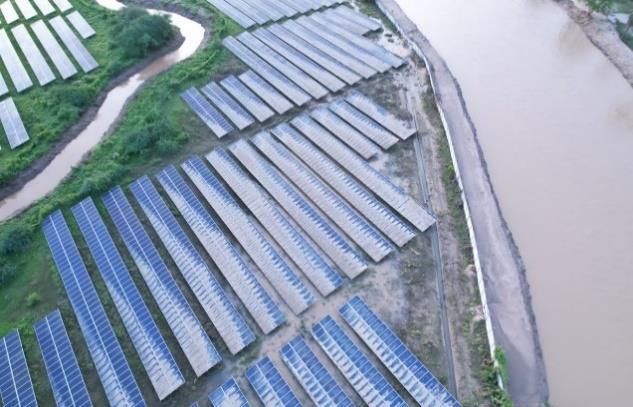
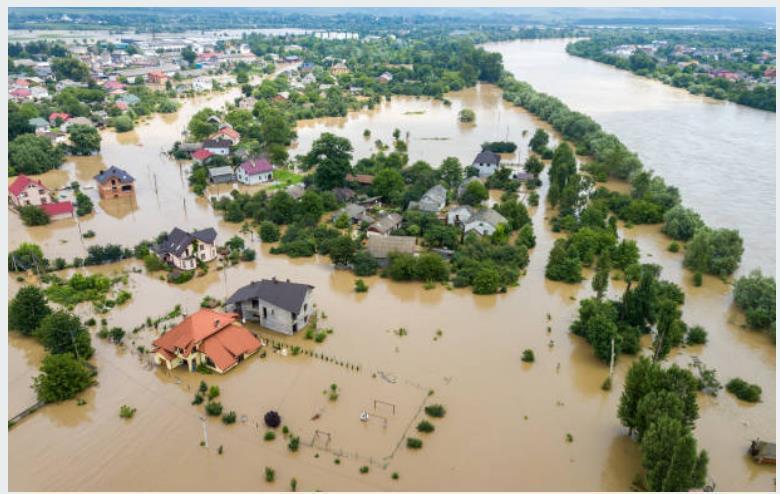
Fluvialfloodingoccurswhenwaterlevelsinariver,stream, or lake rises and exceeds the capacity of the channel, overflowingontotheadjacentfloodplain.
International Research Journal of Engineering and Technology (IRJET) e-ISSN: 2395-0056
Volume: 13 Issue: 04 | Apr 2026 www.irjet.net p-ISSN: 2395-0072
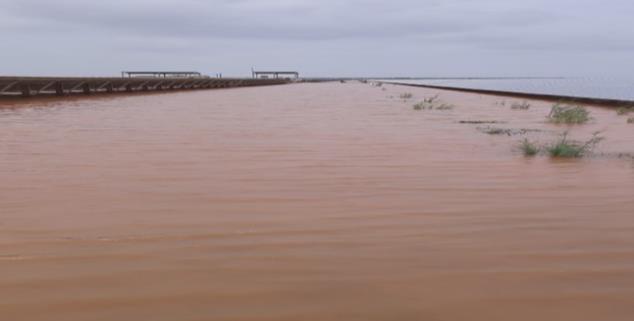
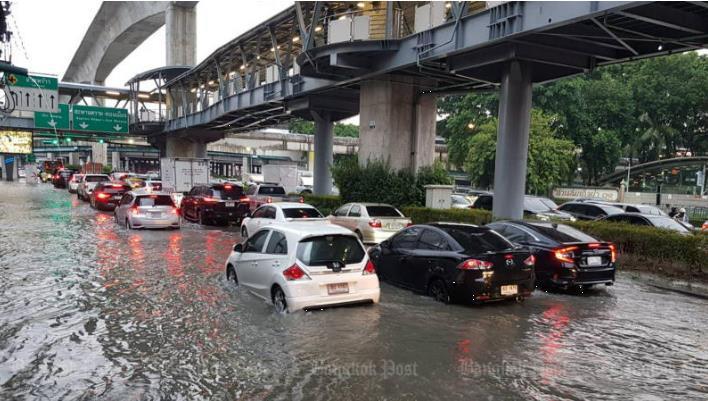
Pluvialfloodingiscausedbyintenserainfallthatcreatesa floodeventindependentofanoverflowingbodyofwater.It occurswhentherateofprecipitationexceedsthecapacityof thegroundtoabsorbitorthelocaldrainagesystemstocarry itaway.
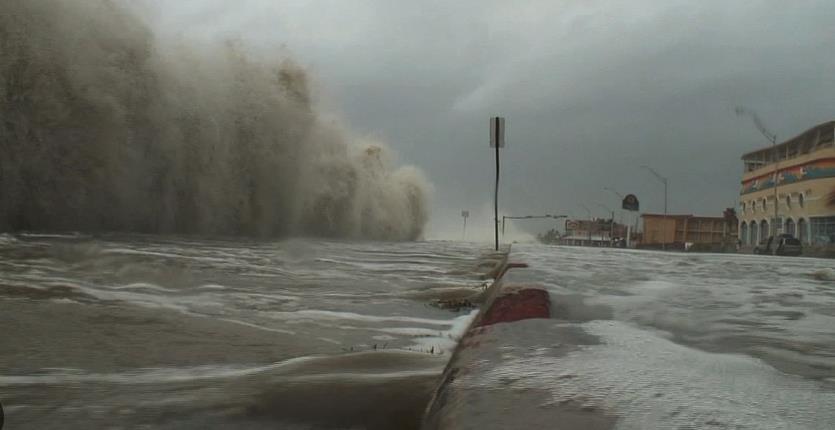
2.3 Coastal Flooding
Thisistheinundationoflandalongt
2.4 Flash Flooding
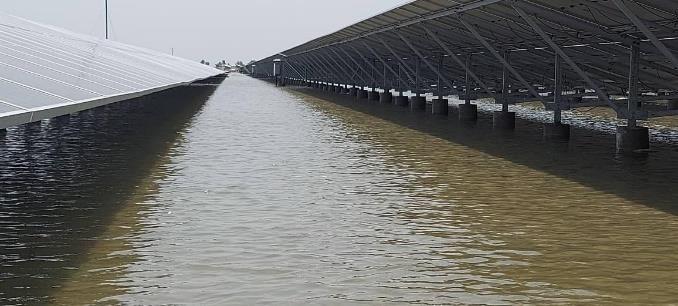
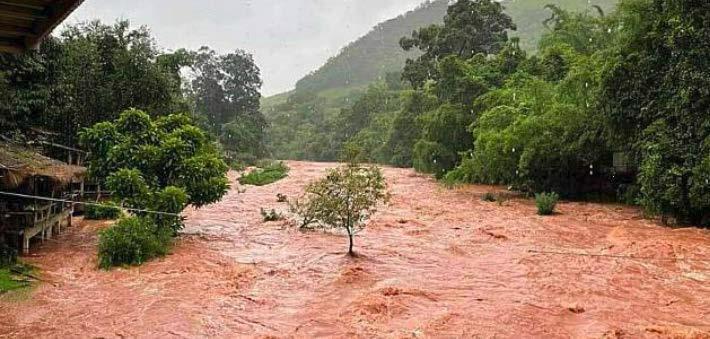
Aflashfloodhappenswhenwaterlevelsinriversorcanals riseveryquickly,oftenduetoheavyrainorsuddenwater
release. This rapid increase causes water to overflow the banksathighspeed,whichcandamagelandandstructures.
Floodriskassessmentinvolvesevaluatingthelikelihoodand potentialimpactoffloodinginagivenstudyareaofground mountedsolarpowerplant.
Forconductingdetailedfloodriskassessmentsforground mount solar power plants, generally below datasets are required.
1. Topographysurveyofstudyareaconductedthrough landbase,dronebaseorthroughLidarsurvey.
2. Cross sections and L-Sections of nearby nala/stream/river crossing through site vicinity area.
3. A Digital Terrain Model (DTM) of the site and its surrounding area with the highest possible resolution is essential to achieve accurate flood simulationresults.
4. Soil test data is required to know about runoff potentialofsitesoilaspertheborelogdata.
International Research Journal of Engineering and Technology (IRJET) e-ISSN: 2395-0056
Volume: 13 Issue: 04 | Apr 2026 www.irjet.net p-ISSN: 2395-0072
1. Daily Rain gauge station data of at least past 30 yearsobtainedthroughgaugestationnearbytosite.
2. Catchmentcharacteristics(soiltype,landuse,slope etc).
3. Evapotranspirationrates.
4. Streamflowmeasurements.
3.3 Historical Data Analysis of past flooding
1. Historicalfloodrecords(dates,severity,duration)
2. Rainfallandriverdischargedata
3. FloodDamagereportsandinundationmaps.
Hydraulicmodellingcanbeperformedbasedonthevarious methods.Methodsareenlistedbelow:
Theprocessinvolvessimulatingrainfall-runoffasinputand generating outputs such as flood inundation maps, water surfaceelevations,andfloodvelocitymaps.
Depending on the flooding risk whether from a nearby river/nala/streamorduetodirectrainfallimpactwithinthe sitevicinity,appropriatemodellingtechniquesareadopted. Theseinclude:
1DModelling(1dimensionalmodelling)
2DModelling(2dimensional)
Coupled1D–2DFloodModelling
Thismethodoffloodanalysistypicallyrequiresspecialized softwaretopredictwatermovementinstream/nala/rivers andfloodplains.Commonlyusedtoolsinclude:
HEC-RAS
TUFLOW
IBER
MIKE11
Thisapproachintegratesspatialdatawithhydrologicaland hydraulic outputs to develop comprehensive flood hazard maps.
TheprocesstypicallyrequiresGIS-basedsoftwareforspatial dataprocessingandanalysis.Commonlyusedtoolsinclude:
QGIS
ArcGIS
GlobalMapperPro
Thisapproachinvolvesconductingfloodfrequencyanalysis usingstatisticalmethodssuchas:
GumbelDistribution
Log-PearsonTypeIIIDistribution
Theobjectiveistoestimatefloodreturnperiodsand assessthelikelihoodofextremefloodevents.
Thismethodutilizessatelliteimagery and remotesensing techniquestomonitorfloodextentandtrackchangesover time.
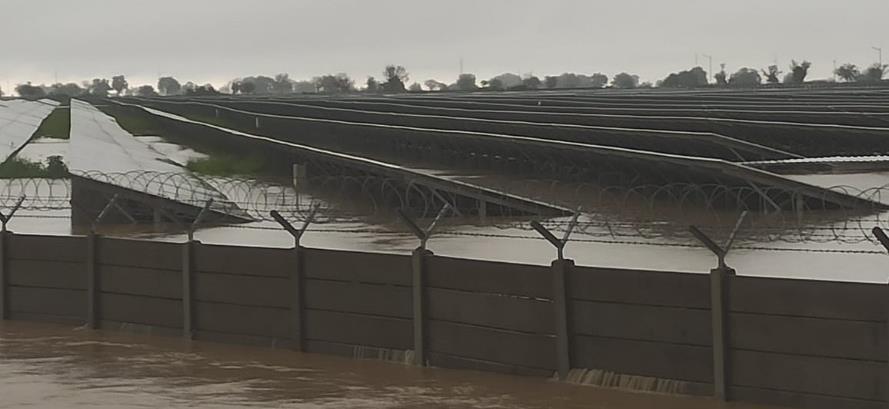
Flooding can damage or disable critical solar PV components,leadingtodegradedsystemperformanceand significantlossesinbothenergygenerationandrevenue.
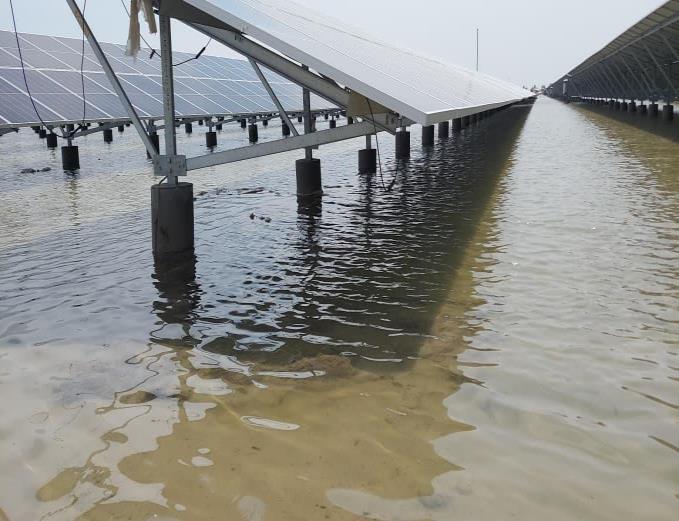
Althoughsolarmodulesaredesignedforoutdoorconditions, floodingcansubmergetheentirearray,creatingrisksthat requirecarefulassessment.Objectssuchasmud,debris,and stone chips carried by floodwaters may strike the panels, causingmicrocracksthatarenotimmediatelyvisible.These microcracks can allow moisture to penetrate the system, eventuallyleadingtoelectricalfaults.
5.2 Impact on Module Mounting
Modulemountingstructuresaretypicallymadefromvarious steelmaterialssuchasHDG,ZAM,andAZ.Directexposureof thesesteelcomponentstowaterduringfloodingcanleadto
International Research Journal of Engineering and Technology (IRJET) e-ISSN: 2395-0056
Volume: 13 Issue: 04 | Apr 2026 www.irjet.net p-ISSN: 2395-0072
corrosion,dependingonsoilaggressiveness.Inhighlysevere environments, complete replacement of the mounting structuremayberequired.Therefore,athoroughinspection iscriticaltoensuresystemintegrityandpreventlong-term operationalissues.
5.3 Impact on Electrical Infrastructure of Solar PV plants
Flooding also affects conduits, wiring, and other electrical components. In many cases, these elements may need completereplacement.Athoroughinspectionisessentialto ensuresystemintegrityandpreventlong-termoperational issues.
5.4 Impact of Flooding in Switchyard of PV
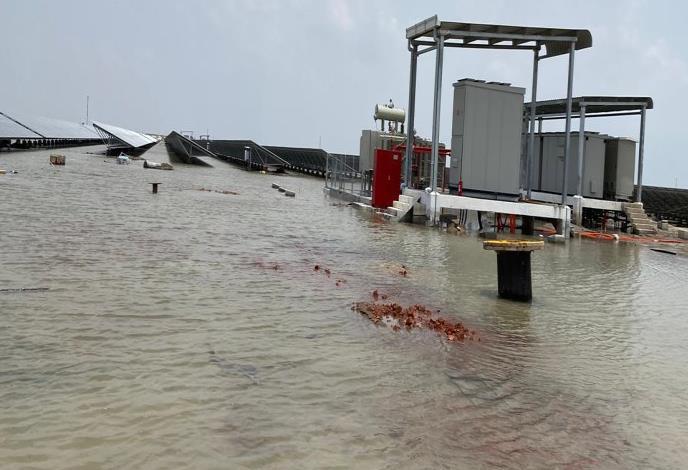
Floodingintheswitchyardofaphotovoltaic(PV)plantcan lead to severe operational and safety risks. Water ingress into switchyard equipment such as transformers, circuit breakers,isolators,andcontrolpanelscancauseinsulation failure, short circuits, and equipment damage. Prolonged exposure to moisture may result in corrosion of metallic partsanddeteriorationofprotectivedevices,compromising systemreliability.Additionally,floodingcanhinderaccess formaintenancepersonnel,delay
restorationeffortsandincreasethelikelihoodoffirehazards orelectricalfaultsuponre-energization.Theseimpactscan lead to extended downtime, costly repairs, and significant generationlosses.
Projectedclimatevariabilityisexpectedtoincreaseboththe frequency and magnitude of extreme weather events, creating substantial challenges for the design and operational reliability of solar photovoltaic (PV) systems. Thesedynamicconditionsnecessitatecomprehensiverisk assessmentsandadaptivestrategiesacrossallprojectstages ranging from initial planning and engineering design to construction, commissioning, and long-term maintenance (IPCC,2022;IEA,2023).
(Source-ipcc.ch],[iea.org]
AccordingtotheIPCCSixthAssessmentReport(AR6)and regionalclimateprojections,theKhavadaregioninGujarat and solar-rich areas of Rajasthan are expected to face significantclimatevariabilityoverthenext25years. These regions will likely experience average temperature increases of 2–2.5°C and intensified monsoon rainfall, leading to frequent heatwaves and flash flooding events. Suchextremesposecriticalriskstogroundmountedsolar PVinfrastructure,includingstructuraldegradation,electrical componentfailures,andoperationaldowntime.
Tomitigatetheserisks,early-stagedesigninterventionsare essential.Integratingadaptivemeasuresduringtheplanning phase will enhance climate resilience, reduce financial exposure, and ensure uninterrupted renewable energy generationintheseriskpronezones.
AnextensiveanalysisconductedbyNRELonalargefleetof photovoltaicinstallationsassessedtheinfluenceofextreme weather conditions on system performance. Findings indicatethat,routineweather-relateddisturbancesgenerally leadtoanaverageannualenergyreductionofapproximately 1%. However, infrequent but severe events such as highintensity floods or extreme windstorms can trigger substantial operational disruptions, resulting in energy lossesthatmayescalatetonearly60%ofexpectedoutput (NREL,2023).
Hailstorms and strong winds were identified as major contributors to structural damage, while heatwaves accelerate long-term degradation rates, nearly doubling theminhotclimatescomparedtocoolerones. Extended cloud cover and soiling events were shown to cause short-term yield reductions, compounding overall performancedecline.
Thesefindingshighlightthecriticalneedforclimate-resilient design, robust maintenance strategies, and risk-informed
International Research Journal of Engineering and Technology (IRJET) e-ISSN: 2395-0056
planningtosafeguardPVassetsagainstbothfrequentminor impactsandinfrequentbutsevereweatherhazards.
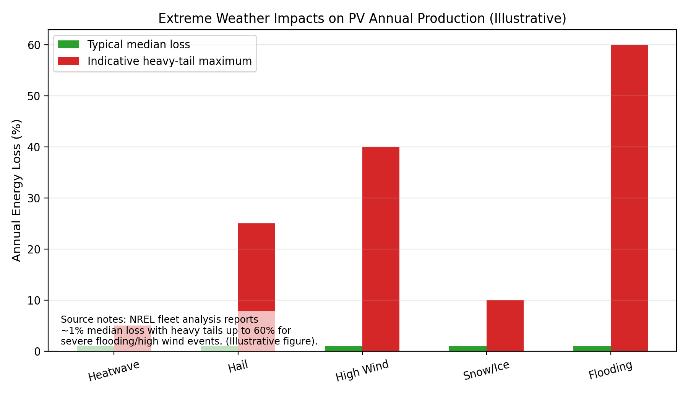
Fig -8:Illustrativedistributionofextremeweatherimpacts on annual PV production for severe flooding/high wind events (Source- NRELfleetanalyses).
Infrastructure RiskPanels, mounting structures, inverters, and electrical systemsfacegrowingexposuretoextremeweatherhazards, includingstorms,flooding,highwinds,hail,andheavysnow.
These conditions can cause structural damage, electrical failures, and accelerated wear, underscoring the need for robust design standards, storm handling measures, and proactive maintenance strategies (Sources: NREL, Solar BuilderMagazine).
Operational Delays-
Severeweatherconditionscanrestrictsiteaccessibilityand interrupt construction and commissioning activities, resultinginextendedprojecttimelinesandincreasedcosts.
Suchdisruptionsemphasizetheneedforrobustcontingency plansandflexibleschedulingapproachestoensureproject continuityandresilience.
Changes in Solar IrradianceClimatechangecanmodifycloudpatternsandatmospheric conditions,leadingtovariabilityinsolarradiation.
This affects predictability of energy generation and longtermyieldforecasts. (Sources-swissre.com)
Water Resource ChallengesAltered precipitation patterns and prolonged drought conditions can limit the availability of water required for modulecleaningandauxiliarycoolingsystems,potentially impacting plant performance and operational efficiency (Source:IEA)
Soil and Microclimate ChangesGround-mounted solar PV installations can modify local microclimatic conditions, influencing both soil and
Volume: 13 Issue: 04 | Apr 2026 www.irjet.net p-ISSN: 2395-0072 © 2026, IRJET | Impact Factor value: 8.315 | ISO 9001:2008 Certified
vegetationdynamics.Researchindicatesthatareasbeneath PVpanelsmayexperiencesoiltemperaturereductionsofup to7°Candredistributionofsoilmoisture,whichcanleadto soilinstabilityorvegetationstress.Theseimpactsarelikely tointensifyunderclimate-drivenvariationsinrainfalland temperaturepatterns(Source:MDPI).
Increased Corrosion and MaterialDegradation-
Environmental factors such as high humidity, acidic precipitation, and frequent temperature fluctuations can significantlyacceleratecorrosionofmountingstructuresand electricalcomponents.
Thisdegradationreducestheoperationallifespanofcritical assets and drives higher maintenance costs, underscoring the need for corrosion-resistant materials and protective coatingsinPVsystemdesign(Source:extension.psu.edu).
Energy Yield Reduction-
Solar PV systems can experience short term production losses due to factors such as dust storms, extended cloud cover,andextremetemperatures.
Additionallylong-termperformancedegradationmayoccur fromthegradualaccumulationofmicro-cracksandmaterial fatigue, impacting overall energy output and system reliability(Sources:NREL;MDPI)
Transmission and Grid Risks -
Severeweathereventscandamagetransmissionlinesand substations,resultingingridinstability,powerinterruptions, andpotentialoutages(Source:IEA).
Fluctuating Demand ProfilesHigher cooling needs during heatwaves drive increased electricitydemand,affectingsystemsizingandplanning.)
Health and Safety ConcernsWorker exposureto extremeheat,flooding,orpost-storm hazardselevatesrisksduringoperations.
Reputation and Compliance
Inadequate management of climate-related risks can compromise regulatory compliance frameworks, trigger communityopposition,andleadtosignificantreputational damage.
These outcomes not only affect project approvals and stakeholder trust but can also escalate financial exposure andoperationaluncertainty.
Proactive integration of climate resilience measures into design and governance processes is therefore critical for long-termsustainabilityandriskmitigation.
International Research Journal of Engineering and Technology (IRJET) e-ISSN: 2395-0056
Volume: 13 Issue: 04 | Apr 2026 www.irjet.net p-ISSN: 2395-0072
Financial Exposure
Increasedinsurancepremiums,repaircosts,andproduction lossesposeeconomicriskstoprojectviability.
A comparative cost analysis highlights the economic advantage of proactive flood mitigation measures. Implementing mitigation strategies requires an estimated investment ofUSD1.5–3 million,whereaspotential floodrelateddamagescouldrangefromUSD7–15millionifleft unaddressed.
This significant cost difference underscores the costeffectiveness of upfront investment in flood control infrastructure and design adaptations. By allocating resourcestowardpreventivemeasures,projectstakeholders can substantially reduce long-term financial exposure, safeguardcriticalassets,andensureoperationalcontinuity underextremeweatherconditions.Figure2illustratesthe flood mitigation costs and projected flood damage, reinforcingthestrategicimportanceofearlyinterventionin projectplanning.
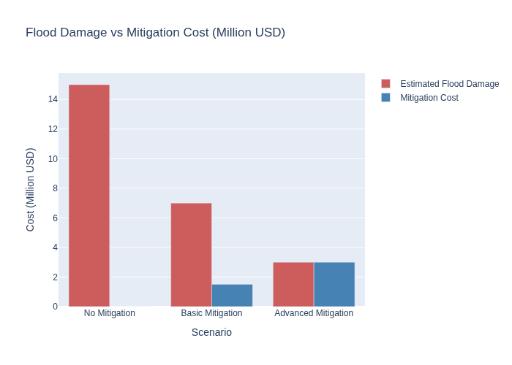
(Sources - AChubbResilienceassessment,TheU.S.Federal Energy Management Program (FEMP), Swiss Re. Billion-dollarRain:WhyIndiacan’taffordtoignoreurban floodrisk)
Integration of NationalRenewable EnergyGoals with Disaster Risk Management Strategies
India has set ambitious climate and energy objectives to alignwithglobalsustainabilitycommitmentsincludingas:
Carbon Intensity Reduction:
Reduce the nation’s carbon intensity by at least 45% by 2030,relativeto2005levels.
RenewableEnergyIntegration:
Achieve 50% cumulative installed electric power capacity fromrenewablesourcesby2030.
Net-Zero Goal:
Attainnet-zerogreenhousegasemissionsby2070.
AspertheMinistryofNewandRenewableEnergy(MNRE), byMarch2024,Indiahadachieved:
SolarPowerCapacity:81.81GW
WindPowerCapacity:45.88GW
India nowaimsfor500GW ofrenewableenergyinstalled capacityby2030,positioningproposedrenewable energy projectsinalignmentwiththesenationalcommitments.
Embedding Disaster Risk Reduction Strategies into Renewable Energy Project Planning
The National Policy on Disaster Management (NPDM) acknowledges that natural hazards such as earthquakes, floods, riverbank erosion, cyclones, and tsunamis pose significantthreatstoinfrastructureandeconomicstability. Thepolicymandatesasystematicapproachcomprisingsix keyelements:
Preparedness
Response
Prevention
Mitigation
Rehabilitation
Recovery
Embeddingtheseprinciplesintorenewableenergyproject planningensuresclimateresilience,operationalcontinuity, andregulatorycompliance.
Strategic Imperatives for Solar PV Projects
Protecting Investments:
Safeguard substantial financial capital deployed in solar infrastructure through robust design and risk mitigation strategies.
Ensuring Energy Security:
Maintain reliability and resilience of renewable energy supplychainsunderevolvingclimateconditions.
Minimizing Environmental Impact:
Prevent contamination risks from damaged equipment or modulefailuresduringfloodevents.
Byintegratingdetailedhydrologicalanalysisandforwardlooking climate projections into project planning, the renewable energy sector can proactively address floodrelatedhazards,ensuringasustainableandresilientenergy future.
International Research Journal of Engineering and Technology (IRJET) e-ISSN: 2395-0056
Volume: 13 Issue: 04 | Apr 2026 www.irjet.net p-ISSN: 2395-0072
Floodeventsposeagrowingchallengetoground-mounted solar installations due to increasingly unpredictable weather, inadequate drainage design, and rising extreme rainfall.
In India, unusual monsoon surges or cloudbursts can inundate vast arrays of panels, damaging electrical components, causing short-circuits, panel corrosion, and foundationalerosion.
Ground-levelinverters,cabling,andmountingstructuresare particularlyvulnerable.
Strategic site selection, topographical assessment, and hydrologicalinfrastructureareessentialtomitigatingsuch floodrisks.[heavendesigns.in],[energy.gov]
Below are several case studies illustrating how severe flooding eventshavedisruptedthefunctioningof groundmountedsolarpowerplants.
Jaisalmer's Dhirubhai Ambani Solar Park
In August 2024, record breaking rainfall in Jaisalmer submerged the Dhirubhai Ambani solar park (40 MW PV) under nearly 2 meters of water. This plant is operational since 2012. The 350-acre installation near Pokhran was severely impacted its low-lying terrain turned into a reservoir, interrupting operations and highlighting vulnerability in desert adjacent plains. (Source - Heavy rainfall flooded solar park and GIB hatching area in Jaisalmer)
TheoccurrenceofintenserainfallinJaisalmerhighlightsthe emergingvulnerabilityofaridregionstoextremeweather phenomena, emphasizing the need for climate-resilient infrastructure and adaptive planning strategies in such environments.
ThefloodingthatimpactedboththeDhirubhaiAmbaniSolar Park and the Great Indian Bustard (GIB) hatching area highlights the vulnerability of renewable energy infrastructure and sensitive ecosystems in desert landscapes.
As abnormal rainfall patterns become more frequent, site planninganddesignforsolarprojectsindesertregionsmust incorporateadvancedhydrologicalassessmentsanddisaster managementstrategies.Failuretoaddresstheseriskscan leadtosevereoperationaldisruptions,habitatdegradation, andlong-termsustainabilityconcernsforbothenergyand biodiversity.
Pavagada SolarPark(Tumakuru,Karnataka) In October 2022
Reportsdocumentedthat,torrentialrainfallandoverflowing reservoirsledtothepartialsubmergenceofa50 MWblock andinundationofaround32acreswithinthePavagadaSolar Park.
Thefloodingcausedasubstantialdropinpowergeneration, promptingextensivedamageassessmentsandrestoration efforts.
Althoughspecificmonetarylossfiguresforthiseventaren’t publicly disclosed, the affected block is part of a ₹16,500 crore facility, highlighting the potential financial impact.
Restorationlikelyinvolvedcleaningorreplacingsubmerged panels, repairing cabling and inverters, and rectifying structuraldamageeachaddingtooperationaldowntimeand restorationcosts.
Source: Karnataka Rains: Water enters Pavagada solar park, submerges 50MW unit | Bengaluru News - Times of India
Solar power plant flooding in REWA 2018
OnJuly5,2019,theRewaUltraMegaSolarPowerProjectin Madhya Pradesh, one of the largest solar parks globally, sufferedseveredamageduetotorrentialrainfallandstormy weather.
AmudslidetriggeredbyheavyrainscriticallyimpactedUnit III (250 MW), reducing generation from 250 MW to about 92.5 MW,a63%capacityloss.
Thefloodingcausedextensivedamageto:
Inverters, PV modules, cable trays, and module mountingstructures(MMS)
Water intrusion inside Switchyard and combiner boxescompromisingelectricalsafety
Financiallosseswereestimatedatover₹20crore,primarily duetoequipmentdamageandhaltedgeneration.
RestorationeffortswereimmediatelyinitiatedbyRewaUltra MegaSolarLimited(RUMSL)anditsoperatorSprngEnergy tobringtheunitbacktofullcapacity.
Sources: (Heavy Rains Wreak Havoc in Madhya Pradesh, Damage a 250 MW Solar Project)
Saudi Arabia – Flood Risk to Ground-Mounted Solar Sites
Whilenospecificground-mountedsolarsitesinSaudiArabia have been reported to flood, flash floods are increasingly common during winter months. For instance, Jeddah and Makkah were hit by heavy rainfall in December 2025, causingwidespreadfloodinginurbanareas.
These events illustrate potential hazard to solar farms, especially those sited in low-lying valleys or near wadis, where sudden water surges could overwhelm panels, inverters,andmountingstructuresevenifthedamagehasn't yetbeendocumented.
Sources:(Gulfnews.com)
Revenue loss due to extreme water flooding in 50MW size plant (General example)
Extreme flooding caused by abnormal rainfall has led to partial or complete submergence of a say 50 MW groundmounted solar plant. This event resulted in operational downtime,equipmentdamage,andsignificantreductionin energygeneration.
International Research Journal of Engineering and Technology (IRJET) e-ISSN: 2395-0056
Volume: 13 Issue: 04 | Apr 2026 www.irjet.net p-ISSN: 2395-0072
Key Impacts:
PlantCapacity:50 MW
Event:Floodingduetoheavyrainfall
Immediate Effect: Generation halted or reduced drastically
Potential Consequences:
Lossofdailyenergyoutput
Repairandrestorationcosts
Long-termreliabilityconcerns
Objective:
Toestimaterevenuelossduringthedowntimeperiodbased on plant capacity, expected generation, tariff rate, and durationofoutage.
Assumptions
PlantCapacity:50MW
PlantLoadFactor(PLF):20%
Tariff:₹3perkWh
Durationofshutdown:7days
Hoursperday:24
Step 1 Daily generation calculations
Calculationfor7-dayplantshutdown
1)Hours=7×24=168hours.
2)Energylossfor168hours=50MW×168h=8,400 MWh.
3)Expectedgenerationlossat20%PLF=8,400×0.2= 1,680MWhlost.
4)Revenuelossat₹3/kWh/unit=1,680,000kWh×₹3= ₹50,40,000INR
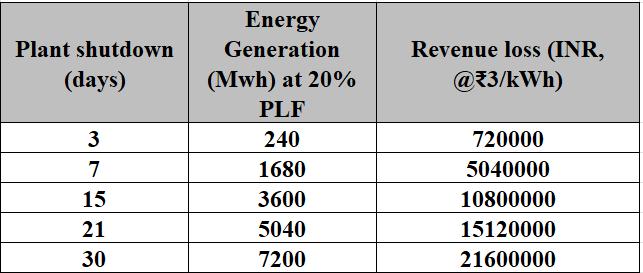
Hence,therewouldbearevenuelossof5,040,000INRdue tofloodingin50MWplantsizeandplantundershutdown for7dayswith₹3unitrate.
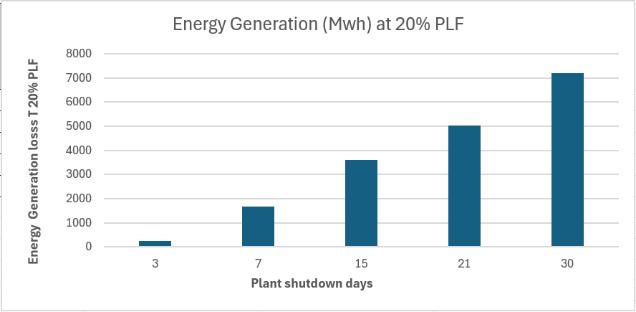
Belowtableshows,Revenuelossduetofloodingwithplant shutdowndaysrangesfrom3to30days.
20%PLF.
To ensure the safety, reliability, and uninterrupted power generationofsolarphotovoltaic(PV)plants,itisessentialto establish comprehensive engineering and operational measuresthatminimizeflood-relatedrisks.Implementing floodmitigationstrategiesduringtheinitialstagesofproject planninganddesigniscritical,asearlyintegrationreduces risk, prevents costly damage, and ensures long-term operationalstability.Proactivemeasuresnotonlysafeguard infrastructure but also protect financial investments by avoiding revenue loss and expensive repairs. While these mitigationsrequireupfrontcapitalandfinancing,thecostis significantly lower compared to potential losses from floodingevents.Therefore,adoptingrobustfloodprotection measures for ground-mounted solar plants is a strategic necessityforsustainableandresilientenergygeneration.
The following mitigations are recommended for implementation.
1. Asitefeasibilitystudyshallbeconductedatinitial stage of the project, and based on identified risks such as flood risk, soil conditions, corrosion potential, and liquefaction, site shall be selected. Solar PV project shall be designed considering measures for all major risk identified in the site feasibilitystudy.
International Research Journal of Engineering and Technology (IRJET) e-ISSN: 2395-0056
Volume: 13 Issue: 04 | Apr 2026 www.irjet.net p-ISSN: 2395-0072
2. Drainageandwatermanagementstrategiesshallbe developed based on the findings of the detailed floodriskassessmentstudy.
3. In the event of a flooding risk from a nearby river/Stream/nala,constructearthenembankments or levees along the plant boundary to provide adequateprotection.
4. Implementelectricalsafetymeasures,includingthe use of water-soluble tape, in areas where the site has a high flood risk and shallow groundwater conditions.
5. Module Mounting structure, and all building structurespresentinsidetheprojectareashallbe placedaboveHighFloodleveloftheplant.
6. Internalfinishedroadlevelshallbeabovehighflood leveloftheplant,somajorbuildingstructuresshall beaccessiblealltime.
7. Prepareemergencyresponseplanning.
8. Regularly inspect drainage systems and embankments.Conductpost-floodinspectionsfor structuralintegrityandelectricalsafety.
Flood risk assessment for ground-mounted solar power plantsisnotoptionalasitisafundamentalrequirementfor sustainableandresilientprojectdesign.
Failure to integrate flood risk considerations at the early planningstageexposesprojectstosignificantrisksincluding infrastructuredamage,prolongeddowntime,andfinancial losses.
Incorporating hydrological analysis, climate change projections,andland-usedynamicsensuresthatsolarassets remainrobustunderevolvingenvironmentalconditions.
Climatevariabilityandrapidurbanizationarealteringrunoff patterns,increasingthefrequencyandseverityofextreme floodingevents.Withoutproactiveassessment,theserisks cancompromiseplantperformanceandlong-termviability. Utilizationofadvancedanalyticaltechniques,includingGISintegratedfloodmappingandpredictivescenariomodelling, facilitatespreciseriskassessmentandsupportsdata-driven decisionmaking.Incorporatingproactivemeasuressuchas optimal site selection, elevation of vital infrastructure, implementationofefficientdrainagenetworks,andadoption of flexible design standards at the initial planning stage is crucial for minimizing flood-induced risks and ensuring long-termoperationalresilience.
Furthermore, continuous monitoring and periodic reassessment using updated climate data will strengthen
resilience over the plant’s lifecycle. Ultimately, a holistic approach combining engineering solutions with environmental foresight will safeguard solar investments, minimize operational disruptions, and contribute to longtermenergysecurityinachangingclimate.
Theauthorswouldliketoexpresstheirsinceregratitudeto EngieEnergyIndiaPvtLtdPunefortheirinvaluablesupport throughout the course of this research. The technical guidance, access to proprietary tools and resources, and collaborativeengagementprovidedbythecompanyplayeda criticalroleinthesuccessfulcompletionofthisstudy.
[1] Times of India - reporting on Pavagada inundation (Octomber2022).
[2] EconomicTimes/companyfilingsTamilNaduproject inundation(Dec2023).
[3] Industrystudiesonsolarunderperformanceandclimate impacts(2024-2025).
[4] IPCC(2022).ClimateChange2022:Impacts,Adaptation andVulnerability.
[5] Jordan, D. C., Perry, K., White, R., Deline, C. (2023). ExtremeWeatherandPVPerformance.NREL.
[6] U.S. DOE FEMP (2023). Severe Weather Resilience in SolarPhotovoltaicSystemDesign.
[7] ChubbResilienceServices.ClimateRiskandResilience Assessment for a Solar Project in a Flood-Prone Area (21 acres,5MWsite,~20% siterisk at1-in-100flood elevation).[chubb.com]
[8] U.S. Department of Energy FEMP. Preventing and MitigatingFloodDamagetoSolarPhotovoltaicSystems. [energy.gov]
[9] SwissRe.Billion-dollarRain:WhyIndiacan’taffordto ignoreurbanfloodrisk.Mumbaifloodcost