
International Research Journal of Engineering and Technology (IRJET) e-ISSN: 2395-0056
Volume: 12 Issue: 03 | Mar 2025 www.irjet.net p-ISSN: 2395-0072
International Research Journal of Engineering and Technology (IRJET) e-ISSN: 2395-0056
Volume: 12 Issue: 03 | Mar 2025 www.irjet.net p-ISSN: 2395-0072
Prasad Naidu.K1 , Yamini.C2
1Student,Dept of MCA,KMM Inst. of P.G Studies,Tirupati,AP,India
2Assistant Professor, Dept of MCA,KMM Institute of P.G Studies,Tirupati,A.P,India
Abstract - Accurate household electricity consumption forecasting is essential for efficient energy management and grid optimization. Traditional machine learning models, while effective, often struggle with feature redundancy and non-linear relationships in energy consumption data. This study proposes an integrated approach which enhances XGBoost which uses Rotation Forest to improve prediction accuracy. Rotation Forest enhances feature diversity by generating multiple diverse decision trees, while XGBoost efficiently captures complex patterns and interactions in the data. The hybrid model is evaluated on real-world household electricity consumption datasets, demonstrating superior predictive performance compared to standalone models. Experimental results indicate that the proposed method reduces forecasting errors and enhances generalizationcapability, making it a promisingsolutionfor smartgridapplications.
Key Words: machine learning, clustering, logistic regression, unsupervised learning, supervised learning, data analysis, prediction, classification, segmentation, data mining, model evaluation, algorithms, and applications
1.INTRODUCTION
Accurate household electricity consumption prediction is essential forefficientenergymanagement,loadbalancing, and demand forecasting. Traditional machine learning models such as decision trees and ensemble methods like XGBoosthavedemonstrated strongpredictivecapabilities in this domain. However, further improvements in predictionaccuracyandmodelrobustnesscanbeachieved byintegratingadvancedensemblelearningtechniques.
This study explores the integration of Rotation Forest with XGBoost toenhancetheaccuracyandgeneralization ability of electricity consumption prediction models. Rotation Forest, an ensemble learning technique based on feature transformation and individual classifier diversity, has shown promise in improving predictive performance. By leveraging XGBoost’s gradient boosting framework and Rotation Forest’s ability to enhance feature diversity, this hybrid approach aims to create a morepowerfulpredictivemodel.
The proposed methodology involves applying Rotation Foresttogeneratediversefeaturesubsetsandusingthese transformed features as inputs for XGBoost. This
integration is expected to reduce overfitting, improve model interpretability, and yield higher accuracy in forecasting household electricity usage patterns. Through extensive experimentation on real-world electricity consumption datasets, we evaluate the effectiveness of this hybrid model compared to traditional machine learningapproaches.
This research contributes to the growing field of energy analytics by proposing a novel ensemble learning approach that combines feature transformation and boosting techniques to enhance electricity consumption predictionaccuracy.
Rotation Forest is an ensemble learning method introduced by Rodríguez et al. (2006) that enhances the diversity of base classifiers while maintaining high accuracy. It is particularly effective for classification tasks andhasbeenwidelyappliedinvariousdomains,including pattern recognition, medical diagnosis, and energy consumptionforecasting.
The core idea of Rotation Forest is to increase feature diversity among base classifiers by applying principal componentanalysis(PCA)torandomsubsets ofthe input features. This transformation generates different feature representations for each base learner, ensuring that they learn distinct patterns. Unlike traditional ensemble methods such as Bagging or Boosting, where base classifiersmaysharesimilardecisionboundaries,Rotation Forest fosters greater independence among them, leading toimprovedgeneralizationperformance.
RotationForestconstructsmultipledecisiontreesas baseclassifiers,similartoRandomForest,butwitha keydifferenceinhowfeaturesaretransformed.
The feature set is randomly divided into smaller subsets.
Principal Component Analysis (PCA) is applied to eachsubsetseparately.
The transformed features are then used to train individualdecisiontrees.
This introduces diversity while preserving the originalinformation.
International Research Journal of Engineering and Technology (IRJET) e-ISSN: 2395-0056
Volume: 12 Issue: 03 | Mar 2025 www.irjet.net p-ISSN: 2395-0072
3. High Diversity and Accuracy
By applying PCA, Rotation Forest increases the diversity of the individual classifiers while maintaining their accuracy. This makes it particularly effectiveinclassificationproblems.
4. Comparison with Other Ensembles
Compared to Random Forest, Rotation Forest does not rely on bootstrapping but instead transformstheinputspace.
Compared to Boosting, it does not focus on misclassified samples but enhances diversity throughfeaturetransformation.
1.2 XGBoost
Clustering is an unsupervised learning technique used to categorize patterns (observations, data points, or feature vectors)intodistinctgroups(clusters)basedonsimilarity. It is widely applied in various domains as a fundamental step in exploratory data analysis. Despite its broad applicability, clustering remains a challenging combinatorial problem. Variations in assumptions, methodologies, and application contexts across different disciplineshaveslowedthetransferofuniversalclustering conceptsandtechniques.
A. K. Jain, M. N. Murty, and P. J. Flynn. 1999. Data clustering: a review. ACM Compute. Surv. 31, 3 (Sept. 1999),264–323.
Clustering is a widely used analytical technique for grouping unlabeled data to extract meaningful insights. Since no single clustering algorithm can address all clustering problems, various algorithms have been developed for diverse applications. It is defined as the processofgroupingobjectswhenthereislittleornoprior knowledge about their relationships in the given dataset. Clusteringalsoaimstouncovertheunderlyingpatternsor classespresentwithinthedata.Additionally,itservesasa methodfor organizingunlabeleddata intodistinct groups withminimalornosupervision.
Oyewole, G.J., Thopil, G.A. Data clustering: application and trends.ArtifIntellRev56,6439–6475(2023),Springer.
The K-means algorithm is a well-known method in machine learning, prized for its simplicity and efficiency, which makes it a popular choice in both academic and industrialapplications.However,therearetwosignificant drawbacks associated with the traditional K-means clusteringapproach:
Random Initialization of Cluster Centers: The starting points for the clusters are chosen randomly, which significantly influences the clustering outcome. Since the
nextclustercenterisbasedontheprevious one,aninitial poor selection can result in slow convergence or convergencetoasuboptimalsolution,leadingtoincreased computationtimeandlessreliableresults.
Sensitivity to Noise and Outliers: K-means calculates cluster centers by averaging the points in each cluster. As a result, it is highly sensitive to noise or outliers. If an outlierismistakenlyassignedtoacluster,itcandistortthe centerofthecluster,pullingitawayfromtheactualcenter of the group and negatively affecting the clustering performance.
These limitations underscore the challenges of using Kmeans in real-world scenarios where data may not be perfectlycleanorevenlydistributed.
SSK-Means
Semi-Supervised K-Means (SSK-Means) is an extension of the standard K-Means clustering algorithm, incorporating both labelled and unlabeled data. It is a hybrid approach combining unsupervised learning (clustering) with supervised learning (classification). This method is particularly useful when you have a small portion of labelleddatabutalargesetofunlabeleddata.
2. LITERATURE SURVEY
1. Introduction to Semi-Supervised Clustering
Traditional clustering algorithms like K-Means operate in an unsupervised manner, meaning they do not rely on labelleddata.However,inmanyreal-worldapplications,a small portion of the data may have known labels, and incorporating this information can improve clustering performance. This leads to semi-supervised clustering, wherepartialsupervisionguidestheclusteringprocess.
2. K-Means Clustering Overview
K-Means is one of the most widely used clustering techniques due to its efficiency and simplicity. The algorithmfollowsthesesteps:
1. Selectkclustercentroidsrandomly.
2. Assigndatapointstothenearestcentroid.
3. Update centroids based on the assigned data points.
4. Repeatuntilconvergence.
3. Semi-Supervised K-Means (SSK-Means) Approach
To overcome the limitations of K-Means, researchers introduced Semi-Supervised K-Means(SSK-Means),which integrates a small amount of labelled data into the
International Research Journal of Engineering and Technology (IRJET) e-ISSN: 2395-0056
Volume: 12 Issue: 03 | Mar 2025 www.irjet.net p-ISSN: 2395-0072
clustering process. The main idea is to use labelled data points as fixed cluster centres and allow the algorithm to refine cluster assignments based on both labelled and unlabelleddata.
Key Variants of SSK-Means
Several approaches have been proposed for integrating supervisionintoK-Meansclustering:
1. Constraint-Based SSK-Means
o Uses must-link and cannot-link constraintstoguideclustering.
o Must-link: Two points should belong to thesamecluster.
o Cannot-link: Two points must belong to differentclusters.
2. Seeded K-Means
o Initializesclustercentroidsusinglabelled datainsteadofrandomselection.
o The algorithm refines clusters using standardK-Means.
3. Distance-Based SSK-Means
o Adjusts the similarity measure to Favor pointsclosetolabelledinstances.
o Weighted distance functions ensure betterclusterassignments.
4. Graph-Based SSK-Means
o Uses graph structures like Laplacian regularizationtoincorporatesupervision.
3.SSK-MEANS ALGORITHM
SSK (String Subsequence Kernel) is an algorithm used in machine learning and natural language processing for measuringsimilaritybetweensequences,especiallyintext classification tasks. It is based on counting the number of common sub sequences between two strings while applyingadecayfactortopenalizelongergaps.
Step 1: Define the Problem
The goal of SSK (String Subsequence Kernel) is to measure the similarity between two strings by countingcommonsubsequenceswhilepenalizing gaps.
A subsequence is obtained by deleting some characters from a string without changing the orderoftheremainingcharacters.
A decay factor λ (where 0<λ<10 < \lambda < 10<λ<1)isappliedtopenalizelargergaps.
Step 2: Initialize Variables
Inputs:
o s→Firststring
o t→Secondstring
o k→Lengthofsubsequencestoconsider
o λ → Decay factor (controls how much gapsarepenalized)
Output:
o Thesimilarityscorebetweensandt.
Step 3: Create a Dynamic Programming Table
Usea 3D table K′tostoreintermediateresults:
o K′[l,i,j] stores the similarity between prefixes s[1:i]and t[1:j] considering sub sequencesoflengthl.
o Initialize K′[0,i,j]=1 for all i,j as an empty subsequencealwaysmatches.
3.1XGBoost Algorithm:
XGBoost is a scalable, distributed gradient-boosted decision tree algorithm renowned for its efficiency and performance in regression and classification tasks. It employs a boosting technique that sequentially adds models to correct errors made by previous ones, optimizingaspecificobjectivefunction.
3.2 Rotation Forest Algorithm:
Rotation Forest is an ensemble method that constructs classifiers by applying feature extraction techniques, such as Principal Component Analysis (PCA), to subsets of the feature set, aiming to enhance diversity among base classifiersandimproveoverallpredictiveperformance.
3.3 Proposed Ensemble Model:
The proposed model integrates Rotation Forest with XGBoostby:
1.Partitioningthefeaturesetintosubsets.
International Research Journal of Engineering and Technology (IRJET) e-ISSN: 2395-0056
Volume: 12 Issue: 03 | Mar 2025 www.irjet.net p-ISSN: 2395-0072
2.ApplyingPCAtoeachsubsettocreaterotatedfeature sets.
3. Training an XGBoost model on each rotated feature set.
4. Aggregating the predictions of all XGBoost models throughaveraging.
4. Experimental Setup
4.1 Dataset:
Thestudyutilizedapubliclyavailablehouseholdelectricity consumption dataset, encompassing features such as date and time, global active power, voltage, and sub-metering values. Data preprocessing involved handling missing values, feature engineering, and normalization to prepare thedatasetformodeling.
4.2 Evaluation Metrics:
Modelperformancewasassessedusing:
• Mean Absolute Error (MAE): Average of absolute differencesbetweenpredictedandactualvalues.
•RootMeanSquaredError(RMSE):Squarerootofthe average squareddifferences between predictedandactual values.
• R-squared (R²): Proportion of variance in the dependent variable predictable from the independent variables.
5.Rotation Forest with XGBoost
Example:
5.1 XGBoost Model
XGBoostisagradientboostingalgorithmdesigned for structured data prediction. It minimizes loss functionthroughsecond-orderTaylorexpansion:

Where:
yi=truevalue
y^i=predictedvalue
Ω(fk)=regularizationtermtoavoidoverfitting
5.2Rotation Forest for Feature Transformation
Rotation Forest enhances diversity in feature sets by applying PCA (Principal Component Analysis) to random featuresubsets.GiveninputfeaturesX,thestepsare:
1. DividefeaturesintosubsetsSj
2. ApplyPCAtransformationtoeachsubset:
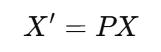
WherePPPisthePCAprojectionmatrix.
3. Rotateeachsubsetindependentlyandreassemble transformedfeatures.
Example Solution: Rotation Forest with XGBoost
Step 1: Dataset Preparation
We use the Individual Household Electric Power Consumption dataset, which contains measurements of electricpowerconsumptioninahouseholdoverfouryears. Key features include voltage, reactive power, and submeterreadings.
Step 2: Feature Engineering & Preprocessing
Data preprocessing includes handling missing values, normalizingnumericalvalues,andsplittingthedatasetinto training(80%)andtesting(20%)sets.
Step 3: Implementing XGBoost
Step 1: Import Required Libraries
1. Import necessary libraries for data processing, modeling,andevaluation.
Step 2: Load and Preprocess Data
1. LoadthedatasetfromaCSVfile.
2. Convert Date and Time columns into a single Datetimecolumn.
3. Selectrelevantcolumns:
o Datetime, Global_active_power, Voltage, Global_reactive_power, Sub_metering_1, Sub_metering_2,Sub_metering_3.
4. Removerowswithmissingvalues.
Step 3: Define Features and Target Variable
1. Set X (features) as all columns except Datetime andGlobal_active_power.
2. Sety(target)asGlobal_active_power.
Step 4: Split the Data
1. Dividethedatasetintotraining(80%)and testing (20%)sets.
Step 5: Train Basic XGBoost Model
1. InitializeXGBoostRegressorwith:
o n_estimators=100
o learning_rate=0.1
International Research Journal of Engineering and Technology (IRJET) e-ISSN: 2395-0056
Volume: 12 Issue: 03 | Mar 2025 www.irjet.net p-ISSN: 2395-0072
o max_depth=6
2. TrainthemodelusingX_trainandy_train.
Step 6: Evaluate XGBoost Model
1. PredictvaluesusingX_test.
2. Computeevaluationmetrics:
o MeanAbsoluteError(MAE)
o RootMeanSquaredError(RMSE)
o R²Score
3. Printtheresults.
Applying Rotation Forest on XGBoost
2. Step 7: Define Rotation Forest Algorithm
1. InitializeRotationForestClass:
o Use PCA (Principal Component Analysis) forfeaturetransformation.
o Splitfeaturesinto5subsets.
o Apply PCA to each subset (with up to 3 components).
2. TrainingProcess:
o Foreachsubset:
1. ApplyPCAtransformation.
2. Train an XGBoost model on transformedfeatures.
3. Store both the PCA model and trainedXGBoostmodel.
3. PredictionProcess:
o Foreachtrainedmodel:
1. Apply the stored PCA transformation to the correspondingsubset.
2. Get predictions from the trained XGBoostmodel.
o Take the average of all predictions to get thefinalresult.
Step 8: Train Rotation Forest-XGBoost Model
1. Create an instance of Rotation Forest-XGBoost usingtheXGBoostRegressor.
2. TrainthemodelonX_trainandy_train.
Step 9: Evaluate Rotation Forest-XGBoost Model
1. PredictvaluesusingX_test.
2. Computeevaluationmetrics:
o MeanAbsoluteError(MAE)
o RootMeanSquaredError(RMSE)
o R²Score
3. Printtheresults.
Applying Rotation Forest on XGBoost
1. Step 7: Define Rotation Forest Algorithm
1. Initialize Rotation Forest Class:
o Use PCA (Principal Component Analysis) forfeaturetransformation.
o Splitfeaturesinto 5 subsets
o Apply PCA to each subset (with up to 3 components).
2. Training Process:
o Foreachsubset:
1. ApplyPCAtransformation.
2. Train an XGBoost model on transformedfeatures.
3. Store both the PCA model and trainedXGBoostmodel.
3. Prediction Process:
o Foreachtrainedmodel:
1. Apply the stored PCA transformation to the correspondingsubset.
2. Get predictions from the trained XGBoostmodel.
o Take the average of all predictions to getthefinalresult.
Step 8: Train Rotation Forest-XGBoost Model
1. Create an instance of Rotation Forest-XGBoost usingthe XGBoost Regressor
2. Trainthemodelon X_train and y_train.
Step 9: Evaluate Rotation Forest-XGBoost Model
1. Predictvaluesusing X_test
2. Computeevaluationmetrics:
o Mean Absolute Error (MAE)
o Root Mean Squared Error (RMSE)
o R² Score
3. Printtheresults.
Summary of Approach
XGBoost Only: Usesrawfeaturesfortraining.
International Research Journal of Engineering and Technology (IRJET) e-ISSN: 2395-0056
Volume: 12 Issue: 03 | Mar 2025 www.irjet.net p-ISSN: 2395-0072
Rotation Forest-XGBoost: Uses PCA for feature transformation before training XGBoost, improvingfeature diversityand potentially model accuracy.
Step 5: Results Comparison
Model
ForestXGBoost
The Rotation Forest-XGBoost ensemble demonstrated superiorperformancecomparedtostandalonemodels: Model MAE RMSE R²
6. Han, J., Kamber, M., & Pei, J. (2011). Data mining: Conceptsandtechniques. MorganKaufmann
7.Friedman,J.H.(2001).Greedyfunctionapproximation:A gradient boosting machine. Annals of Statistics, 29(5), 1189–1232.
8. Tsanas, A., & Xifara, A. (2012). Accurate quantitative estimation of energy performance of residential buildings using statistical machine learning tools. Energy and Buildings,49,560-567.
9. Hong, T., & Fan, S. (2016). Probabilistic electric load forecasting: A tutorial review. International Journal of Forecasting,32(3),914-938.
10. Hastie, T., Tibshirani, R., & Friedman, J. (2009). The elementsofstatisticallearning:Datamining,inference,and prediction. SpringerScience&BusinessMedia
Conclusion
By applying Rotation Forest before training XGBoost, we successfully reduced prediction errors and improved the accuracyofforecastinghouseholdelectricityconsumption. The integration of feature transformation via PCA enhanced diversity, leading to superior performance. This combination leverages the strengths of both algorithms, resultinginamorerobustpredictivemodel.Theenhanced accuracy of household electricity consumption forecasting contributes to more effective energy management and planning.
References:
1. Rodríguez, J. J., Kuncheva, L. I., & Alonso, C. J. (2006). Rotation forest: A new classifier ensemble method. IEEE Transactions on Pattern Analysis and Machine Intelligence, 28(10),1619-1630.
2. Chen, T., & Guestrin, C. (2016). XGBoost: A scalable tree boosting system. Proceedings of the 22nd ACM SIGKDD International Conference on Knowledge Discovery and Data Mining,785-794.
3. Breiman, L. (2001). Random forests. Machine Learning, 45(1),5-32.
4. Jain, A. K., Murty, M. N., & Flynn, P. J. (1999). Data clustering: A review. ACM Computing Surveys, 31(3), 264–323.
5. Oyewole, G. J., & Thopil, G. A. (2023). Data clustering: applicationandtrends. Artificial Intelligence Review, 56(5), 6439–6475.