
International Research Journal of Engineering and Technology (IRJET) e-ISSN: 2395-0056
International Research Journal of Engineering and Technology (IRJET) e-ISSN: 2395-0056
Dhruv Mahapure 1 , Kunal Raut 2 , Sumit Mishra 3, Maya Patil 4
1Dhruv Mahapure, Student, Dept. of Information Technology, SJCEM , Palghar, Maharashtra, India
2Kunal Raut, Student, Dept. of Information Technology, SJCEM , Palghar, Maharashtra, India
3Sumit Mishra, Student, Dept. of Information Technology, SJCEM , Palghar, Maharashtra ,India
4Maya Patil, Professor, Dept. of Information Engineering, SJCEM, Palghar, Maharashtra , India
Abstract
Agricultureservesastheprimarysourceoflivelihoodfora significantportionofIndia’spopulationandisanintegralpart of the primary sector. The Harvesting System, a machine learning-drivensolution,aimstoenhancetheefficiencyofthe harvesting process for farmers. Implementing an accurate vision system capable of real-time fruit classification and analysisisessential forensuringthecost-effectivenessand productivityofharvestingrobots.
In many regions of India, farmers face challenges in crop cultivation duetounfavorableclimateconditions and poor soil quality. Additionally, the lack of readily accessible assistancetoguidefarmersinselectingtheappropriatecrops usingmodern technological advancements exacerbates the issue. Illiteracy further hampers farmers from leveraging advancements in agricultural science, often resulting in continuedrelianceontraditionalfarmingmethods.Thiscan hinderachievingoptimalyields.Forexample,cropfailuremay resultfrominadequatefertilizationorunpredictablerainfall patterns.
Theincreasingavailabilityofagriculturaldataoffersimmense potential for improving crop management but also poses challengesinitseffectiveutilization.Thisstudyintroducesthe Harvestify Classifier, a machine learning-based framework designed to enhance agricultural decision-making. By accuratelyclassifyingcropsandforecastingyields,thesystem leveragesdiversedatasetssuchassatelliteimages,soilhealth metrics, and climatic conditions. Advanced algorithms, including Random Forest and Support Vector Machines (SVM),areemployedtoensureprecisepredictionsandrobust performance.
KEYWORDS
MachineLearning, Processing,Training, Testing, Predictive Model,TextProcessing
Accordingtothe2011census,118.6millionfarmersinIndia relyonagriculturefortheirlivelihood,highlightingitscritical roleinthecountry.Farmersfaceseveralchallenges,suchas understandingsoilconditions,determiningtherighttimeand
location for compost application, accounting for rainfall, maintainingcrop quality, and addressing the variabilityof factorsevenwithindifferentareasofthesamefield.These challenges, compounded during significant agricultural decision-making processes, often require consideration of multiplevariablesandmetrics.
To address these complexities, a program is proposed to assist farmers in enhancing their productivity by continuously monitoring agricultural fields. For instance, online weather data, including rainfall trends and soil parameters, can guide decisions on which crops are best suitedforspecificlocations.Thissystemintroducesadesktop applicationthatleveragesdataanalysistechniquestopredict themostprofitablecropyieldsbasedoncurrentclimateand soilconditions.
Key Features of the System:
1. Crop Recommendation
2. Fertilizer Recommendation
3. Plant Disease Prediction
Agriculturehasbeena cornerstoneofIndianculturesince ancienttimes.Historically,farmerscultivatedcropsontheir ownland,adaptingpracticestomeettheirneeds.However, theadventofmoderntechnologiesandtechniqueshasledto a gradual shift in agricultural practices. This shift, while beneficial insomerespects,hasalsoresultedina growing reliance on hybrid and artificial products, which may compromise health. Moreover, a lack of awareness about propercropcultivationtimingandlocationhascontributed to changes in seasonal climatic conditions, negatively impacting essential resources like soil, water, and air, ultimatelyleadingtofoodinsecurity
Supervised Learning: Createsmathematicalmodelsusing labeleddata,withinputsandcorrespondingdesiredoutputs.
Unsupervised Learning: Builds models from datasets containingonlyinputs,withnolabeledoutputs.
Semi-Supervised Learning:Developsmodelsfrompartially labeled data, where some input samples lack associated labels.Thispaperfocusesonimprovingcropyieldsthrough various techniques, including fertilizer recommendations
Volume: 12 Issue: 03 | Mar 2025 www.irjet.net p-ISSN: 2395-0072 © 2025, IRJET | Impact Factor value: 8.315 |
International Research Journal of Engineering and Technology (IRJET) e-ISSN: 2395-0056
Volume: 12 Issue: 03 | Mar 2025 www.irjet.net p-ISSN: 2395-0072
tailored to specific crops. By integrating machine learning algorithmsandleveragingdata-driveninsights,theprogram aims to revolutionize agricultural practices, ensuring sustainability and improved productivity for the Indian farmers.
1. Overview of Machine Learning in Agriculture:
Machine learning (ML) has found applications in various agriculturalprocesses,suchassoilanalysis,cropmonitoring, yieldprediction,andharvestclassification.Theseinnovations aimtoenhancedecision-making,resourcemanagement,and productivity.
Importance of Harvest Prediction:
Accurateharvestpredictionplaysavitalroleinensuringfood security,efficientresourceallocation,andwastereduction.It allowsfarmerstomaketimelyandinformeddecisionsthat optimizeagriculturaloperationsandoutputs.
2. Supervised Learning Methods:
Supervisedlearningalgorithmsarewidelyusedinpredicting harvestoutcomesbasedonhistoricaldata.Examplesinclude:
Support Vector Machines (SVM): Effective for binary classificationandregressiontasks.
Random Forests: Provideshighaccuracythroughensemble learningbyconstructingmultipledecisiontrees.
3. Agricultural Datasets:
Machinelearningapplicationsinagriculturerelyondiverse andhigh-qualitydatasets,suchas:
Satellite Imagery: Offersinsightsintocrophealth,growth patterns,andlanduse.
Sensor Data: Monitors parameters like soil moisture, temperature,andhumidityinreal-time.
4. Crop-Specific Models:
ML modelshavebeendevelopedforspecificcropssuch as wheat, rice, maize, and sugarcane. These models excel at predictingharvesttimesandyields,aidinginefficientfarm management.
5 Shinde and Khade (2021) survey machine learning techniques in network intrusion detection, highlighting a novel deep learning model based on non-symmetric deep autoencodersforfeatureextractionandclassification,tested effectively on KDD Cup '99 and NSL-KDD datasets for enhancednetworksecurity[11].
Advanced agricultural techniques offer transformative potentialforimprovingcropmanagementandproductivity by integrating diverse data sources and technologies. By analyzing environmental factors, soil characteristics, and weather patterns, comprehensive crop type classification becomes possible, enabling precise recommendations for suitable crops in specific regions. This method promotes efficient land use while fostering sustainable agricultural practices.
Predictivemodelingservesasanothercriticaltool,leveraging a range of agronomic data such as soil quality, climatic conditions,andenvironmentalfactorstoforecastcropyields accurately. These models improve yield predictions, streamline resource allocation, and support farmers in makingwell-informeddecisions.
Intheareaofcrophealth,automatedsystemsfordetecting and diagnosing plant diseases utilize advanced image classificationalgorithmsandsensor-baseddatacollection.By identifying early signs like leaf discoloration or pest infestations, these systems enable timely intervention, minimizingpotentialcroplosses.
A comprehensive assessment of soil quality, incorporating parameters such as chemical composition, texture, and moisturelevels,furtherenhancesagriculturalpractices.This data-drivenanalysis helps farmers match crops to specific soil conditions, boosting productivity and promoting sustainablefarmingtechniques.
Together,thesecutting-edgeapproachesrepresentarobust framework for improving agricultural efficiency, ensuring sustainability,andbuildingresilienceagainstenvironmental challenges.
Theagriculturalsectorencounterssignificantchallengesin optimizingharvesttiming,whichoftenleadstoissuessuchas inaccuratepredictions,fragmenteddata,anddiminishedcrop quality.Conventionalharvestingpracticesfrequentlyresult inprematureordelayedharvests,adverselyaffectingboth yieldandmarketvalue
The lack of centralized data, spread across multiple tools, makes it difficult for farmers to make well-informed decisions.
Moreover, climate change exacerbates these difficulties by introducing greater unpredictability in weather patterns, complicatingthetimingofharvests.Atthesametime,rising consumerexpectationsforpremiumqualityproducedemand advanced solutions to ensure crops are harvested at their peak maturity, meeting quality standards and market requirements.
International Research Journal of Engineering and Technology (IRJET) e-ISSN: 2395-0056
Volume: 12 Issue: 03 | Mar 2025 www.irjet.net p-ISSN: 2395-0072
1.Machine learning (ML) is transforming agriculture by enhancingprocessessuchassoilanalysis,cropmonitoring, yield prediction, and harvest classification. Through advanced algorithms, ML enables data-driven approaches that address key challenges in modern farming. Accurate harvestpredictionplaysavitalroleinensuringfoodsecurity, optimizing resource allocation, and minimizing waste by helpingfarmersharvestcropsattherighttimeformaximum yield and quality. However, the agricultural sector faces complexities in data analysis due to environmental variability, pest and disease outbreaks, and unpredictable weather patterns. These challenges underscore the importanceofadoptingadvancedMLtechniquestointerpret diversedatasetsandsupportsustainablefarmingpractices.
2. In harvest prediction and classification, supervised learning methods are commonly used to predict harvest outcomes based on historical data. Popular supervised learningalgorithmsincludeSupportVectorMachines(SVM), RandomForests,DecisionTrees,andNeuralNetworks.SVM isknownforitsabilitytoclassifydataintodistinctcategories by finding the optimal hyperplane that separates different classes. Random Forests, an ensemble learning method, createmultipledecisiontreestoenhancepredictionaccuracy andpreventoverfitting
3.Datapreprocessingtechniquesareessentialforcleaning, normalizing, and augmenting agricultural data to ensure machinelearningmodelscangenerateaccuratepredictions. Cleaninginvolvesremovingnoise,handlingmissingvalues, andcorrectingerrorsinthedata.Normalizationadjuststhe scale of data to ensure that features have a similar range, preventing any one variable from disproportionately influencingthemodel.Dataaugmentationtechniques,suchas generatingsyntheticdataorusingdifferentdatasources,help increasethevolumeanddiversityoftrainingdata,improving modelrobustness.[1]
4.Machinelearningmodelshavebeendevelopedforspecific crops like wheat, rice, maize, and sugarcane to predict harvest times and yield. These models utilize data such as weatherpatterns,soilconditions,andcropgrowthstagesto make accurate predictions. For example, wheat models forecastharvesttimingbasedontemperatureandmoisture levels, while maize models predict yield by analyzing soil healthandclimatevariables.Thesecrop-specificmodelshelp optimizeharvestplanningandimproveyieldforecasting.[4]
5.Thedetectionmodelwillaimtoidentifyvisualartifactsand inconsistenciesindeepfakecontent,focusingonfactorslike head pose misalignments, unnatural lighting, and shadow anomalies. In particular, the model will detect spatial and temporalinconsistencies,includinginconsistentheadposes (Yangetal.)andlightingorshadowerrors(Maternetal.).By incorporating these features, the model will be better equippedtodetectsubtlemanipulations,ensuringthateven
minor visual inconsistencies are captured, which might otherwisebeoverlooked.[9][7]
6. Theapplication will feature a user-friendly interface for mediacontentanalysis,enablinguserstouploadimagesand videosanddetectdeepfakesinreal-time.Toensureseamless functionality, the system will include secure storage for media files, robust payment processing features, and adherencetorelevantdata protectionregulations.Regular securityauditswillbeconductedtoprotectuserinformation, ensuringtheapplicationremainssecureandtrustworthyfor allusers.[12][9]
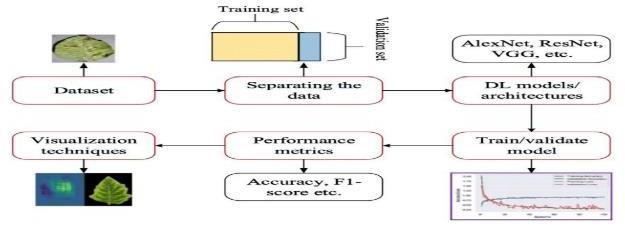
APlantDiseaseDetectionSystemflowdiagrambeginswith users uploading plant images. The images undergo preprocessing (like resizing or noise removal) and are analyzedbyatrainedmachinelearningmodel,suchasCNN. Themodelclassifiesthediseasebasedonpatterns,andthe systemoutputsthediseasenamewithpossiblesolutionsor treatments
TheCropRecommendationGraphprovidesavisualanalysis ofsuitablecropsbasedonvariousenvironmentalfactorslike soil type, temperature, rainfall, and nutrient availability. It helps farmers make informed decisions by identifying optimalcropsforspecificregions,ensuringbetteryields.
The graph compares multiple crop options side-by-side to highlightthebestchoicesundergivenconditions.Thisaidsin sustainableagriculturebyrecommendingcropsthatrequire fewer resources and are resilient to local conditions. The graphalsoemphasizestheimportanceofselectingcropsthat arebotheconomicallyviableandenvironmentallyfriendly
International Research Journal of Engineering and Technology (IRJET) e-ISSN: 2395-0056
Volume: 12 Issue: 03 | Mar 2025 www.irjet.net p-ISSN: 2395-0072
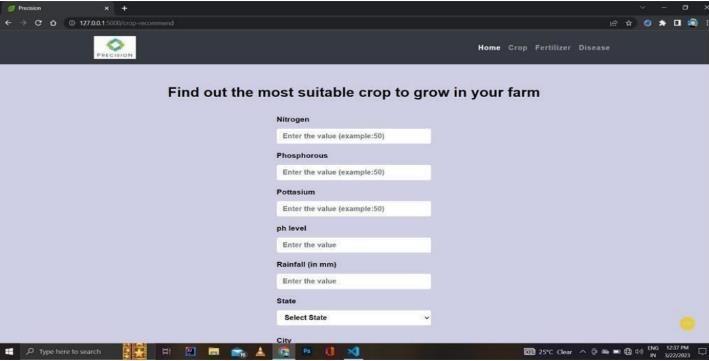
Thehomepageofthe”Harvestify”systemoffersa visually appealingandfunctionalinterfacedesignedtoassistfarmers with smart agricultural decisions. It dis plays a vibrant backgroundofseedlings,reinforcingthethemeofsustainable agriculture.Theplatform’stagline,“GetInformedDecisions AboutYourFarmingStrategy,”highlightsitspurpose.Below, itintroducestwokeyquestionsithelpsanswer:“Whatcrop toplanthere?”and“Whatfertilizertouse?”Thenavigation baratthetopprovideseasyaccesstodifferentsections:Crop, Fertilizer, and Disease. This design ensures simplicity and accessibility,guidingusersthroughcrucialdecisionmaking processesefficiently

AFertilizerRecommendationSystemflowdiagramgenerally begins with the user entering soil parameters such as Nitrogen,Phosphorus,andPotassium(NPKlevels),pH,and crop type. This input data is then processed by a machine learning model that analyzes the soil's nutritional content andotherenvironmentalfactorsusingpredefinedpatter.
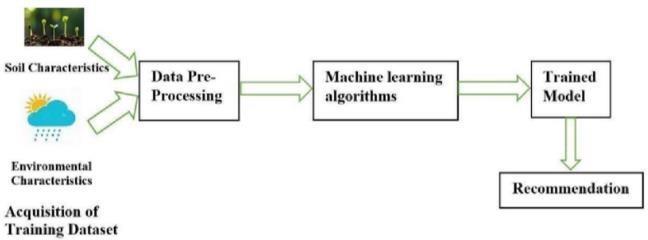
A model is proposed for recommending soil treatments, fertilizers, and predicting crop diseases, based on datasets sourcedfromKaggle.Integratingmachinelearningwiththe agricultural sector aims to significantly enhance farming practices.Variousalgorithmswillbeemployedandcompared topredictthemosteffectiveoutcomesforfarmers,ultimately improving crop yield and minimizing losses. To ensure accuracy, the study will focus on understanding soil compositionanditsrelationshipwithcropsandfertilizers,as wellasanalyzingdifferentplantdiseases,theircauses,and treatments. Analyzing the available datasets will help improvethemodel’spredictionaccuracy.Futureworkwill involvedeployingthismodelinauser-friendlyapplicationfor easyaccessbyfarmers
•AImodelsinpredictiveanalyticscanforecastsupplyand demand trends, optimizing inventory management and reducingwaste.Machinelearningalgorithmscanalsodetect anomaliesintransactionsorqualitydata,helpingtoidentify potential fraud or product issues early, ensuring timely interventionandminimizingrisks.
•IoT-basedMonitoringandAutomatedDataEntryRealtime SensorIntegration:IoTdevicescanmonitorconditionslike temper ature, humidity, and soil quality, automatically feeding data into the blockchain for real time updates. AutomatedQRCodeScanning:QRcodescanbescannedat every checkpoint to reduce manual data entry, ensuring higherdataaccuracy.IoTbasedmonitoringintegratesrealtime sensors to track conditions such as temperature, humidity,andsoilquality,automaticallyfeedingthisdatainto a blockchain for real-time updates. Automated QR code scanning at each checkpoint reduces manual data entry, enhancing data accuracy and ensuring efficient tracking throughouttheprocess
Hybrid Blockchain Implementation: By implementing a hybrid blockchain that combines both public and private chains, scalability, speed, and privacy are enhanced while ensuringtransparencyandmaintainingdataintegrity.This approachoffersthebestofbothworlds,allowingforsecure transactionsandefficientoperations.
Multi-modal Detection Approaches: Cross-modalanalysis integrates audio analysis with video data to detect inconsistencies between voice and facial movements, improving the overall accuracy of detection systems and makingthemmoreeffectiveatidentifyingmanipulations.
• Developing mobile applications for all stakeholders farmers,suppliers,andconsumers willprovideeasyaccess to reports, updates, and product traceability. Through QR codesorRFIDtags,userscantrackthejourneyofproducts,
International Research Journal of Engineering and Technology (IRJET) e-ISSN: 2395-0056
Volume: 12 Issue: 03 | Mar 2025 www.irjet.net p-ISSN: 2395-0072
ensuring transparency and enhancing the user experience acrosstheagriculturalsupplychain.
1. J. Joo, U. Lee, S. Jeong, J. Y. Yoon, H. Jin ,S. C. Kim, ” PeriodontalDiseaseDetectionUsingConvolutionalNeural Networks”,InternationalConfer018.
2.J.JitendraKumarJaiswal,RitaSamikAnnu, Application ofRandomForAlgorithmon FeatureSubsetSelectionand ClassificationandRegression||,IEEEpaper2017.
3S.DingandX.Xu,“Extremelearningmachine:algorithm, theory and appli cations”, Article in Artificial Intelligence Review,June2013.Mehta,ChahatJain,KaranKanchan,Prof. VinayaSawant AMachineLearningApproachtoForetell theProbabilityofaCropContractingaDisease||,2018Fourth Inter national Conference on Computing Communication ControlandAutomation(ICCUBEA).
4.ClassificationUsingMachineLearningTechniques”,Issue8, Volume4,August2005
5.D.B.M.PAZZANI,“Learningandrevisinguserprofiles:The identificationofinterestingwebsites,”MachineLearning,vol. 27,no.3,pp.313–331,1997ZOBEIDI,MARJANNADERAN, SEYEDENAYATOLLAHALAVI,”EffectiveTextClassification UsingMulti-levelFuzzyNeuralNetwork”,March2017
6. M.Mohanty, D. P.Hughes,and M. Salath´ e, “UsingDeep LearningforImageBasedPlantDiseaseDetection,”Frontiers inPlantScience,vol.7,2016.
7.B.Ghosal,A.Sarkar,A.Das,R.Gangopadhyay,S.Sarkar,and B.N.Singh,“RiceLeafDiseasesClassificationUsingCNNwith Transfer Learning,” Jour nal of Ambient Intelligence and HumanizedComputing,2020.
8.S.Sladojevic,M.Arsenovic,A.Anderla,D.Culibrk,andD. Stefanovic, “Deep Neural Networks Based Recognition of PlantDiseasesbyLeafImageClassification,”Computational IntelligenceandNeuroscience,vol.2016,2016.
9. N. S. Tewari, A. Gupta, and M. Mohanty, “A Machine LearningApproachtoSoilFertilityPredictionUsingNutrient Content and Environmental Parame ters,” Journal of Soil Science,vol.12,no.2,pp.132–140,2019.
10.A.KamilarisandF.X.Prenafeta-Bold´u,”Deeplearningin agriculture: A sur vey,” Computers and Electronics in Agriculture, vol. 147, pp. 70-90, 2018. doi: 10.1016/j.compag.2018.02.016.
11. Shinde S. M., & Khade N. B. (2021). A SURVEY ON INTRUSION DETECTION SYSTEM USING MACHINE LEARNINGFRAMEWORK",InternationalJournalofEmerging TechnologiesandInnovativeResearch(www.jetir.org|UGC
2025, IRJET | Impact Factor value: 8.315 |
andISSNApproved),ISSN:2349-5162,Vol.7,Issue3,pageno. pp542-547, March-2020, Available at : http://www.jetir.org/papers/JETIR2003085.pdf