
International Research Journal of Engineering and Technology (IRJET) e-ISSN: 2395-0056
Volume: 12 Issue: 04 | Apr 2025 www.irjet.net p-ISSN: 2395-0072
International Research Journal of Engineering and Technology (IRJET) e-ISSN: 2395-0056
Volume: 12 Issue: 04 | Apr 2025 www.irjet.net p-ISSN: 2395-0072
Kazi Samina Shamsi Huq
M.Sc., Urban Management and Development (IHS, Erasmus University Rotterdam), Netherlands
Abstract – Gentrification is a growing phenomenon in Dhaka, with significant socio-economic consequences for its inhabitants. While gentrification brings modernization, improved infrastructure, and investment, it also exacerbates housinginequality,displaceslong-standingcommunities,and, on top of that, undermines social cohesion. Over the past few decades, Dhaka’s urbanization has been fueled by fastgrowing populations, migration from rural areas, as well as increased investment in infrastructure. Additionally, this city has expanded outward, with newer developments replacing older neighborhoods. As a result, areas historically characterizedbyaffordable housingandhometolow-income populations are now witnessing increasing property values and large-scale urban renewal projects. Although gentrificationhasbeenextensivelystudiedintheGlobalNorth, itsimpactinDhakaisarelativelyrecentareaofresearch.This paperexaminesthespatialandsocio-economicconsequences of gentrification, focusing on neighborhoods that were previously accessible to low-income groups but are now experiencing widespread rental inflation and developmentdriven displacement. Using qualitative interviews with displaced residents and housing developers alongside spatial analysis, this study reveals that displacement follows a localized, multi-stage pattern with affected households relocating to adjacent lower-cost or peri-urban areas. Findings indicate that the absence of inclusionary zoning and other regulatory mechanisms allows market-driven urbanizationto intensifyhousinginequality,reinforcingsociospatial segregation. This study argues that adopting inclusionary zoning policies could offer a viable strategy to balance urban growth with social equity. In the absence of such intervention, Dhaka risks deepening its housing crisis with low-income communities increasingly pushed toward peripheral and environmentally vulnerable areas.
Key Words: Gentrification, Inclusionary Zoning, Social equity,Regulatoryframeworks,Displacement
Theconceptofgentrificationiswidelyknownyetcontested. Formorethanfivedecades,scholarshavebeendebatingthe complexities of gentrification. At the heart of these discoursesareconcernsoverwhobenefitsfromtheprocess and who is left behind to bear its consequences [1]. Gentrification is commonly addressed as a process of neighborhoodtransformation,whererisingpropertyvalues, rental inflation, and urban redevelopment lead to the
displacement of low-income communities [2] However, gentrification does not occur in isolation. It is actively supported by key players, including private developers, construction firms, government bodies, and real estate professionals, who collectively shape urban growth and land-use decisions [3][1] On the other hand, academic discourse on gentrification is divided into two key perspectives. One viewpoint suggests that gentrification fosterssocialprogressbyenhancingneighborhoodcohesion and integration [4]. However, the more widely accepted perspective argues that gentrification disrupts social structures,displacesvulnerablepopulations,andintensifies segregation[5].Whiletraditionallyassociatedwithcitiesin theGlobalNorth,gentrificationisincreasinglyaffectingcities indevelopingcountriesaswell,includingDhaka.
Asoneofthemostrapidly urbanizingcitiesinSouthAsia, Dhaka is undergoing a significant transformation in its housing market, driven by market-led urbanization and risingdemandforupscalehousing.Thesechangesareoften framed as indicators of economic progress and renewal. Nevertheless,theycomeat acost,particularlyforDhaka’s vulnerablecommunities.Thefearofresidentialandsociospatial displacement is not merely theoretical now; it is a present reality for low-income and marginalized people. Lookingahead,gentrificationinDhakaislikelytocontinue asthecityexpandsandmodernizes.Withoutintervention, the risk is that Dhaka could become extremely polarized, withaffluentresidentsoccupyingprimelocations,whilethe urban poor are pushed to the city’s periphery. Urban renewalandmodernizationareoftenpresentedassignsof economic success, bringing both opportunities and challenges.Theemphasis,however,shouldbeonfostering renewalanddevelopmentwithoutcausingdisplacement[6]. Yet, Dhaka lacks formal protections for displaced communities to ensure housing equity. This makes gentrification an even harsher process, where the entire groupisgraduallydisplacedwithnohousingalternativesor socialassistance.Historically,Dhaka’surbanexpansionand development have been heavily shaped by low-income groups, whose contributions to the city’s physical and economicgrowthremainvitaltothisday[7] Yet,thesesame communitiesnowexperiencethemostsevereconsequences of gentrification, as rising property prices along with redevelopment projects make affordable housing increasinglyinaccessible.Therelocationofthesepopulations to the urban periphery not only disrupts their social networks but also limits their access to employment
International Research Journal of Engineering and Technology (IRJET) e-ISSN: 2395-0056
Volume: 12 Issue: 04 | Apr 2025 www.irjet.net p-ISSN: 2395-0072
opportunities, education, and essential services, further deepeningsocio-economicinequalities.
Despitetheextensiveresearchongentrificationincitieslike NewYork,London,andotherEuropeanurbancenters,there is a critical gap in understanding how gentrification progresses in South Asian megacities like Dhaka. Existing studiesonDhakahaveprimarilyfocusedonrentalinflation, slum evictions, or the after-effects of transit-oriented development.However,littleanalysishasbeenconductedon howgentrificationinducessocio-spatialconsequencesinthe contextofmarket-drivenurbanization.Furthermore,Dhaka lacksregulatoryinstrumentssuchasinclusionaryzoningor anyaffordablehousing mandatestopreserveandprovide affordableunitsinordertoalleviategradualdisplacement. Thesepolicygapsremainlargelyunexaminedinacademic discourse.Thispaperseekstobridgethesegapsbyexploring how gentrification has transformed Dhaka’s affordable housingandacceleratedneighborhood-leveldisplacement.It specificallyinvestigatesthedifficultiesexperiencedbylowincomecommunitiessincetheyencounterthepressuresof urban redevelopment, focusing on the central research question:“To what extentdoesgentrificationreshapeDhaka’s housing landscape, and how does the absence of inclusionary zoning exacerbate socio-economic inequalities?” Toanswer thisquestion,thepapercontextualizesDhaka’sresidential gentrification within global urban housing debates and highlights the urgent need for policy interventions that balance economic growth with housing affordability. Moreover, the results will contribute to the ongoing discourse on sustainable urbanization and explore the feasibilityoflocalizedinclusionaryzoningmechanisms.
This paper aims to examine the socio-spatial impacts of gentrificationinDhaka,withaparticularfocusonitseffects onlow-incomecommunitiesandthehousinglandscape.It seekstoidentifykeyissuesingentrificationwhileanalyzing howitmanifestsacrossdifferentresidentialareas.Another keyobjectiveistoevaluatethepolicygapsthatcontributeto housing inequalities, in particular, the absence of inclusionary zoning. Furthermore, the study explores the reasonsbehindthelackofimplementationofinclusionary zoningasapolicyresponseinDhaka.
RuthGlassintroduced the term gentrification inher1964 book London-AspectsofChange,inordertodefinetheinflow of the gentry into lower-income urban areas. Both the process of population shifts and changes in the built environment are encompassed in this phenomenon Nonetheless, Glass (1964) used this term to describe how the working-class neighborhoods in London transformed when middle-class individuals moved in, resulting in the
displacementoforiginalinhabitantsalongwithalteringthe actual fabric [8]. Over time, scholars have broadened the concept.Beauregard(1989)highlightstheterm’scomplexity by pointing out that different urban processes have been categorizedunderit[9] Itscomplexitieshavebeenfurther shapedbyneoliberalpoliciesandgrowingdecentralization Furthermore, some address gentrification as one of the methodsofurbanrevitalization,whileothersunderlineits role in exacerbating socioeconomic inequalities [3][10] Clark(2005)suggeststhatgentrificationischaracterizedby financial investment in urban neighborhoods. He further addedthefactthatgentrificationinvolvestherestructuring offixedcapital,whichreshapestheurbanenvironment[11]. As a result, it is often viewed as a product of neoliberal economicpoliciesandglobalization.Similarly,Smith(1996) describes gentrification as a capital reallocation process, where an area attracts financial investment, boosting economic growth [3]. However, this influx of capital also raises living costs, forcing long-standing inhabitants to be displaced.Here,theconceptofdisplacement,oftennotedto be the most severe consequence of this process, remains complexandcontested,particularlyregardingthedistinction between displacement and replacement of the original residents. Studies have reached varying conclusions regardingthescaleofthedisplacement.Someresearchers, suchasSlater(2006),stronglycriticizedgentrification[12], while others, like Byrne (2003), highlighted potential benefits[13].
Gentrificationiscommonlyanalyzedthroughtwoprimary theoreticallenses,theproductiontheoryandconsumption theory,developedbyNeilSmithandDavidLey,respectively Here,thefirstoneistheProductionsideexplanation Smith (1979) argued that gentrification is primarily driven by economic forces, particularly the rent gap, which is the differencebetweentheproperty’spresentrentalvalueand itsanticipatedvalueafterredevelopment[14] Developers andinvestorscapitalizeonthisgap,leadingtoneighborhood transformation.Yet,therearedifferingperspectivesonthe sourcesandconceptualizationoftherentgap.Thesecond lens is David Ley’s consumer preference model (1986), whereLeyapproachesgentrificationthroughtheviewpoint of human and natural geography, emphasizing shifts in consumerbehaviorandlifestylepreferences.Itsuggeststhat changes in attitudes and consumption patterns influence urbantransformation[15]
Gentrificationhasbeenlinkedtobroaderneoliberalurban policiesthatprioritizeprivatization,realestatedominance, and public-private partnerships [16]. Similarly, Lees et al. (2008) interpret gentrification through the lens of neoliberalism, a philosophy centered on privatization, deregulation,andreducedpublicintervention Theyargue that neoliberal policies, when left to operate freely, inevitablydrivegentrification[17] Sager(2011)highlights that within the framework of neoliberal policies,
International Research Journal of Engineering and Technology (IRJET) e-ISSN: 2395-0056
Volume: 12 Issue: 04 | Apr 2025 www.irjet.net p-ISSN: 2395-0072
gentrification pushes the government to emphasize the physical appeal of urban spaces to attract businesses and high-income residents, often at the expense of vulnerable people [18]. In addition to that, according to Peck (2012), under neoliberal urbanism, housing has been treated as a financialcommodity,fuelingspeculation[19] Scholarsargue that gentrification is not merely a housing issue but a broader process of urban inequality that marginalizes working-classcommunities,ethnicminorities,andinformal settlers [20]. Moreover, neoliberal housing policies have intensified socioeconomic inequalities, widening the gap between higher-income and vulnerable groups [21]. Furthermore, gentrification in the Global South follows distincttrajectoriesduetoinformalhousingmarkets,weak regulatory frameworks, and rapid urbanization. Besides, market-driven approaches to urban development have contributedtogrowinghousingcostsanddisplacement[10]. ThetransformationoftheurbanhousinglandscapeinDhaka canalsobeunderstoodthroughtheperspectiveofpolitical economy and neoliberal urbanism. For instance, here in Dhaka, government policies permit large-scale real estate developments and land privatization without strong protectionsforlow-incomecommunities.Atthesametime, the political economy of Dhaka’s housing sector is largely influencedbyprivatedevelopersandfinancialinstitutions, which shape housing availability and affordability. The absence of regulatory instruments for affordable housing allowsdeveloperstotargetupper-middletohigher-income groups while pushing out low-income renters. The government’sfocusoneconomicgrowthhasledtoasurgein high-end residential developments, which displace vulnerablecommunitieswithoutofferingviablerelocation alternatives.Thisalignswiththeideaofthecityasa“Growth Machine” [22], in which urban policies benefit private investors and affluent groups rather than long-term lowincomeresidents.
Overthepastfewdecades,Dhakacityhasexpandedbeyond its historic core to accommodate the growing population, leadingtoahousingboom.Oneofthemostevidenteffectsof gentrification is the transformation of the physical landscape.AsstatedbyPhillips(2018),thistransformation is a tangible and observable change in the material environment [23]. These changes typically involve modifications to the existing housing situation, including renovations, demolitions, and the construction of new housing. Beyond housing, gentrification reshapes the neighborhood’samenitiesthatcatertoaffluentgroups[5] Essoka (2010) argues that while investments aimed at refininganeighborhood’sphysicalinfrastructuremaylead toitsrevitalization,economicallyunderprivilegedresidents oftendonotbenefitfromthesechanges[24].Instead,such developmentsfrequentlyresultinincreasedpropertyvalues and living costs. Zukin (1990) asserts that, alongside new housingdevelopments,innovativeretailbusinessesarealso
introduced to attract further capital accumulation [25]. Theseshiftsinurbanlandreinforcesocio-spatialsegregation [26].
InDhaka,severalfactorscontributetogentrification.First, realestatedevelopmentservesasaprimaryforce,fueledby both local and international investments. As Dhaka has becomeaglobalizedcity,developersarecapitalizingonthe demand for modern housing and commercial spaces, targeting affluent residents. Second, urban policy and planning have played an important role in shaping gentrification.Governmentalpoliciesaimedatmodernizing the city, such as the development of new infrastructure, favor higher-income groups. While these policies are designed to improve urban living standards, they can inadvertently lead to the displacement of lower-income communities.Zukin(1987)capturesthiscondition,stating that economic institutions shape the conditions to which gentrifiers respond [27]. At the same time, urban spatial planning and strategy-making are never truly neutral. As Healey (1998) explains, strategy-making is an inherently politicalattempt,relyingonsymboliclinguisticsratherthan purelytechnicalfactsandfigurestoconstructnarrativesthat resonate with commonly shared social denotations [28] Third,theriseinpropertyvaluesismakingitdifficultforlow and vulnerable communities to remain in gentrifying neighborhoods.Aslandbecomesmoreexpensive,property ownersfrequentlyincreaserentsordecidetosellthehouse toinvestorsordevelopers,resultingindisplacement.
Displacement is widely regarded as one of the most significantandcontentiousconsequencesofgentrification.It referstothevoluntaryorinvoluntaryrelocationofresidents due to rising housing costs, redevelopment, or changes in neighborhooddemographics.Althoughgentrificationisoften framed as urban revitalization, scholars argue that its benefits are unevenly distributed, disproportionately affecting low-income communities, ethnic minorities, and other vulnerable populations [3]. According to Marcuse (1985),theprocessofdisplacementoccursthroughmultiple mechanisms, including direct economic displacement, exclusionary displacement [29], and social displacement. Direct displacement happens when intensifying property valuesandrentalchargesforcelongstandinginhabitantsto leave their areas. Studies in various global cities have demonstratedthatpropertyspeculationandredevelopment projectsrapidlytransformhousing markets, making them unaffordableforexistingresidents[30] Ontheotherhand, exclusionary displacement describes how low-income groupsgraduallybecomeunabletomoveintocertainareas becauseofthegrowingcostsandlimitedreasonablehousing options [29] Even if long-term inhabitants are not immediately displaced, that neighborhood becomes inaccessible to new low-income residents, thereby reinforcing socio-economic segregation. In cities with no
International Research Journal of Engineering and Technology (IRJET) e-ISSN: 2395-0056
Volume: 12 Issue: 04 | Apr 2025 www.irjet.net p-ISSN: 2395-0072
regulatory frameworks, such as Dhaka, the absence of affordable housing policies, rent control mechanisms, or inclusionaryzoningexacerbatesexclusionarydisplacement. Socialdisplacementisalessvisiblebutequallysignificant outcome of gentrification. It occurs when residents experiencealossofsocialnetworks,culturalfamiliarity,and communityidentityeveniftheyremainphysicallypresentin agentrifyingneighborhood.Davidson(2009)critiquesthe traditional approach to studying displacement in gentrification, which often focuses solely on physical outmigration,peoplebeingforcedtomoveout becauseofthe rising rents or evictions.He argues thatthisistoolimited because it ignores the deeper, more abstract loss of place anddisruptionofsocialrelations[31].
According to Calavita and Mallach (2010), inclusionary zoning is typically used to describe a land-use policy mechanismwhichrequiresdeveloperstosetasideashareof theirmarket-ratehousingprojectsforaffordableunits[32] Inclusionaryzoningwasfirstproposedasaninstrumentin the1970sintheUnitedStates.Expandingtheavailabilityof affordable housing and promoting socioeconomic integrationarethemainobjectivesofthisprogram[33] It also seeks to lessen the rate at which vulnerable communities are being displaced as a result of rising propertypricesandrentinflation.Inclusionaryzoninghas spreadfromtheUnitedStatestoWesternEuropeovertime, andmostrecently,ithasbeenembracedinplaceslikeSouth Africa, Australia, and India [32]. In contrast to traditional publichousing,whichfrequentlyreliesongovernment-led construction,inclusionaryzoningfunctionswithinthereal estate market and balances market-driven growth and affordability. In order to alleviate the financial burdens, developers usually receive incentives such as density bonuses,flexibilityindesign,taxbreaks,orexpeditedpermit approvals[34] Moreover,multipleempiricalstudiessupport the idea that these incentives enhance the number of inclusionary housing units [35] Inclusionary zoning mechanisms can be either mandatory or voluntary. If it appliesasamandatorymandate,developmentsmustcomply with the law, but if voluntary, it comes in exchange for incentives. Hence, this policy helps to mitigate socioeconomic segregation by securing access for low-income populations to well-developed urban areas with better infrastructure,schools,andemploymentopportunities. However,incitieslikeDhaka,wherenoformalinclusionary zoning mandates exist, real estate development remains mostlymarket-driven.Thishasledtothetransformationof previously affordable neighborhoods into high-income enclaves WhiletheNationalHousingPolicyrecognizesthe need for affordable housing, it lacks concrete zoning regulations or mandatory development requirements. Current planning and zoning regulations under Rajdhani UnnayanKatripakha(RAJUK)encourageaffordablehousing
projects without making them compulsory. Moreover, government-backed affordable housing schemes like the Ashrayanprojectsprovidefreehousingforhomelesspeople, yet they are not integrated with private sector developments. Furthermore, large-scale satellite town projectslikePurbachalandJhilmilareaddressedasoptions forlow-incomebuyers,however,theiraffordabilityremains highlyquestionable,whichfurtherreinforcessocio-spatial divisionsinDhaka’shousinglandscape
Thisstudyemploysqualitativeandcasestudyapproachesto explore the economic, social, and spatial impacts of gentrificationinDhaka.ThemaincaseareaisDhaka,with five sub-cases, specifically five neighborhoods, namely Shyamoli, Kallyanpur, Mohammadpur, Rampura, and Banasree,wereselected.Theseneighborhoodswereselected fortheiractiveurbandevelopmentandvaryingdegreesof gentrification.Despitesharingacommonsubjectofconcern and a context within Dhaka, these neighborhoods vary in geographicallocationandhistoricalland-usepatterns Both primary as well as secondary data were gathered for this paper.Primarydata werecollected with thehelpof semistructured interviews with fifteen inhabitants, three developers, and five local business owners to capture diverseperspectives.Purposivesamplingwasusedtoselect participants Additionally, field observations documented physical transformations such as new constructions, renovations, as well as changes in land-use and social behaviorsinpublicplaces.Photographicdocumentationand mapping techniques were also used to record visible indicators of gentrification, capturing lived experiences beyondwhatinterviewsanddocumentscouldreveal.Onthe otherhand,secondarydatasourcesincludedcensusreports, real estate market trends, urban development plans, and socio-economic surveys, which provided a broader contextual understanding. Detailed analysis of urban policies, planning documents, and academic literature furtherenrichedthestudybysituatingthefindingswithin existingdiscourseongentrification.Newspaperarticlesand local media reports were examined to trace narratives arounddisplacementandurbanchange.
Besides,asthisstudyiscontextual,itsfindingsmaynotbe universallygeneralized.However,selectingvariedsub-cases enhances external validity. Internal validity was ensured throughmethodologicaltriangulation,criticalreflection,as wellasstandardizeddatacollectionandanalysismethods Duringtriangulation,interviewinsightswerecross-checked with observational data and policy documents to identify consistencies and contradictions. In order to strengthen reliability, a structured interview guide was developed to conductthesemi-structuredinterviews.Atthesametime, indicatorsandguidelineswerealsopreparedforsystematic field observations. Qualitative data were analyzed using Atlas.ti,applyingthematiccoding,andwritingmemos.This
International Research Journal of Engineering and Technology (IRJET) e-ISSN: 2395-0056
Volume: 12 Issue: 04 | Apr 2025 www.irjet.net p-ISSN: 2395-0072
process helped to identify patterns related to the consequencesofgentrificationandpotentialdisplacements. By integrating these methods, the study ensures a comprehensiveandrigorousexaminationofgentrificationin Dhaka
3.1.1
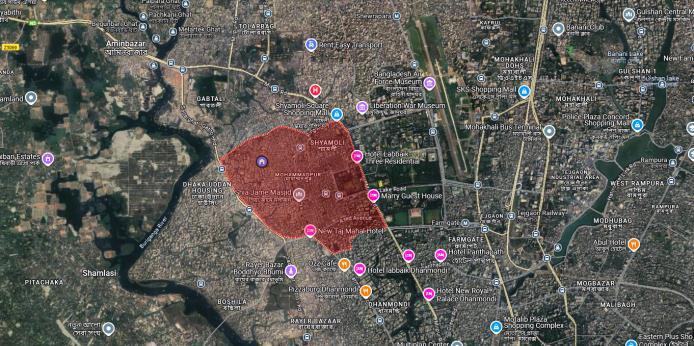
In Dhaka, Shyamoli is located in the northwest corner of Agargaon.Duetothebalanceofresidentialandcommercial space allocation, this area has recently become one of the most in-demand areas in Dhaka. Moreover, Shyamoli is knownnotonlyforseveralhealthcarefacilitiesalongwith shoppingcenters,butalsoforitsaccessibility.Forinstance, Shyamoli is well connected by major roads and networks such as Mirpur Road and the Ring Road. These are facilitating easier access to the rest of the city. These connectivity features are also another prime reason for makingthisareaareasonablechoiceformiddleandhigherincomefamilies.
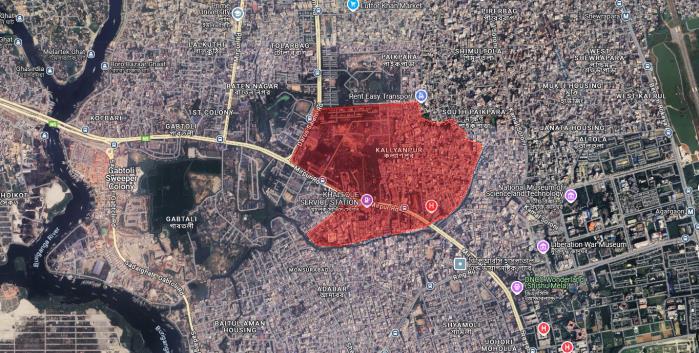
On the other hand, Kallyanpur is identified for its interdistrictbusdepotsandterminalfacilities.Atthesametime, Kallyanpurisknownforitspublichousingclusters.Thisarea ishometoseveraleducationalinstitutions,suchastechnical and vocational institutes. Despite having many public and semi-public housing options for many years, the recent increase in commercial activities and expansion has graduallychangedthepreviouslandscape.
3.1.2
Mohammadpur is one of the renowned neighborhoods of Dhaka,whichwasoriginallyrecognizedasaresidentialarea. But nowadays, this picture has been altered due to the substantialcommercialgrowthandrealestateinterventions. Thisareaishometoadiversepopulation;atthesametime, itholdsboththeolderhousingtypesandcurrenthigh-rise themedapartmentcomplexes.Amongitsseveralsignificant landmarks, the Geneva camp is one of Dhaka’s largest settlements of Bihari Refugees. Furthermore, Mohammadpur’slocationaladvantageisalsoprominent.Its
closer proximity to Dhanmondi and Lalmatia has made it more convenient for commercial and residential investments.
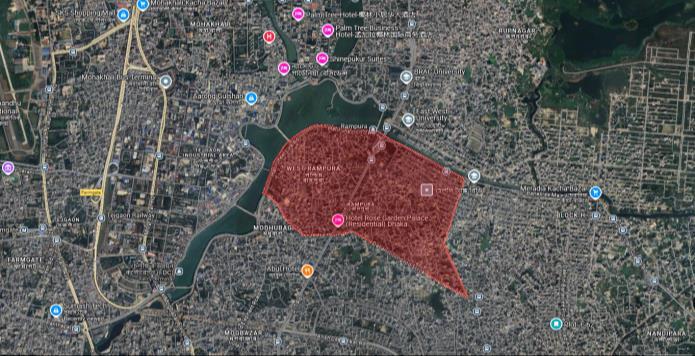
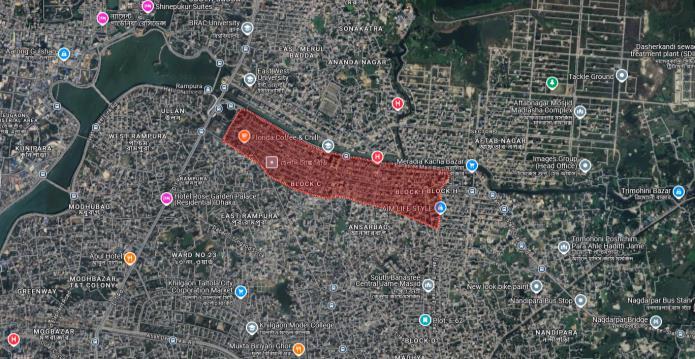
Rampura is a highly populated neighborhood, yet its community growth rate is relatively steady. This area is popularamongstudentsandyoungprofessionalsduetothe affordablerentaloptions. Itisregardedasoneofthevital transitpointsasitconnectseasternDhakatoitscommercial hubs.Moreover,theHatirjheelprojecthasfurtherenhanced itsaccessibilityandrealestatevalue.
In contrast, Banasree is organized in a grid pattern associatedwithnumberedblocks.Thisarearesidesnextto Rampura and is framed as a planned residential area. Becauseofitsincreasingpopularity,ithasbeenwitnessinga
International Research Journal of Engineering and Technology (IRJET) e-ISSN: 2395-0056
Volume: 12 Issue: 04 | Apr 2025 www.irjet.net p-ISSN: 2395-0072
significant increase in the number of high-rise complexes alongwiththeemergenceofsmallerbusinesshubs.
Thefindingsofthispaperhighlightthemultifacetedeffects of gentrification in Dhaka, particularly in areas such as Shyamoli, Kallyanpur, Mohammadpur, Rampura, and Banasree.Thefollowingisananalysisofthesocioeconomic transformation,spatialchanges,andcommunityresponses duetorapidgentrification.
Interviews with residents and business owners reveal significantdemographicandsocioeconomicshiftsinthese neighborhoods, and these are primarily driven by an increasing presence of upper-middle to higher-income groups.Long-termresidentsreportedrisingpropertyprices andrentalexpenses,makinghousingunaffordableforlowincomefamilies.Asaresult,severallower-incomeoccupants areforcedtoreducetheirlivingspacesorrelocatetomore affordableareas,mostlyonthecity’speriphery.
Localbusinessdynamicshavealsoundergoneconsiderable changes.Forinstance,traditionalsmall-scalebusinesseslike tea stalls and small grocery stores are gradually being replaced by new upscale cafes, chain restaurants, and branded retail outlets. Additionally, field observation also indicates that Shyamoli Ring Road has become a hub for high-end cafes and brand-name shops. All these transformationshavecontributedtoalteringthisroadintoa commercialized zone that has shaped the area’s upscale image.Similarly,inBanasreeandRampura,thedevelopment oftheHatirjheelprojecthasplayedavitalroleinincreasing unit prices and commercial activities. The addition of recreationalfacilitieshasamplifiedthepopularityofthese areastomajorcommercialchains.Althoughsomebusiness owners recognize that these changes bring in a new customer base, they also underline the fact that older businesses that used to serve low-income residents are being marginalized. As commercial spaces grow more expensive and consumer preferences shift, many local enterprisesstruggletosurvive,leadingtoaslowandsteady loss of the neighborhood’s diversity and affordability. A longtimeRampuraresidentwhohascalledtheareahomefor overadecadesharedhisfrustration:
“I used to pay 10,000 taka for a two-bedroomflat.Now,evena single-bedroom unit costs almost the same. Families like ours have no choice but to move further out. We have had to leave behindour neighbors, the schools our childrenusedto attend, and the community we have been a part of for years. It is not justaboutfindinganotherplacetolive,butit isaboutstarting overinanunfamiliararea,oftenwithfewerfacilities.Thismay sometimes cause a longer distance from work. It feels like the city is pushing us out, making room for those who can afford it ”
Similarly,businessownersreporteddifficultiesinsurviving duetogrowingrentsandconsumerpreferences.Agrocery storeownerinShyamolishared:
“Before, most of my customers were locals buying daily essentials. Now, with these new apartments, people prefer supermarkets.”
In contrast, developers and new business owners viewed thesechangespositively.OnedeveloperinBanasreestated:
“These areas were underutilized for years. Now with high-rise apartmentsandcommercialspaces,wearebringingprogress and better infrastructure. I admit this may be the reason for property value increase, but it creates new opportunities for investment and employment, you see.”
Hence,thesetransformationshavecreatedasocio-economic divideaswell aseconomicopportunities.Thetablebelow summarizesthecontrastingimpactsofdifferentgroups.
Table -1: Contrastingimpactsofdifferentgroups
Aspects
Low-income residents Affluent residents & Private investment
Housing accessibility Decreasesdueto risingvalues Expandingwithhighenddevelopments
Social networks Disrupteddueto displacement Strengthenedwithin exclusiveareas
Economic impact Lossofaffordable rentalspaces Increasedinvestment opportunities
Accessto services Relocatedto peripheries, reducedaccess Improvedfacilities& infrastructure
Political influence Minimal representationin planning Higherinfluenceon urbanpolicies
Asmentionedearlier,gentrificationintensifiedthehousing marketsinareaslikeShyamoli,Kallyanpur,Mohammadpur, Rampura, and Banasree, they became increasingly inaccessible to low-income families. Many were left with little choice but to move to more affordable but less developed neighborhoods on the urban periphery. Displacement,whethervoluntaryorinvoluntary,oftengoes unnoticed,makingitdifficulttoquantify,yetitremainsone of the most significant social costs of gentrification [36]. Manydisplacedresidentsfadeintotheurbanperiphery,and their struggles are largely invisible in mainstream urban developmentnarratives.Whileforcedevictionswererare, economic displacement was a recurring issue, forcing familiestorelocateduetounaffordablerentsandincreased costs of daily necessities. Interviews with developers revealedcontrastingperspectivesonthesechanges.While acknowledgingtherisinghousingcosts,theyemphasizedthe demand for modern living standards and commercial
International Research Journal of Engineering and Technology (IRJET) e-ISSN: 2395-0056
Volume: 12 Issue: 04 | Apr 2025 www.irjet.net p-ISSN: 2395-0072
expansion.Somejustifiedgentrificationasanecessarystep toward urban progress, arguing that urban growth inevitably leads to higher property values and increased investment.ArealestateofficerinBanasreeexplained:
“Dhaka is expanding, and people want better housing. Yes, prices rise, but that’s how cities grow. We are building apartments with improved infrastructure.”
Forlow-incomeresidents,however,thesetransformations cameatahighcost.ManydisplacedresidentsfromShyamoli, Kallyanpur,andMohammadpurmovedtolesscentralareas suchasGabtoli,Rayerbazar,Bosila,Beribadh,andpartsof Hazaribagh.Bosilahasbecomeakeyspilloverareaforthose pricedoutofMohammadpur.Whilelow-incomepocketsin Rayerbazar still offer cheaper rentals, these too are undergoing changes. Along the Beribadh area, informal settlements are expanding as displaced households seek lower rents, often settling in precarious conditions with limited access to basic services. Similarly, those displaced fromRampura andBanasreeare often relocatedto Badda and parts of Merul Badda, areas that lack adequate infrastructure, reliable public transport, and fewer opportunities.Overthepastyear,propertypricesandrents have surged across the selected areas, with Shyamoli and Kallyanpur, particularly Shyamoli, experiencing the most dramaticincreases,a42%riseinpricesanda45%hikein rent, driven by new commercial developments and infrastructureimprovements.Mohammadpur,Rampura,and Banasreesawmoremoderategrowth.
Table -2: Propertypriceandrentgrowthtrendsforthe last12months
becomesembeddedwithinthecity’sgeography,reinforcing cyclesofsocialandspatialsegregation.
Fieldobservationsandphotographicdocumentationshow majorchangesintheselectedneighborhoods,mainlydueto therapidconstructionofhigh-riseapartments,commercial buildings,andrenovatedinfrastructures.Manysingle-story housesandolderapartmentbuildingshavebeendemolished or converted into large real estate projects, completely changingthecharacteroftheseareas.
ThemostvisiblechangesareinMohammadpur,Shyamoli, and Banasree, where new residential and commercial buildings have transformed the skyline. Mohammadpur, onceaquietareawithmostlylow-riseprivatehousesanda fewmixed-usebuildings,haschangedsignificantlyoverthe past 15 years. Previously, Japan Garden City was the only large high-rise project in the area, but now new developments like Baitul Aman and Adabor housing have introduced many multi-story buildings, replacing older homes and empty plots. Better infrastructure and developmentshavefurtherintensifiedthistransformation. On the other hand, the Hatirjheel-Rampura corridor has madeiteasiertotravel,increasingthedemandforthisarea. The Hatirjheel-Begunbari Development has turned Hatirjheelintoa recreationalandvisuallyappealingspace that has also boosted property values, brought more businesses,andmadetheareamoredesirabletolivein. A residentinRampuranoted:
“Rich people want clean roads and new buildings, but where do people like us go? They don’t think about that. Every day, we see our neighborhoods changing, houses torn down, and rents rising beyond what we can afford. Those in power talk about development, but for people like us, it means losing our place. It feels like this city is only meant for those who canpay while the rest of us are forgotten.”
Kallyanpur
Rampura
Source:Author’sanalysisandrealestatereports
Whiledisplacementisacrucialindicatorofgentrification,it is not the sole defining factor. Gentrification also entailsa broadertransformationbeyondrelocation,includingshifting social composition and changes in the built environment. Withlimitedaccesstopublicservices,fewerjobprospects, andlongercommutetimes,manyfamiliesfacefinancialand socialinsecurity.Thispatternofexclusionnotonlyerodes livelihood opportunities but also reshapes the housing dynamics,concentratingwealthandmoderndevelopments in certain areas while pushing marginalized populations further to the fringes. As a result, economic inequality
Similarly,patternsoftransformationcanbeseeninShyamoli and Kallyanpur, where the emergence of new commercial developmentshasfurtherintensifiedland-usechanges.Even thoughinKallyanpur,therearestillafewaffordablehousing and public housing projects where low-income people reside. However, many informal settlements and low-cost housingoptionshavebeendisplacedinrecenttimes,forcing long-termresidentstoseekalternativehousing.Oneofthe keydriversofchangeinShyamoliistheconstructionofthe Mohammadpur-Beribadh road and the widening of the MirpurRoad.Thesechangeshavemadecommutingeasier. Additionally,theexpansionofshoppingcenters,hospitals, and educational institutions has also increased the area’s appeal. The entire streetscape has been transformed by high-rise developments. A long-time resident of Mohammadpurreflectedonthesechanges:
International Research Journal of Engineering and Technology (IRJET) e-ISSN: 2395-0056
Volume: 12 Issue: 04 | Apr 2025 www.irjet.net p-ISSN: 2395-0072
“Our neighborhood used to have open spaces and empty plots. Now, look around, every vacant plot is turning into an apartment. It feels really suffocating. The places where children used to play and families gathered are slowly disappearing.Nowchildrenmostlyplayontheroads,andthis is not safe. But there is no other way. There is no sense of community like before. With more high-rises, the streets are getting busier, traffic is worse, and the cost of living keeps rising too.”
Realestatespeculationandinfrastructurerenewalinitiatives arecausingsignificantspatialchanges,whichemphasizethe increasingtensionbetweendisplacementandexpansion.All ofthesearefinallyposingcriticalquestionsregardingequity andinclusivity.
4.4
The study revealed notable shifts in social cohesion as gentrificationreshapedneighborhooddynamics.Long-term residentsexpressedconcernsaboutweakeningcommunity tiesastheinfluxofhigher-incomepeopleledtoadeclinein informal social networks and everyday neighborhood interactions.Unlikelong-standingresidentswhovaluestreet corner gatherings, the local market, and the shared roof, newer residents often prefer privatized spaces like malls, gyms,andexclusivecafes.Thisshifthasalteredthefabricof communitylife,makingsocialinteractionsmorefragmented and selective. Interviews, particularly with women, highlightedhowthesechangesinpublicspacesaffectedtheir mobility and access to shared social environments. Many womennotedthattraditionalgatheringspotssuchasstreet markets and shared spaces were disappearing, making it harderforthemtoengagesociallyinthewaystheyoncedid.
Furthermore, displacement significantly fades social cohesion,asthoseforcedtorelocatelosetheirestablished support systems, while those who remain experience disruptions in long-standing neighborhood bonds and cultural connections [37] Older residents particularly felt thelossoffamiliarcommunityinteractions.Aretiredschool teacherfromShyamolisharedhersentiments:
“Earlier, we knew all our neighbors and helped each other. Now, new people move in and out so frequently that no one even says salaam.”
Both women and men expressed discomfort in upscale shopping malls and cafes that cater to a more affluent clientele.Insomecases,thetransformationofsocialspaces reinforceseconomicandsocialdivisions,whichmakeslongterminhabitantsfeellikeoutsidersintheirneighborhoods. AsDeener(2007)highlighted,gentrificationfostersasense of alienation among actual residents, as urban spaces are reshapedtoalignwiththetastesandlifestylesofthecreative and affluent classes [38]. A housewife from Kallyanpur expressedherunease:
“The new shopping malls and cafes are for the rich. They usually don’t feel welcoming to people like us who have been living here for many years. In older days, we could gather at tong(localteastalls)orstreetmarkets,placeswhereeveryone was comfortable, regardless of how rich they were. But now, everything looks expensive. Also, the prices of local things are too high, and the environment feels unfamiliar. As if our area is changing but not for us.”
However,perspectivesonthesechangeswerenotentirely negative.Youngerresidents,particularlystudentsandyoung professionals, have mixed opinions. While some acknowledgedthelossoftraditionalsocialbonds,otherssaw the transformation as a step towards modernization. A university student in Banasree shared a more optimistic view:
“It is true that things are changing, but now we have more facilities,likenowwehavebetterroads,restaurants,andafew recreational places. It is not all bad, right? Previously, we did not have many options for gatherings, and the streets were often poorly maintained. But now, with better roads and better infrastructure, it's easier for us. And we have more options and places to go out with families and friends. I understand some people may feel left out, but for many of us, all these changes mean progress.”
Both the positive and negative views highlight the dual nature of gentrification. On one hand, it brings infrastructuralimprovementsandnewopportunities,buton theotherhand,itdisruptsestablishedcommunitynetworks. All these create an environment where social interactions becomeincreasinglydividedalongeconomiclines.
Jucker(2004) emphasizesthelink betweeneconomicand social justice, pointing out a tension between growth and societal fairness [39] Within the current framework in Bangladesh, economic progress often benefits a small portionofthepopulation,leavingmanyothersbehind.This study reveals that gentrification affects neighborhoods in multiple ways:spatially,socially,andeconomically,which leadstounevendevelopmentpatternsacrossdifferentareas. Despitethegrowingdemandforaffordablehousing,Dhaka’s urbanpolicieshavenotyetintroducedinclusionaryzoning,a regulatory tool used in many cities to ensure a balance of incomegroupsinnewlybuiltdevelopments.Boththepublic and private sectors drive urban expansion, with the governmentplayingacrucialroleinsettingandenforcing policies.
However, Bangladesh's top-down planning approach is complexaswellascomplicated.Here,theauthoritieshave thepowertolegalizeanddesignurbandevelopment,they dependmainlyonthemarketdynamicsincurrentpractice. Asaresult,therearenoauthorizedrulesandrequirements toallocateaffordableorinclusivehousingunits,especially
International Research Journal of Engineering and Technology (IRJET) e-ISSN: 2395-0056
Volume: 12 Issue: 04 | Apr 2025 www.irjet.net p-ISSN: 2395-0072
for low-income and marginalized people. In addition to increasing relocation, the absence of inclusionary zoning restrictssocialintegration,thuswideningthegapbetween affluent and marginalized groups in Dhaka’s urban landscape.
Table -3: Keyshiftsindensityandnumberoffamily distributions:
Areas
NumberofHouseholds Increasein Middleincome families Increase in highincome families Decrease in Lowincome families
Shyamoli High High Moderate High
Mohammad pur High High High High
Kallyanpur Moderate High Moderate Moderate
Banasree High High High High
Rampura Moderate High Moderate Moderate
These raise a crucial concern: why hasn’t inclusionary zoningbeenimplementedinDhaka?Thisisduetoanumber ofimportantfactors:
First, the absence of mandatory rules for developers: Private developers are obligated by law to include a fixed numberofaffordablehousingunitsinthenewlyconstructed developments in several global north cities, including London,NewYork,andToronto.Inclusionaryzoningpolicies are utilized to make sure that new developments provide housingopportunitiesforpeopleofalleconomiclevels,not onlyfortheaffluent.However,giventhepresentsituation, Dhakahasnosuchregulations.Theprimarydriverofprivate developersinDhakaisprofit.Theyonlyfocusonhigh-end constructionsthatservemiddleandhigher-incomeclients. Due to this, there is very little motivation or no encouragementtoprovideaffordableunitsforlow-income communities. Theabsenceofaffordablehousingsolutionsas well as policies leads to the ultimate spread of expensive commercial and residential projects, which fuels gentrification.
Second, weak enforcement of land-use regulations: In Dhaka,developersarenotmandatedtoincludeaffordable unitsbyanyzoningrulesinhigh-densityareas.Thismeans theydon’thavetobuildunitsforlow-incomefamilieswhen they plan for any new projects in higher-density neighborhoods. On top of that, weak governing systems, corruption,andlegalgapsallowdeveloperstosidestepland restrictions when required. For instance, developers may find ways to exploit systematic gaps to build in ways that onlybenefitthemfinanciallywithoutconsideringtheneeds
ofthe broadercommunity. Becauseofthis,Dhaka’s urban growthiscontinuingwithoutappropriateinclusiveplanning that takes social justice or equity for all socioeconomic groupsintoaccount.
Third, market-driven real estate growth: The high demandforluxuryandhigh-endhousinginDhakaleadsto speculative real estate practices, where developers and investorsfocussolelyonmaximizingtheirprofits,without government policies or interventions that promote social inclusion,likeauthorizingthatnewconstructionincludea specific proportion of affordable housing. As a result, affordable housing options stay limited, and the housing marketbecomesmoreexclusive.
Dhaka is undergoing rapid gentrification, fundamentally changingits original urbanlandscape.Thefindingsofthis paper highlight the complex socio-spatial and economic transformationsthatarecausedbygentrification.Interviews and observations reveal both anticipated and nuanced consequences in the selected studied areas. On one hand, improvements in infrastructure, increased commercial activities,andrisinglandpricesindicateurbandevelopment. Yet,ontheotherhand,thesechangesandtransformations are not at all neutral Instead, they deepened the socioeconomic disparities, reshaped housing dynamics, and weakened social cohesion within those affected areas. Accordingtothefindings,gentrificationinDhaka involves bothdirectandindirectdisplacement,whichareverysimilar to the global trends discussed by scholars such as Smith (1996)[3]andLees(2008)[10].Here,directdisplacementis immenselynoticeableinthegrowingrentsandlandprices, whichhaveforcedthelow-incomepeopleoutoftheirareas This aligns with Smith’s (1979) rent gap theory, which suggests that the economic potential for higher profits in redevelopedareasattractsspeculativeinvestment[14] Asa result,housingbecomesincreasinglyunaffordableforlowincome groups. Moreover, this paper identified that lowincomepeoplearelikelytorelocatetomoreperipheral or fringeareasinsearchofaffordablerentaloptions.However, thisrelocationoftenresultsin a loss ofaccesstoprevious livelihoodopportunitiesandreducedavailabilityofessential amenities.Meanwhile,indirectsocialdisplacementoccurred in the studied areas due to the shifts in the social compositionofneighborhoods,thisoutcomeishighlighted by Zukin (1990) [25]. These disruptions are particularly severeforlow-incomepeoplewhoseaccesstosocialcapital weakens as gentrification reconfigures shared spaces and communalnetworks AsLefebvre(1991)emphasized,social relations exist through spaces and that space itself is produced through everyday life and interactions [40] Davidson (2009) uses this claim and argues that displacementisnotjustlosingone’shomebutalsolosinga wayoflifeandcommunity[31].Thewayinwhichthelowincome populations interact is significantly different from
International Research Journal of Engineering and Technology (IRJET) e-ISSN: 2395-0056
Volume: 12 Issue: 04 | Apr 2025 www.irjet.net p-ISSN: 2395-0072
the affluent groups. According to the findings, the participants repeatedly reported that affluent newcomers prefermoreexclusivefacilitieslikeupscalerestaurantsand gymsoversharedcommunityspaces,reducingopportunities forinteractionbetweendifferentincomegroups.
Furthermore, the study underlines how Dhaka’s gentrificationisdrivenbybroaderneoliberalurbanism.As argued by Harvey (1989), neoliberal policies mostly prioritizetheurbandevelopmentthatisdrivenbymarket forces over social equity [16]. Besides, weak regulation, along with such strong, focused private real estate investment,hasintensifiedthesetransformationscausedby gentrificationinDhaka,inturnmakinghousingincreasingly exclusive.Despitetherecognitionoftheneedforaffordable housing by the National Housing Policy, the absence of inclusionaryzoninghasfurtheralloweddeveloperstodrive up the existing property prices without offering any affordable units for low-income families. Some have characterized gentrification as an indication of urban progress, but its unequal benefits eventually pose serious questions about who gains and who loses from these processes.Therefore,inkeepingwithworldwidepatterns, Dhaka’surbandevelopmentimpliesthatgentrificationinthe areasunderstudyleadstohousingexclusion,whichworsens inequality. Moreover, market-driven growth devoid of regulatory measures results in socio-spatial segregation. These results highlight the pressing need for legislative actions that ensure social justice, affordable housing, and significantcommunityinvolvementinurbanplanning.The trendsofinequalityandexclusioncouldpersistinthefuture intheabsenceofanypolicytools.Futureresearchcouldlook atthelong-termimpactsofgentrification-inducedchanges, particularlythoserelatedtosocialintegration,community networks,andthecopingmechanismsemployedbylocalsto dealwiththetransformation.Examiningalternativehousing options and policy implications that strike a balance betweensocietaljusticeandeconomicexpansionisessential giventhecity’sgrowingurbanization.Thiswillensurethat development does not result in any inequalities or displacement.
[1] Zuk, M., Bierbaum, A. H., Chapple, K., Gorska, K., & Loukaitou-Sideris, A. (2017). Gentrification, displacement,andtheroleofpublicinvestment. Journal of Planning Literature, 33(1), 31–44. https://doi.org/10.1177/0885412217716439
[2] Smith, N. (1982). Gentrification and Uneven Development. Economic Geography, 58(2), 139–155. https://doi.org/10.2307/143793
[3] Smith, N. (1996). The New Urban Frontier: Gentrification and the Revanchist City (1st ed.). Routledge https://doi.org/10.4324/9780203975640
[4] Van Eijk, G. (2010), Exclusionary Policies are Not Just about the ‘Neoliberal City’: A Critique of Theories of
Urban Revanchism and the Case of Rotterdam. InternationalJournalofUrbanandRegionalResearch, 34: 820-834.https://doi.org/10.1111/j.14682427.2010.00944.x
[5] Smith, N. (2002). New Globalism, New Urbanism: Gentrification as Global Urban Strategy. Antipode, 34, 427-450
[6] National Low Income Housing Coalition (2025). Gentrificationandneighborhoodrevitalization:WHAT’S THE DIFFERENCE? https://nlihc.org/resource/gentrification-andneighborhood-revitalization-whats-difference
[7] Hasan,M.,&Ahmad,A.H.(1999).Policyguidelinesand suggestionsforimprovinglow-incomehousinginDhaka city. Khulna University Studies, 25–32. https://doi.org/10.53808/kus.1999.1.1.25-32-se
[8] Glass,R.(1964). London:aspectsofchange.MacGibbon& Kee.
[9] Beauregard,R.A.(1989).Thechaosandcomplexityof gentrification.In Gentrification of the City (NeilSmith, PeterWilliams).Retrieved fromhttps://doi.org/10.4324/9781315889092
[10] Lees,L.(2008).GentrificationandSocialMixing: TowardsanInclusiveUrbanRenaissance? Urban Studies, 45(12),2449-2470.
https://doi.org/10.1177/0042098008097099
[11] Clark, E. (2005). The order and simplicity of gentrification:apoliticalchallenge.InR.Atkinson&G. Bridge(Eds.), Gentrification in a global context: the new urban colonialism (pp.261-269). Routledge.
[12] Slater, T. (2006). The Eviction of Critical Perspectives from Gentrification Research. International Journal of Urban and Regional Research, 30(4), 737–757. https://doi.org/10.1111/j.1468-2427.2006.00689.x
[13] Byrne, J. P. (2003).Two Cheers for Gentrification. Georgetown Law Faculty Publications and Other Works 930.
https://scholarship.law.georgetown.edu/facpub/930
[14] Smith,N.(1979).TowardaTheoryofGentrification:A Back to the City Movement by Capital, not People. Journal of the American Planning Association, 45(4), 538–548.
https://doi.org/10.1080/01944367908977002
[15] Ley,D.(1986).AlternativeExplanationsforInner-City Gentrification:ACanadian Assessment. Annals of the Association of American Geographers, 76(4), 521–535. https://doi.org/10.1111/j.1467-8306.1986.tb00134.x
[16] Harvey,D.(1989).Theurbanexperience.JohnsHopkins UniversityPress.
[17] Lees,L.,Slater,T.,&Wyly,E.(2008).Gentrification (1sted.). Routledge.
https://doi.org/10.4324/9780203940877
[18] Sager,T.(2011).Neo-LiberalUrbanPlanningPolicies: ALiteratureSurvey1990-2010. Progress in Planning, 76, 147-199.
https://doi.org/10.1016/j.progress.2011.09.001
International Research Journal of Engineering and Technology (IRJET) e-ISSN: 2395-0056
Volume: 12 Issue: 04 | Apr 2025 www.irjet.net p-ISSN: 2395-0072
[19] Peck, J. (2012). Austerity urbanism: American cities under extreme economy. City, 16(6), 626–655. https://doi.org/10.1080/13604813.2012.734071
[20] Slater,T.(2009).MissingMarcuse:Ongentrificationand displacement. City, 13(2–3), 292–311. https://doi.org/10.1080/13604810902982250
[21] Miles, M. (2007). Urban Utopias: The Built and Social Architectures of Alternative Settlements (1st ed.). Routledge https://doi.org/10.4324/9780203099124
[22] Logan,J.R.,&Molotch,H.L.(1987).UrbanFortunes:The Political Economy of Place. University of California Press.http://www.gbv.de/dms/bowker/toc/97805200 63419.pdf
[23] Phillips,M.(2018).Gentrificationandlandscapechange. In Edward Elgar Publishing eBooks. https://doi.org/10.4337/9781785361746.00015
[24] Essoka, J.D. (2010). The Gentrifying Effects of Brownfields Redevelopment. Western journal of black studies, 34,299.
[25] Zukin, S. (1990). Socio-Spatial Prototypes of a New OrganizationofConsumption:TheRoleofRealCultural Capital. Sociology, 24(1), 37-56. https://doi.org/10.1177/0038038590024001005
[26] Ley, D., & Dobson, C. (2008). Are There Limits to Gentrification?TheContextsofImpededGentrification inVancouver. Urban Studies, 45,2471-2498.
[27] Zukin,S.(1987).Gentrification:CultureandCapital in theUrbanCore. Annual Reviewof Sociology, 13(1),129–147.https://doi.org/info:doi/
[28] Healey, P. (1998). Collaborative planning in a stakeholder society. Retrieved from https://eprints.ncl.ac.uk/60688
[29] Marcuse,P.(1985).Gentrification,Abandonment,and Displacement:connections,causes,andpolicy responsesinNewYorkCity.Retrievedfrom https://openscholarship.wustl.edu/law_urbanlaw/vol 28/iss1/4/
[30] Atkinson, R. (2004). The evidence on the impact of gentrification:newlessonsfortheurbanrenaissance? ideas.repec.org. Retrieved from https://ideas.repec.org/a/taf/eurjhp/v4y2004i1p107131.html
[31] Davidson,M.(2009).Displacement,Space,andDwelling: Placing Gentrification Debate. Ethics, Place & Environment, 12(2), 219–234. https://doi.org/10.1080/13668790902863465
[32] Calavita, N., & Mallach, A. (Eds.). (2010). Inclusionary housing in international perspective: Affordable housing, social inclusion, and land value recapture. LincolnInstituteofLandPolicy.
[33] Calavita, N., Grimes, K., & Mallach, A. (1997). Inclusionary housing in California and New Jersey: A
comparativeanalysis. HousingPolicyDebate,8(1),109–142.https://doi.org/10.1080/10511482.1997.9521249
[34] Jacobus,R.(2015).Inclusionaryhousing:Creatingand maintaining equitable communities. Cambridge, MA: LincolnInstituteofLandPolicy.
[35] Schuetz,J.,Meltzer,R.,&Been,V.(2011).SilverBulletor Trojan Horse? The Effects of Inclusionary Zoning on Local Housing Markets in the United States. Urban Studies, 48(2), 297-329. https://doi.org/10.1177/0042098009360683
[36] Atkinson, R. (2015). Losing One’s Place: Narratives of Neighborhood Change, Market Injustice and Symbolic Displacement. Housing, Theory and Society, 32(4),373–388.https://doi.org/10.1080/14036096.2015.1053980
[37] Newman,K.,&Wyly,E.K.(2006).TheRighttoStayPut, Revisited:GentrificationandResistancetoDisplacement in New York City. Urban Studies, 43(1), 23-57. https://doi.org/10.1080/00420980500388710
[38] Deener, A. (2007). Commerce as the structure and symbolofneighborhoodlife:Reshapingthemeaningof community in Venice, California. City and Community, 6(4), 291–314. https://doi.org/10.1111/j.15406040.2007.00229.x
[39] Jucker,R.(2004).HavetheCakeandEatIt:Ecojustice VersusDevelopment?IsitPossibletoReconcileSocial and Economic Equity, Ecological Sustainability, and HumanDevelopment?SomeImplicationsforEcojustice Education. Educational Studies, 36
[40] Lefebvre,H.(1991)TheProductionofSpace.Cambridge, MA: Blackwell. First published as La Production de L’espace.