
International Research Journal of Engineering and Technology (IRJET) e-ISSN: 2395-0056
Volume: 12 Issue: 01 | Jan 2025 www.irjet.net p-ISSN: 2395-0072
International Research Journal of Engineering and Technology (IRJET) e-ISSN: 2395-0056
Volume: 12 Issue: 01 | Jan 2025 www.irjet.net p-ISSN: 2395-0072
Y. Sujana1, S. Harshitha Reddy2 , M. Chandra Shekar3 , N. Aadithya Santhosh4
1Y. Sujana, Asst. Professor, Computer Science and Engineering – Data Science, IARE, Telangana, India
2S. Harshitha Reddy, Student, Computer Science and Engineering – Data Science, IARE, Telangana, India
3M. Chandra Shekar, Student, Computer Science and Engineering – Data Science, IARE, Telangana, India
4N. Aadithya Santhosh, Student, Computer Science and Engineering – Data Science, IARE, Telangana, India ***
Abstract - The power of globalization in the field of food makes this highly complex value chain and increases further that fraud, food safety, and opacity challenges. These are low tech and not fool proof; food fraud in the supply chain can go undetected for months or even years meriting fakes real value. To tackle these impediments, we introduce a pioneering approach that aims to renovate the food traceability using a blockchain based mobile application. Based on this, a blockchain platform through which it develops is made in order to trace and track the route of food products from the farm right up to the dining table. This enables each food item to receive a unique digital identity that is registered in the blockchain, whereby it is possible for consumers tracing their origin, production methods, transportation and handling, just as they happen. Smart contracts facilitate transactions and agreements between multiple parties, enforcing predefined conditions and thereby enabling trust in the supply chain. Our application enables consumers through access to detailed food product information leading to informed decision making to make smart choices. It also helps to improve food safety as it enables detection and prevention of both allergen contamination and foodborne illnesses or fraudulent activities. Our solution also allows for a more efficient operation and significant cost reduction to food businesses through streamlined processes and data driven insights.
Key Words: Blockchain, Food Safety, Authenticity, Transparency, Traceability, Smart – Contracts, Python, Django.
Asconsumers'concernsabouttheprovenanceandquality oftheirfoodgrow,itiscrucialtoensurefoodauthenticity andqualityassurance.
Conventional means of monitoring and confirming food items frequently fail to deliver the dependability and transparency required to win over customers. Blockchain technology presents a viable answer to these problems because of its capacity to produce safe, transparent, and unchangeable records. Because blockchain technology is decentralized, all food product-related transactions and dataaresafelyrecordedandunchangeable.Fromthefarm
to the consumer's plate, this technology allows for complete traceability, making every stage of the supply chaintransparentandverifiable.
This project explores the application of blockchain technology in food authentication and quality assurance, examininghowitcantransformtheindustrybyproviding end-to-endvisibility,ensuringdataintegrity,andfostering trust among consumers and businesses alike. To address these issues, we present a groundbreaking solution: a blockchain-based application designed to revolutionize food traceability. By harnessing the power of blockchain technology, our application offers a transparent, immutable, and decentralized platform for tracking every stepofthefoodsupplychaininreal-time.
A. TraditionalPaper-BasedSystems:
Manualdataloggingatdifferentstagesofthesupplychain is one of the many paper-based tracking and recording methodsusedinmanyfoodsupplychains.
B. BarcodeandRFIDSystems:
Traditional barcode and RFID (Radio-Frequency Identification) systems are widely used to track and trace food products throughout the supply chain. Barcodes and RFID tags are affixed to products and scanned at various points, allowing for basic traceability. However, these systems can be limited in their ability to provide detailed informationandreal-timemonitoring.
C. EnterpriseResourcePlanning(ERP)Systems:
Food producers and distributors frequently use ERP systems to handle several facets of their business, such as manufacturing, distribution,and inventory.Businessesare abletotracktheflowofcomponentsandfinalgoodsthanks to traceability features included in some ERP systems. These systems might not offer end-to-end traceability, though, and they might not be compatible with external stakeholders.
International Research Journal of Engineering and Technology (IRJET) e-ISSN: 2395-0056
Volume: 12 Issue: 01 | Jan 2025 www.irjet.net p-ISSN: 2395-0072
A. Data Silos: Data collected by RFID and barcode systems often remain in isolated silos, making it difficulttoachieveend-to-endtraceability.
B. Cost: ImplementingRFIDtechnologycanbeexpensive, particularlyforsmall-scaleproducers.
C. Limited Information: While these systems can track movement and identification, they may not provide comprehensiveinformationaboutproductqualityand authenticity.
D. Trust Issues: Dependenceonthird-partyorganizations requirestrustintheirintegrityandcapabilities.
E. Difficulty in Traceability: Tracking the origin and journey of food products is cumbersome and often incomplete.
The proposed solution is to develop a food traceability platform powered by blockchain technology in order to address the shortcomings of current solutions and revolutionize food traceability. Using blockchain technology,thisplatformwillofferatransparent,safe,and effectivewaytotrackandtracefoodproductsthroughout thesupplychain.
A. DecentralizedBlockchainInfrastructure:
Useadecentralizedblockchainnetwork(likeEthereumor Hyperledger Fabric) to capture and store food product transaction data. Data security and integrity will be guaranteed by each transaction's immutability and cryptographiclinking.
B. SmartContractAutomation:
Use smart contracts to automate and uphold agreements between producers, distributors, retailers, and regulators all parties involved in the supply chain. Supply chain procedures will be streamlined by smart contracts, whichwill alsoenablesmooth transactionsand guarantee adherence to predetermined norms and standards.
C. End-to-EndTraceability:
Giveeveryfoodproductlistedontheblockchainadistinct digitalidentitytoenableend-to-endtraceabilityfromfarm to table. At every point in the supply chain production, processing, packing, distribution, and transportation captureanddocumentpertinentdatapoints.
D. TransparencyandVerification:
Givecustomersclearaccesstoawiderangeofinformation regarding food goods, such as provenance, manufacturing processes, certifications, and quality control procedures. Make it possible to verify the legitimacy and calibre of fooditemsusingunchangeableblockchain-storedrecords.
E. Consumer-FacingApplication:
Provideaconsumer-friendlyapplicationthattheymayuse to scan QR codes or enter product details to obtain comprehensive traceability data. Why Give customers the power to choose wisely by providing them with clear, reliableinformationaboutthefooditemstheyeat.
F. FeedbackandRating:
Enable users to rate and comment on food items by implementing a feedback and rating system in the mobile application.
Blockchain technology has emerged as a transformative toolinensuringfoodauthenticationandqualityassurance, addressing the critical challenges of transparency, traceability, and trust in the global food supply chain. Traditional methods of tracking and verifying food products often suffer from inefficiencies, data tampering, andlimitedaccesstoreal-timeinformation.
One of the primary advantages of blockchain in food systemsisitsabilitytoprovideend-to-endtraceability.By recording every transaction and movement of food productsonatamper-proofledger,blockchainensuresthat stakeholders can access accurate and unalterable information about a product’s origin, processing, and distribution. This level of transparency helps in detecting and preventing fraud, such as mislabeling or adulteration offooditems.
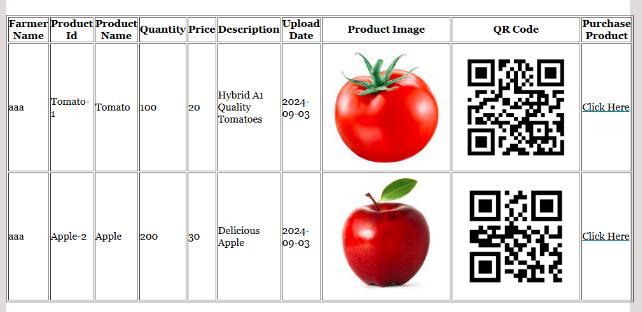
Another significant contribution of blockchain is fostering consumertrust.Inanera whereconsumersdemandmore information about the products they consume, blockchain provides a reliable platform for verifying claims about organic, sustainable, or ethically sourced products. By scanning a QR code or accessing a digital record, consumers can trace a product’s history and make informedpurchasingdecisions.
Blockchain also facilitates improved coordination and accountability among supply chain participants. Smart contracts, a feature of blockchain, automate agreements andtransactionsbasedonpredefinedconditions,reducing disputesanddelays.Thisensuresthatstakeholdersadhere
International Research Journal of Engineering and Technology (IRJET) e-ISSN: 2395-0056
Volume: 12 Issue: 01 | Jan 2025 www.irjet.net p-ISSN: 2395-0072
to compliance standards and contractual obligations, enhancingtheoverallefficiencyofthefoodsupplychain.
In addition to addressing fraud and quality issues, blockchain plays a critical role in food recall management. In the event of contamination or safety concerns, the technology enables rapid identification and isolation of affected batches, minimizing the scope of recalls and protectingpublichealth.
Despite its promising applications, the adoption of blockchain in food authentication and quality assurance faces challenges such as high implementation costs, technicalcomplexity,andtheneedforcollaborationamong diverse stakeholders. Addressing these barriers requires concertedeffortsinstandardizingdataprotocols,ensuring interoperability, and promoting education and awareness aboutthebenefitsofblockchaintechnology.
A. BlockchainNodes:
1) Miners/Validators: Dedicated, high-performance servers or nodes that can execute consensus methodsfortheblockchain,suchas ProofofWork andProofofStake.
2) Resource Requirements: Significant CPU, RAM, and storage space depending on the blockchain platformandnetworksize.
B. Client Devices:
1) PCs: End-user hardware (desktops, laptops, etc.) that is used to interact with blockchain applicationsandseeweb-basedinterfaces.
2) Mobile Devices: Tabletsand smartphonesthatcan beusedtoaccessblockchainappsanddataonthe go.
C. Networking:
1) LAN/WAN: Infrastructureforalocalareanetwork (LAN) or wide area network (WAN) that links clientdevices,IoTdevices,andblockchainnodes.
2) Bandwidth: Sufficient bandwidth to manage data transferamongdispersedcomponents.
A. Blockchain Platform: Ethereum, for applications requiring public blockchain features and smart contractflexibility.
B. SmartContracts: Solidityandtruffle
C. ContractsImplemented:
1) Farmer: Manages product registration and certification.
2) Manufacturer: Processes raw materials into finishedproducts.
3) Distributor: Handlesdistributiontoconsumers.
4) Consumer: Tracks product purchase and consumption.
D. Development Environment
1) Truffle Suite: Development framework for Ethereumcontractsandtesting.
2) Ganache: Local Ethereum blockchain for developmentandtesting.
3) VS Code: Online Solidity IDE for quick contract developmentandtesting.
4) Languages: Solidity (for smart contracts), Python (for backend integration and frontend development).
E. Web Development:
1) Frontend Development: HTML, CSS, JavaScript for buildinguserinterfaces(UIs)andintegratingwith Web3.js or similar libraries for blockchain interaction.
2) Backend Development: Django backend framework for server-side logic and API integrations.
The blockchain-based food authentication and quality assurance solution's system architecture consists of a number of interconnected parts that cooperate to guarantee the system's performance, security, and scalability. An extensive explanation of the system architecture, with its principal elements and their interrelationships,maybefoundbelow.
Atitscore,thiswouldconsistoffourlayersthataresetto be the main culprits of the functioning system. These four layers are the User Layer, Application Layer, Blockchain Layer, and Data Layer. The core interfaces of the User Layer will be given to all parties in the system-farmers, processors, distributors, retailers, and consumers-who wanttoaccessthesystem.
Business logic, smart contracts, and bridging the User Layer to the Blockchain Layer will be the role of the Application Layer. At the heart, the Blockchain Layer ensures a decentralized and immutable ledger for recording all the transactions. Lastly, the Data Layer
International Research Journal of Engineering and Technology (IRJET) e-ISSN: 2395-0056
Volume: 12 Issue: 01 | Jan 2025 www.irjet.net p-ISSN: 2395-0072
manages not only on-chain but also off-chain storage ensuringthatitisscalableandretrievabledata.
1 : High Level Overview
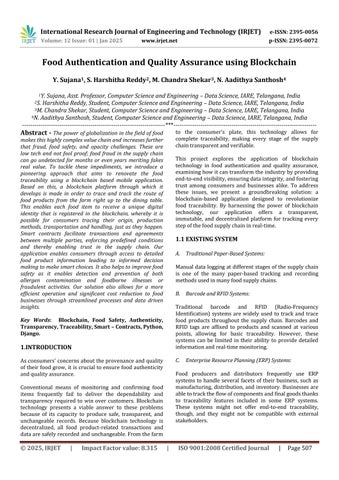
2 : Flowchart
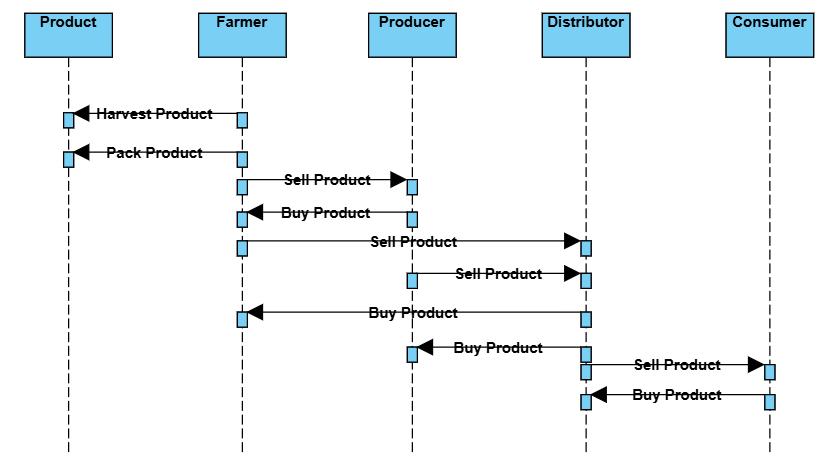
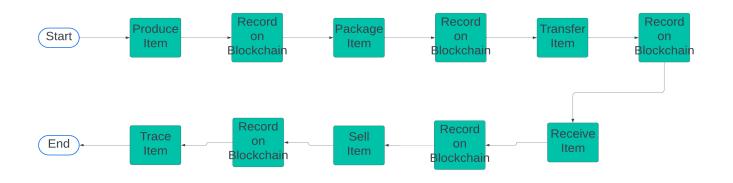
Figure 3 : Sequential Diagram
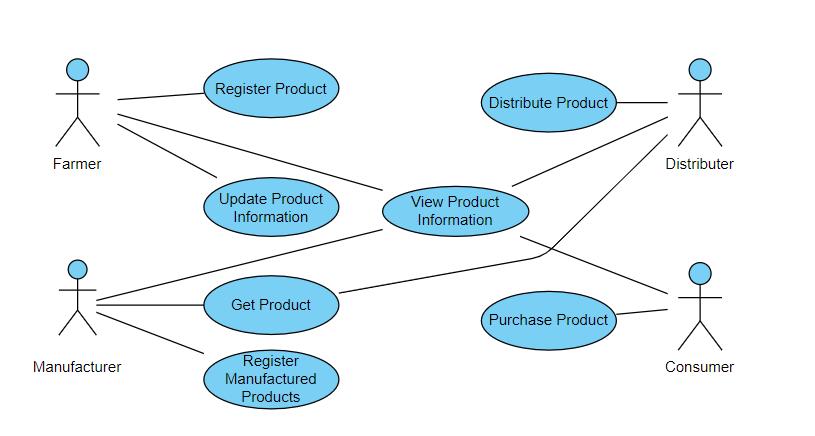
Figure 4 : Use Case Diagram
4. METHODOLOGY AND IMPLEMENTATION
A. TheTraceabilityFramework
Every product has a unique serial code that is associated with an external Ethereum account. Every product transactionistracked,kept,andconnectedtotheproduct's serial number ina smartcontract. It hasan access control strategy that limits the transactions that can be made by authorizedusers.
B. TradingMechanism
The movement of goods from one party to another is followed in the form of blocks in the blockchain. The consumers first register on the system and ask to buy the productwithaserialnumber.Thatrequestisforwardedto theowneroftheproductforupdatingtheownershipwith newowner.Itmakessurenoduplicateserialcodesaresold bydistributors.
C. ReputationSystem
Thissysteminfusesalayeroftrustbetweencustomersand other stakeholders. It allows only actual customers of the producttoprovidereviewsoftheproduct.Thereviewson the blockchain cannot be changed which does not enable any merchant or distributor to delete or update bad reviews in order to boost up their respective rating percentages.Andinthiswaythismechanismhelpstohold the entire integrity of the retailer and let the customer knowaboutthesellerbeforemakingthetransaction.
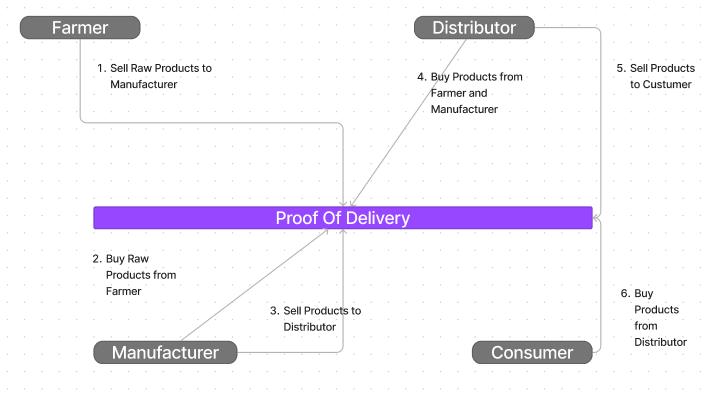
5 : Methodology
4.1 TECHNOLOGY IMPLEMENTED
Platform: Ethereum - It provides robust smart contract functionality, wide adoption, and community support suitableforimplementingadecentralizedsupplychain.
NetworkType:PrivateBlockchainNetwork
Algorithm: Consensus Mechanism -ProofofAuthority(PoA) forfastertransactionprocessingandlowercostscompared topublicnetworks.
ContractsImplemented:
International Research Journal of Engineering and Technology (IRJET) e-ISSN: 2395-0056
Volume: 12 Issue: 01 | Jan 2025 www.irjet.net p-ISSN: 2395-0072
1. Farmer: Manages product registration and certification.
2. Manufacturer: Processes raw materials into finishedproducts.
3. Distributor:Handlesdistributiontoconsumers.
4. Consumer: Tracks product purchase and consumption.
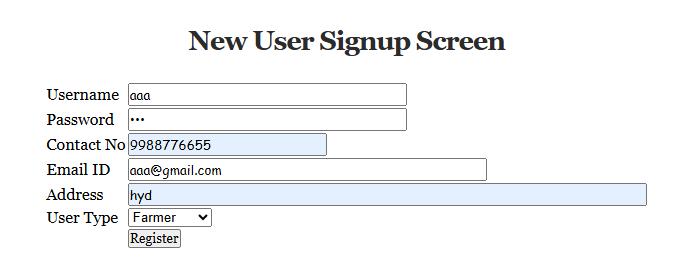
Although the officials did not associate the use of the blockchain for fighting fraud, they instead, emphasized other transparency, traceability and consumer trust benefits of how it was possible to be used in organic food supplychain.Thissawthesecureprocessingofallstagesin foodproductionaswell asthedistribution;deploymentof smartcontractsonEthereumblockchaininvolvingrelevant stakeholderslikefarmers,manufacturers,distributors,and consumer etc. The Result was A Decrease in Fraud Events and an Increase in the Verification of Organic Records, Redeeming Credit to The Organic Market. Consumers experiencedenhancedtransparencywithaccesstodetailed product data, including information on country of origin, certificationstatusandproductionmethodsenablingmore informed purchasing decisions. In essence, the initiative underlined blockchain's potential to disrupt SCM by ensuringfulltransparencyandintegrityaroundallaspects oftheorganicfoodecosystem.
Afterall,theintroductionofblockchaintechnologyinfood authentication and quality assurance promises to bring about much-needed change to remake the entire food supply chain as much more transparent and reliable. In
this regard, harnessing such intrinsic properties of blockchain technology, such as non-analog, decentralized, and transparent, can alleviate many such pertinent challenges,suchasfoodfraudcases,traceabilityproblems, and issues of compliance with approaches regarding regulatory frameworks. Moving forward, the improvements on blockchain technology will continue to developthecapabilitiesoffoodauthenticationandquality assurance systems as interoperable standards are adopted. Collaborative efforts among stakeholders - that is, government agencies, industry leaders, and technology providers - will be crucial in realizing the full potential of blockchainin ensuring food safetyand qualityaround the world.
Inessence,blockchainrepresentsatransformativetoolfor building a more resilient and trustworthy food supply chain, reinforcing consumer confidence and enabling sustainablepracticesfromfarmtofork.
[1] Tsoukas, A. Gkogkidis, A. Kampa, G. Spathoulas andA.Kakarountas,"Blockchaintechnologyinfoodsupply chain: A state of the art," 2021 6th South-East Europe Design Automation, Computer Engineering, Computer NetworksandSocialMediaConference(SEEDA-CECNSM).
[2] M. Fiore and M. Mongiello, "Blockchain Technology to Support Agri-Food Supply Chains: A Comprehensive Review," in IEEE Access, vol. 11, pp. 75311-75324,2023,doi:10.1109/ACCESS.2023.3296849.
[3] G. Sai Radha Krishna and P. Rekha, "Food Supply Chain Traceability System using Blockchain Technology," 2022 8th International Conference on Signal Processing and Communication (ICSC), Noida, India, 2022, pp. 370375,doi:10.1109/ICSC56524.2022.10009418.
[4] A.Shahid,A.Almogren,N.Javaid,F.A.Al-Zahrani, M. Zuair and M. Alam, "Blockchain-Based Agri-Food SupplyChain:ACompleteSolution,"inIEEEAccess,vol.8, pp. 69230-69243, 2020, doi: 10.1109/ACCESS.2020.2986257.
[5] J. Katti, P. Inde, P. Jadhav, T. Ghule, D. Deshmukh andG.Dharmale,"ABlock-ChainBasedApproachforFood Supply Chain Management," 2022 13th International Conference on Computing Communication and Networking Technologies (ICCCNT), Kharagpur, India, 2022,pp.1-5,doi:10.1109/ICCCNT54827.2022.9984473.
[6] S. B and H. D, "Blockchain and IoT's role in Agri Food Supply Chain Traceability," 2022 IEEE 9th Uttar Pradesh Section International Conference on Electrical, Electronics and Computer Engineering (UPCON), Prayagraj, India, 2022, pp. 1-6, doi: 10.1109/UPCON56432.2022.9986425.
International Research Journal of Engineering and Technology (IRJET) e-ISSN: 2395-0056
Volume: 12 Issue: 01 | Jan 2025 www.irjet.net p-ISSN: 2395-0072
[7] S. Rajput, A. Singh, S. Khurana, T. Bansal and S. Shreshtha,"BlockchainTechnologyandCryptocurrenices," 2019 Amity International Conference on Artificial Intelligence (AICAI), Dubai, United Arab Emirates, 2019, pp.909-912,doi:10.1109/AICAI.2019.8701371.
[8] H. Hellani, A. E. Samhat, M. Chamoun, H. E. Ghor andA.Serhrouchni,"OnBlockChainTechnology:Overview of Bitcoin and Future Insights," 2018 IEEE International Multidisciplinary Conference on Engineering Technology (IMCET), Beirut, Lebanon, 2018, pp. 1-8, doi: 10.1109/IMCET.2018.8603029.
[9] H. R. Andrian, N. B. Kurniawan and Suhardi, "Blockchain Technology and Implementation: A Systematic Literature Review," 2018 International Conference on Information Technology Systems and Innovation (ICITSI), Bandung, Indonesia, 2018, pp. 370374,doi:10.1109/ICITSI.2018.8695939.
[10] Z. Zheng, S. Xie, H. Dai, X. Chen and H. Wang, "An Overview of Blockchain Technology: Architecture, Consensus, and Future Trends," 2017 IEEE International Congress on Big Data (BigData Congress), Honolulu, HI, USA, 2017, pp. 557-564, doi: 10.1109/BigDataCongress.2017.85.
[11] S. L. Nita and M. I. Mihailescu, "Blockchain Applications in Computer Communication," 2021 13th International Conference on Electronics, Computers and ArtificialIntelligence(ECAI),Pitesti,Romania,2021,pp.14,doi:10.1109/ECAI52376.2021.9515094.
2025, IRJET | Impact Factor value: 8.315 |