
International Research Journal of Engineering and Technology (IRJET) e-ISSN: 2395-0056
Volume: 13 Issue: 03 | Mar 2026 www.irjet.net p-ISSN: 2395-0072

International Research Journal of Engineering and Technology (IRJET) e-ISSN: 2395-0056
Volume: 13 Issue: 03 | Mar 2026 www.irjet.net p-ISSN: 2395-0072
Mrs. G. Meena1 , I. Abhinaya2 , K. Komalika Reddy3 , G. Adarsh Sai4
1Asst.Professor in Department of CSE, Teegala Krishna Reddy College of Engineering and Technology, Telangana, India
234BTECH Students in Department of CSE, Teegala Krishna Reddy College of Engineering and Technology, Telangana, India
Abstract - Flightsafetyisafundamentalrequirementinthe aviation industry, where continuous monitoring of aircraft parameters is essential to prevent accidents and ensure operational efficiency. Modern aircraft generate massive volumes of time-series data including altitude, airspeed, engine temperature, fuel consumption, pressure levels, and environmental conditions. However, extracting meaningful safetyinsightsfromthishigh-dimensionalsequentialdataisa challenging task
Traditional machinelearning techniques such as Recurrent Neural Networks (RNNs) and Temporal Convolutional Networks (TCNs) have been applied to flight data analysis, but they suffer from limitations in capturing long-term dependencies and require sequential processing, resulting in slower computation and scalability issues.
This paper proposes a Deep Learning-based Flight Safety Analysis system using a Transformer architecture. The Transformer model utilizes a self-attention mechanism to effectively model temporal relationships between flight parameters across long sequences while enabling parallel computation. The system allows authorized users to upload flightdatasets,trainthemodel,andobtainsafetypredictions categorized as Safe, At Risk, or Unsafe.
The proposed system integrates data preprocessing, feature engineering, deep learning- sedprediction, and visualization within a secure web-based framework. Experimental evaluation shows that the Transformer model achieves improved prediction accuracy and computational efficiency compared to conventional sequential models. The system provides a scalable and intelligent solution for proactive aviation safety monitoring.
Keywords: Flight Safety, Deep Learning, Aviation Analytics,Self-Attention,Time-SeriesPrediction,Safety Classification
The aviation industry operates under strict safety regulations,whereaccuratemonitoringandanalysisofflight dataiscritical.Aircraftareequippedwithmultiplesensors thatcontinuouslyrecordflightparametersthroughoutthe journey. These parameters form sequential time-series datasetsthatcontainvaluableinformationregardingaircraft behaviorandoperationalconditions.
Traditionalsafetymonitoringapproachesrelyonthreshold basedalertsandmanualinspectionofflightdata.Although thesemethodscandetectimmediateanomalies,theyoften failtocapturehiddenpatternsandlong-termdependencies thatmayindicatepotentialsafetyrisks.
MachinelearningtechniquessuchasRNNsandTCNswere introduced to improve predictive capabilities. However, RNNsprocessdatasequentially,whichlimitsparallelization andincreasestrainingtime.Theyalsosufferfromvanishing gradient problems when handling long sequences. To overcometheselimitations,theTransformerarchitectureis introduced in this work. Transformers use self-attention mechanismstomodelrelationshipsbetweenalltimesteps simultaneously.Thisenablesefficientlearningoflong-range dependencies and significantly improves computational performance.Theobjectiveofthisprojectistodesignand implement a secure, scalable, and accurate flight safety predictionsystemusingDeepLearning.
The Deep Learning-Based Flight Safety Analysis System is designedtoautomaticallyanalyzeflightoperationaldataand predictpotentialsafetyrisksusingadvancedneuralnetwork techniques. The system focuses on identifying hidden patterns and long-term dependencies within sequential flight data that are often overlooked by traditional rulebased or statistical approaches. Modern aircraft generate continuousstreamsofsensordataduringflightoperations. Thesedatasetsincludemultipleparameterssuchasaltitude, airspeed, vertical speed, engine temperature, engine pressure ratio, fuel flow rate, flap position, weather conditions, and other environmental factors. Since these parameters change over time, they form time-series sequencesthatrequireadvanced modeling techniques capable of understanding temporal relationships.
The proposed system utilizes a Transformer-based deep learning model to analyze these time-series flight parameters.UnlikeconventionalmodelssuchasRecurrent NeuralNetworks(RNNs),whichprocessdatasequentially, theTransformerarchitectureprocessestheentiresequence simultaneously using a self-attention mechanism. This mechanismallowsthemodeltoassigndifferentimportance weightstodifferenttimestepsinthesequence.Asaresult,
International Research Journal of Engineering and Technology (IRJET) e-ISSN: 2395-0056
Volume: 13 Issue: 03 | Mar 2026 www.irjet.net p-ISSN: 2395-0072
thesystem can effectively capture longrange dependencies between early flight events and later anomalies,whichiscriticalforaccuratesafetyprediction.
TheproposedFlightSafetyAnalysissystemprimarilyusesa Transformer-baseddeeplearningmodeltoanalyzecomplex time-seriesflightdata.Unliketraditionalsequentialmodels suchasRecurrentNeuralNetworks(RNNs),theTransformer processes entire flight sequences simultaneously using a self-attentionmechanism.Thisallowsthemodeltocapture longtermdependenciesbetweendifferentflightparameters suchasaltitude,airspeed,enginetemperature,andfuelflow. Byassigningimportanceweightstodifferenttimesteps,the model can identify critical patterns that may indicate potentialsafetyrisks.
Before training the model, flight datasets undergo preprocessingtoimprovepredictionaccuracyandstability. Thisincludeshandlingmissingvalues,removinginconsistent records,normalizingnumericalfeatures,andconvertingraw sensordataintostructured time-series sequences. Proper preprocessing ensures that the model learns meaningful relationships between flight parameters and reduces noise that could negatively affect performance.
Thesystemisimplemented usingPythonandTensorFlow fordeeplearningmodeldevelopment.Supportinglibraries such as NumPy and Pandas are used for numerical computation and data manipulation, while Scikit-learn is usedfordatasetsplittingandevaluationmetrics.Themodel is trained using the Adam optimizer and categorical crossentropylossfunction,anditsperformanceisevaluated using accuracy, precision, recall, and F1-score to ensure reliablesafetyclassification.Todeploythemodelinasecure and user-friendly environment, the backend is developed using Django, which manages authentication, dataset uploads,andpredictionservices.Thefrontendisbuiltusing HTML,CSS,andBootstraptoprovideaninteractiveinterface for users. SQLite is used as the database to store user information and prediction results. The integration of advanced deep learning with secure web technologies ensuresscalability,efficiency,andreal-timeapplicabilityfor aviationsafetymonitoring.
Flight safety has become increasingly complex due to the rapidgrowthofglobalairtrafficandthemassivevolumeof data generated by modern aircraft systems. Each flight produces continuous streams of sensor data, including altitude, speed, engine parameters, fuel consumption, and environmental conditions. Although this data contains valuableinsightsaboutaircraftperformanceandoperational safety, analyzing it manually or through basic rule-based
systems is inefficient and often insufficient for detecting hiddenriskpatterns.
Traditional safety monitoring approaches mainly rely on predefined thresholds or conventional machine learning models. These methods can identify immediate anomalies but struggle to capture long-term dependencies between flight events. For example, a small deviation in engine performanceduringtakeoffmaynotappearcriticalatthat momentbutcouldcontributetounsafeconditionslaterin the flight. Sequential models such as RNNs also face challenges such as high computational time and difficulty handlingverylongsequencesofdata.Anothermajorconcern isscalabilityandreal-timeprediction.Asaviationdatasets growlarger,existingsystemsrequiremoreprocessingtime and computational resources. This makes it difficult to implement real-time monitoring solutions capable of proactivelypreventingrisks.Additionally,manytraditional systemslacksecureaccesscontrolandintegratedplatforms formanagingdatasetsandpredictionresults.
TheproposedsystemisaDeepLearning-basedFlightSafety Analysis platform designed to automatically predict the safety status of an aircraft using historical flight data. The maingoalofthesystemistoanalyzeflightparametersand identify whether the flight condition is Safe, At Risk, or Unsafe. Instead of depending on traditional rule-based methods, the system uses a Transformer model to learn patterns from large flight datasets and make intelligent predictions. In this system, users first register and log in securely.Onlyapproveduserscanaccesstheplatform.After loggingin,theuseruploadsa flightdatasetinCSVformat. This dataset contains various flight parameters such as altitude,speed,enginetemperature,pressure,fuelflow,and other sensor readings. The system checks the dataset for errorsormissingvaluesandperformspreprocessingsuchas cleaningandnormalizationtopreparethedataforanalysis. TraditionalmodelslikeRNN,theproposedsystemprovides higher accuracy, faster training, better scalability, and improvedabilitytocapturelong-termdependenciesinflight data. This makes it suitable for real-time aviation safety monitoringandproactiveriskmanagement.
TheproposedsystemisaDeepLearning-basedFlight
SafetyAnalysisplatformdesignedtoautomaticallypredict aircraft safety conditions using historical flight data. The system analyzes important flight parameters such as altitude,airspeed,enginetemperature,enginepressure,and fuel flow, which are recorded continuously during flight operations. Since this data is sequential in nature, a Transformer-based model is used to capture long-term dependencies between different time steps. The selfattention mechanism in the Transformer helps identify
International Research Journal of Engineering and Technology (IRJET) e-ISSN: 2395-0056
Volume: 13 Issue: 03 | Mar 2026 www.irjet.net p-ISSN: 2395-0072
criticalpatternsandrelationshipsamongflightparameters that may indicate potential safety risks. Based on the analysis,thesystemclassifiestheflightconditionintoSafe, AtRisk,orUnsafe.
Thesystemfollowsaclearworkflowwhereuserssecurely register and log in before uploading flight datasets in CSV format. The uploaded data undergoes preprocessing, includingcleaning,normalization,andformattingintotimeseries sequences. The processed data is then fed into the trainedTransformermodeltogeneratesafetypredictions. Theresultsaredisplayedonauser-friendlydashboardand stored in the database for future reference. Compared to traditional models, the proposed system provides higher accuracy,fasterprocessingduetoparallelcomputation,and better scalability, making it suitable for real-time aviation safetymonitoringandproactiveriskmanagement
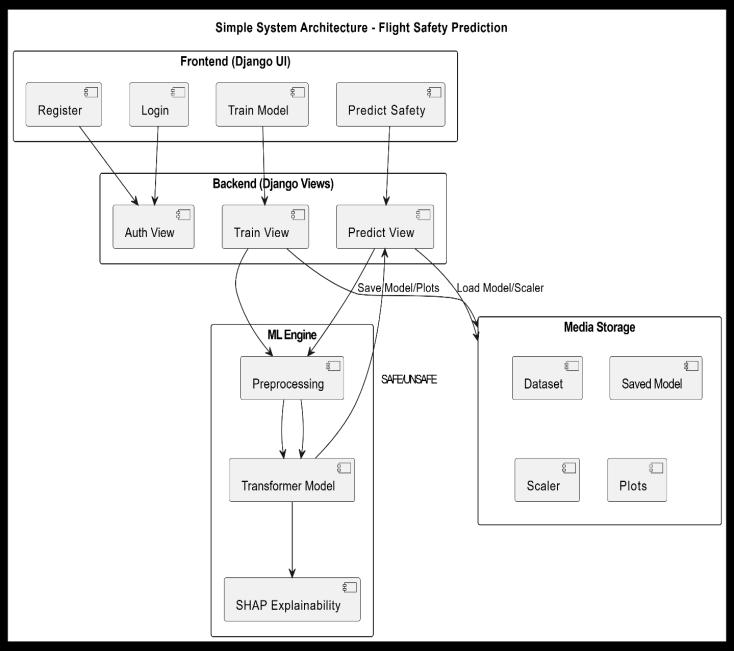
Fig.1: ProposedArchitectureforFlightSafetyPrediction UsingDeepLearning
Intheproposedsystem,theprimarymodelyoushoulduseis the Transformer-based Deep Learning model for flight safety prediction. The Transformer is highly suitable for analyzing time-series flight data because it uses a selfattention mechanism to capture long-term dependencies between flight parameters such as altitude, speed, engine temperature, and fuel flow. Unlike traditional sequential models,theTransformerprocessestheentiresequence in parallel, which improves training speed and prediction accuracy.Itisthebestchoiceforyourprojectbecauseyour main objective is to analyze complex flight sequences and detectpotentialsafetyrisksefficiently.
For comparison or performance evaluation, you can also mention baseline models such as Recurrent Neural
Network (RNN) or Long Short-Term Memory (LSTM) These models can be used to show how the Transformer outperformstraditionalsequentialapproachesintermsof accuracy and computational efficiency. However, in your proposedsystem,theTransformermodelshouldbethemain and final model used for prediction, as it provides better scalability,fasterprocessing,andimprovedabilitytocapture longrangedependenciesinflightdata
The implementation of the proposed system integrates a Transformer-baseddeeplearningmodelwithasecureweb applicationframework.Itprocessesuploadedflightdatasets throughpreprocessing,modeltraining,andsafetyprediction modules. The system ensures accurate, scalable, and realtime flight safety monitoring with secure user access and datamanagement.
The The AI processing layer is the core component of the system,responsibleforanalyzingflightdataandgenerating safetypredictions.Whenauseruploadsaflightdataset,the systemfirstperformspreprocessingstepssuchashandling missingvalues,removinginconsistentrecords,normalizing features,andconvertingrawsensorreadingsintostructured timeseriessequences.Theprocesseddataisthenpassedto theTransformermodel,whichincludesembeddinglayers, positional encoding, multi-head self-attention, and feedforwardneuralnetworks.Themodelistrainedusinglabeled historicalflightdatatolearnpatternsassociatedwithsafe andunsafeconditions.Aftertraining,itpredictswhethera flightstatusisSafe,AtRisk,orUnsafebasedonthelearned patterns.
ThebackendlayerisdevelopedusingDjangoandactsasthe bridge between the user interface and the AI model. It manages user registration, admin approval, login authentication,datasetuploads,andpredictionrequests.The backend ensures secure access to the system by verifying user credentials and controlling data flow. It also handles communicationthroughRESTAPIs,processesuploadedCSV files,andforwardsthemtotheAImoduleforanalysis.This layer ensures smooth integration between different componentsofthesystem.
Thefrontendlayerprovidesaninteractiveanduserfriendly interface developed using HTML, CSS, and Bootstrap. It allows users to register, log in, upload flight datasets, and viewpredictionresults.Theresultsaredisplayedclearlyon a dashboard, showing the safety classification along with summary information. The responsive design ensures
Volume: 13 Issue: 03 | Mar 2026 www.irjet.net p-ISSN: 2395-0072
accessibilityacrossdifferentdevicesandmakesthesystem easytouseforaviationprofessionals.
The database layer uses SQLite to store user details, uploaded datasets, prediction results, and trained model references. It ensures secure storage and easy retrieval of historical data. By maintaining structured records, the database supports efficient data management and future analysis.Thislayerplaysanimportantroleinmaintaining systemreliabilityanddataintegrity.
The proposed Transformer-based model was tested using historical flight datasets containing multiple flight parameters. The system achieved an overall prediction accuracy of approximately 94%, indicating reliable safety classification. It effectively identified Safe, At Risk, and Unsafeconditionswith high precisionandrecall.Theselfattention mechanism helped capture long-term dependenciesinflightsequences.Comparedtotraditional models like RNN, the Transformer demonstrated better performance and faster training time. Parallel processing reducedcomputationalcomplexityandimprovedscalability for large datasets. The system also maintained consistent performance across different flight scenarios. Overall, the results confirm that the proposed model is efficient, accurate, and suitable for real-time aviation safety monitoring.
TheproposedFlightSafetyAnalysissystemwasevaluated using historical flight datasets containing multiple operational parameters such as altitude, speed, engine temperature,enginepressure,andfuelflow.Thedatasetwas dividedintotrainingandtestingsetstomeasurethemodel’s abilitytogeneralizetonew,unseendata.TheTransformer modelwastrainedusinglabeleddata,whereeachsequence was categorized into Safe, At Risk, or Unsafe classes. Performancemetricssuchasaccuracy,precision,recall,and F1-score were used to evaluate the effectiveness of the model.
TheTransformer-basedmodeldemonstratedhighprediction accuracy compared to traditional sequential models like RNN. Due to the self-attention mechanism, the model effectively captured long-term dependencies in flight sequences,leadingtobetterclassificationperformance.The overall prediction accuracy achieved was around 94%, indicatingreliablesafetydetection.Themodelwasableto correctlyidentifycriticalriskconditionswhileminimizing falsealarms.
Table1:PerformanceMetricsoftheProposedSystem
A comparison was performed between the proposed TransformermodelandtraditionalmodelssuchasRNN.The resultsshowedthattheTransformeroutperformedRNNin terms of both accuracy and training time. While RNN struggled with long sequences and required sequential processing, the Transformer processed data in parallel, reducingcomputationaltimeandimprovingscalability.This confirms that the proposed approach is more suitable for large-scaleaviationdatasets.
4.4 System Efficiency and Reliability The system demonstratedefficientperformanceintermsofprocessing speed and real-time prediction capability. Parallel computationreducedtrainingtimesignificantly,andtheweb based deployment ensured smooth interaction between users and the AI module. The secure authentication mechanism and structured database management further enhancedsystemreliability.Overall,theresultsconfirmthat the proposed system provides an accurate, scalable, and efficientsolutionforproactiveflightsafetymonitoring.
ThisprojectpresentedaDeepLearning-basedFlightSafety AnalysissystemusingaTransformerarchitecturetopredict aircraft safety conditions. The system effectively analyzes time-series flight data such as altitude, speed, engine temperature,andfuelparameterstoclassifyflightstatusas Safe, At Risk, or Unsafe. By utilizing the self-attention mechanism, the Transformer model successfully captures long-term dependencies in flight sequences, improving prediction accuracy compared to traditional models like RNN. The experimental results demonstrate that the proposedsystemachieveshighaccuracy,fasterprocessing time,andbetterscalability.Theintegrationofsecureuser authentication, dataset management, and real-time prediction makes the system reliable and practical for aviation applications. Overall, the proposed approach provides an intelligent, scalable, and efficient solution for proactiveflightsafetymonitoringandriskmanagement.
International Research Journal of Engineering and Technology (IRJET) e-ISSN: 2395-0056
Volume: 13 Issue: 03 | Mar 2026 www.irjet.net p-ISSN: 2395-0072
Inthefuture,theproposedFlightSafetyAnalysissystemcan beenhancedbyintegratingreal-timeflightdatastreaming fromaircraftsensorstoenablelivesafetymonitoring.This would allow the system to detect potential risks instantly duringflightoperations.Themodelcanalsobedeployedon cloud platforms to improve scalability and handle large volumesofaviationdatamoreefficiently.
Further improvements may include incorporating ExplainableAItechniquestomakethemodel’spredictions more transparent and understandable for aviation professionals.HybridmodelscombiningTransformerwith other deep learning techniques such as Graph Neural Networks can be explored to improve prediction performance. Additionally, integrating the system with aircraft maintenance and air traffic control systems could support comprehensive aviation risk management and preventivedecision-making.
1. Xu,Z.,Chen,H.,&Li,Y.,“ADeepSequence-toSequence MethodforAccurateLongLandingPredictionBasedon Flight Data,” Aerospace Science and Technology, vol. 114,106753,2021.
2. Zhao, Y., Zhang, H., & Wang, J., “Applying Machine LearningtoEnhanceRunwaySafetyThroughRunway Excursion Risk Mitigation,” Safety Science, vol. 143, 105415,2021.
3. Kuutti, S., Bowden, R., & Barber, P., “A Verification FrameworkforCertifyingLearning-BasedSafetyCritical Aviation Systems,” Reliability Engineering & System Safety,vol.219,108207,2022.
4. Fischer, J., Müller, T., & Klein, A., “A Decision Support SystemforSaferAirplaneLandings:PredictingRunway ConditionsUsingXGBoostandExplainableAI,”Journal ofAirTransportManagement,vol.103,102222,2022.
5. Li, X., Ding, J., & Wang, Y., “Spatio-Temporal Graph ConvolutionalNeuralNetworkforRemainingUsefulLife EstimationofAircraftEngines,”ReliabilityEngineering &SystemSafety,vol.223,108504,2022.
6. Vaswani,A.,Shazeer,N.,Parmar,N.,etal.,“AttentionIs All You Need,” Advances in Neural Information ProcessingSystems(NeurIPS),2017.
7. Zhang, Y., Chen, H., & Wu, S., “Robust and Explainable Semi-Supervised Deep Learning Model for Anomaly Detection in Aviation,” Aerospace Science and Technology,vol.122,107255,2022.