
International Research Journal of Engineering and Technology (IRJET) e-ISSN: 2395-0056
Volume: 12 Issue: 11 | Nov 2025 www.irjet.net p-ISSN: 2395-0072
International Research Journal of Engineering and Technology (IRJET) e-ISSN: 2395-0056
Volume: 12 Issue: 11 | Nov 2025 www.irjet.net p-ISSN: 2395-0072
Hakan TEKİN1, Eren MURTULU1
1Seger Ses ve Elektrikli Gereçler San. A.Ş. Bursa, Türkiye
Abstract - Seat heater is an electronic circuit–based topology designed for optimizingvehicleheatingsystemsand enhancing passenger comfort in low-temperature weather conditions. To can implement a design in a real word automotive system, the necessary standards for this section shouldbeconsidered.Thisstudypresentsastep-by-stepdesign ofathree-leveltemperaturecontrolcircuitseatheatersystem for automotive industry applications. the designed schematic of the switching circuit is presented and detailed code comments and explanations are provided for the micro controller unit (MCU) regarding occupancy sensor analysis, setting heater operation based on passenger selection, and controlling current loops for the seat heater circuit.
Key Words: Seat heater, Automotive industry, Micro controller, Three level temperature control, printed circuit board (PCB) design
1.INTRODUCTION
Although theseatheatersystemshavebeendesignedand usedinautomobilessince1970,andaccordingto2010U.S. automotivedata,morethan30percentofautomobileshave been equipped with these systems, normally they don’t follow any specific individual or mandatory industrial standards[1-2].
This causes some of these designs to not be used in an optimized wayand to generateheat thatis morethanthe sufferabletemperatureforpassengers.
Someofthedesignscouldnotintroduceautomaticturn-off systems over time, which can generate serious heat problems for occupants who suffer lower body sensory deficitscausedbyparalysis,diabetes,andneuropathy[1].
Forinternalcombustionenginecars,normallythepowerfor elements like the wipers, lighting, heating, and cooling systems is supplied by the alternator, which normally chargesthebatteryovertime[3-4].
With the growing demand for electric vehicles (EVs), the applicationoffullyelectronics-basedsystemsisincreasing.
In these cars, the mentioned parts are supplied by the batterypacksystem[5-8].
Therefore,anoptimizedapplicationofelectricenergycanbe helpfulforbatteryhealthandalongerlifespan.Ontheother
hand, normally different ranges of battery voltages are generatedandusedintheautomotiveindustry.Therefore, designingacircuitthatiscapableofworkinginawiderange of input voltages and generating a fixed DC voltage is essential[9-10].
Anotherimportantparameterthatcanincreasethelongevity ofthebatterysystemisestablishingacurrentwithminimum ripple amplitude in the battery, even if there is a large difference between the battery pack and the target DC voltageforthementionedcircuits[11-13].
DC-DCconvertershavebeenanalyzedinliterature[14-19]. ThistypeofconvertersisusedinEVsfordifferentpartslike thelighting,coolingorheating,wipersystem,soundcircuits, etc.
A micro controller system should manage the generated power and power distribution for these parts. One of the optionalpartsisseatheatersystemthatisessentialforcold weathers.
In this study, a three level heating system for automotive industry is presented to generate 3A, 4A and 4.5A for the seatsinacarbasedonthepassengerrequestbypressinga buttonsystemTheAttiny1616MCUisusedinexperimental tests,andallcodecommentsregardingtheanalog-to-digital conversions,seatoccupationcheck,andthree-levelheating button control to adjust the level of current in the heater system based on temperature and passenger comfort are presented.
Figure1showsthecircuittopologythatswitchestheload. TheintegratedcircuitshownasU2isacoded-typepower switchandcorrespondstotheBTS6143Dproduct.
Whenasignalisappliedtotheswitch'sINpin,ittransfers the voltage from the VBB input pin to the OUT pin. The outputcurrentcanbecontrolledbyaPWMsignalappliedto theINpin.
Theswitchfeaturesshort-circuitprotection,currentlimiting, overtemperaturedetection,andloaddetection.Becausethe switch's RdsON resistance is very low, it can conduct a continuous current. Furthermore, the switch can supply a loadcurrentofupto8A.
International Research Journal of Engineering and Technology (IRJET) e-ISSN: 2395-0056
Volume: 12 Issue: 11 | Nov 2025 www.irjet.net p-ISSN: 2395-0072
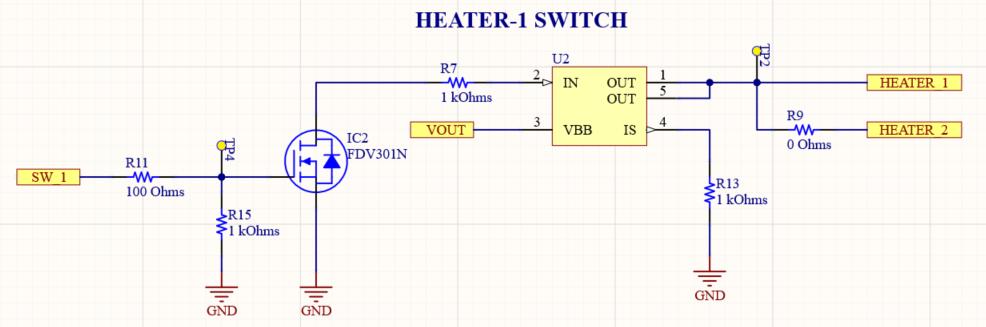
Figure 1 Schematicdesignoftheswitchingcircuit.
Figure2showstheschematicdesignoftheMCUusedinthe circuit.TheATTINY1616microcontrollerfromMicrochipis usedhere.TheMCUispoweredbya5Vregulator.
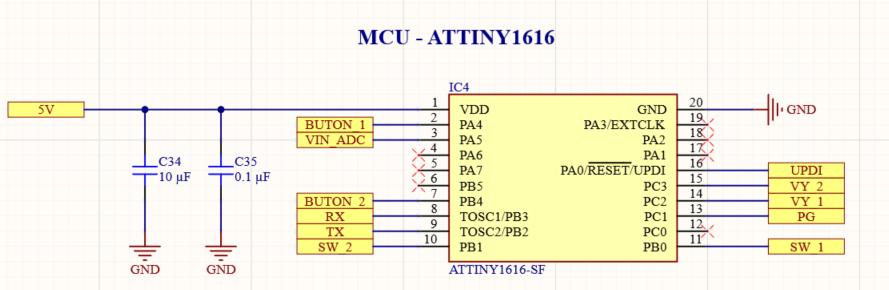
Figure 2 MCUschematicdesign.
This subsection presents the code comments for current sensordata readingandconversionfromanalogtodigital format,aswellascurrentadjustmentsfortheheatingpad basedontheheatlevelselectedbythepassengerthrougha 3-leveltemperatureadjustmentbuttonforeachpadsystem. The general flowchart of the MCU is presented in figure 3 andshowstheoperationalstepsindetail.
Forthefirststage,theMCUreadstheinputvoltage(battery voltage).
The system operates if the battery voltage is within the desiredrange(9–32V);otherwise,itdoesnotoperate.This is done using the voltage information obtained from the voltagedividershownbelow.
TherelatedcodecommentshavebeenpresentedinFigures 4aand4bundertitles: adc_calculation.c/adc_calculation.h
Start
Isthebatterywithin the9-32Vrange?
Isthereapassenger intheseat?
Duty%50,Counter=0
StarttheHeater
Wasthebutton pressed?
Figure 3. MCUoperationflowchart.
International Research Journal of Engineering and Technology (IRJET) e-ISSN: 2395-0056
Volume: 12 Issue: 11 | Nov 2025 www.irjet.net p-ISSN: 2395-0072
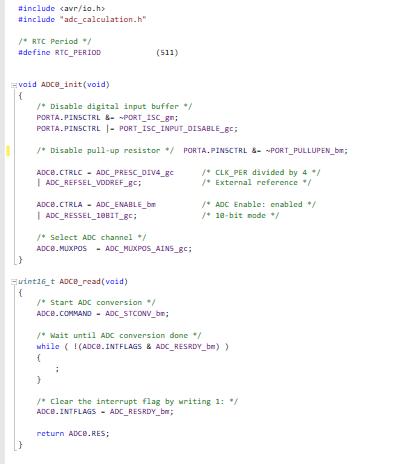
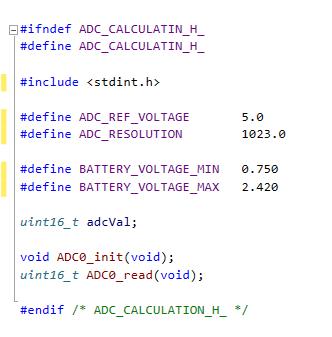
Figure 4. (a)adc_calculation.cand(b)adc_calculation.h codecomments
The next stage of the process checks whether a seat is occupiedviathepresence/absencebycheckingthedataof the seat occupancy sensor. If a passenger is seated, the systemoperates,providingtheheatingfunction.Ifnooneis seated,thesystemremainsinactive.Thecodecommentsfort his stage have been presented in Figures 5a and 5b with titles: ocupancy_reading.c / ocupancy_reading.h
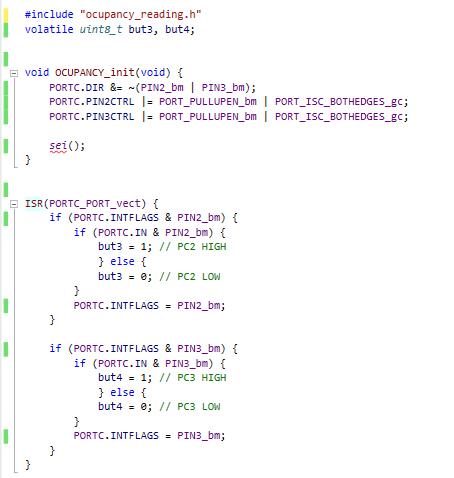
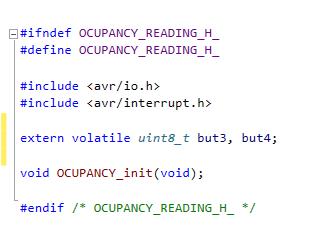
Figure 5. (a)ocupancy_reading.cand(b) ocupancy_reading.hcodecomments
When a passenger is seated, the user can adjust the temperatureinthreestagesusingabutton.Thetemperature isadjustedbycontrollingthecurrentflowthroughtheload. Thefirststageiscontrolledbytheswitchata50%dutycycle generating3Acurrentinpadsystem,thesecondata60% dutycyclewithpresenting4A,andthethirdata70%duty cycle by generating 4.5 A for seat pad system. The code commentsforthisoperationalmodesfigures6aand6bare presented with general title of buton_readin.c / buton_reading.h:
International Research Journal of Engineering and Technology (IRJET) e-ISSN: 2395-0056
Volume: 12 Issue: 11 | Nov 2025 www.irjet.net p-ISSN: 2395-0072
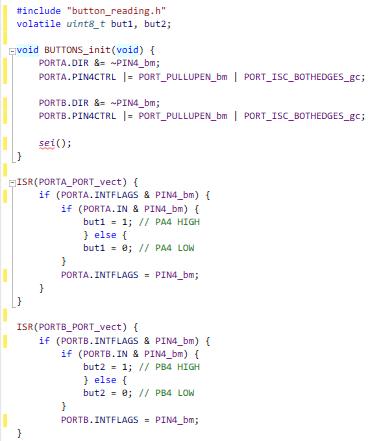
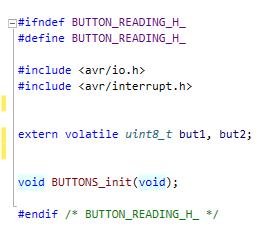
Figure 6 (a)buton_readin.cand(b)buton_reading.hcode comments
Thissectionofthecodemakesthenecessaryadjustmentsto generatethePWMsignalusedtocontrolthecurrentflowof theheatingpad.Therelevantcodecommandsareshownin Figures7aand7b,aswellasinthegeneral switch_pwm.c / switch.pwm.h headers.
The main.c code in Figure 8 contains the functions necessary for the overall operation of the system. If the systemoperatesbetween9–32 Vandapassengerisseated, the system begins heating at a 50% duty cycle, corresponding to Stage 1. The user can adjust the setting usingabutton.Afterthreesettings,pressingthebuttonagain returnsthesystemtoStage 1.Iftheseatedpassengerleaves, theheatingprocessstops.
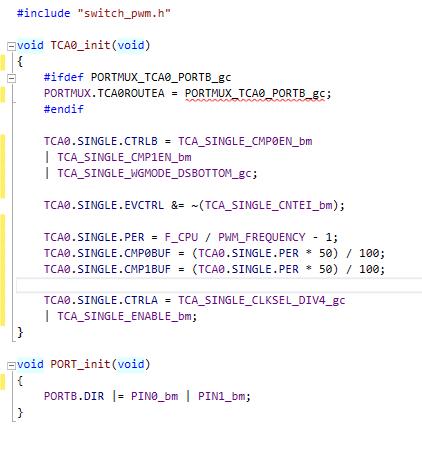
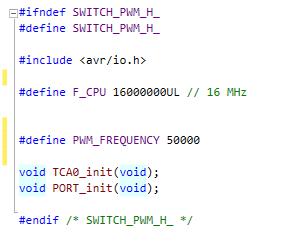
Figure 7 (a)switch_pwm.cand(b)switch_pwm.hcode comments
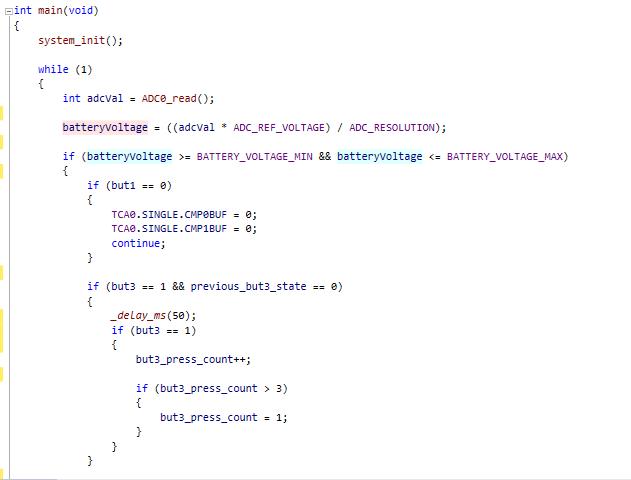
International Research Journal of Engineering and Technology (IRJET) e-ISSN: 2395-0056
Volume: 12 Issue: 11 | Nov 2025 www.irjet.net p-ISSN: 2395-0072
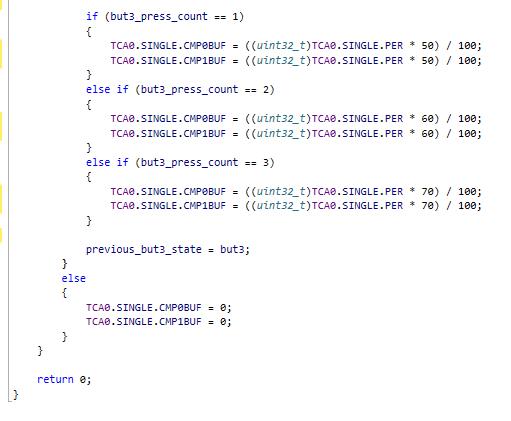
Figure 9a shows a three dimensions (3D) view of the seat controlunit’sprintedcircuitboard(PCB).
ThePCBisdesignedwithfour1 ozcopperlayers,including thetopandbottomlayersserveassignallayers,layer 2as ground,andlayer 3aspower.
OzpresentsaunitforweightofcopperpersquarefootofPCB area.
The integration of the design with the test setup in a laboratoryenvironmentisshowninFigure 9b.
ThedesignedPCBwastestedunderthreedifferentinputDC voltages that simulate the battery voltages. Since a buck–boosttypepowerconverteristestedintheprototypecircuit, both lower and higher voltages than the desired 24 V DC outputareconsidered.
The tested input DC voltages are 10 V DC, 16 V DC, and 28 V DC,andtheperformanceoftheconverterinstabilizing at24 V DCareevaluated.
Figure 10apresentstheoutputvoltageofthePCBunder10 V input. Channel 1 shows the input voltage, and Channel 2 demonstratesthegeneratedvoltageoftheproposedDC–DC converter.
Ascanbeseen,althoughthereisalargedifferencebetween the input and output voltages, the proposed circuit successfullygeneratesanundamped24 V DCoutputvoltage.
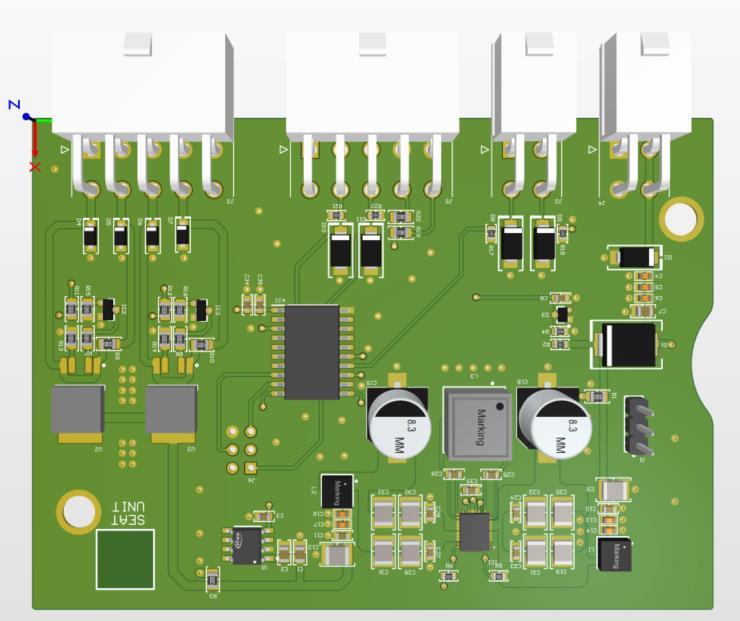
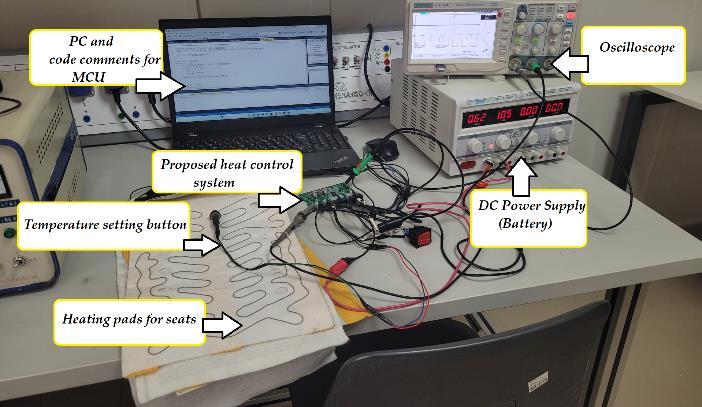
9. (a)3DPCBviewoftheseatcontrolunit,(b) laboratorywork-bench.
Figures 10band10cshowtheoutputvoltageoftheDC–DC converterfor16 V DCand28 V DCinputbatteryvoltages.
As these results show, the quality of the converter output voltageremainsunchanged,andanundamped,fixed24 V DC isgenerated.
TheseresultsshowthatthedesignPCBcanpresentafixed DCvoltageforawidebandofinputvoltagerangesthatcan be evaluated as an advantages for application in different automobileswithdifferentbatteryDCvoltageslikethe12V or24Vwithoutanyneedtosetanyparameterinthecircuit. The test results show the capability of the topology for presentingaDCvoltagethatsuppliestheseatheatersystem. Presenting a variable DC voltage for heater can cause seriousproblemsliketheunstablecurrentfortheheaterand lowefficiency
International Research Journal of Engineering and Technology (IRJET) e-ISSN: 2395-0056
Volume: 12 Issue: 11 | Nov 2025 www.irjet.net p-ISSN: 2395-0072
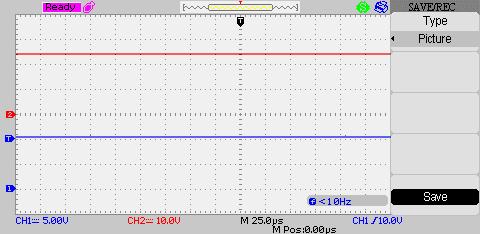
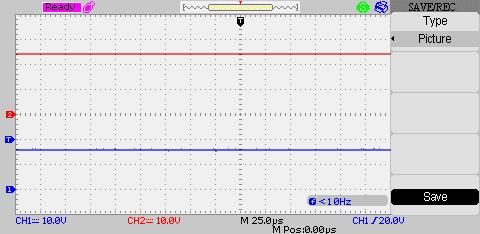
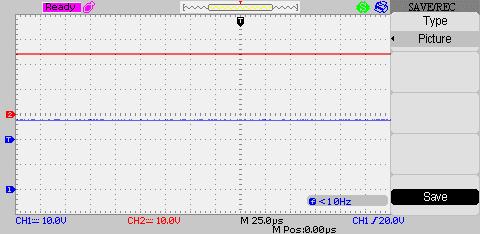
Figure 10 Generatedafixed24VDCoutputvoltagefor(a) 10VDC,(b)16VDCand(c)28VDCastheinputbatteryDC voltages.
Anewandpracticalseatheatercircuitispresentedinthis study.allcodecommentsregardinginputbatterylimitation bandchecks,voltagepolaritychecks,andanyshortcircuits in the system, along with the occupation sensor data and currentcontrolfortheheatingpadsaccordingtopassenger selection,arepresentedthoroughlyandindetail.
Laboratory test results are presented for fixing the DC voltagebytheusedconvertertoshowhowitcanpresenta constant24VDCfordifferentinputvoltages form10to30 VDC.TheproductwasdevelopedintheR&DsectionofSeger
A.Ş in Türkiye according to requests from automotive companiesandisactivelyinuse.
This research was conducted in the R&D department of Seger Ses ve Elektrikli Gereçler San. A.Ş., Bursa, Türkiye, within the framework of industry–university cooperation withBursaTechnicalUniversityunderthesupervisionofDr. Ertekin. The authors thank the supervisor and his organizationfortheirtechnicalsupport.
[1] SafetyResearch&Strategies,Inc.340AnawanStreet/ Suite200,Rehoboth,MA02769,2011.
[2] D.Mihai,"Fuzzy control for temperatureof the driver seatinacar,"2012InternationalConferenceonApplied andTheoreticalElectricity(ICATE),Craiova,Romania, 2012,pp.1-8,doi:10.1109/ICATE.2012.6403436.
[3] A.RajeevVKand V.Prasad,"OnlineAdaptiveGain for Passivity-Based Control for Sensorless BLDC Motor Coupled With DC Motor for EV Application," inIEEE TransactionsonPowerElectronics,vol.38,no.11,pp. 13625-13634, Nov. 2023, doi: 10.1109/TPEL.2023.3288939.
[4] S. Mishra, A. Varshney, B. Singh and H. Parveen, "Driving-Cycle-Based Modeling and Control of SolarBattery-Fed Reluctance Synchronous Motor Drive for Light Electric Vehicle With Energy Regeneration," inIEEETransactionsonIndustryApplications,vol.58, no. 5, pp. 6666-6675, Sept.-Oct. 2022, doi: 10.1109/TIA.2022.3181224.
[5] Ertekin, D. ARVIN converter: a bidirectional DC/DC converterforgrid-connectedG2V/V2Genergystorage and electrification approaches.Electr Eng106, 5485–5505 (2024). https://doi.org/10.1007/s00202-02402295-x
[6] Huang R, Hong F, Ghaderi D. Sliding mode controllerbased e-bike charging station for photovoltaic applications. Int Trans Electr Energ Syst. 2020;30:e12300. https://doi.org/10.1002/20507038.12300
[7] T.Yuvaraj,K.R.Devabalaji,J.A.Kumar,S.B.Thanikanti andN.I.Nwulu,"AComprehensiveReviewandAnalysis oftheAllocationofElectricVehicleChargingStationsin Distribution Networks," inIEEE Access, vol. 12, pp. 5404-5461,2024,doi:10.1109/ACCESS.2023.3349274.
[8] M. Asna, H. Shareef, A. Prasanthi, R. Errouissi and A. Wahyudie,"ANovel Multi-Level ChargingStrategyfor Electric Vehicles to Enhance Customer Charging
International Research Journal of Engineering and Technology (IRJET) e-ISSN: 2395-0056
Volume: 12 Issue: 11 | Nov 2025 www.irjet.net p-ISSN: 2395-0072
Experience and Station Utilization," inIEEE TransactionsonIntelligentTransportationSystems,vol. 25, no. 9, pp. 11497-11508, Sept. 2024, doi: 10.1109/TITS.2024.3372183.
[9] Y. Xie, C. Wang, X. Hu, X. Lin, Y. Zhang and W. Li, "An MPC-BasedControlStrategyforElectricVehicleBattery Cooling Considering Energy Saving and Battery Lifespan," inIEEE Transactions on Vehicular Technology,vol.69,no.12,pp.14657-14673,Dec.2020, doi:10.1109/TVT.2020.3032989.
[10] K. Maalej, S. Kelouwani, K. Agbossou, Y. Dubé and N. Henao,"Long-TripOptimalEnergyPlanningWithOnline MassEstimationforBatteryElectricVehicles,"inIEEE TransactionsonVehicularTechnology,vol.64,no.11, pp. 4929-4941, Nov. 2015, doi: 10.1109/TVT.2014.2376700.
[11] M. Özden, D. Ertekin and P. Siano, "LevenbergMarquardt Algorithm-Based Neural Network Smart Control Strategy for a Low-Input Current Ripple and High-VoltageGainPowerConverterinFuel-CellsEnergy Systems,"inIEEEAccess,vol.13,pp.3613-3631,2025, doi:10.1109/ACCESS.2024.3524378.
[12] DavutErtekin,MustafaÖzden,AdnanDeniz,Muhammed ZeydToprak,Neuro-fuzzy-SVPWMswitched-inductorcapacitor-based boost inverter for grid-tied fuel cell power generators, design and implementation, Renewable Energy, Volume 227, 2024, 120469, ISSN 0960-1481, https://doi.org/10.1016/j.renene.2024.120469.
[13] Tekin,H.Setrekli,G.Murtumu,E.;Karşıyaka,H.;Ertekin, D. A Proposed Single-Input Multi-Output BatteryConnected DC–DC Buck–Boost Converter for Automotive Applications.Electronics2023,12, 4381. https://doi.org/10.3390/electronics12204381
[14] H.Gholizadeh,M.Dehghan,R.S.Shahrivar,M.H.Samimi and M. Ghassemi, "A Non-Isolated Quadratic DC-DC ConverterImprovedbyVoltage-LiftTechniqueSuitable forHigh-VoltageApplications,"inIEEEAccess,vol.12, pp. 158292-158310, 2024, doi: 10.1109/ACCESS.2024.3484667.
[15] M.DiwakarNaik,U.Vinatha,M.VenkateshNaikandP.K. Bonthagorla,"InvestigationandPerformanceEvaluation ofNovelSingle-SwitchHigh-GainDC-DCConvertersfor DCMicrogridApplications,"inIEEEAccess,vol.13,pp. 103798-103808, 2025, doi: 10.1109/ACCESS.2025.3579261.
[16] K.-M.Kim,"High-EfficiencyResonantDC-DCConverter With Low Input Current Ripple for DC Power Distribution Systems," inIEEE Access, vol. 12, pp. 85983-85994,2024,doi:10.1109/ACCESS.2024.3416614.
2025, IRJET | Impact Factor value: 8.315 |
[17] Ghaderi, D.; Maroti, P.K.; Sanjeevikumar, P.; HolmNielsen,J.B.;Hossain,E.;Nayyar,A.AModifiedStep-Up ConverterwithSmallSignalAnalysis-BasedController forRenewableResourceApplications.Appl.Sci.2020,10,1 02.https://doi.org/10.3390/app10010102
[18] EfficiencyImprovement for a DC-DCQuadratic Power BoostConverterbyApplyingaSwitchTurn-offLossless Snubber Structure Based on Zero Voltage Switching. (2018).Elektronika Ir Elektrotechnika,24(3), 1522.https://doi.org/10.5755/j01.eie.24.3.20977
[19] Ertekin,D.;Baltacı,K.;Çelebi,M.AdvancingRenewable Energy:AnExperimentalStudyofaSwitched-Inductor, Switched-Capacitor Luo Boost Converter for LowVoltage Applications.Electronics2023,12, 5006. https://doi.org/10.3390/electronics12245006
Hakan Tekin received his Bachelor's degree from Fırat University in 2021 and his Master's degree from Bursa Technical University in 2023. He is currently pursuing his doctoralstudiesatBursaTechnicalUniversity.Heiscurrently workingasanembeddedsystemsdesignengineeratSegerSes ve Elektrikli Gereçler San. A.S. His research and areas of interestincludepowerelectronics,DC-DCconverters,control circuits,electricvehicles,andacousticdevicedesigns.
ErenMurtulureceivedhisBachelor'sdegreefromİskenderun TechnicalUniversityin2021.Heiscurrentlyworkingasan electronicsprojectengineeratSegerSesveElektrikliGereçler San. A.Ş., where he is responsible for managing electronic project processes, creating system designs, and defining design inputs. His professional interests include electronic systemdesign,embeddedsystems,andprocessmanagement inautomotiveelectronics.