
International Research Journal of Engineering and Technology (IRJET) e-ISSN: 2395-0056
Volume: 13 Issue: 01 | Jan 2026 www.irjet.net p-ISSN: 2395-0072
FABRICATION, MECHANICAL CHARACTERIZATION AND STATISTICAL OPTIMIZATION OF ALUMINIUM 7075 METAL MATRIX COMPOSITE REINFORCED WITH COPPER, SILICON CARBIDE AND FLY ASH
Dr K. DHARMAREDDY¹, T. LAKSHMANNA²
¹Professor, Department of Mechanical Engineering, Sri Venkateshwara University College of Engineering, Tirupathi, India
²PG Student, Department of Mechanical Engineering, Sri Venkateshwara University College of Engineering, Tirupathi, India
Abstract - Aluminum 7075 alloy is widely applicable to the aerospace, automotive, and structural industries as it has a high ratio, but its wear resistance and hardness on the surface are not sufficient to withstand extreme service conditions. In the current study, a hybrid metal matrix composite through the stir casting method was made using Aluminum 7075 reinforced with Copper (Cu), Silicon Carbide (SiC) and Fly Ash. A Taguchi L9 orthogonal array was used to design three levels of reinforcement so as to make the experiments fewer in number but still statistically reliable. The artificial composites were machined as per the ASTM standards, and the strength and hardness of the composite were evaluated in terms of tensile strength. Signal-to-noise (S/N) ratio analysis and Analysis of Variance (ANOVA) were used to statistically optimize between all of these reinforces to assess their contribution to the mechanical performance. As the experimental findings indicate, the addition of SiC leads to great improvement in hardness and tensile strength owing to the high degree of stiffness and loadbearing capacity, which, on the other hand, Copper strengthens the interfacial bonding and ductility by solid solution strengthening effects. The fly ash also helps improve stiffness and reduce weight; therefore, it makes the composite economical and sustainable to the environment. The optimum composition, which is obtained through Taguchi and ANOVA analysis, has better mechanical performance than the base alloy. The research verifies that stir casting is a convenient and economical process in the manufacturing of high-performance Aluminum 7075 hybrid composites that are applicable in high engineering purposes.
Keywords: Hybrid metal matrix composite, Silicon carbide, fly ash, Stir casting, Aluminum 7075, Taguchi method, ANOVA.
Introduction
The aluminum alloys are important in present-day engineered applications because they are low-density, have high specificstrength,possessgoodcorrosionresistance,andarewellmachinable[1]. Aluminum7075,amongthem,isoneof the strongest heat-treatable aluminum alloys and has found wide application in aerospace structures, automotive parts and defense applications where the ratio of strength to weight is the most vital [2]. Even though Aluminum 7075 has superiorstrengthandfatigueresistance,Aluminum7075haslimitedwearresistanceandaveragehardnessonthesurface, limitingitsuseincomponentsthatrequirehighfrictionandabrasiveconditions[3].
Over the recent years, metal matrix composites (MMCs) have been receiving considerable attention due to the fact that they possess better mechanical and tribological characteristics than monolithic alloys [4]. The effectiveness of load transferandsuppressionofplasticdeformationhasbeenknowntohelpharden,stiffenandincreasethewearresistanceof aluminum matrices by incorporating hard ceramic reinforcements like Silicon Carbide (SiC) into them [5]. The added contentofceramicparticlesmay,however,renderitbrittleandductileinnature.Toaddressthisdrawback,hybridmetal matrix composite, i.e., mixtures of metallic and ceramic reinforcements have also been suggested to provide a balanced strength,hardnessandtoughness[6].
Copperfindsextensiveapplicationasastrengtheningagentoranalloyingelementin aluminumalloysduetoitsabilityto enhancestrengthbysolidsolutionstrengtheningaswellasprecipitationstrengtheningmechanisms[7].Recently,flyash, a by-product of thermal power plants, because of its industrial waste, has also received attention as a low-cost and lightweight reinforcing material and has been shown to contribute to the stiffness increment and environmental friendliness [8]. Adding Copper, SiC and Fly Ash into Aluminum 7075 simultaneously is hence likely to make it a costeffectivehybridcompositewithhighermechanicalperformance.
International Research Journal of Engineering and Technology (IRJET) e-ISSN: 2395-0056
Volume: 13 Issue: 01 | Jan 2026 www.irjet.net p-ISSN: 2395-0072
Thecurrentpaperisdevotedto theproductionof Aluminum 7075hybridmetalmatrixcomposites usingthestircasting method, along with an assessment of the mechanical characteristics of the obtained materials. Also, a Taguchi-based statisticalmethod,alongwithANOVA,isutilizedtofindthebestreinforcementmixtureanddeterminethemostsignificant parametersontensilestrengthandhardness.
Literature Review
Aluminum7075isahigh-strengthAl-Zn-Mg-Cuseriesalloythathasbeensignificantlyexploredinthecontextofsuperior structural use as it shows a superb strength-to-weight ratio and boasts good fatigue performance [1]. Nevertheless, its relatively low wear resistance and moderate surface hardness have prompted researchers to come up with Aluminum 7075-based metal matrix composites (MMCs) and hybrid composites that have better mechanical and tribological properties[2].SiliconCarbide(SiC)isoneofthesereinforcementsthathavebeenhighlyadoptedduetoitshighhardness, thermalstability,andgoodload-bearingcapacity,amongotherthings[3].
It has been found by various researchers that the introduction of SiC particles in Aluminum 7075 greatly increases hardness,tensilestrengthandwearresistancebecauseoftheeffectivemechanismsoftransferringloadsandgrainrefining [4]. Bharathi et al. [5] prepared Al7075-SiC composites by the powder metallurgy method, where they noted that there was a significant rise in the hardness and refinement of the grain structure with a rise in SiC content. On the same note, Mulugundam et al. [6] documented enhanced mechanical and tribo logical behavior of Al7075 composites with 15 wt% SiC,whichwasattributedtodispensehomogeneityandhighinterfacialbonding.
During the last several years, hybrid metal matrix composites have become of interest since the reinforcements can be tailored more easily when two or more are combined [7]. Fly ash has also become a promising low-cost and lightweight reinforcement whose two-fold benefits are a reduction in the cost and waste use [8]. According to Rajesh et al. [9], the hardness and tensile strength of Al7075 composites reinforced with SiC and fly ash were better than those of the base alloy.Equally,Sathishkumaretal.[10]indicatedthatflyash-basedaluminumcompositesexhibitedbetterwearresistance, higherstiffnessandacceptableductility.
Theadditionofcopperintoalloysofaluminumisfrequentlydonetoincreasestrengthbysolidsolution strengtheningas wellasbeingprecipitationhardened[11].Sravanthietal.[12]haveshownthattensilestrengthandhardness aregreatly enhanced with the controlled addition of copper in Al7075. It has also been reported that the interface bonding and efficiencyofloadtransferareenhancedbythecombinedeffectofCopperandSiCreinforcements[13].
Though numerous studies have been done on the Al7075 composites with reinforcements using either single or two reinforcements,thereislittleresearchdoneontheuseofCopper,SiCandFlyAshcombinedwithstatistical optimization methods,includingtheTaguchimethodandANOVA[14].Hence,thisresearchwillfillthisresearchgapbyformulatingand refininganAl7075-Cu-SiC-FlyAshhybridcompositethroughanexperimentalandstatisticalprocedure.
Materials and Methodology
Aluminum7075alloywaschosenasthematrixinthecurrentinvestigationasithasahighstrength-weightratio,excellent fatigueresistance,andalargerangeofuseintheaerospaceandstructural applications[1].Zinc,magnesium,andcopper arethemainalloyingelementsofthechemicalcompositionofAl7075.Copper(Cu),SiliconCarbide(SiC)andFlyashwere selectedasreinforcementstocomeupwithahybridmetalmatrixcomposite.Solidsolutionstrengtheningwasdoneusing copper powdertoincrease strengthand interfacial bonding, and to increase hardness,stiffness,and wear resistance. SiC particles were used [2]. The industrial waste by-product, fly ash, was included to enhance the stiffness and sustainable developmentofmaterialsasalightweightandlow-costreinforcement[3]
International Research Journal of Engineering and Technology (IRJET) e-ISSN: 2395-0056
Volume: 13 Issue: 01 | Jan 2026 www.irjet.net p-ISSN: 2395-0072
Remaining
The composites were made bythe stir casting method, whichhappensto be one of the cheapest, inadditionto the most commonliquidmetallurgypathwaysoffabricating aluminumsmatrixcomposites[4].Theingotsof aluminum7075were melted in an electric resistance furnace with the temperature around 800-850 degC. To enhance wettability, the reinforcementparticleswerepreheatedat400-600degCinordertoremovemoisture.Avortexwasformedinthemoltenaluminums by mechanical stirring, and the reinforcements to be used were preheated and in the molten-aluminum and addedgraduallyatastirringrateof300-600rpmtoallowevendistributiontotakeplacewithinaperiodof8-10minutes.
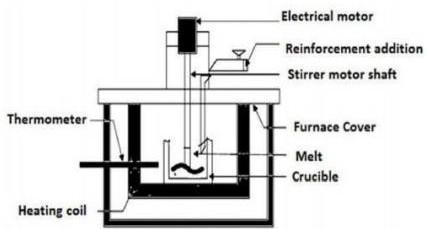
Figure 0-1 Stir Casting Experimental Setup
AccordingtotheDesignofExperimentsintroducedbyTaguchi,anL9orthogonalarraywasused,andthreecontrolfactors (Cu,SiCandFlyAsh)wereselected,andthreelevelswereusedtodesigntheexperimentalmatrix[5].Themoltenmixwas then carefully mixed, and then the mixture was poured into preheated metallic molds and left to dry at ambient temperature.
The samples of cast were machined according to the ASTM standards to obtain mechanical testing samples. Universal TestingMachinewasusedtoapplytensiletestsincompliancewithASTME8/E8M,andhardnesswasdeterminedthrough theuseofVickershardnesstesting.Signal-to-noiseratioandAnalysisofVariance(ANOVA)werealsousedtoanalysethe experimentalresultsindeterminingthesignificanceofeachparameterofreinforcement.
International Research Journal of Engineering and Technology (IRJET) e-ISSN: 2395-0056
Volume: 13 Issue: 01 | Jan 2026 www.irjet.net p-ISSN: 2395-0072
Table 0-2 Design of Compositions – 3 Levels
Analysis
1.1 Taguchi Method of Design of Experiments.
In the current study, the Taguchi technique has been incorporated to effectively examine the effect of the reinforcement parametersonthemechanicalpropertiesoftheAluminium7075hybridcompositeattheleastnumberofexperiments[1]. The control factors were taken to be three, i.e. Copper (Cu), Silicon Carbide (SiC) and Fly Ash and each of them at three levels.Anine-experimentorthogonalarraywaschosen,adesignthatwouldonlyneed9experimental runsratherthan27 thatwouldbeneededinacompletefactorialdesign.Thismethodprovidesmajorsavingsintermsofcostandtimeofthe experimentandpreservesthestatisticalreliability[2].
DesignSummary
TaguchiArray L9(3^3)
Factors: 3
Runs: 9
ColumnsofL9(3^4)array:123
Table 0-1 Experimental Results
The performance properties that were to be optimized were ultimate tensile strength (UTS) and Vickers hardness. The signal-to-noise (S/N) ratio calculation is based on the larger-the-better criterion, as both of the properties are to be maximized. The standard Taguchi formulation used to compute the S/N ratio of each response enables simultaneous considerationofboththeaverageandthevariationinonestatistic[3].
1.2 Signal-to-noise ratio analysis
The analysis of the signal-to-noise ratio was conducted to determine the best combination of the reinforcement parametersthatareabletomaximizethetensilestrengthandhardness. Largerisbetter
International Research Journal of Engineering and Technology (IRJET) e-ISSN: 2395-0056
Volume: 13 Issue: 01 | Jan 2026 www.irjet.net p-ISSN: 2395-0072
Table 0-2 Response Table for Signal To Noise Ratios For Tensile Strength
ResponsetableforsignaltonoiseratioistabulatedinTable4-2forTENSILESTRENGTH,andobservedthatthedeltavalue forsignaltonoiseratioishigherforCopper,followedbySiliconCarbideandFlyAsh.
Table 0-3 Response Table For Means For Tensile Strngth
Responsetableformeansistabulated4-3forTENSILESTRENGTHandfoundthatstandarddeviationishigherforCopper follwedbySiliconCarbideandFlyAsh.Copperhasmoreeffectontheresponsecomparedtoothertwofactors.
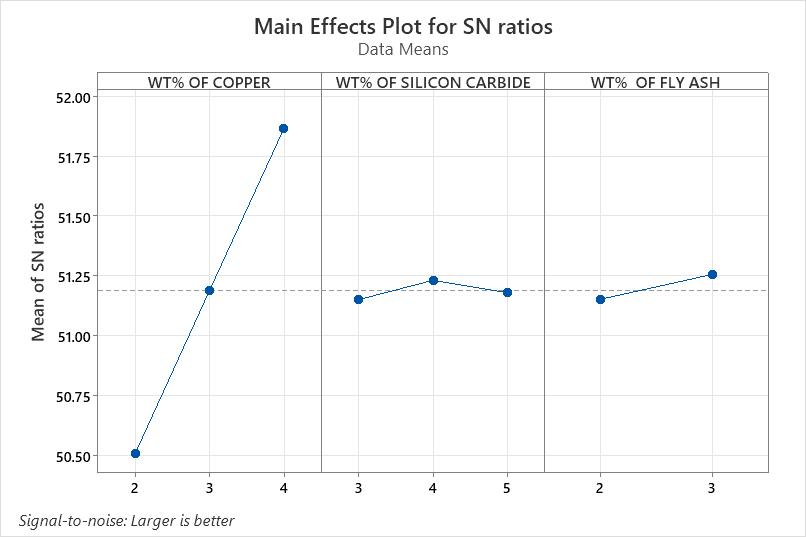
0-1 Main Effects Plot For S/N Ratios Of Tensile Strength
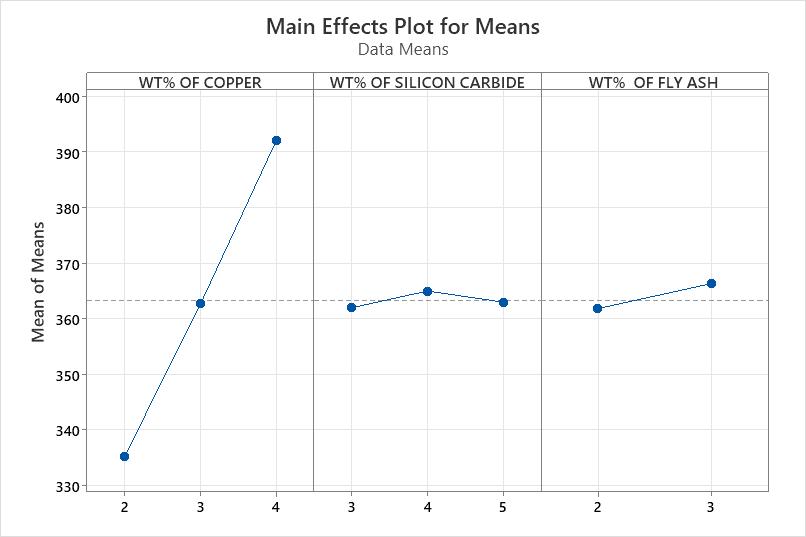
Figure 0-2 Main Effects Plot For Means Of Tensile Strength
Whereisthevalueofthemeasuredresponse,andisitthenumberofobservations ThegreatertheS/Nratios,thehigher theperformanceandthereducedsensitivitytothenoisefactors.
International Research Journal of Engineering and Technology (IRJET) e-ISSN: 2395-0056
Volume: 13 Issue: 01 | Jan 2026 www.irjet.net p-ISSN: 2395-0072
Table 0-4 Response Table for Signal To Noise Ratios For Hardness
Response table for signal to noise ratio is tabulated table 4-4 for HARDNESS and observed that delta value for signal to noiseratioishigherforCopper,followedbySiliconCarbideandFlyAsh.
Table 0-5 Response Table for Means For Hardness
Responsetableformeansistabulated4-5forHARDNESSandfoundthatstandarddeviationishigherforCopperfollwed bySiliconCarbideandFlyAsh.Copperhasmoreeffectontheresponsecomparedtoothertwofactors.
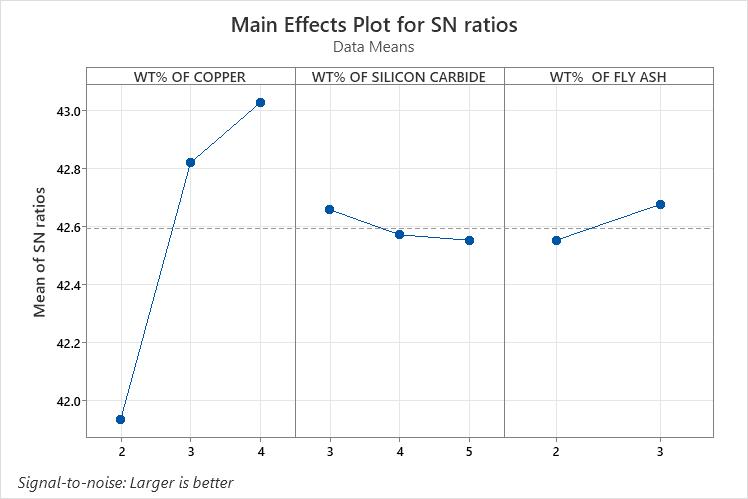
Figure 0-3 Main Effects Plot For S/N Ratios Of Hardness
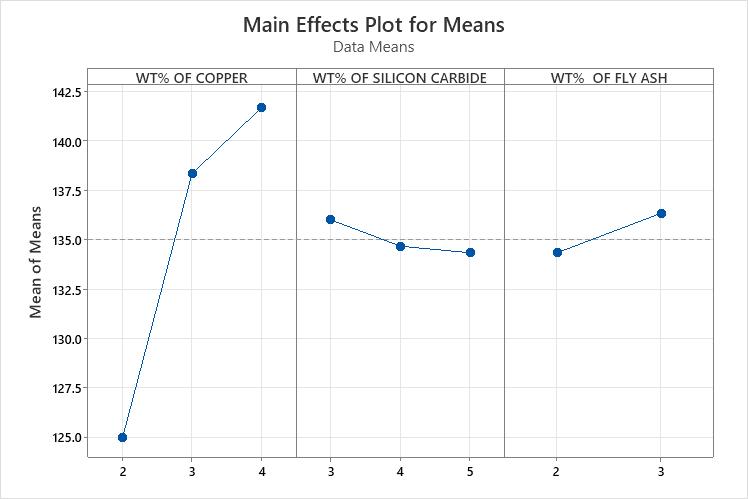
Figure 0-4 Main Effects Plot For Means Of Hardness
International Research Journal of Engineering and Technology (IRJET) e-ISSN: 2395-0056
Volume: 13 Issue: 01 | Jan 2026 www.irjet.net p-ISSN: 2395-0072
Based on these plots, it was found that the most substantive impact on both tensile strength and hardness is on the SiC content, which is then succeeded by Copper, and Fly Ash has a relatively lesser impact. This was found to be the level combinationthatwouldgivethebestS/Nratioinbothresponses.
1.3 Analysis of Variance (ANOVA)
Thestatisticalsignificanceandthecontributionofthepercentageofeachparameterofreinforcementsonthemechanical properties were analysed using Analysis of variance (ANOVA). ANOVA divides the overall variation of experimental outcomes into the parts of contributions of each of the control factors, as well as experimental error. The F-test was employedindeterminingwhetherafactorhasanoticeableimpactontheresponseatacertainlevelofconfidence.
Table 0-6 Analysis Of Variance For Tensile Strength
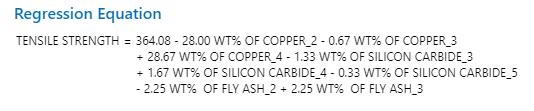
Figure 0-5 Regression Equation Of Tensile Strength
Table 0-7 Analysis Of Varaince For Hardness

Figure 0-6 Regression Equation Of Hardness
AccordingtotheANOVAresults,allthefactorsthataffecttensilestrengthandhardnessaredominatedbySiCowingtoits high stiffness and bearing capacity. Second, but not least, copper contributes primarily because it enhances interfacial bonding and strengthens precipitation. Fly Ash also contributes a minor, however, not negligible factor that is mainly relatedtotheenhancementofstiffnessandthereductionofweight.
International Research Journal of Engineering and Technology (IRJET) e-ISSN: 2395-0056
Volume: 13 Issue: 01 | Jan 2026 www.irjet.net p-ISSN: 2395-0072
1.4 Interpretation of statistical results
ThehybridTaguchiandANOVAanalysisassuresthatthemechanical behaviorofthehybridcompositeofAl7075ishighly controlled by the ceramic reinforcement level, especially SiC. The existence of Copper is, however, important in the balancing of strength and ductility, where Fly Ash would be involved in the economical and sustainable factors without drasticallyimpairingthemechanicalperformance.Theoptimizedcombinationoftheparametersoffersasensibleprocess ofchoosingthereinforcementlevelsintheapplicationofengineeringpractice.
Results and Discussion
1.5
Tensile Strength Behavior
The tensile test outcome of the Aluminum 7075 hybrid composites reinforced with Copper, Silicon Carbide, and Fly Ash hasaclearimprovementincomparisonwiththeunreinforcedbasealloy.Thistensilestrengthimprovementislargelydue to the hard SiC particles, which successfully shift the load off of the ductile aluminum matrix to the hardening reinforcementphase.
TENSILE STRENGTH
An increase in the content of SiC between low and medium contributes to a significant increase in UTS because of an increaseintheload-bearingcapacityandthelimitofplasticdeformation.Butatextremelylargereinforcementlevels,the improvement rate is marginal, and this can be linked to particle clustering and a decrease in matrix continuity. This is further reinforced by the use ofCopper astensile strengthis increased by bothinterfacial bonding and the precipitation hardeningofthealuminummatrix.FlyAshmodestlyenhancesstrength,butalsoexcessusageofthesameislikelytolower theductilitybecauseitisstiffandbrittle.
International Research Journal of Engineering and Technology (IRJET) e-ISSN: 2395-0056
Volume: 13 Issue: 01 | Jan 2026 www.irjet.net p-ISSN: 2395-0072
1.6 Hardness Characteristics
Thevaluesofhardnessofthefabricatedcompositesexhibitasteadyrisewithanincrementinthereinforcementcontent, especially SiC. As Figure 5-2 shows, the Vickers hardness values are much greater in the case of specimens with a high content of SiC. This is possible because of the inherent hardness of SiC particles and their even distribution in the aluminumbase,whichactsasaresistancetoalocalizedplasticdeformation.
Table 0-2 Vickers Hardness Tests Of Aluminum Mmc’s
Figure 0-2 Vickers Hardness Graph
International Research Journal of Engineering and Technology (IRJET) e-ISSN: 2395-0056
Volume: 13 Issue: 01 | Jan 2026 www.irjet.net p-ISSN: 2395-0072
The other process of hardening is through solid solution strengthening and precipitation, which copper also helps in. Surface resistance to indentationis alsoincreased further by flyAshparticles, whichare relativelyhardand lightweight. The resultant effect of these reinforcements is that the resultant composite material has a significantly higher surface hardnessthantheunderlyingAl7075alloy.
1.7 Impact of Synergy of Reinforcement.
A synergistic effect on the mechanical properties is present in the hybrid reinforcement system. Although hardness and strength are mainly controlled by SiC, Copper is very important in ensuring that the ductility is acceptable and that the transfer of load across the matrix-particle interface is enhanced. Fly Ash, besides lowering the cost and density of the material,helpsintheadvancementofstiffnessandstabilityofthemicrostructure.Thestatisticaloptimizationtechniqueis proven to be effective by the fact that the optimized composition determined using the Taguchi and ANOVA analysis demonstrates the optimum tensile strength and hardness. The data obtained reflects that the ceramic and metallic reinforcementsshouldhaveabalancedratiotopreventahighdegreeofbrittlenatureand,atthesametime,attainahigh strengthandsurfacehardness.
1.8 Fracture and Failure Considerations.
The tensile behavior of the fracture reveals that the tensile specimens deformed under a mixed mode of failure. Lower reinforcement content composites have more ductile fracture properties compared to those with higher SiC and Fly Ash content, which exhibit relatively brittle fractures because of the existence of rigid particles, which hinder plastic deformation. This fact also contributes to the necessity of optimization and not mere maximization of the content of reinforcement.Ingeneral,thefindingsattesttothefactthattheAl7075-Cu-SiC-FlyAshhybridcompositepreparedviastir castingpossessesmuchbettermechanicalcharacteristicsandcanbeadjustedtocomplexengineeringpurposesbyuseofa goodcontroloverthereinforcementcontent.
Conclusions
Conclusions made are based on the experimental study and statistical analysis of Aluminum 7075 hybrid metal matrix compositesreinforcedwithCopper,SiliconCarbide,andFlyAsh.Thefollowingconclusionsaremade:
1. The hybrid composites that were made through the stir casting technique successfully produced aluminum 7075based composites and showed that the technique is easy, cost-effective and appropriate when it comes to mass productionofparticulatereinforcedMMCs.
2. The impact of Silicon Carbide on tensile strength and hardness is greatly enhanced by its high stiffness and loadbearing,whichprovesthedominantpositionofthematerialamongthechosenreinforcements.
3. The addition of copper increases interfacial bonding between the aluminum matrix and the reinforcements and also helpsinincreasingthestrengthofthematerialthroughsolidsolutionandprecipitationstrengtheningprocesses.
4. Fly Ash is a low-cost and lightweight type of reinforcement, which enhances stiffness and hardness and allows industrialwastetobeutilizedmoresustainably,butwhenusedinexcessivequantities,itslightlydecreasesductility.
5. Signal-to-noiseratioanalysisandTaguchiL9designhavebeenusefulin ensuringfewerexperimentsweredone,and thebestcombinationofreinforcementswasfoundtomaximizemechanicalperformance.
6. TheresultsoftheAnalysisofVariance(ANOVA)showedthatSiChasthemostsignificanteffectonthetensilestrength andthehardness,followedbyCopper,andtheFlyAshhasanintermediatebutsignificanteffect.
7. TheoptimizedhybridcompositehasmuchbettermechanicalpropertiesthanthebaseAluminum7075alloy,buthasa reasonableductilevalue.
8. Fracture behavior signals a ductile-brittle mode that is mixed, which points to the significance of strength reinforcementbalance,butnottheexcessiveadditionofceramic.
9. The Al7075-Cu-SiC-Fly Ash hybrid composite that is developed is applicable in high-end structures and tribological applications,intheaerospace,automotiveanddefenseindustries
References
[1] Davis,J.R.,1993. Aluminium and Aluminium Alloys.ASMInternational,MaterialsPark,OH.
[2] Callister,W.D.andRethwisch,D.G.,2018. Materials Science and Engineering: An Introduction.10thed.Wiley,NewYork.
[3] Surappa,M.K.,2003.Aluminiummatrixcomposites:Challengesandopportunities. Sadhana,28(1–2),pp.319–334.
International Research Journal of Engineering and Technology (IRJET) e-ISSN: 2395-0056
Volume: 13 Issue: 01 | Jan 2026 www.irjet.net p-ISSN: 2395-0072
[4] Hashim, J., Looney, L. and Hashmi, M.S.J., 1999. Metal matrix composites: Production by the stir casting method. Journal of Materials Processing Technology,92–93,pp.1–7.
[5] Bharathi,P.,Balamurugan, K.andUthayakumar,M., 2023.Mechanical andmicrostructural behaviourof Al7075–SiC–B4Chybridcompositesfabricatedbypowdermetallurgy. Materials Today: Proceedings,72,pp.2101–2107
[6] Mulugundam,S.S.,Reddy,A.C.andKumar,A.,2021.Mechanical andtribological behaviour ofAl7075–SiCcomposites fabricatedbypowdermetallurgy. Journal of the Brazilian Society of Mechanical Sciences and Engineering,43,pp.1–12.
[7] Miracle, D.B., 2005. Metal matrix composites – From science to technological significance. Composites Science and Technology,65(15–16),pp.2526–2540.
[8] Rohatgi, P.K., 2006. Cast aluminium matrix composites for automotive applications. Journal of Materials, 58(11), pp.71–76.
[9] Rajesh,S., Senthilkumar, V. andSabarish,R.,2020.Mechanical characterisation of Al7075reinforced with SiC andfly ashhybridcomposites. Materials Today: Proceedings,27,pp.2553–2557.
[10] Sathishkumar, A., Stalin, B. and Ravichandran, M., 2020. Mechanical and tribological behaviour of stir-cast aluminiumhybridcomposites. IOP Conference Series: Materials Science and Engineering,912,032041.
[11] Totten, G.E. and Mackenzie, D.S., 2003. Handbook of Aluminium: Vol. 1 – Physical Metallurgy and Processes. Marcel Dekker,NewYork.
[12] Sravanthi,C.,Reddy,P.R.andRao,K.S.,2024. Optimisationofalloyingelementsand SiCadditioninAl7075using theTaguchimethod. Advances in Materials and Processing Technologies,10(2),pp.1–14.
[13] Prasad,S.V. andAsthana,R., 2004. Aluminum metal–matrixcompositesforautomotiveapplications:Tribological considerations. Tribology Letters,17(3),pp.445–453.
[14] Montgomery,D.C.,2017. Design and Analysis of Experiments.9thed.Wiley,NewYork.
[15] Roy,R.K.,2010. A Primer on the Taguchi Method.2nded.SocietyofManufacturingEngineers,Dearborn,MI.
[16] Ramesh,C.S.,Ahamed,A.,Channabasappa,B.H.andKeshavamurthy,R.,2009.DevelopmentofAl6061–TiB2insitu composites. Materials & Design,30(6),pp.222–226.
[17] Sahu,M.K.andSahu,R.K.,2019.FabricationandcharacterisationofAl7075–B4C–flyashhybridcompositesbystir casting. Materials Today: Proceedings,18,pp.2892–2900.
[18] Namdev, A.P., Joshi, S.S. and Patil, P.P., 2020. Friction stir processing of Al7075 with SiC and fly ash reinforcements. Materials,13(3),pp.1–15.