
International Research Journal of Engineering and Technology (IRJET) e-ISSN:2395-0056
Volume:12Issue:04|Apr2025 www.irjet.net p-ISSN:2395-0072
International Research Journal of Engineering and Technology (IRJET) e-ISSN:2395-0056
Volume:12Issue:04|Apr2025 www.irjet.net p-ISSN:2395-0072
Mr. Harshal Koli 1 , Mr. Kishan Kalburge 2 , Mr. Raghavendra Gajjam 3 , Mr. Sanket Pawar 4
1 Research Scholar at Civil Dept., S.E.S Polytechnic College, Solapur, Maharashtra 413002
2 Research Scholar at Civil Dept., S.E.S Polytechnic College, Solapur, Maharashtra 413002
3 Research Scholar at Civil Dept., S.E.S Polytechnic College, Solapur, Maharashtra 413002
4 Research Scholar at Civil Dept., S.E.S Polytechnic College, Solapur, Maharashtra 413002***
Abstract - This report investigates the feasibility and benefitsofutilizingelectronicwaste(e-waste)asasustainable alternative in the construction industry. With the rapid increase in electronic device usage, the world is witnessing a parallel surge in e-waste generation, raising serious environmental and health concerns due to the presence of toxicmaterials.Thereportexploreshowrecycledcomponents from e-waste such as plastics, metals, and glass can be repurposed as partial substitutes for conventional building materials like cement, sand, and aggregates. Through this approach, the construction sector can reduce its reliance on natural resources, lower material costs, and contribute to environmentalconservation bydivertingharmfulwastefrom landfills. The report also discusses the technical, environmental, and economic implications of this practice, along with the challenges related to safe recycling and public acceptance.Ultimately,thestudyhighlightsthepotentialofewaste reuse as a promising step toward greener construction practices and improved waste management, while emphasizing the need for further research and technological development to ensure safety, performance, and scalability
Key Words: E-waste,Sustainableconstruction,Electronic wastemanagement,Circulareconomy,E-wasterecycling.
The increasing use of electronic devices has resulted in a sharp rise in electronic waste (e-waste), which poses significant environmental and health hazards due to the presenceoftoxicelements.Oneinnovativeandsustainable waytotacklethisgrowingproblemisbyintegratinge-waste intoconstructionmaterials.Thismethodinvolvesrecycling componentslikeplastics,metals,andglassfromdiscarded electronics to partially replace traditional raw materials usedinconcreteandotherbuildingproducts.Incorporating e-waste in construction not only helps conserve natural resourcesbutalsoreducesthenegativeimpactassociated with conventional e-waste disposal methods, such as landfilling or incineration. Moreover, this approach can lowerconstructioncostsandreduceenergyconsumptionby minimizing the demand for energy-intensive material extraction. Despite these benefits, there are certain challengestoaddress,suchasensuringthesafeprocessing
of hazardous components and gaining public trust in the durabilityandsafetyofthesealternativematerials.reusingewasteinconstructionoffersapromising,eco-friendly,and economicallyviablestrategyformanagingelectronicwaste whilealsomeetingthematerialdemandsoftheconstruction sector. Nevertheless, further advancements in recycling technologiesandqualitycontrolareessentialtofullyrealize itsbenefits.
To explore and promote the effective reuse of electronic waste in various construction applications suchas filling materials,pavements,andminorinfrastructureworks with the objective of reducing environmental pollution, minimizingthedemandfornaturalresources,andsupporting sustainableconstructionpractices.
1. InnovativeReuseofE-Waste:Todevelopcreativeand practical techniques for recycling electronic waste, convertingdiscardedcomponentsintousefulmaterials forconstructionapplications.
2. Minimize Environmental Harm: To reduce the ecologicalhazardslinkedtoimpropere-wastedisposal such as soil and water contamination caused by hazardoussubstanceslikelead,mercury,andcadmium byincorporatinge-wasteintoconstructionprocesses.
3. Promote Eco-Friendly Construction: To support the shifttowardsustainablebuildingpracticesbyreplacing traditional raw materials (such as sand, gravel, and cement) with recycled e-waste, encouraging the production of environmentally responsible "green concretes."
4. Reduce Construction Expenses: To investigate the potentialforloweringconstructioncoststhroughthe useofe-wasteasanalternativetocostlyrawmaterials, without compromising the quality or strength of the finalstructures.
5. Boost Resource Efficiency: To increase the recovery andreuseofvaluableelementsfrome-wastesuchas metals, plastics, and glass thereby reducing the dependence on newly mined or manufactured resources.
International Research Journal of Engineering and Technology (IRJET) e-ISSN:2395-0056
Volume:12Issue:04|Apr2025 www.irjet.net p-ISSN:2395-0072
6. EnhanceMaterialPerformance:Toevaluatetheimpact ofe-wasteinclusionontheperformancecharacteristics ofconstructionmaterials,includingimprovementsin thermalproperties,strength,andoveralldurability.
7. AdvanceSustainableBuildingGoals:Tocontributeto more sustainable, affordable, and environmentally consciousconstructionpracticesbyutilizinge-wastein theproductionofbuildingmaterials.
8. AlleviateResourceShortages:Toaddressthegrowing scarcityofnaturalaggregatesbyidentifyinge-wasteas aviablealternativesourceforconstructioninputs..
2. Literature Review
Contributionsofresearchersarepresentedasfollows,
S.Lehar,I.Lehar(2019) [1] this study emphasizes the growing interest in transforming waste and recycled materials into sustainable construction resources. The authorshighlightthatthenegativeenvironmentaleffectsof traditional construction materials have led researchers to exploreeco-friendlyalternatives.Thepaperreviewsvarious types of waste such as industrial, agricultural, and electronic andexamineshowtheirby-productscanbeused in construction to reduce the environmental footprint of buildingpractices.
S.K.Kalifyavardhan,P.R.Prem,P.S.Ambinly [2] thispaper exploreshowtherapidexpansionoftheelectronicsindustry and changing consumer lifestyles have resulted in a significantincreaseinelectronicwaste.Theauthorsdiscuss the challenges posed by the disposal of electrical and electronicequipmentandunderlinetheimportanceoffinding sustainablesolutionsformanagingthiswaste.Theysuggest thatreusingorrecyclinge-wasteinconstructioncouldbeone effective way to manage the growing volume of discarded electronics.
M.Masuduzzaman,S.K.S.Amit(2018) [3] thisconference paperintroduceselectronicwasteasapromisingmaterialfor useintheconcreteindustry.Theauthorsexplainthate-waste can be repurposed as a partial substitute for conventional concrete ingredients. Their findings suggest that using ewasteinconcreteproductionisnotonlytechnicallyfeasible butalsooneofthemosteffectivewaystomanageelectronic waste while supporting the development of smart, sustainableurbaninfrastructure..
A.Bahadoran,J.R.DeLile,S.Masudy-Panah(2022)[4] this reviewpaperdiscussesthedevelopmentandapplicationof photocatalyticmaterialsderivedfrome-waste.Theauthors examine various studies indexed in major databases like Springer,Scopus,andScienceDirect,focusingonthephysical andchemical propertiesofthesematerials.Theypointout that certain properties of e-waste-derived substances are comparable to those found in conventional construction materials, making them suitable for use in various civil engineeringapplications,includingstructuralelements
3.
MaterialsUsedintheProject
Thematerialsusedinthisstudywerecollectedfromvarious reliable sources. Prior to their application, each material underwentappropriatetestingtodetermineitssuitabilityfor useinconstructionwork.
Theprimarymaterialsusedinthisprojectinclude:
1. Cement
2. CoarseAggregates
3. FineAggregates(Sand)
4. ElectronicWaste(E-Waste)
3.1.1Cement
Cementisakeybindingmaterialknownforitsadhesiveand cohesiveproperties,whichallowittoholdothermaterials together. When mixed with water, it forms a paste that hardens over time, making it suitable for construction purposes.Mostmoderncementsareclassifiedashydraulic cements, meaning they can set and harden under water. Thesearetypicallycomposedofcompoundssuchascalcium silicatesandaluminates,usuallyderivedfromlimestoneand clay.
For this project, Ordinary Portland Cement (OPC) was selectedduetoitswidespreaduseandprovenreliabilityin generalconcreteapplications.
TypesofCementUsed:
Ordinary Portland Cement (OPC): OPCisthemostcommontypeofcement,suitablefora varietyofconstructionworks.Itisavailableindifferent strength grades, such as 33, 43, and 53, with the 53grade being known for its high early strength, which helpsinfasterconstruction.
Portland Slag Cement (PSC): PSC is produced by blending Portlandcement clinker withgranulatedblastfurnaceslagandgypsum.Itisa durable and environmentally friendly alternative to OPC.Thiscementisespeciallyusefulinmassconcreting worksduetoitslowerheatofhydrationandimproved long-termperformance.
3.1.2Aggregate
Aggregates are one of the most significant components of concrete,makingupapproximately80%ofitstotalvolume. Their properties have a direct impact on the strength, durability, and overall behavior of the concrete mix. Aggregatesaregenerallycategorizedintotwotypes:
International Research Journal of Engineering and Technology (IRJET) e-ISSN:2395-0056
Volume:12Issue:04|Apr2025 www.irjet.net p-ISSN:2395-0072
FineAggregates
CoarseAggregates
FineAggregates
Fineaggregatesconsistofparticlesthatpassthrougha4.75 mm IS sieve. These materials act as fillers between coarse aggregates and play a critical role in enhancing the workability, cohesion, and uniformity of the concrete mix. Additionally, they help the cement paste bind the coarse aggregate particles together, providing a stable matrix. AccordingtoIS383:1970,fineaggregatesareclassifiedinto fourgradingzonesbasedontheirparticlesizedistribution:
ZoneI(coarserparticles)
ZoneII
ZoneIII
ZoneIV(finerparticles)
CoarseAggregates
Coarse aggregates are particles retained on a 4.75 mm IS sieve. They form the structural skeleton of concrete and significantlyinfluenceitsmechanicalstrength.Thestandard size for general concrete applications is 20 mm. However, depending on the structural requirements and spacing of reinforcement:
40mmaggregatesmaybeusedwherethereareno sizeconstraints.
10 mm aggregates are suitable for sections with closelyspacedreinforcement.
3.1.3Sand
Fineaggregate,commonlyknownassand,isavitalingredient in concrete mixtures. It significantly affects the mix's performancebyenhancingworkability,increasingstrength, andcontributingtothedurabilityofthefinalstructure.By occupying the spaces between coarse aggregates, fine aggregates help create a compact and uniform concrete matrix.
KeyFunctionsofFineAggregateinConcrete:
Improved Workability: Fine aggregates help in creating a smooth and cohesive mix, making the concrete easier to mix, transport,place,andcompact.
Densification of Mix: Sand fills the gaps between coarse aggregates, resultinginadenserandmorecompactstructure. Thisminimizesthepresenceofvoids,contributing to improved strength and resistance to wear and tear.
Reduced Water Demand: Awell-gradedblendoffineandcoarseaggregates canreducetherequiredamountofwater,allowing foralowerwater-cementratio.Thisimprovesthe concrete'sstrengthandreducesrisksofshrinkage andcracking.
Enhanced Cohesion:
Thefineparticlesofferagreatersurfacearea,which improvesthebondbetweenthecementpasteand aggregates.Thispreventssegregation(separationof components)andbleeding(wateraccumulationon thesurface)duringplacingandcuring.
Aesthetic Contribution: The color and texture of fine aggregates can influencethesurfacefinishandvisualappealofthe concrete, especially in decorative or architectural applications.
Increased Durability: Adenserconcretemixformedwithfineaggregates offers better resistance to environmental factors such as moisture and temperature changes, enhancingthelong-termdurabilityofthestructure.
Structural Properties: Fine aggregates play a crucial role in determining the thermal behavior, elastic response, and dimensionalstabilityofconcrete,contributingtothe overallstructuralintegrity.
Electronicwaste(e-waste)isincreasinglybeingexploredas analternativematerialinconcreteproduction,particularly as a partial replacement for coarse aggregates. This approach not only offers an innovative use for growing volumes of discarded electronics but also contributes to moresustainableconstructionpractices.
SustainableWasteManagement
Integrating e-waste into concrete helps divert electronic componentsfromlandfills,therebyreducingenvironmental pollution. This also aids in conserving natural aggregate resourcesandsupportstheprinciplesofacirculareconomy bygivingwastematerialsasecondlife.
PartialReplacementofAggregates
Crushed and processed components of e-waste, such as plastics, circuit boards, or non-toxic glass, can be used to replace a portion of conventional coarse aggregates in concretemixtures.Thisreplacementtypicallyrangesfrom 5% to 30%, depending on the specific application and desiredproperties.
KeyAdvantagesofUsingE-WasteinConcrete:
Improved Performance:
Research suggests that, when used in suitable proportions,e-wastecanimprovethecompressive strengthanddurabilityofconcretewhilereducing itsoverallenvironmentalimpact.
Reduced Structural Weight: Since e-wastematerialsare generallylighterthan natural aggregates, their inclusion can lower the unit weight of concrete, which is beneficial in lightweightconstruction.
Cost Efficiency:
Substituting a portion of natural aggregates with readilyavailablee-wastecanreducematerialcosts,
International Research Journal of Engineering and Technology (IRJET) e-ISSN:2395-0056
Volume:12Issue:04|Apr2025 www.irjet.net p-ISSN:2395-0072
This chapter deals with the results obtained during the analysiswork.Thisstudywasdependsupontheanalysisof existingdistributionsystemandoptimizationofit.Results obtained
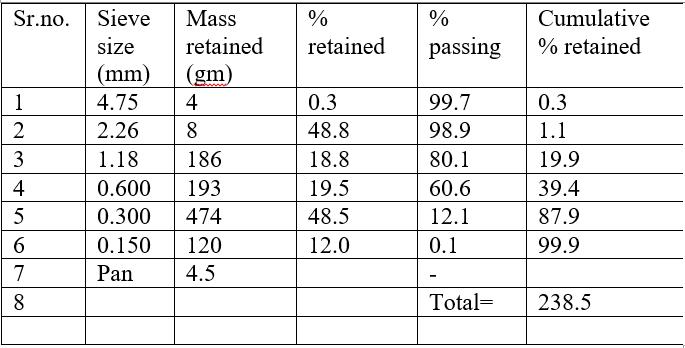
3.2.1Sieveanalysis
Atestusedtodeterminetheparticlesizeoffineandcoarse aggregatesisknownasthesieveanalysistest. Collectedsampleaggregatesarethoroughlysievedthrough appropriateISSievetodeterminetheparticlesize.
Well,concretebondingwillnothappenwhenthesamesize ofaggregateshasbeenusedinconcrete,anditreducesthe strengthoftheconcrete.
SieveAnalysistesthelps.
Todeterminethequalityofaggregatesbasedonthe size.
Select the appropriate size of aggregates for particularconstructionwork.Forexample,40mm aggregates are used for PCC, and 12mm, 20mm aggregatesareusedinreinforcedconcreteworks.
To identify the flaky and irregular shape of aggregates, which is not suitable for construction works.
o ApparatusRequired
IS sieve for Fine aggregates – 10mm, 4.75mm, 2.36mm,1.18mm,600microns,300microns,150 microns,and75microns.
IS sieve for Coarse aggregates – 25mm,20mm 12.5mm,10mm,4.75mm.
WeighingBalance
Pan
Observationtable:
o specificgravityofaggregatetestbypycnometer
o The specific gravity of aggregates is a measure of their quality and strength. When using a pycnometer for this test, the procedure typically involvesthefollowingsteps:
1. Preparation:Aclean,drypycnometerisweighed empty.
2. Sample Addition: A known weight of fine aggregate (usually about 1 kg) is added to the pycnometer.
3. WaterFilling:Waterisaddedtothepycnometerto immersetheaggregatecompletely.Thepycnometer isthenshakentoremoveanyentrappedair.
4. Weighing:Thepycnometer,nowfilledwithwater andaggregate,isweighedagain.
5. FinalStep: The aggregate is removed, and the pycnometerisrefilledwithwatertothesamelevel asbeforeandweighed.
o Calculation
Let me explain the formula for specific gravity using a pycnometer.
Thespecificgravity(SG)ofaggregatesiscalculatedas:
SG=WeightofaggregateinairWeightofanequalvolumeofw aterdisplacedbytheaggregateSG
Forthistest,theformulabecomes:
SG=W2−W1/(W4−W1)−(W3−W2)
Where:
W1=Weightoftheemptypycnometer.
W2 = Weight of the pycnometer with the dry aggregate.
W3 = Weight of the pycnometer with water and aggregate.
W4 = Weight of the pycnometer filled with water only.
o Stepsforthecalculation:
1. Subtract the weight of the empty pycnometer (W1W_1)fromtheweightofthepycnometerfilled
International Research Journal of Engineering and Technology (IRJET) e-ISSN:2395-0056
Volume:12Issue:04|Apr2025 www.irjet.net
with dry aggregate (W2W_2) to get the weight of theaggregate.
2. Subtract the weight of the pycnometer filled with waterandaggregate(W3W_3)fromtheweightof thepycnometerfilledwithwateronly(W4W_4)to findtheweightofthedisplacedwater.
Weightofemptypycnometer,W1=600g
• Weightofpycnometer+drysoil,W2=850g
• Weightofpycnometer+soil+water,W3=1400g
• Weightofpycnometerfilledwithwateronly,W4= 1300g
SG=850−600/(1300−600)−(1400−850)
SG=250150=1.67
Thespecificgravityofthematerialis 1.67
3.2.3Impactvaluetestofaggregate
1. ApparatusSetup:
a. Ensure you have the impact testing machine, cylindricalsteelcup,atampingrod,a2.36mm ISsieve,abalance,andahammer.
2.SamplePreparation:
- Take the aggregates that pass through the 12.5 mm IS sieveandareretainedonthe10mmISsieve.
-Washtheaggregatesthoroughlyanddrytheminanoven at a temperature of 100–110°C for about 4 hours. Allow themtocoolbeforetesting.
3.WeighingtheSample:
- Measure about 350 grams of the prepared aggregate sample.
4.FillingtheCup
-Placetheaggregatesintothecylindricalsteelcupinthree equallayers.
- Compact each layer by tamping it 25 times with the tampingrod.
5.ImpactApplication:
-Mountthecupwiththesampleonthebaseoftheimpact machine.
p-ISSN:2395-0072
-Adjustthehammertofallfreelyfromaheightof380mm.
-Allowthehammertostrikethesample15times,withan intervalofonesecondbetweenblows.
6.Sieving:
-Afterthetest,removethesampleandsieveitthrougha 2.36mmISsieve.
-Collectthematerialthatpassesthroughthesieve(called fines).
7.WeighingtheFines:
-Weighthefines(materialpassingthroughthe2.36mm sieve)andrecordtheweightas(B).
- Also, record the initial weight of the sample before the testas(A).
8.Calculation:
-Usetheformula:
AVI=B/AX100
Where
A=Totalweightofthesampleusedforthetest.
B=Weightofthefines(materialpassingthrougha2.36mm sieve)afterthetest.
-ThisprovidestheAggregateImpactValueasapercentage.
Weightofsamplebeforetest(A)=500g
Weightoffinespassing2.36mmsieve(B)=125g
AIV=125500×100=25%
result: The Aggregate Impact Value is 25%, indicating the toughnessoftheaggregate. Aggregates withAIVlessthan 30%aregenerallyconsideredsuitableforroadconstruction
4. RESULT AND DISCUSSION
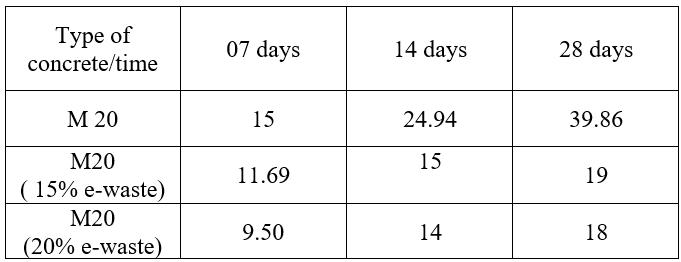
The chapter presents the results of various concrete mix proportions tested for their strength characteristics. It includesthecompressivestrengthtestsperformedoncube specimensofsize15cmx15cmx 15cm,witha focus on M20 grade concrete and mixes incorporating different percentages of e-waste. The compressive strength of the concretewastestedat7,14,and28daysofcuringusinga
International Research Journal of Engineering and Technology (IRJET) e-ISSN:2395-0056
Volume:12Issue:04|Apr2025 www.irjet.net p-ISSN:2395-0072
compressiontestingmachine.Theresultsshowthatwhile the compressive strength of conventional M20 concrete increasessteadilywithtime,theadditionofe-waste(at15% and 20% replacements) results in a decrease in strength comparedtothecontrolmix.Specifically,theM20mixwith 15%e-wasteshowedcompressivestrengthsof11.69MPaat 7days,15MPaat14days,and19MPaat28days,whilethe 20% e-waste mix exhibited lower strengths, ranging from 9.50MPaat7daysto18MPaat28days.Thisdatahighlights the impact of e-waste on the strength development of concreteovertime.
Resultsaretabulatedasbelow,
4.1Compressivestrengthtestforcube
Compression test is the most common test conducted on hardened concrete, partly because it is an easy test to perform, and partly because most of the desirable characteristicpropertiesofconcretearequalitativelyrelated toitscompressivestrength.
Followingisthemethodtocalculatecompressivestrengthof concrete.
Thecubespecimenisofthesize15*15*15cm.Ifthelargest nominalsizeoftheaggregatedoesnotexceed10mm.10cm cubes may also use alternatively. Here, For M20 grade Concrete of all six mixes of different trails tested on Compression testing machine for 7 days, 14 days and 28 dayswithnormalwatercuring.
Dimensionsofthecube=15cm*15cm*15cm
Area on which load is acting = 150 mm*150 mm = 22500mm2
Hence, compressive strength of cube = load/area=load/22500
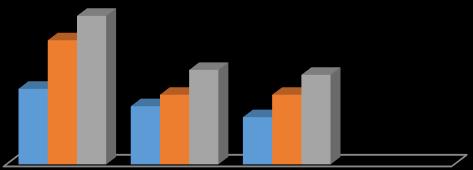
Itcanbeconcludedthatincorporatinge-wasteasapartial replacementforcoarseaggregatesinconcreteisapromising approach toward sustainable construction. The study showed thatusingup to15%e-wasteintheconcrete mix yielded the highest compressive strength at 28 days, indicatingthatamoderateamountofe-wastecanenhanceor maintain the strength properties of M20 grade concrete. However,increasingthee-wastecontentto20%resultedin areductioninstrength,suggestingthatthereisanoptimal limit for replacement. Additionally, it was observed that proper crushing and processing of e-waste is essential to ensureitscompatibilitywithconventionalaggregatesandto achievedesirablestrengthperformance.Thisapproachnot onlysupportswastemanagementeffortsbutalsopromotes theconservationofnaturalresourcesandthedevelopment ofeco-friendlyconstructionmaterials
[1] SLehar,ILehar,ConstructionandBuildingMaterials, 2019 - Elsevier The application of wastes and their recycled extractions to develop green construction materialsattractsresearchersworldwideowingtothe highpessimisticenvironmentalimpact
[2] S.K. Kalifyavardhan, P.R. Prem, P.S. Ambinly, The exponentialdevelopmentoftheelectronicindustryand changes in people's lifestyle have increased the discarding rate of waste electronic appliances and electricalequipment’s.
[3] M.Masuduzzaman,S.K.S.Amit(2018),conferenceon smart city 2018 - ieeexplore.ieee.org building materials.Oneofthenewwastematerialsusedinthe concrete industry is E-waste. The use of E-waste in concrete industry is measured as the most viable application.
[4] A. Bahadoran, J.R. De Lile, S. Masudy-Panah (2022), mdpi.com in the literature search, Springer, Scopus, ScienceDirect,andreviewdiscussese-wastederived photocatalyticmaterials.