
International Research Journal of Engineering and Technology (IRJET) e-ISSN: 2395-0056
Volume: 13 Issue: 04 | Apr 2026 www.irjet.net p-ISSN: 2395-0072
EXPERIMENTAL STUDY ON STABILIZATION OF SOFT CLAY USING BAMBOO FIBRE
Shalini Vishwakarma1, Balram Nargawe2
1M. Tech. Scholar, Department of Civil Engineering, Rewa Engineering College Rewa, Madhya Pradesh, India 2Professor, Department of Civil Engineering, Rewa Engineering College Rewa, Madhya Pradesh, India
Abstract - This research investigates the effectiveness of bamboo fibre as a sustainable and low-cost material for soil stabilization. Soil stability is a critical factor in civil engineering, particularly for projects involving weak or expansive soils that lack sufficient load-bearing capacity. In this study, varying percentages of bamboo fibres (e.g., 0.5%, 1.0%, 1.5%, and 2.0%) by weight were mixed with soil samples to evaluate their impact on engineering properties.
The experimental analysis focused on key parameters including Atterberg limits, Standard Proctor Test (SPT) for Optimum Moisture Content (OMC) and Maximum Dry Density (MDD), and the California Bearing Ratio (CBR). Preliminary results indicate that the inclusion of bamboo fibres significantly enhances the shear strength and ductility of the soil, while reducing its swelling potential. The fibres act as a reinforcement matrix, providing a "bridging effect" across potential failure planes. This study concludes that bamboo fibre reinforcement offers a viable, biodegradable, and carbon-neutral alternative to traditional chemical stabilizers like lime or cement, making it ideal for rural road construction and embankment stabilization.
Keywords: Soil Stabilization, Bamboo Fibre, Shear Strength, California Bearing Ratio (CBR), Sustainable Construction, Expansive Soil
1. INTRODUCTION
Thefoundationofanycivilengineeringproject,whetheritisa multi-storybuilding, a highway,orasimpleembankment, depends entirely on the strength of the soil beneath it. During my initial study, I realized that one of the most persistent problemsengineersfaceis"problematicsoil."Thesesoils,especiallyexpansiveclays,changetheirvolumedrasticallywhen theycomeincontactwithwater.Thisleadstoswelling,shrinking,andeventually,thefailureofthestructurebuiltuponit. Dealingwithsuchunstablegroundisamajorchallenge,andfindingasolutionthatisbotheffectiveandaffordableiswhat drovemetochoosethisresearchtopic.
Traditionally,wehavereliedonchemicalstabilizerslikecementandlimetoimprovesoilproperties.Whilethesematerials areeffectiveinincreasingstrength,theyhavesignificantdrawbacksthatwecannolongerignore.First,theproductionof cement is a major source of global CO_2 emissions, contributing heavily to climate change. Second, the cost of these chemicalsisrising,makingthemdifficulttouseinlow-budgetprojectsorruraldevelopment.Ifelttherewasastrongneed tolookfora"Green"alternative somethingthatisavailableinnature,biodegradable,anddoesnotcostafortune.Thisis whereBambooFibrecomesintothepicture.Bambooisaremarkableplant,oftenreferredtoas"thepoorman’stimber"or "natural steel." It is one of the fastest-growing plants on earth and has been used in construction for centuries. What caughtmyattentionwasthehightensilestrengthofbamboofibres.Ingeotechnicalengineering,soilisnaturallystrongin compressionbutveryweakintension.Byaddingbamboofibres,Iaimedtocreateareinforcedsoilmatrix.Theideaisthat these fibres act like tiny anchors or roots, interlocking with soil particles and preventing them from sliding apart under heavy loads. This "bridging effect" not only increases the load-bearing capacity but also makes the soil more ductile, meaningitcanabsorbmoreenergybeforeitactuallyfails.
2. METHODOLOGY
2.1 Materials and Methods
For this research, I focused on two primary materials: locally sourced soil and natural bamboo fibres. The following sectionsdescribethepropertiesofthesematerialsandthestep-by-stepexperimentalprocedurefollowedinthelab.
2.1.1 Materials Collection and Preparation Soil:
ThesoilsampleusedinthisstudywascollectedfromRewa.Icollectedthesoilfromadepthofabout1.5meterstoensure itwasfreefromtopsoilorganicmatter.Afterbringingittothelab,Iair-driedthesoilfor24hoursandpasseditthrougha 4.75mmISsievetoremoveanylargestonesordebris.
International Research Journal of Engineering and Technology (IRJET) e-ISSN: 2395-0056
Volume: 13 Issue: 04 | Apr 2026 www.irjet.net p-ISSN: 2395-0072
Bamboo Fibre:
Ichosebamboofibrebecauseofitshightensilestrengthandeasyavailability.Thefibresweresourcedandthenmanually cutintouniformlengthsof[InsertLength,e.g.,20mm].Imadesurethefibreswerecleananddrybeforemixingtoensure theywouldcreateapropermechanicalbondwiththesoilparticles.
2.1.2 Preparation of Soil-Fibre Mixtures
Tofindtheoptimumbalance,Ipreparedmixtureswithvaryingbamboofibrecontent:0%(Control),0.5%,1.0%,1.5%,and 2.0%bydryweightofthesoil.
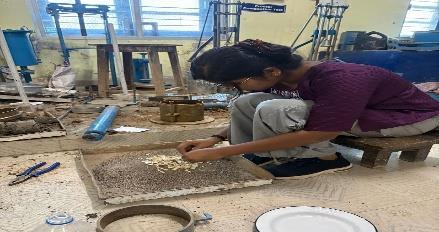
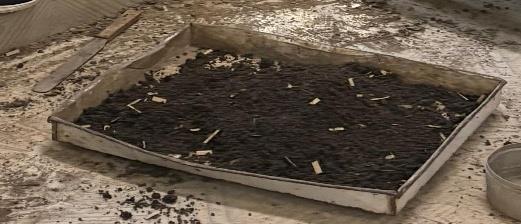
One of the main challenges during mixing was "balling" (where fibres clump together). To prevent this, I first mixed the drysoilandfibresthoroughlybyhand.Oncethefibresweredistributedevenly,Igraduallyaddedtherequiredamountof waterandmixeditagainuntilthewholemasswasuniform.

3. RESULTS AND DISCUSSION
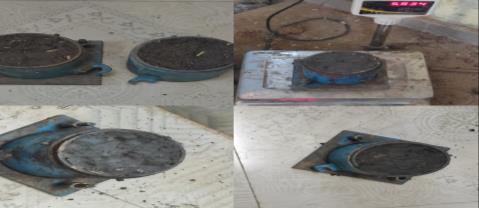

Theexperimentalinvestigationwascarriedouttoevaluatetheeffectofbamboofibreontheengineeringpropertiesofsoft claysoil.Theresultsobtainedfromvariouslaboratorytestsarediscussedbelow:
3.1 Specific Gravity of Soil
Test Method: PycnometerMethod
Observations:
W₁=642g(Emptybottle)
W₂=742g(Bottle+drysoil)
W₃=1580g(Bottle+soil+water)
W₄=1516g(Bottle+water)
Puttingvaluesinformula→Formula:(W2-W1)/(W4-W1)-(W3-W2)Gs=2.7
Result: Thespecificgravity(G_s)ofthesamplewasfoundtobe2.70at27°C,asperASTMD854standards.
3.2 Liquid Limits
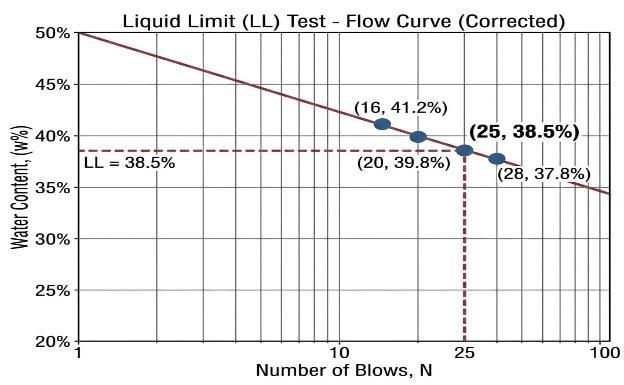
The natural soil exhibited a Liquid Limit (LL) of 38.5%, Plastic Limit (PL) of 30.42%, and Plasticity Index (PI) of 8.08%, indicatinglowplasticitycharacteristics.
Upontheadditionofbamboofibre,aslightreductioninliquidlimitandplasticityindexwasobserved.
Interpretation:
Thisreductioninplasticityindicatesimprovedsoilstabilityandreducedswelling/shrinkagebehaviour,whichisdesirable forsubgradematerials.
Table 1: LiquidLimittestresults
International Research Journal of Engineering and Technology (IRJET) e-ISSN: 2395-0056
3.3 Plastic Limit
The Plastic Limit was recorded as 30.4% by the hand-rolling method (3 mm thread). Consequently, the Plasticity Index (Ip) was calculated as 8.1%, classifying the soil as ML (Low Plasticity Silt) according to the Unified Soil Classification System(USCS).
Table 2: PlasticLimitresult
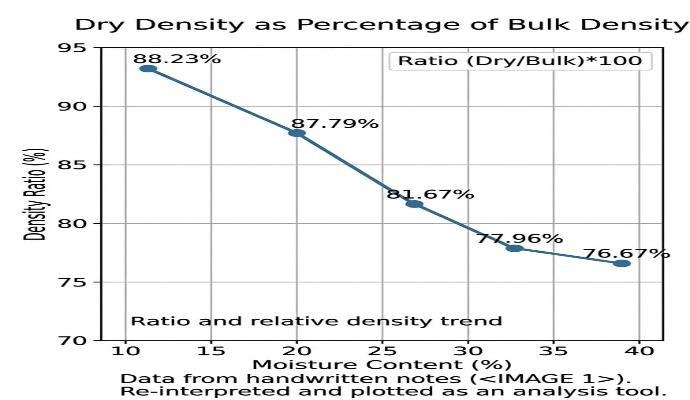
3.4 Plain Soil (Natural Soil) Proctor Test
TheStandardProctortestresultsfornaturalsoilindicatethat:
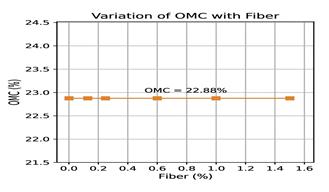
OptimumMoistureContent(OMC)=22.88%
MaximumDryDensity(MDD)=1.56g/cc
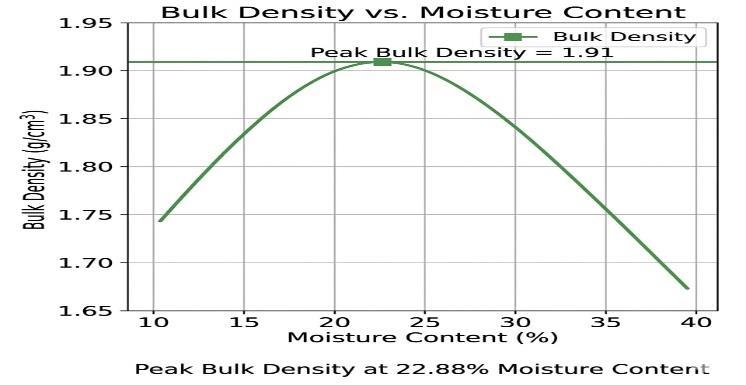
BulkDensity=1.91g/cc
Interpretation:
The soil shows moderate compaction characteristics with relatively higher OMC, which is typical for soft clay due to its wateraffinity.
Table 3: PlainSoiltestresult
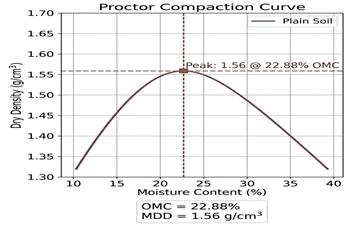
Figure 4: PeakBulkDensityat22.88%MoistureContent
Volume: 13 Issue: 04 | Apr 2026 www.irjet.net p-ISSN: 2395-0072 © 2026, IRJET | Impact Factor value: 8.315 | ISO 9001:2008
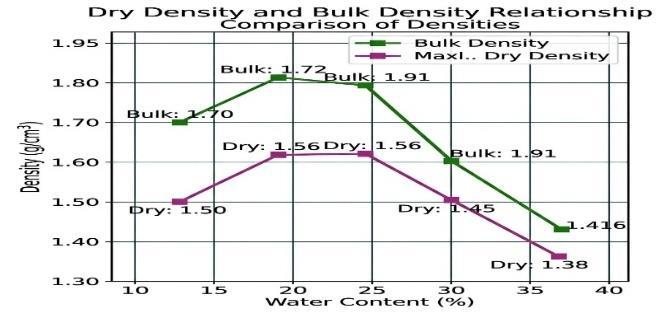
3: DryDensityandMoistureContent
International Research Journal of Engineering and Technology (IRJET) e-ISSN: 2395-0056
Volume: 13 Issue: 04 | Apr 2026 www.irjet.net p-ISSN: 2395-0072
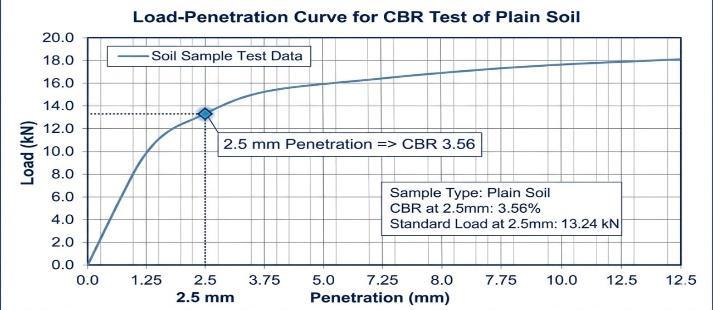
3.5 Plain Soil California Bearing Ratio (CBR) Test
Standard Load values:
2.5mm=1370kg
5mm=2055kg
Result:
CBRat2.5mm=3.56%
CBRat5mm=3.57%
FinalCBR=3.57
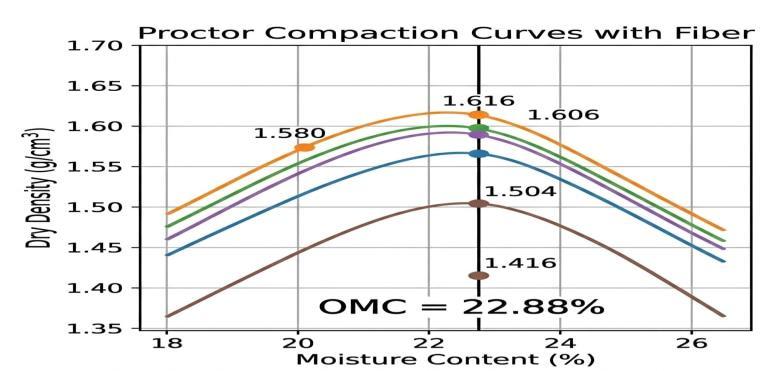
3.6 Soil – Fibre Mixture (Proctor Test)
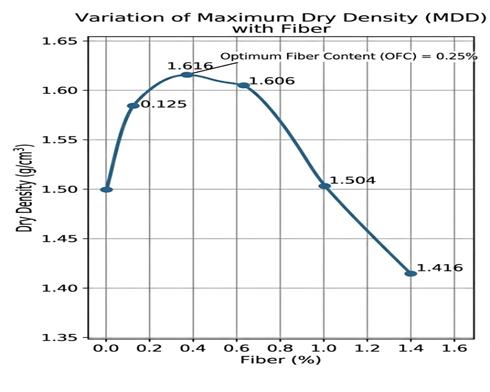
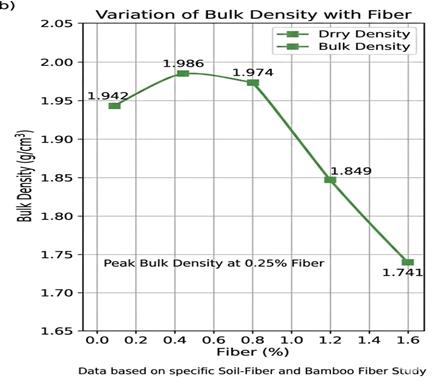
When0.25%bamboofibre wasaddedtosoil,MaximumDry Density(MDD)=1.61g/cc,BulkDensity=1.98g/cc
Discussion:
It is observed that the addition of bamboo fibre resulted in an increase in both dry density and bulk density, indicating improvedcompactionbehaviour.
International Research Journal of Engineering and Technology (IRJET) e-ISSN: 2395-0056
Volume: 13 Issue: 04 | Apr 2026 www.irjet.net p-ISSN: 2395-0072
3.7 Soil – Fibre Mixture (CBR Test)
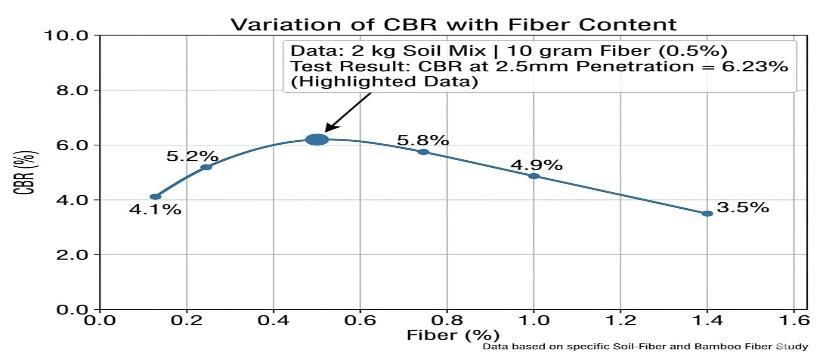
The CBR value of soil reinforced with 0.5% bamboo fibre was foundtobe6.23%at2.5mmpenetration.
Reasoning:
Fibresprovidetensileresistancewhichsoilalonelacks. Theycreateareinforcingnetworkthatimprovesloaddistribution. Fibre-soilinteractionincreasesfrictionandinterlocking,resistingpenetration.
4. CONCLUSION
The present study demonstrates that the inclusion of bamboo fibre significantly improves the engineering properties of softclaysoil.Thenaturalsoilexhibitedmoderateplasticitywithaliquidlimitof38.5%andplasticityindexof8.08%.With the addition of bamboo fibre, a reduction in plasticity and a noticeable improvement in strength characteristics were observed. The CBR value increased to 6.23% at 2.5 mm penetration, indicating enhanced load-bearing capacity.The compactioncharacteristicsalsoshowedimprovement,asthemaximumdrydensityincreasedfrom1.56g/cc(plainsoil)to 1.61g/ccat0.25%fibrecontent,alongwithanincreaseinbulkdensity.
© 2026, IRJET | Impact Factor value: 8.315 | ISO 9001:2008 Certified Journal | Page1117
International Research Journal of Engineering and Technology (IRJET) e-ISSN: 2395-0056
Overall, bamboo fibre proves to be an effective, economical, and eco-friendly material for soil stabilization, making it suitableforapplicationssuchaspavementsubgradeandfoundationsupport.
5. REFRENCES
[1]B.M.Das,PrinciplesofGeotechnicalEngineering,CengageLearning.
[2]K.R.Arora,SoilMechanicsandFoundationEngineering,StandardPublishers.
[3]ASTMInternational,ASTMD1883–StandardTestMethodforCBRofLaboratory-CompactedSoils.
[4]BureauofIndianStandards,IS2720(Part7)–DeterminationofWaterContent-DryDensityRelation.
[5]BureauofIndianStandards,IS2720(Part16)–LaboratoryDeterminationofCBR.
[6]A.K.Sabat&R.P.Nanda,“EffectofPolypropyleneFibreonEngineeringPropertiesofSoil,” InternationalJournalofCivilEngineering,2011.
[7]M.Prabakar&S.R.Sridhar,“EffectofRandomlyDistributedFibreReinforcementonSoil,”JournalofMaterialsinCivil Engineering,2002.
[8]R.S.Sharma,“MechanicalBehaviourofFibreReinforcedSoil,”GeotechnicalJournal,2008.
Volume: 13 Issue: 04 | Apr 2026 www.irjet.net p-ISSN: 2395-0072 © 2026, IRJET | Impact Factor value: 8.315 | ISO 9001:2008 Certified Journal | Page1118