
International Research Journal of Engineering and Technology (IRJET) e-ISSN: 2395-0056
Volume: 12 Issue: 06 | Jun 2025 www.irjet.net p-ISSN: 2395-0072
EXPERIMENTAL ANALYSIS OF ENRICHED BIOGAS AS A SUSTAINABLE FUEL FOR SPARK IGNITION ENGINES
Rahul Singh Chauhan1 , Shailendra Kumar2
1M.Tech. (ME) Scholar, Department of Mechanical Engineering, Goel Institute of Technology and Management Lucknow, Uttar Pradesh, India
2Assistant Professor, Department of Mechanical Engineering, Goel Institute of Technology and Management Lucknow, Uttar Pradesh, India
Abstract: Thisstudyfocusesonenrichingbiogastomake it suitable as a sustainable alternative fuel for spark ignition (SI) engines. Biogas, primarily composed of methane (CH₄) and carbon dioxide (CO₂), also contains trace gases such as hydrogen sulfide (H₂S) and water vapor. To enhance its energy content and performance, biogas must be enriched, especially in methane concentration. The research aimed to design a costeffective biogas enrichment system combining water scrubbing and chemical scrubbing techniques. A packedbedwaterscrubberandchemicalscrubbersusingCa(OH)₂, KOH, and NaOH were developed and tested at varying pressures and flow rates. The best performance from the water scrubber yielded 83.05% CH₄ content, while combining it with chemical scrubbers increased methane concentration up to 95.15% with 76.04% rise efficiency This enriched biogas was then used as fuel in a 4.5 kW variable speed SI engine, and its performance was compared with petrol and CNG. The engine was tested under different compression ratios, ignition timings, engine speeds, and throttle positions. Results showed that enriched biogas provided comparable power output and brake thermal efficiency to petrol and CNG. It delivered a maximum power of 4.55 kW and thermal efficiency of 21.94%. Emission analysis indicated that CO and CO₂ emissions were lower than petrol but slightly above CNG. Overall,thestudyconfirmsthatenrichedbiogasisaviable and cleaner alternative to conventional fossil fuels for SI engines.
Keywords: Biogas, enriched biogas, water scrubbing, chemical scrubbing, CNG, bio-CNG, biogas enrichment, engineperformance,engineemission
1. INTRODUCTION
In our daily routine activities, economic, social, and industrialdevelopment,energyisconsideredasimportant input.Energyplaysavitalroleinourdailylife.Thedegree of development and civilisation of a country is measured by the utilization of energy by human beings for their needs. Day by day energy consumption is increasing very rapidly. The world's fossil fuel supply i. e. coal, petroleum oil, and natural gas will be depleted in a few decades. The rate of energy consumption is increasing, supply is depletingresultingininflationandenergyshortage.Thisis
calledtheenergycrisis.Alternativeornon-conventionalor renewable energy resources are very essential to develop futureenergy
1.1 Biomass
Biomassisorganicmatterfromplants,animals,andmicroorganisms grown on land and water and their derivatives. It includes residues of agriculture and forestry, animal waste, industrial waste, municipal waste, sewage, kitchen waste,discardedmaterialfromfoodprocessingplants,etc. Biomasscontributesabout12%oftoday’sworld'sprimary energy supply, while in many developing countries, its contribution ranges from 40% to 50% of primary energy [6].
InIndia,over501.73milliontonsofagriculturalandagroindustrial residues are being produced every year [7]. According to the 19th Livestock Census Report, the Indian livestock population stands at 512 million, comprising mainly cows, buffaloes, sheep, goats, pigs, and other speciesincludingpoultry.In India,thecurrentpotential of 2600 million tons of livestock dung generated per year, capable of yielding 263,702 million m3 of biogas is exploited[8].
TABLE1.1Rowmaterialavailabilityandgasyield[9][10]
International Research Journal of Engineering and Technology (IRJET) e-ISSN: 2395-0056
Volume: 12 Issue: 06 | Jun 2025 www.irjet.net p-ISSN: 2395-0072
8 Algae 40tons/ha/year 0.32
9 Waterhyacinth60tons/ha/year 0.42
Theavailabilityandgasyieldfromsomeoftheseresources is shown in TABLE 1.1. Most of the organic matter containing proteins, fats, and carbohydrates can be microbiologically transformed into biogas. These are (i) animal-waste-based resources, such as animal and human excreta, slaughterhouse waste, etc., (ii) land-based resources such as crop wastes, by-products of agro-based industries, urban solid wastes, and (iii) water-based resourcessuchasalgae,seaweed,waterhyacinth,etc.
1.2 Biogas as a promising alternative
Biogasisproducedfromwetbiomasswithabout90–95% water content by the anaerobic digestion process. Anaerobic digestionis a biochemical processthat involves the degradation of organic compounds into simple substances to produce biogas and digestate through the activities of a micro-organism. Carbon present in biomass may be ultimately divided between fully oxidized Carbon Dioxide (CO2) and fully reduced Methane (CH4). Biogas contains about 50 – 60% CH4, 30 – 40% CO2, and trace amounts of O2, H2, H2S, water vapour, etc. It is an interesting alternative fuel, which can be used as a replacement for fossil fuels in heat and power production, or as an engine fuel [11]. Biogas offers the advantage of replacingthedemandforfossilfuelswhilealsopreventing CH4,aGreenhouseGas(GHG),frombeingemitteddirectly into the atmosphere as it would via normal biological degradationofwastebiomass[12].Ifthisfuelisusedinan internalcombustionengine,theCH4contentiscombusted, leaving CO2 in the atmosphere instead, which has a 21times lower global warming potential than CH4 [13]. Nitrogen-rich digested slurry is also produced as a byproduct, which provides excellent fertilizer and humus, withimprovedsanitationasanaddedbonus.
1.3 Biogas generation
Biogas is produced by the action of anaerobic bacteria. These bacteria live and grow without oxygen. They derive the needed oxygen by decomposing biomass. The process is favoured by wet, warm, and dark conditions. In this process, part of the carbon is oxidized and another part is reduced to produce the mixture of CO2 and CH4. The airtight equipment used for conversion is called a biogas plant or digester, and it is designed and controlled to favour CH4 generation. Soluble nitrogen compounds remain available in sludge. The energy available from the combustion of biogas is 60 – 90% of the input dry matter heatofcombustion.Thus,theenergyconversionefficiency oftheprocessis60%to90%.

FIGURE1.1Stagesoftheanaerobicdigestionprocess
The biochemical process takes place in three stages as showninFIGURE1.1.Theseareasfollows:
(1) Stage-I: Hydrolysis
Organic waste from animals and plants contains carbohydrates in the form of cellulose, hemicellulose, and lignin.Theeffectofwatercausesa setofanaerobic microorganisms to break down complex organic material into simple and soluble organic components. The rate of hydrolysisisaffected bybacterial concentration,substrate quality,pH,anddigestertemperaturerangeof30°C–40°C.
(2) Stage-II: Acid formation
The micro-organisms of the facultative and anaerobic group collectively called acid formers, produce mainly acetic and propionic acids and volatile solids. This stage takesaboutonedayat25 oC.Duringthisstage,asignificant amountofCO2isreleased.
(3) Stage III: Methane formation
Anaerobic methanogenic bacteria slowly digest the productsofthesecondstage,generatingCH4,CO2,a trace amount of hydrogen, and other gases. The process takes abouttwoweekstocompleteat25 oC.TheCH4contentof biogas is about 60% which provides a high calorific value tofinduseincooking,lightingandpowergeneration.
1.4 Motivation and Scope of the present work
The following points represent the motivation for doing thepresentwork:
India has significant biomass resources that are underutilized or not being utilized, which may be usedtogeneratebiogas.
When biomass is used to generate biogas, GHGs emission is decreased since they are not dischargeddirectlyintotheatmosphere.
Convertingbiomassintobiogasnotonlyproduces valuable fuel but also sludge that can be used as fertilizer.
Biogas enrichment provides a fuel that can substitute natural gas in a different application, resulting in reduced natural gas imports and savingsinforeignexchange.
Biogas technology not only creates rural employment and makes villages self-sufficient in terms of energy, but it also offers social and
International Research Journal of Engineering and Technology (IRJET) e-ISSN: 2395-0056
Volume: 12 Issue: 06 | Jun 2025 www.irjet.net p-ISSN: 2395-0072
ecological benefitssuchassanitation and reduced deforestation.
Currently, biogas is mainly used as a fuel for cooking and stationaryengines.The biogaspotential hasnotbeen fully utilized due to a lack of appropriate storage facilities, mobility, and operational flexibility. The present work wouldbeusefulin:
Developing a suitable, low-cost, and effective biogasenrichmentsystem.
Improvements in biogas technology for use as a vehicularfuel,whichisagrowingareainIndia.
Encourage the use of biogas-fuelled stationary enginesandautomobiles,thatemitlesspollutants.
Increasingopportunitiesforruralpopulationsand creatingasuitableatmosphereforlong-termrural development by developing biogas plants and enrichmentsystems.
Encouragingtheuseofdigestedslurryfrombiogas plantsasorganicmanure.
2. LITERATURE REVIEW
The rapid depletion and consequent price rise of petroleum-basedfuelsincreasedtheenergydemandofthe world, and environmental degradation concern has intensified the search for substitute renewable energy sources like solar energy, biomass and biofuels, wind energy, and hydro energy [21]. Renewable sources of energy, such as biomass and biogas, solar, and wind generated 14% of the total global energy need [22]. The biogas can be produced from various biomass like animal waste, food wastes, sewage sludge, agricultural residue, forest residue, industrial wastes, etc. by anaerobic digestion. Now, biogas is not only utilized for cooking and lighting purposes but also for vehicular fuel and power generationapplications
It is also called carbon-neutral as the carbon in biogas comes from organic waste, which has derived this carbon from atmospheric CO2 in a relatively shorter period of time [24]. In India, the Ministry of New and Renewable Energy, Government of India, New Delhi had set a goal of producing48,55MWofbiogasenergyby2022[25].Biogas production has enormous potential in Asia, Europe, and the rest of the world [26]. Anaerobic digestion is also considered one of the ways of treating waste. It also supports the ‘clean India' campaign launched by the Government of India, New Delhi by converting waste into energy. Biogas production using anaerobic digestion technology is considered economical, environmentally friendly, and more efficient than other energy production technologies using biological and thermo-chemical energy conversiontechniquesandcanbeseenasasolutioninthe currentenergyscenario[27].
In fact, anaerobic digestion is a series of biological processes. In this process, the breakdown of micro-living
organisms into bio-degradable material without the presence of oxygen. This includes several biochemical processes such as hydrolysis, acetogenesis, and methanogenesis. CH4, CO2 and H2S are the main constituentsofbiogas.Thebiogasgeneratedfrombiomass can be used directly for process heating, cooking, or generatingpower,butthehigherCO2contentdecreasesits heatingvalueandreducestheeconomicfeasibilityofdirect use. Specific steps for biogas treatment are therefore highly recommended before end-use. In applications such asvehicularfuelandgridinjection,thebiogasshouldhave a high energy density; hence, the enrichment of biogas is needed[37].
Anoptimalbiogas enrichmenttechniquemust be chosen interms of lowinitialand maintenancecosts,lowenergy usage, and high efficiency resulting in high concentrations of CH4 in the enriched biogas with the overall economy. The typical biogas cleaning and enrichment stages include (1) H2S removal, (2) CO2 removal, and (3) water vapour removal.
2.1 Biogas enrichment technologies
The biogas produced directly from a bio-digester is comprised of CH4, CO2, and traces of several other gases. Raw biogas taken from a biodigester is composed of around 60% of the CH4 by volume, which has a heating value of 20.67 MJ/m3 compared to the 35.8 MJ/m3 of enriched biogas [32]. The CH4 yield could be increased considerably by using graphene oxide nanoparticles and Ca(OH)2 pre-treatment in the anaerobic digestion process fromcowdung-basedslurry[38].Energycompoundswith lowheatvalueareconsideredcounter-productivebecause theirobjectiveistoofferthehighestamountofexothermic heat demanding the smallest possible volume. In raw biogas, a high concentration of CO2 decreases heating value and restricts its usage for low-energy demanding applications. It is not desirable to use raw biogas as a fuel for the vehicle since it reduces the power output from the engine and occupies extra space in gas storage cylinders. CO2 in biogas can leads to a problem of freezing at meteringpointsandvalves[39].Thus,itishighlydesirable toremoveCO2frombiogastouseasfuelforawiderrange ofapplications.
2.2 Definition of the problem
In the view of the literature review, it is required to promotetheuseofbiogasasacleanandrenewableenergy source.Theproblemoftheresearchissummarisedbelow:
A low-cost biogas enrichment system with better performance is required to be designed and developed.
Themostofthepreviousresearchisontheuseof raw/treated biogas in diesel engines in duel fuel mode (with diesel fuel). The use of raw/treated biogas in diesel engines as a fuel requires some enginemodifications.
International Research Journal of Engineering and Technology (IRJET) e-ISSN: 2395-0056
Volume: 12 Issue: 06 | Jun 2025 www.irjet.net p-ISSN: 2395-0072
Comparative study on performance and emission characteristics of petrol engine without engine modificationisrequiredby usingpetrol,CNG,and enrichedbiogas.
2.3 Objectives of the present work
Intheviewoftheproblemdefinition,thefollowingarethe objectivesofthepresentresearchwork:
Todesignanddevelopanefficientlow-costbiogas enrichmentsystem.
Tochecktheperformanceofthedevelopedbiogas enrichmentsystem
To utilize the enriched biogas as an alternative primaryfuelinafour-strokepetrolengine.
To study the performance and emission characteristicsofthe engine fuelledwith enriched biogas and compare the results with those of petrolandCNGoperations
3. DESIGN OF WATER SCRUBBER
In this chapter, various design aspects and design procedure of water scrubber for biogas enrichment are discussed. The considered biogas composition was 60% CH4 and 40% CO2. It has been reported that CH4 content inbiogascouldbe enriched byreducingCO2 contentfrom it. Thus, CH4 enrichment in biogas improves its calorific value, reduces storage space, and reduces compression work upon storing into the high-pressure cylinder. Water scrubbing is one of the suitable methods of CH4 enrichment in biogas for rural areas due to its low cost, simplicity in operation, and suitability for small-scale operation. A water scrubber consists of a packed bed absorption column and uses water as a solvent to absorb CO2frombiogas.
4. EXPERIMENTAL SETUP
In this chapter, the development of the biogas enrichment system and testing of the developed system are being discussed. The performance and emission characteristics studies on spark ignition engine by using petrol, CNG, and enrichedbiogasarealsotalkedabout.
Biogas enrichment setup removes/reduces H2S, CO2, and water vapour from incoming biogas, thereby CH4 content in outgoing biogas increases. It is required to bring the biogastotheBISstandardsofIS16087:2016and/ortothe levelofnaturalgas.
PART A: Biogas Enrichment
4.1 Biogas Generation Plant
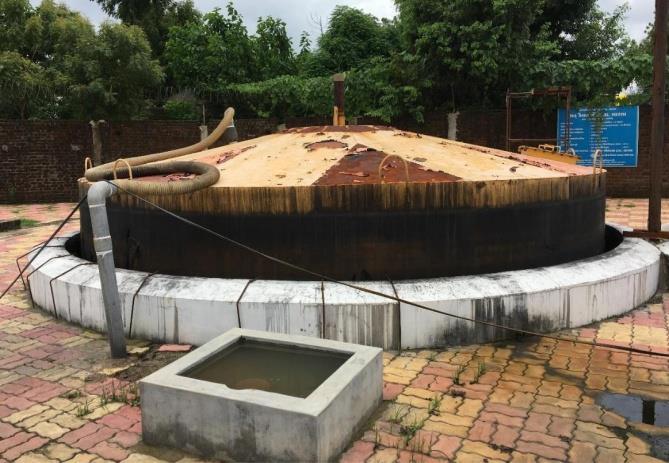
Afloatingdrumtype(KVIC)digesterof85m3 capacitywas used to supply biogas to the enrichment setup. Cow dung was used as a feed material for biogas generation. The
generated biogas is available at a constant pressure of 88 mm of the water column. FIGURE 4.1 shows the biogas plant.Biogasgenerationpressurewasmeasuredbyusinga simple U – tube manometer. The average composition of generatedbiogasisshowninTABLE4.1.
TABLE4.1Compositionofbiogas
PART B: Engine Performance
4.2 Engine Test Setup
The pictorial view of the engine test setup is shown in FIGURE4.2.Thesetupcomprisedofasinglecylinder,fourstroke, multi-fuel research engine coupled to an eddy current type dynamometer for loading. The engine's operation mode can be switched from Compression Ignition(CI)toECUSparkIgnition(SI)orfromECUSItoCI mode. In both modes, the compression ratio can be changed without stopping the engine and without altering thecombustionchambergeometrybyaspeciallydesigned tilting cylinder block arrangement. In SI mode operation, fuel injection timing, fuel injection angle, and ignition advance angle can be programmed with an open ECU at each operating point depending on RPM and throttle position. It facilitates the improvement of engine performanceoveritsoperatingrange.Theairtemperature, coolant temperature, throttle position, and trigger sensor were all connected to the open ECU, which controls the ignition coil, fuel injector, fuel pump, and idle air. Instruments were provided to interface airflow, fuel flow, temperature, engine crankshaft speed, and load readings. Thesetupincludedastand-alonepanelboxwithanairbox, two fuel tanks for dual fuel testing, a manometer, a fuel flow measuring device, transmitters for air and fuel flow measurements, a process indicator, and a hardware interface.Rotameterswereprovidedformeasuringcooling
International Research Journal of Engineering and Technology (IRJET) e-ISSN: 2395-0056
Volume: 12 Issue: 06 | Jun 2025 www.irjet.net p-ISSN: 2395-0072
water and calorimeter water flow. For online engine performance evaluation, a Labview-based engine performance analysis software package called ‘Enginesoft’ was used. The PE3 series software package was used for configuringtheopenECUfortheSImodeengineoperation.
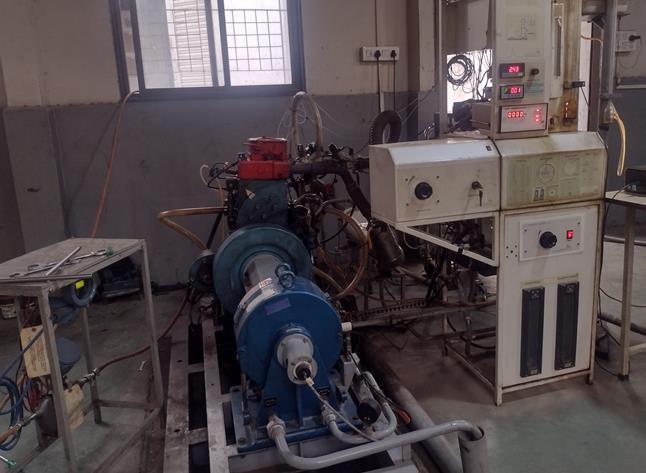
FIGURE4.2Pictorialviewoftheenginetestsetup
4.2.1 Engine test parameters
Thefollowingweretheenginetestparametersconsidered forthestudiesofperformanceandemissioncharacteristics ofsparkignitionengine:
Fuelused:(1)Petrol,(2)CNG,(3)Enrichedbiogas.
Engine crankshaft speed in rpm: (1) 1200, (2) 1400,(3)1600,(4)1800.
Compressionratio:(1)6,(2)8,(3)10.
Ignition advance before top dead center: (1) 20o , (2)25o,(3)30o .
Throttleposition:(1)100%open,(2)50%open.
Totalnumberofreadings=3×4×3×3×2=216
5.
RESULT AND DISCUSSIONS
The results of experimental work carried out for biogas enrichmentbywaterandchemicalscrubbingaredescribed in Part A of this chapter. Part B deals with the results of engine performance and emission characteristics evaluation by using petrol, CNG, and enriched biogas as fuel.
PART A: Biogas enrichment
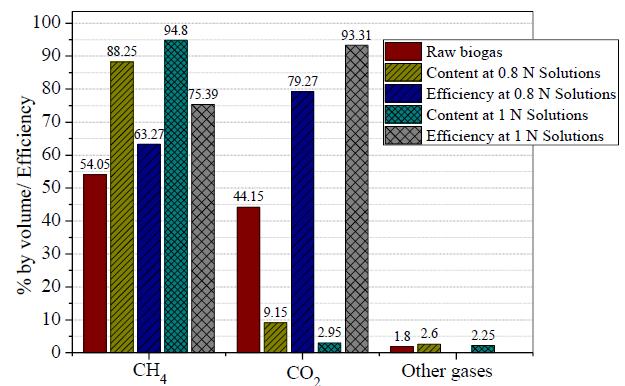
Biogas enrichment with Ca(OH)2, NaOH, and KOH solutions at a concentration of 1 N and silica gel with biogas flow rates of 0.864 Nm3/h, 0.672 Nm3/h, and 0.54 Nm3/h, were found to yield methane at the levels of 69.75%, 83.20%, and 94.80%, respectively. The CH4 rise efficiency and CO2 removal efficiency were found to be at the highest level of 75.39% and 93.31% respectively at a minimum biogas flow rate of 0.54 Nm3/h. Therefore, it
wasobservedthattheCH4absorptionrateincreasedwhen thebiogasflowratedecreased.Itwasalsoobservedthat 1 N solution concentration absorbs more CO2 than 0.8 N solution concentration. Thus, the solution with a higher concentration could give more CH4 content in enriched biogas. Biogas enrichment with Ca(OH)2, NaOH, and KOH solutions at a concentration of 1 N and silica gel with biogas flow rates of 0.864 Nm3/h, 0.672 Nm3/h, and 0.54 Nm3/h, were found to yield methane at the levels of 69.75%, 83.20%, and 94.80%, respectively. The CH4 rise efficiency and CO2 removal efficiency were found to be at the highest level of 75.39% and 93.31% respectively at a minimum biogas flow rate of 0.54 Nm3/h. Therefore, it wasobservedthattheCH4absorptionrateincreasedwhen thebiogasflowratedecreased.Itwasalsoobservedthat1 N solution concentration absorbs more CO2 than 0.8 N solution concentration. Thus, the solution with a higher concentration could give more CH4 content in enriched biogas.
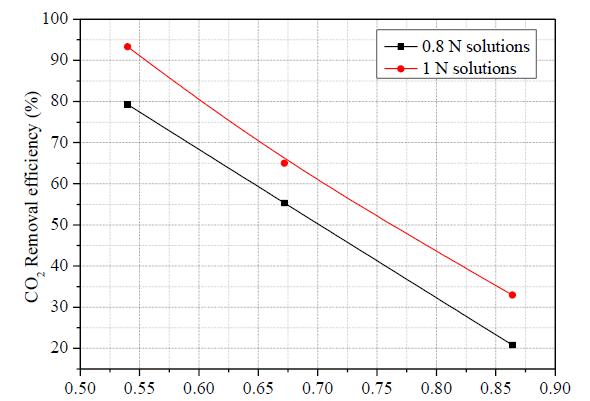
FIGURE5.1VariationofCO2removalefficiencywiththe biogasflowrate
The variation of CO2 removal efficiency with biogas flow rate is illustrated in FIGURE 5.1. Whereas FIGURE 5.2 shows a graphical representation of results obtained by chemicalscrubbingofbiogas.
In this method also, the content of the obtained enriched biogas confirms the BIS standard IS 16087:2016, hence it can be compressed and filled into a CNG cylinder, and can beusedasautomotivefuelorstationaryenginefuel.
International Research Journal of Engineering and Technology (IRJET) e-ISSN: 2395-0056
Volume: 12 Issue: 06 | Jun 2025 www.irjet.net p-ISSN: 2395-0072
5.2Chemicalscrubbingofbiogas
PART B: Engine performance and emission
5.1 Brake Power of the engine
Thevariationofbrakepoweroftheenginewithcrankshaft speedatIgnitionAdvance(IA)30o,inFIGURE5.3.
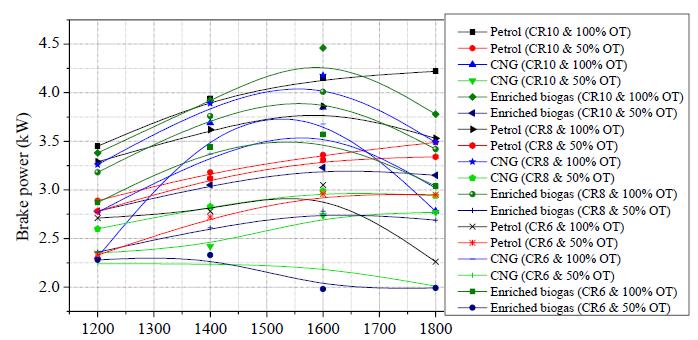
FIGURE5.3VariationofBPwithenginespeedatIA30o
The performance test results at 100% open throttle showedthattheenginedevelopedmaximumpowerof4.65 kW at 1800 rpm for petrol, and 4.55 kW at 1600 rpm for enrichedbiogasatcompressionratio10andIA25o,while in the case of CNG it was 4.31 kW at 1600 rpm at compression ratio 8 and IA 25o. In the case of enriched biogas as fuel 2.2% power reduction has been observed comparedtopetrol,whileitwas7.89%inthecaseofCNG. This power reduction might be due to variation in the amount of fuel supply to the engine and variation in the calorificvalueofthefuel[23].
5.2 Brake thermal efficiency of the engine
The variation of Brake Thermal Efficiency (BTHE) with brake power of the engine for 100% open throttle operationatIA30o,areillustratedinFIGURE5.4
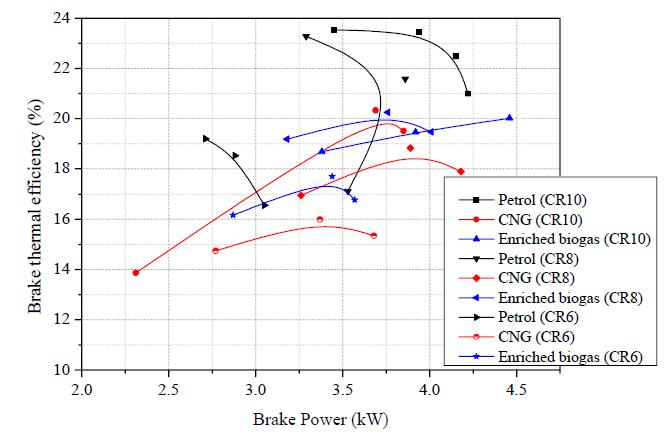
FIGURE5.4VariationofBTHEwithBPatIA30ofor100% openthrottle
The resultsofthe performancetest at100% open throttle operation revealed that the maximum BTHE obtained 22.67% at 3.93 kW output and 21.94% at 4.23 kW output for CNG and enriched biogas operation respectively at a compressionratioof10and25oIA,whileincaseofpetrol operation 23.53% at 3.45 kW output was obtained at a compression ratio of 10 and 30o IA. Maximum BTHE obtained in case of engine running on petrol at 30o, 25o and 20o of IA were found as 23.53%, 23.32% and 23.2% respectively at a compression ratio of 10. In the case of engine running on CNG at 30o, 25o and 20o of IA, maximum BTHE were found as 20.33%, 22.67% and 20.7%respectivelyatacompressionratioof10.
5.3 Carbon Monoxide (CO) emission
CO emission as a function of engine crankshaft speed is showninFIGURE5.5.
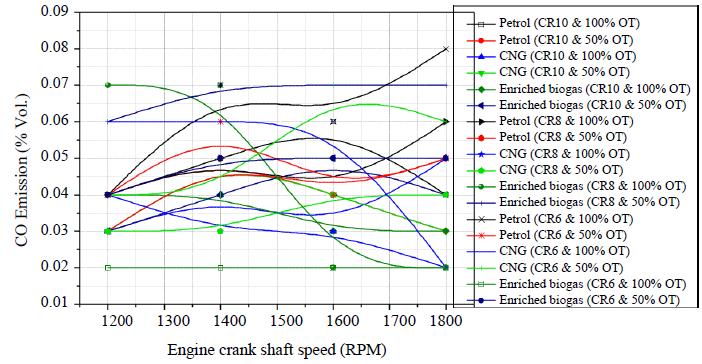
FIGURE5.5VariationofCOemissionwithcrankshaftspeed atIA30o
International Research Journal of Engineering and Technology (IRJET) e-ISSN: 2395-0056
Volume: 12 Issue: 06 | Jun 2025 www.irjet.net p-ISSN: 2395-0072
Inthecaseofpetrolrunengine,COemissionobservedwas slightlylessat50%openthrottlethan100%openthrottle, while in the case of CNG and enriched biogas run engine, the observed CO emission was slightly less at 100% open throttle compared to 50% open throttle. The observed CO emissionwasslightlyhigheratIAof20o comparedtoIAof 30o and 25o for three experimented fuels at respective engine parameters. It was due to the fact that lower the combustiondurationatIA20o
5.4 Carbon Dioxide (CO2) emission
FIGURE 5.6, depicted variations of CO2 emission with enginecrankshaftspeedatIA30o .
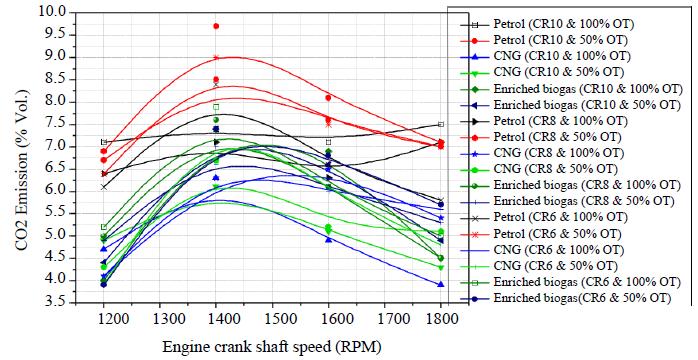
FIGURE5.6VariationofCO2emissionwithcrankshaft speedatIA30o
It was found that the CO2 emission was slightly higher at 50% open throttle than 100% open throttle for all engine test conditions. Not much variation in CO2 emission was observedforthreeexperimentedvaluesofIA.
6. CONCLUSIONS AND FUTURE SCOPES
6.1
Conclusions
Biogas is one of the most suitable natural and renewable resources of energy for heating, lighting, cooking, and power generation. The enriched biogas can be used as a natural gas alternative for vehicular/stationary engine fuel, industrial applications, injections to the gas grid, etc.
Thewaterscrubberwasalsotestedatthreebiogas supply pressures of 0.2 bar, 0.4 bar, and 0.6 bar, the highest CH4 content of 83.05% in enriched biogas was obtained with 53.65% CH4 rise efficiencyatthehighest biogassupplypressure of 0.6 bar, lowest biogas flow rate of 0.864 Nm3/h, and highest water flow rate of 2.772 m3/h. The enriched biogas with 83.05% CH4 coming from the water scrubber was then passed through the chemical scrubber. It was made up of a series arrangementofthreereactionchambers.Thefirst two reaction chambers contained 20 L of 1 N solution of Ca(OH)2 and KOH respectively, and a
third chamber contained silica gel. It had given enriched biogas with 95.15% CH4 with 76.04% CH4 rise efficiency. The content of the obtained enriched biogas confirms the BIS standard IS: 16087:2016,henceitcanbecompressedandfilled intoaCNGcylinderandcanbeusedasautomotive fuel.
Raw biogas was passed through three separate reactionchambersarrangedinseriescontaininga solution of Ca(OH)2, NaOH, and KOH and finally through a chamber containing silica gel. Different flow rates for biogas (0.864 Nm3/h, 0.672 Nm3/h, and 0.540 Nm3/h) and different chemical solvent concentrations (0.8 N and 1 N) were used as parameters to investigate the differences in performance. It could give enriched biogas with maximum CH4 content of 94.05% at the lowest biogas flow rate of 0.540 Nm3/h with 74% CH4 riseefficiency.ItalsoconfirmstheBISstandardIS: 16087:2016.
The enriched biogas with 94.2% of CH4 was used for comparative performance evaluation and emission characteristics study on spark ignition engine. The performance results of the stationary 4.5 kW research engine run on spark ignition mode indicated that the engine can run on enriched biogas as fuel with the same CNG conversionkit.
Theenginedevelopedmaximumpowerof4.65kW for petrol operated and 4.55 kW for enriched biogas operated engine at 10 compression ratio, 25o ignition advance, and 100% open throttle. Whereas, CNG operated engine developed a maximum power of 4.31 kW at 8 compression ratio, 25o ignition advance, and 100% open throttle. The maximum brake power producing capability of the engine corresponds to IA 25o BTDC for all three fuels. The maximum brake thermal efficiency obtained was 22.67% and 21.94% for CNG operated and enriched biogas operated engine respectively at 10 compression ratio, 25o ignition advance, and 100% open throttle, while in the case of petrol run engine 23.53%wasobtainedat10compressionratio,30o ignition advance, and 100% open throttle. The maximum brake thermal efficiency obtaining capability of the engine corresponds to a compression ratio of 10 for all three fuels. Hence, the parameters compression ratio of 10, 25o IA and 100% open throttle are considered optimum operatingparameters.
The CO emission was slightly higher when the engine run on petrol compared to CNG and enriched biogas run engine for respective operatingparameters.
The CO2 emission was slightly higher for petrol run engine compared to CNG and enriched biogas run engine for respective test conditions. While
International Research Journal of Engineering and Technology (IRJET) e-ISSN: 2395-0056
Volume: 12 Issue: 06 | Jun 2025 www.irjet.net p-ISSN: 2395-0072
CNG run engine caused minimum CO2 emission than petrol and enriched biogas run engine at respective test conditions. Further, biogas is renewable and CO2-neutral fuel in terms of net emissionsofcarbontotheatmosphere.
Biogas technology not only provides economic opportunities for the rural population of developing countries like India, but also improves health and hygiene, environmental, and social conditions
6.2 Future scope of work
Thefollowingpointsareproposedforfuturework:
In the present work, CO2 was absorbed by water/chemicals and was not available for useful applications. Effective CO2 separation technique from water/chemicals needs to be developed for usefulapplicationsofCO2.
Tribologicaltestsshouldbeperformedonengines fuelledbyenrichedbiogastoensuretheirviability in stationary power generation and automobile applicationsforlong-termoperation
REFERENCES
[1] “BP Statistical Review of World Energy 2022, 71st edition.” https://www.bp.com/content/dam/bp/businesssites/en/global/corporate/pdfs/energyeconomics/statisti cal-review/bp-stats-review-2022-full-report.pdf (accessed Jul.10,2022).
[2]https://yearbook.enerdata.net/total-energy/worldconsumption-statistics.html(accessedJul.10,2022).
[3]“GlobalEnergyReview2021.” https://www.iea.org/reports/global-energy-review2021/co2-emissions(accessedJul.10,2022).
[4] C. R. Kumar. J and M. A. Majid, “Renewable energy for sustainable development in India: current status, future prospects, challenges, employment, and investment opportunities,” Energy. Sustain. Soc., vol. 10, no. 1, p. 2, 2020,doi:10.1186/s13705-019-0232-1.
[5]“TheHindu.” https://www.thehindu.com/business/brighter-daysawait-renewableenergy-space-investments-likely-tocross-15-billion-in-2022/article38026118.ece(accessed Jan.29,2022).
[6] H. P. Garg and G. Datta., “Global status on renewable energy,” Sol. energy Heat. Cool. methods Build. Int. Work. Iran Univ. Sci. Technol.,pp.19–12,1998.
[7] “National Policy for Management of Crop Residues.” https://agricoop.nic.in/sites/default/files/NPMCR_1.pdf (accessedJul.11,2022).
[8] G. Kaur, Y. S. Brar, and D. P. Kothari, “Potential of Livestock Generated Biomass: Untapped Energy Source in India,” Energies, vol. 10, no. 7, 2017, doi: 10.3390/en10070847.
[9]B.H.Khan, Non-Conventional Energy Resources,2nded. Tata McGraw Hill Education Private Limited, New Delhi, 2011.
[10] S. M. Tauseef, M. Premalatha, T. Abbasi, and S. A. Abbasi, “Methane capture from livestock manure,” J. Environ. Manage., vol. 117, pp. 187–207, 2013, doi: https://doi.org/10.1016/j.jenvman.2012.12.022.
[11] R. Abader, “A Study on Biogas-Fueled SI Engines : Effects of Fuel Composition on Emissions and Catalyst Performance,”UniversityofToronto,2014.
[12] M. F. Demirbas and M. Balat, “Progress and Recent TrendsinBiogasProcessing,” Int. J. Green Energy,vol.6,no. 2, pp. 117–142, Apr. 2009, doi: 10.1080/15435070902784830.
[13] K. Lee, T. Kim, H. Cha, S. Song, and K. M. Chun, “Generating efficiency and NOx emissions of a gas engine generator fueled with a biogas–hydrogen blend and using an exhaust gas recirculation system,” Int. J. Hydrogen Energy, vol. 35, no. 11, pp.5723–5730, 2010, doi: https://doi.org/10.1016/j.ijhydene.2010.03.076.
[14] https://mnre.gov.in/img/documents/uploads/file_s1592215264726.pdf(accessedJul.12,2022).
[15] https://mnre.gov.in/img/documents/uploads/file_f1580897623625.pdf(accessedJul.12,2022).
[16] V. Vijay, P. M. V Subbarao, and R. Chandra, “Identification of potential waste seeds of wildly growing tree species for the production of biogas,” Environ. Sci. Pollut. Res., vol. 27, no. 13, pp. 14515–14528, 2020, doi: 10.1007/s11356-020-08012-y.
[17]L.Wagner,“Trendsfromtheuseofbiogastechnology inGermany,”2015.
[18]M.Lebuhn,B.Munk,andM.Effenberger,“Agricultural biogas production in Germany - from practice to microbiology basics,” Energy. Sustain. Soc., vol. 4, no. 1, p. 10,2014,doi:10.1186/2192-0567-4-10.
[19]D.DeubleinandA.Steinhauser, Biogas from waste and renewable resources: An introduction, Second edi. John Wiley&Sons,Weinheim,2010.
[20] F. Osorio and J. C. Torres, “Biogas purification from anaerobic digestion in a wastewater treatment plant for biofuel production,” Renew. Energy, vol. 34, no. 10, (2) 2164–2171,2009,doi:10.1016/j.renene.2009.02.023.
International Research Journal of Engineering and Technology (IRJET) e-ISSN: 2395-0056
Volume: 12 Issue: 06 | Jun 2025 www.irjet.net p-ISSN: 2395-0072
[21] Feroskhan M. and Ismail Saleel, “A review on the purification and use of biogas in compression ignition engines,” Int. J. Automot. Mech. Eng., vol. 14, no. 3, pp. 4383–4400,2017.
[22] A. Demirbas, “Global renewable energy projections,” Energy Sources, Part B Econ. Plan. Policy, vol. 4, no. 2, pp. 212–224,2009,doi:10.1080/15567240701620499.
[23] R. Chandra, V. K. Vijay, P. M. V. Subbarao, and T. K. Khura, “Performance evaluation of a constant speed IC engineonCNG,methaneenrichedbiogasandbiogas,” Appl. Energy, vol. 88, no. 11, pp. 3969–3977, 2011, doi: 10.1016/j.apenergy.2011.04.032.
[24] O. W. Awe, Y. Zhao, A. Nzihou, D. P. Minh, and N. Lyczko, “A Review of Biogas Utilisation, Purification and Upgrading Technologies,” Waste and Biomass Valorization, vol.8,no.2,pp.267–283,2017,doi:10.1007/s12649-0169826-4.
[25] http://www.mnre.gov.in/mission-and-vision2/achievements posted 30/03/2016 (accessed Oct. 20, 2018).
[26] D. Bona et al., “The Biorefinery Concept Applied to Bioethanol and Biomethane Production from Manure,” Waste and Biomass Valorization, vol. 9, no. 11, pp. 2133–2143,2018,doi:10.1007/s12649-017-9981-2.
[27] R. Chandra, H. Takeuchi, T. Hasegawa, and R. Kumar, “Improving biodegradability and biogas production of wheat straw substrates using sodium hydroxide and hydrothermal pretreatments,” Energy, vol. 43, no. 1, pp. 273–282,2012,doi:10.1016/j.energy.2012.04.029.
[28] N. Abatzoglou and S. Boivin, “A review of biogas purification processes,” Biofuels, Bioprod. Biorefining, vol. 6,no.3,pp.42–71,2009,doi:10.1002/bbb.117.
[29] D. R. Shah, H. J. Nagarsheth, and P. Acharya, “Purification of Biogas using Chemical Scrubbing and Application of Purified Biogas as Fuel for Automotive Engines,” Res. J. Recent Sci.,vol.5,pp.1–7,2016.
[30] M. Balat and H. Balat, “Biogas as a renewable energy sourcea review,” Energy Sources, Part A Recover. Util. Environ. Eff., vol. 31, no. 14, pp. 1280–1293, 2009, doi: 10.1080/15567030802089565.
[31] D. Andriani, A. Wresta, T. D. Atmaja, and A. Saepudin, “A Review on Optimization Production and Upgrading Biogas Through CO2 Removal Using Various Techniques,” Appl. Biochem. Biotechnol., vol. 172, no. 4, pp. 1909–1928, 2014,doi:10.1007/s12010-013-0652-x.
[32]H.M.Morgan et al.,“A techno-economicevaluation of anaerobic biogas producing systems in developing countries,” Bioresour. Technol.,vol.250,pp.910–921,2018, doi:10.1016/j.biortech.2017.12.013.
[33] M. Mohamed Ibrahim, J. Varuna Narasimhan, and A. Ramesh, “Comparison of the predominantly premixed charge compression ignition and the dual fuel modes of operation with biogas and diesel as fuels,” Energy, vol. 89, pp.990–1000,2015,doi:10.1016/j.energy.2015.06.033.
[34]B.J.Bora,U.K.Saha,S.Chatterjee,andV.Veer,“Effect of compression ratio on performance, combustion and emissioncharacteristicsofadualfueldieselenginerunon raw biogas,” Energy Convers. Manag., vol. 87, pp. 1000–1009,2014,doi:10.1016/j.enconman.2014.07.080.
[35] K. Cacua, A. Amell, and F. Cadavid, “Effects of oxygen enrichedairontheoperationandperformanceofadieselbiogasdualfuelengine,” Biomass and Bioenergy,vol.45,pp. 159–167,2012,doi:10.1016/j.biombioe.2012.06.003.
[36]D.BarikandS.Murugan,“Investigationoncombustion performance and emission characteristics of a DI (direct injection) diesel engine fueled with biogas-diesel in dual fuel mode,” Energy, vol. 72, pp. 760–771, 2014, doi: 10.1016/j.energy.2014.05.106.
[37] A. Petersson and A. Wellinger, “Biogas upgrading technologies – developments and innovations,” IEA Bioenergy, p. 13, 2009, [Online]. Available: http://www.build-abiogasplant.com/PDF/IEA_Biogas_technologies.pdf.
[38] R. Kaushal and R. Baitha, “Biogas and methane yield enhancementusinggrapheneoxidenanoparticlesandCa( OH ) 2 pre- treatment in anaerobic digestion Ca ( OH ) 2 pre-treatment in anaerobic digestion,” Int. J. Ambient Energy, vol. 0, no. 0, pp. 1– 8, 2019, doi: 10.1080/01430750.2018.1562975.
[39] D. R. Shah and H. J. Nagarseth, “Low Cost Biogas PurificationSystemforApplicationOfBioCNGAsFuelFor Automobile Engines,” Int. J. Innov. Sci. Eng. Technol., vol. 2, no.6,pp.308–312,2015.
[40] R. Kadam and N. L. Panwar, “Recent advancement in biogas enrichment and its applications,” Renew. Sustain. Energy Rev., vol. 73, no. September 2016, pp. 892– 903, 2017,doi:10.1016/j.rser.2017.01.167.