
International Research Journal of Engineering and Technology (IRJET) e-ISSN: 2395-0056
Volume: 13 Issue: 01 | Jan 2026 www.irjet.net p-ISSN: 2395-0072
International Research Journal of Engineering and Technology (IRJET) e-ISSN: 2395-0056
Volume: 13 Issue: 01 | Jan 2026 www.irjet.net p-ISSN: 2395-0072
Oruganti MadhukarGoud1 , Pynam Jerry Bixler2 , Chimpiri Sairam 3 , Boggula Sri Mithra4 , Mattipi Varshini Priya5 ,Kommareddy Khyathi6
1,2,3,4,5,6, BTech in ECE & IIIT,Andhra Pradesh,India` ***
Abstract - The rapid growth of global population and the increasing demand for food production have highlighted the need for advanced technological solutions in agriculture. Traditional farming practices often suffer from limitations such as inefficient resource utilization,dependencyonmanual labor, and vulnerability to unpredictable weather conditions. AGROBOT is a multi-functional agricultural robotic system designed to address these challenges by integrating automation, sensing, and intelligent decision-making into farming operations.
The proposed AGROBOT system performs multiple agricultural tasks, including weather forecasting, automated seed sowing, and intelligent water sprinkling. Environmental sensors continuously monitor parameters such as temperature, humidity, and soil moisture, enabling real-time data acquisition and analysis. Weather forecasting capabilities assist farmers in planning agricultural activities more effectively, while the automated sowing mechanism ensures precise seed placement, optimal depth, and uniform spacing, thereby reducing seed wastage and improving germination rates. The water sprinkling system operates basedonsoil moisture levels, ensuringefficient irrigation and preventing overwatering.
By combining robotics with Internet of Things (IoT) technologies, AGROBOT enhances precision agriculture and promotes sustainablefarmingpractices.Thesystemminimizes humanintervention, reduces operationalcosts, andoptimizes the use ofwater andother criticalresources.Theexperimental results demonstrate that AGROBOT can significantly improve agricultural efficiency and productivity while maintaining environmental sustainability. This research highlights the potential of multi-functional agricultural robots as a viable solution for modern smart farming systems.
Key Words: AGROBOT, Smart Agriculture, Agricultural Robotics, Weather Forecasting, Automated Sowing, Intelligent Irrigation, Water SprinklingSystem,Internet of Things (IoT), Precision Farming, Sustainable Agriculture
Agriculture plays a crucial role in sustaining the global populationandsupportingeconomicdevelopment.Withthe rapid increase in population and the growing demand for food, the agricultural sector isunderconstant pressure to
improve productivity while efficiently managing limited natural resources. Traditional farming practices, which largelydependonmanuallabourandconventionalirrigation methods,oftenresultininefficientresourceutilization,high operationalcosts,andinconsistentcropyields.Additionally, factors such as unpredictable weather conditions and climatechangefurthercomplicateagriculturalplanningand decision-makingprocesses.
In recent years, technological advancements in robotics, automation,andtheInternetofThings(IoT)havepavedthe wayforthedevelopmentofsmartagriculturesystems.These technologiesenablereal-timemonitoring,precisecontrolof farming operations, and data-driven decision-making. Agricultural robots, in particular, have emerged as a promising solution to address labour shortages, reduce humanintervention,andenhanceoperationalefficiency.By automating repetitive and time-consuming tasks, robotic systemscansignificantlyimproveaccuracy,consistency,and productivityinagriculturalactivities.
AGROBOTisamulti-functionalagriculturalrobotic system designed to support modern farming practices throughautomationandintelligentsensing.Theproposed systemintegratesmultipleessentialagriculturaloperations into a single platform, including weather forecasting, automated seed sowing, and intelligent water sprinkling. Weatherforecastingisachievedbycontinuouslymonitoring environmentalparameterssuchastemperature,humidity, and atmospheric conditions, allowing farmers to make informed decisions regarding sowing schedules and irrigationplanning.Thisproactiveapproachhelpsminimize cropdamagecausedbyadverseweatherconditions.
The automated sowing mechanism of AGROBOT ensures precise seed placement at optimal depth and spacing,whichiscriticalforuniformcropgrowthandhigher germination rates. By reducing seed wastage and maintainingconsistency,thesystemenhancesoverallcrop productivity. In addition, the intelligent water sprinkling systemutilizessoilmoisturesensorstodeterminetheexact water requirements of crops. Irrigation is activated only when necessary, thereby conserving water resources and preventingissuessuchasover-irrigationandsoilnutrient loss.
Theintegrationofthesefunctionalitiesintoasingle robotic platform offers a comprehensive solution for
International Research Journal of Engineering and Technology (IRJET) e-ISSN: 2395-0056
Volume: 13 Issue: 01 | Jan 2026 www.irjet.net p-ISSN: 2395-0072
precisionfarming.AGROBOTnotonlyreducesdependence onmanuallabourbutalsopromotessustainableagricultural practicesbyoptimizingtheuseofwater,seeds,andenergy. Furthermore, the system provides scalability and adaptabilityfordifferentcroptypesandfarmingconditions. This research focuses on the design, implementation, and performance evaluation of the AGROBOT system, highlightingitspotentialtotransformtraditionalagriculture intoasmart,efficient,andsustainablefarmingecosystem.
Traditionalagriculturalpracticeshavebeenfollowedfor centuries and primarily rely on manual labor, natural resources,andfarmers’experience.Thesemethodsinvolve conventionaltoolsandtechniquesforactivitiessuchasland preparation,sowing,irrigation,andcropmonitoring.While traditional farming has sustained food production for generations, it faces several limitations in meeting the demandsofmodernagriculture.
Intraditionalsowingmethods,seedsareusuallyscattered manually or placed using basic hand tools. This approach oftenresultsinunevenseeddistribution,improperspacing, and inconsistent sowing depth, which negatively affect germinationratesandoverallcropyield.Seedwastageisalso acommonissueduetothelackofprecisioninmanualsowing processes.
Irrigationintraditionalagriculturetypicallydependson methodssuchasfloodirrigation,canalsystems,ormanual watering. These techniques do not consider real-time soil moisture requirements and frequently lead to excessive waterusage.Over-irrigationcancausesoilerosion,nutrient leaching,andwaterlogging,whileunder-irrigationmayresult incropstressandreducedproductivity.Moreover,traditional irrigationpracticesrequirecontinuoushumansupervision, increasinglabordependency.
Weather assessment in traditional farming is largely based on farmers’ experience, observation of natural indicators, or historical seasonal patterns. Although this knowledgeisvaluable,itlacksaccuracyandreliabilityinthe face of changing climate conditions. Sudden variations in temperature,rainfall,orhumiditycancauseunexpectedcrop losses, as farmers are unable to make timely decisions withoutscientificforecastingtools.
Additionally, traditional farming methods are laborintensive and time-consuming. With increasing labor shortages and rising operational costs, it has become challenging for farmers to maintain efficiency using conventional techniques alone. These limitations highlight theneedformodern,automatedsolutionsthatcanimprove precision, reduce resource wastage, and enhance productivity.
The challenges associated with traditional agricultural methods emphasize the importance of adopting smart
technologies such as robotic systems and sensor-based automation, which can overcome these inefficiencies and supportsustainablefarmingpractices.
The proposed method presents AGROBOT, a multifunctionalagriculturalroboticsystemdesignedtoautomate essential farming operations and support precision agriculture.Thesystemintegratesenvironmentalsensors, soil moisture sensors, and an embedded control unit to continuouslymonitorfieldconditionsinrealtime.Weatherrelatedparameterssuchastemperatureandhumidityare analysed to assist in short-term weather forecasting and agriculturalplanning.Basedonsensorfeedback,AGROBOT autonomouslyperformsseedsowingusingamotor-driven mechanism that ensures accurate seed placement, proper depth,anduniformspacing,therebyreducingseedwastage andimprovinggerminationrates.
The intelligent water sprinkling system operates through a closed-loop control mechanism, activating irrigation only when soil moisture levels fall below a predefined threshold, which helps conserve water and preventover-irrigation.Therobotnavigatesthefieldusinga controlledmobilityplatform,allowingsystematiccoverage of the agricultural land. All sensing, decision-making, and actuation processes are coordinated by the embedded controller, minimizing human intervention and labor dependency.Thisintegratedapproachenhancesoperational efficiency, optimizes resource utilization, and promotes sustainablefarmingpractices,makingAGROBOTaneffective solutionformodernsmartagriculture.
The AGROBOT system requires a combination of sensing, control, actuation, and mobility hardware components to perform automated agricultural operations effectively. A microcontroller or embedded processing unit (such as Arduino, ESP32, or Raspberry Pi) serves as the central controlunit,responsiblefordataacquisition,processing,and decision-making.
Environmental monitoring is achieved using temperatureandhumiditysensors,whichprovidereal-time weather-related data for forecasting and analysis. A soil moisturesensorisemployedtomeasuresoilwatercontent anddetermineirrigationrequirements.Forautomatedseed sowing, a motor-driven seed dispensing mechanism is integrated,utilizingDCmotorsorsteppermotorstoensure precise seed release and spacing. The water sprinkling system consists of a water pump, solenoid valve, and sprinklerordripnozzles,whicharecontrolledelectronically basedonsoilmoisturelevels.Motordrivermodulesareused tocontrol themovementoftherobotandtheoperationof motorsefficiently.Themobilityplatformincludesawheeled
International Research Journal of Engineering and Technology (IRJET) e-ISSN: 2395-0056
Volume: 13 Issue: 01 | Jan 2026 www.irjet.net p-ISSN: 2395-0072
chassis, DC motors, and wheels, enabling the robot to navigateacrossagriculturalfields.
Powerissuppliedthrougharechargeablebattery, withvoltageregulationcircuitstoensurestableoperationof allcomponents.Additionalhardwaresuchasrelaymodules, connecting wires, and mounting structures are used to interfaceandassemblethesystem.Optionalcomponentslike LCDdisplays,wirelesscommunicationmodules,andobstacle detection sensors can be incorporated to enhance user interactionandsystemfunctionality.
TheeffectiveoperationoftheAGROBOTsystemrelies heavilyonarobustandwell-structuredsoftwareframework that enables real-time monitoring, intelligent decisionmaking,andcoordinatedcontrolofhardwarecomponents. The software requirements define the tools, platforms, programming environments, and algorithms necessary to supportthemulti-functionalcapabilitiesoftheagricultural robot, including weather forecasting, automated seed sowing,andintelligentwatersprinkling.
Embedded System Programming
At the core of the AGROBOT software architecture is the embedded firmware running on the microcontroller or embeddedprocessingunit.Thisfirmwareisresponsiblefor interfacing with sensors, processing input data, executing controllogic,andmanagingcommunicationbetweensystem modules. The software is developed using embedded programminglanguagessuchasCorC++,whichofferhigh performance, low-level hardware access, and efficient memorymanagement.Thefirmwaremustbeoptimizedto ensure real-time responsiveness and reliable operation in outdooragriculturalenvironments.
The software continuously acquires data from environmentalsensorssuchastemperature,humidity,and soilmoisturesensors.Analogsensoroutputsareconverted into digital values using the microcontroller’s analog-todigital converter (ADC). The software applies filtering techniquestominimizenoiseandimprovetheaccuracyof sensor readings. Calibration routines are implemented to account for sensor drift and variations caused by environmental conditions. This processed data forms the basisforalldecision-makingprocesseswithintheAGROBOT system.
Theweatherforecastingcomponentofthesoftwareanalyzes real-timeenvironmentaldatatoidentifyshort-termtrends in temperature and humidity. Threshold-based and rulebasedalgorithmsareusedtoinferweatherconditionsthat mayaffectagriculturalactivities.Whilethesystemdoesnot
replace advanced meteorological models, it provides localizedandtimelyinsightsthatassistinplanningsowing andirrigationoperations.
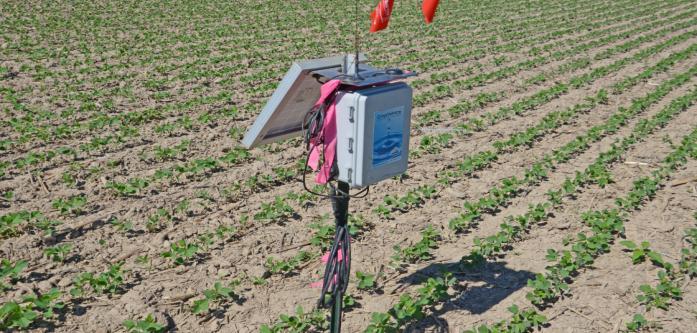
The irrigation control software implements a closed-loop feedback mechanism using soil moisture sensor data. Predefinedthresholdvaluesaresetbasedoncroptypeand soil characteristics. When soil moisture falls below the threshold, the software activates the water sprinkling systemthroughrelayormotordriverinterfaces.Oncethe optimalmoisturelevelisachieved,irrigationisautomatically stopped. This logic ensures efficient water usage and preventsover-irrigation.Thesoftwarealsoincludessafety checks to prevent continuous pump operation in case of sensorfailure.
The sowing module software controls the operation of motorsresponsibleforseeddispensing.Timingandspeed control algorithms ensure accurate seed placement and uniformspacing.
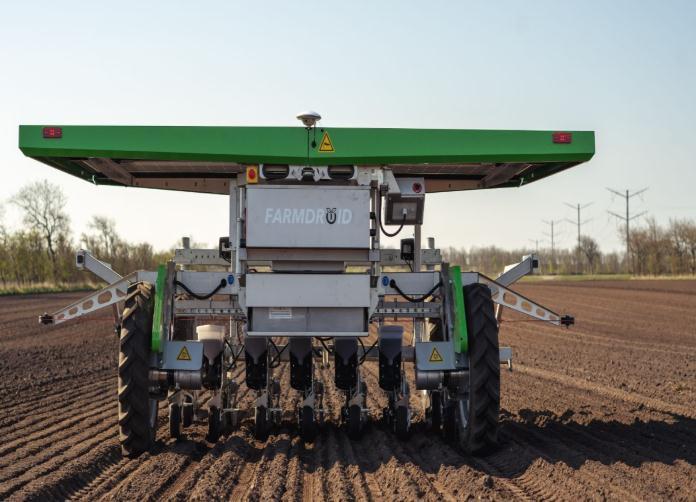
The mobility of AGROBOT is governed by motion control algorithms that regulate motor speed and direction. The software interfaces with motor driver modules to control wheel movement and maintain stability across uneven
International Research Journal of Engineering and Technology (IRJET) e-ISSN: 2395-0056
Volume: 13 Issue: 01 | Jan 2026 www.irjet.net p-ISSN: 2395-0072
terrain.Path-followinglogicenablessystematiccoverageof theagriculturalfield.Optionalobstacledetectionsoftware processesdatafromultrasonicorinfraredsensorstoavoid collisionsandenhanceoperationalsafety.
Communication and User Interface
ThesoftwaresupportscommunicationbetweenAGROBOT and the user through wired or wireless interfaces. Serial communicationprotocolssuchasUART,I2C,orSPIareused forinter-modulecommunication.
Wireless technologies such as Wi-Fi or Bluetooth may be integratedtoenableremotemonitoringandcontrol.Auser interface, implemented via a display module or mobile application, allows farmers to view sensor data, system status, and operational alerts. The interface also provides options to modify threshold values and operational parameters.
Data Logging and Storage
Data logging is an essential software requirement for performanceanalysisandsystemoptimization.Thesoftware storessensorreadings,operationallogs,andeventdatain onboardmemoryorexternalstoragedevices.Thishistorical datacanbeusedtoevaluatesystemperformance,identify trends, and support future enhancements. Efficient data managementtechniquesareemployedtominimizememory usage.
System Reliability and Error Handling
The software must include robust error detection and handlingmechanismstoensurecontinuousoperationunder varying environmental conditions. Watchdog timers are implemented to recover from software crashes or unexpectedbehaviour.Exceptionhandlingroutinesdetect sensor failures, communication errors, and power fluctuations,triggeringappropriatesafetyresponses.These features enhance the reliability and durability of the AGROBOTsystem.
Software Development Tools and Platforms
Development and debugging of the AGROBOT software requireintegrateddevelopmentenvironments(IDEs)such asArduinoIDE,Platform,orembeddedLinuxtools.Version control systemsmaybeusedtomanagesoftwareupdates and enhancements. Simulation and testing tools help validatecontrolalgorithmsbeforedeployment.
Security and Scalability
Basicsecuritymeasuresareincorporatedtoprotectsystem data and communication channels. Authentication mechanisms may be implemented for remote access. The software architecture is designed to be modular and scalable, allowing future integration of advanced features
suchasmachinelearning-basedweatherpredictionorcloudbaseddataanalytics.
Thisresearchpresentedthedesignandimplementationof AGROBOT, a multi-functional agricultural robotic system aimedatenhancingefficiencyandsustainabilityinmodern farming practices. By utilizing real-time sensor data and embedded control mechanisms, AGROBOT enables precision-baseddecision-makingandreducesdependence onmanuallabour.
The experimental evaluation demonstrates that automated sowing ensures accurate seed placement and uniformspacing,leadingtoimprovedgerminationratesand reduced seed wastage. Similarly, the intelligent irrigation systemoptimizeswaterusagebyactivatingsprinklingonly whensoilmoisturelevelsfallbelowpredefinedthresholds, therebypreventingover-irrigationandconservingvaluable waterresources.
Theincorporationoflocalizedweathermonitoring further supports effective agricultural planning and minimizes risks associated with unpredictable climatic conditions.
AGROBOT promotes sustainable agriculture by improving resource utilization, lowering operational costs, and enhancing overall productivity. The modular and scalable designallowsthesystemtobeadaptedforvariouscropsand fieldconditions,makingitsuitableforsmall-scaleaswellas large-scale farming applications. Although the current system employs rule-based control and basic forecasting techniques, it provides a strong foundation for future enhancements.
In conclusion, AGROBOT demonstrates the significantpotentialofagriculturalroboticsintransforming traditional farming into a smart, automated, and efficient ecosystem.Thesystemcontributestotheadvancement of precisionagricultureandrepresentsapracticalsteptoward technology-driven, sustainable food production for the future.
[1] D. Kornack and P. Rakic, “Cell Proliferation without NeurogenesisinAdultPrimateNeocortex,”Science,vol. 294, Dec. 2001, pp. 2127-2130, doi:10.1126/science.1065467.
[2] M.Young,TheTechnicalWriter’sHandbook.MillValley, CA:UniversityScience,1989.
[3] R. Nicole, “Title of paper with only first word capitalized,”J.NameStand.Abbrev.,inpress.
[4] K.Elissa,“Titleofpaperifknown,”unpublished.
International Research Journal of Engineering and Technology (IRJET) e-ISSN: 2395-0056
Volume: 13 Issue: 01 | Jan 2026 www.irjet.net p-ISSN: 2395-0072
[5] R.J.F.Pereira,“PrecisionAgriculture:Technologyand Trends,” Computers and Electronics in Agriculture,vol. 162,pp.273–289,2019.
[6] S. Mishra and P. Kumar, Robotics in Agriculture: Automation and Applications,1sted.,Springer,2020.
[7] M. A. Khan, A. Mahmood, and S. Ahmad, “IoT-Based SmartIrrigationSystem UsingSoilMoisture Sensors,” International Journal of Advanced Research in Computer Engineering & Technology, vol. 9, no. 5, pp. 150–156, 2020.
[8] B.L.Zhang,L.Wang,andQ.Li,“WeatherMonitoringand ForecastingforSmartAgriculture,” IEEE Access,vol.7, pp.111234–111243,2019.
[9] H.PatelandR.Sharma,“DesignandDevelopmentofan Autonomous Agricultural Robot for Sowing and Irrigation,” Proceedings of the International Conference on Robotics and Automation in Agriculture, pp. 45–52, 2021.
[10] R.K.SinghandV.Verma, Embedded Systems and IoT in Precision Farming,2nded.,Wiley,2021.
[11] S. P. Dinesh and K. Ravi, “Automation in Agriculture Using Robotics: A Review,” Journal of Agricultural Engineering Research,vol.17,no.4,pp.205–218,2020.
[12] Arduino, “Arduino IDE Documentation,” [Online]. Available:https://www.arduino.cc/en/software, Accessed:Jan.10,2026.